You have found a reliable supplier. The linen wide-leg pants are beautifully made. The fabric is authentic European flax. The construction is clean. The price leaves you a healthy margin on paper. You ship them to your warehouse, list them on your website, and wait. The sales are fine. Not bad. But not great. Meanwhile, a competitor is selling a nearly identical pant, made in the same region, probably by a similar factory. Their retail price is $148. Yours is $88. And they are selling out. The difference is not the product. The difference is the brand story wrapped around the product. You are selling a commodity pant. They are selling a lifestyle, a status signal, an identity. Rebranding is the process of transforming a generic, high-quality garment into a branded asset that commands a premium price.
Rebranding Shanghai Fumao's linen wide-leg pants for maximum US retail markup requires building a cohesive brand narrative around the product's origin and craftsmanship, adding high-value trims and packaging that signal luxury at the point of unboxing, and implementing a tiered distribution strategy that places the product in boutiques and direct-to-consumer channels where the full retail price is justified by the buying experience. The goal is to make the customer feel they are buying a discovered treasure, not a commodity import.
My name is Elaine. At Shanghai Fumao, I see the full spectrum of what happens to our pants after they leave our factory. Some clients attach a simple hangtag, list them on a discount marketplace, and grind out thin margins on volume. Other clients take the exact same base garment, invest in a brand world around it, and sell it for three to four times the price. I have watched this divergence for years, and I have learned what the high-margin brands do differently. I want to share those strategies with you. This is not about deceiving the customer. It is about building the tangible and intangible value that makes a customer happily pay $128 for a pair of pants they could theoretically find unbranded for $58.
What Brand Narrative Elements Justify a Premium Retail Price for Linen Pants?
A premium price must be anchored in a premium story. The customer who pays $128 for linen pants is not just paying for the fabric and the stitching. She is paying for what the pants say about her. She is buying into a narrative about conscious consumption, about European craftsmanship, about a slow, intentional lifestyle. If your brand does not provide this narrative, she cannot justify the purchase to herself. She will buy the $48 version because, functionally, it covers her legs just as well. Your story is not a decoration on top of the product. It is a core component of the product's perceived value.
A premium brand narrative for linen pants must include three distinct layers: an origin story that traces the flax from a specific European region, a craftsmanship story that highlights specific construction details like French seams or corozo buttons, and a lifestyle story that places the pants in a desirable context—the coastal morning walk, the sunlit artist's studio, the relaxed summer dinner. These narratives must be consistently communicated across your website, your hangtags, your social media, and your wholesale line sheets.
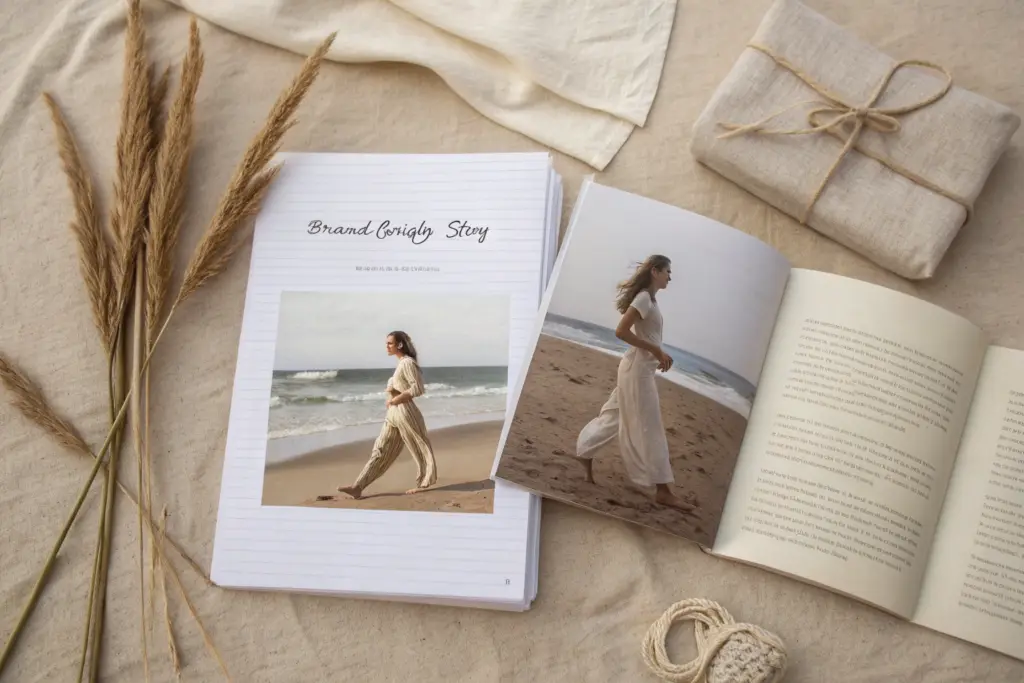
How Does a Specific Fiber Origin Story Create Perceived Value?
"Made from 100% linen" is a factual statement. It is also boring. Every linen pant on the market can say this. "Made from flax grown in the misty fields of Normandy, France, where the climate produces the longest, finest flax fibers in the world" is a story. It transports the customer. It gives her a specific mental image. It gives her a fact she can repeat to her friend when she receives a compliment on her pants. That repeatable fact is word-of-mouth marketing you do not pay for.
I worked with a brand client two years ago who was struggling to differentiate their linen pant program. They were using our standard European flax linen, which is genuinely high quality but not unique in its raw form. We helped them develop a traceability story. We provided the mill certification showing the flax origin in the Ganges River region of France. We provided photos of the flax fields in bloom, which are a stunning pale blue. The brand built a landing page around the "Field to Fabric" journey. They included a small hangtag on each pant with a QR code that linked to a video of the flax harvest. The retail price increased from $78 to $118. The sell-through rate increased. The return rate decreased. Customers who feel connected to the origin of the material are less likely to return the product because they feel a relationship with the story, not just the object. The brand storytelling for fashion labels research confirms that origin narratives increase perceived product value by creating a sense of authenticity and scarcity. You are no longer selling a pair of pants. You are selling a piece of Normandy that a craftsperson transformed into something wearable.
What Construction Details Should Your Brand Story Spotlight?
Customers who buy premium products often perform a small ritual when they first receive a garment. They turn it inside out. They inspect the seams. They feel the weight of the buttons. They are looking for evidence that justifies the price they paid. If they find overlocked seams and plastic buttons, they feel cheated. If they find French seams, bound internal edges, and genuine corozo nut buttons, they feel confirmed in their decision. The inside of the garment must be as beautiful as the outside, and your brand story must teach the customer to look for these details.
The specific construction details that Shanghai Fumao builds into our standard linen pants are marketing assets you should explicitly name in your product descriptions. Do not just say "high-quality stitching." Say "French-seamed side seams, a technique that encloses raw edges for a clean interior that won't fray, even after years of washing." Do not just say "premium buttons." Say "buttons hand-carved from Corozo nuts, a sustainable tropical palm seed with a natural grain pattern unique to each button." Do not just say "comfortable waistband." Say "interior waistband faced with soft, brushed organic cotton twill, so the garment feels smooth against your skin." Each of these descriptions educates the customer about why this pant is worth more. It gives her the vocabulary to recognize quality. Once she learns to recognize French seams, she will never un-see the overlocked seams on a cheap pant. You have trained her to be your customer for life. The fashion product description techniques guide explains how specific, technical language signals expertise and quality to the consumer. Generic language like "well-made" signals nothing because every brand claims it. Specific language like "single-needle lockstitch with 12 stitches per inch" signals that you know what you are doing and you are proud enough of your product to describe it precisely.
How Can Packaging and Trims Transform the Unboxing Into a Brand Experience?
The unboxing experience is the moment your brand moves from a digital image to a physical reality. It is the first physical impression. A pant that arrives in a plastic polybag inside a generic brown box communicates "warehouse commodity." A pant that arrives wrapped in tissue, tied with a ribbon, with a handwritten note, inside a reusable linen dust bag communicates "curated luxury." The product is the same. The perceived value is radically different. The unboxing experience is not an added cost. It is a marketing investment that generates social media content, repeat purchases, and word-of-mouth referrals.
To create a premium unboxing experience for linen pants, invest in three areas: sustainable, textured packaging materials like recycled tissue, cotton ribbons, and reusable linen dust bags; a personalization element like a handwritten note or a care card signed by the brand founder; and upgraded trims on the garment itself, including branded corozo buttons, a woven label with a tactile finish, and a hangtag that tells the product's story in concise, elegant language. The goal is to make the customer feel she is unwrapping a gift from a thoughtful friend, not processing an online order.
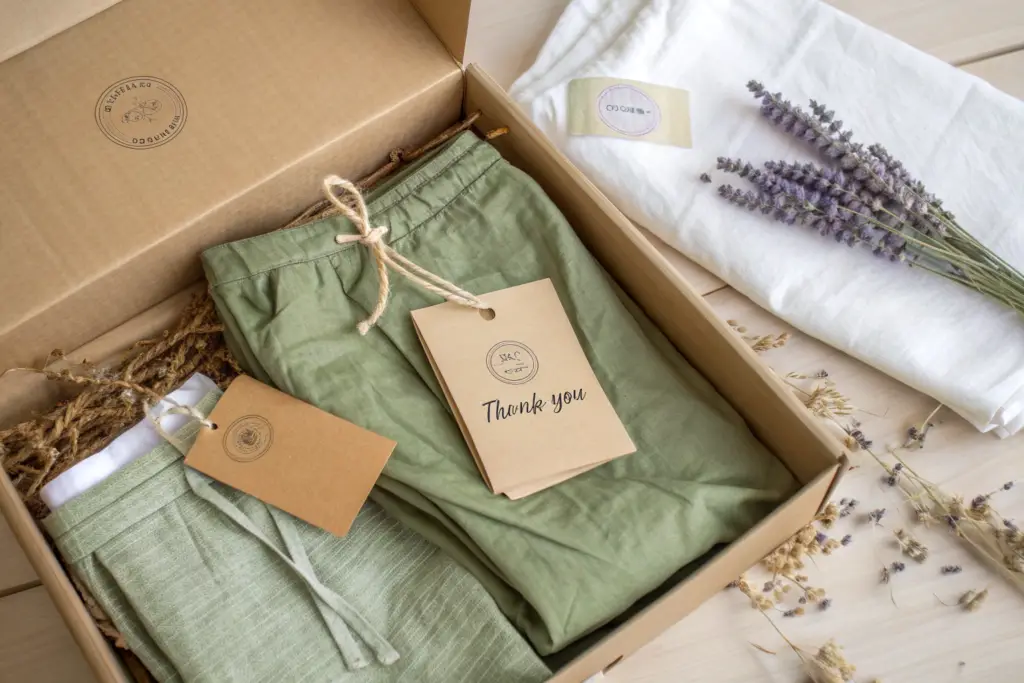
What Specific Packaging Materials Signal Sustainability and Luxury Simultaneously?
The modern premium consumer, particularly the one drawn to natural fibers like linen, is highly sensitive to packaging waste. A box filled with plastic, styrofoam, and non-recyclable materials creates a negative emotional reaction that contradicts the natural, sustainable promise of the linen product. The packaging must align with the product's values.
We have seen several of our brand clients achieve remarkable results with a specific packaging formula. They use a FSC-certified kraft paper box or a compostable mailer. Inside, the pants are wrapped in unbleached, acid-free tissue paper. The tissue is sealed with a small, branded paper sticker, not a plastic tape. A handwritten thank-you note on recycled cardstock is placed on top. The pants themselves are folded inside a reusable, un-dyed linen drawstring bag with a subtle brand logo stamped in the corner. This bag serves a dual purpose: it protects the pants during shipping and becomes a useful item the customer keeps for travel or storage, keeping your brand in her daily life. One brand owner told me that his linen dust bag is now the most tagged item on his brand's Instagram. Customers use it as a shoe bag, a toiletry bag, a project bag. Every time they pull it out, they think of his brand. The sustainable packaging for fashion brands resources provide options for eco-friendly materials. The investment in this packaging suite is approximately $1.50 to $3.00 per unit, depending on volume. This cost is either absorbed into the margin or added to the retail price. At a $118 retail price, a $2.00 packaging investment is 1.7% of the retail price. The perceived value increase, as measured by reduced return rates and higher customer lifetime value, significantly exceeds this cost.
How Do Upgraded Trims Communicate Brand Value Without Words?
Trims are the small, functional components of a garment: the buttons, the zippers, the labels, the drawcords. On a commodity pant, these are generic, unbranded, and made from the cheapest possible material. On a premium pant, they are branded, made from natural or high-quality materials, and designed as an integral part of the garment's aesthetic. Trims are a silent communication channel. They tell the customer, "Someone thought about this detail. Someone cared."
The single most impactful trim upgrade for linen pants is the button. Replace generic plastic buttons with genuine corozo, mother-of-pearl, or responsibly sourced horn buttons. These natural materials have weight, texture, and subtle color variations that plastic cannot replicate. A customer who touches a corozo button immediately feels the difference between your pant and a mass-market pant. The next most impactful upgrade is the main label. A woven label with a soft, tactile finish sewn onto the inner waistband feels substantially better than a printed satin label that scratches the skin. We can source these custom trims for our clients and install them during production. The cost difference between a generic plastic button and a branded corozo button is approximately $0.40 per garment. The perceived value increase is multiples of that. I recall a brand owner who switched from a basic satin label to a woven, debossed label. A customer emailed her specifically to compliment the label, saying it was the most comfortable garment label she had ever felt. That customer became a repeat buyer and a brand advocate. The garment trim sourcing for premium brands guide explains how trims function as silent salespeople. They communicate quality at the tactile level, which is more persuasive than any product description.
What Distribution and Pricing Strategies Maximize Retail Markup?
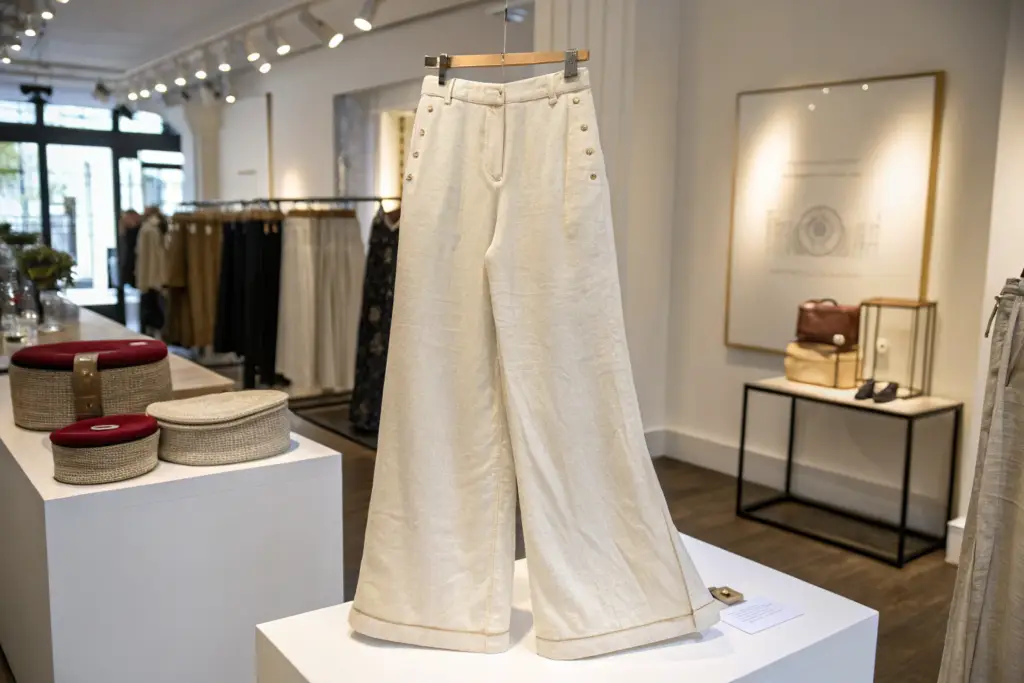
A premium brand story and a beautiful unboxing experience create the conditions for a high retail price. But you still need to place the product in channels where that price is accepted and expected. A $128 linen pant listed on a discount marketplace alongside $19.99 fast-fashion pants will not sell. The context undermines the price. The customer browsing that marketplace is in a bargain-hunting mindset. She sees your price and scrolls past. The same pant, displayed in a curated boutique where the lighting is warm, the sales associate is knowledgeable, and the neighboring products are also premium, sells at full price. Distribution strategy is as important as product strategy.
A maximum-markup distribution strategy for rebranded linen pants is built on two pillars: a direct-to-consumer (DTC) website that tells your full brand story without distraction, and a selective wholesale channel of 20 to 30 carefully chosen boutiques whose brand identity aligns with yours. The DTC channel captures the full retail margin. The wholesale channel provides third-party credibility and physical touchpoints where customers can feel the product. The pricing architecture should maintain a consistent retail price across all channels, with the DTC site offering value-adds like free shipping or a loyalty discount rather than undercutting the wholesale partners on price.
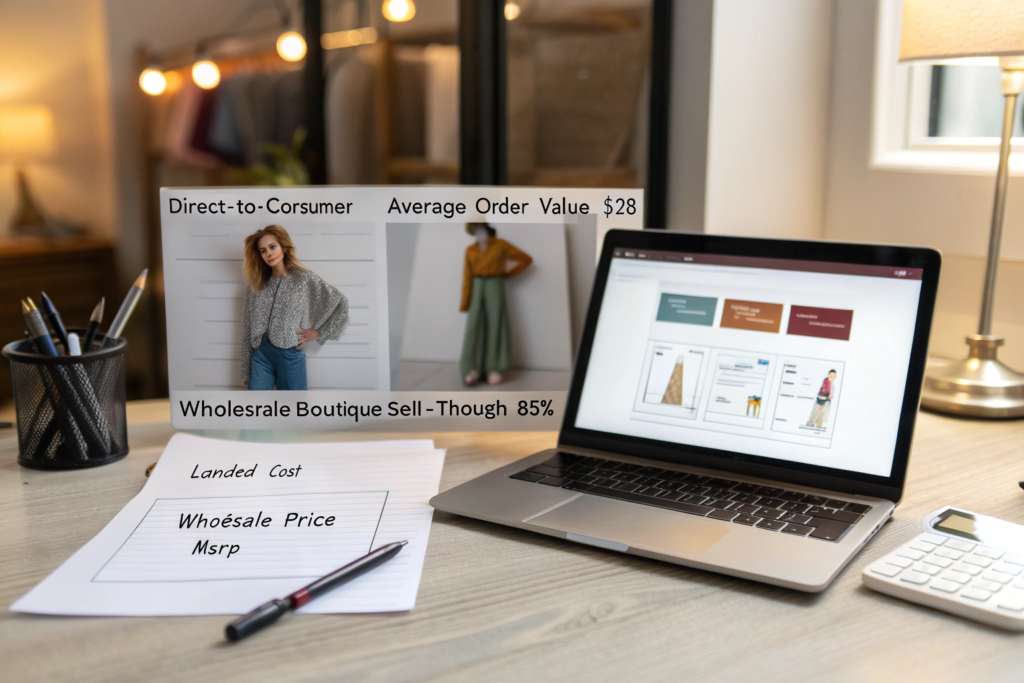
Why Should Your DTC Website Be the Margin Anchor?
When you sell directly to the consumer, you capture the full retail price minus only the transaction and fulfillment costs. The margin on a DTC sale of a $128 pant, assuming a landed cost of $22, is approximately $106 before marketing and operating expenses. The margin on a wholesale sale of the same pant at a $64 wholesale price is $42. The DTC sale is more than twice as profitable per unit. This does not mean wholesale is bad. Wholesale provides volume, brand awareness, and the credibility of being sold in respected stores. But your DTC channel should be the anchor that funds your business.
To make DTC work at premium prices, your website must do the work of a boutique sales associate. It must tell the origin story. It must show detailed photos of the French seams, the corozo buttons, and the fabric texture. It must include a size guide with a fit video showing the pants on models of different body types. It must have a clear, confident return policy that reduces purchase anxiety. One of our most successful brand partners generates 70% of their revenue through their DTC website. They invest heavily in product page photography and storytelling. Their product pages are not just a grid of images and a price. They are miniature brand documentaries. The direct-to-consumer fashion brand strategies guide explains the economics of DTC versus wholesale. The key insight is that DTC is not just a sales channel. It is a brand control channel. You control the narrative, the pricing, the customer data, and the relationship. Wholesale distributes your product. DTC distributes your brand.
How Do Selective Wholesale Partnerships Reinforce Premium Pricing?
A widespread misconception is that more wholesale accounts equal more revenue. For a premium brand, the opposite is often true. Being in too many stores, especially stores that do not align with your brand identity, dilutes your premium positioning. The customer sees your pant in a discount boutique, marked down because it did not sell in that context, and her perception of your brand's value drops. Scarcity and selectivity signal premium value.
Select 20 to 30 boutiques that are destinations for your target customer. These might be lifestyle boutiques in affluent coastal towns, curated concept stores in major cities, or specialty linen and natural-fiber shops. Visit them if possible. Understand their customer base. Provide them with not just the product but a brand story package: a lookbook, a display suggestion, a fabric swatch card for the counter, and a short training document for their sales associates on the product's unique features. A boutique sales associate who can say, "This pant is made from Normandy flax and the buttons are carved from a tropical nut that feels cool to the touch," sells significantly more than one who says, "Those are linen pants." We support our wholesale-focused brand clients by providing small fabric swatch books and product story cards that they can include in their wholesale shipments to their boutique accounts. This turns a simple restock into a brand experience for the boutique owner, who then becomes a more effective salesperson. The selective distribution in fashion analysis shows that brands that limit their points of sale to carefully chosen partners maintain higher full-price sell-through rates and stronger brand equity than brands that sell to anyone who will buy.
How Can You Use Social Proof and Visual Content to Lock In the Premium Price?
The final layer of a premium rebranding strategy is the social proof that surrounds the product. A customer who is considering a $128 pant will almost certainly look at your Instagram, read your reviews, and search for photos of real people wearing your product. If your Instagram is empty, your reviews are sparse, and the only product photos are on a white background, she hesitates. The price feels risky. If your Instagram shows real, beautiful women wearing your pants in aspirational but relatable settings, and your reviews are detailed and positive, the price feels justified. The customer is not just buying the pant. She is buying membership in the community of women who look like those photos.
Build social proof for your rebranded linen pants through three channels: a user-generated content program that encourages customers to share photos wearing your pants in their real lives, a review collection system that captures detailed, story-rich reviews, and a visual content library that includes lifestyle photography, detailed macro shots of fabric and construction details, and behind-the-scenes content from the design and production process. This content reduces the perceived risk of the premium price by showing the customer exactly what she will receive and how it will look and feel in her own life.

How Do Customer Photos and Reviews Function as Risk Reducers?
A professional model in a studio can make anything look good. A customer knows this. She discounts the studio photos as aspirational fiction. But a photo of a real customer, tagged in her own home or on her own vacation, wearing your pants and looking genuinely happy, is persuasive evidence. It says, "A person like me bought these pants and loved them." This is the most powerful form of marketing, and it costs you nothing beyond the effort of building a community that wants to share.
Several of our brand partners run a monthly "customer photo contest." Customers tag the brand in their photos. The brand selects one winner each month and sends her a gift card or a free accessory. The contest generates a steady stream of authentic, diverse lifestyle imagery. The brand reposts these images on their social media and, with permission, on their product pages. The product page for a specific pant shows not only the studio shots but a gallery of real customers of different ages, sizes, and styles wearing the pant. A new customer scrolling this page sees someone who looks like her. The purchase risk dissolves. Reviews function similarly. A review that says, "These pants are great" is weak social proof. A review that says, "I wore these linen pants on a 12-hour flight to Greece, and I arrived looking like I had just stepped out of a spa. The fabric didn't wrinkle excessively, and the wide leg was so comfortable. I received three compliments before I even left the airport" is powerful social proof. It tells a story. It places the product in a desirable context. It provides specific, credible details. Encourage your customers to leave this kind of review by sending a follow-up email a week after delivery that asks specific questions: "Where have you worn your new linen pants? What compliment did you receive? How did the fabric feel after a full day of wear?" The user-generated content for fashion brands strategy guide explains how customer-created content builds trust more effectively than brand-created content because it is perceived as authentic and unbiased.
What Behind-the-Scenes Content Humanizes Your Brand and Justifies the Price?
A customer who sees only the finished product does not see the human effort behind it. The price can feel arbitrary. A customer who sees a video of your visit to the Shanghai Fumao factory, showing the pattern maker adjusting a curve on the barrel-leg silhouette, or the sewer carefully attaching a corozo button, understands that human hands made this garment. The price now represents fair payment for skilled labor, not an arbitrary brand markup.
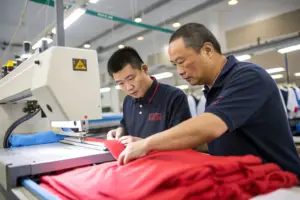
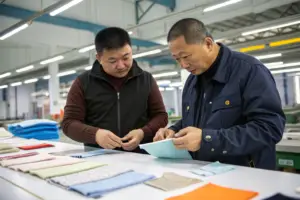
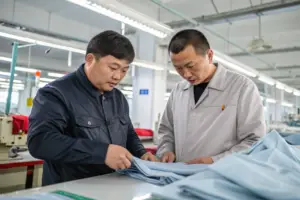
One of our brand partners recently visited our factory and filmed a series of short documentary videos. A video of our pattern engineer explaining the challenge of balancing the drape of the wide-leg curve. A video of our QC inspector measuring a seam against a specification. A video of me, Elaine, talking about the origin of the flax. These videos were posted on the brand's Instagram and website. The response was extraordinary. Customers commented, "I had no idea so much work went into a pair of pants. I will never buy fast fashion again." The behind-the-scenes content transformed the brand from a seller of products into a storyteller about craftsmanship. The price was no longer a number to question. It was a value to appreciate. The behind-the-scenes content marketing for brands research demonstrates that transparency about production processes increases consumer willingness to pay a premium price. When customers understand the cost structure and the human effort, they perceive the price as fair. You do not need to travel to Shanghai to create this content. We can provide you with high-resolution photos and videos of our production process, our fabric archive, and our sample studio. You can use this footage to tell the story of how your pants are made, even if you never set foot in the factory.
Conclusion
Rebranding Shanghai Fumao's linen wide-leg pants for maximum US retail markup is not a single action. It is a system of interconnected strategies that build perceived value at every customer touchpoint. It begins with a brand narrative that traces the flax from a specific field in Normandy and names the craftsmanship details like French seams and corozo buttons. It continues through a tactile unboxing experience of recycled tissue, linen dust bags, and handwritten notes that makes the customer feel she is unwrapping a gift. It is reinforced by a distribution strategy that anchors your margin in direct-to-consumer sales while selectively partnering with boutiques that elevate your brand's prestige. And it is sealed by a social proof ecosystem of customer photos, story-rich reviews, and behind-the-scenes content that humanizes the price and builds community.
The pants we make at Shanghai Fumao are the raw material of a premium brand. The construction quality, the authentic fabric, the rare silhouettes—these are the foundation. What you build on that foundation determines whether the pant sells for $48 or $148. The brands that succeed at the higher price point are not necessarily the ones with the most creative designs. They are the ones that understand that they are not in the garment business. They are in the meaning-making business. They sell a story that the customer wants to wear.
If you are ready to move from commodity pricing to premium branding, and you want a manufacturing partner who can provide the quality base, the customization options, and the visual assets to support your brand story, I am ready to help. Contact me, Elaine, at elaine@fumaoclothing.com. Share your brand vision, and let's discuss how our trims, our packaging support, and our product quality can serve as the foundation for a linen pant that your customers will pay a premium to own.