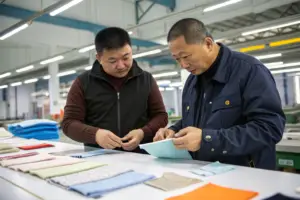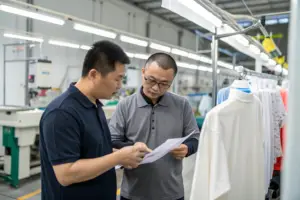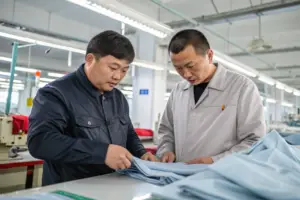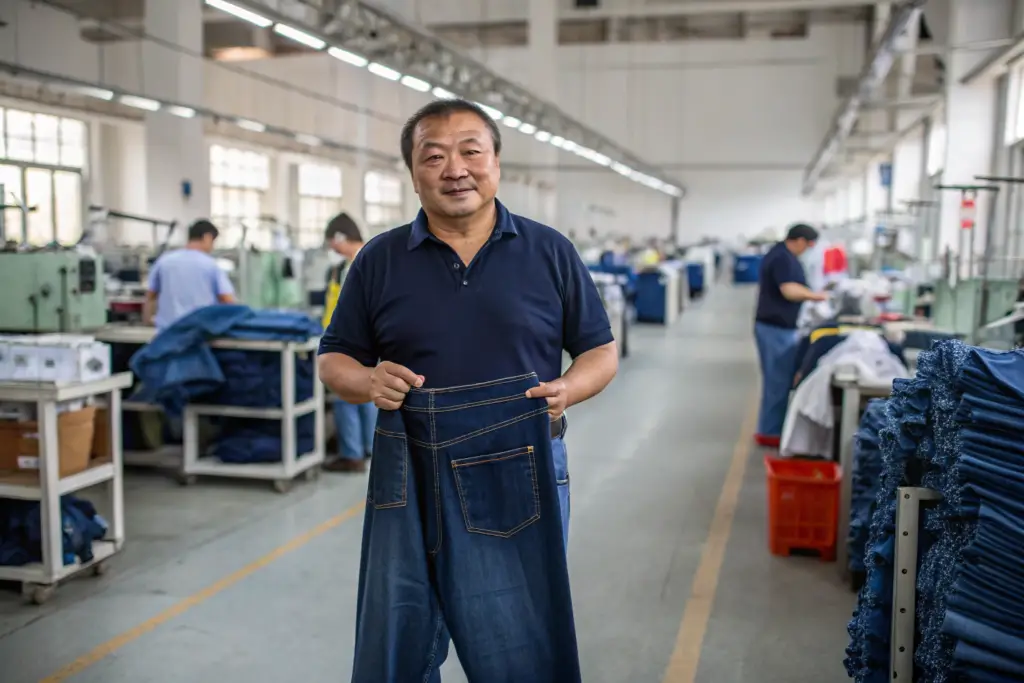
Big brands do not trust easily. They have too much to lose. A quality failure on a 20,000-unit order does not just cost money. It costs shelf space at major retailers. It costs the buyer's reputation inside their own company. It costs the brand's relationship with their end customer, who does not care that the factory messed up. They just know the shorts they bought fell apart. So when a large brand or a major distributor places a repeat order with a factory year after year, that is not a transaction. That is a verdict. The verdict is that this factory has earned something rare: institutional trust.
Shanghai Fumao is a Chinese apparel manufacturer with five owned production lines, specializing in denim shorts and woven garments for U.S. brands and distributors. Big brands trust us for three structural reasons. First, we own our production assets outright, which means we control the schedule, the labor, and the quality system without relying on subcontractors. Second, we operate on a transparency model where clients receive real-time production tracking, full test data, and unannounced audit access. Third, we ship DDP, which means we take financial responsibility for the goods until they are inside the client's warehouse, removing logistics risk from the buyer's balance sheet.
I founded this company. I have been in the room when a skeptical sourcing director from a national retailer grilled me for two hours about our shade banding process. I have also been on the phone when that same director called to place a reorder twice the size of the first. Trust is not built by a website. It is built by thousands of small decisions made consistently over years. In this article, I want to tell you who we are, how we are structured, and what the trust of large clients actually rests on. Not marketing language. The operational reality.
What Is the Origin and Structure of Shanghai Fumao?
Every factory has a story. Most factory stories on Alibaba are fiction. "Established in 1995 with 500 employees and a 100,000 square meter facility." Then you get on a video call and see a shed with ten sewing machines. The origin story is fabricated to impress buyers. I tell you our real story because it explains our structure, and our structure explains our reliability.
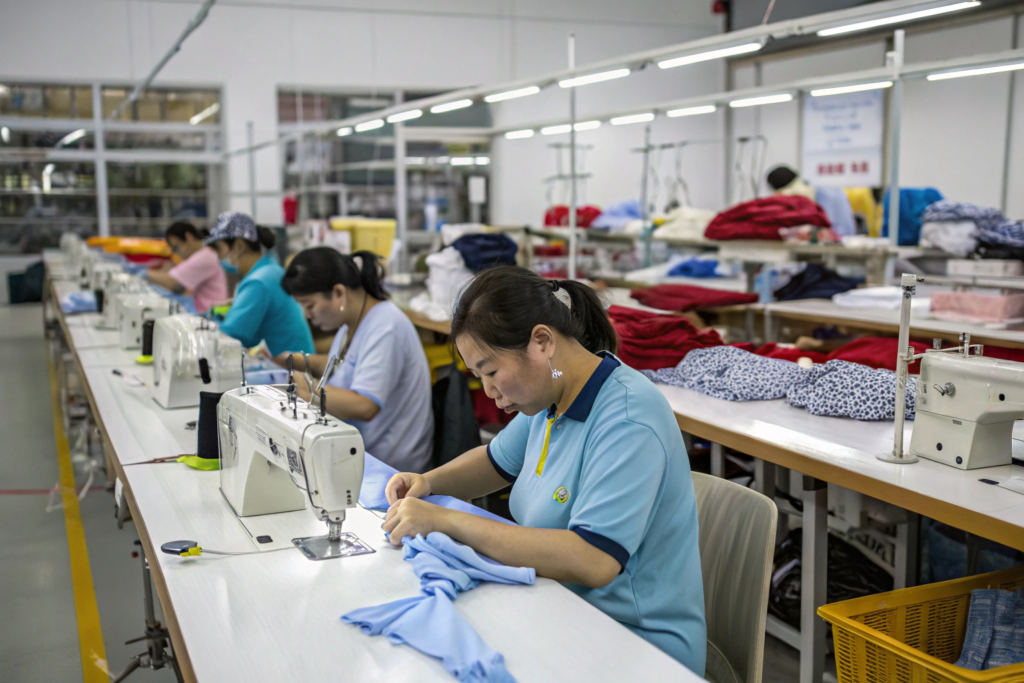
Shanghai Fumao began not as a denim specialist but as a woven garment workshop producing shirts and blouses for the domestic Chinese market. I started the company with two sewing lines and a small cutting room in a rented industrial space on the outskirts of Shanghai. The early years were hard. Margins were thin. Quality was inconsistent. I made mistakes. I lost clients. I learned that the only way to survive in the long term was to control the production process completely and to be brutally honest with clients, even when the truth was uncomfortable. Over fifteen years, we reinvested profits into buying our own facility, expanding to five lines, building an in-house testing lab, and developing our wash development capability. We did not take outside investment. We grew organically. That means we answer only to our clients, not to investors demanding quarterly returns.
Let me explain the physical and legal structure of the company, because that structure is the foundation of the trust big brands place in us.
How Did Shanghai Fumao Evolve from a Small Workshop to a Five-Line Factory?
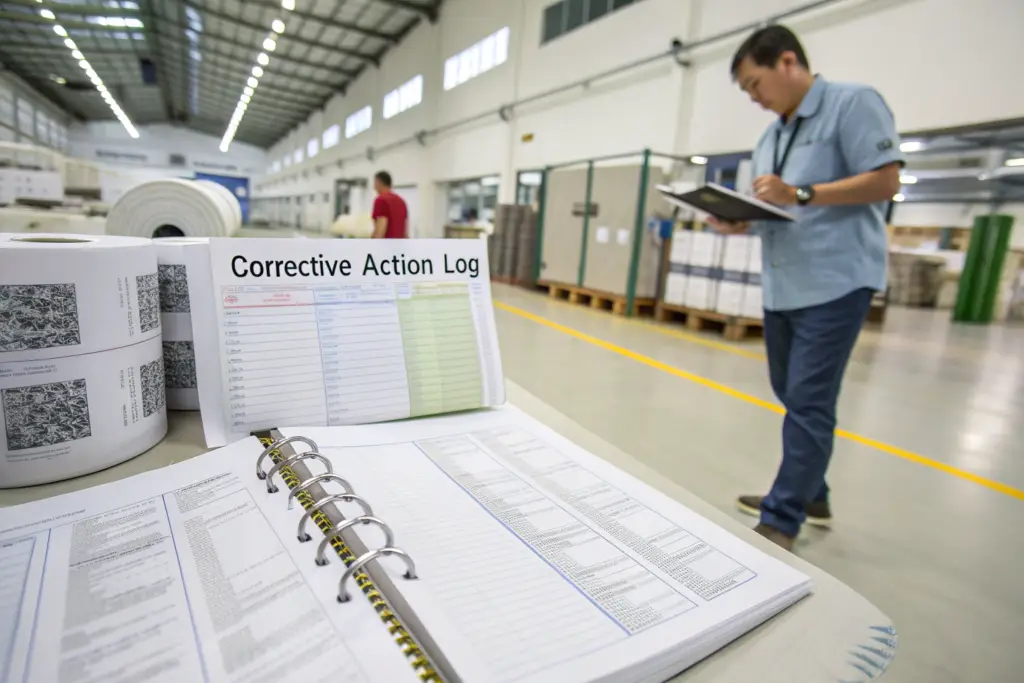
The evolution was gradual and deliberate. The first line was shirts. The second line was blouses. The third line was added when we won our first U.S. contract, a 5,000-piece order of women's cotton trousers for a midwestern catalog brand. That contract forced us to upgrade our quality system. The buyer sent an inspector who spent three days on our floor and left a list of 27 corrective actions. We fixed all 27. That buyer is still a client today.
The fourth and fifth lines were added specifically for denim. Denim requires different machinery. Heavier needles. Stronger feed dogs. Specialized overlock machines for thick seams. A dedicated wash house relationship. We invested in the equipment and trained a dedicated denim sewing team. The transition from general woven garments to denim specialization took three years. The denim lines now account for about 60% of our revenue. The remaining 40% is still woven products like shirts, blouses, and trousers. This diversification is intentional. It protects us from seasonal demand swings. When denim shorts orders are slow in the fall, the woven lines are busy with fall and winter garments. The factory stays active year-round, which keeps our skilled workers employed and our production rhythms consistent. You can read about lean manufacturing growth principles. We followed them without knowing the terminology. Grow in response to real demand. Do not overextend. Invest in the process, not the marketing.
What Does Owning Our Production Facility Mean for Quality Control?
Ownership is the difference between control and dependency. A factory that rents its space can lose its lease. A factory that subcontracts its sewing to a village workshop cannot guarantee who is making the clothes or under what conditions. A factory that leases its machinery is at the mercy of the leasing company for maintenance.
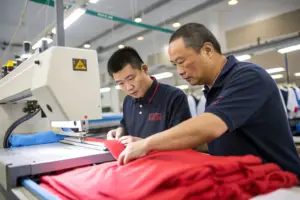
Shanghai Fumao owns its factory building, its 140 sewing machines, its cutting equipment, its wash development lab, and its testing instruments. This capital investment is significant. It ties up cash that could be used for other things. But it gives us absolute control over our production environment. The machines are maintained on our schedule. The factory layout is optimized for our workflow. The workers are our employees, with contracts, social insurance, and a stake in the company's success. When a big brand's compliance auditor visits, they check the property deed or the long-term lease. They check the machinery asset register. They verify that the people on the sewing line are direct employees, not agency temps. Ownership makes these checks simple. We provide the documents. They match reality. The factory ownership and compliance connection is direct. Owned assets mean stable employment. Stable employment means experienced workers. Experienced workers mean consistent quality. The chain is logical. The foundation is ownership.
How Does Our Business Model Differ from Typical Alibaba Suppliers?
Alibaba is the world's largest sourcing marketplace. It is also a minefield. For every genuine manufacturer, there are ten trading companies posing as factories. They have glossy catalogs, professional salespeople, and zero production capability. They take your order, mark it up 15%, and subcontract it to the cheapest workshop they can find. Quality is inconsistent. Communication is filtered. Delivery is unpredictable.
We are not on Alibaba. This is a deliberate choice. Alibaba rewards the lowest price and the fastest response time. It penalizes factories like ours that invest in quality, testing, and compliance, because those investments raise our unit cost and slow our response time. We cannot compete on price with a trading company that pays village wages and ignores safety regulations. We do not want to. The brands that buy from us are not looking for the lowest price. They are looking for a reliable partner who will deliver consistent quality, on time, with full documentation. Those brands do not find their factories on Alibaba. They find them through trade shows, industry referrals, LinkedIn, and direct outreach. Our business model is built around long-term partnerships, not transactional orders.
Let me explain the specific structural differences between our model and the typical Alibaba trading company model.

Why Are We Not on Alibaba, and Where Do We Find Our Clients Instead?
Alibaba's business model incentivizes volume over value. The platform earns revenue from supplier memberships and advertising. A factory that buys a Gold Supplier membership and pays for keyword ads gets more visibility. The quality of the product is secondary to the quality of the marketing budget. The buyer review system can be manipulated. The response time metric forces factories to reply within hours, which encourages templated, shallow responses instead of thoughtful technical evaluation of the buyer's design.
We find our clients through channels that reward substance over speed. Industry trade shows, particularly Magic in Las Vegas and Texworld in New York, where buyers can touch our fabric, see our washes, and look me in the eye. LinkedIn, where we share detailed technical content and where our satisfied clients post about their experiences. Google organic search, where our blog articles on denim manufacturing rank for technical queries that only serious buyers are typing. Direct referrals from existing clients, which account for about 40% of our new business. A referral means a brand owner trusted us enough to recommend us to a peer. That is the highest form of marketing. The B2B sourcing channels research shows that industrial buyers increasingly rely on referrals and content-driven research rather than marketplaces for critical supply decisions. The cost of a failed sourcing decision is too high to trust a marketplace algorithm.
How Does Our Direct Communication Model Prevent the Sales Rep Problem?
The problem Ron described is real. Inefficient communication with supplier sales reps is one of the top frustrations of apparel buyers. The sales rep does not understand the technical question. They forward it to the production manager. The production manager answers in Chinese. The sales rep translates it poorly. The buyer receives a confusing reply three days later. The back-and-forth consumes weeks.
Our model eliminates the intermediary. When you work with Shanghai Fumao, you are assigned a dedicated merchandiser who speaks fluent English and has technical garment knowledge. This person is not a sales rep. They are a project manager who sits on our production floor. When you ask a technical question about wash shrinkage, they walk to the lab, talk to the wash technician, and send you the answer within hours. When you need a design modification, they discuss it directly with the pattern maker. There is no telephone game. The communication chain is short. The client, the merchandiser, and the production team form a tight triangle. This model does not scale infinitely. We can handle a limited number of clients at this level of attention. That is intentional. We would rather have 30 deeply served clients than 300 clients who receive template responses. The direct communication in supply chain model reduces errors and speeds up decision-making. It is more expensive to operate. We pay our merchandisers more than the industry average. The investment returns itself in client retention.
What Specific Systems Do Big Brands Audit and Approve?
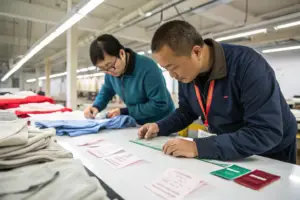
Big brands do not take your word for anything. They send auditors. The auditor spends two or three days in your facility. They review documents. They inspect the production floor. They interview workers privately. They check the chemical storage area. They test the fire alarms. They measure the light levels at the sewing stations. At the end, they issue a scorecard. If the score is below the brand's threshold, you do not get the order. It is that simple.
We have passed audits from major U.S. retailers and brands. The audit reports are confidential to those clients, but I can describe the types of systems they examine and the standards we are held to. These systems are not window dressing. They are the operational backbone of the factory. They are what turns a promise of quality into a verifiable, auditable process.
Let me describe the four systems that big brand auditors spend the most time examining and why these systems matter for order consistency.

What Social Compliance Standards Do We Meet for Large Retailer Requirements?
The social compliance audit is usually the first gate. The brand wants to know that their products are made in a facility that treats workers fairly and provides a safe working environment. The risk of a labor scandal in the supply chain is existential for a consumer brand.
Our facility is audited to the BSCI standard and the SMETA standard. These audits cover twelve areas. Fair remuneration. Decent working hours. No forced labor. No child labor. Freedom of association. Occupational health and safety. Chemical safety. Fire safety. Dormitory conditions, if applicable. Environmental management. Business ethics. The auditor verifies each area through document review, physical inspection, and confidential worker interviews. Our BSCI rating is B, which indicates good performance with minor findings. The last audit found that we should improve the lighting in one corner of the raw material warehouse. We fixed it within 30 days. The SMETA audit is unannounced, which means the auditor arrives without prior notice. We maintain audit-ready conditions every day. The BSCI and SMETA social audits are the most widely accepted social compliance frameworks in the apparel industry. A valid audit report from these schemes is a prerequisite for doing business with most European and many U.S. retailers.
What Quality Management System Do Auditors Verify on Our Floor?
The quality system audit is the second gate. The auditor examines whether our quality control processes are documented, systematic, and actually followed. They do not just read the quality manual. They stand on the production floor and watch whether the inspectors are following the procedures described in the manual.
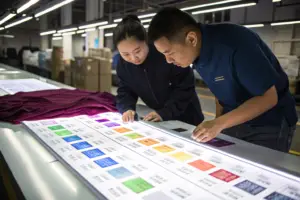
Our quality management system is built on ISO 9001 principles, though we are not formally certified to ISO 9001. We chose not to pursue the certificate because our clients' own audit standards are more rigorous and more specific to apparel. The system covers incoming fabric inspection, in-line quality audits, final AQL inspection, measurement system calibration, non-conforming material control, corrective action tracking, and customer complaint handling. The auditor pulls records. They check that our spectrophotometer was calibrated last month. They check that the corrective action from a client complaint six months ago was actually implemented and verified. They check that our inspection data is statistically valid. A quality system is not the paper. It is the evidence that the paper describes what actually happens on the floor. The ISO 9001 quality management framework provides the structure. Our clients' audits provide the verification.
How Does Our Fabric and Chemical Testing Lab Support Brand Compliance?
The third area of audit scrutiny is product safety testing. The brand needs to know that the shorts will not harm their customer. They need test reports. Not our test reports. Independent test reports. But our internal lab is what ensures we pass the independent tests.
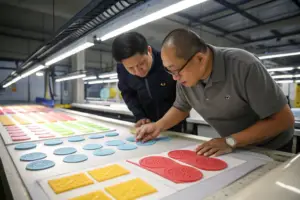
Our lab contains the equipment I have described in other articles. The universal tensile tester. The Martindale abrasion machine. The Crockmeter. The spectrophotometer. The GSM cutter. The skew measurement template. We test every fabric lot before cutting. We test shrinkage on every wash batch. We test color fastness on every dye lot. These internal tests catch problems before they become independent test failures. When the brand sends a sample to SGS or Bureau Veritas for third-party testing, we already know the result. Our internal data matches the third-party data because our equipment is calibrated to the same standards. The auditor checks our calibration records. They check our technician training records. They check our sample retention policy. A well-run internal lab is the best predictor of third-party test success. The garment testing standards from ASTM and AATCC are the benchmarks we test against. Our internal standards are tighter than the industry minimums.
What Production Tracking and Traceability Systems Do We Operate?
The fourth area is supply chain traceability. The brand wants to know that the cotton in their shorts did not come from a prohibited region. They want to be able to trace a defective short back to the exact roll of fabric and the exact operator who sewed it. Traceability is not just a record-keeping exercise. It is a risk management tool.
Our traceability system uses a bundle ticket that travels with the cut panels through every stage of production. The ticket records the fabric roll ID, the cutting date, the operator ID for each major operation, the wash batch number, and the final inspector ID. If a quality issue is found, we can isolate the affected pieces to a specific roll, operator, and time window. This limits the scope of a recall or a rework. For cotton origin traceability, we use the mill's transaction certificates. Our mills source BCI-certified or organic-certified cotton. The certificates flow from the gin to the spinner to the weaver to us. We maintain the chain of custody documentation. The supply chain traceability systems are increasingly mandated by U.S. regulations, including the Uyghur Forced Labor Prevention Act. Our documentation demonstrates that our cotton supply chain is clean and verifiable.
What Does the Repeat Order Rate Tell You About Brand Trust?
The ultimate test of trust is not what a brand says in a testimonial. It is whether they place another order. And another. And another. A brand that orders once and never returns had an okay experience or a bad experience. A brand that orders season after season, year after year, had a great experience. The repeat order rate is the truest metric of factory performance.
Our repeat order rate among U.S. clients is over 80%. This means that more than eight out of ten clients who place a first order with us place a second order within twelve months. This number is not a survey. It is calculated from our order records. It includes clients who have been with us for over five years and clients who placed their first order last year. A repeat order rate this high is unusual in the apparel sourcing industry, where buyer churn is high due to quality failures, delivery delays, and communication breakdowns.
Let me explain what drives this repeat business and how large brands behave when they trust a factory.
Why Do Professional Buyers Value Consistency Over the Lowest Price?
A professional buyer at a large brand has a complex job. They manage dozens of suppliers across multiple countries. Their performance is measured on product margin, quality, and on-time delivery. A supplier who offers the lowest price but delivers inconsistent quality creates more work. The buyer has to manage returns, negotiate chargebacks, and explain stock-outs to their boss. The low price is not worth the management overhead.
A supplier who delivers consistent quality at a fair price makes the buyer's job easy. The order is placed. The milestones are tracked. The shipment arrives on time. The quality passes incoming inspection. The buyer can focus on other tasks. This consistency is what they are really buying. The price is secondary. One of our longest-standing clients, a catalog retailer in the Midwest, has been ordering from us for nine years. Their buyer told me once, "I do not even think about your orders anymore. They just show up. That is why I keep ordering." That is the highest compliment a factory can receive. The order has become boring. Boring is reliable. Reliable is profitable. The supplier relationship management literature confirms that long-term partnerships based on trust and consistency outperform transactional relationships based on price.
What Does a Five-Year Client Relationship Look Like in Practice?
A long-term client relationship evolves. The first order is about proof. The factory must deliver on every promise. The second order is about trust. The buyer relaxes slightly. The factory now has a pattern on file, a wash recipe locked, and a relationship with the buyer's quality team. The third order and beyond are about partnership. The factory begins to anticipate needs. We suggest fabric improvements. We propose wash innovations. We alert the client when cotton prices are rising and suggest locking in a bulk order.
One of our clients, a Texas-based distributor, has ordered from us for six years. Their first order was 2,000 pairs. Their last order was 20,000 pairs. We have a shared drive with all their tech packs, wash standards, and inspection criteria. Their reorders are processed with a single email. "Elaine, repeat Order #TX-2024-Fall, same spec, ship date April 1." That is the entire communication. The trust is so deep that a five-word email triggers a $150,000 production run. This is the partnership sourcing model. It is the opposite of the Alibaba RFQ model, where the buyer sends the same inquiry to ten suppliers and picks the lowest price. The RFQ model is for buyers who see factories as interchangeable. The partnership model is for buyers who see a factory as a strategic asset.
Conclusion
Shanghai Fumao is a factory built on a simple idea. Own the assets. Control the process. Be transparent with the client. Deliver what you promise. That idea sounds obvious. It is surprisingly rare in the apparel manufacturing industry, where subcontracting, hidden information, and broken promises are the norm.
Big brands trust us because our structure aligns with their risk management requirements. We own our building, our machines, and our five production lines. We employ our workers directly. We operate an in-house testing lab. We maintain BSCI and SMETA social compliance certifications. We track every order with a milestone system that clients can see. We ship DDP, so the logistics risk stays with us. These are not marketing features. They are operational realities that a brand's audit team can verify by walking through our facility and checking our records.
The repeat order rate proves the system works. Over 80% of our clients place a second order. Some have been ordering for nearly a decade. Their trust is not based on a low price. It is based on the boring, reliable, profitable consistency of orders that just show up, on time, as specified, season after season.
If your brand is looking for a denim shorts manufacturer that can withstand a rigorous audit and deliver consistent quality at scale, I invite you to begin your own verification process. Contact our Business Director, Elaine. She can provide our factory audit reports, a video tour of our facility, and client references in your product category. Her email is elaine@fumaoclothing.com. Trust is not given. It is earned. At Shanghai Fumao, we have been earning it for over fifteen years. One order at a time.