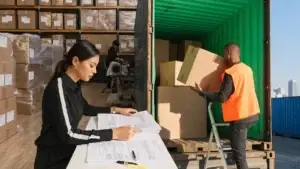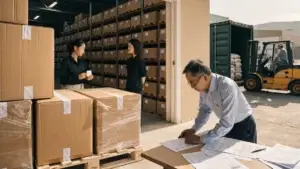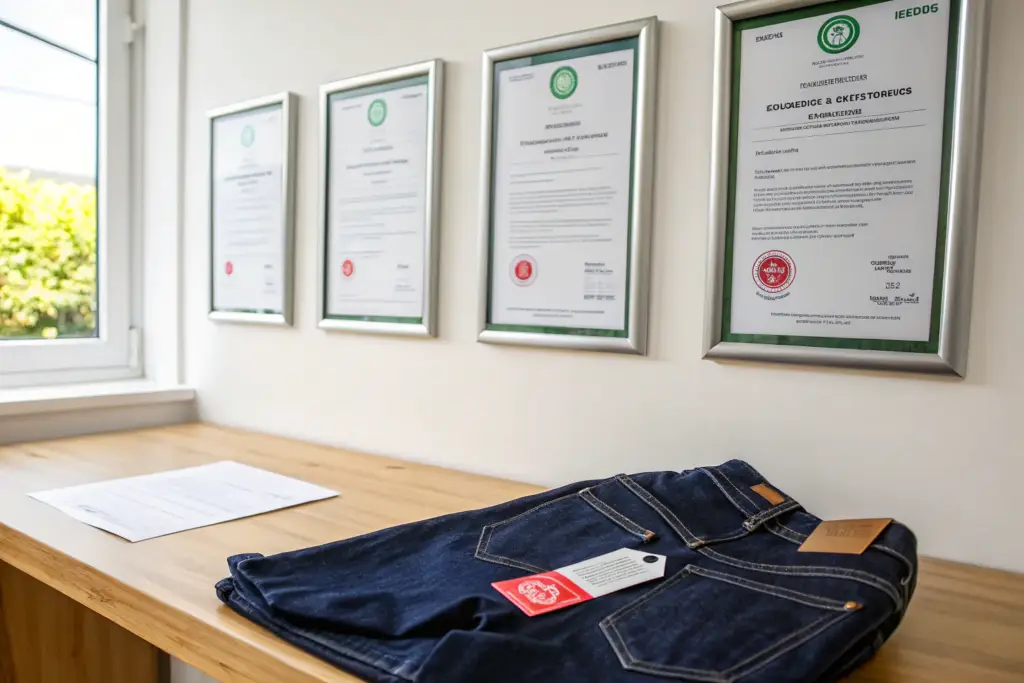
Certifications can be confusing. Some are real. Some are just fancy logos a factory buys for $200 from a website. I have seen factories display certificates on their wall that expired three years ago. I have seen certificates with the factory name crudely photoshopped onto the document. A certification is only as valuable as the audit behind it and the integrity of the factory displaying it. You, as a buyer, need to know the difference between a certificate that actually protects your customers and one that is just decoration.
Shanghai Fumao denim shorts are produced under four verifiable certification frameworks. Our factory holds the BSCI social compliance audit with a valid rating. Our denim fabric is tested to OEKO-TEX Standard 100 Class I requirements, meaning no harmful substances contact the skin. Our wash processes comply with ZDHC wastewater guidelines through our salt-free dyeing and ozone finishing systems. And our export documentation includes a valid Certificate of Origin for every shipment, which verifies the goods are manufactured in our owned facility.
But listing the names of certifications is not enough. You need to understand what each one actually tests, why it matters to your brand's legal liability, and how you can verify that the certificate is real. I want to walk you through our compliance framework in plain language. No marketing fluff. Just the facts about what we test, why we test it, and how that protects your business from the regulatory and reputational risks that keep brand owners awake at night.
What Social Compliance Audits Verify Our Factory's Ethical Standards?
The way a factory treats its workers is not just a moral question. It is a supply chain risk question. A factory that underpays its workers, ignores fire safety, or forces excessive overtime is a factory that could be shut down by local authorities tomorrow. Your order is on their sewing line. You have paid a deposit. The shutdown happens. Your goods are locked inside. Your ship date is gone. I have seen this happen to buyers who sourced from un-audited factories to save $0.30 per unit. The savings vanished when their entire summer inventory was held hostage by a labor dispute or a government inspection.
Social compliance audits are designed to verify that a factory meets basic standards for worker safety, fair wages, working hours, and environmental responsibility. An audit is a snapshot. It is a third-party inspector walking through the factory, checking records, interviewing workers, and issuing a report. The report has a validity period, usually one to two years. A factory that takes compliance seriously gets re-audited before the certificate expires. A factory that does not care lets it lapse and hopes buyers do not notice. You should notice. A lapsed audit is a red flag.
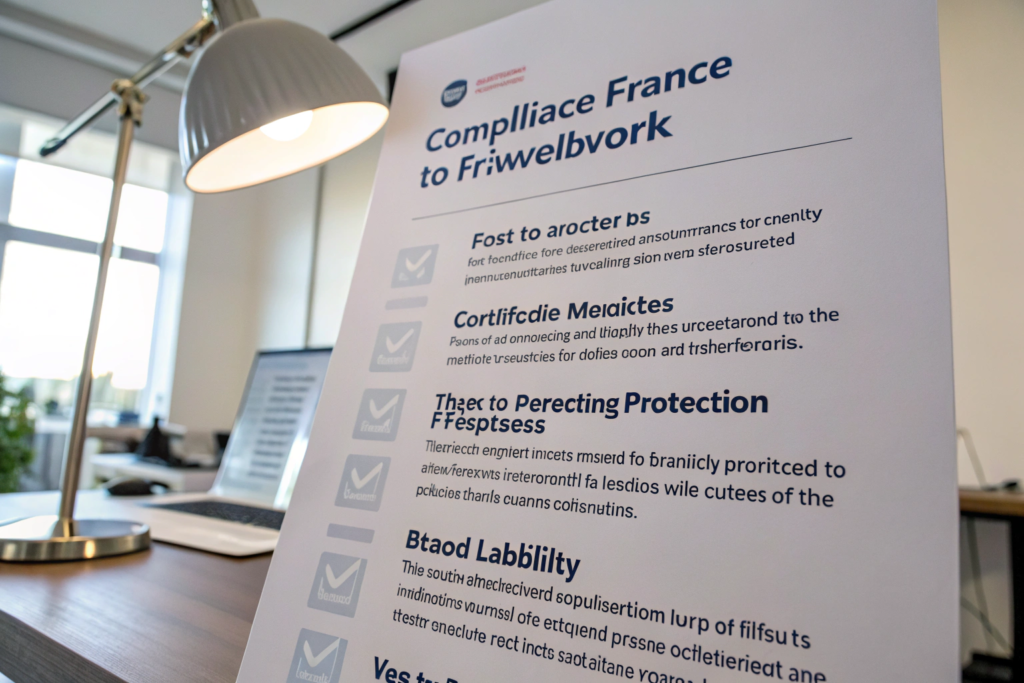
Here are the two social compliance frameworks that are most relevant to our factory and most requested by our U.S. buyers.
What Is BSCI and Why Does a Valid Rating Matter for U.S. Importers?
BSCI stands for Business Social Compliance Initiative. It is an audit framework developed by Amfori, a European trade association, but it is widely accepted by U.S. brands and retailers as well. The audit covers twelve performance areas including fair remuneration, decent working hours, occupational health and safety, and no child labor.
Our factory undergoes a BSCI audit every two years. The auditor, sent by an independent firm like SGS or TÜV Rheinland, spends a full day on our premises. They walk the production floor. They check the fire exits, the electrical panels, the chemical storage area. They review payroll records against time card data. They conduct confidential worker interviews without management present. The audit concludes with a rating. The ratings range from A to E. We hold a B rating, which indicates good performance with minor findings that are addressed in a corrective action plan. A C rating is the minimum most Western buyers will accept. A D or E rating is a fail. You can verify the BSCI audit process directly on the Amfori website. When we send you our audit report, check the date. Make sure it is within the two-year validity window. A real factory will share the full report, not just the cover page. The full report includes the auditor's specific observations. Our last audit flagged that we should add emergency exit route lighting in one corner of the raw materials warehouse. We fixed it within 30 days and submitted photographic evidence. That is how a functioning corrective action process works.
How Does an Unannounced Sedex Audit Differ from a Scheduled One?
Sedex is another major social compliance platform. Unlike BSCI, which is a specific audit protocol, Sedex is a membership organization. Members share audit reports through a secure database. The actual audit is conducted using the SMETA methodology, which stands for Sedex Members Ethical Trade Audit.
The key difference with Sedex is the option for an unannounced audit. A scheduled audit gives the factory a date weeks in advance. A dishonest factory can clean up for that day, send underage workers home, and coach employees on what to say. An unannounced audit removes that opportunity for deception. We have chosen to participate in the Sedex program with an unannounced audit option. This means an auditor can arrive at our gate any working day within a designated window. We do not know the exact date. This forces us to maintain compliant conditions every day, not just on the scheduled audit day. The SMETA audit includes a detailed environmental assessment module. The auditor checks our wastewater treatment, our chemical storage labeling, and our waste segregation practices. You can learn about the SMETA audit methodology on the Sedex website. The unannounced audit is the gold standard for social compliance. If a factory refuses an unannounced audit, ask them what they are afraid of. A factory with nothing to hide has nothing to fear from a surprise visit.
Which Fabric and Chemical Safety Certifications Protect Your Customers?
Your customer wears the shorts against their skin. They wash them with their family's laundry. They trust that the fabric will not cause an allergic reaction. They trust that the indigo dye does not contain carcinogenic amines. That trust is a legal liability for your brand. If a customer is harmed by a chemical in your product, they will sue you. They will not sue the factory in China. They will sue your company, in a U.S. court, under U.S. product liability law.
This is why fabric and chemical safety certifications are not optional. They are your legal shield. A valid, third-party chemical safety certificate demonstrates that you exercised due diligence in sourcing your product. If a claim is made against your brand, that certificate is your defense. It shows you did not knowingly sell a hazardous product. Without it, you are exposed. The good news is that the testing standards are well-established and the certificates are straightforward to verify. The bad news is that some factories fake these certificates because a lab test costs money and takes time. You must verify.
Let me explain the two certifications we hold for every denim fabric lot and how they protect your specific product categories.

What Does OEKO-TEX Standard 100 Certification Actually Test For?
OEKO-TEX Standard 100 is the most widely recognized certification for textile chemical safety. It tests for over 100 harmful substances including formaldehyde, heavy metals, pesticides, chlorinated phenols, and phthalates. The testing is conducted by independent OEKO-TEX partner institutes, not by the factory itself.
Our denim shorts are certified to OEKO-TEX Standard 100 Class I. Class I is the strictest level. It means the product is safe for babies and toddlers to put in their mouths. We chose Class I because many of our buyers sell kids' denim shorts alongside adult sizes, and they want a single certification that covers their entire range. The certificate number is printed on the label or available upon request. You can enter that number on the OEKO-TEX label check website and it will confirm that the certificate is valid and list the certified product categories. The test covers every component of the short. The denim shell fabric. The pocket lining. The waistband interlining. The sewing thread. The care label. The button and rivet coatings. A cheap factory might only test the shell fabric. We test the entire assembly. Last year, a Tennessee-based children's boutique owner told us her previous supplier's shorts failed a random CPSIA spot check because the pocket lining contained phthalates above the legal limit. The factory had used a cheap polyester lining with a plasticizer-heavy print. Our OEKO-TEX Class I certificate covers the pocket lining. That certification protected her from a recall that would have cost her entire season's profit.
How Does the ZDHC Gateway Program Apply to Our Wash Processes?
ZDHC stands for Zero Discharge of Hazardous Chemicals. It is a program focused on eliminating hazardous chemicals from the textile supply chain, with a particular focus on wastewater from wet processing like denim washing. The ZDHC Manufacturing Restricted Substances List defines the chemicals that must be eliminated.
Our denim wash house is registered on the ZDHC Gateway platform. This means we upload our wastewater test reports to a public database. The reports show the levels of restricted substances in our discharge water after treatment. Parameters like pH, chemical oxygen demand, and heavy metal content are tested by an accredited laboratory. The results are transparent and accessible to any brand that sources from us. This matters because conventional denim washing uses potassium permanganate, sodium hypochlorite, and heavy stone abrasion, all of which generate hazardous effluent. We reduced these inputs by converting to ozone finishing and enzyme washing. Our ZDHC wastewater report shows compliance with the Foundational Level requirements. You can explore the ZDHC Gateway to understand how the program tracks chemical management. A clean wastewater report is not just an environmental metric. It is evidence that our wash processes are controlled, documented, and chemically safe. A factory that dumps untreated wastewater is also likely cutting corners on the chemicals that end up on your fabric. The two are correlated. A factory that respects the river respects the customer's skin.
What Product-Specific Certifications Add Value for Niche Markets?
Beyond the baseline social and chemical certifications, certain product-specific certifications can open doors to niche markets. A brand selling to the U.S. military or law enforcement needs Berry Amendment compliance. A brand targeting the eco-conscious Gen Z consumer needs a verifiable organic or recycled content claim. A brand selling to large retailers like Walmart or Target needs to meet their proprietary supplier requirements.
These niche certifications are not required for every brand. If you are selling direct-to-consumer through your own Shopify store, a GOTS organic certification might be a nice marketing asset but it is not a legal requirement. If you are pitching to a major department store buyer, that same GOTS certificate could be the difference between getting the purchase order and being told "come back when you have it." You need to match your certification portfolio to your sales channel. Do not pay extra for organic certification if your customer does not ask for it. But do not be caught without it if your dream retail partner demands it.
Here are two product-specific certifications that we can provide for clients whose market positioning requires them.
Can We Provide GOTS-Certified Organic Cotton Denim Shorts?
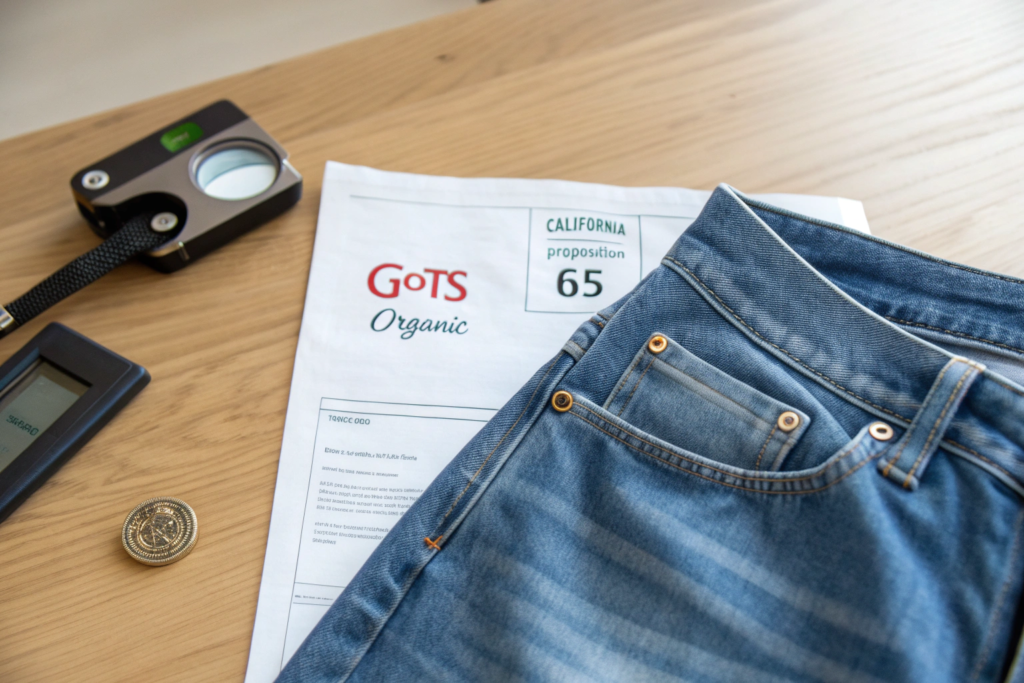
Yes, but only on specific orders where organic content is specified and verified. GOTS, the Global Organic Textile Standard, is the leading standard for organic fibers. It covers both the organic origin of the cotton and the social and environmental criteria of the processing stages.
A GOTS-certified product requires a chain of custody from the cotton farm to the finished garment. Every entity in that chain must be GOTS-certified. The cotton gin. The spinner. The weaver. The dye house. The garment factory. We are GOTS-certified for our sewing and finishing operations. This means we can process GOTS-certified organic denim fabric from a GOTS-certified mill and apply GOTS-compliant dyes and washes. The finished short can carry the GOTS label, which has real marketing power. A San Francisco eco-brand we work with reports that their GOTS-labeled denim shorts command a 28% price premium over their conventional line and sell through faster. However, the minimum order quantity for a GOTS run is higher because the certified fabric must be sourced in full rolls and the production line must be segregated to prevent mixing with conventional cotton. If your brand needs GOTS certification, we can provide it. But we will be honest about the cost and MOQ implications. Organic is not just a label swap. It is a separate supply chain.
Are Our Products Compliant with California Proposition 65 Requirements?
California Proposition 65 requires businesses to provide warnings about significant exposures to chemicals that cause cancer, birth defects, or other reproductive harm. The list contains over 900 chemicals. For denim shorts, the most relevant restricted substances are lead in hardware, phthalates in synthetic components, and certain azo dyes that can break down into carcinogenic amines.
Our standard denim shorts are Proposition 65 compliant. We test for lead content in all buttons, rivets, and zipper components. Our hardware supplier provides material composition certificates showing lead content below 100 ppm, the practical limit for enforcement. For phthalates, our polyester pocket linings and synthetic leather patches are tested by an independent lab and confirmed below the 0.1% threshold for each of the six restricted phthalates. The azo dye issue is covered by our OEKO-TEX certification, which bans the relevant aromatic amines. We can provide a Proposition 65 compliance statement with every shipment. This statement is a legal document you can file in case of a challenge. The California Proposition 65 law allows private citizens to sue brands for non-compliance. These lawsuits are common. A plaintiff's attorney buys a product, tests it for lead or phthalates, and if the level is above the threshold, files a lawsuit. Your brand is the target, not the factory. Our compliance program is designed to give you the documentation you need to get such a lawsuit dismissed. The testing paperwork is your shield.
How Can You Independently Verify the Certifications We Claim?
I can write about our certifications all day. Words on a screen cost nothing. You should not trust my words. You should trust your own verification. A certification is a promise from an independent third party. The only way to know if the promise is real is to go directly to that third party and ask them. Every legitimate certification has a public verification method. A certification number that you can type into a database. An audit report with a phone number you can call. A website where you can enter the factory name and see the current status.
Fake certificates are a known problem in the apparel industry. Factories scan a real certificate from another company, photoshop their name onto it, and send it to buyers. Or they pay a corrupt local lab to issue a certificate without actually performing the tests. The defense against this is independent verification. You, the buyer, initiate the check. You do not rely on the document the factory sends. You go to the source.
Here is exactly how you can verify our two most important certifications without any help from us.
How Do You Verify an OEKO-TEX Certificate Number Online?
Every valid OEKO-TEX certificate has a unique certificate number and a QR code. The number is printed directly on the certificate document. It usually starts with a number like "2024.OEKO.123456" or a similar format depending on the issuing institute.
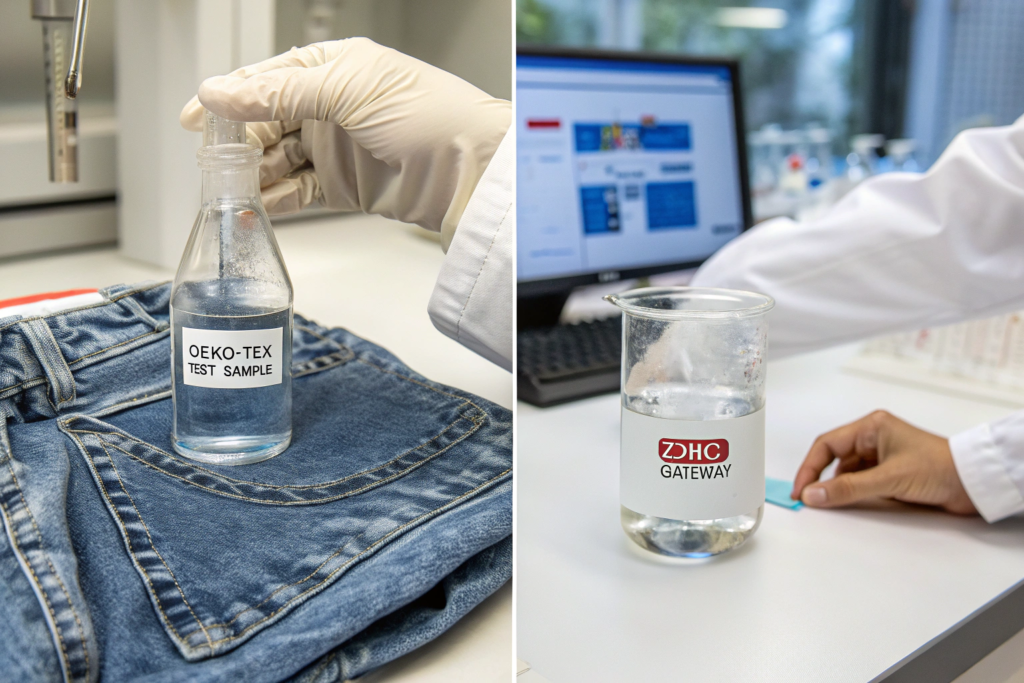
To verify, go to the OEKO-TEX website and navigate to the Label Check page. Type in the certificate number exactly as it appears. Click search. The database will return the certificate holder's name, the certified product categories, and the certificate's expiry date. Check that the certificate holder name matches "Shanghai Fumao" or our legal entity name. Check that the product category includes "denim" or "woven cotton garments." Check that the date is in the future. If any of these three checks fail, the certificate is not valid for our shorts. If the number returns no result, the certificate is fake. This OEKO-TEX verification tool is public and free. Use it. It takes two minutes. I encourage every new buyer to verify our OEKO-TEX number before sending a deposit. I know it will pass. The fact that I encourage the check should tell you something about my confidence in our compliance.
What Questions Should You Ask About Our BSCI Audit Report?
A BSCI audit report is a dense document. It can be 30 pages long. The cover page with the pass rating looks impressive, but the real information is in the detailed findings section. Do not accept just the cover page.
Ask for the full report. Then ask these five questions. First, what was the audit date? If it is more than two years old, it is expired. Second, what was the rating? We hold a B, which is good. A C is acceptable. D or E is a fail. Third, how many findings were there? Every audit has findings. Zero findings is suspicious. It suggests the audit was not rigorous or was staged. Our last report had three minor findings, all corrected. Fourth, what were the specific findings? Read them. A finding about "incomplete emergency exit signage" is a minor, fixable issue. A finding about "systematic overtime exceeding legal limits" is a red flag. Fifth, can we see the corrective action evidence? We have photos and documents showing each finding was resolved. This level of disclosure is the mark of a transparent factory. The BSCI audit report reading guide on the Amfori website explains each section. A factory that shares the full report and walks you through the findings is a factory that is not hiding anything. A factory that makes excuses about why they cannot send the full report is a factory you should walk away from.
Conclusion
Certifications are the backbone of a defensible supply chain. They protect your brand from legal liability when the fabric touches your customer's skin. They protect your inventory from being stranded in a factory that gets shut down for labor violations. They protect your marketing claims from being exposed as greenwashing by a skeptical consumer with a smartphone and a search engine. At Shanghai Fumao, our certification framework is built around four verifiable pillars. The BSCI social audit with a B rating, re-audited every two years, with an unannounced option through Sedex. The OEKO-TEX Standard 100 Class I certification, valid for every component of the short, verifiable by you on the OEKO-TEX label check website in under two minutes. The ZDHC Gateway wastewater compliance, demonstrating that our ozone and enzyme finishing processes do not pollute the water that our workers and their communities depend on. And the California Proposition 65 compliance documentation that serves as your legal shield in the most litigious state in the U.S. market.
We also offer niche certifications like GOTS organic for brands whose market positioning requires it, but we are honest about the cost and MOQ implications. We do not upsell certifications you do not need. We answer your questions about the ones you do need with full transparency, including sharing the complete audit findings, not just the cover page.
I know that a buyer who asks detailed questions about certifications is a buyer who has been burned before. You bought from a factory that claimed to be certified. The claim turned out to be a lie. The product got flagged at customs or, worse, by a customer's allergic reaction. That experience taught you that a certification is only as good as the verification behind it. I respect that lesson. I built our compliance program to withstand the verification you are going to do anyway.
If you want to verify our certifications yourself, start with our OEKO-TEX number. Our Business Director, Elaine, will send it to you along with our full BSCI audit report. She can also provide the ZDHC wastewater test results and the Proposition 65 compliance statement for the specific wash and hardware combination you are considering. Reach her at elaine@fumaoclothing.com. Your brand's reputation is on the line with every pair of shorts you sell. Let Shanghai Fumao be the factory whose certifications prove that you made the safe choice, before anyone ever has to ask.