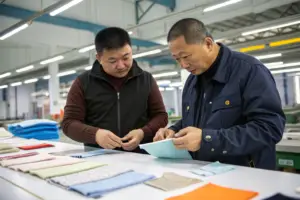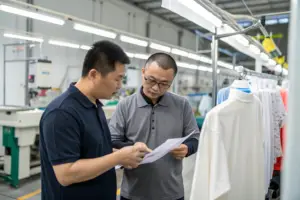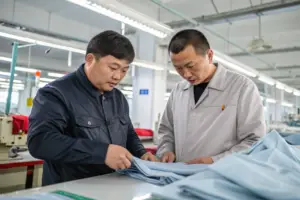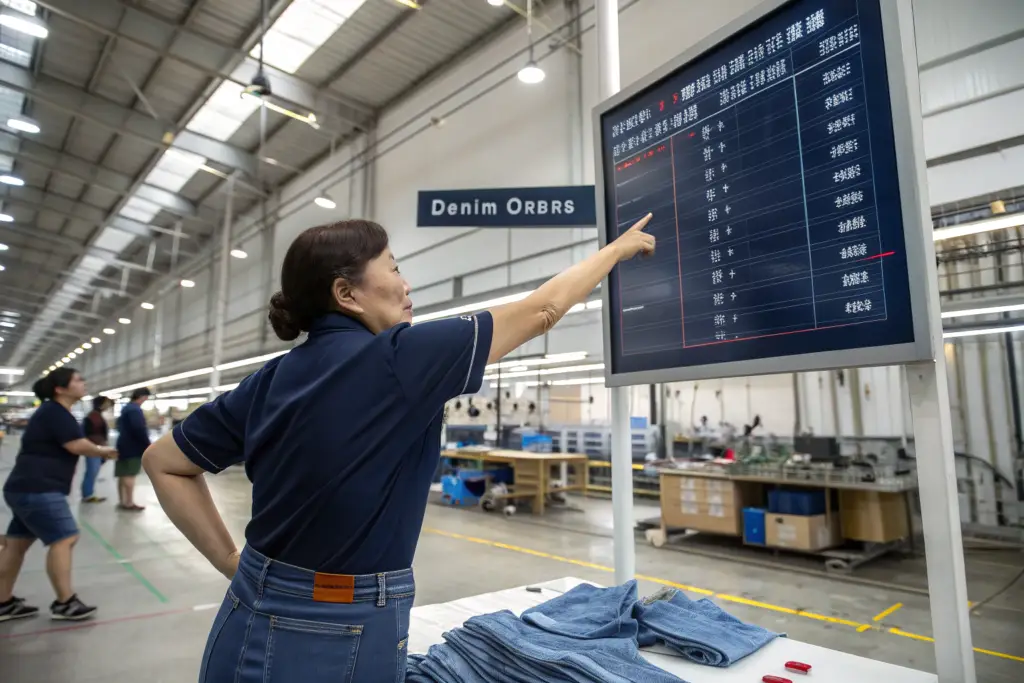
"Best" is a dangerous word in manufacturing. I have been in this industry for over fifteen years, and I have learned that the best factory for one brand is a disaster for another. A streetwear startup that needs 300 pairs with a radical acid wash has a completely different need than a department store distributor ordering 20,000 pairs of basic five-pocket shorts. Yet most factory websites claim to be the best at everything. They promise luxury quality at mass-market prices, with zero-day lead times. You and I both know this is not honest. So I will not give you a lazy "yes, we are the best" answer. I will give you a framework to decide if we are the right fit for your specific brand.
Shanghai Fumao may be the best denim shorts manufacturer for your brand if three conditions are true. First, you value predictable landed costs over the absolute lowest FOB price. Second, your brand requires consistent sizing across thousands of units, not just beautiful samples. Third, you need a factory that can handle complex washes and finishing techniques without subcontracting the work to an unknown third party.
If those three conditions match your sourcing priorities, then we are a strong candidate. But you should still challenge that claim. You should understand exactly what kind of brand thrives with us and what kind of brand should look elsewhere. In this article, I will break down our strengths honestly, share where we are not the right fit, compare us to the alternatives, and let you make the final call with clear eyes.
When Is a Chinese Denim Factory the Right Strategic Fit for Your Brand?
The decision to manufacture in China is not just about price anymore. Vietnam, Bangladesh, and India are all competing for your denim business. Each country has a different strength. If you only need basic, unwashed denim shorts sewn at the lowest possible labor cost, China is probably not your best option. The minimum wage in Shanghai is higher than in Dhaka. That is just a fact.
China's advantage today is not cheap labor. It is speed, technical capability, and supply chain completeness. The denim mills, the zipper factories, the wash chemical suppliers, and the garment workshops all exist within a 200-mile radius in the Yangtze River Delta. This cluster means a sample that takes three weeks to develop in Bangladesh takes three days here. If your brand competes on trend responsiveness, unique wash effects, or fast inventory replenishment, then a Chinese factory is your strategic fit. If your brand competes solely on being the lowest-priced option on a marketplace, China is no longer the automatic choice.
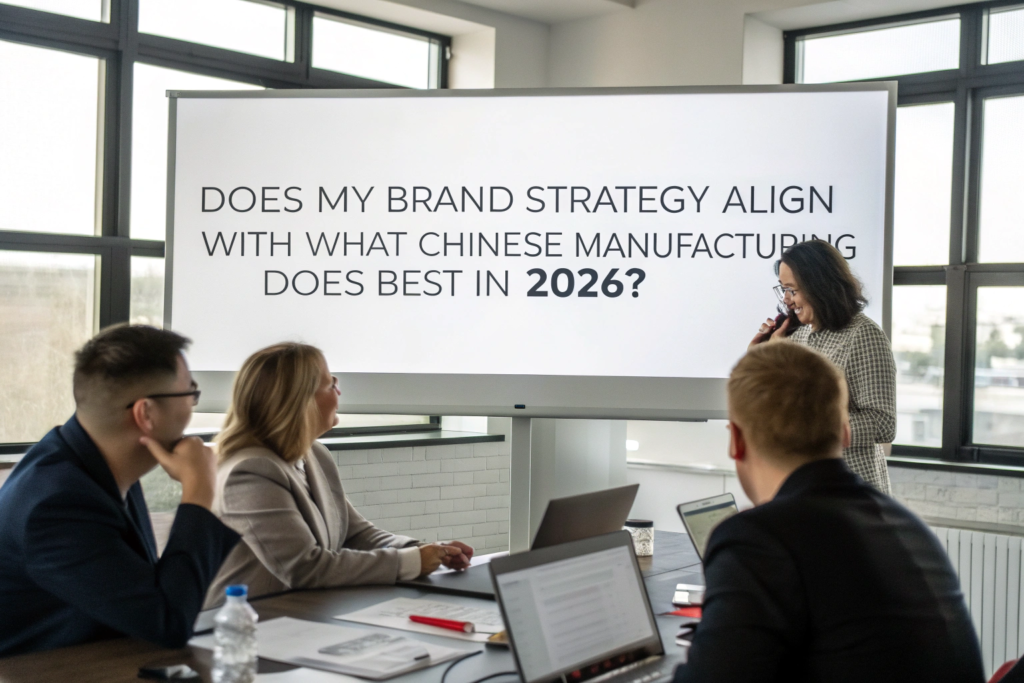
The question is not "Is China good?" The question is "Does my brand strategy align with what Chinese manufacturing does best in 2026?"
What Types of Apparel Brands Gain the Most from Chinese Manufacturing?
The brands that win with Chinese factories are the ones that sell a story, not just a commodity. They need a specific fabric hand feel. They need a wash that photographs well on a model. They need the zipper to be a branded YKK with a custom puller. These are value-added details that justify a higher retail price.
We work with a premium outdoor lifestyle brand from Oregon. Their customer expects shorts that can handle a hike but look good at a brewery afterward. They need a specific DWR-coated pocket bag, a gusseted crotch, and a enzyme-washed 10.5 oz denim that breathes. They could not get all of this under one roof in a lower-cost country. The fabric mill, the trim supplier, and the sewing factory would be in three different cities, connected by slow logistics. In China, we source the coated fabric from a mill two hours away, the YKK zipper from the Suzhou factory, and assemble it on our five lines. The supply chain industrial cluster effect is real. It compresses lead times and allows for complex assemblies that low-cost countries simply cannot coordinate efficiently. If your product has three or more custom components, China is still the most logical place to make it.
Are There Scenarios Where a Vietnamese or Indian Factory Would Be a Better Choice?
Yes. If your product is a basic pull-on denim short with no zipper, no complex wash, and a simple solid color, then a lower-cost country can absolutely beat our price. The labor cost difference per garment can be $0.80 to $1.20. On a 20,000-unit order, that is real money.
Also, if your brand sells exclusively in the European Union and you want to avoid the EU's anti-dumping duties on certain Chinese textile categories, Vietnam might offer a duty advantage. Or if your entire supply chain is already in India, and you have established relationships with Indian cotton mills, it makes sense to keep production local to your fabric source. I tell potential clients this openly. A factory that claims to be the best choice for every single brand is lying. We are the best choice for brands that need technical capability and supply chain speed. We are not the best choice for a commodity basic without any customization. You can review the tariff implications yourself on the EU trade tariff database if your market is in Europe. The smartest sourcing decision is the one that matches your product's complexity to the country's industrial maturity.
What Are the Core Manufacturing Strengths of Fumao Clothing?
Every factory has a personality. Some are fast and sloppy. Some are slow and perfect. Some are cheap and rigid. Our personality is technical, transparent, and mid-scale. We do not chase 50,000-unit orders from mega-brands that would dominate our capacity and turn us into a single-client dependency. We also do not take on 50-unit sample runs with no path to bulk production. Our sweet spot is the brand doing 1,000 to 15,000 units per style per season. The brand that is big enough to need real quality control but small enough that the founder still personally checks the samples.
Within this niche, we built three distinct strengths. First, our wash development lab. Second, our internal hardware and fabric testing protocol. Third, our direct ownership of the entire production flow from cutting to packing. These three strengths work together. You cannot have a great wash without great fabric testing. You cannot guarantee a ship date without owning the production line. They are interconnected. Let me break down each one with specific, verifiable details.
These are not just words on a brochure. These are the capabilities I invested my own capital into building over the past decade.

How Does Our Wash Development Lab Create Custom Finishes Competitors Cannot Match?
Our wash lab is a small room with a big impact. It houses three miniature sample washing machines, a laser engraver, an ozone generator, a spray booth with ventilation, and a library of over 200 physical wash swatches, each with its chemical recipe documented.
When a client sends a reference image of a wash they like, we do not guess. We run a small sample, 50 cm by 50 cm, through a sequence of tests. The first test might be a stone enzyme combination at 40 degrees Celsius for 20 minutes. If the color is still too dark, we add a 10-minute ozone cycle. If the contrast is not sharp enough, we hand-spray potassium permanganate on the thigh and knee zones, then neutralize it. Each step is recorded. The recipe that works becomes your proprietary wash formula. We do not use it for another client without your permission. A California surf brand came to us last year with a photo of a pair of shorts they had worn for three summers. They wanted to replicate that exact faded, sun-bleached look on new shorts. Our lab ran eight iterations over four days. On the ninth try, we matched it perfectly by adding a saltwater soak between the enzyme and ozone stages. The brand owner cried when he saw the sample. That kind of reaction comes from a dedicated garment wash development process that a standard factory without a lab cannot provide.
What Specific Testing Equipment Do We Own That Most Small Factories Do Not?
Most small factories have a tape measure and a pair of eyes. That is the extent of their quality equipment. We invested in instruments that provide objective, numerical data. This removes the "I think it looks fine" argument from the quality conversation.
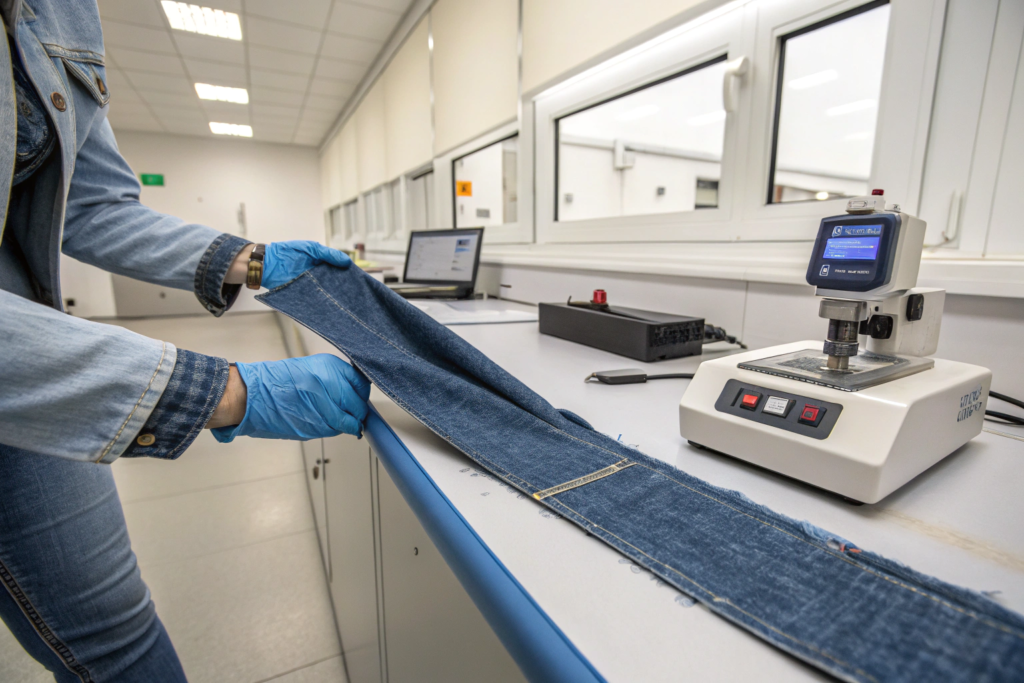
Our lab houses a universal tensile strength tester. This machine pulls a strip of denim fabric apart until it rips. It outputs a number, in Newtons, that tells you the exact force required. We test fabric before cutting and after washing. The number must stay above 300 Newtons in the warp direction. We also have a Martindale abrasion tester. This rubs a swatch of denim against a standard wool abrasive in a circular motion. After 5,000 cycles, we check for holes or significant color loss. This simulates the friction of sitting on rough surfaces. For color, we use a spectrophotometer, not a human eye, to compare the production wash to the approved lab dip. The machine outputs a Delta E value. A Delta E below 1.0 means the color difference is invisible to the human eye. A Delta E above 2.0 is a fail. We reject batches above 2.0. You can learn about the Martindale abrasion test and why it matters for upholstery-weight denim. These machines are not cheap. A tensile tester costs around $5,000. A spectrophotometer is $3,000. Most small factories choose not to spend that money. We chose to spend it because we believe data builds trust faster than words do.
Where Might Fumao Clothing Not Be the Ideal Fit for a Buyer?
I believe honesty is the fastest way to a good fit. Chasing a client who is not right for us wastes their time and ours. A mismatch leads to a bad experience, a negative review, and a damaged reputation. I would rather tell you upfront that we are not your ideal partner than have you discover it after spending money on samples.
There are three scenarios where we are probably not the right factory for your brand. First, if your primary decision criterion is the lowest possible unit price, and you are willing to accept inconsistent sizing and basic packaging as a trade-off. Second, if you need extremely small minimum order quantities, like 50 pieces per style with no path to scaling up. Third, if you require a factory that is already certified for a highly niche, specific ethical standard that we have not yet pursued because no other client has requested it.
Here is the honest breakdown of our limitations. Every factory has them. We are no exception.
Why Is Our Minimum Order Quantity Set at Its Current Level?
Our minimum order quantity per style is 300 pieces per color. Some buyers hear that number and walk away. I understand. If you are a startup testing a new design with a small audience, 300 pieces feels like a huge risk.
The reason for this MOQ is not greed. It is the minimum scale required to run our wash processes efficiently. Our washing machines are industrial-sized. They consume the same amount of water and chemicals whether they are processing 50 shorts or 300 shorts. Running them at 50 pieces means the cost per garment for the wash alone becomes unacceptably high. The math does not work. Also, our cutting room uses automated spreading machines. The setup time to lay out the fabric, align the pattern markers, and calibrate the blade is 45 minutes, regardless of whether we cut 50 pairs or 300 pairs. The setup cost is fixed. For small runs, the fixed cost per unit is too high. If you need small batch production of 50 to 100 pieces, a local sample room or a specialized small-batch factory in a low-cost country might serve you better. We are set up for brands that have validated their market and are ready to place inventory-building orders.
Is Our Pricing Structure Right for Brands Seeking the Lowest Dollar Cost?
No. We are not the cheapest option. Our pricing reflects the cost of owning the factory, maintaining the testing lab, running the wash development center, and employing a dedicated merchandising team for each client. These costs are real. They add roughly 8% to 12% to the unit price compared to a bare-bones trading company that subcontracts everything.
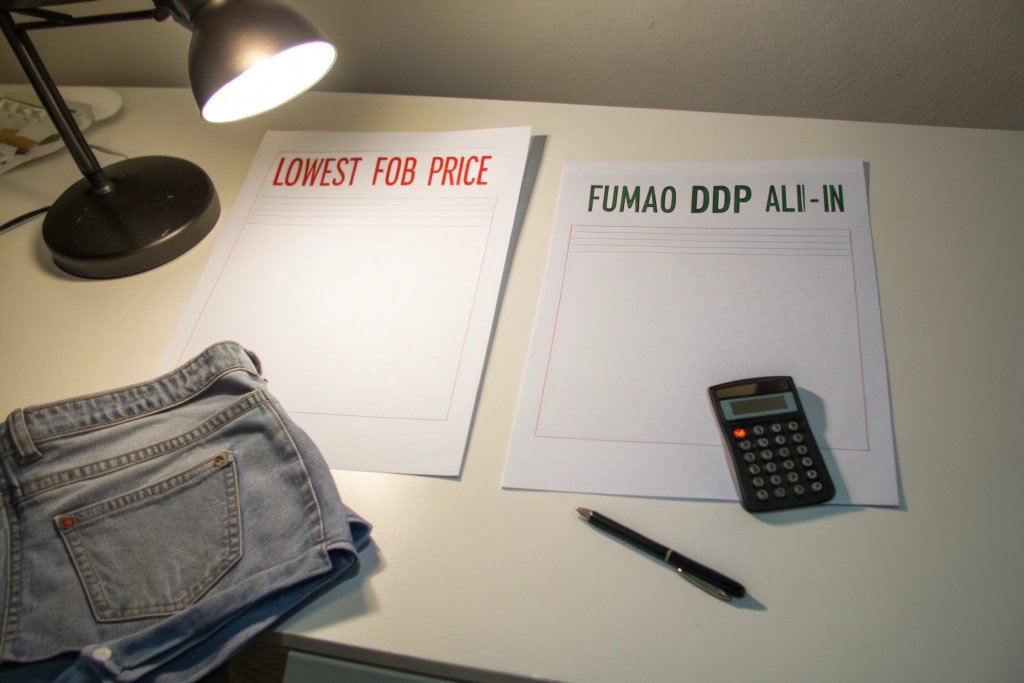
A brand that views denim shorts purely as a commodity, where the only goal is to hit a $3.50 FOB price, will not be happy with our quote. They will find a cheaper supplier. And that is fine. The brands that choose us see the higher unit cost as an investment in lower defect rates, fewer returns, and on-time deliveries. They calculate the total cost of ownership, not just the ex-factory price. I talked to a Chicago distributor last month. He compared our DDP price to a Vietnamese FOB offer. The FOB price looked $1.10 cheaper. But when he factored in his broker fees, the 16.6% duty he would have to pay himself, the uncertain freight costs, and the cost of a third-party inspection because he did not trust the Vietnamese factory's internal QC, his total landed cost was actually $0.30 higher than our DDP quote. The total landed cost calculation often reveals that a higher unit price with a transparent logistics package is the better financial decision. But if you only look at the FOB column on a spreadsheet, you will miss this.
How Can You Verify Our Claims Before Committing to an Order?
You have read this article. You have heard me make a lot of statements about our quality, our lab, our transparency, and our delivery performance. You should not trust any of it. Not because I am lying, but because you are a smart buyer. A smart buyer verifies claims independently. A smart buyer asks for evidence that cannot be easily faked. A smart buyer talks to other people who have already taken the risk.
I encourage this verification process. It separates factories with substance from factories with a good marketing writer. I have nothing to hide. My factory floor is open. My client list is referenceable. My testing data is archived. Here is exactly how you can check if Shanghai Fumao is real before you wire a single dollar.
Due diligence is your shield against sourcing scams. A factory that welcomes diligence is a factory that expects to pass it.
Can We Provide Verifiable Client References in Your Market?
Yes. I maintain a list of current U.S. clients who have agreed to serve as references. These are real brand owners and distributors. They are not paid spokespeople. They are busy people who value the relationship enough to take a 15-minute call from a prospective buyer.
When you ask for a reference, I will ask the client first if they are available. I do not give out their contact information without permission. But I always have two or three who are willing to talk. Ask them the hard questions. Ask about a time when our shipment was late and how we handled it. Ask about a quality issue they had and whether we took responsibility. Ask if our communication was proactive or reactive. A reference who only says nice things is not a real reference. A real reference will give you a balanced view. I once had a client tell a prospect that our wash on the first sample was too dark. He then told them we reworked it three times without complaint and nailed it on the fourth try. That honest balance is more valuable than a perfect review. This is the power of supplier reference checks. Use them. They are free, and they will tell you more than any website ever could.
What Happens If You Find a Quality Issue in the Bulk Shipment?
This is the moment that tests a factory's character. The contract says one thing. The factory's reaction in the first 24 hours after you report a problem says the real truth.
Here is our protocol. If you find a quality issue that we missed, you send us photos and a description. I personally review them within 24 hours. If the issue is a material defect, like a zipper that is failing or fabric that is ripping, we take one of two actions. For small, correctable issues, we issue a credit on your next order for the defective units plus a handling fee. For significant, systemic problems, we rework or replace the goods at our cost, including the freight. We had a situation in 2024 with a batch of 3,000 shorts where the waistband button attachment was slightly weaker than spec. A Texas client discovered it during his incoming inspection. We did not argue. We shipped replacement buttons and a set of hand-press tools to his warehouse. We also credited him $400 for the labor cost of his team fixing the 150 affected units. He was annoyed, but he told me later that our response turned a potential relationship-ender into a proof point of our integrity. The quality claim process should be defined in your purchase agreement. But the true test is not the paper. It is the speed and fairness of the factory's response when the problem is real. I respond fast because my name is on the door. A hired manager at a trading company might bury your email for a week. That is the difference ownership makes.
Conclusion
So, is Shanghai Fumao the best denim shorts manufacturer for your brand? The honest answer is that we are the best for a specific type of brand. The brand that has moved past the startup phase and is ready to order 300-plus units per style. The brand that values wash innovation and technical consistency over the absolute lowest FOB price. The brand that wants a factory partner who owns their production lines, opens their testing data, and answers a complaint call on the first ring. If that description fits you, then we are a very strong candidate, and I would welcome the chance to prove it.
If your brand is still in the prototype phase, operating on razor-thin margins, or only ordering 50 pieces at a time, we are probably not your best fit right now. And that is okay. Build your sales volume. Validate your market. We will still be here when you are ready to scale. The worst thing you can do is force a partnership with a factory whose business model is not aligned with your current stage. It leads to frustration on both sides.
I have tried to be as transparent as possible in this article. I have shared our strengths, our limitations, and the exact methods you can use to verify everything I have said. The next step is yours. If you want to start a conversation, reach out to our Business Director, Elaine. She can connect you with a client reference in your product category, send you a physical sample of our wash work, and give you a video tour of our testing lab. Her email is elaine@fumaoclothing.com. Whether you choose Shanghai Fumao or another factory, I hope this framework helps you make a smarter sourcing decision. The right factory partnership changes your business. The wrong one haunts you. Choose carefully. Verify thoroughly. And when you are ready for a partner who values your trust as much as your purchase order, we are here.