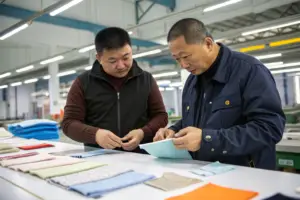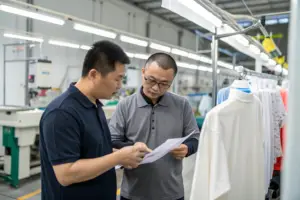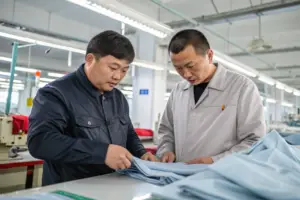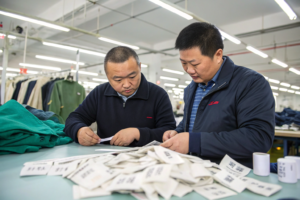
You placed the order in February. The factory promised delivery by April 15th. That gave you plenty of time to receive the shorts, distribute them to your retail accounts, and launch your summer marketing campaign. April 15th comes. No shipment. You email the factory. They tell you the fabric mill had a backlog. The shorts will ship April 30th. April 30th becomes May 10th. May 10th becomes May 25th. The shorts finally arrive in June. Summer is half over. Your retail buyers are furious. You are sitting on inventory you have to discount by 40% just to break even. The factory apologized. Apologies do not pay your rent.
You avoid delayed shipments on denim shorts by locking down four specific variables before you send a deposit. First, confirm the fabric is in stock at the mill, not just ordered. Second, agree on a production schedule with six milestone dates and a penalty for missed milestones. Third, choose DDP shipping terms so the factory remains financially responsible for the goods until they reach your warehouse. Fourth, require a live video tour of the factory floor showing your actual order in progress on the scheduled production date.
I run Shanghai Fumao, and I have been on the wrong end of a missed ship date. I know the sick feeling of calling a client to tell them their summer shorts will arrive in the fall. That feeling is why I rebuilt our entire production scheduling system. I want to share the specific tactics that prevent delays, the warning signs that a factory is about to miss your date, and the contractual protections that give you recourse if things go wrong. A ship date is not a wish. It is a commitment. And it can be managed.
Where Do Denim Short Shipment Delays Actually Originate?
Everyone blames the shipping line. The vessel was late. The port was congested. These are visible delays. You can track them. The real killers are the invisible delays that happen weeks before the container reaches the port. They happen inside the factory. They happen inside the fabric mill. They happen when the production manager looks at the schedule, sees a problem, and decides not to tell you because they hope they can catch up.
Denim shorts have a specific supply chain vulnerability that other garments do not share. The fabric lead time is long. Denim is not a stock fabric that sits on every shelf. It is a heavy, specialized textile. The indigo dyeing process takes days. The finishing process, sanforization and skew control, takes more days. If the mill is backed up, your fabric can be delayed by three weeks before a single yard reaches the cutting table. The garment factory cannot control this. They can only communicate it. A factory that communicates the delay the moment they learn about it is a factory you can work with. A factory that hides the delay until the ship date has passed is a factory you must avoid.
Let me map out the three most common delay points in the denim short supply chain and how to protect against each one.
Why Is Denim Fabric Availability the Root Cause of Most Delays?
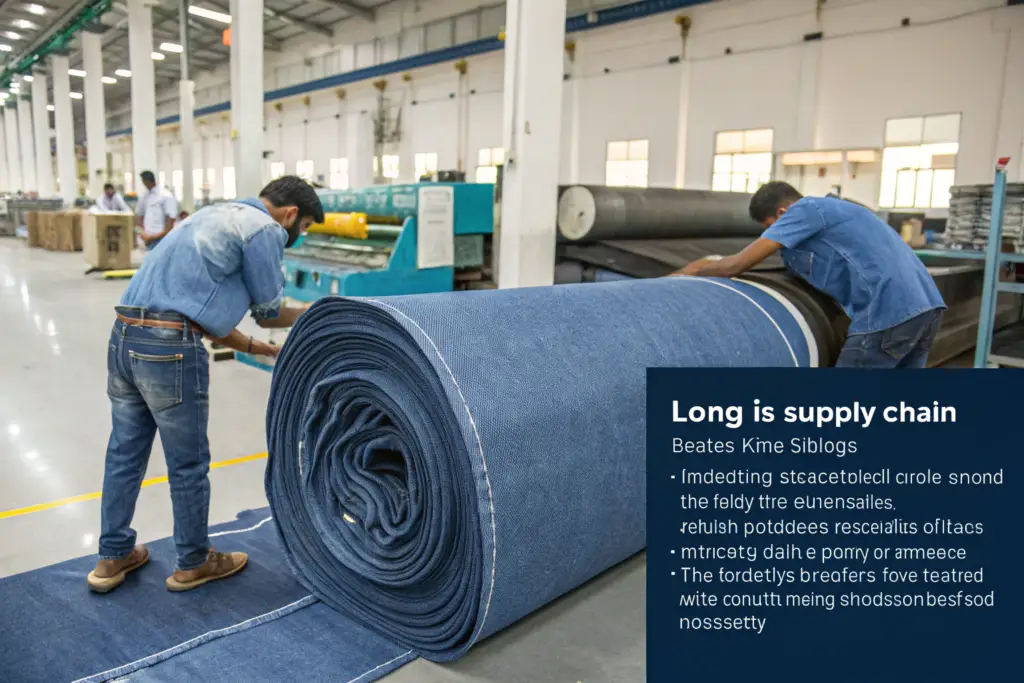
Denim fabric is not like printed cotton poplin. It is heavy. It is dyed in a complex multi-dip indigo process. The yarn must be rope-dyed. The dyed yarn must be woven. The woven fabric must be sanforized to control shrinkage. Each step takes time. A denim mill typically requires 21 to 30 days from order to delivery for a standard specification, and longer for a custom weight or blend.
If the garment factory does not have the fabric in stock, your order is at the mercy of the mill's production schedule. The mill is serving many customers. Large brands with 50,000-yard orders get priority. Your 3,000-yard order waits in the queue. The garment factory can quote you a 30-day production lead time, but if the fabric takes 21 days just to arrive, the math does not add up. The factory is hoping the mill delivers faster than usual. Hope is not a strategy. The solution is to ask the factory a specific question before placing the order. "Is the fabric in your warehouse right now, or is it on order from the mill?" If it is on order, ask for the mill's confirmed delivery date. Ask for the mill's name. A factory that hesitates to share this information is hiding the fact that the fabric is not secured. At Shanghai Fumao, we stock greige fabric for our core denim specifications. This eliminates the mill lead time for repeat orders. For new specifications, we share the mill purchase order with the client so they can see the confirmed delivery date. Transparency about fabric status is the first line of defense against delays.
How Does Inefficient Production Scheduling Create Internal Bottlenecks?
The fabric arrives. The order enters the production queue. Then it sits. Not because anyone is lazy, but because the production schedule was overloaded. The factory accepted more orders than its lines can handle. Your order is one of ten competing for the same sewing line. The production manager makes a choice every morning about which order to prioritize. The choice is usually driven by which client is shouting loudest that day.
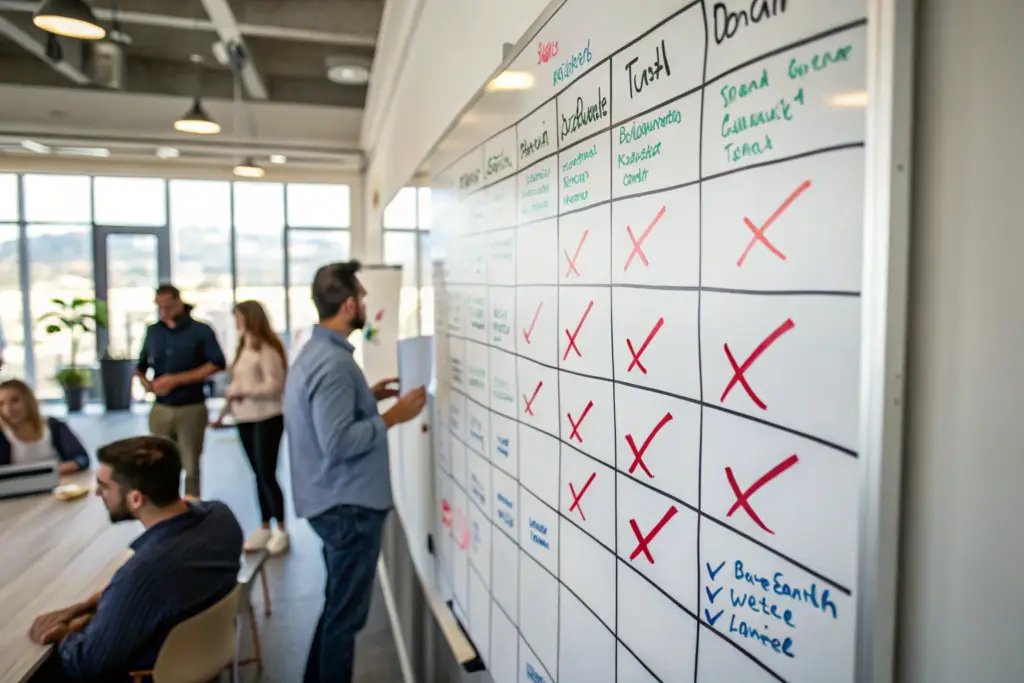
This is a capacity planning failure. A well-managed factory uses a capacity booking system. Each production line has a finite number of hours per week. Each order consumes a known number of hours based on the piece quantity and the standard minute value of the garment. When the line is fully booked, no more orders are accepted for that period. The system is binary. A slot is either available or it is not. Factories that do not use this system are guessing. They are saying "we will find time somewhere." The somewhere never materializes. The production capacity planning methodology is well-established in lean manufacturing. We use a visual scheduling board that shows every line, every week, with colored cards for each order. A client on a video call can see their card on the board. If the board is full for March and a client wants a March delivery, we tell them honestly that April is the earliest available slot. Honesty about capacity is more valuable than a promised date that cannot be met.
What Production Milestones Should Your Contract Include?
A single ship date is a gamble. A production schedule with milestones is a management tool. When the contract says "Ship Date: June 1st," you have no visibility into whether the order is on track during the four to six weeks of production. You send a polite email at week three. "How is everything going?" The factory replies "All on schedule." You have no way to verify that. On June 1st, the truth arrives. The order is not ready. You have been lied to for three weeks.
A milestone-based contract breaks the production process into discrete, verifiable stages. Each stage has a date. You can verify whether each date was met. If a milestone is missed, you know immediately that the final ship date is at risk. You can intervene. You can demand a recovery plan. You can adjust your marketing calendar. You are not blindsided on the final day. You have been informed every step of the way.
Here are the specific milestones we include in every denim short production contract and how they create accountability.
What Are the Six Critical Milestones for Denim Short Production?
A denim short production timeline can be broken into six distinct stages. Each stage has a deliverable and a date. I will list them in order.
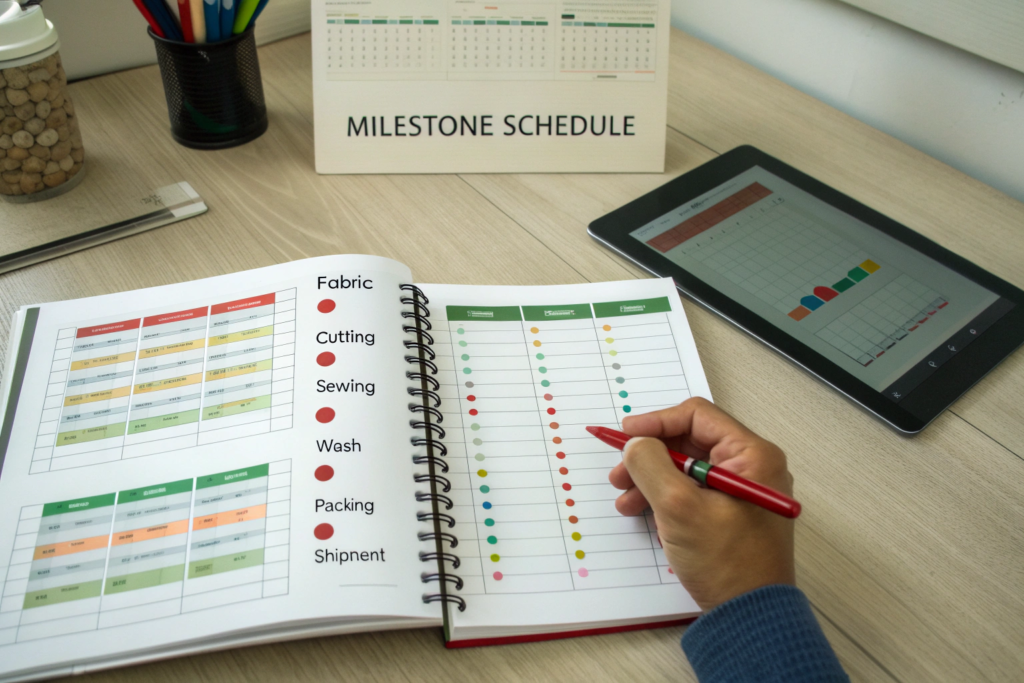
Milestone one is Fabric In-House. The date the denim fabric, hardware, and trims are physically in our warehouse and have passed incoming inspection. This is the most important milestone. If the fabric is late, everything else shifts. Milestone two is Cutting Complete. The date all fabric is cut into panels and bundled for the sewing line. Cutting usually takes two to three days for a standard order. Milestone three is Sewing Start and Sewing Complete. We break sewing into two dates because it is the longest phase. Sewing a 5,000-unit order takes seven to ten working days on one dedicated line. Milestone four is Wash Complete. The date the washed shorts are back from the wash house or the in-house wash facility, dried, and pressed. Milestone five is Inspection and Packing Complete. The date the final AQL inspection is passed and the shorts are packed into export cartons. Milestone six is Container Departure or DDP Handover. The date the container is loaded and the vessel departs, or for DDP orders, the date the goods are handed to our forwarder.
These production milestones are listed in our contract with planned dates and a tolerance of plus or minus two working days for internal milestones. The fabric in-house date has zero tolerance. If the fabric is one day late, the ship date shifts by one day. That is the mathematical reality. We do not pretend otherwise.
How Do Milestone-Based Penalty Clauses Protect Your Investment?
A milestone without a consequence is a suggestion. A milestone with a penalty is a commitment. Our standard contract includes a penalty clause for missed ship dates that are caused by our failure to meet internal milestones.
If the final ship date is missed by more than five working days due to a delay that was within our control and not communicated proactively, we apply a discount of 2% of the order value for each week of delay, up to a maximum of 8%. This is not a large sum for the client, but it is a significant financial consequence for us. It focuses the production team's attention. The penalty clause also covers the scenario where we ship by air freight at our cost if the sea freight delay would cause the client to miss a critical selling window. Air freight for 5,000 pairs of denim shorts is expensive, around $2.50 to $3.50 per unit. We will absorb that cost rather than miss a hard deadline if the delay is our fault. The supply contract penalty clauses are enforceable under the Uniform Commercial Code in the U.S. and equivalent laws in China. The clause is not there to punish us. It is there to align our incentives with yours. When we both lose money from a delay, we both work hard to prevent it.
How Can You Verify That Your Order Is Actually on Track?
The factory says everything is on schedule. You want to believe them. But you have been burned before. The factory that said "on schedule" was actually three weeks behind and hiding it. You need a way to verify the status of your order that does not rely on the factory's words alone.
There are two verification methods that work. One is remote. One is on-site. The remote method is a live video call where you direct the camera to specific areas of the factory floor. The on-site method is a third-party inspection at the production stage, not just at the final stage. Both methods give you independent confirmation that your order exists, is in progress, and matches the status the factory has reported. A factory that welcomes these verification methods is a factory that is confident in its schedule. A factory that makes excuses is a factory that is hiding a delay.
Let me explain how to use both verification methods effectively during the production cycle.
What Should You Look for During a Live Video Production Check?
A scheduled video call where the factory walks you through a prepared route is better than nothing, but not by much. The factory can clean up the area they plan to show you. They can move other orders out of the frame to make it look like your order is the priority. An unannounced or short-notice call is harder to stage.
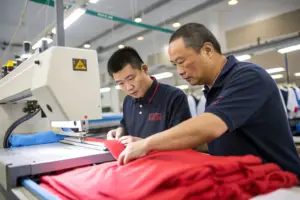
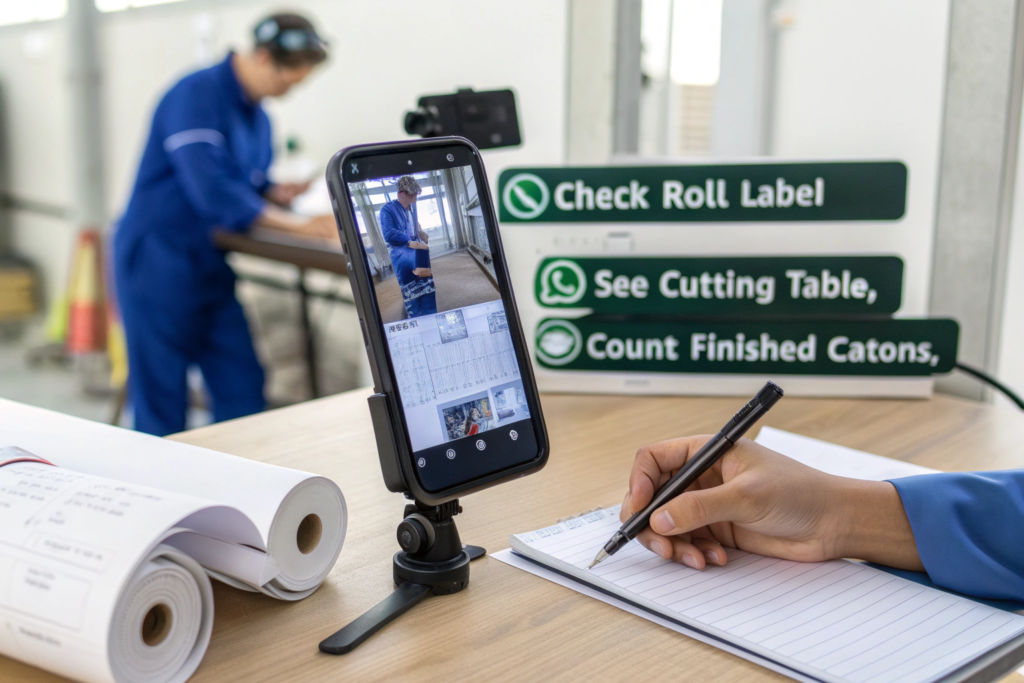
Tell the factory on Monday morning your time, which is Monday evening their time, that you want a video call in 30 minutes. Give them no time to prepare a show. During the call, ask to see five specific things. First, the fabric storage area. Ask the contact to zoom in on the roll labels. Do the labels show the fabric specification that matches your order? Second, the cutting table. Is there denim fabric spread on the table? Are the cut panels bundled with bundle tickets? Ask the contact to zoom in on a bundle ticket. The ticket should show your style number and your order quantity. Third, the sewing line. Are there operators actively sewing? Do the pieces on the machines look like your shorts? Fourth, the production whiteboard or digital screen. Ask to see the daily production output tracking. Is your order listed? What quantity was produced yesterday? Fifth, the finished goods area. If your order is supposed to be partially complete, there should be packed cartons with your brand markings. If the factory cannot show you these five things, your order is not where they say it is. The remote factory audit method has become more common and more accepted since 2020. A factory that refuses a live video check is a factory you should not trust with a deposit.
When Should You Commission a Third-Party In-Process Inspection?
A final random inspection before shipment is standard practice. It is also late. If the inspector finds a problem at the final stage, the shorts are already made. The options are to rework, which takes time, or to ship with defects, which damages your brand. An in-process inspection, conducted when approximately 30% of the order is sewn, catches problems when there is still time to fix them without delaying the ship date.
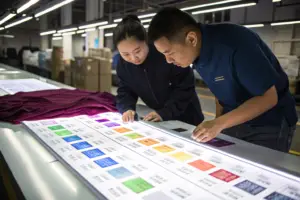
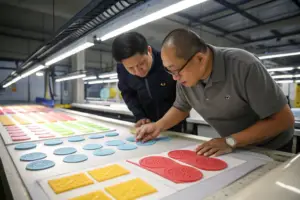
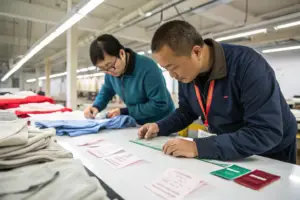
We encourage clients to commission an in-process inspection from SGS, QIMA, or Bureau Veritas. The inspector visits our factory when 30% of the pieces are sewn and 10% are finished. They check measurements, sewing quality, and wash consistency. They also verify the production progress against the milestone schedule. Are there actually 1,500 pieces sewn, as the milestone report states? The inspector counts the bundles. They check the daily production logs. They issue a report within 24 hours. This independent verification of progress gives you confidence that the factory's status updates are accurate. The in-process inspection guide explains the methodology. The cost is typically $300 to $400 per visit, a small fraction of the order value. For orders over $20,000, this cost is negligible compared to the cost of a missed ship date. We do not charge for accommodating the inspector. We provide a workspace and access to all production records. A factory that tries to delay or restrict the inspector's access is hiding something.
How Do Shipping Terms Affect Your Delivery Certainty?
The shorts are packed. The cartons are sealed. The order is complete. Now it has to cross an ocean. The shipping term you choose determines who is responsible for the goods during that journey and who pays when something goes wrong. Choose the wrong term, and a container delay at the port of Los Angeles becomes your financial problem. Choose the right term, and it remains the factory's problem until the shorts are inside your warehouse.
FOB is the most common term. It is also the most misunderstood. Buyers think FOB means the factory handles the shipping. It does not. FOB means the factory's responsibility ends when the goods cross the ship's rail at the port of departure. After that, the buyer owns the goods and bears all risk. If the container is delayed, damaged, or inspected by customs, those costs belong to the buyer. FOB is fine for experienced importers with their own freight forwarder and customs broker. It is risky for buyers who are importing for the first time or who do not have established logistics relationships.
Let me explain why we recommend DDP for most denim short orders and how it changes the delivery certainty equation.
Why Does DDP Shipping Align the Factory's Incentives with Your Delivery Date?
Under DDP, the factory is responsible for the goods until they are delivered to your named place. The factory pays the ocean freight. The factory pays the customs duty. The factory pays the brokerage. The factory pays the trucking. The factory bears the risk of port congestion, customs exams, and freight rate increases.
This changes the factory's behavior. A factory shipping FOB cares that the goods leave their dock on time. They do not care if the container sits at the port for a week waiting for a vessel. That delay is your cost. A factory shipping DDP cares about the entire journey. They choose carriers with higher schedule reliability. They file customs paperwork early to avoid holds. They track the container and proactively resolve issues at the port. Their financial interest is aligned with yours. The shorts are not delivered until they are at your warehouse. Every day of delay costs the factory money in storage fees and tied-up working capital. The DDP vs FOB risk comparison is clear. DDP transfers logistics risk to the party best equipped to manage it, the factory that ships containers every week. The buyer receives a single, predictable cost and a single point of accountability.
What Happens When Port Congestion or Customs Holds Delay Your Shipment?
Port congestion is a fact of life in international shipping. The ports of Los Angeles and Long Beach experience periodic congestion due to labor disputes, seasonal volume spikes, and weather events. A container can sit at the terminal for five to ten days waiting to be unloaded and cleared.
Under FOB, this is your problem. You pay demurrage, the storage fee charged by the port. Demurrage can be $150 to $300 per day after the free time expires. A seven-day delay can cost $1,000 to $2,000. You have no control over the situation. You just pay the bill. Under DDP, this is our problem. We pay the demurrage. We also have more leverage to resolve the issue because we work with the forwarder and the port on a daily basis. We know who to call to expedite a release. We have relationships with trucking companies that can pick up the container quickly once it is cleared. The port congestion demurrage fees are well-documented in the shipping industry. The key insight is that DDP converts a variable, uncontrollable cost into a fixed, guaranteed price. You budget one number. That number does not change, even if the port is a disaster zone. That predictability is worth a small premium on the unit price.
Conclusion
Delayed shipments on denim shorts are not random acts of the universe. They are the predictable result of four failures. A failure to secure fabric inventory before accepting the order. A failure to plan production capacity honestly. A failure to track milestones and communicate delays proactively. And a failure to align shipping incentives so the factory cares about the goods arriving, not just departing.
You can protect your brand from these failures by taking four actions before you send a deposit. First, ask whether the fabric is physically in the factory's warehouse. If it is not, ask for the mill's name and the confirmed delivery date. Second, insist on a production contract with six milestone dates, each with a tolerance, and a penalty for unexcused delays. Third, schedule a live video check during the sewing phase. Ask to see the bundle tickets, the cutting table, and the production whiteboard. Fourth, choose DDP shipping terms. Let the factory carry the logistics risk. You want one price, one delivery date, and one accountable party.
I built Shanghai Fumao to deliver on time. Not perfectly, because supply chains are complex and sometimes a typhoon closes a port. But reliably. Our greige inventory eliminates the fabric lead time for core specifications. Our capacity booking board prevents overbooking. Our milestone tracking dashboard gives clients real-time visibility. And our DDP shipping model means we are responsible until the shorts are at your warehouse dock. We have missed ship dates. Every factory has. But when we see a delay coming, we communicate it immediately with a recovery plan. The worst sin in manufacturing is not the delay. It is the silence.
If you want to work with a factory that treats your ship date as a shared commitment, not just a hope, reach out to our Business Director, Elaine. She can show you our current capacity availability, a sample milestone contract, and a live view of our production tracking board. Email her at elaine@fumaoclothing.com. Your summer season is too short to spend it waiting for shorts that should have been there in the spring.