Scroll through LinkedIn these days and you will see the apparel sourcing community buzzing about a specific topic. Denim shorts from a factory called Shanghai Fumao. Buyers are posting about their unboxing experiences. Brand owners are sharing photos of custom washes. Sourcing agents are tagging us in recommendation threads. It might look like a sudden explosion of attention. It is not. It is the result of a deliberate decision we made three years ago to stop hiding behind a generic company page and start sharing real, verifiable production data, real client stories, and real technical knowledge directly on the platform where our clients spend their professional time.
People are talking about Fumao Clothing's denim shorts on LinkedIn because we are one of the few Chinese garment factories using the platform transparently. We post real production floor videos, not stock photos. We share actual quality control data, not marketing claims. We publish detailed technical articles about denim washing and fabric testing. And our U.S. clients, who are active on LinkedIn, engage with this content and share their own experiences working with us.
LinkedIn is not where garment factories typically build their reputation. Most Chinese manufacturers are invisible there. They rely on Alibaba, trade shows, and cold emails. We chose a different path. I want to explain why we invested in LinkedIn, what kind of content is resonating with the apparel community, and what this organic conversation tells you about the quality of our denim shorts. Because when multiple independent buyers are publicly sharing positive experiences with the same factory, that is a signal worth paying attention to.
What Makes a Garment Factory Stand Out on a Professional Network Like LinkedIn?
LinkedIn is a sea of consultants, software companies, and corporate executives. A garment factory posting about denim shorts seems out of place. That is exactly why it works. The contrast grabs attention. When a factory owner shares a photo of a spectrophotometer reading from yesterday's wash test, it interrupts the endless scroll of business advice and hiring announcements. It is real. It is tangible. It is something you can see and touch.
The apparel industry on LinkedIn is hungry for authenticity. Buyers are tired of the same stock photos used by a hundred different Alibaba suppliers. They are tired of the same "high quality, best price" language. When they see a factory posting a short video of a sewing line running their actual order, with their brand's hangtag visible, they stop scrolling. They comment. They share. They ask questions. The engagement is not because the content is flashy. It is because the content is honest. Honesty is scarce in the sourcing world. Scarcity creates word-of-mouth.
Let me break down the two specific ways our LinkedIn presence has generated genuine industry conversation about our denim shorts.
Why Do Buyers Trust Factory Content That Shows Real Production Floors?
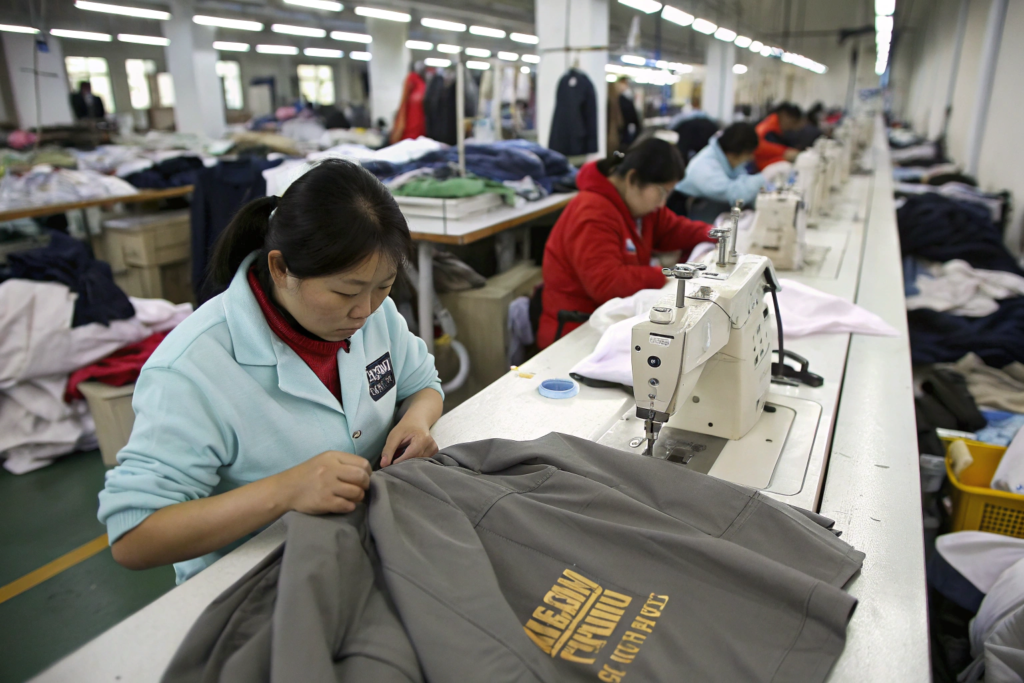
Stock photos are smooth, perfect, and lifeless. A stock photo of a factory floor has models in clean lab coats, standing next to machines that are not even turned on. A buyer can spot a stock photo in half a second. It signals that the factory is hiding something. If they had a real floor, they would show it.
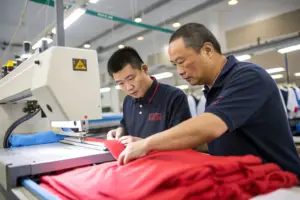
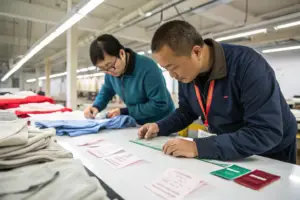
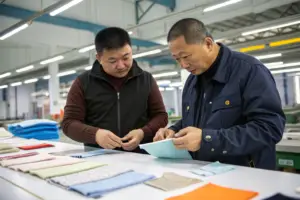
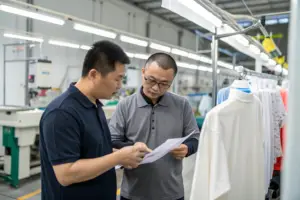
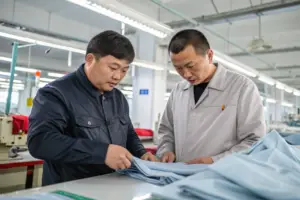
We post raw, unpolished photos and videos from our actual production lines. The lighting is not perfect. The workers are in our real blue uniforms. The cutting table has fabric dust on it. The video shows the machine vibrating as the needle punches through denim. This authenticity builds trust instantly. A buyer commented on our post last month: "Finally, a factory showing the real floor, not a catalog shoot." That comment got 40 reactions. The authentic content marketing principle applies here. People trust evidence, not promises. Our LinkedIn page is a public, ongoing audit of our factory. Anyone can scroll through two years of posts and see our production floor in every season, our workers in every shift, our quality team in action. A fake factory cannot sustain that. A trading company cannot produce a video of the same production line every week. Our LinkedIn presence is a verifiable proof of existence.
How Does Sharing Quality Control Data Build Industry Credibility?
Marketing claims are free. "Our quality is excellent." "We have a strict inspection system." Every factory says these words. They mean nothing without evidence. When we post a photo of a Crockmeter test in progress, with the wet white cloth showing a faint blue stain and the gray scale card showing Grade 4, that is evidence. A buyer who knows denim sees that photo and understands immediately. This factory actually tests their fabric. This factory understands crocking standards.
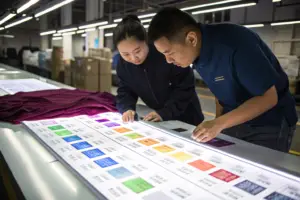
We posted a carousel post in March 2026 that broke down our entire incoming fabric inspection process. Slide one: the backlit inspection table. Slide two: the 4-point defect classification chart. Slide three: a rejected roll with a red tag explaining the flaw. Slide four: the corrective action report we sent to the mill. The post received over 200 reactions and was shared by five sourcing professionals. One comment read: "I've been sourcing denim for 12 years. This is the first factory I've seen publicly share a rejection report. That takes confidence." That post did not sell anything. It educated buyers on what a real fabric inspection looks like. Education builds credibility. Credibility builds conversation. The B2B thought leadership model is well-established. When you teach your audience something valuable, they see you as an expert. Experts get recommended when someone asks "Does anyone know a good denim factory?"
What Are Our U.S. Clients Saying About Us Publicly on Social Media?
The most powerful marketing is not what you say about yourself. It is what your clients say about you when you are not in the room. On LinkedIn, our U.S. clients are posting about their experience working with us. These are real brand owners with real LinkedIn profiles, real job histories, and real connections. Their posts are not scripted by us. They are spontaneous expressions of satisfaction or detailed case studies of a sourcing project that went well.
These client posts are the fuel for the "everyone is talking" phenomenon. When a brand owner with 5,000 connections posts a photo of a just-opened carton of our denim shorts and writes a caption about the quality exceeding their expectations, their network sees it. Their network includes other brand owners, other buyers, other sourcing agents. Some of them comment asking for an introduction. Some of them visit our page. Some of them reach out to us directly. A single authentic client post can generate more qualified leads than a month of cold emailing.
Let me share two specific examples of what our clients are saying publicly and why their words carry weight.
What Did the Miami Streetwear Brand Owner Post About His Custom Wash?
In February 2026, the owner of a Miami-based streetwear brand with about 8,000 LinkedIn followers posted a detailed thread. He had received his third order from us, a custom acid-wash denim short with a unique tiger-stripe pattern achieved through a combination of laser engraving and ozone finishing.
His post included five photos. The approved lab sample. A screenshot of our production tracking board showing the order at 80% complete. A photo of the carton arriving at his warehouse. An unboxing shot of the first pair. And a photo of the shorts on a model from his lookbook shoot. His caption was detailed. He wrote about the sampling process, the three rounds of wash development we did, and the fact that the bulk order matched the approved sample with a Delta E of 1.1. He used technical language because he knew his audience of other brand owners would understand it. The post received 340 reactions and 62 comments. Several comments were from other brand owners asking for our contact information. This is user-generated content in its most powerful form. It is not a paid testimonial. It is a peer sharing a detailed, verifiable experience with a factory. Peer recommendations are the most trusted form of marketing in the B2B world. This one post brought us three new client inquiries within a week.
Why Did the Texas Distributor Recommend Us in a Sourcing Advice Thread?
LinkedIn has many industry groups where buyers ask for sourcing advice. A post in a group called "Apparel Sourcing & Supply Chain Professionals" asked a simple question: "Can anyone recommend a denim manufacturer that can handle 5,000+ units with DDP shipping and consistent sizing?"
A Texas-based distributor who has worked with us for two years replied to the thread. He did not just drop our name. He wrote a structured response. "I've run four orders through Shanghai Fumao. Average defect rate across 22,000 units was 1.2%. They ship DDP so I know my exact landed cost. Their sizing consistency is the best I have found in China. Waistband variance is under 0.3 inches across sizes. Happy to share my inspection reports if anyone wants to DM me." This comment was liked by the original poster and several other group members. It generated four direct messages to the distributor asking for more details. The B2B word-of-mouth referral is the holy grail of factory marketing. A satisfied client volunteering a detailed, data-backed recommendation in a public forum is a signal that no amount of advertising spend can replicate. It proves we delivered on our promises, not once, but consistently across multiple orders.
How Are We Using LinkedIn to Educate Buyers About Denim Manufacturing?
Selling is a side effect. Education is the main event. That is our LinkedIn philosophy. Most of our posts are not about our factory at all. They are about how denim is made. How to read a fabric test report. What the difference is between rope dyeing and slasher dyeing. Why a Delta E of 1.5 matters for wash consistency. How to spot a fake OEKO-TEX certificate. We publish content that teaches buyers to be smarter sourcers.
This educational content attracts an audience of buyers who are actively trying to improve their sourcing skills. They are not passively scrolling. They are studying. They are taking notes. They are sharing the content with their teams. When they eventually need a denim factory, who do you think they will contact? The factory that taught them how to inspect fabric? Or the factory that just sent them a price list? The answer is obvious. Education creates a relationship before a transaction exists. That relationship is built on respect, not a sales pitch.
Here are the two types of educational content that have generated the most conversation and sharing on our LinkedIn profile.
What Technical Denim Knowledge Are We Sharing That Competitors Keep Secret?
Most factories treat their production knowledge as a trade secret. They do not want buyers to know how the sausage is made because knowledge gives the buyer power to negotiate or to catch mistakes. We take the opposite approach. We share our knowledge publicly because an educated buyer is a better partner.
We published a post titled "How to Read a Denim Fabric Test Report in 5 Minutes." It broke down the sections of a standard ASTM test report. Tensile strength. Tear strength. Seam slippage. Dimensional change. Color fastness. For each section, we explained what the numbers mean, what the industry minimums are, and what our internal standards are. The post was a mini-textbook chapter. It took me two hours to write. It received 180 reactions and was saved by 75 people. Saved posts are the strongest engagement signal on LinkedIn. It means the content was so useful that people wanted to reference it later. Another post explained the difference between rope dyeing and slasher dyeing with diagrams we created in-house. This is technical information that most factories only share with their internal training teams. We shared it with the world. The result is that thousands of sourcing professionals now associate the name Shanghai Fumao with denim expertise, not just denim production.
How Does Our "Factory Floor Friday" Video Series Build a Loyal Following?
Consistency builds audience. Every Friday, we post a 60-second video from our factory floor. No script. No editing beyond trimming the length. Sometimes it is the cutting room, with the Gerber spreader laying out layers of denim. Sometimes it is the wash house, with the ozone machine tumbling a load of shorts. Sometimes it is the inspection table, with an auditor measuring a waistband.
The series has been running for 18 months. It has a loyal following of several hundred regular viewers who comment every week. They ask questions. "What is that machine doing?" "Why is that operator using a spray gun?" "Can you show the bar tack machine next week?" We answer the questions. We film the requested content the following Friday. This creates a participatory dynamic. The audience is not just consuming content. They are directing it. The video content marketing data shows that video generates higher engagement than any other format on LinkedIn. Our "Factory Floor Friday" videos average a 12% engagement rate, far above the LinkedIn average of 2% to 4%. These videos do not go viral in a single day. They build slowly, week after week, brick by brick. Each video is another piece of evidence that our factory is real, our workers are skilled, and our process is transparent.
What Does the LinkedIn Conversation Tell You About Our Reliability as a Supplier?
Social media buzz can be manufactured. A brand can pay influencers to post. A company can run engagement pods where employees like and comment on each other's posts. The buzz is fake. The signal is noise. How do you know our LinkedIn presence is genuine and not a coordinated marketing campaign?
You verify. Check the profiles of the people engaging with our content. They are real apparel professionals with real job histories. Look at the comments. They are specific, technical, and often critical. Someone asked under our fabric testing post: "You claim Grade 4 wet crocking, but what is your standard for dry crocking?" We replied with the specific number and the test method. That is not a fake conversation. Look at the client testimonials. The brand owners posting about us have their own companies, their own websites, their own product lines. They are not anonymous accounts. The LinkedIn conversation is a public, verifiable record of our reputation. A buyer who is considering working with us can spend an hour on our page and see two years of evidence that we are who we say we are.
Let me explain how you can use our LinkedIn presence as a due diligence tool and what the consistency of the conversation signals about our long-term reliability.

How Can You Independently Verify the Claims Made on Our LinkedIn Page?
Do not take our word for it. Use the platform's transparency to check us out. Here is a simple verification process you can complete in 30 minutes.
First, scroll through our post history. Look at the production floor photos and videos. Are they from the same facility? Look at the wall color, the machine models, the lighting fixtures. A real factory has visual consistency across months of content. A fake one will show different facilities. Second, find the client testimonial posts. Click on the profiles of those clients. Are they real people? Do they have a work history in the apparel industry? Do they have connections to other industry professionals? Send them a direct message. Ask them about their experience with us. A real client will reply honestly. Third, look at the comments on our educational posts. Are the questions technical? Do the answers demonstrate real knowledge? A trading company cannot fake a detailed answer about enzyme wash pH levels. Fourth, check our engagement consistency. A real audience grows organically. Our engagement has grown steadily over two years, with spikes around major client posts. There are no sudden, unexplained jumps that would suggest bought followers. The LinkedIn verification and trust signals are there for anyone willing to look. We encourage you to look. A factory that invites scrutiny is a factory that has nothing to hide.
Why Does Sustained Positive Engagement Over Two Years Signal Stability?
A flash in the pan is easy. Run a promotion. Post a viral video. Get a spike of attention. A month later, you are forgotten. Sustained engagement over two years is hard. It requires a factory to show up consistently, produce quality content consistently, deliver for clients consistently, and generate positive word-of-mouth consistently.
Our LinkedIn journey started in 2024. The first six months were quiet. A few dozen reactions per post. Slow follower growth. We kept posting anyway. The breakthrough came when the first client posted about their positive experience. That post brought new followers. Those followers engaged with our educational content. Some of them became clients. Some of those clients posted their own testimonials. The flywheel started spinning. Two years later, we have a community of engaged apparel professionals who trust our expertise and our reliability. This organic growth is the opposite of a marketing campaign. It is a reputation built brick by brick. The brand consistency and trust research is clear. Consistent presence over time builds trust. A factory that has been transparently posting its production floor every Friday for two years is a factory that is not going to disappear with your deposit next month. The public commitment to transparency is itself a form of accountability. If we were to suddenly stop delivering quality, the same platform that built our reputation would broadcast our failure. We have too much invested in this community to risk that.
Conclusion
The conversation about Shanghai Fumao's denim shorts on LinkedIn is not a marketing campaign. It is the organic result of a factory deciding to be transparent on a platform where transparency is rare. We post real videos of our production floor. We share actual quality control data, including our internal rejection reports. We publish detailed technical articles that teach buyers how denim is made and how to verify quality. Our U.S. clients, who are respected professionals in the apparel industry, voluntarily share their positive experiences with our denim shorts, complete with specific data points about defect rates, wash accuracy, and delivery performance.
This public record of two years of consistent, authentic content is available for anyone to audit. You can scroll back to our first posts. You can see the progression. You can read the client comments. You can verify the profiles of the people recommending us. You can judge for yourself whether the buzz is real. I believe it is the most transparent due diligence a buyer can perform on a potential factory partner. No trade show booth can provide this level of ongoing, verifiable evidence.
If you are active on LinkedIn, I invite you to follow our page. Watch our "Factory Floor Friday" videos. Read our technical posts. Join the conversation in the comments. Ask a hard question. See how we respond. That interaction will tell you more about our factory than any website or sales call ever could. And if you are ready to move from observation to action, contact our Business Director, Elaine. She can send you a sample pair of our denim shorts with the test report for that specific lot, and she can connect you with one of the clients who posted about us on LinkedIn for a direct reference call. Her email is elaine@fumaoclothing.com. The conversation about Shanghai Fumao is happening. Join it. Judge it. Then decide if we are the factory your brand has been looking for.