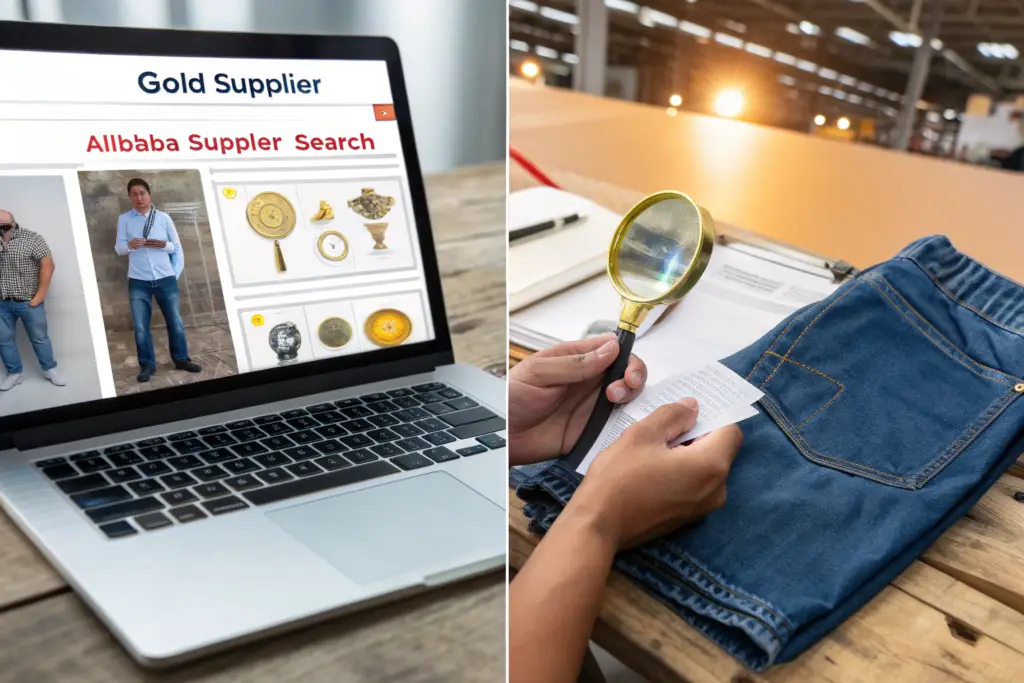
You type "denim shorts manufacturer" into the Alibaba search bar. The results page shows thousands of suppliers. Gold Supplier badges. Verified badges. Trade Assurance icons. Five-star ratings. Professional product photos. They all look legitimate. You send ten inquiries. Nine replies arrive within an hour. Every reply promises high quality, best price, fast delivery. The language is identical. The photos look like they were shot in the same studio. You realize you have no idea which of these suppliers is a real factory, which is a trading company, and which is an outright scam. The badges that are supposed to help you distinguish have become wallpaper. Everyone has them. They mean nothing.
You spot a reliable denim shorts supplier on Alibaba by ignoring the badges and testing the supplier on five specific, un-fakeable criteria. First, demand a live video tour where you control the camera direction. Second, ask for the factory address and cross-check it on Baidu Maps satellite view. Third, request a copy of the business license and verify the "Business Scope" field says "Manufacturing." Fourth, ask a technical question about denim shrinkage or crocking standards that only a production manager could answer. Fifth, order a paid sample and measure every dimension against the spec sheet before discussing a bulk order.
I am the owner of Shanghai Fumao, a denim factory with five real production lines. I am not on Alibaba. I made that choice because the platform's incentive structure rewards marketing spend over manufacturing quality. But I understand why buyers use Alibaba. It is the largest directory of Chinese suppliers in the world. If you are going to use it, you need a system for sorting the real from the fake. In this article, I will give you that system. No generic advice about checking reviews. Specific, actionable tests that a trading company cannot pass.
Why Are Alibaba Badges and Reviews Not Enough to Verify a Supplier?
Alibaba introduced badges and reviews to solve the trust problem. Gold Supplier means the supplier paid for a premium membership. Verified Supplier means a third-party inspection company visited the supplier's registered address and confirmed it exists. Trade Assurance means Alibaba will refund your money if the supplier fails to meet the contract terms. These are useful signals. They filter out the most obvious scams.
The problem is that these signals have been gamed. A Gold Supplier badge costs a few thousand dollars a year. Any trading company with a budget can buy it. A Verified Supplier inspection checks that a business exists at an address. It does not check whether that business is a factory or a trading company operating out of a small office. The inspector takes a photo of the outside of the building and a photo of the meeting room. They do not audit the production floor. Trade Assurance covers non-delivery and major quality discrepancies, but filing a claim is a slow, bureaucratic process. The buyer still loses the selling season. The money-back guarantee does not recover the lost sales. The badges reduce your risk from catastrophic to merely severe. They do not make a supplier reliable. They make a scam slightly less likely to succeed.
Let me explain the two most common ways suppliers manipulate the Alibaba trust signals and how you can see through them.
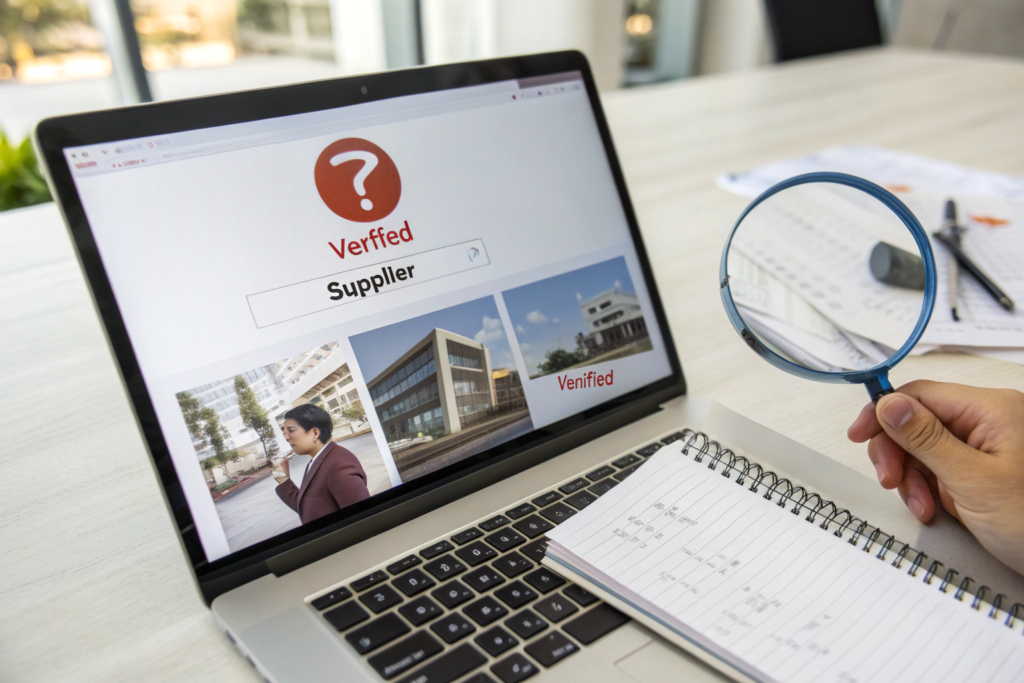
What Does a "Verified Supplier" Badge Actually Verify?
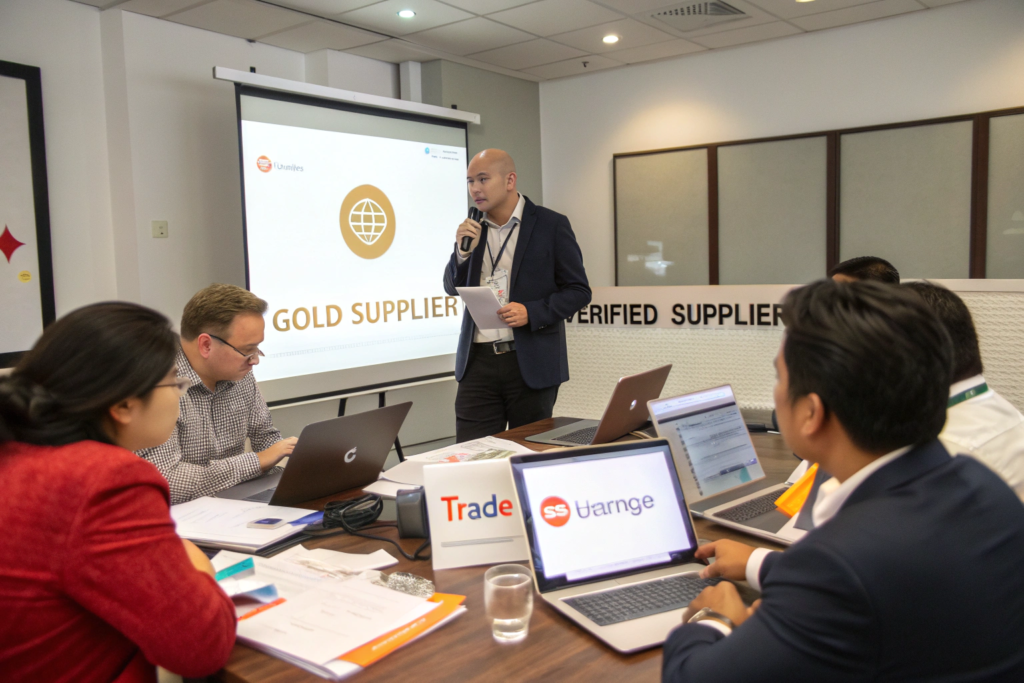
A Verified Supplier badge means that an Alibaba-appointed third-party inspection company, usually TÜV Rheinland or Bureau Veritas, visited the company's registered business address. The inspector confirmed that the business is registered, has a physical office at the stated address, and has the basic capabilities claimed on its profile.
The verification does not check whether the company manufactures products. It checks whether the company exists. A trading company with a small office and a meeting room can pass the verification. The inspector takes a photo of the company sign outside the building. They take a photo of the meeting room where samples are displayed. They do not take photos of the production floor because there is no production floor. The verification report is available on the supplier's profile. Read it carefully. Look at the photos. Are there photos of sewing machines? Are there photos of a cutting table? Are there photos of fabric rolls in a warehouse? If the photos only show an office, a meeting room, and a showroom with one sample of each product, the supplier is a trading company. The Alibaba Verified Supplier program description explains what is actually checked. The gap between what buyers assume it means and what it actually means is where the risk lives.
How Do Suppliers Manipulate Reviews and Transaction History?
Reviews can be faked. A supplier can create buyer accounts, place small orders with themselves, and leave five-star reviews. This is against Alibaba's rules, but it happens. A supplier can also offer discounts or free samples to real buyers in exchange for positive reviews. The reviews are technically from real transactions, but the incentive structure is corrupt.
Transaction history can also be misleading. A supplier shows $500,000 in total transactions. You assume this means they have shipped large orders to many clients. But the transaction history includes Trade Assurance orders of all sizes. A supplier can accumulate volume through hundreds of small sample orders, not bulk production orders. A sample order proves the supplier can make one piece. It does not prove they can make 5,000 identical pieces. Look at the transaction details. Are there repeat orders from the same buyers? A supplier with genuine bulk production capability will have repeat orders from buyers who placed initial sample orders and then returned for production quantities. Check the buyer profiles. Are they registered businesses in your target market? Or are they new accounts with no history? The Alibaba supplier evaluation guides from independent sourcing agencies are more candid than Alibaba's own documentation about these manipulation tactics.
How Can a Live Video Tour Expose a Fake Factory?
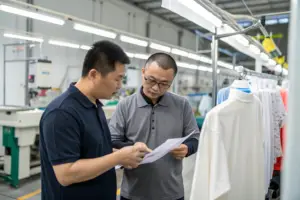
The live video tour is the single most powerful verification tool available to a remote buyer. A pre-recorded video is worthless. It can be shot at any factory. A stock photo album is worse. A live, interactive video call where you direct the camera operator is almost impossible to fake convincingly.
The key is to lead the tour. Do not let the supplier guide you through a prepared route. Ask them to walk to specific locations. Ask them to show you specific things that only a real, operating factory would have. A trading company that is borrowing a factory floor for the day will stumble. They will make excuses. They will say the area you asked to see is closed for cleaning, or the worker who has the key is not available. A real factory owner will walk you there immediately because the factory is their home. They know every corner. They are proud to show it.
Here is the exact script you can use during a live video tour to separate a real factory from a staged showroom.
What Five Specific Things Should You Demand to See on a Video Call?
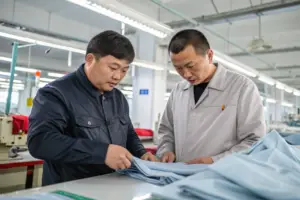
When you are on the call, after the initial greetings, take control. Tell the contact you want to see five specific things, in this order. First, the fabric warehouse. Ask them to walk to the area where denim rolls are stored. Look at the shelves. Are they full? Are the rolls labeled with specifications and dates? A real factory has a fabric inventory. A trading company buys fabric per order and has no warehouse. Second, the cutting table. Ask them to show you the cutting table up close. Is there fabric spread on it? Are there cutting marks? Are the scissors or the cutting machine nearby? A real factory cuts fabric every day. The table should show signs of recent use. Third, a production worker's station. Ask them to zoom in on a sewing machine. Is there a bundle of cut panels next to the machine? Is there a bundle ticket with a style number and quantity? Ask them to read the date on the bundle ticket aloud. A current date means active production. Fourth, the quality control area. Ask to see the inspection table. Are there measuring tapes, inspection reports, and defect stickers? A real factory inspects. A fake one does not have an inspection station. Fifth, the finished goods area. Ask to see packed cartons. Zoom in on the shipping marks. Do the cartons show export markings, destination ports, and buyer names? A real factory ships. A fake one has empty cartons or no cartons at all. If the supplier cannot show you these five things within a five-minute walk, you are not talking to a factory. The remote factory audit checklist from third-party inspection companies follows a similar logic.
Why Should You Cross-Check the Factory Address on Baidu Maps?
The address on the supplier's Alibaba profile is a claim. Baidu Maps is the Chinese equivalent of Google Maps, with satellite view and street view for many areas. You can verify the claim from your desk.
Copy the factory address from the Alibaba profile. Paste it into Baidu Maps. Switch to satellite view. Look at the building. Is it a large industrial building with a loading dock, or is it a small office building in a commercial district? A factory needs loading docks for trucks. It needs a large footprint. It is usually located in an industrial zone or a manufacturing town. If the satellite image shows a building in a downtown office park, the address is an office, not a factory. If the address does not appear on Baidu Maps at all, or the pin drops in an empty field, the address is fake. During the live video tour, ask the contact to walk outside the building and show you the street. Does the street match the Baidu Maps street view image? A supplier who refuses to show the exterior or whose exterior does not match the map is hiding something. The Baidu Maps verification method is a standard due diligence tool used by professional sourcing agents.
What Legal Documents Can Prove a Supplier Is a Real Manufacturer?
A live video tour gives you visual evidence. Legal documents give you documentary evidence. Both are needed. A visual tour can be staged at a factory that the supplier does not own. A friend's factory. A rented corner of a floor. Legal documents tie the supplier's company name to a specific physical location and a specific business activity.
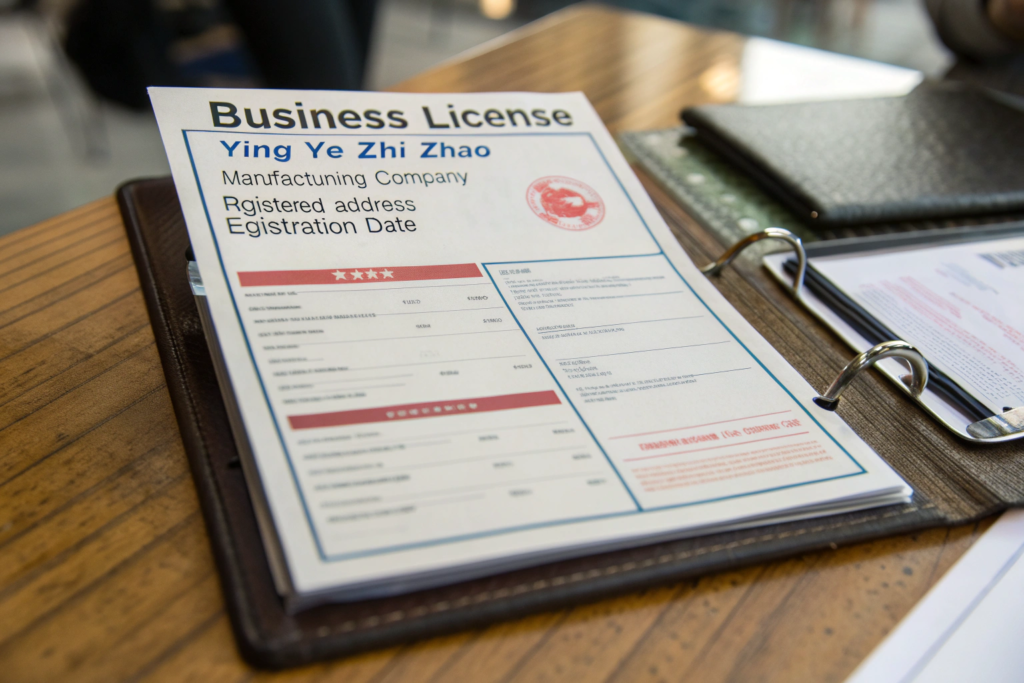
The key document is the Business License, or Ying Ye Zhi Zhao. Every legally registered company in China has one. It is a single page with a unified social credit code, a company name, a legal representative, a registered address, a registration date, and a business scope. The business scope field is the most important for your purposes. It lists the activities the company is legally permitted to conduct. A real factory will have "Manufacturing" or "Production" in its business scope. A trading company will have "Wholesale," "Retail," or "Trading."
Let me explain how to read these documents and what other documentary evidence can strengthen the case.
How Do You Read a Chinese Business License to Identify a Real Factory?
Ask the supplier to send you a copy of their business license. A legitimate factory will provide it immediately. A trading company will hesitate, make excuses, or send a heavily redacted version.
Look at the "Business Scope" (经营范围) field. This is a block of Chinese text. Use a translation app to read it. Look for these characters: 生产 (production/manufacturing), 制造 (manufacturing), 加工 (processing). If these characters appear, the company is legally registered to manufacture products. If the scope only contains 销售 (sales), 批发 (wholesale), 零售 (retail), 贸易 (trading), the company is a trading company. Now look at the registered address. Does it match the address on the Alibaba profile and the address you saw on Baidu Maps? If the addresses do not match, ask why. There may be a legitimate reason, like the factory moved and the license was not updated. But it is a red flag that requires explanation. Look at the registration date. A company registered in 2023 with a Gold Supplier badge is a new operation. A company registered in 2010 with a consistent history is more established. Check the registered capital. A higher registered capital suggests a larger, more stable company. The Chinese business license verification process is well-documented by business services firms.
What Other Certifications Indicate a Legitimate Manufacturing Operation?
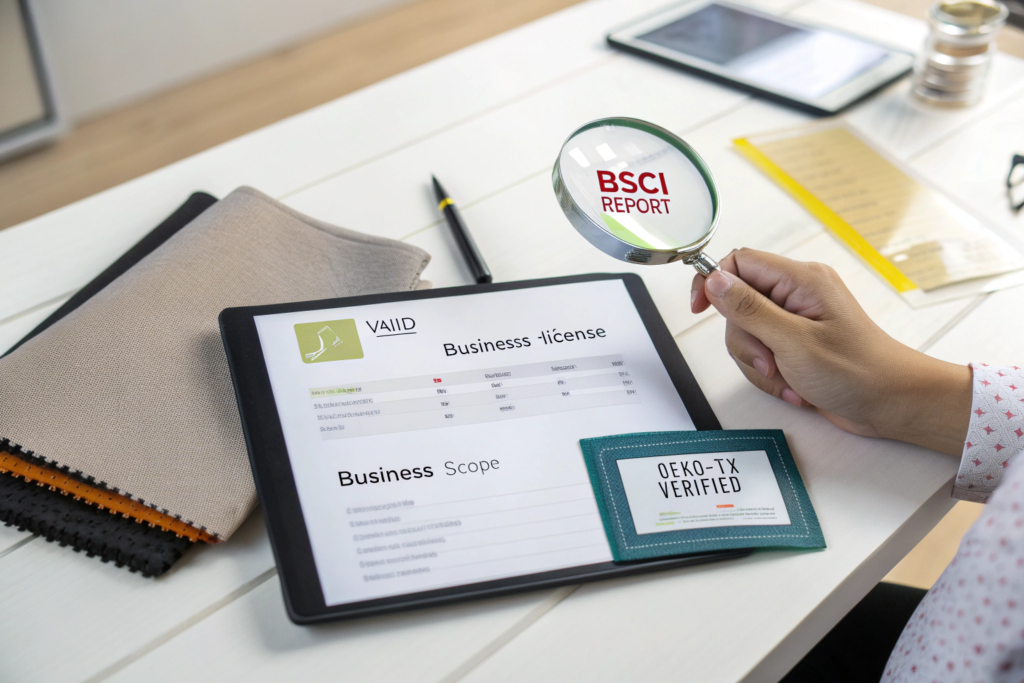
Beyond the business license, ask for additional certifications that only a real factory would have. An export license, or Customs Registration Certificate, proves the company is authorized to export goods directly. A trading company may not have this if they export through a third-party agent. A social compliance audit report, such as BSCI or SMETA, proves that an independent auditor visited the factory floor, inspected working conditions, and confirmed the existence of a real production facility. The audit report includes photos of the production floor and a description of the manufacturing processes.
A valid OEKO-TEX Standard 100 certificate for the supplier's denim products proves that the fabric has been tested by an independent lab for harmful substances. The certificate lists the certificate holder's name, which should match the supplier's company name. You can verify the certificate number on the OEKO-TEX website. A fake certificate number will not appear in the database. A Certificate of Origin template, even a blank one, shows the company's production address and the authorized signature of the local chamber of commerce. A trading company that subcontracts production may struggle to provide a genuine Certificate of Origin because the issuing authority verifies the manufacturing location. The supplier document verification process used by professional quality control firms includes these document checks as a standard part of due diligence.
What Technical Questions Reveal a Supplier's Real Expertise?
A salesperson at a trading company can memorize a price list and a lead time. They can learn to say "30 days, FOB Shanghai, payment T/T 30% deposit." They cannot answer a technical question about denim manufacturing. The question requires knowledge of production processes, fabric behavior, and quality standards. The salesperson will say "Let me check with our factory" or "Can you send an email with your questions?" This delay is the signal. A real factory owner or an experienced merchandiser answers the question immediately because they deal with these technical issues every day.
Asking technical questions is a form of knowledge-based authentication. You are verifying that the person you are talking to has direct access to production knowledge. A person who has that access works in a factory. A person who does not works in a trading office.
Here are five technical questions you can ask, the answers you should expect, and what a wrong answer reveals.
What Are Five Technical Denim Questions Only a Factory Can Answer?
Question one: "What is your standard shrinkage tolerance for 10.5 oz denim after three home washes, and what test method do you use?" A real factory will answer "2% maximum, tested to AATCC 135, and we pre-adjust our patterns to compensate." A trading company will say "We guarantee no shrinkage" or "The fabric is pre-shrunk," which is vague and meaningless without a percentage and a test method.
Question two: "What is your wet crocking standard for indigo denim, and how do you achieve it?" A real factory will answer "We target a minimum of Grade 3.5 on the AATCC 8 standard, achieved through a cationic fixation process after dyeing." A trading company will say "Our quality is very good, no color transfer," which is a marketing claim, not a technical answer.
Question three: "Can you show me a photo of your Crockmeter or your tensile testing machine with today's date on a piece of paper next to it?" A real factory can snap this photo in two minutes. A trading company cannot because they have no lab.
Question four: "What is the difference between rope dyeing and slasher dyeing, and which do your mills use for indigo denim?" A real factory will explain that rope dyeing creates a ring-dyed effect with a white core for authentic fading, while slasher dyeing creates a more uniform color with less dimensional fade, and will state which method their fabric uses. A trading company will not know the terms.
Question five: "What is the standard seam allowance on the inseam of your denim shorts, and what stitch per inch count do you use?" A real factory will answer "3/8 inch seam allowance with 10 to 12 stitches per inch using a safety stitch or a 5-thread overlock." A trading company will guess or avoid the question. The denim technical knowledge required to answer these questions is not something a general salesperson possesses. It is tribal knowledge from the production floor.
How Should You Evaluate the Speed and Specificity of the Response?
The speed of the answer matters. A real factory answers within seconds. The knowledge is in their head. A trading company takes hours or days because they have to forward the question to someone else and wait for a reply. The specificity of the answer matters. Look for numbers. Standards. Test methods. Percentages. A vague answer is a non-answer. "Our quality is very good" is a non-answer. "We target a Delta E below 1.5 on the spectrophotometer for wash consistency" is a real answer.
The willingness to provide evidence matters. A real factory says "I will send you a photo of that test right now." A trading company says "I will ask our quality department and get back to you." The quality department does not exist. The photo never arrives. The supplier technical assessment should be part of every buyer's evaluation process. The questions cost nothing to ask. The answers reveal everything.
Conclusion
Spotting a reliable denim shorts supplier on Alibaba is a test of your discipline, not the supplier's badges. The platform gives you a list of candidates. It does not tell you which candidates are real. That judgment is yours. You make it by demanding a live video tour where you lead the camera to the fabric warehouse, the cutting table, and the quality inspection area. You make it by cross-checking the factory address on Baidu Maps satellite view. You make it by reading the business license for the characters that mean manufacturing. You make it by asking five technical questions that only a production manager could answer and measuring the speed and specificity of the response.
A reliable supplier will cooperate with every one of these tests. They will welcome the video tour. They will provide the business license without hesitation. They will answer the technical questions with numbers and standards. They will send a photo of their testing equipment with today's date. A supplier that resists, delays, or gives vague answers is hiding something. Walk away. There are thousands of suppliers on Alibaba. Most of them are not factories. A few of them are. The tests in this article will separate the few from the many.
I am not on Alibaba, but I understand the search. If you want to skip the verification gauntlet and talk directly to a factory that can pass every test in this article on a single video call, contact our Business Director, Elaine. She will walk you through our fabric warehouse, our cutting tables, our testing lab, and our production lines, all on a live video tour. She will send you our business license, our BSCI audit report, and our OEKO-TEX certificate. She will answer your technical questions immediately, with numbers. Reach her at elaine@fumaoclothing.com. Whether you find your supplier on Alibaba or through a referral, use the tests. They will protect you from the most expensive mistake in sourcing: trusting a badge instead of verifying a factory. At Shanghai Fumao, we pass every test because we are exactly what we claim to be.