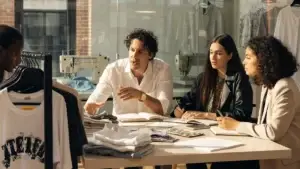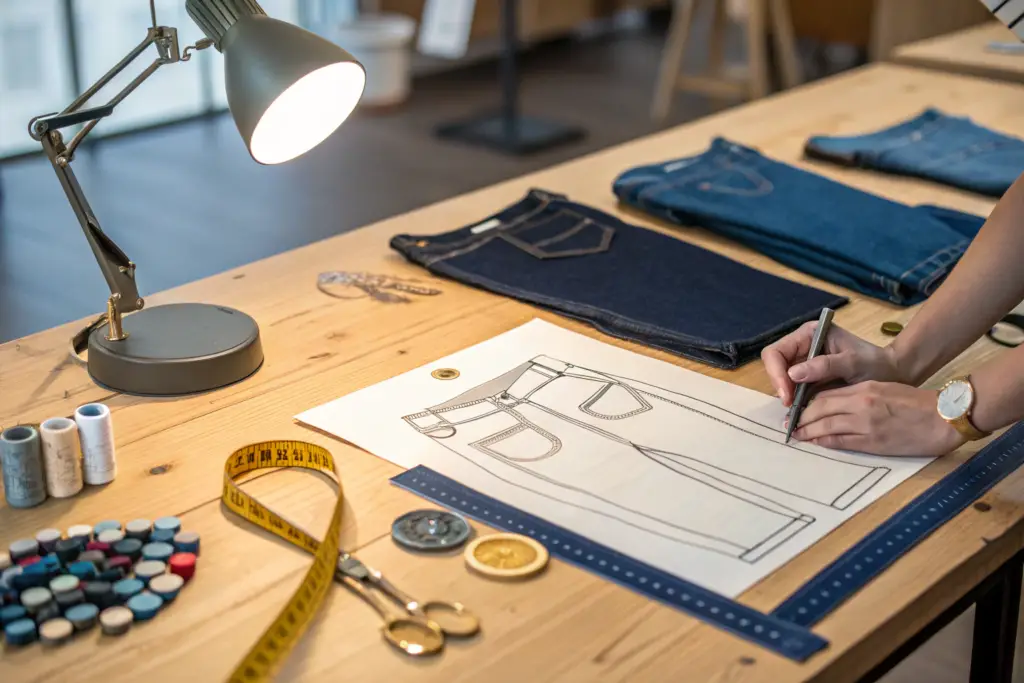
You have the design sketch ready. You can picture the exact wash, the perfect fit, the custom hardware that will make your shorts stand out on a crowded rack. Then the search begins. You type "custom denim shorts manufacturer" into Google. You send inquiries. The replies come back. Most of them are form emails with a price list attached. They do not ask about your design. They do not ask about your target customer. They just want to know how many pieces you need so they can send a quote. This is the sourcing equivalent of a doctor prescribing medicine without asking where it hurts. Finding a factory that can actually deliver premium custom denim shorts, not just stock styles with your logo slapped on the back patch, is genuinely hard.
You find premium custom denim shorts by targeting factories that own their wash development lab, employ in-house pattern makers, and hold verifiable certifications for sustainable finishing. These three capabilities are the minimum requirement for a true customization partner. Anything less is a trading company that will outsource your design to the lowest bidder, losing control of your fit, your wash, and your timeline.
I run Shanghai Fumao, a factory with five dedicated production lines and a fully equipped development room. I have walked hundreds of brand owners through the custom development process. I know where the bottlenecks hide. I know where the costs inflate unnecessarily. I know what separates a smooth, on-time delivery of a beautiful custom short from a six-month nightmare that ends with a chargeback. Let me show you the entire landscape of custom denim sourcing, from the capabilities you must demand to the specific steps of bringing your sketch to life.
What Capabilities Define a True Premium Denim Shorts Factory?
The phrase "premium custom denim" gets thrown around by every Alibaba supplier with a camera and an internet connection. But premium is not a claim. It is a set of physical assets and human skills that either exist inside the factory walls or do not. You cannot fake a wash lab. You cannot fake a pattern room. You can fake a website, a catalog photo, and a sales pitch. I have seen competitors download stock images of laser machines, post them on their profile, and tell buyers it is their equipment. The machine does not exist. The wash gets outsourced to a third-party laundry. The pattern gets emailed to a freelance pattern maker. The factory is just a sewing shed that assembles outsourced components.
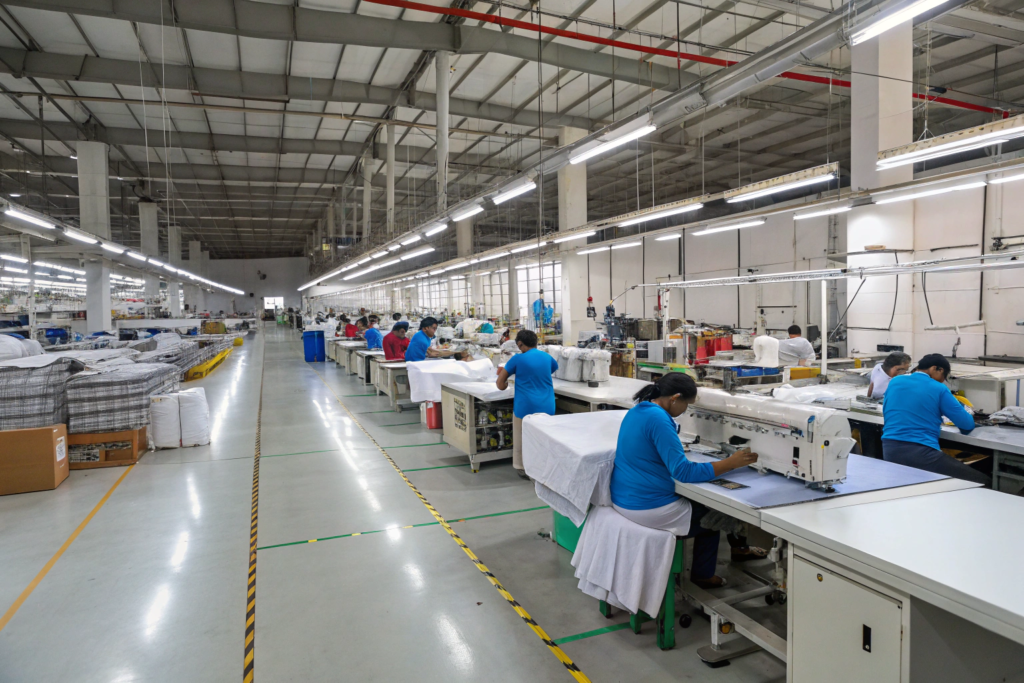
A true premium factory has vertical integration. This means the pattern making, the sample sewing, the wash development, the production sewing, and the finishing all happen under one roof, under one quality system, with one accountable management team. Vertical integration is expensive to build. It requires capital investment. It requires hiring specialists. Most factories avoid it because they can survive on low-margin, high-volume basic orders. They do not need a wash lab to make 50,000 pairs of solid black shorts for a uniform company. They need one to make 2,000 pairs of uniquely washed, custom-fit shorts for a fashion brand. If you want the second outcome, you must find the factory with the first set of assets.
Let me break down the two specific capabilities that are the non-negotiable entry ticket to premium customization.
Why Must a Premium Factory Have an In-House Pattern Room?
The pattern is the DNA of your short. It determines the fit. The fit determines whether the customer buys a second pair. If the pattern is made by a freelancer who never visits the factory floor, there is a disconnect between the paper design and the stitched reality.
Our pattern room employs three full-time pattern makers. They sit 20 meters from the sewing line. When a sample comes off the machine, the pattern maker walks over, checks the seam allowance, feels the ease in the hip, and adjusts the digital pattern immediately. This physical proximity is irreplaceable. We use the Gerber Accumark CAD system for grading and marker making. A digital pattern ensures that a size Small and a size 2XL have the same pocket placement ratio and the same rise angle. The CAD pattern making software also calculates fabric consumption efficiency. This saves you money on material cost. Last winter, a Portland-based brand brought us a vintage pair of 1990s shorts and asked us to recreate the exact fit block. Our head pattern maker measured the curve of the seat seam with a flexible ruler, digitized 22 fit points, and produced a sample that matched the vintage pair within 0.2 cm on every key measurement. A freelance pattern maker working from photos alone could not have achieved that precision. The in-house pattern room also allows for rapid iterations. A fit adjustment that takes two weeks with an outsourced pattern maker takes two days with our team.
What Role Does a Dedicated Wash Development Lab Play in Customization?
The wash is what sells the short. A customer browsing online cannot feel the fabric weight. They cannot test the zipper. They buy with their eyes. The wash is the visual hook. A generic rinse wash makes your short look like a commodity. A unique, dimensional wash makes it look like a premium product worth a $65 price tag.
Our wash lab is where that visual differentiation is engineered. The lab contains three sample washing machines of different capacities, an ozone generator, a laser engraver for pattern creation, a spray gun booth for manual distressing, and a library of over 200 archived wash recipes. When you send a reference image, we do not guess at a single recipe. We run a matrix. We prepare five small denim swatches. We wash each one with a slightly different enzyme concentration or ozone cycle time. We dry them. We measure the color on the spectrophotometer. We send you high-resolution photos of all five options under standardized lighting. You choose the one that matches your vision. The chosen recipe becomes your locked production formula. This iterative garment wash technology process is the opposite of the standard factory approach, which is to apply a generic "medium blue stonewash" and hope you accept it. A dedicated lab means your wash is not a generic option off a menu. It is a custom creation, documented and repeatable.
How to Identify Custom Denim Manufacturers Through Online and Offline Channels?
Finding the factory is a research project. The best factory for your brand is probably not the first one that appears in a Google search. The factories with the biggest marketing budgets are often trading companies, not manufacturers. They spend money on ads, not on wash labs. You need to look in the places where real factory owners spend their time and where real manufacturing capability is on display.
The search is a two-track process. The online track is broad. It helps you build a long list of candidates. The offline track is deep. It helps you verify which candidates are real. You need both tracks. Relying only on online research will leave you vulnerable to fake profiles and stolen photos. Relying only on offline visits is expensive and limits your options to a single trade show or a single industrial town. The smartest approach combines digital investigation with physical verification, or a proxy for physical verification if you cannot travel.
Here is how to use both channels effectively to narrow your search to genuine premium manufacturers.

Which Online Platforms Offer the Most Verified Premium Manufacturers?
Alibaba is the largest marketplace, but it is also the most polluted with intermediaries. Sorting through it requires aggressive filtering. I recommend using the "Verified Supplier" and "Trade Assurance" badges as a minimum, but do not stop there. Click into the company profile. Look for the "Business Type" field. If it says "Trading Company," move on. If it says "Manufacturer," it is a candidate, but still unproven.
A more targeted approach is to use industry-specific directories. The Makers Row platform connects U.S. brands with vetted factories. The Worldwide Responsible Accredited Production registry lists factories that have passed social compliance audits. A factory that appears on the WRAP compliance database has been inspected by a third party and proven to have a real physical facility with real employees. LinkedIn is also underrated for denim sourcing. Search for "Denim Wash Technician" or "Denim Pattern Maker" in the Guangdong or Zhejiang regions of China. Look at their employer history. The factories that employ these specialized technicians are the ones with genuine capability. A wash technician does not work for a trading company. A trading company has no wash lab to employ them in. When you find a factory, check their website for specific photos of their wash lab, their pattern room, their testing equipment. A Google reverse image search on those photos can reveal if they are stolen from another factory's site. If the same photo appears on three different websites, none of those companies are trustworthy.
What Questions Should You Ask During a Factory Video Tour?
A video tour is the closest thing to an in-person visit when travel is not possible. But a pre-recorded video is worthless. It can be edited, staged, or shot at a different factory. You need a live, interactive video call. And you need to lead the conversation, not passively watch a guided tour.
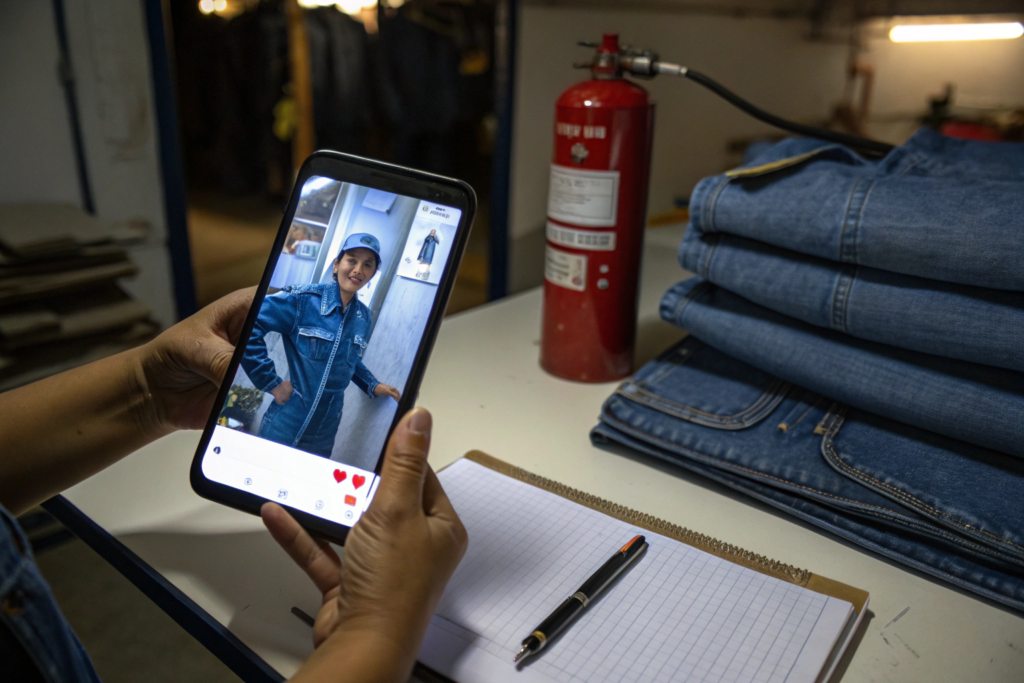
Here are the five questions I recommend you ask during a live factory video tour. First, "Please show me the electricity meter or the main power distribution box." A real factory has a heavy-duty electrical infrastructure. A trading company's showroom does not. Second, "Walk to the cutting table and show me the current work orders taped to the side of the table." A real work order has a style number, a quantity, a date, and a fabric lot code. A fake one is blank or looks freshly printed. Third, "Zoom in on the fire extinguisher inspection tag." The tag has a date and a factory address in Chinese. This is hard to fake on short notice. Fourth, "Show me the inside of a washing machine. Is it wet?" A dry washing machine means the wash is not done in-house. Fifth, "Introduce me to the pattern maker." A real pattern maker can answer a technical question about denim shrinkage allowance in real-time. A salesperson pretending to be a pattern maker will stumble. This factory audit checklist provides a structured framework for your evaluation. The goal is to find inconsistencies. A real factory is consistent in its messiness, its noise, and its workflow. A fake one is too clean and too quiet.
What Does the Custom Development Process Look Like Step by Step?
The unknown is scary. If you have never developed a custom denim short from scratch, the process can feel like a black box. You send a sketch. You wait. You get a sample. You hope it looks right. This lack of visibility creates anxiety. Anxiety leads to hesitation. Hesitation leads to missed launch windows.
I believe the custom development process should be a transparent, milestone-based journey. You should know exactly what happens between your first email and the approved bulk production sample. At Shanghai Fumao, the custom development process follows six defined stages. Each stage ends with a deliverable that you review and approve before we move to the next. You are never in the dark. You always know what we are working on and when you can expect the next update. This structure is what turns a custom order from a leap of faith into a managed project.
Let me walk you through the two stages where the most critical decisions are made and where the most value is added.
How Does the Sampling Stage Ensure Your Design Vision Is Accurate?
The sampling stage is where your 2D sketch becomes a 3D garment. It begins with a detailed tech pack review. If you have a complete tech pack with measurement specs, stitch details, and wash references, we start there. If you only have a sketch and a reference photo, our pattern maker helps you build the tech pack from scratch.
We ask a series of precise questions. What is the desired waist height? Natural waist, mid-rise, or low-rise? What is the leg opening width? How deep should the front pocket curve be? What type of fly? Zipper or button? We fill in the missing specifications with our knowledge of standard U.S. sizing. The first sample, called the proto sample, is made from a similar but not identical fabric. It is a fit test, not a final product. You receive the proto sample, try it on a fit model, and send us feedback. "The waist is snug. The thigh is too loose. The front rise is 1 cm too short." We adjust the pattern. We cut a second sample, the fit sample, in the actual production fabric. This sample should nail the fit. Once the fit is approved, we make the pre-production sample with the correct wash, the correct hardware, the correct labels. This sample is identical to what will be produced in bulk. The garment sampling process is iterative. Patience here pays off. Rushing through samples to hit a production date always results in a bulk order that does not match the vision.
What Information Do You Need to Provide for Accurate Pricing?
Accurate pricing requires accurate specifications. A vague inquiry like "How much for custom denim shorts?" will only get a vague, inflated quote. The factory has to pad the price to cover the unknown variables.
To get a precise, fair quote, you need to provide six pieces of information. The target fabric weight, in ounces per square yard. The fiber composition, like 99% cotton 1% spandex versus 100% cotton rigid. The wash description, with a reference photo if possible. The hardware specifications. Generic YKK or a custom-branded button and rivet set? The labeling requirements. A simple woven label or a multi-page hangtag with foil stamping? And the estimated order quantity per style and per wash. The difference between 500 units and 5,000 units is significant in fabric consumption and production efficiency. Providing a BOM garment cost breakdown helps the factory give you a transparent price. Our quotations separate the fabric cost, the trim cost, the wash cost, the labor cost, and the logistics cost. You can see exactly where your money is going. This transparency allows you to make informed trade-off decisions. If the price is too high, we can discuss reducing the wash complexity or simplifying the hardware rather than cutting into the fabric quality, which would hurt the product.
How Can You Ensure Your Custom Order Is Delivered on Time and on Budget?
A beautiful custom sample is a promise. The bulk delivery is the fulfillment of that promise. Too many brands experience a disconnect between the two. The sample arrives in four weeks and looks perfect. The bulk order takes twelve weeks and looks different. The cause is usually a breakdown in production planning, a subcontracting detour the buyer did not know about, or a logistics failure at the port.
Ensuring on-time, on-budget delivery requires two things. A production schedule that is shared and updated transparently, and a shipping model that aligns the factory's incentives with your receipt of the goods. You need visibility into whether your order is on track during the production weeks, not just a ship notification when it is already done. And you need a pricing structure where the factory loses money if the shipment is late or damaged. That is the only language that guarantees attention.
Here are the two mechanisms we use to keep custom orders on the rails from cutting to warehouse delivery.
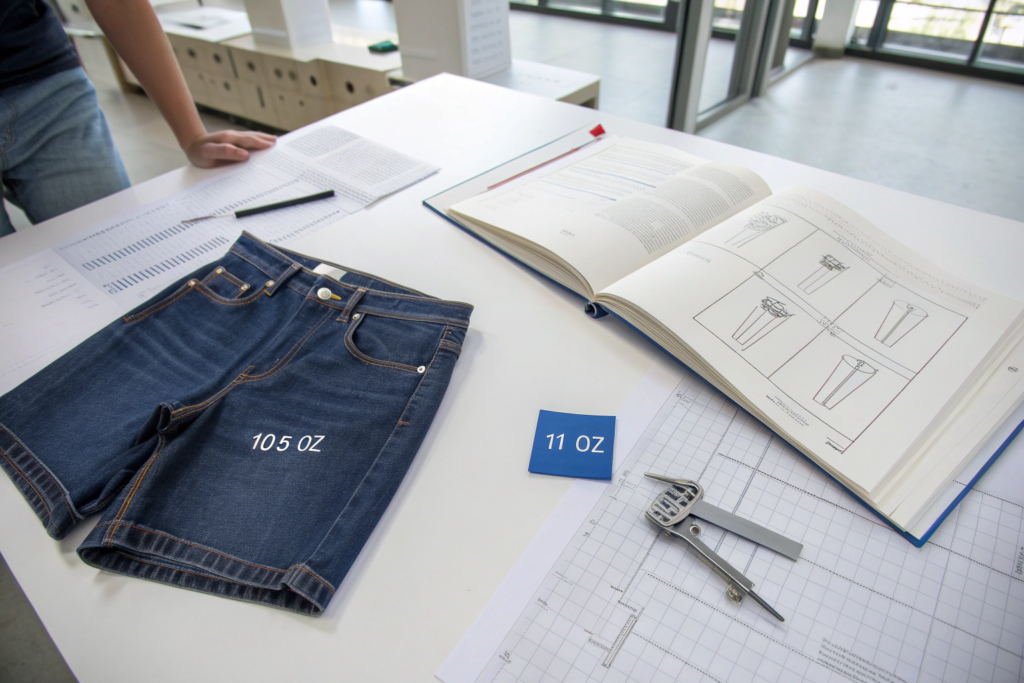
A custom order has more variables than a stock order. The fabric might be a custom dye lot. The hardware might have a custom mold. The wash is being run for the first time at bulk scale. Each of these variables is a potential delay point. A shared, detailed timeline makes these variables visible.
When you place a custom order with us, you receive a link to a production tracking board. The board shows the major milestones: Fabric Sourcing, Pattern Finalization, Cutting, Sewing, Wash, Inspection, Packing, and Shipment. Each milestone has a planned date and an actual completion date. The board is updated daily by the production coordinator. If the custom button mold takes three days longer than planned at the hardware supplier, the "Sewing" milestone date shifts by three days. You see the shift happen. You can adjust your launch marketing calendar accordingly. This production planning and control transparency prevents the end-of-timeline panic where the ship date arrives and the goods are not ready. It also holds our team accountable. A publicly visible delay is a powerful motivator to solve the problem quickly. The old model, where the buyer sends an email asking for an update and waits three days for a reply, is a recipe for missed deadlines. The new model is a live dashboard.
How Does a Guaranteed DDP Price Keep Your Budget Predictable?
Custom orders often involve higher per-unit costs than stock items. The fabric is special. The wash is complex. The margin for error in your financial planning is thinner. A surprise freight bill or a customs duty assessment can wipe out your profit on a custom run.
Our DDP pricing eliminates budget variance. The price we quote you per unit, delivered to your door, is the price you pay. Period. We absorb the ocean freight fluctuation. We handle the customs bond. We pay the duty at the correct HTS rate for your specific fiber blend. If the container is flagged for a customs exam, the inspection fee is ours. If the port is congested and storage fees accrue, they are ours. You can build your retail price and your gross margin calculation on a fixed, guaranteed cost. A Seattle-based brand owner told me last year that his previous factory quoted an attractive FOB price for a custom wash short. The final landed cost, after freight, duty, broker fees, and a surprise exam fee, was 22% higher than the FOB quote. That 22% was his entire projected profit margin. The DDP shipping terms transfer the logistics risk to the party best equipped to manage it. The factory ships every day. You ship a few times a year. The factory has the broker relationships, the volume freight discounts, and the experience to handle customs. You should not be learning customs clearance on a critical custom order. Let the factory own that risk.
Conclusion
Premium custom denim shorts are not found. They are made. The making happens in a factory that invested in the three capabilities that cannot be outsourced. An in-house pattern room that turns your vintage reference into a graded size run with millimeter precision. A dedicated wash lab that runs five test swatches and a spectrophotometer reading to nail your unique fade. A vertically integrated production floor where the pattern maker, the wash technician, the sewing line supervisor, and the quality auditor all work for the same company, under the same roof, with the same accountability to your brand.
Finding this factory requires disciplined research. Filter the online directories by "Manufacturer" and cross-check the photos. Demand a live video tour and ask to see the electricity meter, the cutting table work order, and the fire extinguisher tag. Ask to speak to the pattern maker. A factory that passes these tests has earned the right to quote on your custom project. Once you engage, the process should be a transparent, milestone-based journey from tech pack review to proto sample to fit sample to pre-production approval. The timeline should be visible on a shared dashboard. The price should be a single DDP number that lands the shorts at your warehouse door with no surprise fees.
I built Shanghai Fumao to be this kind of factory. The kind where a brand owner with a sketch and a vision can walk through a structured development process and emerge with a carton of shorts that look exactly like the image in their head. If you have a custom denim short design you are ready to bring to life, I invite you to start the conversation. Contact our Business Director, Elaine. She will ask you the detailed questions about fabric weight, wash references, and hardware preferences. She will build your tech pack with you if you do not have one. She will send you a video tour of our pattern room and wash lab. Her email is elaine@fumaoclothing.com. Let Shanghai Fumao be the factory that turns your custom denim short design from a sketch into a best-selling product.