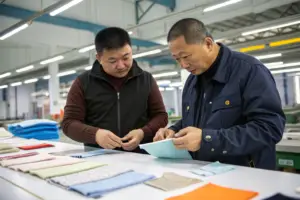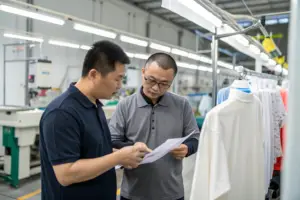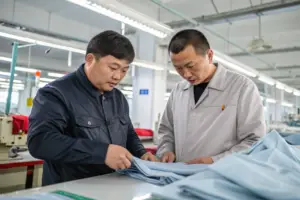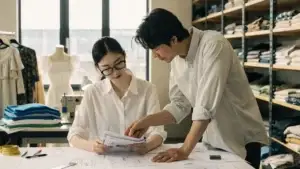
You have been scrolling through supplier catalogs for weeks. You finally found a factory whose linen wide-leg pants look perfect in the photos. The price fits your margin calculation. You are ready to move forward. But a quiet, reasonable voice in your head asks, "What if the fabric feels cheap in person? What if the fit is wrong? What if the color is nothing like the screen?" You ask the supplier for a sample. And then the response comes back: "We require a sample fee of $200 plus $80 shipping." Or worse, "We don't provide samples without a bulk order deposit." Suddenly, you are being asked to gamble thousands of dollars on a product you have never touched, worn, or inspected with your own hands. That is not a sourcing strategy. That is a blind bet.
Yes, you can absolutely get samples of linen wide-leg pants before placing a bulk order with Shanghai Fumao. We operate a structured sampling program with three tiers: a stock sample program where we send existing designs from our showroom for a refundable fee, a custom sample program where we develop your specific design with your chosen fabric and trims, and a pre-production sample that serves as the legally binding reference standard for your bulk order. Each tier has a defined cost, timeline, and purpose. The only thing we do not do is ask you to commit to a bulk order before you have physically held our product.
My name is Elaine. I have been on both sides of the sample conversation. As a factory owner, I understand the cost and labor that goes into making a single pair of pants. As someone who has also been a buyer earlier in my career, I understand the insanity of being asked to wire a 30% deposit for goods you have never seen. I built our sampling program to bridge this trust gap. In this article, I will explain exactly how sampling works at Shanghai Fumao, what each sample type costs and how long it takes, how to evaluate a sample like a professional so you don't waste a round, and what legal protections a pre-production sample provides you. Because a sample is not just a preview. It is the physical contract between your brand's promise and our factory's delivery.
What Types of Samples Can You Request Before Committing to a Bulk Order?
The word "sample" means different things to different suppliers. To some, a sample is a photo they send you on WhatsApp. To others, it is a garment they pulled from a previous client's overrun, in a size and color you did not choose. To a professional factory, sampling is a structured, multi-stage process. Each stage answers a different question. The stock sample answers, "What is your baseline quality?" The custom sample answers, "Can you execute my specific design?" The pre-production sample answers, "Will the bulk production match what I approved?" Understanding these distinctions prevents you from accepting a stock sample when you need a custom sample, or paying for a custom sample when a stock sample would have answered your initial questions.
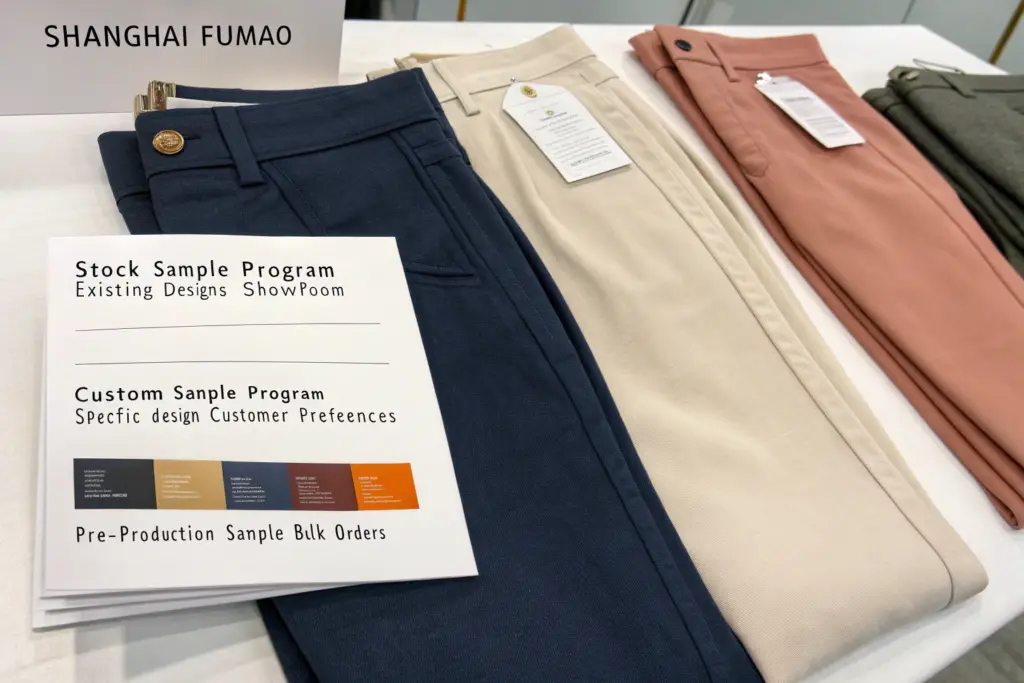
Shanghai Fumao offers three sample types, each mapped to a specific stage of your buying journey. A stock sample shows our existing workmanship and fabric quality using our in-house designs. A custom sample is made to your exact specifications, from your tech pack or reference image, using your selected fabric and trims. A pre-production sample is the final, sealed reference garment made from your actual bulk production fabric, used to approve the line before bulk cutting begins.
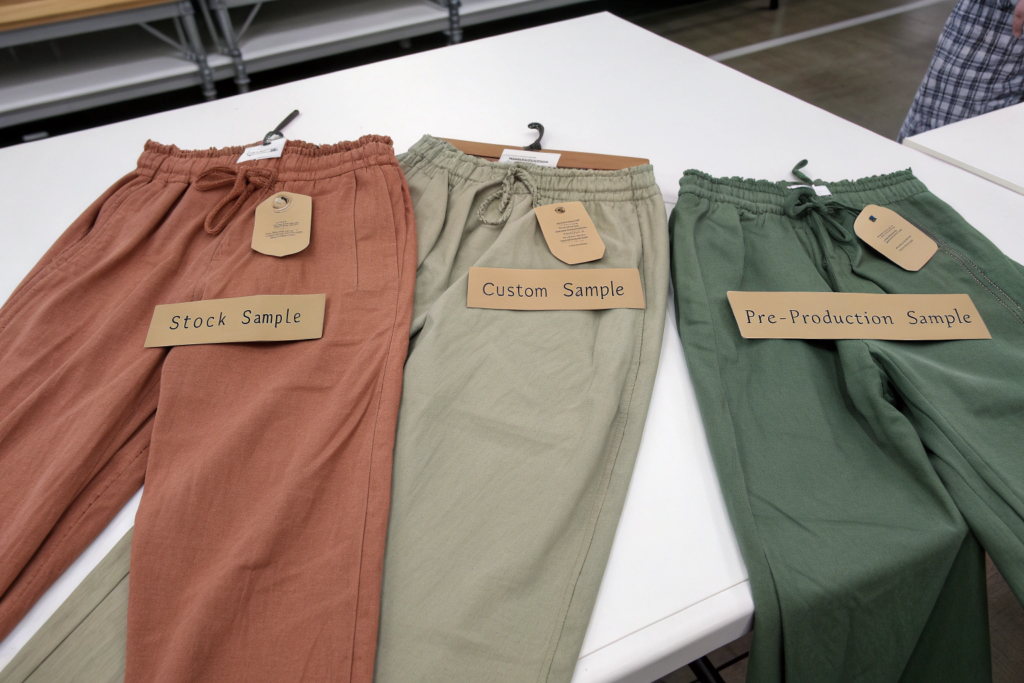
When Is a Stock Sample Sufficient for Your Initial Evaluation?
If you are a first-time buyer evaluating a new supplier, you do not yet need a sample of your specific design. You need a sample that answers one question: "Is this factory's workmanship and fabric quality good enough to trust with my brand?" A stock sample answers this question quickly, inexpensively, and without the complexity of developing a new style.
At Shanghai Fumao, our stock sample program works like this. We maintain a showroom collection of our best-selling linen wide-leg pant styles in standard sizes, usually a U.S. size 6 or 8. You browse our online showroom or request photos. You select a style that is close to the silhouette you are interested in, whether that is a high-waisted palazzo, a barrel-leg, or a classic straight wide-leg. We ship that sample to you. The sample fee ranges from $50 to $80 per piece, which covers a portion of our production cost and the international courier fee. This fee is fully refundable against your first bulk order. If you place an order of 300 units or more, we credit the sample fee back to your invoice. If you do not place an order, you keep the sample and the fee is not refunded. This fee structure filters out non-serious requests while protecting serious buyers from a sunk cost. The stock sample allows you to evaluate our stitch quality, our fabric hand feel, our internal finishing, our label attachment, and our overall attention to detail. You can wash it, wear it, and see how the linen ages. One buyer who later became a long-term client told me she wore our stock sample pants for three months before placing her first order. She wanted to see how the fabric held up after multiple washes. The pants passed her personal durability test. That level of confidence is what a stock sample provides. The garment sampling best practices guide emphasizes that a supplier's willingness to provide stock samples with a transparent, refundable fee structure is a strong signal of their confidence in their own product quality.
What Information Do You Need to Provide for a Custom Sample?
Once you have validated our baseline quality through a stock sample, or if you already have a specific design in mind, the next step is a custom sample. This is where we bring your vision to life. The more precise information you provide, the fewer sampling rounds you will need, and the lower your development cost will be.
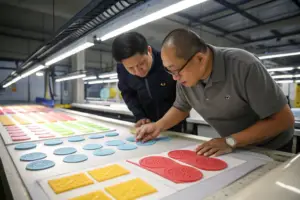
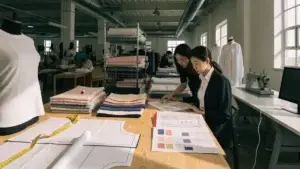
For a custom sample, we ask for a minimum information set. First, a reference image or a sketch. This can be a professional flat sketch, a photo of a competitor's pant you want to adapt, or even a mood board image that captures the silhouette and drape. Second, your size specifications. If you have a full tech pack with graded measurements, that is ideal. If you do not, we can work from a base size and your target fit description, such as "relaxed through the hip, wide leg with a 26-inch hem opening." Third, your fabric and trim preferences. You can select from our in-house fabric archive, or you can send a reference swatch of the texture and weight you want. Fourth, your color selection, either a Pantone reference or a physical color standard. The custom sample fee ranges from $120 to $200 per style, depending on the complexity of the design and the number of pattern pieces. The timeline is typically 10 to 14 business days for the first sample. This fee is also refundable against a bulk order of 500 units or more. A custom sample is an iterative process. The first sample rarely achieves 100% of the designer's vision on the first try. That is normal. We expect feedback and adjustments. What separates a good sampling experience from a frustrating one is the clarity of the feedback. I will discuss how to give effective sample feedback later in this article. The fashion tech pack creation guide provides templates for organizing your design specifications. A well-prepared spec sheet is the fastest path to an accurate first sample.
How Does the Sampling Process Work Step by Step at Fumao?
A sampling process that feels like a black box creates anxiety. You send your design brief. A silence follows. Three weeks later, a package arrives. You open it with a mix of hope and dread. The process should not feel this way. You should know exactly where your sample is in the pipeline, who is working on it, and when it will ship. Transparency during sampling is a preview of the communication culture you will experience during bulk production. If the supplier is vague about sample timelines, they will be vague about production timelines.
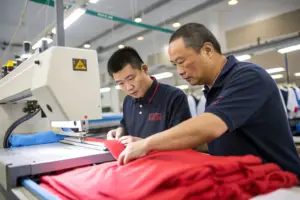
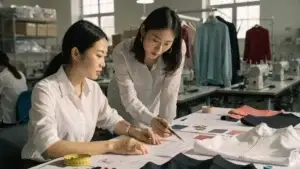
Our sampling process follows a published, six-stage workflow that is visible to you through a shared digital tracker. The stages are: Design Brief Review, where we confirm all specifications are clear; Pattern Making and Grading, where our pattern engineer creates or adapts the pattern; Fabric and Trim Sourcing, where we pull from stock or procure your specific materials; Sample Cutting and Sewing, executed by our dedicated sample team; Internal Quality Check, where the sample is measured and inspected against your spec; and Client Shipment, with a tracking number provided the same day. Each stage has a defined duration, and delays are communicated proactively.
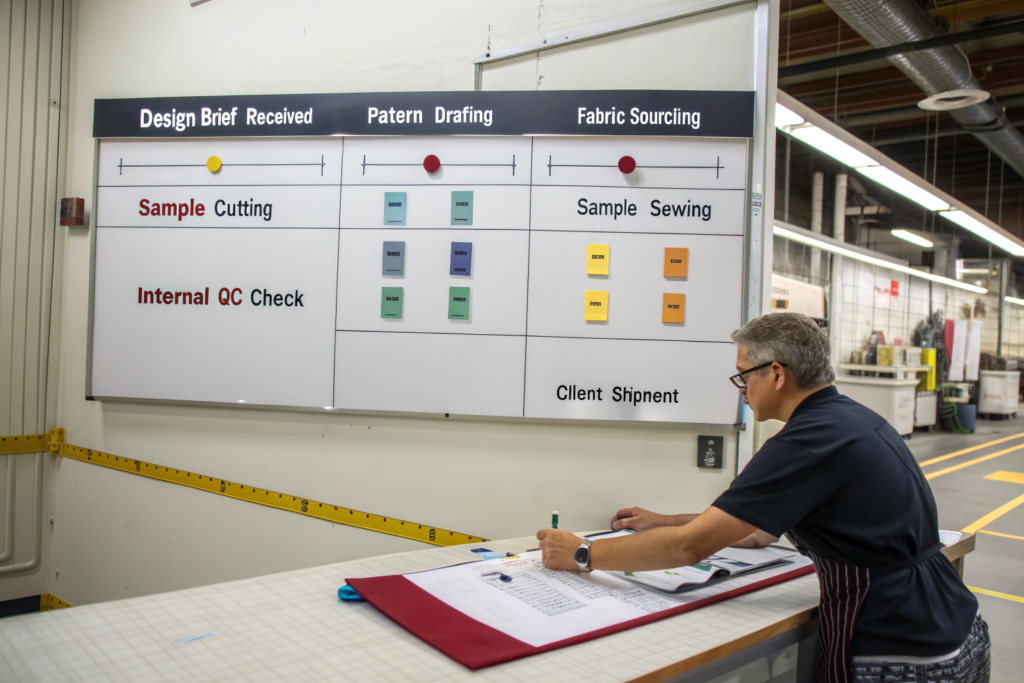
What Happens During the Internal Quality Check of a Sample?
Before any sample leaves our studio, it passes through an internal quality gate. This is not a cursory glance. It is a systematic check against the specifications you provided. The purpose is to catch and correct errors before the sample reaches your hands. A sample that arrives with a missing label, a crooked hem, or a measurement that is a half-inch off creates an immediate negative impression, even if those errors are easily fixable. The sample is a first date. It should arrive looking its best.
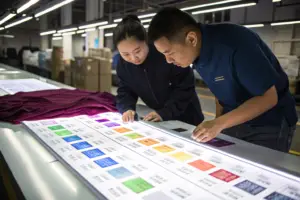
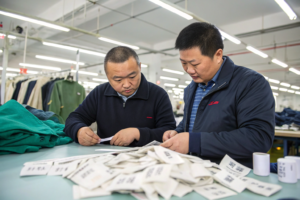
Our internal sample QC checklist includes the following verification points. Measurement against spec: every key measurement on the sample, from the waist circumference to the inseam length to the hem opening width, is measured and recorded on a form. This form is included in the package with the sample, so you can see our measurements against your spec. Stitch quality: all seams are inspected for consistent stitch tension, no skipped stitches, and correct seam type as specified. Trim accuracy: labels, hangtags, buttons, and zippers are checked against the approved trim card. Color matching: the sample fabric is compared against the approved lab dip or Pantone reference under a D65 lightbox. Pressing and presentation: the sample is professionally pressed, folded, and packaged so it arrives in pristine condition. If any check fails, the sample goes back to the sample room for correction. It does not ship until it passes. This internal QC step saves you the frustration of receiving a sample with obvious errors, which then requires a "fix and resend" cycle that wastes a week. The garment quality control checklist provides a detailed framework for sample inspection. You should ask your supplier whether they perform an internal QC on samples before shipping. A supplier who does not is using you as their quality inspector.
How Long Does Each Sample Type Take From Request to Delivery?
Timelines in sampling are determined by two factors: the availability of fabric and the complexity of the design. A stock sample ships fastest because the fabric and pattern already exist. A custom sample takes longer because both may need to be created. Here are our standard timelines, measured from the date we receive a complete and clear design brief.
| Sample Type | Pattern Making | Fabric Sourcing | Cutting & Sewing | QC & Shipping | Total Lead Time |
|---|---|---|---|---|---|
| Stock Sample | Not required (existing pattern) | In stock | 1-2 days | 1 day + courier | 3-5 business days |
| Custom Sample (stock fabric) | 2-3 days | In stock | 3-4 days | 1 day + courier | 7-10 business days |
| Custom Sample (special fabric) | 2-3 days | 5-10 days | 3-4 days | 1 day + courier | 12-18 business days |
| Pre-Production Sample | Not required (pattern locked) | Bulk fabric | 3-4 days | 2 days + courier | 7-10 business days |
The courier delivery time to North America typically adds 3 to 5 business days. The total calendar time from sample request to sample in your hands is roughly two to three weeks for a custom sample. If a supplier promises a custom sample in three days, be skeptical. A rushed sample is a poorly made sample. Good sampling requires time for the pattern engineer to think, for the fabric to relax before cutting, and for the sewer to work at sample-room speed, not production-line speed. We prioritize accuracy over speed in sampling. The apparel sampling lead time optimization article explains the trade-offs between fast samples and accurate samples. A sample that arrives fast but wrong costs more time in re-sampling than a sample that takes an extra three days and arrives correct.
How Should You Evaluate a Sample and Provide Feedback Professionally?
A sample arrives. You open it. Your emotional reaction is immediate. You either love it or you are disappointed. Both reactions are useful data, but neither is actionable feedback. Actionable feedback is specific, measurable, and visual. It tells the factory exactly what to change, by how much, and in what direction. "The fit feels off" generates a guessing game that leads to a second sample that also feels off. "The front rise is 1.5cm too short, causing pulling at the natural waist. Increase front rise by 1.5cm at the center front, tapering to 0cm at the side seam" generates a corrected sample that fits. The quality of your feedback directly determines the speed of your sampling process and the accuracy of your final product.
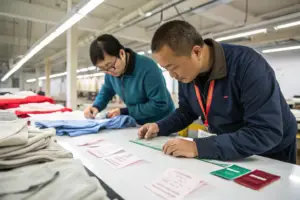
Evaluate a sample against three distinct criteria: measurements against your spec sheet, fit on a live body or dress form, and aesthetic details including drape, color, and trim. Provide feedback using a visual markup method where you draw directly on a photo of the sample, circling problem areas and annotating with specific measurements and directional changes. Avoid vague language like "make it looser" or "this looks weird." Use specific, quantitative instructions that a pattern maker can translate into a revised pattern.
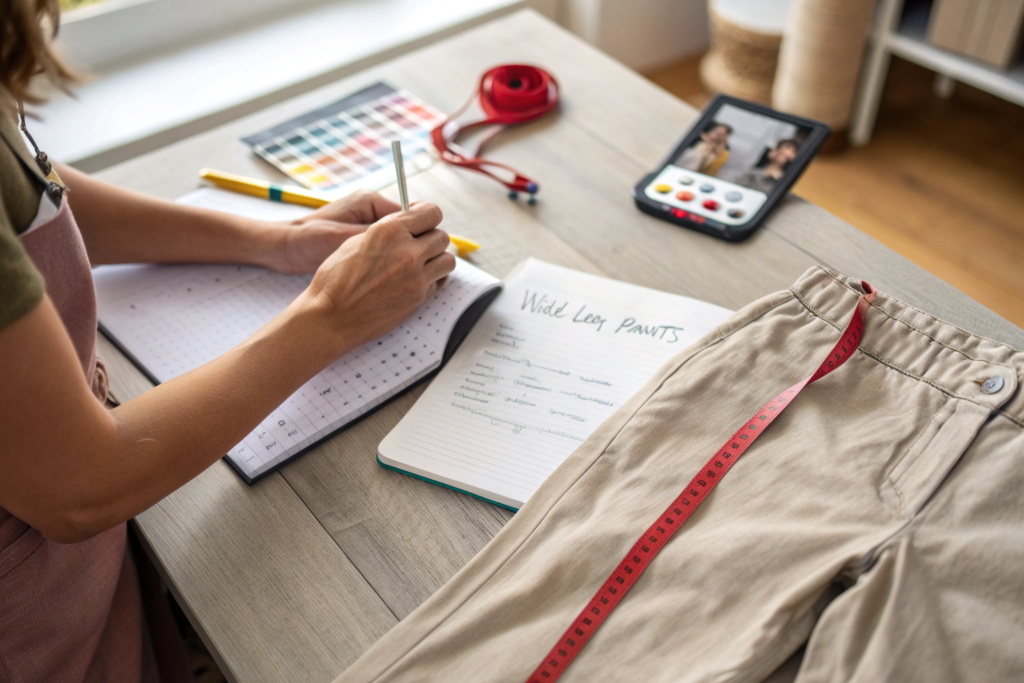
What Is the Best Method for Documenting Fit Corrections?
The most accurate way to communicate a fit problem is through a "fit comment photo." You, or a fit model, wear the sample. Someone photographs you from the front, side, and back, in natural light, standing in a relaxed posture. You then mark up these photos using a basic image editing tool, or even your phone's photo markup feature. You draw an arrow showing where the fabric pulls. You draw a line showing where you want the waistband to sit. You write directly on the image: "Reduce hip width by 2cm total (1cm per side)." The marked-up photo is worth a thousand words of written description.
I have seen sampling rounds reduced from four to two solely by switching from written feedback to visual feedback. The reason is simple. A Chinese pattern maker reading an English email translated by a sales rep loses nuance. A pattern maker looking at a photo with arrows and measurements drawn directly on it understands instantly. The visual language of pattern making is universal. We encourage our clients to schedule a 15-minute video call to review the fit sample together. You wear the sample or put it on a dress form. We watch on video. You point to the issue on camera. Our pattern maker, who joins the call, sees exactly what you see and asks clarifying questions in real time. This collaborative fit session often resolves multiple issues in one call that would have taken two rounds of written feedback. The fit sample evaluation best practices guide explains the professional fit assessment process. Invest the time in a live fit review. It accelerates the entire development timeline.
How Do You Distinguish Between a Sample Error and a Design Flaw?
Not every problem with a sample is a factory error. Some problems are design flaws that the sample has revealed. A design flaw is an issue inherent in the concept: a pocket placed in a location that gaps when the wearer sits, a hemline that looks unbalanced at the specified length, a fabric choice that wrinkles excessively in a fitted area. A sample error is a deviation from the agreed specification: a seam sewn at the wrong allowance, a zipper installed backward, a color that does not match the lab dip.
Distinguishing between the two is critical because the solution is different. A sample error is the factory's responsibility to fix at their cost. A design flaw requires a collaborative re-design conversation and may incur additional sampling costs. I recall a situation where a client specified a very deep side pocket on a wide-leg linen pant. The sample arrived with the pocket exactly as specified. But when worn, the pocket bag pulled the side seam open, creating a gap. This was a design flaw, not a sample error. Our pattern engineer suggested reducing the pocket depth by 3cm and adding a bar tack at the pocket opening to stabilize the seam. The client approved the change, and the second sample was perfect. The additional sample cost was the client's responsibility because the original specification was followed exactly. A good factory will identify potential design flaws during the pattern-making stage and flag them before cutting the sample. Our pattern engineer's design brief review includes a "constructability assessment." If we see a potential issue, we send a note: "The specified pocket depth may cause gaping in this lightweight linen. We recommend a maximum depth of 18cm. Do you approve this adjustment, or would you like to proceed as specified?" This proactive communication prevents the client from paying for a sample that is destined to have a problem. The design for manufacturability in apparel concept explains how early collaboration between design and production reduces sampling iterations and cost.
What Legal Weight Does a Pre-Production Sample Carry?
The pre-production sample, often called the PP sample or the gold seal sample, is the most important garment in your entire order. It is not just another sample. It is the physical definition of what you have agreed to pay for. In a legal dispute, the PP sample, signed and dated by both parties, is the reference standard. The bulk production is measured against it, not against the original tech pack, not against the first custom sample, and certainly not against the supplier's verbal promises. Everything that came before the PP sample was exploration. The PP sample is the contract, rendered in fabric and thread.
The pre-production sample must be made from the actual bulk production fabric, not a sampling meterage. It must include all approved trims, labels, and hangtags in their final form. It must be signed, dated, and sealed by both you and the factory. A copy is retained by you, and a copy is retained by us. Any deviation in the bulk production from the PP sample constitutes a quality failure, entitling you to the remedies specified in your purchase agreement. Without a sealed PP sample, you are relying on memory and goodwill, neither of which is a strong position in a dispute.
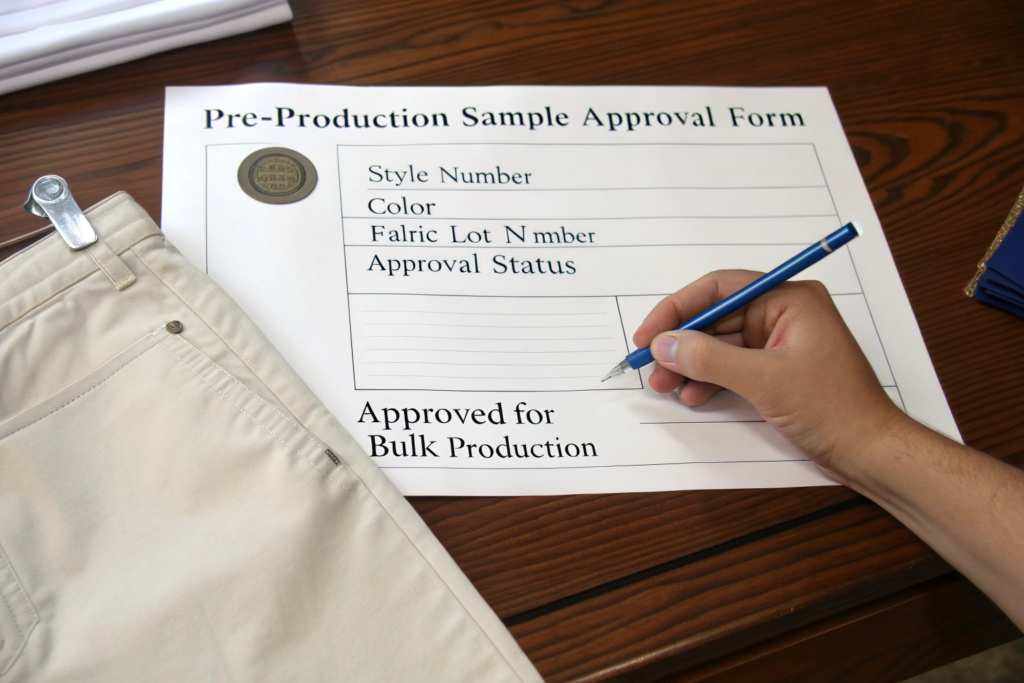
What Specific Elements Must a PP Sample Approval Form Include?
A verbal "I approve" over the phone is not a legal approval. A formal PP sample approval form should be a one-page document that accompanies the sealed sample. It should include the following specific elements.
The style number and style name. The purchase order number to which the sample is linked. The fabric lot number from which the sample was cut, which must match the bulk fabric lot. The color name and the approved lab dip reference number. A checklist of all trims with confirmation of their approval status: main label, care label, hangtag, buttons, zippers, drawcords. The measurement chart with the approved measurements filled in, and a column for the actual sample measurements. A signature line for the buyer, with the date. A signature line for the factory representative, with the date. A space for comments, where any "accepted deviations" are explicitly noted. For example, "Accepted: slight color variation in the pocket lining, which will be corrected in bulk." This document, stapled to a fabric swatch cut from the same roll used for the sample, creates a complete physical record of what was approved. In my fifteen years in this industry, I have seen this document resolve disputes that could have escalated into chargebacks. A brand owner once claimed the bulk pants were a different shade than what was approved. We pulled out the PP sample and its attached fabric swatch, placed them next to the bulk pant, and held them under the lightbox together. The shade matched. The dispute was resolved in five minutes because the evidence was physically present. The pre-production sample protocol guide details the industry standard for PP sample management. Demand this level of formality from your supplier. A supplier who treats the PP sample as a casual step is a supplier who will treat your quality standards as casual suggestions.
How Does the PP Sample Protect You in a Quality Dispute?
Imagine this scenario. Your bulk shipment arrives. You open a carton and feel immediately that the fabric is thinner than what you approved. The supplier says, "This is the same fabric as the sample. You must be mistaken." Without a sealed PP sample and a fabric lot number record, you have a "he said, she said" argument. You might win a partial credit through negotiation. You are unlikely to win a full refund or a return through a legal process.
With a sealed PP sample and a documented fabric lot number, the situation changes. You pull out the PP sample. You weigh the fabric. You compare the GSM. You provide the lab test report showing the bulk fabric is 30 GSM lighter than the PP sample fabric. The supplier's fabric lot number records show they used a different lot than the approved one. The contractual clause, supported by the physical PP sample, entitles you to a remedy. The PP sample transforms a subjective opinion about fabric weight into an objective, measurable, and contractually enforceable fact. I have been on the supplier side of a PP sample investigation. It forces accountability. It makes our incoming fabric inspection more rigorous because we know any deviation from the PP sample lot will be caught and will cost us. The PP sample is not a bureaucratic exercise. It is the mechanism by which the sample you approved becomes the standard we must meet. The garment quality dispute resolution services offered by third-party inspection companies often use the PP sample as the primary reference standard. If you do not have one, the inspector has no baseline for comparison. If you do have one, the inspector's job is straightforward and the report is conclusive.
Conclusion
Sampling is the bridge between digital selection and confident bulk ordering. It replaces hope with evidence. A stock sample proves the factory's baseline quality and allows you to touch, wear, and wash our product before any financial commitment beyond a refundable fee. A custom sample translates your specific design vision into a physical garment, revealing both the factory's interpretive skill and the real-world behavior of your chosen fabric. A pre-production sample, made from bulk fabric and formally sealed and signed, becomes the physical contract that defines what you have purchased and what we must deliver.
At Shanghai Fumao, we have structured our sampling program to be transparent, affordable, and legally robust because we want our clients to order with their hands and their eyes, not just with a hope. We do not ask you to trust us. We ask you to test us. Request a stock sample. Wear it. Wash it. Then let's develop your custom design together, and lock it in with a sealed PP sample that protects us both.
If you are ready to move from a screen image to a physical garment you can hold, I am ready to start the process. Contact me, Elaine, at elaine@fumaoclothing.com. Tell me which of our stock designs you would like to evaluate, or send me your tech pack and reference images, and I will provide a sampling timeline and fee quote within one business day. Let's build your proof before you write the big check.