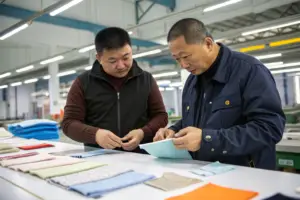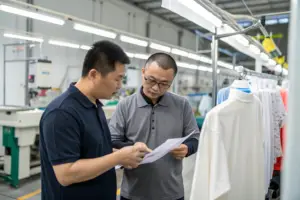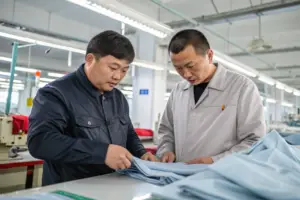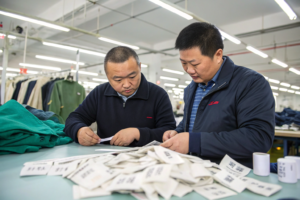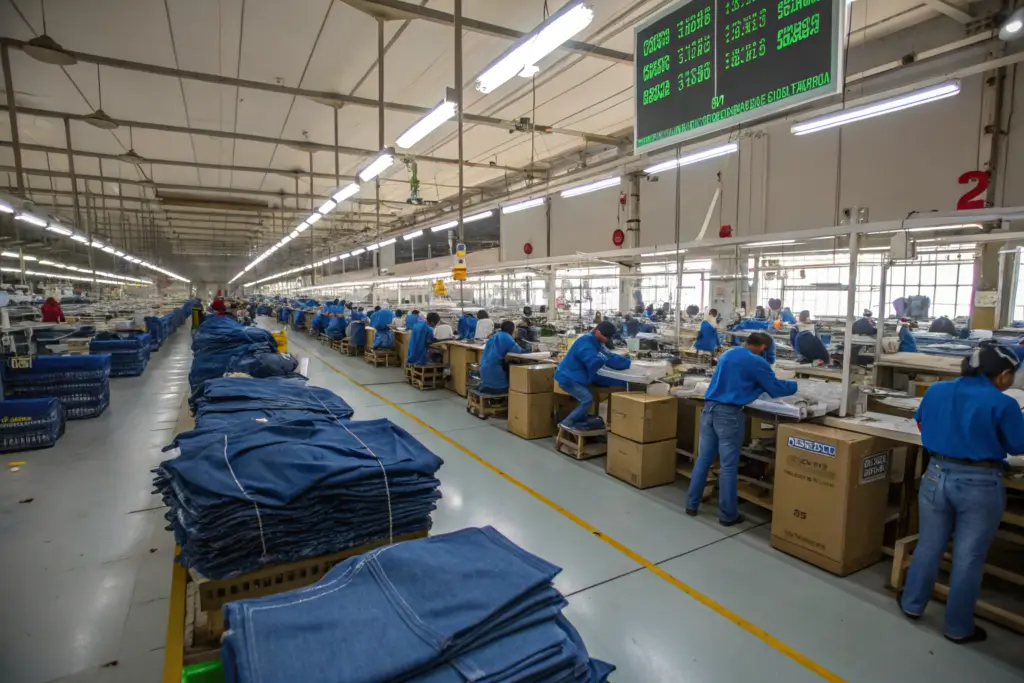
Large orders are a different animal. A factory that can sew 500 pairs beautifully might collapse under the weight of 15,000 pairs. Deadlines get missed. Quality drifts. Communication breaks down. You wire a deposit of $60,000. You plan your entire summer season around the delivery. And then the factory goes silent for three weeks. When they finally respond, the shipment is delayed by a month. The selling window is closing. Your retail buyers are calling you, angry. I have heard this nightmare from too many brand owners who chose a factory based on a low price and a friendly salesperson, without asking the hard question about capacity. Can this factory actually handle my volume without subcontracting half the work to an unknown workshop?
Yes, Shanghai Fumao can handle large wholesale orders for denim shorts. Our five owned production lines have a combined capacity of 25,000 to 30,000 pieces per month for denim products. We have delivered single orders of 50,000-plus units to U.S. distributors. We achieve this without subcontracting because we own the lines, control the schedule, and maintain a pre-stocked greige fabric inventory that eliminates the 15-day mill lead time for repeat orders.
But claiming capacity is easy. Proving it is harder. You need to understand the physical reality behind the number. How many machines do we actually have? How many workers per line? What happens when two large orders overlap? I want to show you the machinery, the workforce, the scheduling system, and the real-world case studies that demonstrate our capacity is not a marketing slide. It is a physical asset you can verify.
What Is Our Actual Monthly Production Capacity for Denim Shorts?
Capacity is a number that factories inflate. They take the theoretical maximum, multiply it by a wish, and present it as reality. "Oh yes, we can do 50,000 pieces a month," says the salesperson. Then you visit the factory. You count 20 sewing machines. You do the math. Twenty machines times eight hours times twenty working days. The real capacity is closer to 4,000 pieces. The salesperson was off by a factor of twelve.
I do not want to sell you a false promise. I want to give you the real numbers, the ones you can verify with a calculator or a video tour. Our denim shorts capacity is calculated from the physical assets we own. We have five lines. Each line has 28 workstations. Each workstation has an industrial sewing machine, a trained operator, and a specific task in the assembly sequence. When we run denim shorts, the line is balanced for a takt time of approximately 2.5 minutes per operation. This yields about 200 pieces per line per 10-hour shift. With one shift per day, one line produces 1,000 pieces per five-day week. Five lines produce 5,000 pieces per week. Over a 4.3-week month, that is 21,500 pieces. We can push to 30,000 with overtime and weekend shifts during peak season. These numbers are not theoretical. They are based on actual output tracked daily on our production dashboard.
Let me break down the two key resources that determine whether we can absorb your order without compromising existing commitments.
How Do Our Five Production Lines Distribute Workload During Peak Seasons?
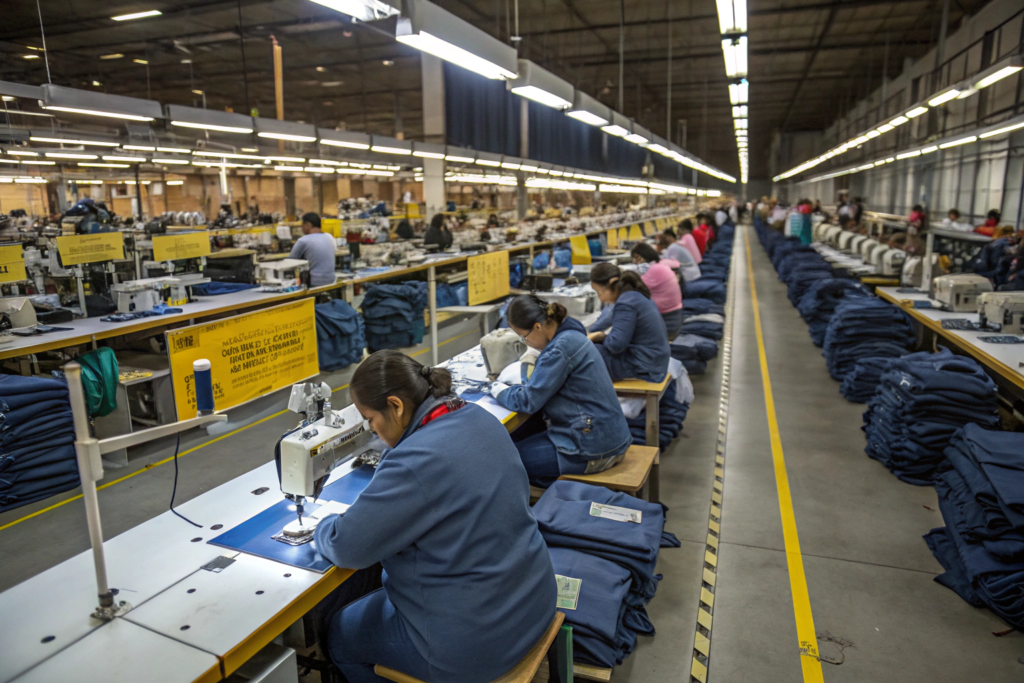
Peak season for denim shorts is January through May, for delivery into the U.S. summer market. During these months, our five lines operate at 90% to 100% allocation. But we do not wait until January to plan. Capacity planning starts in September.
We use a capacity booking model. Each client with a confirmed order reserves a slot on a specific line for a specific number of weeks. The slot is defined by the start date, the line number, and the piece quantity. Once a slot is booked, we do not overbook it. This is the same model airlines use for seats. If the line is fully booked for March, we tell the client honestly that their order will begin in April. We do not accept the order and then hope for the best. During peak 2025, we ran four lines on denim shorts and one line on denim jackets. When an urgent reorder came in from a large Florida distributor, we shifted the jacket line to shorts for seven days to accommodate the rush. This flexibility exists because we own all five lines. We do not need permission from a subcontractor. The capacity planning system is visible internally on a magnetic whiteboard that spans an entire wall of the production office. Every order, every line, every week is represented by a magnetic card. If a client visits, they can see their card on the board. Transparency is the cure for capacity anxiety.
What Machinery and Workforce Size Supports Our Output?
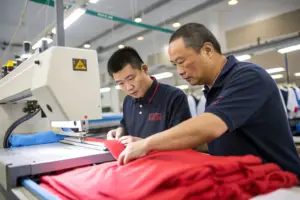
A capacity number is meaningless without the machinery and the skilled workers to back it up. Our five lines together house 140 industrial sewing machines. These include lockstitch machines for seams, overlock machines for edge finishing, chainstitch machines for waistbands, bar tack machines for pocket corners, and buttonhole and button attach machines for the fly.
Each machine is paired with a trained operator. Our total workforce is 220 employees across all departments. The sewing floor has 140 operators. The cutting room has 12. The wash house has 8 technicians. The quality team is 15 inspectors and auditors. The remaining headcount is pattern makers, mechanics, warehouse staff, and management. Cross-training is the secret to our flexibility. We do not have 140 operators who each know only one operation. We have a core of 100 specialists and 40 floaters who are certified on three or more machines. When an order requires more overlocking capacity, we shift floaters to the overlock stations. When the bar tack station becomes a bottleneck, we shift floaters there. This manufacturing workforce flexibility means we can adapt the line balance to the specific requirements of your short. A style with multiple pockets needs more lockstitch time. A style with a simple design needs less. Our line supervisors rebalance the workload daily based on the style running that day.
How Do We Manage Raw Material Supply for Volume Orders?
A factory can have empty machines. The machines mean nothing without fabric. The most common reason a large order is delayed is not sewing capacity. It is raw material shortage. The factory accepted the order. They planned the production. Then they called their fabric mill and heard "the yarn is delayed, delivery in three weeks." The production slot sits empty. The workers are idle. The ship date slides.
We solved the raw material problem for denim shorts by changing our inventory philosophy. The traditional model is Just-In-Time. You order fabric after you receive the buyer's purchase order. This minimizes working capital. It also maximizes delay risk. We operate a Just-In-Case model for our core denim specifications. We stock greige fabric, undyed and unfinished denim, in our warehouse for the specifications that our U.S. clients order most frequently. When your order arrives, we are not waiting for the mill. We are pulling rolls from our own rack and moving them to the dyeing and finishing queue. This cuts 10 to 15 days out of the lead time and eliminates the most common delay point.
Here is how our fabric inventory system supports large, time-sensitive wholesale orders.
What Is Our Greige Fabric Inventory Strategy for Popular Denim Specs?
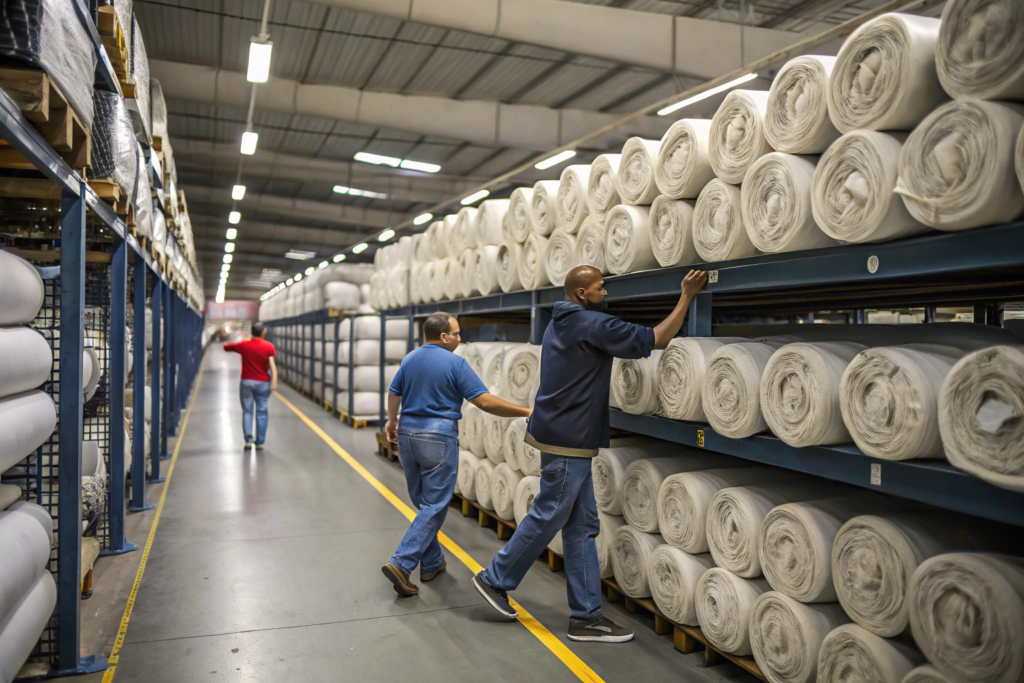
Greige fabric is denim before it has been finished. It is the raw, unwashed cotton fabric straight off the loom. It is a creamy, off-white color. It is stable. It can be stored for months without degradation if the warehouse is climate-controlled. We stock four greige specifications that cover 80% of our denim short orders. A 10.5 oz 3/1 right-hand twill, 99% cotton 1% spandex, in a standard width of 62 inches. A 12 oz rigid 3/1 twill, 100% cotton. An 8 oz lightweight twill for summer beach shorts. And a 10.5 oz twill with a higher spandex content of 2% for super-stretch styles.
At any given time, our greige warehouse holds between 30,000 and 50,000 yards of fabric across these four specifications. This represents a working capital investment of approximately $150,000 to $250,000. It is money sitting on a shelf. Many factories refuse to tie up this much cash. They would rather use the buyer's deposit to buy the fabric, which means the buyer waits. We made the strategic decision to use our own capital to pre-stock greige. This allows us to absorb a large wholesale order without a fabric lead time. When the order is confirmed, we issue the greige to our finishing partners for dyeing and sanforization. The dyed, finished fabric returns to our cutting room in 5 to 7 days. The greige fabric inventory model is common in large-scale vertical mills but rare in mid-sized garment factories. It is a competitive advantage we built deliberately for the U.S. wholesale market, where speed and reliability matter more than squeezing the last $0.05 out of the fabric cost.
How Do We Ensure Hardware and Trim Supply for 10,000+ Unit Orders?
Fabric is the big piece. Hardware and trims are the small pieces that can stop the whole line. A missing zipper. A delayed custom button. A hangtag that did not arrive. A 10,000-unit order requires 10,000 zippers, 10,000 buttons, 20,000 rivets, and 10,000 care labels. If any one of these is missing, the shorts cannot be completed.
We solve this with safety stock and supplier partnerships. Our primary hardware supplier is SBS Zipper. We maintain a standing monthly order with them for our standard YKK-style metal zippers in the three most common lengths for denim shorts. Our hardware cabinet holds a minimum of 20,000 zippers, 30,000 buttons, and 50,000 rivets at all times. For custom hardware, where the client has a branded button or a custom zipper puller, the lead time is longer. We order custom hardware at the same time we approve the pre-production sample. The hardware is in our warehouse before the fabric is cut. We do not start cutting if the custom hardware has not arrived. A brand owner from Ohio learned this lesson with a previous factory. His custom leather waistband patches were ordered late. The 8,000 finished shorts sat in polybags for 10 days waiting for the patches. The ship date was missed. With us, the trim arrival is a milestone on the production board. If the milestone is red, the line does not start. The supply chain risk management principle is simple. Identify the longest-lead-time component. Order it first. Track it obsessively. Do not cut fabric until it is in hand.
What Systems Do We Use to Maintain Quality Across Large Production Runs?
Quality on a 500-piece sample order is easy. You can personally check every piece. Quality on a 50,000-piece bulk order is a mathematical challenge. You cannot check every piece without a massive inspection team that costs more than the order margin. You need a statistical system that gives you confidence that the 49,800 pieces you did not check are as good as the 200 pieces you did check.
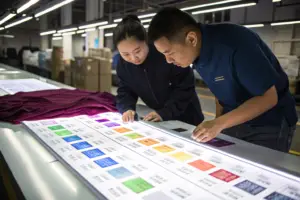
Our quality system for large runs is built on three statistical pillars. The hourly in-line audit catches production drift within 30 pieces of its origin. The AQL final inspection provides a statistically valid sample of the finished lot. And the batch traceability system allows us to isolate any problem to a specific roll of fabric, a specific operator, and a specific hour of the day. These three pillars work together. In-line stops the bleeding. AQL measures the health of the patient. Traceability identifies the source of the infection. Without all three, you are guessing.
Let me explain the traceability system and the final inspection protocol that protect large wholesale orders from the hidden defect rate risk.

How Does Batch Traceability Work Across a 50,000-Unit Order?
Traceability means that every pair of shorts can be traced backward to the exact roll of fabric it came from, the exact operator who sewed the critical seams, and the exact wash batch it was processed in. This is achieved through a sticker system.
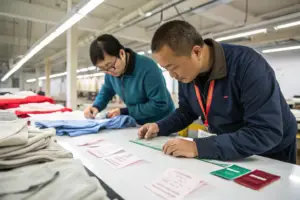
When a fabric roll is accepted at incoming inspection, it receives a unique roll ID number. This number is printed on a sticker and attached to the roll. When the roll is moved to the cutting room, the cutting work order records which pattern pieces were cut from that roll. The cut panels are bundled with a bundle ticket that lists the roll ID and the cut date. As the bundle moves through the sewing line, each operator attaches a small sticker with their operator number to the bundle ticket after completing their operation. By the time the short is finished, the bundle ticket carries a chain of custody. Roll ID. Cutter ID. Operator IDs for waistband, fly, inseam, and pocket. Wash batch number. If a quality issue is found at final inspection, say a skipped stitch on the inseam, the inspector reads the bundle ticket. The problem is traced to Operator 37 on Line 3 at 2:00 PM. We check the other pieces from Operator 37 in that same hour. If the problem is systemic to that operator, only the pieces they sewed in that hour are affected. Instead of re-inspecting the entire 50,000-unit order, we re-inspect 200 units. This batch traceability system limits the financial impact of a defect and allows for targeted corrective action. The operator is retrained. The process is fixed. The order moves forward.
What Final Inspection Protocol Applies to Orders Over 10,000 Pieces?
The industry standard for final inspection is AQL 2.5. For a lot size of 10,000 pieces, this means inspecting a sample of 200 pieces and accepting up to 10 major defects. We inspect at AQL 1.5 for large wholesale orders. For that same 10,000 pieces, we inspect 200 pieces and accept no more than 7 major defects. This is a statistically tighter standard.
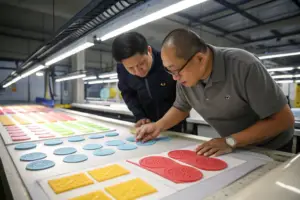
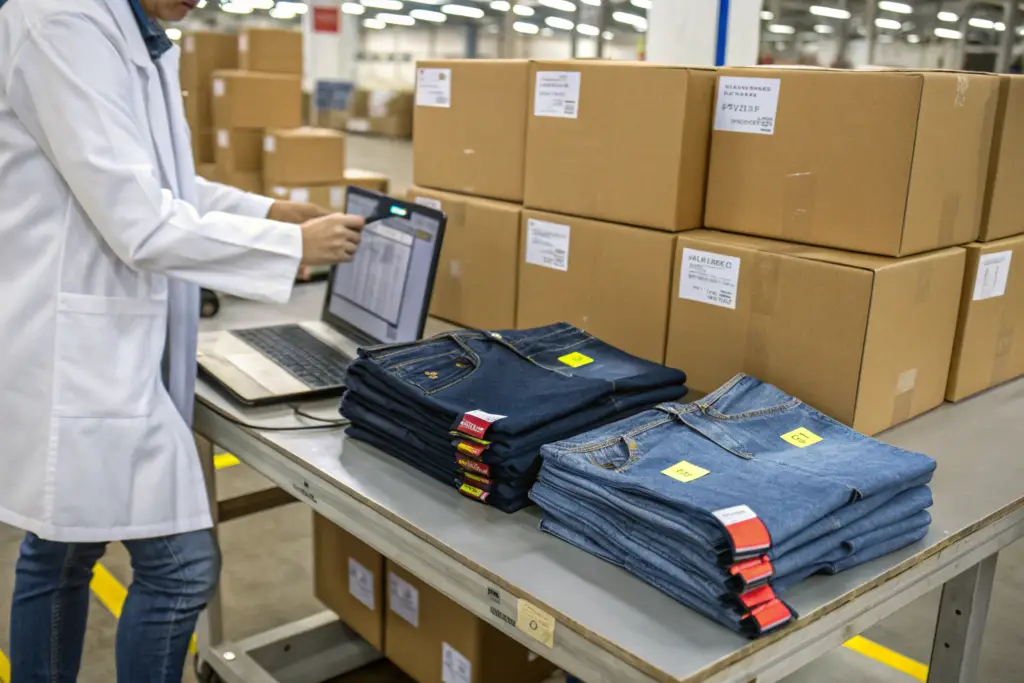
More importantly, our inspection is not a single event at the end. It is layered. The final AQL inspection is conducted by our independent QA team. They pull the random sample from the packed cartons. They inspect each piece for measurements, visual defects, and functional defects like zipper operation. The results are recorded on an inspection report. If the lot passes, a green release sticker is placed on each inspected carton. If the lot fails, the entire lot is quarantined. It does not leave the factory until a 100% re-inspection is completed and the lot passes. For orders over 10,000 pieces, we also recommend and facilitate a third-party inspection by SGS, QIMA, or Bureau Veritas. The third-party inspector works for you. They come to our factory on a date we do not select. They pull their own sample. They issue their own report. You receive the report before you release the balance payment. The AQL sampling table is a public standard. The math is transparent. A factory that claims to inspect but cannot explain their AQL level and sample size is not doing statistical inspection. They are doing a visual glance at a few open cartons. That is not quality control. That is theater.
How Do We Handle Logistics and Shipping for Large Wholesale Shipments?
Producing 30,000 pairs of shorts on time is half the battle. Getting them across the ocean and through U.S. Customs without damage, delay, or surprise fees is the other half. A large wholesale shipment is a big, heavy object moving through a complex international system. The container weighs several tons. The cargo value is six figures. A mistake in the paperwork can hold the container at the port for two weeks. Demurrage fees accumulate at $200 per day. Your margin evaporates while the shorts sit in a customs warehouse.
We handle logistics for large shipments under DDP terms, which means we are responsible for the goods until they reach your specified warehouse. This responsibility forces us to be meticulous about packing, documentation, and customs clearance. We use specialized denim export packing, pre-clear customs while the vessel is in transit, and provide real-time container tracking. The logistics chain for a large order is not an afterthought. It is a planned part of the production schedule.
Here is how we ensure your large wholesale order arrives intact, on time, and with no surprise costs.
What Packing and Container Loading Standards Prevent Transit Damage?
Denim shorts are heavy. A full 40-foot container can hold 25,000 to 30,000 pairs depending on the packaging. That weight puts tremendous pressure on the cartons at the bottom of the stack. If the cartons are single-wall, they will crush. The shorts inside will be compressed into wrinkled bricks.
We use double-wall corrugated export cartons for all wholesale shipments. Each carton has a bursting strength of 200 pounds per square inch. Inside the carton, the shorts are individually polybagged and folded to a standard retail-ready presentation. A desiccant pack is placed in each carton to absorb moisture during the ocean transit, which can swing from hot equatorial weather to cold Pacific nights. The cartons are sealed with reinforced packing tape and strapped with two poly straps. On the pallet, the cartons are stacked in an interlocking pattern to distribute weight. The loaded pallet is wrapped in stretch film. The container is loaded with the heaviest pallets at the bottom, near the doors, for weight distribution. We also use corner protectors on pallets to prevent strapping from cutting into the cartons. These packing specifications are detailed in our export packaging guidelines. A factory that skimps on packaging to save $0.10 per carton is transferring the damage risk to you. Under DDP, the damage risk is ours, so we do not skimp.
How Does DDP Shipping Simplify the Import Process for Bulk Orders?
DDP stands for Delivered Duty Paid. It is an Incoterm that means the seller bears all costs and risks of transporting the goods to the named destination, including duty and customs clearance. For a large wholesale order, DDP transforms a complex import project into a simple domestic delivery.
Under DDP, our logistics team books the ocean freight under our contract. We have negotiated rates with major carriers for the Shanghai to Los Angeles and Shanghai to New York routes. We prepare the Importer Security Filing, the customs bond, and the entry summary. We classify the shorts under the correct HTS code and pay the duty, which for cotton denim shorts is typically 16.6% but varies by fiber composition. You receive one invoice. The price per unit we quoted you, delivered to your warehouse in Dallas or Chicago or wherever. No surprise demurrage bill. No customs exam fee you did not budget for. No trucking invoice from a carrier you never heard of. A large Midwest distributor received a shipment from us in April 2026. The DDP price was $8.25 per unit. When the truck pulled up to his warehouse, he paid nothing extra. He had already calculated his exact margin. The DDP Incoterms explained page clarifies the seller's obligations. For a buyer placing a $100,000-plus order, the predictability of DDP is worth more than a slightly lower FOB quote that leaves you exposed to freight and duty volatility.
Conclusion
Large wholesale orders require a factory system, not a factory building. The system must have the physical capacity of five owned production lines and 140 sewing machines staffed by cross-trained operators. It must have the raw material buffer of a 50,000-yard greige fabric inventory that eliminates the mill lead time for repeat orders. It must have a hardware cabinet stocked with 20,000 zippers and 30,000 buttons so a missing trim component does not hold a 10,000-unit order hostage. It must have a statistical quality system with batch traceability that can isolate a defect to a specific operator and a specific hour, rather than re-inspecting an entire container. And it must have a logistics model, DDP, that puts the freight risk, the duty risk, and the customs clearance risk on the factory that does it every day, not on the buyer who does it twice a year.
I built Shanghai Fumao to handle volume. Not volume at any cost, but volume with control. The control that comes from owning the assets, employing the workforce directly, stocking the raw materials with our own capital, and investing in the traceability and inspection infrastructure that makes quality verifiable at scale. Our largest single order to date was 75,000 pairs of denim shorts for a national U.S. retailer. The order shipped in five 40-foot containers over six weeks. The defect rate at the retailer's incoming inspection was 0.8%. The reorder came two months later. That reorder is the only capacity proof that truly matters.
If you have a large wholesale order you need to place, or if you are scaling your brand and need a factory that can scale with you, let's talk specifics. Our Business Director, Elaine, can provide our current capacity availability calendar, a video tour of our five production lines and greige warehouse, and a sample of our batch traceability tags. Reach her at elaine@fumaoclothing.com. Large orders should not be a leap of faith. They should be a managed project with a factory that has the physical assets and the proven track record to deliver. At Shanghai Fumao, that is what we provide.