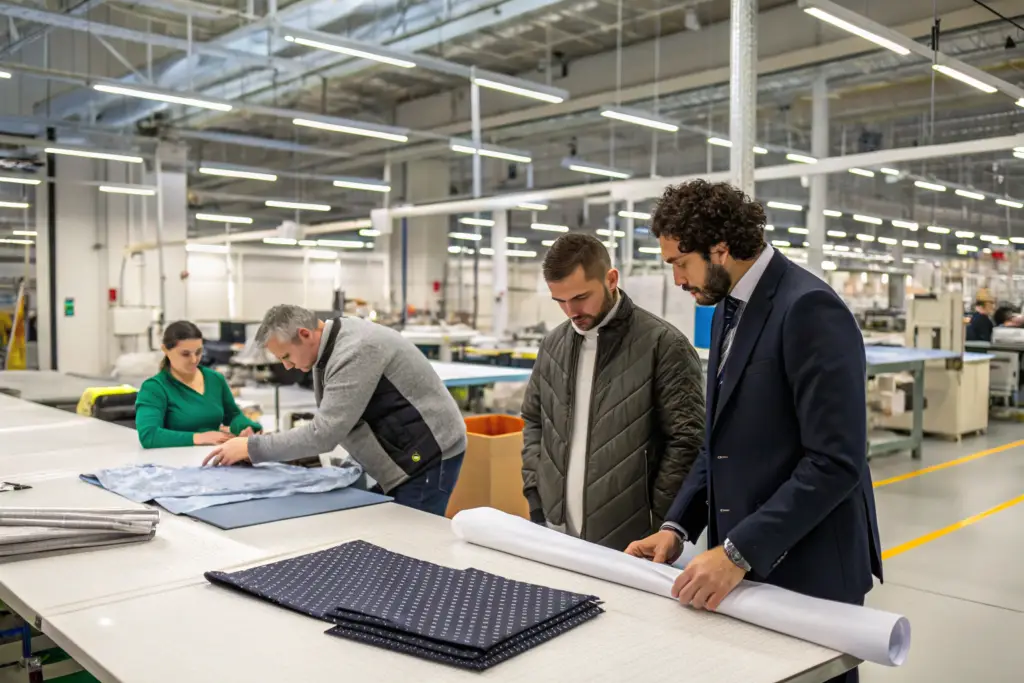
You have a vision for a clothing line. You can see it in your head. But you are not a technical designer. You do not know how to create a Tech Pack, grade a pattern, or specify the correct seam construction. You need more than just a factory. You need a creative and technical partner. A brand owner told me, "I had the ideas, but I didn't have the 'how.' I was afraid a factory would just make whatever I sent them, even if it was wrong. I needed someone to help me figure it out."
Yes, a full-service B2B garment factory like Shanghai Fumao can absolutely handle both design support and production. This is the essence of true End-to-End Private Label Manufacturing. We bridge the critical gap between a creative concept and a manufacturable product. Our services extend far beyond cut-and-sew to include design consultation, tech pack development, pattern making, fabric sourcing, and fit sampling, all seamlessly integrated with bulk production.
At Shanghai Fumao, we are not just the hands that sew. We are the technical brains that help translate a vision into a viable, sellable garment. We are the partner for brands that need more than just a sewing line. Let me show you exactly how our integrated design and production model works, and why it is the smartest path for founders who want to focus on their brand rather than becoming technical experts.
What Design and Development Services Does a Full-Service Factory Offer?
Many new brands believe they must arrive at the factory's door with a perfect, production-ready Tech Pack and all their fabrics sourced. This is a myth. A true full-package partner offers a suite of services designed to take you from "napkin sketch" to "production-ready." This is where the partnership moves beyond manufacturing and into collaborative product development.
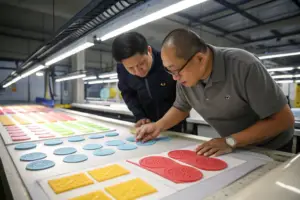
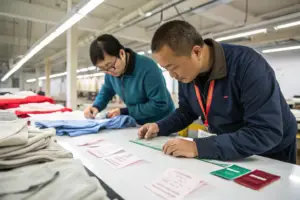
A full-service factory offers a comprehensive range of design and development support, including: Concept Consultation (refining your idea and target market), Tech Pack Creation (translating your vision into a detailed technical blueprint), Fabric & Trim Sourcing (leveraging the factory's network to find the perfect materials), Pattern Making & Grading (creating the digital blueprint for all sizes), and Fit Sampling & Approval (managing the iterative process to perfect the garment).
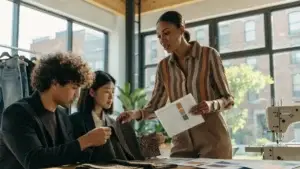
I recall a founder who came to us with a beautiful watercolor sketch of a women's wear dress and a piece of vintage lace she wanted to incorporate. She had no Tech Pack. She did not know what fabric would drape correctly. Our team sat with her. We discussed her target customer and price point. We sourced three different sustainable Tencel fabrics for her to choose from. Our pattern maker created the initial digital pattern and a 3D simulation. We produced the first Proto Sample. She was amazed. She said, "You took what was in my head and made it real. I didn't have to learn a whole new career." This is the power of integrated design and production .
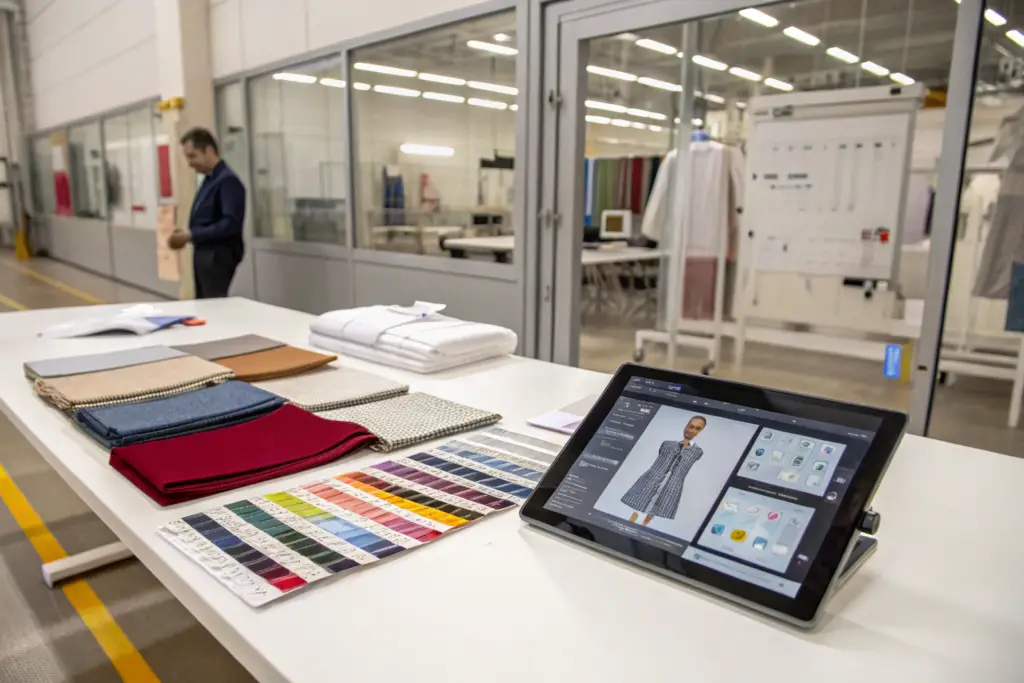
How Does the Factory's Sourcing Expertise Enhance the Design Process?
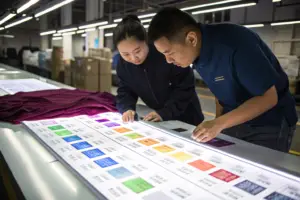
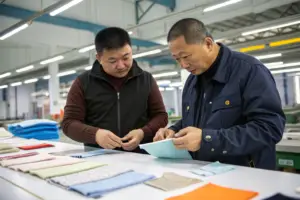
You might have an idea for a "soft, flowy blouse." We translate that into specific fabric options: "Here is a 120 GSM Tencel Twill for a beautiful drape. Here is a 100% Combed Cotton Voile for a crisper feel." Because our sourcing team is integrated with our production team, we know which fabrics sew well, which ones are prone to shrinkage, and which mills are reliable. This practical knowledge is injected into the design phase, preventing the heartbreak of falling in love with a fabric that is impossible to manufacture or has a prohibitive MOQ. This is a huge advantage of the end-to-end model .
What Is the Difference Between a "Proto Sample" and a "Fit Sample" in Our Process?
This is the structured journey we guide you through:
- Proto Sample: The first physical draft. Made in a "mock" fabric to check the basic silhouette, proportions, and seam lines. It answers the question: "Is the overall shape correct?"
- Fit Sample: Made in the correct (or very close) final fabric. Evaluated on a live fit model. This is where we refine the fit, check the drape, and perfect the details. Multiple rounds are common.
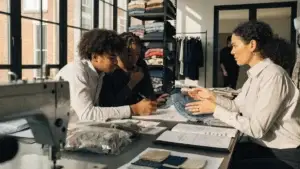
We manage this entire iterative process for you, providing clear guidance and visual feedback at each stage.
How Does an Integrated Model Improve Fit, Quality, and Speed?
When design and production are handled by separate entities, there is an inherent friction. The designer may specify a construction detail that is difficult or expensive to sew. The factory may make a change for manufacturability without fully understanding the design intent. This leads to delays, cost overruns, and a final product that misses the mark. Integration dissolves these barriers.
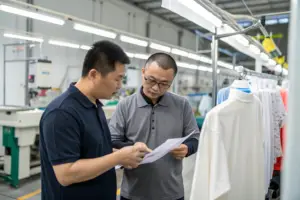
An integrated design and production model dramatically improves fit, quality, and speed by fostering direct, real-time collaboration between the creative and technical teams. Our pattern makers talk directly to our sewing line supervisors. Our sourcing team is in the same room as our designers. This eliminates the "telephone game" of miscommunication, allows for instant problem-solving, and ensures that design intent is never lost in translation to the factory floor.
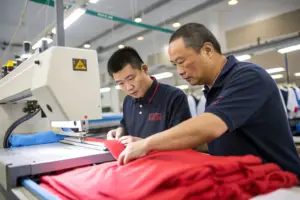
A men's wear client wanted a very specific, soft "roll" to the collar of his oxford shirts. It was a subtle, but critical, design detail. In a fragmented model, he would have sent a Tech Pack to a factory and hoped they interpreted "soft roll" correctly. In our integrated model, our pattern maker and head sewer sat down together. They discussed the right interlining, the correct stitch tension, and the precise collar band construction to achieve the desired effect. The first sample was nearly perfect. This internal collaboration shaved weeks off the development time and ensured the final garment captured the exact design intent. This is the tangible benefit of design-production synergy .
How Does In-House Pattern Making Speed Up Sampling?
If we had to outsource pattern making to a third-party service, every pattern revision would take 3-5 days of back-and-forth communication and shipping. Because our pattern makers are in-house, a fit comment you send on Tuesday morning can be translated into a revised pattern and a new sample cut by Tuesday afternoon. This compresses the development timeline significantly. It also allows for real-time problem-solving. If a sewer is struggling with a complex seam, they can walk over to the pattern maker's desk and figure out a solution together.
Why Does "Design for Manufacturability" Reduce Bulk Production Issues?
This is a critical concept. A beautiful design is worthless if it cannot be sewn efficiently and consistently in bulk. Our pattern makers and production supervisors have a deep understanding of "Design for Manufacturability" (DFM) . They can look at a sketch and immediately identify potential pain points: a seam that will be difficult to align, a pocket that is too small to turn cleanly, a fabric choice that will cause puckering. They can suggest subtle modifications—often invisible to the end consumer—that make the garment easier and more consistent to sew, reducing defects and cost without compromising the aesthetic.
What Are the Financial and Strategic Advantages of This Partnership?
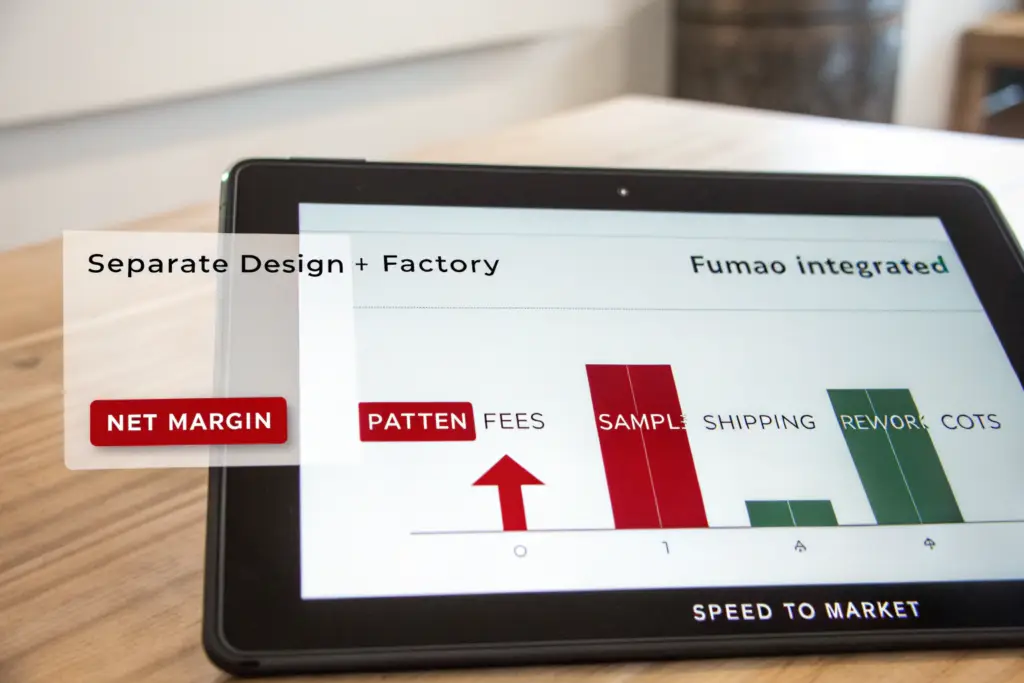
Some founders believe they can save money by hiring a freelance designer to create a Tech Pack and then shopping it to the cheapest factory. While the upfront cost might appear lower, this fragmented approach is fraught with hidden costs and strategic disadvantages. The integrated partnership, while perhaps having a slightly higher initial development cost, provides a superior return on investment.
The financial and strategic advantages of an integrated partner include: Reduced Total Development Cost (by eliminating miscommunication and rework), Faster Speed-to-Market (compressing the timeline from sketch to bulk), Lower Risk of Bulk Quality Issues (since the team that designed it is overseeing its production), and the liberation of the Founder's Time (allowing them to focus on building the brand, not managing multiple vendors).
We analyzed the numbers with a brand that had previously used a freelance designer and a separate factory. On paper, their development cost was lower. But they went through five rounds of fit samples because the factory kept misinterpreting the designer's spec. The sample shipping costs alone were over $800. The total time from sketch to approved PP sample was 22 weeks. When they developed a similar-complexity style with our integrated team, they had it approved in 10 weeks with only two fit samples. The total development cost was comparable, but the speed to market was twice as fast. They were able to launch the collection a full season earlier, capturing significantly more full-price sales. This is the real financial advantage.
How Does This Model Free Up Capital and Reduce Risk?
By compressing the development timeline, you free up working capital faster. You are not tying up money in endless sampling. More importantly, you reduce the significant financial risk of a bulk production failure. Because the team that designed the garment is the same team overseeing its production, the likelihood of a catastrophic quality issue is dramatically lower. You are buying peace of mind and brand protection.
What Is the Value of a Single Point of Accountability?
When you have a designer and a separate factory, and something goes wrong in bulk production, you are caught in the middle of a blame game. The factory blames the designer's spec. The designer blames the factory's execution. You are stuck holding the bag. With an integrated partner, there is one throat to choke. There is a single point of accountability. This clarity is invaluable and removes a massive source of stress from the brand owner's life.
What Does the Ideal "Design Handoff" to Fumao Look Like?
You do not need to arrive with a 30-page Tech Pack. You need to arrive with a Clear Vision. The ideal "handoff" to us is not a finished technical document. It is a collaborative conversation. We meet you where you are in your journey. Our job is to translate your creative vision into our technical language.
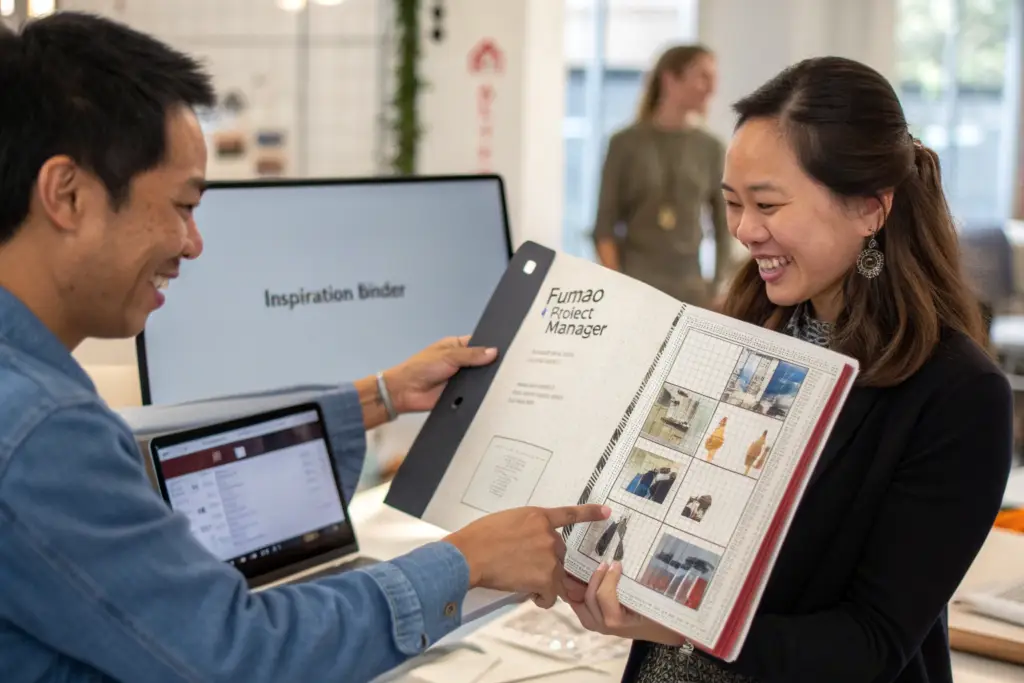
The ideal design handoff to Fumao is a "Creative Brief." This can include: hand sketches, digital mood boards (Pinterest, Instagram links), physical reference samples (a vintage garment you love the fit of), and a clear articulation of your target customer, price point, and brand aesthetic. We take this inspiration and, through a structured process of consultation and development, transform it into a full Tech Pack and, ultimately, a finished garment.
A new brand founder came to us with a Pinterest board and a single sentence: "I want to make the perfect everyday hoodie for the modern minimalist guy." That was it. We had a series of conversations. We showed him fabric options (heavy fleece, French terry). We discussed fit (relaxed, drop shoulder). We talked about details (kangaroo pocket, clean hem). Over a few weeks, we translated that single sentence into a complete Tech Pack. The resulting hoodie became the cornerstone of his brand. He did not need to be a technical designer. He needed to be a clear communicator with a strong vision, and he needed a partner who could execute. This is what we do.
What If I Already Have a Tech Pack from a Freelance Designer?
That is perfectly fine. We are happy to work with existing Tech Packs. Our process then focuses on a Design Review. We will carefully examine the Tech Pack for DFM (Design for Manufacturability) . We might suggest small modifications to improve sewability or reduce cost without changing the design intent. We then proceed directly to sourcing and sampling. The key is that we take ownership of the translation from the document to the physical product.
How Do We Protect Your Intellectual Property During This Process?
This is a top concern for brands, and rightfully so. Before you share any details of your vision, we sign a strict NDA and Manufacturing Agreement . This legally protects your designs. Furthermore, as we discussed in our article on brand protection, our entire B2B business model is built on your success. We do not own any brands. We do not sell to the public. We have zero incentive to compromise your intellectual property. Your designs are yours, exclusively.
Conclusion
Can a garment factory handle both design and production? The answer is a definitive yes, and for a growing private label brand, partnering with a factory that does is one of the smartest strategic decisions you can make. It eliminates the friction, miscommunication, and hidden costs of a fragmented supply chain. It transforms the complex process of creating clothes into a seamless, collaborative journey from concept to consumer.
At Shanghai Fumao, we are built for this. We are the technical and creative partner that helps you translate your vision into reality, without requiring you to become a pattern maker or a sourcing expert. We provide the integrated infrastructure—from design consultation to DDP delivery—that allows you to focus on what you do best: building an incredible brand.
If you have a vision and are looking for a partner who can handle both the creative development and the world-class production, let's talk. Our Business Director, Elaine, can walk you through our integrated process and show you how we can bring your ideas to life. Please email Elaine at: elaine@fumaoclothing.com.