You have found the perfect print for your kids’ wear collection. The design is adorable. The colors are on-trend. But when the sample arrives, it feels like sandpaper. Or it is so flimsy it is see-through. Or after one wash, it shrinks to doll size. The print does not matter anymore. The fabric has failed. A parent-buyer told me, "I don’t care how cute the dinosaur is. If it’s scratchy or falls apart, it’s going back. My kid’s comfort and safety come first."
The most critical fabric properties for children’s clothes are, in order of priority: 1) Safety & Chemical Compliance (OEKO-TEX certified, free from harmful substances), 2) Comfort & Softness (breathable natural fibers like GOTS cotton or smooth Tencel), and 3) Durability & Easy Care (strong fibers, good colorfastness, and resistance to pilling and shrinkage, able to withstand frequent, aggressive washing).
At Shanghai Fumao, we source and manufacture kids’ wear with a deep understanding of these priorities. We know that a child’s comfort and a parent’s trust are the foundation of any successful children’s brand. Let me break down the specific fabric properties you must prioritize, and why they are non-negotiable for building a line of children’s clothes that are loved and lived in.
Why Is Chemical Safety the Absolute First Priority in Kids’ Fabrics?
Before we talk about softness or durability, we must talk about safety. A child’s skin is thinner and more permeable than an adult’s. They put everything in their mouths. Their developing bodies are more vulnerable to the effects of toxic chemicals. This is not a marketing angle; it is a fundamental responsibility. Ignoring this is a non-negotiable business and ethical risk.
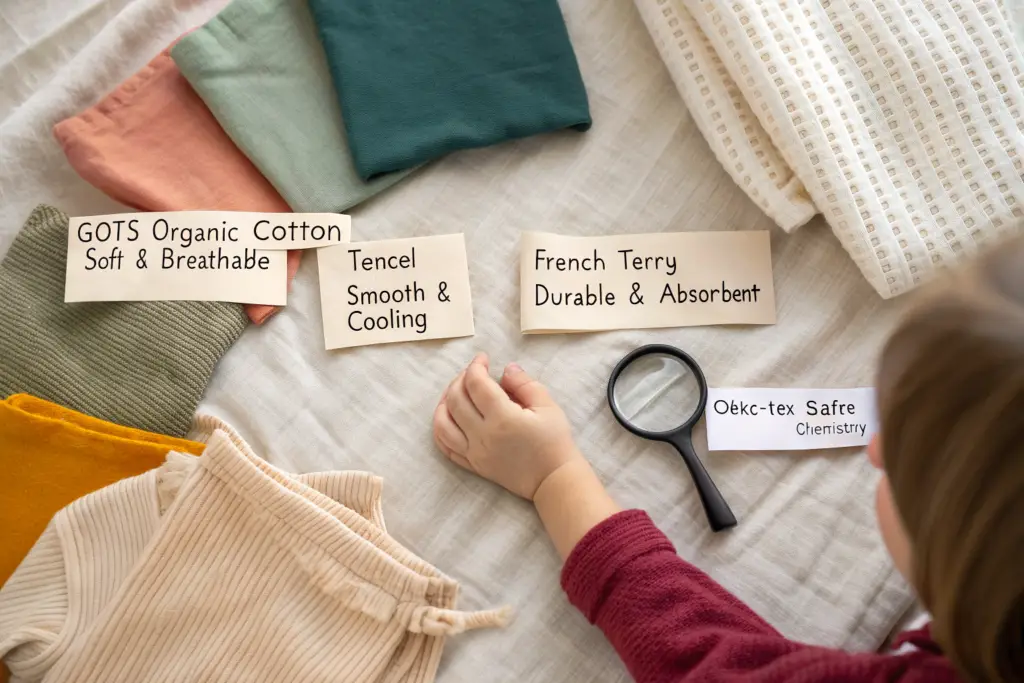
Chemical safety is the absolute first priority because children are uniquely vulnerable to the harmful substances that can lurk in conventionally produced textiles. These include heavy metals (like lead in zippers or snaps), formaldehyde (used in anti-wrinkle finishes), pesticides (residues from conventional cotton), and allergenic dyes. The non-negotiable standard is OEKO-TEX Standard 100 certification, which verifies that every component of the garment has been tested and is harmless for human health.**
I recall a brand owner who came to us after a terrifying experience. Her previous factory had used non-compliant snaps on a line of baby rompers. The snaps contained lead above the legal CPSIA limit. The entire shipment was seized by US Customs and destroyed. She lost her inventory and faced a potential fine. The financial loss was bad, but the thought of a child being harmed by her product was devastating. When she partnered with us, the first thing we provided was the OEKO-TEX Standard 100 certificate for every material and trim. This is the shield that protects your brand and, more importantly, protects the child. Understanding children’s product safety regulations is essential for any kids’ wear brand.
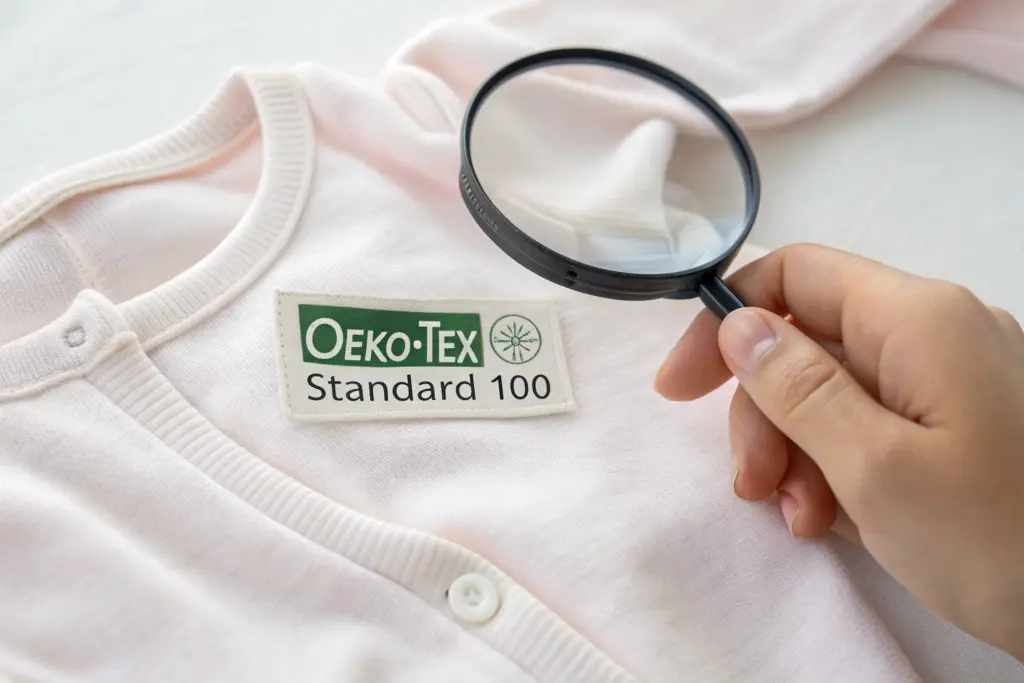
What Does OEKO-TEX Standard 100 Actually Test For?
This certification is not a single test. It is a comprehensive screening for over 100 regulated and non-regulated substances that are harmful to human health. This includes:
- Heavy Metals: Lead, Cadmium, Mercury.
- Formaldehyde: A known irritant and carcinogen.
- Pesticides & Herbicides: Including Glyphosate.
- Phthalates & BPA: Plasticizers found in some prints and synthetic materials.
- Azo Dyes: Dyes that can break down into carcinogenic amines.
The certification has different product classes. Class I is the strictest, for items for babies and toddlers up to 36 months. This is the standard we require for all our baby and toddler apparel.
How Do You Ensure Trims (Buttons, Zippers) Are Also Safe?
The fabric can be perfectly safe, but a lead-containing button or a phthalate-laden zipper tape ruins the entire garment. Our sourcing team requires OEKO-TEX Standard 100 certificates or equivalent lab test reports for all trims used in kids’ wear. This is a non-negotiable part of our quality control process. We do not treat trims as an afterthought. They are held to the same rigorous safety standard as the main fabric.
Which Fibers Provide the Best Combination of Softness and Breathability?
Once safety is assured, the next frontier is comfort. A child will simply refuse to wear a scratchy or hot garment. They cannot articulate "this fiber is irritating my skin," but their behavior—the tugging, the whining, the meltdown—communicates it loud and clear. Softness and breathability are not luxuries; they are functional requirements for a child’s daily life. The choice of fiber is the primary driver of this comfort.
The gold standards for softness and breathability in kids’ wear are GOTS-certified organic cotton and Tencel Lyocell. Organic cotton (especially long-staple varieties and in a combed, ring-spun construction) is incredibly soft, naturally hypoallergenic, and highly breathable. Tencel is exceptionally smooth (silk-like), cool to the touch, and excellent at wicking moisture, making it ideal for sensitive or eczema-prone skin.
A brand we work with switched their entire basics line from conventional carded cotton to GOTS-certified combed ring-spun organic cotton. The cost increased, but the customer feedback was transformative. Reviews flooded in saying, "This is the softest onesie I’ve ever felt." "My son with eczema can finally wear a comfortable shirt." The brand’s return rate plummeted, and their customer loyalty soared. The fabric was the marketing. This is the power of prioritizing comfort through premium fiber selection. The benefits of organic cotton are well-documented.
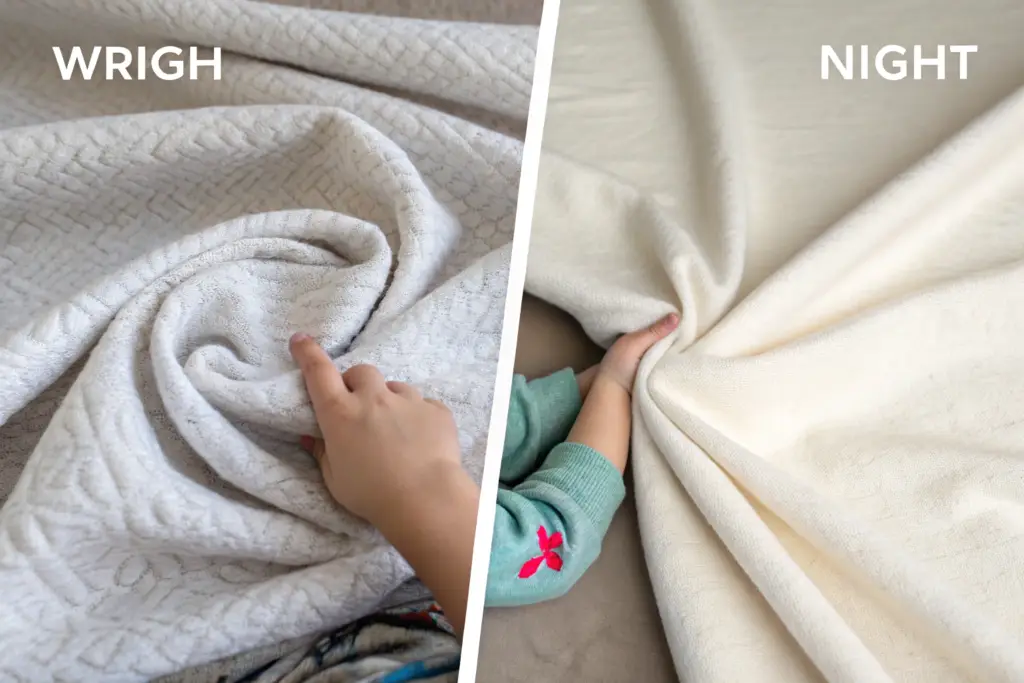
What Is the Difference Between Combed Cotton and Regular Cotton?
This is a crucial processing difference.
- Regular (Carded) Cotton: The fibers are roughly aligned. Short fibers and impurities remain. This creates a fuzzier, rougher surface that is more prone to pilling and can be irritating to sensitive skin.
- Combed Cotton: The cotton is literally combed with fine brushes to remove the short fibers and impurities. The remaining long fibers are aligned parallel. The resulting yarn is smoother, stronger, and incredibly soft. This is the minimum standard we recommend for premium kids’ wear.
Why Is Tencel Recommended for Children with Eczema or Sensitive Skin?
Tencel Lyocell fibers are naturally smooth and round. Unlike cotton, which has a rough, ribbon-like surface, Tencel fibers do not have "micro-barbs" that can irritate delicate or compromised skin. This smooth surface also makes the fabric incredibly soft and cool to the touch. Furthermore, Tencel is highly breathable and excels at moisture management. It wicks moisture away from the skin, keeping the child dry and comfortable. This is crucial for preventing the heat and sweat that can trigger eczema flare-ups. It is a premium fiber that solves a real, painful problem for many families.
What Durability Factors Are Non-Negotiable for Active Kids?
Kids are hard on their clothes. They crawl, climb, slide, and tumble. Their garments are subjected to a level of abrasion and stress that would destroy most adult fashion items. Then, they are thrown in the washing machine on a hot cycle, again and again. A beautiful, soft fabric is useless if it pills into a fuzzy mess, fades to a dull grey, or develops holes after three wears. Durability is a parent’s silent expectation.
Non-negotiable durability factors for kids’ wear include: High Abrasion Resistance (to prevent pilling and wear at the knees and elbows), Excellent Colorfastness (to survive frequent hot washes without fading), and Dimensional Stability (controlled shrinkage so the garment doesn’t become a crop top after one dry). Blends like a 60/40 Cotton-Polyester fleece or strategically placed reinforced panels are excellent ways to enhance durability.
A distributor of outdoor kids’ wear has built his brand’s reputation on the reinforced knee. It is a simple, double-layer patch of durable fabric sewn into the knee of all his pants. It is not a fashion statement. It is an engineering solution. Parents know that these pants will survive a season of playgrounds. They are willing to pay a premium for that promise. We execute this detail using a durable, abrasion-resistant nylon blend and attach it with a flatlock seam to minimize bulk. It is a small detail that speaks volumes about the brand’s understanding of its customer.
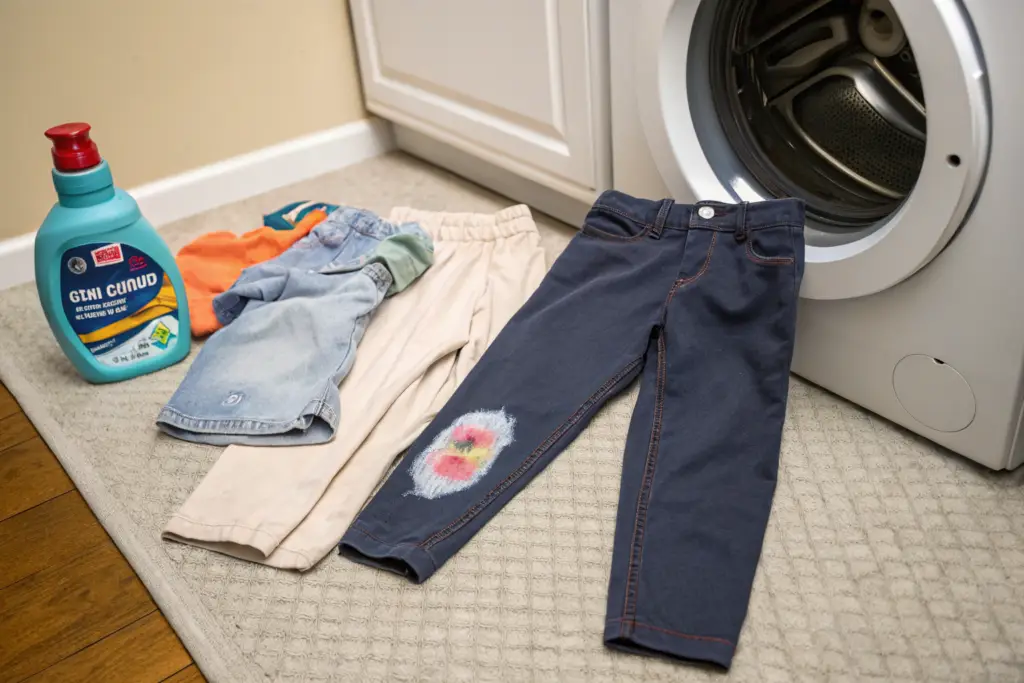
How Do You Test for Pilling and Abrasion Resistance?
We do not guess. We use the Martindale Abrasion and Pilling Tester (ISO 12945-2 standard). A sample of the fabric is rubbed against a standard abrasive for thousands of cycles. The tested sample is then compared to a visual scale and given a grade of 1 (severe pilling) to 5 (no pilling). A fabric for premium kids’ wear must achieve a grade of at least 4. We also perform internal wash tests, subjecting garments to 20-30 simulated wash and dry cycles to evaluate colorfastness and shrinkage.
Why Is "Easy Care" (Machine Washable) So Important for Parents?
This is a simple, practical reality. Parents do not have time for "hand wash cold, lay flat to dry." They need to be able to throw the garment in the washing machine and dryer and have it come out looking the same. A brand that requires fussy care instructions is a brand that will be left in the drawer or returned. Our sourcing focuses on fabrics that are pre-shrunk (compacted) and have high colorfastness to laundering. We provide clear, accurate care labels based on our textile testing . This ensures the parent’s experience matches the brand’s promise.
How Does Fumao Source and Vet Fabrics for These Critical Properties?
You should not have to become a textile scientist to launch a safe and successful kids’ wear brand. The responsibility for vetting materials against these critical properties—safety, comfort, durability—should lie with your manufacturing partner. Our entire sourcing operation is built around this principle. We are the gatekeepers of quality for your brand.
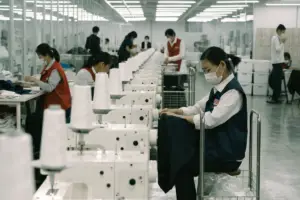
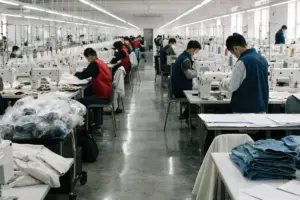
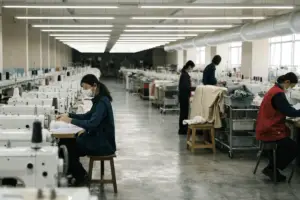
Fumao sources and vets fabrics through a rigorous, multi-step process specifically calibrated for the demands of children’s wear. We maintain a curated library of pre-vetted, compliant fabrics from trusted mills. Every material is screened for OEKO-TEX and GOTS certification. We perform internal testing for shrinkage, colorfastness, and pilling. We do not just trust a supplier’s word; we verify every critical property before the fabric is ever cut.
A new brand founder came to us wanting to use a beautiful, soft bamboo viscose for a line of baby pajamas. She had heard bamboo was "eco-friendly." Our sourcing team reviewed the mill’s certifications. While the fabric was soft, the specific mill did not have the required OEKO-TEX Class I certification for baby sleepwear, nor could they provide a full chain-of-custody for their bamboo sourcing. We presented the client with the risk. She was disappointed but grateful. We worked together to find an alternative: a beautifully soft GOTS-certified organic cotton interlock that met all safety and comfort standards. She launched her line with confidence and a clear conscience. This is the value of a partner who prioritizes brand protection over just making a sale.
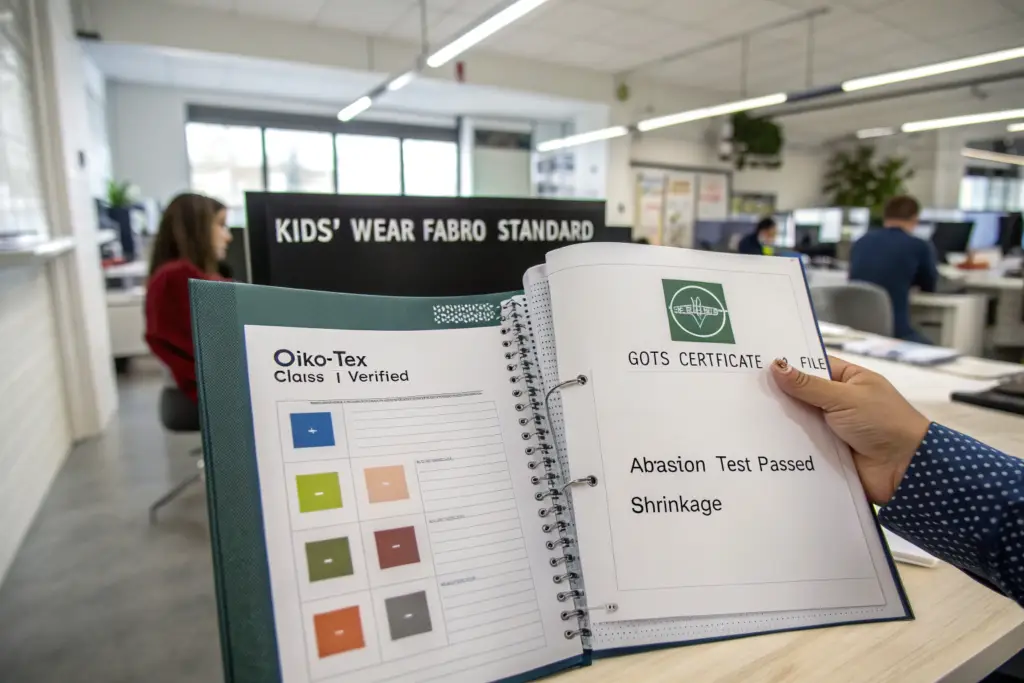
What Certifications Are on Our "Must-Have" List for Kids’ Fabrics?
For any fabric destined for kids’ wear, our baseline requirements are:
- OEKO-TEX Standard 100, Class I: Non-negotiable for all items, especially for ages 0-3.
- GOTS (Global Organic Textile Standard): Required for any "organic" claim. We verify the scope certificate.
- GRS (Global Recycled Standard): Required for any "recycled" claim (e.g., recycled polyester fleece).
We maintain digital copies of all current certifications and verify them on the certifying bodies’ public databases.
How Does This Vetting Process Protect Your Brand’s Reputation?
This process is your invisible shield. It protects you from:
- Legal Liability: Seizures by customs and fines for non-compliance (CPSIA).
- Financial Loss: Costly returns, recalls, and retail chargebacks.
- Reputational Damage: The devastating impact of a social media post linking your brand to unsafe materials.
A single safety failure can destroy a kids’ wear brand. Our rigorous vetting process is the most important investment we make on behalf of our private label partners . It allows you to build your business on a foundation of trust and integrity.
Conclusion
Choosing the right fabric for children’s clothes is an act of profound responsibility and care. It is about more than just aesthetics or cost. It is about safeguarding a child’s health, ensuring their comfort, and engineering a product that can withstand the beautiful chaos of childhood. Safety, softness, and durability are not competing priorities; they are the three legs of the stool upon which a successful kids’ wear brand is built.
At Shanghai Fumao, we do not take this responsibility lightly. Our sourcing, vetting, and testing protocols are designed to ensure that every garment we produce meets the highest standards for the most important customer: the child who will wear it and the parent who trusts your brand.
If you are ready to build a kids’ wear line on a foundation of uncompromising quality and safety, let’s talk. Our Business Director, Elaine, can walk you through our fabric standards and share our library of compliant materials. Please email Elaine at: elaine@fumaoclothing.com.