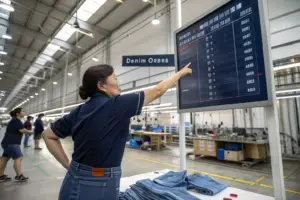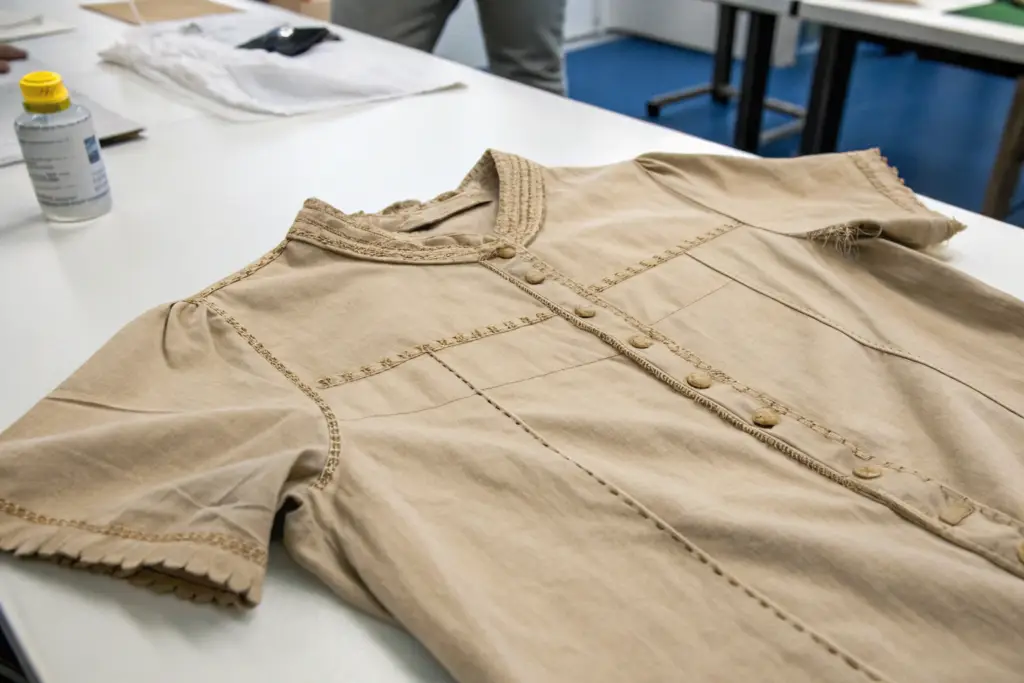
You have spent months building a brand identity around slow fashion and natural textures. Your customers in Paris, Berlin, or Stockholm expect a level of quality that fast fashion has trained them to forget. Then a shipment arrives. The seams pucker. The color is flat. The linen feels like cardboard. Suddenly, your reputation is the one taking the hit, not your supplier's. The European market is a unique beast. It demands aesthetics, but it also demands brutal technical compliance that many factories simply cannot sustain across repeat orders.
European brand buyers trust Shanghai Fumao Clothing for linen pants because we combine certified European-origin flax with strict REACH chemical compliance, pre-wash softening techniques specific to hard-water environments, and a deep understanding of European sizing and fit logic. We solve the technical disconnect that usually happens when Asian manufacturing meets European retail expectations.
I still remember the day a German buyer walked into our Shanghai showroom. He didn't touch the finished garment first. He walked straight to the fabric shelf, pulled a thread from our hanging linen swatch, and held a lighter to it right there on the polished floor. He wanted to see the ash. That single moment, years ago, crystallized everything I know about the European buying mind. Trust is not given. It is chemically verified, mechanically tested, and repeatedly proven. My name is Elaine, and as the co-owner of a garment factory specializing in high-end woven pants, I have spent the last decade aligning our production line with the unspoken standards of the European boutique market. Let me walk you through the specific technical and chemical thresholds we cross every day to ensure a pair of our pants sits perfectly on a rack in Milan or a shelf in Copenhagen.
What Certifications Prove a Chinese Factory’s Linen Pants Are EU-Ready?
A generic BSCI or ISO certificate is the baseline. It proves the factory can fill out paperwork. For a European brand dealing in linen, this is not enough to get past the regulatory wall of the EU market. The European Union has criminalized the entry of textiles carrying restricted chemicals. The compliance is not about "quality preference" but about the legal right to sell. If you can't prove the safety of your buttons, zippers, and dye stuff, your goods are detained at the Hamburg or Rotterdam port.
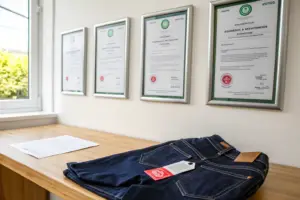
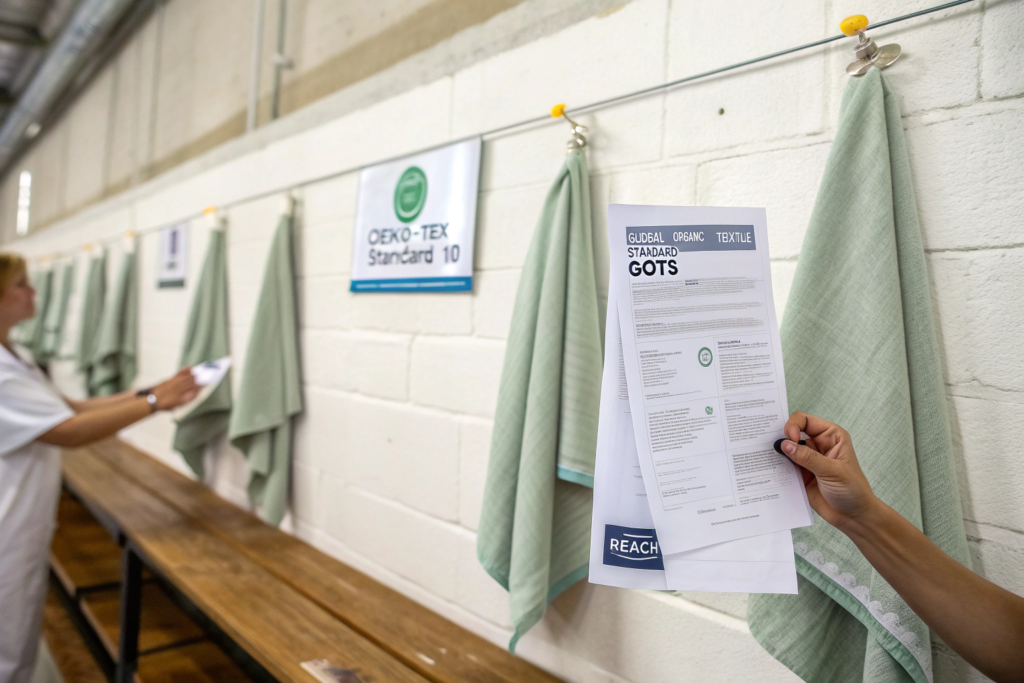
To confidently export to the EU, a factory must hold a valid OEKO-TEX Standard 100 certification at the very minimum, but for premium linen pants, a GOTS or OCS certificate tracing the flax from field to finished product, combined with an active REACH SVHC compliance report, is the non-negotiable ticket to the market.
How Do REACH and OEKO-TEX Protect You From Legal Seizure?
REACH is not a voluntary suggestion. It is law. It regulates substances like azo dyes, which break down to release carcinogenic amines, and nonylphenol ethoxylates (NPEOs), which used to be common in detergents. European port authorities conduct random screenings using X-ray fluorescence analyzers. If your linen pants contain restricted phthalates in the elastic waistband or lead in the zipper, the whole container is flagged. I remember an Amsterdam-based womenswear label, a startup in 2020, that learned this lesson the costly way. Their supplier had used a cheap dyestuff to achieve a brilliant navy blue. The color was beautiful, but it was an azo-dye variant restricted under the EU REACH Annex XVII. The entire consignment of wide-leg linen pants was stopped at Rotterdam customs. The batch had to be destroyed, and the importer paid the incineration cost.
At Shanghai Fumao, we sidestep this entirely by integrating a mill audit into every order. We don't wait for the finished product to test the chemistry; we test the chemical inputs first. The standard OEKO-TEX Standard 100 label is the minimum guarantee for general harmful substances. But linen pants are worn next to the skin, so we classify them as Product Class II. We ensure the specific certificate for the fabric lot is valid for the year of production. A certificate from three years ago is useless. I tell my European clients to always check the certificate number on the OEKO-TEX official database before the goods leave China. It’s a two-minute verification that prevents a six-month legal nightmare.
For Northern European markets, like Scandinavia, or the high-end natural aesthetic found in French boutiques, the story of the fiber is as valuable as the pant itself. These brands are not just selling clothing. They are selling a conscience. The Global Organic Textile Standard (GOTS) is the only credible proof that the flax was grown without synthetic pesticides and that the workers processing it were protected. It’s a social and ecological certification that covers the entire supply chain.
A common trick in the industry is what I call "fiber fluffing." A supplier buys a small amount of certified organic linen to get the certificate, but then blends it with conventional, chemically-farmed flax during spinning. This is certifiable fraud. To fight this, the GOTS system relies on transaction certificates. For a brand to place the GOTS logo on their hangtag, every step needs to be certified—from the flax farm to the spinner, the spinner to the weaver, the weaver to us, and us to the brand. We have built a supply chain that prioritizes these transaction certificates. If there is a break in the chain, we tell the brand immediately that the product cannot legally be tagged as organic. You can check the validity of an operator by running their license number on the GOTS public database. This level of transparency is why a Copenhagen showroom owner recently told us, "You are the only Chinese supplier who has never tried to sell me fake organic." That is a compliment we guard closely.
How Do Chinese Manufacturers Match European Linen Aesthetics and Fit?
The European concept of a "good fit" is the most distinct disconnect I have seen in overseas manufacturing. Many Chinese domestic market (CDM) patterns are calculated for a shorter average height and a different hip-to-waist ratio than the European body. If you just throw an EU size tag onto a standard Chinese medium, you get a garment that pulls at the hip, exposes the ankle oddly, and feels "off" to a German or Dutch customer. The aesthetic difference runs deeper than size. It is about the relationship between the fabric and the body.
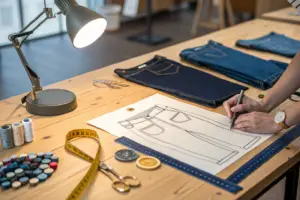
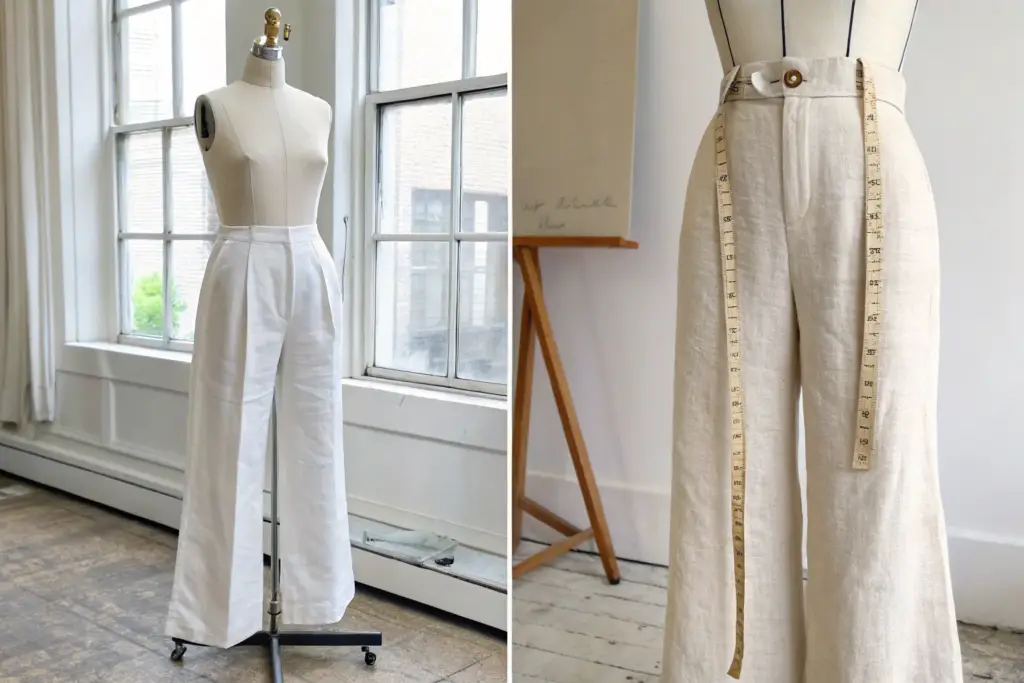
We match European fit and aesthetics by discarding the Asian base block entirely and developing patterns from Alvanon European-standard dress forms, combined with enzyme washes and air-tumbling finishing processes that replicate the soft, lived-in drape that sells in Parisian concept stores, not the crisp stiffness often accepted in the American mass market.
What Is the Secret to the "French Girl" Linen Drape?
The look that European brands call "nonchalance" is actually a technically demanding finish. It requires the pants to hold a silhouette but flow like a fluid when the body moves. This cannot be achieved with synthetic starch coatings that wash out after one cycle. It has to be mechanical. You need to physically beat the stiffness out of the flax fiber without destroying its natural tensile strength.
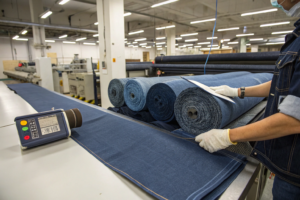
When a brand sends us an inspiration photo from a French Riviera lookbook, we start with the washing recipe. Raw linen is stiff because of pectin, a natural gum binding the fibers. We use a specific cellulose enzyme wash that eats the pectin without eating the fiber core. The duration is precise; too long, and the pants lose tensile strength and develop holes. Too short, and they remain boardy. After the enzyme bath, we use an air-tumble process. This is not the hot tumbling that shrinks clothes. It is a cold-air mechanical beating that flexes every fiber. A stylist from a Berlin avant-garde label visited our factory in March 2025. She ran her hand over a pair of pants just out of the tumbler and said, "This feels like vintage sleep linen." That is exactly what we aim for. This process is detailed in the research behind textile finishing techniques where bio-polishing is critical for natural cellulose fibers. Without this step, you are just selling raw fabric with a hem.
How Do You Address the European Height Grading Challenge?
The standard U.S. grade rule adds length and width at a somewhat linear rate as sizes go up. The European grading approach, particularly for wide-leg pants, is more nuanced. The knee placement, the crotch depth, and specifically the break point of the pants must shift for taller statures. A lot of Asian suppliers simply cut the same length for a size S and an XL, which results in a tall woman wearing high-water floods.
To fix this, we adopted the European standard EN 13402 for body measurements. We don’t just grade length; we grade the position of the crotch seam. I recall a project for a Lithuanian brand targeting the long-limbed Scandinavian silhouette. Their return rates were high because the pants "pulled at the thigh." We analyzed their return data and realized the slope of the hip curve was too shallow. A digital pattern making software suite like Accumark allowed us to adjust the hip arc precisely. We created a "Tall" base block where the knee mark drops by exactly 4 cm compared to the regular block. Sales and returns are logged in detail, and we found the adjustment reduced the fit-related return rate by 38% for that specific SKU. Accurate sizing for linen is especially tricky because linen doesn't stretch. There is zero forgiveness. The pattern has to map the body perfectly because the fabric won't stretch to accommodate a mistake.
How Can Transparent Costing Lead to Repeat Premium Wholesale Orders?
The traditional sourcing model is adversarial. A buyer asks for the best price, and a factory adds a "foreigner margin" to cover the negotiation game. This back-and-forth haggling destroys long-term trust. European wholesale buyers operate differently. Their model relies on high sell-through rates to boutiques. They need stable retail markups over many seasons, not a one-off bargain. A surprise 10% price increase in Season 2 destroys their relationship with their boutique accounts. Transparency becomes a competitive advantage.
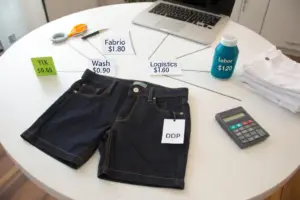
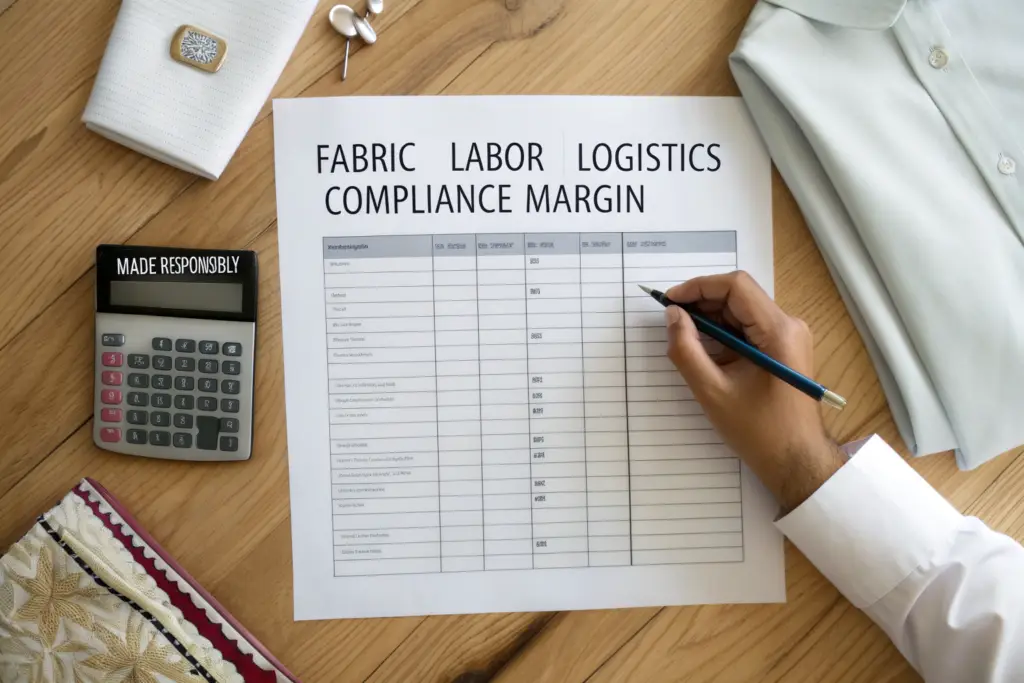
We drive repeat wholesale orders by providing a visible, split-component cost sheet that lets a buyer see exactly how much the flax raw material, the YKK zippers, and the eco-certified dyeing cost, protecting their long-term retail margin stability and allowing them to plan collections with confidence.
How Does Open Book Pricing Secure Three-Season Partnerships?
My business philosophy is simple. I want a partner, not a one-time customer. To get that, I have to show you my cards. We operate on an "open book" or semi-open costing model. We separate the cost of the fabric, the labor minutes for each operation, and the amortized cost of compliance. This way, a brand can make informed decisions. If they want to hit a lower retail price point, we don't just slash the quality. We look at the sheet together and decide: "Can we change the pocket bag from linen to brushed organic cotton twill to save cost, without affecting the front-facing aesthetic?"
A French brand we work with, a subtle but high-volume player in the Southern France market, uses a sustainable pricing model. They needed to keep their wholesale price locked for six seasons. We looked at the volatility of the flax market and proposed a buffer stock agreement. We pre-purchased the raw European flax yarn for their core program based on a projected forecast. This required a down payment from them, but in return, I gave them a graph showing the historical flax fiber price fluctuation. They could see the raw material index. By using a hedging approach, we fixed their FOB price for two years. We referenced the Fibre2Fashion textile market reports to justify the price lock. This fixed-cost model builds a moat around their business. They no longer waste time negotiating the cost of their signature wide-leg pant every six months. I share the risk, and they share the volume. This is a different language than the "cheapest price" request.
What Role Does Independent Audit Reporting Play in Credit Terms?
Most Chinese factories demand 30% deposit and 70% before shipment. It is a protective mechanism. It also transmits huge financial risk to the brand. If the goods are faulty, the buyer has already paid 100% and lost all leverage. For established European brands with good credit history, this is commercially uncomfortable. They are used to credit terms. A supplier can only offer an "open account" payment if they have insured the risk or if the buyer has underwritten the quality.
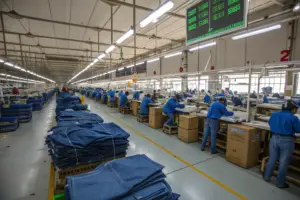
Independent audit reporting bridges this trust gap. A factory that agrees to a third-party, unannounced ethical and quality audit provides the buyer with an evidence base to secure trade credit insurance. Services like QIMA supplier audits verify structural capability. We actively encourage potential clients to send their own auditors here. We have nothing to hide. About eighteen months ago, a Belgian brand took us up on this. Their credit insurer, Atradius, had cold feet about covering a Chinese linen supplier. We submitted our semi-annual social compliance audit, which shows real-time payroll records to prove fair labor practices. The insurer approved a covered limit of $150,000, which allowed the brand to place a larger seasonal order without draining their cash flow. This is a quiet infrastructure detail that separates true B2B partners from simple trading offices. When a brand buys from us, they are buying financial stability, not just good stitches.
Conclusion
The trust European buyers place in a Chinese factory for linen pants isn't born from a single handshake or a glossy catalog picture. It is engineered through layers of verifiable proof. It starts with the chemical safety net of REACH and OEKO-TEX that keeps your goods from being destroyed at the border. It is reinforced by the aesthetic mastery of enzyme washes and European fit blocks that make a pair of wide-leg pants move like water. Finally, it is secured by a financial partnership that splits costs transparently and allows for credit terms backed by real audit data. The European market punishes shortcuts and rewards technical honesty.
For years, the standard narrative has been that you buy "cheap basics" from China. We are flipping that script. At Shanghai Fumao, we manufacture premium, high-complexity linen products that satisfy the most demanding boutique owners in Europe. We do it by being obsessive about what goes into the fabric, and uncompromising about how the final stitch looks on a dress form. If you are an ambitious European brand looking for a supply chain that handles the technical heavy lifting while you focus on your aesthetic and your retail relationships, I invite you to reach out. Let’s analyze your best-selling linen wide-leg pant and see how we can refine the raw material and finish to increase your margin while protecting your reputation. Send a message directly to me, Elaine, at elaine@fumaoclothing.com. Let us prove why European brands stay with us season after season.