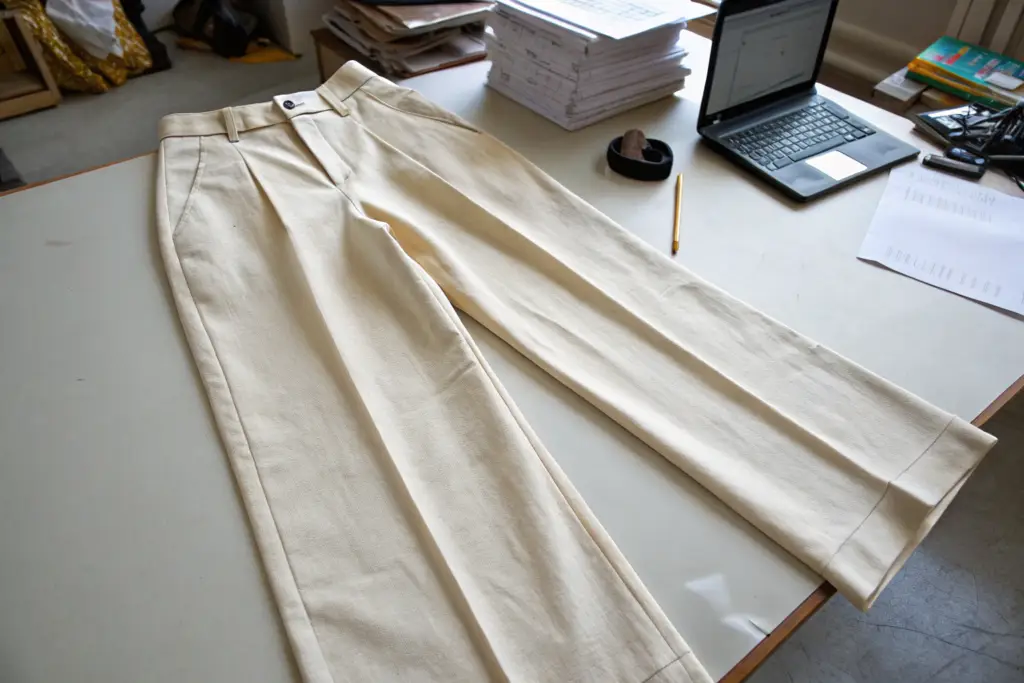
You just found a photo of perfectly draped linen wide-leg pants. The price from that Chinese supplier looks too good to be true. Your mind races with potential profit margins. But then, a familiar knot forms in your stomach. You remember the last shipment that arrived late, or the fabric that felt nothing like the sample. The excitement of a great find is quickly replaced by the anxiety of things going wrong. Sourcing from China doesn't have to be a gamble that keeps you up at night.
You can systematically reduce sourcing risks for linen wide-leg pants by locking down three core areas before you even place a deposit: verified material authenticity, enforceable quality benchmarks, and logistical accountability with penalty clauses. When you control these variables, you transform an overseas transaction into a predictable supply chain.
If you’ve been burned before by certificates that don’t mean anything or sales reps who disappear after payment, I understand the frustration. My name is Elaine, and I co-own a garment factory in Shanghai. For over a decade, I’ve sat on the other side of the table. I’ve seen what makes a partnership bulletproof, and I’ve also seen the shortcuts that cause deals to collapse. In this article, I’ll walk you through the exact steps my most successful U.S. brand partners use to protect their investment when sourcing linen pants. We’ll cover how to test fabric before production, secure your shipping window, and build a quality control process that acts as your eyes on the ground.
How to Verify Authentic Linen Fabric Quality Before Production?
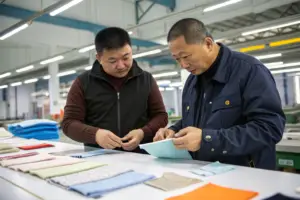
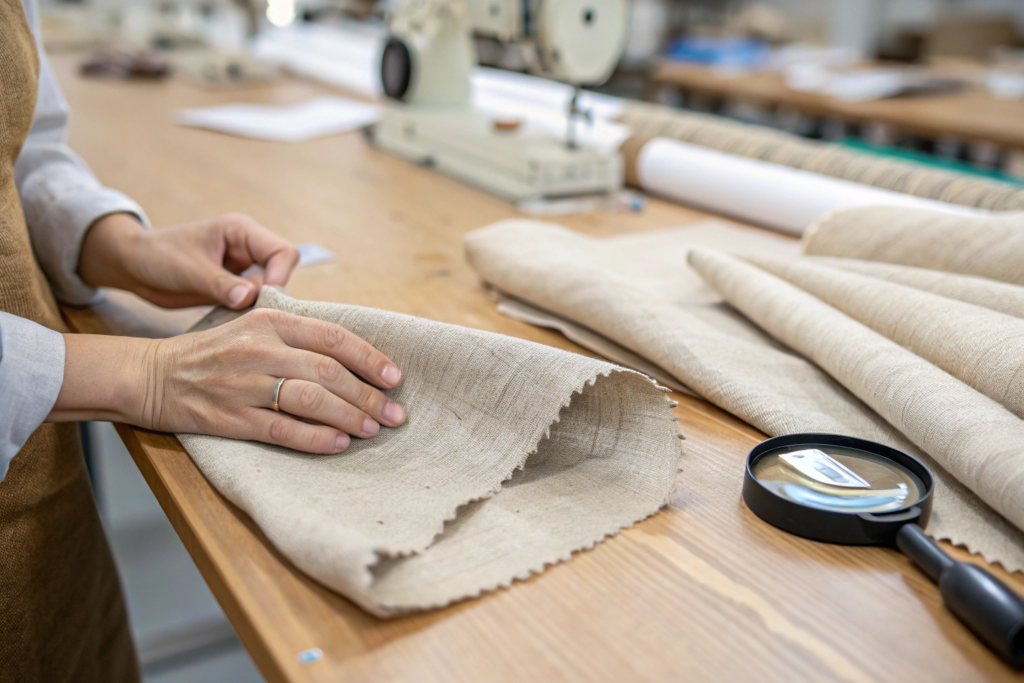
The biggest risk in the linen market isn’t price inflation—it’s fiber fraud. I’ve seen shipments labeled as "100% European flax" that were actually a cheap blend of viscose and polyester. Linen has a specific cool touch and a distinct slubby texture that synthetics try to mimic but rarely master. If you can’t physically walk into a warehouse, you need a remote verification process that holds suppliers accountable. This means moving beyond a simple photo of a certificate.
To verify authentic linen quality remotely, demand a burn test video alongside a professional lab report from a third-party testing agency like SGS or Intertek for the exact batch of yarn that will be used for your order. An authentic burn test shows the fiber igniting quickly, burning steadily with the smell of burning paper, and leaving a fine, gray ash—not hard beads.
Why Do Lab Tests Truly Eliminate Certificate Fraud?
A piece of paper from a supplier saying the fabric is pure linen is worthless if it's not traceable. I once worked with a startup brand in Austin, Texas, in the summer of 2022. They had received a OEKO-TEX certification from a potential supplier, but when we helped them cross-check the license number on the official website, it had expired two years prior. The supplier was falsifying certificates—just as you fear. To close this loophole, you must learn to read a lab report.
| Test Parameter | Why It Matters | What to Look For |
|---|---|---|
| Fiber Composition | Defines if it’s truly 100% flax or a blend. | A precise percentage breakdown from an ISO 1833 chemical analysis. |
| Shrinkage Level | Linen shrinks; uncontrolled shrinkage ruins sizing. | Pre-wash test result showing under 3% residual shrinkage for garments. |
| Color Fastness | Dye bleeding on light bags or upholstery is a retail disaster. | Grade 4 or above on multi-fiber staining test. |
| Thread Count/Weight | Matches the "hand feel" you approved. | Verify weight in GSM (grams per square meter) matches your spec. |
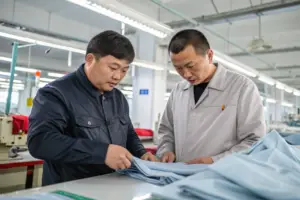
You should ask for a garment testing service report from Intertek. A genuine report has a unique ID. You can call the lab directly to verify the results. This isn't rude; it’s standard professional practice. Another crucial step is the physical mail sample. A lab test tells you the chemistry, but it doesn’t tell you how the pants will drape on a body. For that, you need a physical sample cut from the production roll. Ask for a fabric swatch verification service where the swatch is sealed by a third party and sent directly to you. This creates a golden standard. Once you approve that swatch, the factory must match it during bulk production. At Shanghai Fumao, we staple the approved swatch directly to the production file. There is zero excuse for substitution. If a supplier hesitates to let a third-party inspector handle the sampling, treat that as a major red flag.
How Can a Burn Test Prevent High-Priced Blends?
Even with a lab report, a simple visual check can save you a lot of money. Linen is a natural bast fiber. Polyester is plastic. Heat treats them very differently. I always teach our junior merchandisers this trick: fire doesn't lie. You can ask your supplier to perform a fiber burn test right on a live video call. This eliminates the chance they send a real swatch but manufacture with a blend.
Here is how you read the flame. When you hold a flame to 100% linen, it burns very fast and continues to glow after the flame is removed, like a cigarette. The smoke smells like burning dry leaves or paper. Most importantly, when the fire goes out, you can crush the residue into fine, soft ash between your fingers. Polyester, however, melts away from the flame. It drips as a hot liquid and gives off thick, black, chemical-smelling smoke. When it cools, it forms a hard, black plastic bead that you cannot crush. Ask the inspector to burn a few threads pulled from the inner seam allowance of a finished pair of pants. If the ash turns hard, it’s not pure linen. Recently, we worked with a Los Angeles brand specializing in plus-size women’s wear. They were being offered a "heavy linen" at a price that looked too good. They sent us the competitor's sample. We did the burn test and found tiny hard beads in the ash. It was a viscose-linen blend being sold as a premium material. We helped them source genuine 220 GSM flax, and by optimizing the cutting markers, we matched nearly 80% of the target price without lying about the fabric. Their return rate dropped by 45% on that SKU.
How to Lock in On-Time Delivery Windows for Seasonal Apparel?
Missing the seasonal window turns a best-selling product into heavily discounted dead stock. For linen pants, the Spring/Summer delivery is non-negotiable. If your summer bottoms arrive in September, you've lost the season. Late shipments usually happen because of two things: "rolling delays" where the factory feeds you small excuses weekly, or "bottleneck excuses" blaming the fabric mill. You must tie shipping dates to money.
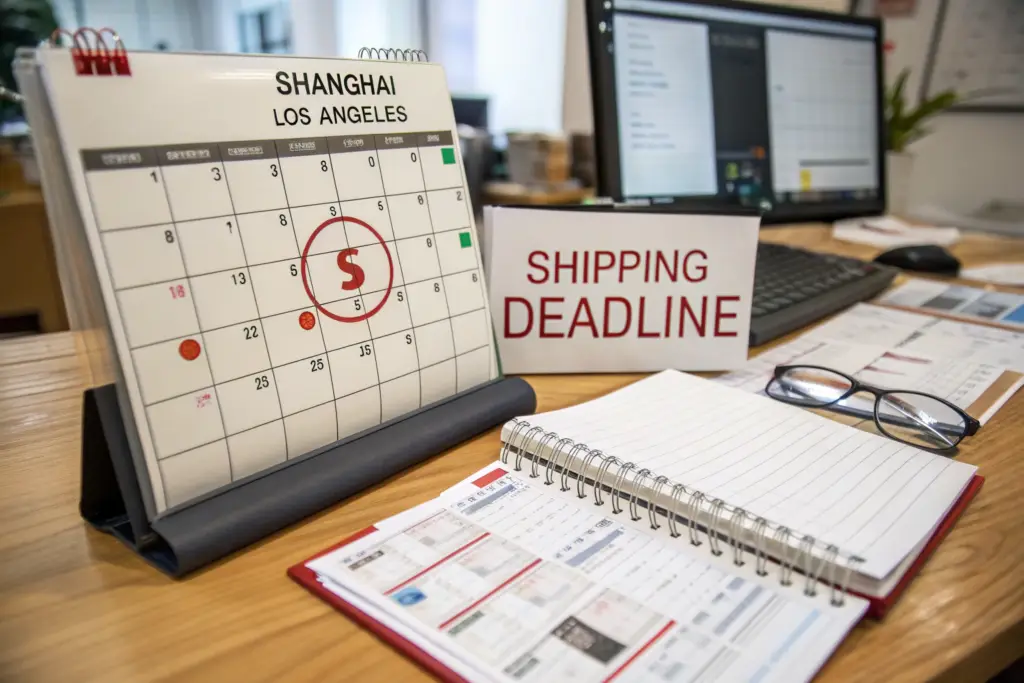
To secure your delivery window, structure your payment terms so the final balance is linked directly to a shipping date performance clause, not just a "ready for shipment" notice. This means if the goods miss the vessel booking you confirmed weeks earlier, the supplier faces a penalty or funds are withheld until the goods actually land.
How Do You Structure Contracts With Actual Delivery Penalties?
Words are nice, but bank transfers are better motivators. A purchase order that simply says "ASAP shipment" is useless. You need a specific contract clause that defines "late." I recommend specifying the "Latest Delivery Date" (LDD) and linking it to the confirmed vessel sailing schedule. Let me give you a real example. Last spring, we signed an agreement with a San Francisco sustainable brand. They were launching a pop-up store on June 1st. We calculated backwards from that date. We allowed two weeks for U.S. customs clearance and trucking. We booked a vessel slot for the first week of May. We then wrote into the contract that if the goods did not clear the loading port customs by May 1st, resulting in a missed vessel, Shanghai Fumao would cover the cost of air-freighting 20% of the order to ensure they had stock for the opening, or pay a 5% late delivery discount on the next order. This wasn't a punishment; it was a partnership guarantee. When a machinery breakdown threatened our finishing line, knowing we had this clause motivated our whole team to authorize an extra weekend shift to catch up. Ask your supplier if they are willing to accept supply chain insurance or penalty terms. If they won't risk a cent on their own performance, they are asking you to take all the risk.
Why Should You Use Forwarder Cargo Allocation Instead of Factory’s Promise?
A factory telling you "the ship leaves on April 15th" doesn't matter if they don't actually have a reserved space on the vessel. A promise is not a container. This is where you need to take logistical control, or at least verify the booking. Using your own nominated freight forwarder is often safer, but even with an FOB arrangement, you can demand a Booking Confirmation.
| Logistics Mode | Risk Level | Control Point |
|---|---|---|
| Factory’s Forwarder (CFR Terms) | High. Delays hidden easily. | Demand the Container Booking Number before final payment. |
| Your Nominated Forwarder (FOB Terms) | Medium. You control the ship. | Direct communication with the carrier for real-time tracking. |
| DDP (Delivered Duty Paid) | Low. One point of contact. | The partner handles everything from port to warehouse. |
I remember a case with a Florida-based distributor in October 2023. They relied on a factory’s forwarder who kept saying "shipping next week." Seven weeks passed. We stepped in to help them audit the situation. We found out the factory had never actually secured a container slot because freight prices had spiked, and they were waiting for rates to drop. The buyer missed Black Friday completely. Since then, we always advise brands to ask for the container tracking number as soon as the goods leave the factory floor. If you use a DDP model, the responsibility shifts to the seller to manage these hurdles. We handle this by sending our clients a screenshot of the verified terminal gate-in receipt. You know the goods are in the port's hands, not mine. That transparency is the only real cure for anxiety about shipments.
What Is the Realistic Total Landed Cost for Premium Linen Pants?
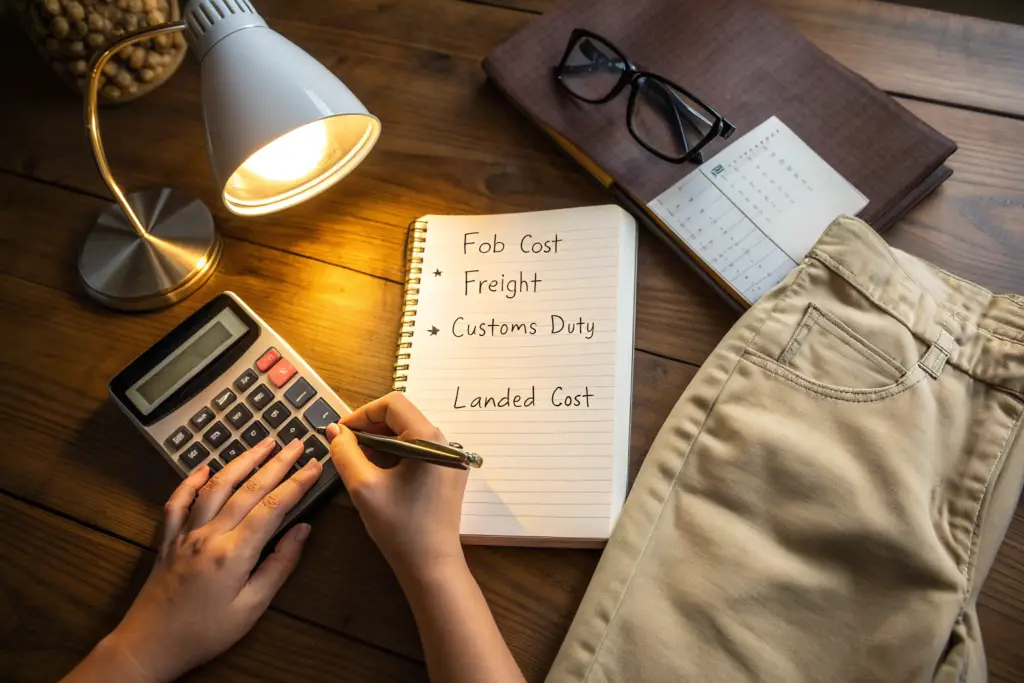
The advertised FOB (Free On Board) price on Alibaba is a trap if you mistake it for your final cost. I’ve seen too many brands base their retail pricing on the ex-factory cost and forget that linen isn't just heavy; it breathes, so it’s bulky to ship. You pay for volume, not just weight. The true cost includes hidden taxes, unexpected duties, and the surcharges that pile up during the ocean journey.
The realistic landed cost of a premium pair of linen wide-leg pants from a reliable Chinese factory is typically 2.5 to 3.5 times the raw fabric cost, fully landed at your U.S. warehouse. This calculation includes the DDP surcharge that covers import duties, customs clearance, and final mile delivery, which saves you from paying a customs broker surprise fees later.
How Do You Reverse-Engineer a Factory’s FOB Quote?
You cannot negotiate effectively if you don't understand what goes into the price. A pair of wide-leg pants uses almost twice the fabric of a slim-fit pair. The style itself drives your cost. Let’s break down the actual cost components that a factory calculates before adding their profit margin.
| Cost Component | Description | Approx. % of FOB Price |
|---|---|---|
| Raw Material (Flax Fabric) | 100% European flax, pre-washed quality. Heavy GSM (200+). | 45-55% |
| Accessories & Trim | YKK or high-end zippers, corozo buttons, care labels, hangtags. | 5-10% |
| Labor (CMT) | Cut, Make, Trim. Wide-leg patterns require careful alignment and hemming. | 25-30% |
| Overhead & Profit | Factory utilities, equipment depreciation, and management margin. | 10-15% |
When you see a price that is lower than the calculated cost of fabric, physics is being broken somewhere. They are likely using a thin fabric or a synthetic blend. I always tell my clients to do a "fabric yield calculation." If the pants have a 60cm width at the hem, the pattern consumes significant width. Ask the factory for the actual consumption per piece in meters. Multiply that by the quoted fabric price. If the math doesn't add up, walk away. We once reverse-engineered a quote for a client in New York who showed us a competitor's bid of $6.50 FOB. The fabric alone, a decent Lithuanian linen, would have cost $5.50 at the required meterage. That left $1 for labor, trim, and profit. It was impossible. The factory was definitely selling dead stock fabric of lower quality. We provided a transparent cost breakdown sheet for them, and they realized that paying $8.20 for the real thing gave them a higher dollar profit margin because they could charge a premium retail price.
Why Does DDP Simplify Your Total Cost Calculation?
For U.S. buyers, FOB and CIF terms introduce a fog of uncertainty. You don't know your exact warehoused cost until you pay the customs duty, the harbor maintenance fee, and the trucking invoice three weeks later. Using a DDP (Delivered Duty Paid) model eliminates this. It collapses all the post-shipment variables into one final, predictable number. Customs classification is a typical landmine. Linen pants are categorized under specific HS codes. If a supplier falsifies the code to lower the tax, you are the importer of record and legally liable. There was an incident in early 2021 where a Chicago-based boutique chain was fined by Customs and Border Protection for misclassified garments. The agent had labeled linen pants as synthetic trousers to save 8% duty. The importer was penalized, even though the factory made the mistake. To avoid this, I urge you to use a customs compliance advisory resource to verify your codes. When we ship DDP to your warehouse, we handle the classification and take the risk of clearance. You pay a single invoice upfront, and you know exactly what each unit costs before you sell it. This isn't just about convenience. It’s about making an accurate profit forecast.
How to Build a Bulletproof Quality Control Checklist for Wide-Leg Pants?
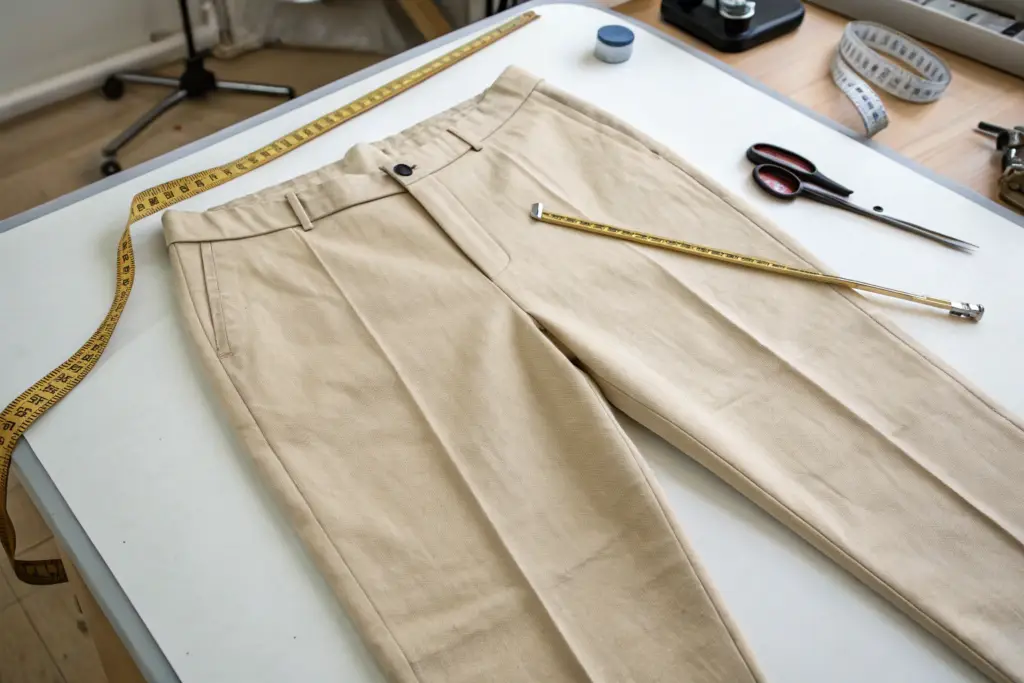
Linen is a living fabric. It moves, it shrinks, and it wrinkles. A spec sheet that works for polyester joggers will fail completely for wide-leg linen pants. The bias cut of a wide leg can stretch out on the production floor, turning elegant flare into a distorted mess if not controlled. Your inspection document must go beyond basic stitch count and focus on the structural integrity and specific behavior of flax fibers under stress.
A bulletproof QC checklist for linen wide-leg pants must include a 24-hour relaxation measurement test, a seam slippage test on the side seams, and a specific hem width alignment check. This ensures that the pants won’t twist, split, or shrink dramatically the first time your customer washes them.
What Are the Exact Testing Points for Wide-Leg Stability?
Standard AQL (Acceptable Quality Limit) inspections check for stains and holes. That’s the bare minimum. For wide-leg silhouettes, you need to measure the "swing" and symmetry. I will share the exact checklist we use at Shanghai Fumao for these items, which was refined after a catastrophic order in 2018 where 300 pairs of wide-leg pants shrank unevenly at the hem because the left and right leg panels were cut from different fabric rolls. We learned the hard way so you don't have to.
Essential QC Checkpoints for Linen Wide-Leg Pants:
- The Hem Circumference Alignment: Lay the pants flat. Measure the opening of the left leg and the right leg. Tolerance should be under ± 0.25 inches. A wider gap indicates a twisted seam.
- Relaxation Shrinkage: Cut a 50cm x 50cm swatch from the bulk. Measure it exactly. Wash it at home laundry settings. Dry it flat. Measure again. The spec should require less than 3% shrinkage. If you skip this, the pants lose two inches in length on the first wash.
- Seam Slippage Check: The side seams of wide-leg pants are under high stress, especially on the hip. Use a seam slippage test. If you can see the threads opening up easily when you pull the seam apart with your fingers, the pants will split. For this, we often refer to the ASTM D1683 standard for woven seams to ensure the stitch is locking effectively.
- Crease Resistance: Linen wrinkles by nature, but a good finishing process helps. Crumple the fabric in your hand. If it immediately holds deep, sharp creases that don’t fall out after a few minutes, it hasn't been properly softened. This is often a dealbreaker for retail display appeal.
About a year ago, we worked with an influencer-led brand in Miami. They were transitioning from polyester sets to natural fibers. Their first batch of linen pants from a third-party factory had a major issue: the wide legs were twisting around the calf. The issue was not the cut but the fabric tension. The rolls had been rolled too tightly. We fixed this by spreading the fabric on our cutting tables and letting it "relax" for 12 hours with a light mist of water to release the tension before the fabric was cut. It took an extra half-day, but it prevented a 100% return rate. Insist on this relaxation protocol.
How Do You Audit the Dye Lot Consistency for Earthy Tones?
Linen is famous for those beautiful, earthy tones: flax seed, oatmeal, sage green, and dusty blue. The problem is that natural fibers absorb dye inconsistently compared to synthetics. If you don't audit the dye lots, you might end up with pants that have a slightly different color panel on the left leg than the right leg, or production lots that don't match between sizes. This is called "shade banding."
You need to demand a "shade band report." This shows the acceptable variation range from the standard. We do a continuity blanket. That’s a strip of fabric sewn from at least five different rolls of the bulk fabric. Under a lightbox, you can see if Roll A and Roll C are too far apart. I always advise my clients to invest in a portable lightbox for their U.S. office. When we send a pre-production sample, we also send a "digital color reading" using a spectrophotometer. You can ask your factory for the lab test data, often provided by services like Datacolor. This gives you a Delta E value. If the Delta E is greater than 1.0, the human eye can start to see a difference. We once had a case with an organic linen brand from Portland, Oregon. They ordered a beautiful "natural unbleached" cream color. The first two shipments were perfect. The third shipment arrived slightly yellow-tinted because the factory used a different batch of flax from a different region. It was technically the same spec, but the base fiber was inherently warmer. We now map the origin of the flax fibers to batch numbers. Because we offer full-package manufacturing, we track the greige fabric batch from the mill to the garment. If a specific batch is off, we catch it before cutting. It’s a level of detail that stops a chargeback before it happens.
Conclusion
Sourcing linen wide-leg pants from China successfully requires you to be a proactive partner, not a distant buyer hoping for the best. You face real dangers, from material fraud and falsified certificates to delayed seasonal deliveries and inconsistent dye lots. You can neutralize these risks by implementing a three-part defense. Verify the fiber with a burn test and traceable lab report from the specific production batch. Lock your delivery schedule with penalty clauses and verified container bookings. Perfect the fit and color with a checklist built specifically for the unstable nature of wide-leg linen.
Every step I’ve detailed here isn't just theory. It’s a collection of solutions we’ve built at Shanghai Fumao over the last decade by fixing the specific failures you are trying to avoid. Whether it was keeping the pant legs from twisting for a Miami brand, or catching a bad batch of yellow flax for a Portland organic label, the lesson is always the same: problems are easier to prevent than to fix when the inventory is already on a cargo ship. We believe in transparent costing, proactive fabric relaxation, and a logistics chain where you never have to wonder where your container is.
If you are looking for a production arm that understands the unique challenges of making high-quality linen products for the American market, I would be happy to discuss your requirements. We don't just cut and sew. We solve problems before they become expensive. You can reach out to me directly and let’s review your linen wide-leg pant designs together. Contact our Business Director, Elaine, at elaine@fumaoclothing.com. I am ready to build a supply chain that lets you sell with confidence.