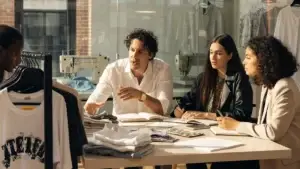
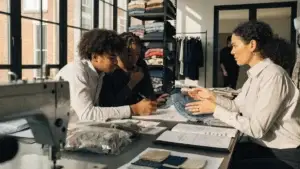
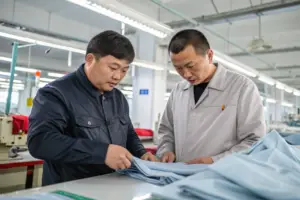
Every factory claims to be different. They use the same words. "High quality." "Fast delivery." "Best price." These words mean nothing without proof. I know this because I compete in the same market. The real difference does not live in a marketing slogan. It lives in the decisions you make when nobody is watching. It lives in the moment when a batch of zippers arrives 1mm too narrow, and you have to decide whether to use them or reject them and delay the shipment. It lives in the wash recipe you refuse to cheapen, even when the chemical salesman offers you a shortcut that saves $0.12 per unit. These invisible decisions accumulate. They form the true DNA of a factory.
Shanghai Fumao is different because we make three commitments that most factories will not make. First, we reject fabric lots that fail our 2% shrinkage threshold, even if it delays production. Second, we own our five production lines outright, which means we control the schedule, not a subcontractor. Third, we operate on a transparent DDP pricing model where the risk of freight fluctuation is ours, not yours.
But a list of commitments is still just words. You need to see the machinery behind the promise. You need to understand how we approach denim as a technical craft, not a commodity. I want to take you inside the real differences. The ones you can measure with a tension gauge. The ones you can feel in the finished waistband. And the ones that show up in your bank account when your return rate drops below 1%.
How Do Our Internal Quality Standards Exceed Industry Norms?
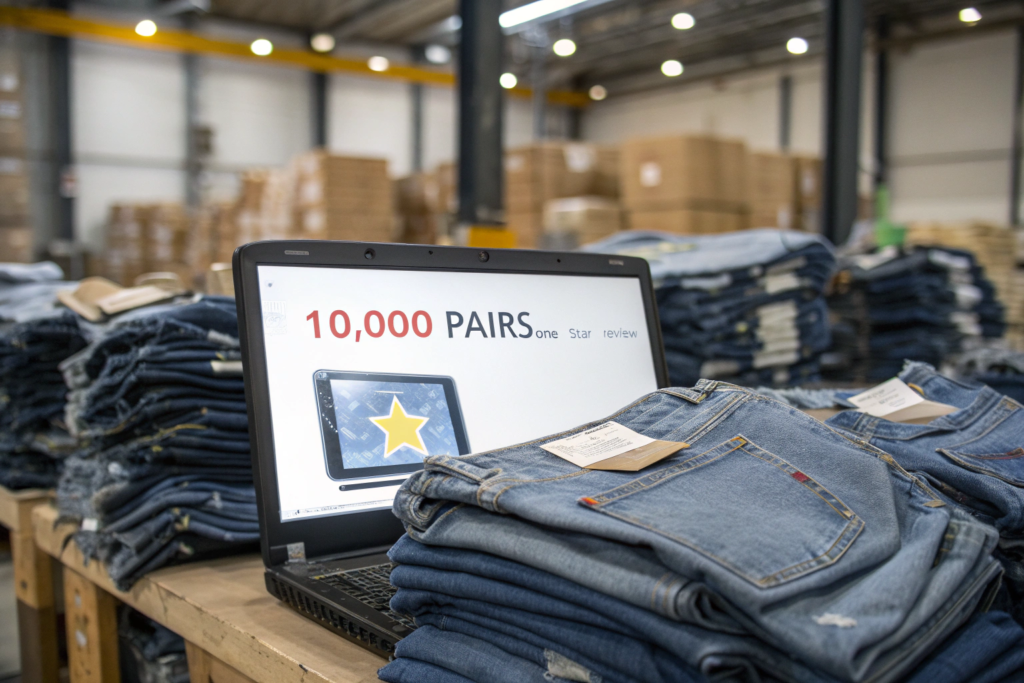
The industry norm in denim manufacturing is built on acceptable defect rates. An AQL of 2.5 means the factory accepts up to 2.5% of the order having major defects. That sounds small. But on an order of 10,000 pairs, that is up to 250 defective shorts landing in your warehouse. Your customer buys one of those 250. They leave a one-star review. That review stays on your website forever, scaring away hundreds of potential buyers.
We rejected the AQL 2.5 standard for our denim line five years ago. We now operate on an internal AQL of 1.0 for critical defects and 1.5 for major defects. This is not a marketing trick. This is a production discipline that costs us more money in rework hours but saves our clients from the silent killer of bad reviews. The difference starts at the fabric inspection table and continues through every single workstation on the sewing floor.
Let me show you the specific inspection gates where we stop problems before they become your problems.
What Is a 7-Point Inspection and Why Does It Catch Hidden Flaws?
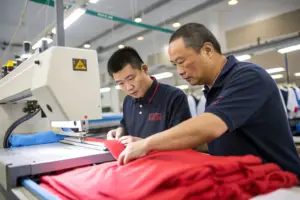
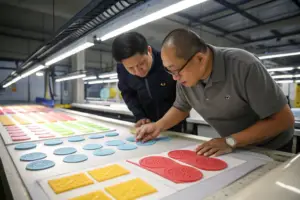
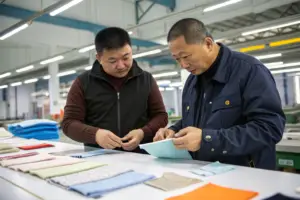
A standard 4-point fabric inspection checks for holes, stains, and weaving defects in the raw fabric roll. It is a good start. It is not enough. We use a 7-point system that extends the check into the finishing stages where most defects actually hide.
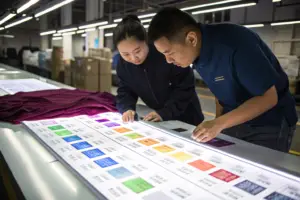
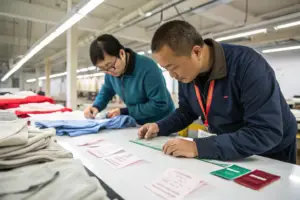
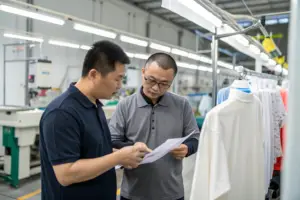
The seven points are: raw fabric inspection, cut panel check, in-line sewing audit at station three, in-line audit at station seven, wash effect approval, final measurement audit, and pre-packing visual check. The secret weapon is the in-line audits. Most factories only check at the end. By then, a sewing machine with a skipped stitch has already produced 200 defective pairs. Our roving auditor stops at station three, where the front panels meet the back panels. She measures the crotch seam length on five random pieces every hour. If the seam is off by 0.3 cm, she stops the line and calls the mechanic. This prevents a small drift from becoming a batch failure. The seven point inspection methodology is a best practice we adopted and intensified for denim. We add a specific wash check as point five, where we measure the color variance against the sealed lab dip standard using a calibrated lightbox.
How Do We Test Zippers and Hardware Beyond the Standard?
A broken zipper turns a $45 pair of shorts into trash. The standard test for a zipper is 500 open-close cycles. We test ours to 5,000 cycles on a reciprocating machine. This simulates years of daily use. We use SBS or YKK zippers exclusively, and we still test them. Even the best brands can have a bad production lot.
We also test the snap buttons for pull-off force. The standard is 15 pounds of force. We require 22 pounds. This is because denim is a heavy fabric. When a person sits down, the waistband expands, and the button takes tremendous stress. A cheap alloy button will shear off at the post. Our hardware inspector uses a digital force gauge. She records the break point of ten buttons from each incoming batch. If one fails below 22 pounds, the entire lot is returned to the hardware supplier. The rivets on the pocket corners get the same treatment. We check the zipper durability standards and then we double the requirement. This is not because we are obsessed with zippers. It is because we are obsessed with the moment your customer pulls that zipper up for the hundredth time and it feels just as solid as day one.
Why Does Our Wash and Finishing Process Create a Unique Look?
You can buy a basic pair of blue denim shorts from a hundred factories. They all look the same. That generic blue will force you to compete on price alone. You will be in a race to the bottom against a thousand other Amazon sellers. The only way to escape that race is to offer a wash that cannot be easily copied. A wash that makes the customer stop scrolling on their phone and say, "I have never seen that shade before."
Our wash house is our creative laboratory. We treat garment finishing not as a cleaning step but as a design signature. We combine old-school manual techniques with new ozone and laser technology to create layers of color and texture. A typical pair of our premium washed shorts goes through a six-stage wet process. It is not just dipped in dye and stones. It is built like a painting, layer by layer. This is where the soul of the short is born.
The difference between a flat, lifeless blue and a dimensional, vintage fade lies in the chemical precision and the human touch.
Can We Replicate Complex Vintage Fades Without Damaging the Fabric?
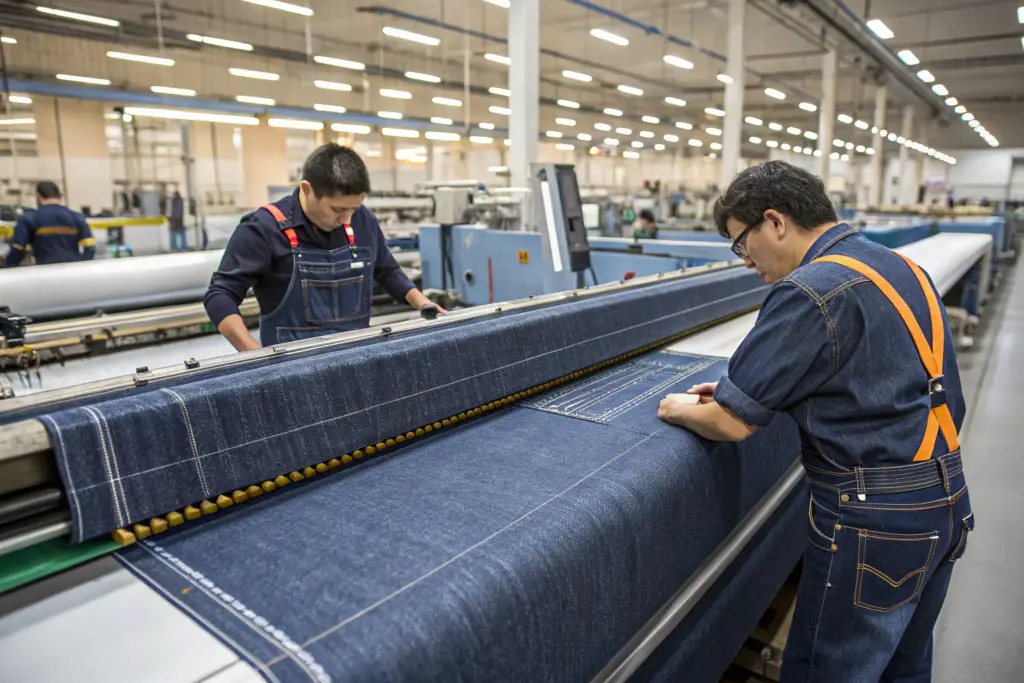
Yes, but it requires a philosophy of preservation, not destruction. The traditional way to get a vintage fade is to beat the fabric with pumice stones for an hour. This weakens the cotton fiber. The shorts feel soft on day one, but they develop holes after three months of wear. We moved away from heavy stonewashing five years ago.
We now use a combination of neutral cellulase enzymes and a specific ozone cycle. The enzyme eats the surface fuzz and softens the hand feel without abrading the fiber core. The ozone then lightens the indigo by oxidizing the dye molecules. This creates a natural-looking fade that penetrates only the surface layer. The underlying fabric structure remains intact. Last spring, a premium menswear brand from San Francisco asked us to replicate a 1980s Levi's wash. They needed the thigh whiskers and the honeycomb behind the knees. We used a template laser to burn the pattern outlines, then hand-sprayed a diluted potassium permanganate solution just in the valleys of the wrinkles. The technician used a soft brush to feather the edges. The result was a short that looked like it had been worn for a decade but had the tensile strength of new denim. You can read about the science behind enzyme washing and how it differs from stone abrasion. The key metric we track is the tear strength after wash. Our vintage process retains 85% of the original fabric strength. Stonewashing typically retains only 60%.
What Is the Salt-Free Dyeing Method and Why Does It Matter?
Traditional indigo dyeing uses a massive amount of sodium hydrosulfite and salt. The salt helps the dye fix to the cotton. The problem is the wastewater. It is loaded with salt and sulfates. Treating this water is expensive and environmentally heavy. Many factories just dump it. This is a reality in some low-cost production regions.
We invested in a salt-free, low-liquor dyeing machine for our denim shorts line. This system uses a modified indigo dye that fixes to the cotton through a cationic pretreatment instead of salt. The fabric is pretreated with a positive charge. The dye particles have a negative charge. They bond without the sodium chloride bridge. The result is identical color fastness. The water savings are 70%. The wastewater is clear enough to be recycled back into the process after a simple filtration. This is a genuine sustainable dyeing technology that changes the environmental math of denim. For your brand, it gives you a true eco-story to tell your customers. Not a vague "we care about the planet" tagline. A specific, verifiable process. We can even provide the batch water meter readings for your sustainability report. This method costs us slightly more in pretreatment chemicals, but the long-term value of a cleaner supply chain and a stronger brand narrative is worth far more.
How Does Owning Our Production Lines Benefit the Buyer?
When a factory tells you they have production lines, ask a simple question. "Do you own them, or do you rent them?" Many trading companies rent a corner of a factory floor. They have no authority over the worker schedule. When a bigger client places an urgent order, the landlord factory bumps the trading company's production. Your order sits half-sewn on a trolley for three days. The deadline slips. You are calling your freight forwarder in a panic, but the person you paid has no power to fix it.
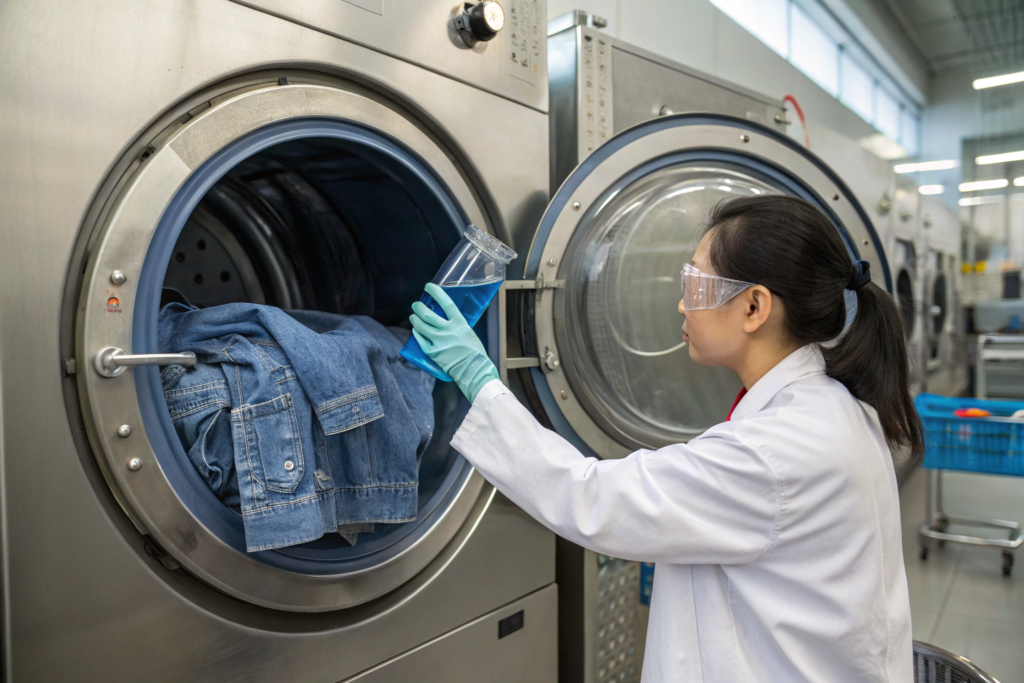
Shanghai Fumao owns all five of our production lines. The factory building is under our name. The cutting machines are our assets. The sewing operators are our employees, hired and trained by us, not a labor agency. This ownership structure means absolute control over the production calendar. When you place an order, I personally approve the production schedule. No external factory manager can override me. Your order stays on the line until it is finished, packed, and loaded onto the truck.
Line ownership translates directly into schedule reliability and quality consistency. Here is the concrete impact on your business.
How Does Line Ownership Guarantee Your Ship Date?
It eliminates the variable of subcontractor priority. I cannot give an excuse that "the subcontractor had a problem." I am the factory. The problem is my problem. I solve it with my own resources.
Each of our five lines has a dedicated production manager. Their bonus depends on two metrics. On-time completion rate and internal defect rate. They do not get paid extra for finishing a big brand order faster at the expense of a smaller client. Every order on their line belongs to them. If a machine breaks down, we have an in-house mechanic who fixes it within the hour. If we lose a worker to illness, a cross-trained operator from another line floats in to cover the station. This is only possible because we control the entire workforce. A rented line cannot cross-train across different companies' orders. The labor is siloed. Last year, during the peak pre-summer rush, a Florida client needed 3,000 pairs in 28 days. We shifted operators from our outerwear line, which was in a slow season, to the denim line for 72 hours. We met the ship date without overtime penalties. You can learn about the advantages of dedicated production lines in lean manufacturing. A dedicated cell owned by one company always outperforms a shared facility.
Can We Handle Urgent Modifications After Production Has Started?
Yes. Because the lines are ours, we can stop and pivot. This is the flexibility a trading company cannot offer. If you sell out of a specific wash in the first week of your launch and need to convert the next batch from light wash to medium wash, a rented factory will say "the schedule is locked."
We can make that switch at the wash stage. The shorts are already cut and sewn. They are sitting in the gray, pre-wash state. If you call me and say the medium wash is outselling the light wash 3-to-1, I will send 80% of that batch through the medium wash recipe instead of the planned 50-50 split. We can do this because the wash technician reports to me, not to a third-party laundry owner. I remember a Chicago-based brand in summer 2025. Their TikTok video showcasing our "dirty indigo" wash went viral on a Tuesday. They called me in a panic on Wednesday morning. They needed 1,500 units of that specific SKU immediately, but their inventory was the standard blue. We had a batch of 2,000 greige shorts prepped for another wash. We diverted them. By Friday, they were in the ozone machine getting the dirty indigo recipe. They shipped the following Monday. The client sold through 80% of that shipment at full price. That agility comes from ownership. You can understand the contrast by reading about the limitations of subcontract manufacturing. With a subcontractor, such a change would require a new purchase order, a price negotiation, and a minimum two-week delay.
What Is the True Value of Our Transparency-Based Partnership Model?
The old factory model is built on an information imbalance. The factory knows the real cost, the real defects, and the real ship date. The buyer knows none of it. The factory uses this information gap to protect its margin. This model is dying. The internet killed it. A buyer today can find a hundred alternative suppliers in ten minutes on their phone. The factories that survive the next decade will be the ones that treat transparency not as a risk, but as a competitive asset.
I made a deliberate decision five years ago. I would show my clients everything. The true fabric cost. The real production schedule. The inspection failures. Yes, showing a failed internal inspection is uncomfortable. It might make me look bad for an hour. But hiding it and shipping faulty goods makes me look bad forever and opens me up to a chargeback. Transparency forces us to be better. If I know you will see the inspection report, I will make sure that report is clean before it reaches you. This creates a self-reinforcing cycle of quality.
A transparent partnership changes the nature of the conversation from transactional to collaborative.
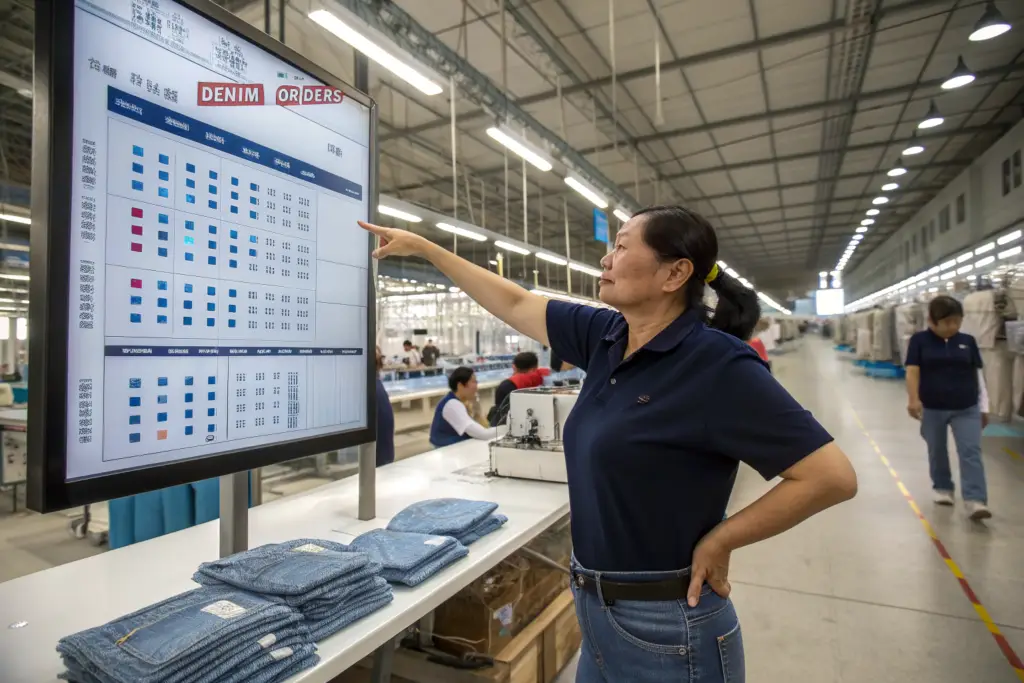
We do not send a generic "Your order is in production" email once a week. We give you access to a live tracking dashboard. When your order is on our floor, you receive a unique link. This link opens a Trello-style board customized for your purchase order.
The board has columns. "Cutting." "Sewing." "Washing." "Inspection." "Packing." "Shipped." Each garment panel has a card. Our floor supervisor scans a barcode at the end of each stage. The card automatically moves to the next column. You can watch this happen from your office in Texas in real-time. If you see a card stuck in "Sewing" for two days, you can message Elaine and ask "Is there a bottleneck?" Usually, it is something simple like a thread color changeover. But the fact that you can see it and ask builds trust. We also upload the internal inspection report to the dashboard before the third-party inspector even arrives. You see the same defects our auditor found, and you see the corrective action report attached. This real-time production tracking concept is common in electronics, but rare in apparel. We brought it to denim shorts. It reduces the anxiety of the unknown waiting period between payment and delivery.
Why Do We Welcome Third-Party Inspections Without Notice?
Many factories have a "special" room for the inspector. They prepare a clean, organized batch of samples. The rest of the floor is a mess. They tell the inspector when to arrive. This is a theater performance. The buyer pays for an inspection of a staged show.
We do the opposite. We tell our clients, "Send the inspector anytime. Do not tell us the date." We have a standing agreement with QIMA and SGS. Their auditors have access to our facility upon arrival. No waiting room delay while we fix the floor. This forces us to maintain inspection-ready conditions every single day. It is harsh on the management team. We cannot have a bad day. But it proves our quality system is not a performance. It is a habit. Last February, an SGS auditor walked in unannounced for a Midwestern brand's order. He checked the random sample, measured the waistbands, tested the zippers, and reviewed the chemical lab reports. We passed with zero critical defects. The client told me later that his previous supplier failed three announced inspections in a row. That is the difference between a theater and a real factory. You can verify the independence of such inspections by visiting the SGS softlines testing page. An inspection you control is not an inspection at all. An inspection your factory does not control is the only one that counts.
Conclusion
What makes our denim shorts different is not a single secret ingredient. It is a system of decisions that cost us more in the short term and pay off for our clients in the long term. We test zippers to 5,000 cycles when the standard is 500. We reject fabric that shrinks 2.1% when the industry allows 3%. We own our production lines so your ship date is not at the mercy of a third-party landlord's schedule. We invest in ozone and salt-free dyeing not just for marketing, but because it produces a better, more durable fade. And we share the real data, the real schedule, and the real inspection reports, even when they show a problem we had to fix. This transparency is uncomfortable, but it is also the only thing that can build a 10-year partnership in a market where most supplier relationships last less than 12 months.
I do not want to be a supplier you use once. I want to be the factory you call first when you have a new idea. The factory that knows your fit block by heart. The factory that catches a fabric problem before it reaches your warehouse and costs you a review rating. That kind of relationship is built on difference. Real difference. Measurable difference. The kind we have documented in this article.
If this approach to manufacturing sounds like what your brand needs, I invite you to test us. Our Business Director, Elaine, can send you a sample pair of our 10.5 oz denim shorts, finished with our signature ozone wash. She can also share a video tour of our owned production lines and a sample of our real-time tracking dashboard. Reach her at elaine@fumaoclothing.com. Let Shanghai Fumao show you what a genuinely transparent, quality-obsessed denim factory can do for your brand.