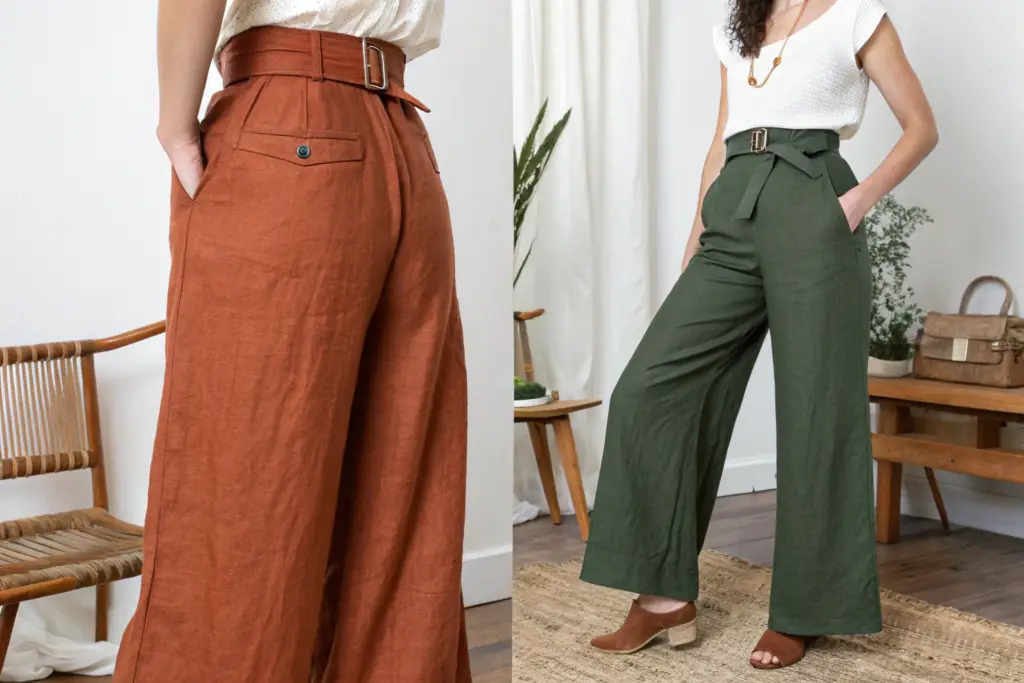
You are staring at your line sheet for the Spring/Summer 2026 season. Last year's bestseller was a classic high-waisted, neutral-toned wide-leg pant. You sold out. But now every other brand has copied that silhouette. The market feels saturated. Your wholesale accounts are asking, "What's new?" They want the next shape that will make customers stop scrolling and walk into the store. If you show them the same pant with a different label, they will pass. You need a product that feels undeniably fresh but still rooted in the fabric customers trust: linen. The risk is betting on a trend that fizzles in six weeks and leaves you with dead stock.
The defining linen wide-leg pant styles for 2026 wholesale buyers are the "barrel-leg" silhouette with a sculpted, inward-curving hem, the ultra-high draped-front closure with a matching self-fabric belt, and a return to textured, open-weave slub linens in saturated mineral tones like deep rust, oxidized copper, and dark malachite green. The market is moving away from minimal beige toward statement structure and artisanal surface interest.
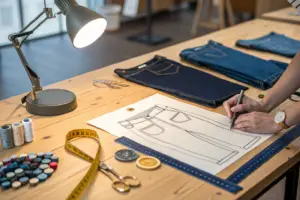
I spend a significant part of my year analyzing what European and North American boutiques pre-order. I don't just watch runway shows. I watch the fabric mills. The yarn spinners signal trends twelve months before a pant hits the rack. My name is Elaine, and at Shanghai Fumao, our in-house design team translates these textile innovations into production-ready patterns for brands. I want to share the three major direction shifts we are seeing for 2026. These are not vague aesthetic guesses. They are backed by the yarn developments and silhouette adjustments our sampling room is cutting right now. Let me walk you through the shapes, the fabrics, and the construction details that will set your wholesale line apart next season.
What Specific Silhouette Shifts Are Defining the 2026 Linen Pant?
The dominant wide-leg shape of 2024 and 2025 was the full, straight-falling palazzo. It was generous. It was relaxed. It was everywhere. For 2026, the leg is being reshaped. The volume is staying, but the geometry is becoming more intentional. The straight line is giving way to a curved, sculpted leg that plays with negative space. European runways and early adopter boutiques are showing pants that taper inward at the hem, or curve out and then back in, creating a silhouette that looks as structural as it does effortless. The new linen pant is not just hanging from the body. It is interacting with the body.
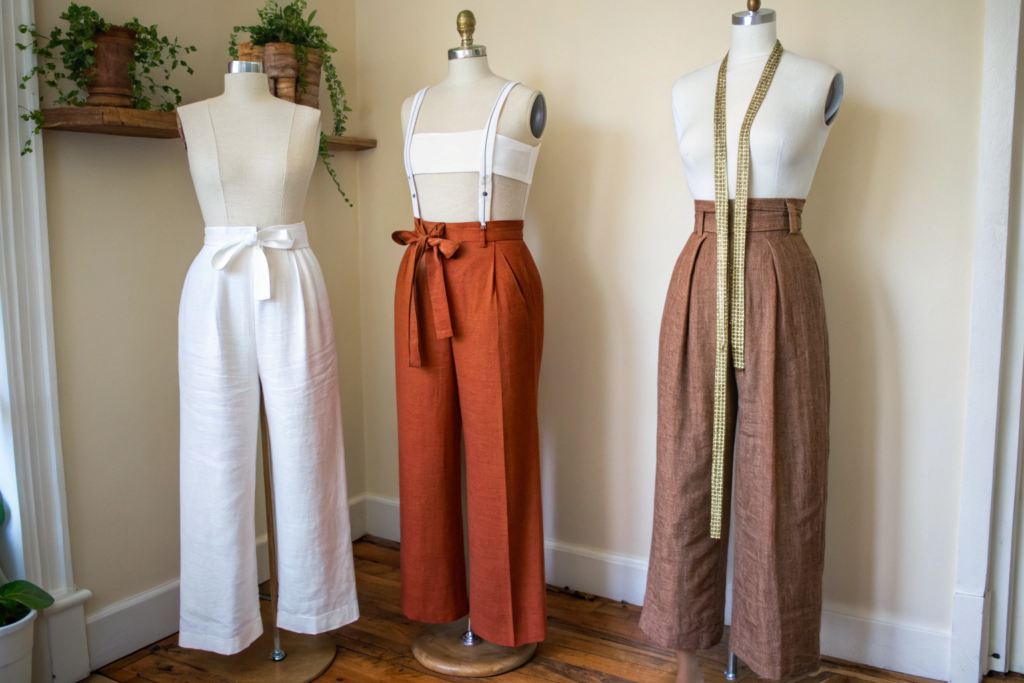
The two silhouettes dominating early 2026 wholesale buying are the "Barrel-Leg" curve pant, which arches outward from the hip and tapers back to a narrow, sometimes elasticated, ankle, and the "Column Drape" pant, which is cut with extreme extra width from a high waist and falls straight to the floor without a break, requiring a denser, heavier linen to hold its vertical flow without collapsing.
Why Is the "Barrel-Leg" Shape Replacing the Straight Palazzo?
The straight palazzo is a two-dimensional shape. It lies flat on a table. The barrel-leg is a three-dimensional object. It's constructed with an exaggerated inseam curve that pushes the fabric out from the thigh, and then pulls it back in towards the hem. This shape looks architectural but wears surprisingly easily because the linen holds the curve without clinging. The key technical challenge is the grain line. If you cut a curve this aggressive on a straight grain, the pants will twist on the body. You must cut the pattern pieces on a slight bias angle, or use a specific pattern-drafting technique called "truing the curve" to balance the drape.
I worked with a Los Angeles-based contemporary brand in late 2025 to develop their first barrel-leg sample. They brought an inspiration photo from a Japanese designer's collection. The shape was stunning, but the factory they were using couldn't stop the inner knee from buckling. We solved this by inserting a very thin, fusible reinforcement tape along the inner leg seam from the mid-calf to the ankle. It's invisible from the outside, but it controls the linen's tendency to bag out. This kind of micro-construction detail is explored in advanced pattern making resources for sculptural silhouettes. The market reception data we are seeing from our brand partners indicates the barrel-leg is connecting strongly with the 25-40 age demographic looking for a fashion-forward work pant that replaces the skinny jean without defaulting to a boring trouser. It pairs aggressively well with a fitted, shorter top, creating a proportion play that photographs beautifully for social commerce.
How Does the "Column Drape" Demand Heavier Fabric Weights?
The Column Drape pant looks simple: a very high waist, a deep pleat, and an absurdly wide leg that goes straight down. It must look like a heavy silk curtain. But simplicity in design is complexity in manufacturing. This pant cannot be made with a lightweight, 150 GSM linen. It would look like a wrinkled bedsheet. The column requires gravity. It needs a heavyweight linen, at least 240 GSM to 280 GSM, to fall with that clean, architectural line.
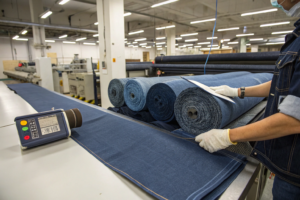
This weight shift is changing how mills are spinning linen for 2026. We are seeing a huge increase in demand for "heavy linen twill" and "double-weave linen." These fabrics have the open breathability of classic linen but the structured body of a light upholstery fabric. A buyer from a premium Australian resort wear brand visited our Shanghai showroom in November 2025 specifically to touch these heavy weights. She held a sample of our 260 GSM washed linen twill and said, "This feels like money." The textile innovation behind this trend is traced through fabric trend forecasting platforms that monitor mill developments. You must also adjust the waistband. A heavy pant on a single button will pull. We are engineering these with a wider, 5cm internal facing and a two-button extended tab closure. If you are buying for 2026, ask your supplier for the "GSM card" of their linen options. If the heaviest they offer is 180 GSM, they cannot produce this silhouette correctly. Move up the supply chain until you find the weight.
Which Color Palettes and Fabric Textures Are Trending Away From Basic Beige?
For five years, the linen market has been drowning in oatmeal, flax, and natural unbleached cream. These are the safe colors. They sell. But wholesale buyers are now looking for differentiation. The boutique owners are telling me, "I already have five racks of beige linen. Show me a color my customer hasn't seen." The 2026 palette is shifting from the neutral kitchen to the mineral quarry. Colors are becoming saturated but grounded, dusty but deep. Simultaneously, the texture of the fabric is being pushed to the extreme. Smooth, uniform linens are being pushed aside by heavily slubbed, almost handwoven-looking surfaces that communicate craft and authenticity instantly.
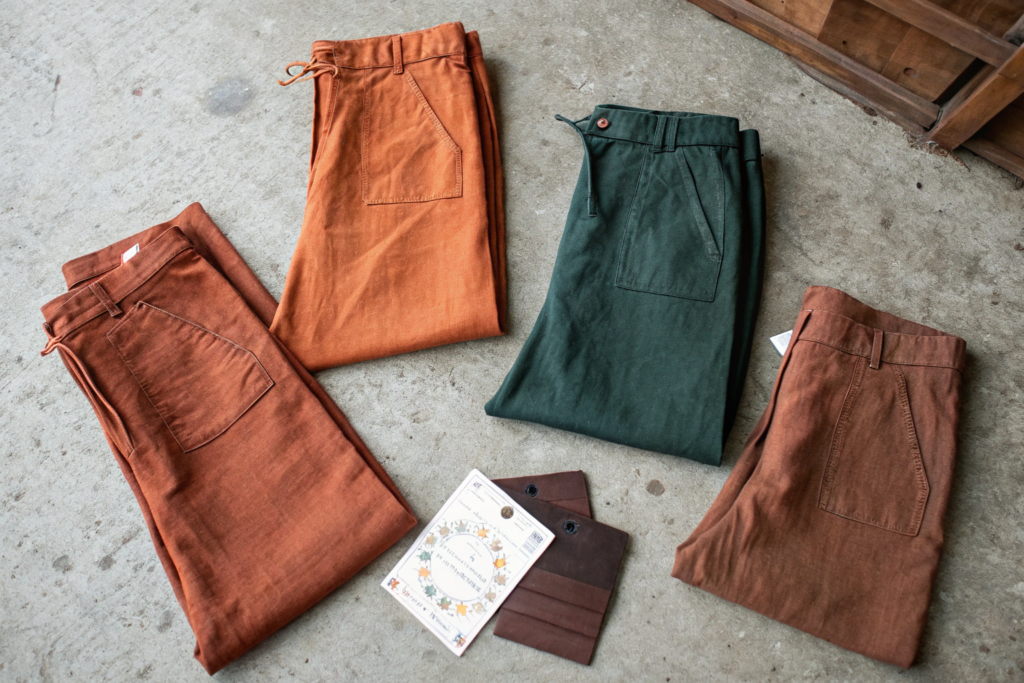
The trending 2026 colors are oxidized mineral tones—specifically Rusted Terracotta, a deep burnt copper, and Malachite Green—paired with "Gauze Linen" weaves and "Raw Slub" textures that emphasize the natural imperfections of the flax fiber. The consumer is seeking visual proof that the garment is made from a real plant, not a lab-tested synthetic.
How Are Saturated Mineral Tones Reshaping Wholesale Color Cards?
A standard blue or a standard green will not sell to a forward-thinking boutique in 2026. The colors must look like they came from a rock, a canyon, or a oxidized metal object. This means the dyeing process is more nuanced. You are not asking for "rust." You are asking for a rust with a slight cool brown undertone to make it sophisticated, not costume-like. These colors require what is called a "topped" dyeing process. The fabric is dyed a base color, and then a second wash of a slightly different tone is applied to create depth. This is how linen escapes looking flat.
In late 2025, we developed a custom color for a San Diego brand called "Canyon Floor." It took six lab dips. It is a warm, earthy copper with a tiny hint of pink that comes alive in sunset light. The brand owner was nervous about moving away from their safe beige palette. We ran a small pre-order of 150 units. It sold out in ten days, outperforming their classic natural linen by 22% in the same launch window. The data on color psychology and consumer purchasing, often discussed on platforms like Pantone's color trend reports, indicates that post-pandemic consumers are drawn to colors that feel connected to the earth but have a saturated, almost jewel-like richness. They want color that feels permanent and meaningful, not fleeting. When you review supplier color cards, reject any dye that looks "chalky." Linen absorbs dye in a unique way, with a natural white core. A poorly formulated dye sits on the surface and looks faded even when new. A high-quality mineral dye penetrates the fiber and ages gracefully. Ask for a "rub fastness" test card on any dark mineral color. Cheap dyes will crock, meaning they rub off on a white bag or a light-colored sofa. This is a technical failure point that separates trend-driven suppliers from quality manufacturers.
Why Is "Gauze Linen" and "Raw Slub" the Dominant Textures?
The trend cycle has moved from polished to textural. A smooth, uniform linen now looks mass-produced. The premium signal in 2026 is an open-weave, almost "basket" texture or a heavy slub where the yarns are intentionally uneven. This is called a nep yarn or a slub yarn, and it celebrates the natural stalk of the flax plant. These fabrics feel incredibly airy. An open-weave gauze linen is not a single yarn woven tightly. It is a group of fine yarns woven loosely, creating a subtle transparency and a crinkled texture that doesn't need ironing.
I sourced a "bark-weave" linen from a specialized mill in Jiangsu last October for a New York City-based gallery store. The fabric looked like the surface of a tree. It had thick and thin sections running randomly. The key specification for this fabric is tensile strength. A fabric with such an uneven surface risks tearing at the thin points. We tested it using an ASTM tensile strength test to ensure the weak points could still withstand a minimum of 35 pounds of force. It passed. The pants we made from it had a zero return rate, and the store reordered three times. The risk with highly textured linens is that the slubs can catch on jewelry or watches. We mitigate this by finishing the fabric with a very light micro-sanding process. It knocks off the sharpest edges of the slubs without flattening the texture. You should ask your supplier if they have a "hand feel finishing" chart. If the texture is just raw loom-state fabric, it will be too scratchy for consumer comfort. A good factory balances visual texture with wearable softness.
What Are the Key Construction Upgrades Wholesale Buyers Must Request?
A fashion-forward silhouette can sell a first order. The construction inside the garment sells the second and third orders. A wholesale buyer's worst nightmare is a high return rate from their retail accounts because the pants don't hold up. The 2026 styles, with their aggressive curves, heavy weights, and open weaves, demand a completely different construction approach than the simple elastic-waist linen pant of 2020. You cannot use a 1cm seam allowance on a loose-weave heavy linen and expect the pants to survive a season of wear.
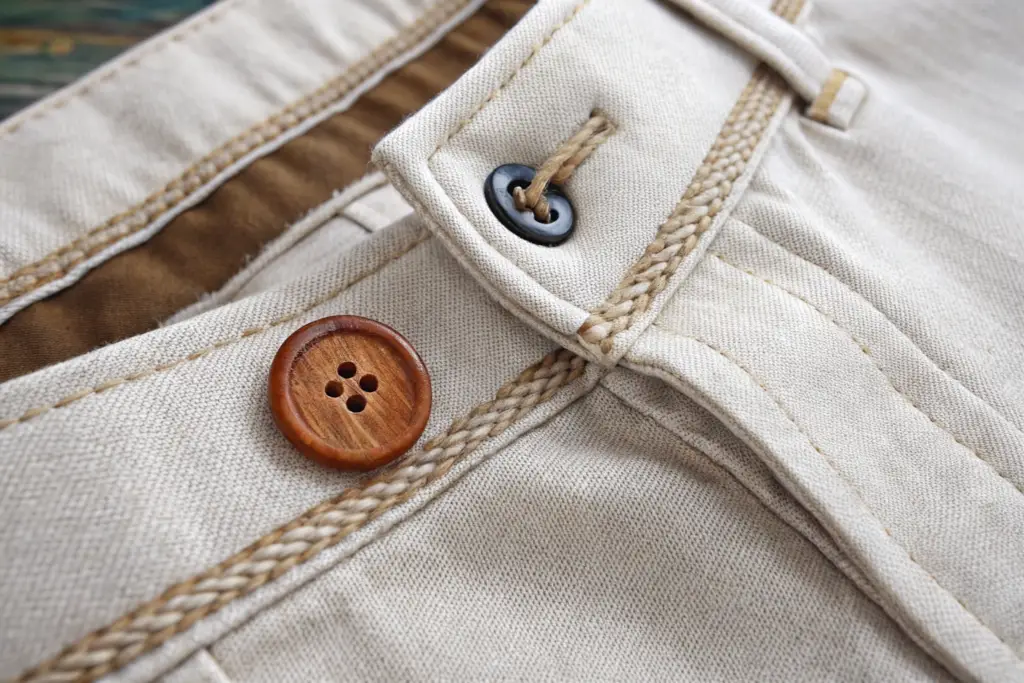
The non-negotiable construction upgrades for 2026 linen wide-leg pants are French-seamed or bound internal finishing on all major seams, genuine corozo nut or shell buttons instead of plastic, and a deep 2-inch hem facing that uses a catch-stitch to allow for invisible length alterations. The inside of the pant must look as intentional as the outside because the premium customer inspects it.
Why Are French Seams Non-Negotiable for Open-Weave Linen?
An overlocked serged seam is the standard for fast fashion. It's fast. It's cheap. It looks like a mess of threads. On a dense cotton, it works. On an open-weave gauze linen, it is a disaster waiting to happen. The raw edge of the fabric, even when overlocked, will fray over time. The threads will pull out of the weave. The seam will weaken with every wash.
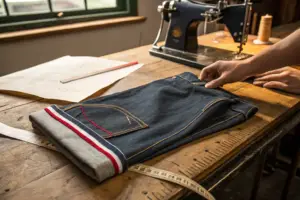
A French seam, or a clean bound seam with a soft cotton herringbone tape, encloses the raw edge completely. There is no raw edge left to fray. This technique takes about 40% more time on the sewing machine, which is why cheap factories avoid it. At Shanghai Fumao, our standard specification for all linen products above a certain price point is an enclosed seam finish. An influential fashion buyer from a Parisian concept store visited us in early 2025. She did not look at the front of the pant first. She turned it inside out and ran her finger along the inner leg seam. She felt the French seam and nodded. That single gesture decided the order. Technical tutorials on fine seam finishing techniques explain why the enclosed seam is the hallmark of garment longevity. If you are writing a tech pack for a 2026 collection, this must be explicitly stated. Do not just write "finish seams neatly." Specify "French seam on inseam and side seams." A factory will charge you slightly more for the extra labor. It is worth every cent in reduced return rates.
What Trims and Fasteners Signal Premium Wholesale Value?
A pair of linen pants that costs $128 at retail cannot have a plastic button that looks like it was pulled from a 1990s blazer. The button is the jewelry of the pant. For 2026, the shift is strongly toward natural materials that patina with age. Corozo nut buttons are the leading choice. Corozo is a nut from a tropical palm. It is an organic material that can be carved and polished to look like ivory, but it is completely sustainable. It has a subtle, natural grain. It feels warm and heavy in the hand.
I sourced a specific batch of corozo buttons from a supplier in Italy for a capsule collection we produced for a London-based brand last season. The color was a deep "coffee bean" brown. The brand received feedback from a retail customer who said the first thing she noticed was the button. She bought the pants because they looked "silently expensive." Similarly, zippers must be selected for heavy fabrics. A size 3 coil zipper is for dresses. For a heavyweight, 260 GSM linen pant with a structured waistband, you need a metal YKK zipper or a heavy-duty vislon zipper. We specify the exact zipper code in our bill of materials. I often guide clients to the YKK product catalog to understand the technical load specifications of different zipper sizes. The last detail is the hem. A simple turned-up hem on a wide-leg pant is visible when you walk. A deep 2-inch hem, stitched with a catch-stitch, allows a tailor to let the hem down by up to 1.5 inches without leaving a visible crease line. This signals to the retailer that the pant is designed to be a long-term wardrobe investment. These details, the seam, the button, the hem facing, collectively justify a wholesale price point that generic importers cannot touch.
Conclusion
The 2026 wholesale linen market is rewarding brands that take a position. The safe, beige, straight palazzo pant is becoming a commodity that will be chased to the bottom on price. The opportunity lies in three areas. First, adopt the new sculptural geometries: the inward-tapering barrel-leg and the ultra-heavy column drape. Second, shift your color palette toward saturated, oxidized minerals and your fabric textures toward raw, open-weave slubs and gauze that the customer can see and feel as authentically natural. Third, demand a complete upgrade in internal construction—enclosed seams, natural corozo buttons, and hem facings that are designed for alteration. These are the precise signals of a premium product that a wholesale boutique buyer scans for in a showroom appointment.
At Shanghai Fumao, our sampling room is already running these shapes for several forward-thinking brands. We have the heavyweight linen twills, the bark-weave textures, and the corozo button supplier relationships ready for production. We are not reacting to trends. We are building them with our mill partners. If you want your 2026 collection to lead the market rather than follow the clearance rack, I welcome you to contact me. Let's review your current bestsellers and map out how to evolve them into the shapes and fabrics that will dominate the season ahead. My name is Elaine, and you can reach me directly at elaine@fumaoclothing.com. Your next best-selling fit is waiting to be cut.