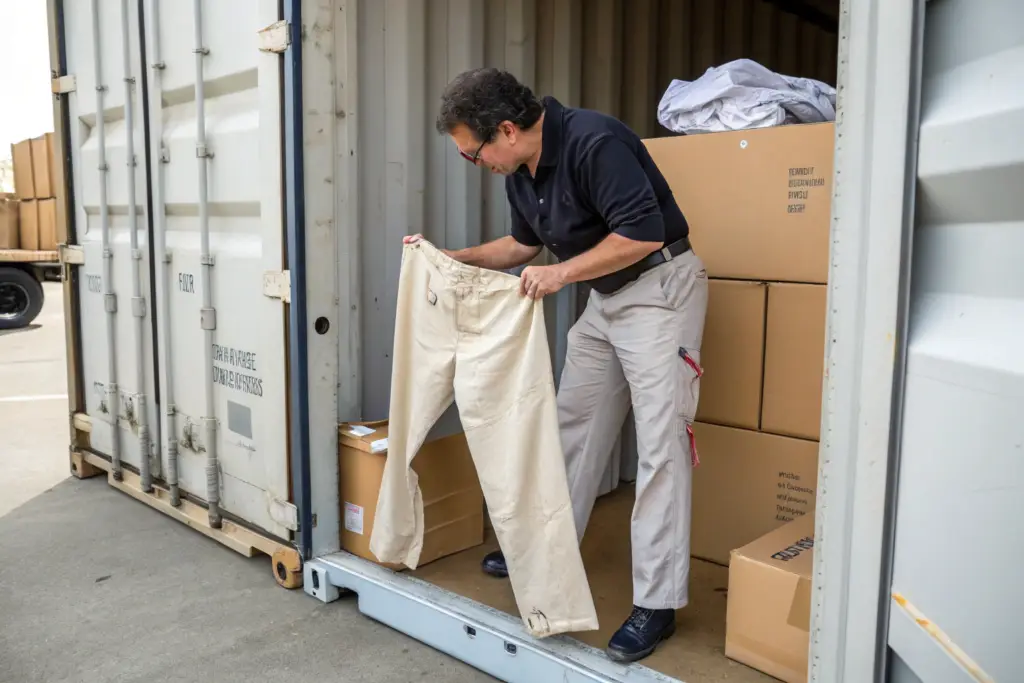
You open the shipping container. You tear into the first carton. You pull out a pair of your signature linen wide-leg pants. Then you see it. A pulled seam at the hip. Or a stain on the thigh. Or the color looks two shades darker than the approval sample on your desk. Your stomach tightens. You have 2,000 units sitting in your warehouse, and your launch date is in three weeks. You emailed the supplier immediately. Three days pass. No reply. The silence is louder than a phone ringing. Quality complaints feel personal, but they are a technical process. Handling them incorrectly destroys both your inventory investment and your supply chain.
To handle a quality complaint effectively, you must freeze the inventory immediately, document the defect with a professional third-party inspection report that quantifies the failure rate against the AQL standard, and submit a structured corrective action request that ties the compensation—whether a discount, remake, or return—to a specific production root cause, not just the visual symptom. The goal is a solution, not a fight.
I have managed garment production for over fifteen years. I have seen both sides of this conversation. I have received angry phone calls from buyers, and I have also made the difficult calls to fabric mills when a batch of linen went wrong. My name is Elaine, and at Shanghai Fumao, we have developed a system for handling complaints that turns a crisis into a chance to prove reliability. I want to share this system with you. Not just the technical steps of an inspection, but the negotiation language that makes a Chinese supplier take your claim seriously. Because a complaint is not the end of a partnership. A badly handled complaint is. Let me walk you through how to lock down the evidence, how to negotiate a fair credit, and how to fix the root cause so you can sell the recovered inventory with confidence.
What Immediate Steps Should You Take Upon Finding a Defect?
The moment you discover a flaw, your emotions will tell you to fire off an angry email. Do not do this. An emotional reaction gives the supplier a reason to dismiss you as a difficult buyer rather than a professional partner with a legitimate claim. The first 48 hours after discovery determine whether you have a winning insurance claim or a dead-end argument. You need to lock down the physical evidence, because linen is a natural fiber that can change appearance with humidity. A stain that is visible today can fade tomorrow. A seam that is pulling might fully rip if the garment is handled roughly. You need to freeze time.
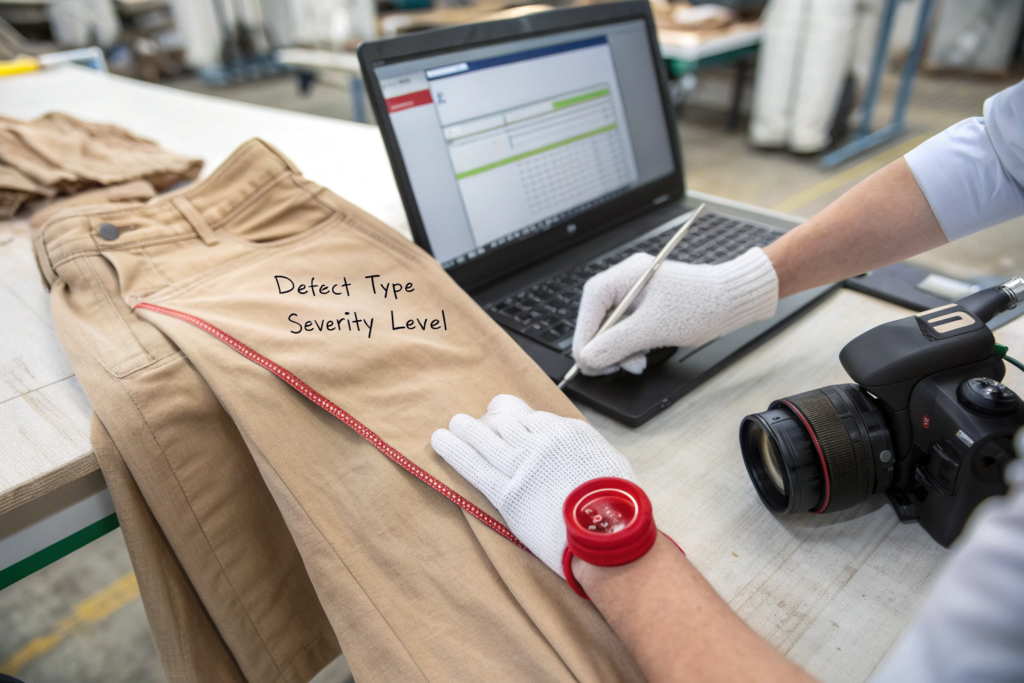
The immediate steps are: seal at least one unopened shipping carton as a control sample, take macro-lens photographs with a ruler placed next to the defect for scale, and suspend all further distribution of the batch. Then, and only then, do you formally notify the supplier in writing with an estimated percentage of affected units based on an initial random sampling of sealed cartons.
How Do You Document a Defect So a Supplier Cannot Refute It?
A picture of a stain on a WhatsApp message is not evidence. It is a conversation starter. A supplier, especially one looking to avoid a costly chargeback, will question the origin. "Did this happen during shipping?" "Was this stained in your warehouse?" You need to build an airtight case that a third party would accept. I learned this during a case in 2021 where a batch of our linen pants arrived in Miami with random oil spots. The client initially sent a blurry phone photo. We could not verify if the spots came from our sewing machines or from a leaky forklift in the U.S. warehouse. This ambiguity almost killed our partnership.
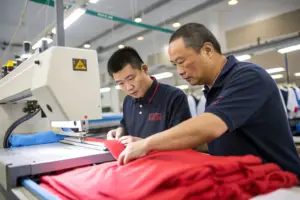
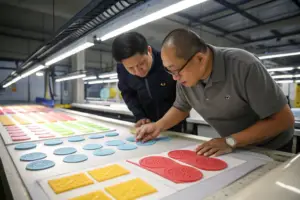
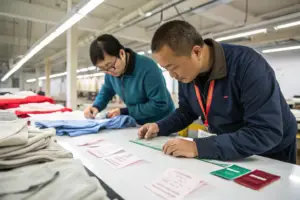
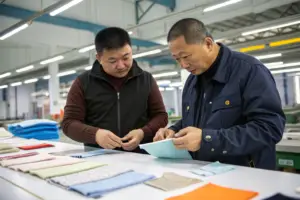
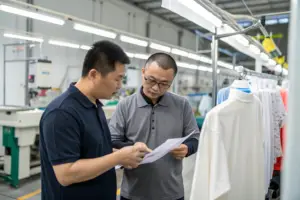
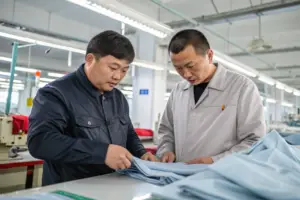
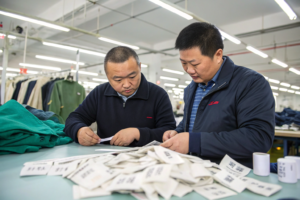
To eliminate doubt, you need a calibrated visual record. First, find the "shipping reference sample." A professional factory keeps a physical counter-sample of the approved production sealed in a bag. Open your shipment and place the defective unit next to that sealed sample. Photograph them side-by-side under natural daylight. This instantly rules out the "you approved this color" defense. Second, use macro photography. Linen has a slubby, irregular texture. A pulled yarn can look like a natural slub to an untrained eye. A macro shot with a sewing ruler in the frame separates a structural tear from a natural characteristic. I advise all our U.S. brand clients to order a professional garment inspection immediately. You can book an inspector on an urgent basis. They will randomly select samples and write a report with an AQL (Acceptable Quality Limit) result. A report stating "Defect rate: 7.5%, exceeding AQL 2.5 threshold" is irrefutable. It shifts the conversation from "is there a problem?" to "how do we solve this problem?" The cost of this inspection is always less than the cost of eating a bad shipment.
Why Must You Preserve an Unopened Carton?
This is the single most overlooked step in the heat of a complaint. Your warehouse team wants to check every box to gauge the damage. Stop them. Leave at least two full, sealed cartons untouched. These cartons are your forensic control group. They prove the defects existed before you handled the goods. If the supplier claims you caused the damage by unpacking, the sealed carton is your defense.
I recall a situation with an Australian distributor about four years ago, which applies equally to U.S. import logistics. They received a shipment of linen pants where the wide-leg hems were measured to be an inch too short in the majority of the pieces they opened. They panicked and opened every single carton, repacked them, and then tried to file a claim. The supplier argued the measurement was taken wrong. Because no sealed carton remained, there was no independent way to prove the shipment arrived with those short hems. The claim failed. Maintain a sealed pallet. The carton itself has the factory's sealing tape and shipping marks. A third-party inspector can open that virgin carton in front of a camera. This creates a chain of custody. In our factory, we actually use tamper-evident bag seals on high-value orders. If the seal is broken, the logistics company is liable. If the seal is intact and the goods inside are damaged, the factory is liable. Ask your supplier about tamper-evident packaging solutions for your next order. It clarifies who pays for a problem.
How Do You Negotiate a Fair Compensation for a Linen Flaw?
Once the inspection report is in your hand and the defect rate is mathematically clear, you enter the negotiation phase. Many buyers go into this conversation with an ultimatum: "Take it all back and refund me." This is often an unrealistic demand that shuts down dialogue. The freight cost of shipping 2,000 pairs of pants back to China is astronomical, sometimes exceeding the value of the goods themselves. The supplier knows this. You need a tiered compensation menu that gives the supplier a way to fix the problem without going bankrupt. A fair negotiation is one where both parties lose something, but the business relationship survives.
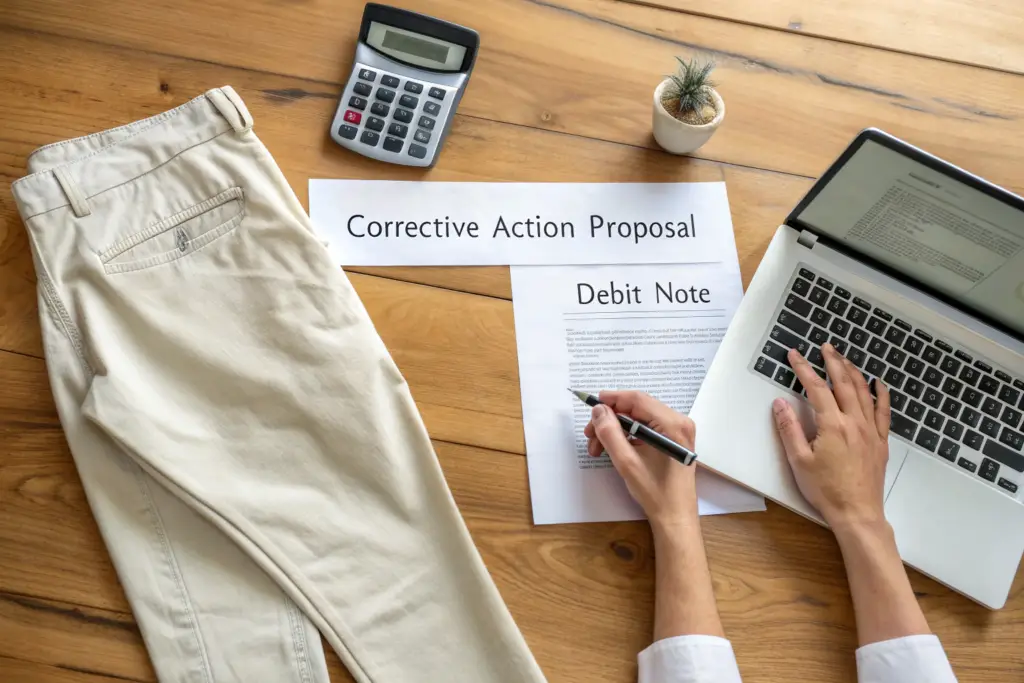
Effective compensation negotiation separates the financial recovery from the emotional grievance and targets a realistic outcome: a factory discount on the defective portion, a credit note against a future order to cover your lost margin, or a remake of the critical units with the fabric and labor cost absorbed by the supplier. The right option depends entirely on whether the pants are still salable at a markdown or are complete trash.
When Is a Price Adjustment Better Than a Full Return?
You need to diagnose if the flaw is structural or aesthetic. A structural flaw, like a wide-leg pant that was cut off-grain and twists around the leg, is unsalable. The garment does not function. A full return or a remake is the only option. But an aesthetic or minor flaw, like slight shade variation or a small oil spot, does not destroy the utility. It just downgrades the product from a premium boutique item to a markdown item.
I remember a case with a Los Angeles brand in the spring of 2023. They imported a batch of beautiful sage green linen pants. The garment construction was perfect. The fit was flawless. But we discovered a 15% shade mismatch between the left and right pant legs on about 20% of the units. It was a fabric lot issue. The pants were wearable, but not sellable at the full $98 retail price. Shipping them back to us in Shanghai would have cost $4,500 in freight and duties. Destroying them was wasteful. We negotiated a 55% factory discount on that 20% portion. The brand sold them through their sample sale channel at $45, recovering their landed cost and making a small profit. The alternative was a zero-recovery return. To calculate this, you need your landed cost per unit right in front of you. The formula I tell my clients is simple. If (Cost of Return Shipping + Sourcing Cost) is greater than (Landed Cost minus Salvage Value), push for a heavy credit note. This kind of recovery is detailed in resources about chargeback and claims management in fashion. It explains how the financial flow of a debit note works. A debit note is a clean way to deduct the agreed compensation from your next invoice. It avoids the mess of international wire refunds. I accept debit notes because they represent a promise to continue the partnership.
How Can a Remake Agreement Rebuild Trust?
Sometimes, the fabric is too beautiful to waste, and the design sells too well to give up. The problem was purely a production execution error. In these cases, push for a remake. But do not just say "remake it." Negotiate a specific remake rider. This rider should state that the supplier uses the same approved fabric and trim, but allocates a senior sewing line and provides daily production progress photos to restore your confidence.
About eighteen months ago, a Miami-based e-commerce brand came to us with a problem from their previous supplier. A batch of wide-leg linen pants had been shipped with an incorrect hem stitch. The supplier had used a single-needle chainstitch that unraveled easily. The design spec clearly required a coverstitch for durability. The previous supplier refused a full return. The brand was stuck. When they moved the production to Shanghai Fumao, we didn't just take the new order. We offered a "recovery production" slot. We sourced fabric from the exact same certified mill, matched the color digitally using a spectrophotometer reading of their good sample, and ran a small batch of 300 units on our sample room line to fill their immediate backorders. We absorbed 50% of the fabric cost. They paid the CMT. This cost us a small margin, but we gained a loyal client who now gives us their full seasonal volume. You should know about supply chain corrective action protocols. A formal corrective action plan is signed by the factory owner, not just the sales rep. It lists the name of the sewing supervisor responsible for the mistake and the new quality gate. A supplier unwilling to sign one is a supplier who plans to make the same mistake again.
How Do You Sell Recovered or Second-Quality Linen Pants Without Damaging Your Brand?
You negotiated a credit. You kept the goods. Now you have a pallet of linen pants that are not bad enough to trash, but not perfect enough for your mainline collection. This inventory is cash sitting dead on your balance sheet. You cannot sell them on your main e-commerce site at full price because a customer who finds the flaw will post a one-star review. That review damages your brand equity far more than the lost cost of the pants. You need a channel that separates the "imperfect" product from your pristine reputation, without making your brand look cheap.
To sell recovered linen pants without hurting your brand, use transparent pricing through private sample sale channels, clearly label the product as "second-quality" or "sample sale" with a description of the aesthetic flaw, and target your existing email subscriber list or a physical pop-up sale where customers can touch and feel the fabric and see that the flaw—like a slight shade variation—is truly minor compared to the deep discount.

How Does Transparent Flaw Marketing Build Customer Loyalty?
Honesty is a surprisingly powerful marketing tool. Today's conscious consumer, especially the one who buys natural linen, values transparency over perfection. If you try to hide a small slub or a slight wash variation as a "design feature" but the customer spots it, they feel tricked. If you openly say, "This batch has a minor color inconsistency in the weave, so we priced it 50% off," you build trust. That customer will buy your full-price item next time because they trust your product descriptions.
I saw this strategy executed brilliantly by a brand we supply in Portland. They received a batch of linen pants with a slightly looser weave than the spec. The pants were still strong and beautiful, but they breathed more and had a slightly more relaxed drape. Instead of hiding this, they launched an email blast titled "The Relaxed Edit." They photographed the exact weave texture up close, showed a comparison with the standard weave, and priced it as a limited run. It sold out in four days. The National Retail Federation often discusses the power of authentic customer connection. Price transparency attracts a customer who cares about value and sustainability. To do this safely, never sell flawed goods on the same product page as your mainline. Use a hidden, password-protected section on your Shopify store, or use a separate Instagram account that is private. The URL should not be indexed on Google. This prevents the discounted price from appearing on a Google Shopping price comparison feed, which would undermine your full-price retailers.
What Restoration Techniques Can Upgrade a "Flawed" Batch?
Before you relegate a batch to the sample sale bin, ask if the flaw can be rehabilitated. A stain is death. But a fit issue or a finishing issue can sometimes be corrected locally. Fabric re-processing is a niche but available service in major U.S. cities. I once guided a New York-based client through a "garment wash rescue." Their wide-leg linen pants arrived with a boardy, stiff finish. The enzyme wash had been too short.
Instead of selling these stiff pants at a loss, they took the container load to a commercial laundry in New Jersey that specializes in garment wet finishing. They ran the entire batch through another bio-wash cycle. The result was a beautifully soft, drapey pant that actually looked better than the original spec. The per-unit cost was about $2.80. They increased the retail price by $15 and sold them as a "special washed edition," turning a potential loss into a margin win. This option requires a technical eye. You need to test the wash on a sample group of five or six pants first. Linen is strong when wet but can shrink unpredictably if the temperature isn't controlled. Also, a good local tailor is your ally for small fixes. A loose button can be resewn with a lock stitch. A hem that is slightly uneven can be re-hemmed. Calculate the local repair cost per unit against the factory's discount credit. If the factory gave you a 20% credit, and it costs 5% of the landed cost to fix the item locally, you are in profit territory. A textile restoration guide can help you understand fiber-specific treatments. Just always test. A botched local fix voids any remaining factory claim.
Conclusion
A quality complaint on your imported linen wide-leg pants is a business problem with a technical solution, not an emotional disaster. The difference between a brand that gets crushed by a bad batch and a brand that recovers and grows is process. Freeze the inventory to preserve evidence. Hire a third-party inspector to turn your subjective annoyance into a mathematical fact. Enter the negotiation with a flexible menu of solutions—a percentage discount, a credit note against a future order, or a remake with signed accountability. And if you keep the goods, sell them with radical transparency or invest in a local restoration to transform seconds into a profitable special edition.
At Shanghai Fumao, I have learned that the best complaint resolution is one that never needs to happen, but the second best is one that makes the relationship stronger. We have signed corrective action plans. We have opened our sewing floor to client-appointed auditors after a mistake. We have paid for air-freight on remakes to meet a launch deadline. The factories that hide from complaints are the ones you should fear. The ones that open their process for forensic review are the ones you can build a brand on. If you are dealing with a complaint right now, and your current supplier has gone silent, or if you want to prevent the next one by moving production to a team that treats your fabric like it's their own, reach out to me. I am Elaine, and you can contact me directly at elaine@fumaoclothing.com. Let's talk about how we can recover your current situation and set a bulletproof quality standard for your future linen orders.