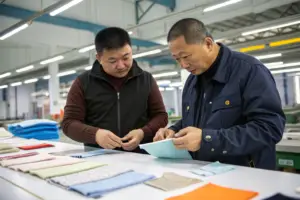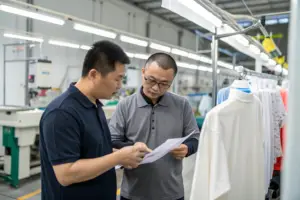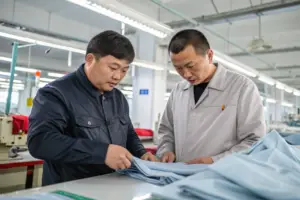
A few years ago, I sat in a buying meeting with a major department store buyer. She had two pairs of classic khaki shorts on the table in front of her. They looked almost identical. Same color, same general shape, same inseam length. She picked up the first pair, rubbed the fabric between her fingers, examined the button, checked the interior waistband, and set it down. She picked up the second pair, did the same, and set it down. She looked at me and said, "This one feels expensive, and this one feels like it belongs in a discount bin. The price difference is twelve cents. Why would anyone make the cheap one?" The twelve cents was the difference between a generic resin button and a genuine horn button, between a straight waistband and a contoured one, and between a papery interlining and a quality woven fusible. The difference was invisible in a product photograph and overwhelming in the hand.
Avoiding the "cheap look" in an imported classic shorts line is achieved not by increasing the overall manufacturing budget across the board, but by investing strategically in a small number of high-impact, subtle details: the hardware, where a single genuine horn or corozo button and a YKK locking zipper transform the tactile experience; the fabric finish, where an enzyme wash creates a soft, expensive hand feel; and the internal construction, where a contoured waistband, a quality interlining, and clean-finished interior seams create a garment that holds its shape and communicates quality from the inside out.
At Shanghai Fumao, I have spent twenty years learning exactly where to invest the marginal dollar to achieve the maximum perceptual return. The brands that sell premium shorts at premium prices are not necessarily spending more on fabric than their competitors. They are spending more intelligently on the details that the customer touches, sees, and feels. Let me walk you through exactly where those investments should be made.
How Does Hardware Selection Instantly Elevate or Destroy Perceived Value?
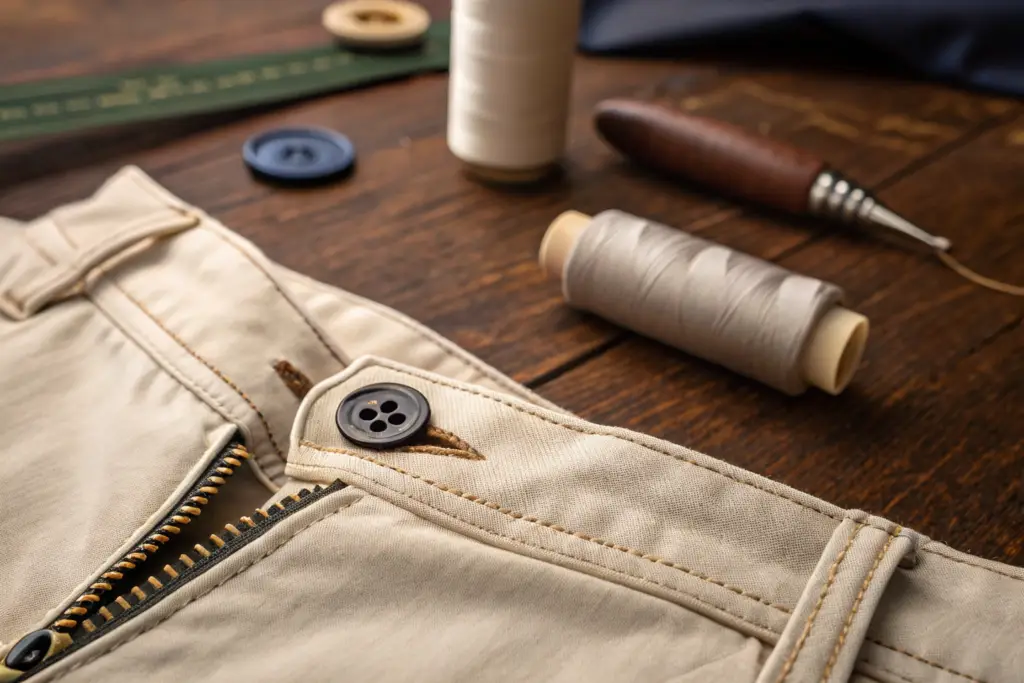
The button and the zipper are the only parts of a pair of shorts that the customer physically manipulates every single time they wear the garment. The customer fastens the waistband button. The customer pulls the zipper. These two interactions are moments of concentrated quality perception. A cheap, lightweight, hollow-feeling button tells the customer, in a fraction of a second, that the entire garment is cheap. A heavy, cool-to-the-touch button with a natural texture tells the customer the garment is premium. The cost difference is measured in cents. The perceived value difference is measured in dollars.
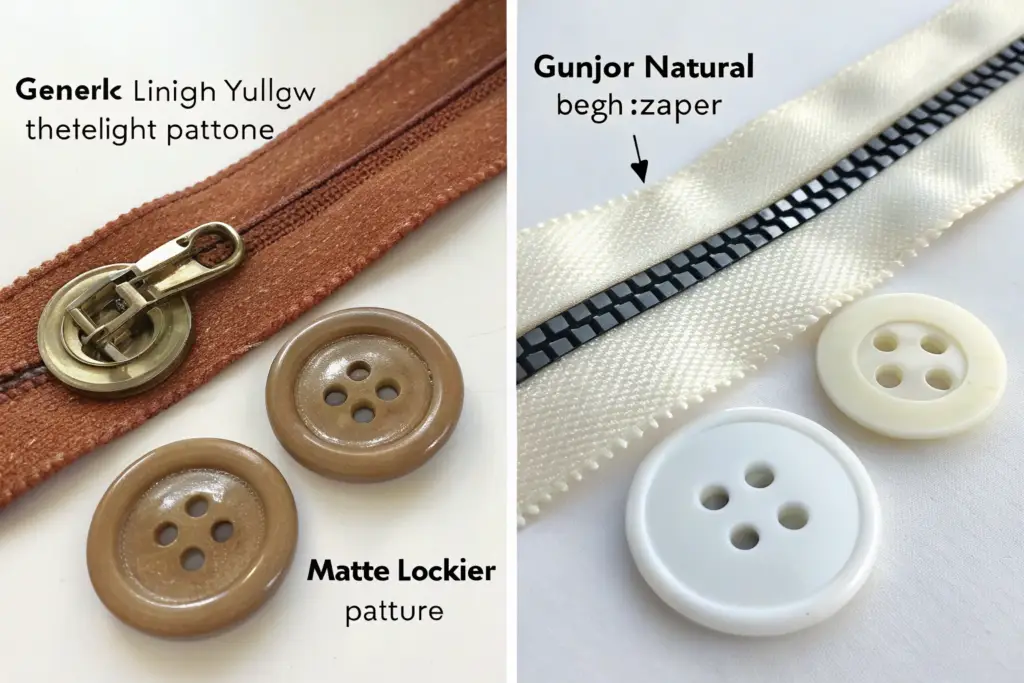
The hardware on a pair of classic shorts is the highest-leverage investment available for elevating perceived quality because the button and zipper are the physical touchpoints that the customer interacts with during every single wear cycle, making a genuine natural button made from horn, mother-of-pearl, or corozo, with its cool-to-the-touch temperature, satisfying weight, and visible natural grain, paired with a YKK or equivalent premium zipper with a locking slider mechanism and a smooth, silent operation, the most effective way to communicate quality at a total cost premium of approximately $0.50 to $1.00 per unit.
Why Does Button Material and Weight Matter So Much?
The human hand is exquisitely sensitive to weight, temperature, and surface texture. These sensations are processed subconsciously, forming an immediate quality judgment before the conscious mind has even registered what it is evaluating. A polyester resin button weighs almost nothing. It feels warm to the touch because plastic is a thermal insulator. Its surface is perfectly uniform because it is molded, a uniformity that the brain reads as artificial and therefore cheap.
A genuine horn, mother-of-pearl, or corozo button is significantly heavier. It feels cool to the touch because natural materials conduct heat away from the skin. Its surface has a natural grain, subtle variations in color and texture that the brain reads as authentic, organic, and expensive. This sensory experience is the difference between a short that feels like it cost twenty dollars and a short that feels like it cost eighty dollars. This luxury button materials and their impact on garment quality perception resource provides a detailed guide to natural button materials.
What Zipper Features Signal Quality to the Consumer?
A zipper is not just a closure. It is a moving mechanical device that the customer operates multiple times per wear. The quality of that operation, the smoothness, the silence, and the security, forms a quality impression every time. A cheap zipper grinds, catches, or feels gritty when pulled. The tape edges are raw and visible. The slider may slip down during wear, a catastrophic failure that renders the short unwearable.
A YKK locking zipper operates smoothly and silently. The locking mechanism prevents the slider from slipping down under tension. The tape edges are cleanly finished and the color matches the garment. The zipper is concealed properly behind a well-constructed fly facing. These details, a smooth pull, a secure lock, and a clean finish, communicate quality to the consumer through the simple act of putting on the shorts. This zipper quality and its role in garment durability and consumer trust guide explains the technical differences between zipper types.
What Interior Construction Details Hide the "Import" Feel?
The customer does not see the inside of the short when it is on the hanger. But they feel it when they put the short on. They see it when they turn the short inside out before washing. A cheap interior, raw overlocked edges, scratchy polyester pocket bags, a papery waistband lining, communicates that the brand cut corners where the customer would not notice. A beautifully finished interior communicates that the brand invested in quality everywhere, even in the places the customer was not supposed to look. The interior is where trust is built or broken.
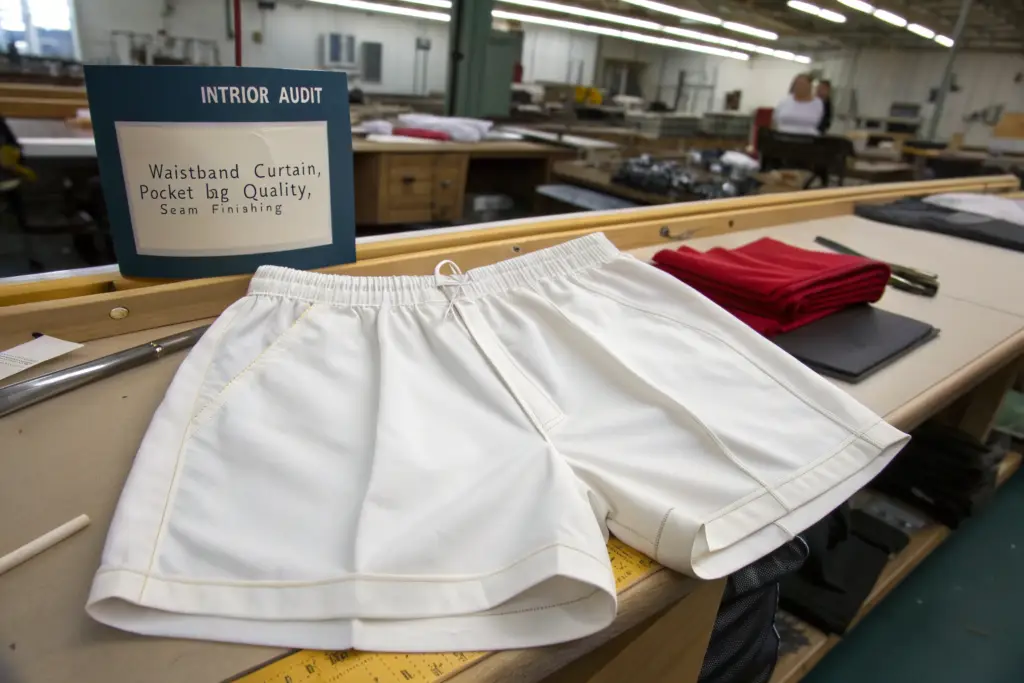
The interior construction of a classic short determines its long-term durability and its tactile comfort against the skin, with the key upgrades being the pocket bags, where switching from standard polyester to a soft cotton or Bemberg cupro eliminates the scratchy, noisy feel of cheap pocketing, the waistband curtain and interlining, where a quality woven fusible and a bound inner edge prevent the waistband from curling, bubbling, or feeling rough against the skin, and the seam finishing, where bound or French-seamed internal seams prevent fraying and create a clean, refined interior that signals to the customer that the garment was made with care.
Why Do Pocket Bags Matter More Than You Think?
The customer interacts with the pocket bags constantly. They put their hands in their pockets. They put their phone, their keys, and their wallet in their pockets. A cheap pocket bag is made from a lightweight, scratchy polyester taffeta. It makes a crinkly, plastic noise when touched. It feels unpleasant against the hand. It tears easily at the seams because the fabric is weak.
A quality pocket bag is made from a soft, substantial cotton twill or a Bemberg cupro. It feels smooth and comfortable against the hand. It is silent. It is strong enough to hold a heavy smartphone without tearing. The difference in cost between these two pocket bag materials is perhaps fifteen cents per pair of shorts. The difference in the customer's daily experience is enormous. This importance of pocket bag quality in garment manufacturing article explains the material options and their properties.
How Does the Waistband Interlining Prevent Curling and Bubbling?
The waistband is the structural backbone of the short. It is subjected to tension every time the shorts are worn. It is exposed to heat, moisture, and mechanical action during laundering. A cheap waistband uses a papery, non-woven fusible interlining. After a few washes, the adhesive breaks down. The interlining separates from the shell fabric. The waistband develops bubbles, curls over at the top edge, and loses its crisp, flat appearance.
A quality waistband uses a woven fusible interlining. The woven construction provides strength and stability. The adhesive is applied in a precise dot matrix pattern that bonds securely and permanently to the shell fabric. The waistband remains flat, smooth, and dimensionally stable for the life of the garment. The cost difference is a few cents per waistband. The customer experience difference is the difference between a short that looks ratty after five washes and a short that looks crisp after fifty. This waistband construction and interlining guide for apparel provides a detailed explanation of the materials and processes involved.
How Does Fabric Finish Create a High-End Hand Feel Without a High-End Price?
The fabric is the largest surface area of the short. The customer sees it and touches it constantly. A fabric that looks and feels cheap will doom the entire garment, regardless of how well it is constructed. The good news is that the cost of the raw greige fabric is not the primary determinant of the final hand feel. The finishing processes applied to the fabric after it is woven, the enzyme washes, the mechanical brushing, and the softener treatments, are the primary determinants, and these processes add a relatively small incremental cost.
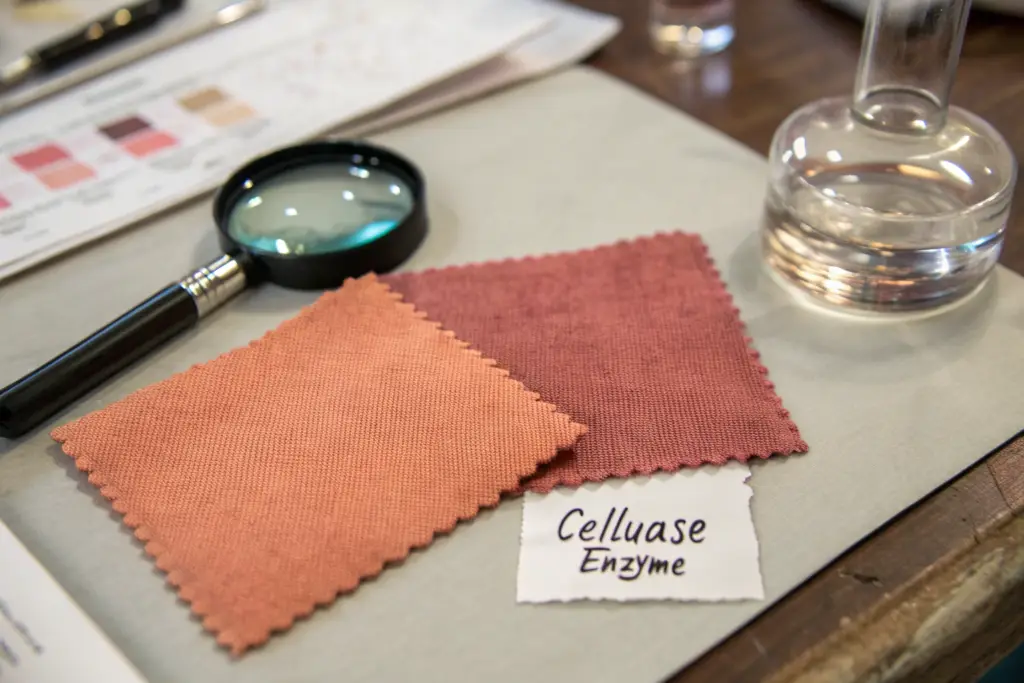
The hand feel of a classic short is transformed from commodity to luxury primarily through wet finishing processes, specifically enzyme washing, which uses natural cellulase enzymes to remove the micro-fuzz on the cotton fiber surface, creating a smooth, clean hand, and mechanical peaching or brushing, which raises a fine nap on the fabric surface that feels soft and warm to the touch, with these two processes adding a combined cost of approximately $0.50 to $0.80 per unit while dramatically elevating the consumer's tactile quality perception.
What Is the Difference Between Enzyme Washed and Standard Cotton?
Standard, untreated cotton twill has a surface that is microscopically rough. The short cotton fibers protrude from the yarn surface, creating a texture that feels dry, slightly scratchy, and distinctly unfinished. This is the hand feel of a cheap short. The consumer associates it with low price because it is the default state of inexpensive fabric.
Enzyme washing removes this micro-roughness. The process uses a natural protein called cellulase, which specifically digests cellulose, the material that cotton fibers are made of. The fabric is tumbled in a bath with the enzyme at a controlled temperature and for a controlled time. The enzyme gently eats away the protruding fiber ends, smoothing the fabric surface. The result is a fabric that feels dramatically softer and more pleasant to the touch. The process is sometimes called bio-polishing. The effect is permanent and does not wash out. This enzyme wash and bio-polishing in textile finishing resource explains the process in detail.
How Does Mechanical Peaching Create a Luxurious Touch?
Mechanical peaching, also called brushing or sueding, is a physical process that runs the fabric over a series of rotating rollers covered with fine, abrasive brushes. The brushes pull the short cotton fibers to the surface of the fabric, creating a fine, soft nap that feels almost velvety to the touch.
This napped surface is what gives a premium short its signature soft, warm hand feel. The fabric no longer feels like a hard, flat piece of cloth. It feels like a soft, living material. The process can be applied to the face of the fabric, the back, or both. For shorts, a face-side peach is standard. The combination of enzyme washing, which smooths and cleans the surface, followed by mechanical peaching, which raises a soft nap, produces the most luxurious hand feel achievable on cotton at a modest cost. This mechanical finishing for fabric hand feel provides an overview of the available technologies.
Conclusion
Avoiding the "cheap look" in an imported classic shorts line is not a matter of spending more money. It is a matter of knowing where the perceptual leverage points are and investing the marginal dollar precisely there. The hardware, the button and the zipper, are the touchpoints where the customer's fingertips form a quality judgment in a fraction of a second. The interior construction, the pocket bags and the waistband finishing, determines how the short feels against the skin and how it withstands the washing machine. The fabric finish, the enzyme wash and the mechanical peach, transforms a standard cotton twill into a fabric that feels expensive to the touch.
These investments are small. The total cost premium for upgrading the hardware, the interior construction, and the fabric finish on a pair of classic shorts is typically between $1.50 and $2.50 per unit. The difference in the retail price that the brand can command, and the difference in the customer's willingness to reorder, is many multiples of that investment.
At Shanghai Fumao, we have built our manufacturing process around these leverage points. We know exactly where to invest for maximum perceptual return, and we guide our brand partners through these decisions based on their specific market positioning and target customer. If you are developing a classic shorts line and want to ensure that your product communicates quality at every touchpoint, contact our Business Director, Elaine, at elaine@fumaoclothing.com. Let's build a short that feels as expensive as it looks.