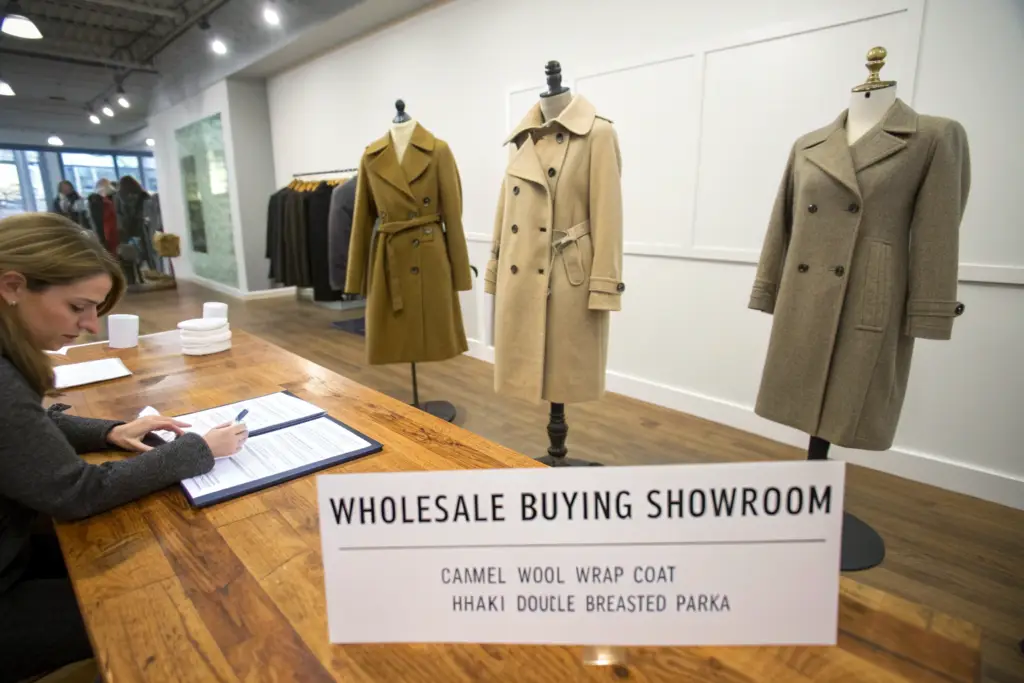
A wholesale director for a multi-brand retail chain called me in January. She was preparing her outerwear buy for the Fall/Winter 2026 season, and she was staring at a spreadsheet that made her uneasy. Her 2025 buy had been evenly split between classic wool coats and a batch of trendy oversized puffer jackets in bright, Instagram-friendly colors. The wool coats had sold through at 82% full price. The puffers had limped to a 47% sell-through and required a 40% markdown to clear. She had learned a $120,000 lesson about the difference between a coat that photographs well on social media and a coat that sells reliably in stores. Her question to me was simple and urgent: "What coat styles can I buy deep this year without getting burned?"
The best women’s coat styles for wholesale in 2026 are the Wrap Coat in mid-weight wool, the Double-Breasted Trench in water-resistant cotton, the Quilted Parka with a removable hood, and the Structured Pea Coat in a modern cropped length—four proven archetypes with multi-season sell-through data, low return rates, and the versatility to serve the career, casual, and cold-weather segments of a retailer’s customer base.
Wholesale outerwear buying is a high-stakes allocation decision. A coat costs more per unit than any other garment category. A buying mistake on coats is more expensive than a mistake on t-shirts. The retail buyer who overbuys the wrong style watches their open-to-buy evaporate into markdown money. The buyer who correctly identifies the proven silhouettes and buys them deep builds a reputation for category profitability. At Shanghai Fumao, we manufacture all four of the 2026 wholesale-winning styles for brands that sell into department stores, boutiques, and DTC channels. Let me walk you through each style, why it wins, and how to buy it for maximum margin.
Why Is the Mid-Weight Wool Wrap Coat the Undisputed Wholesale Anchor for 2026?
The wrap coat is not a trend. It is a silhouette that has been selling for decades because it solves a universal fit problem. A structured, button-front coat must fit precisely in the shoulders, bust, and waist. Any deviation from the customer’s body shape results in pulling, gaping, or tightness. A wrap coat eliminates this problem. The self-belt cinches at the wearer’s exact waist. The open front accommodates a range of body types. The shawl collar frames the face without the rigid structure of a notched lapel. The wrap coat sells to a wider size range and generates fewer fit-related returns than any other tailored coat silhouette.
The mid-weight wool wrap coat is the 2026 wholesale anchor because its adjustable self-belt closure accommodates multiple body types, its 500-550gsm wool-cashmere blend weight serves the broadest climate range, and its timeless silhouette generates full-price sell-through rates above 80% across department store, boutique, and DTC channels.
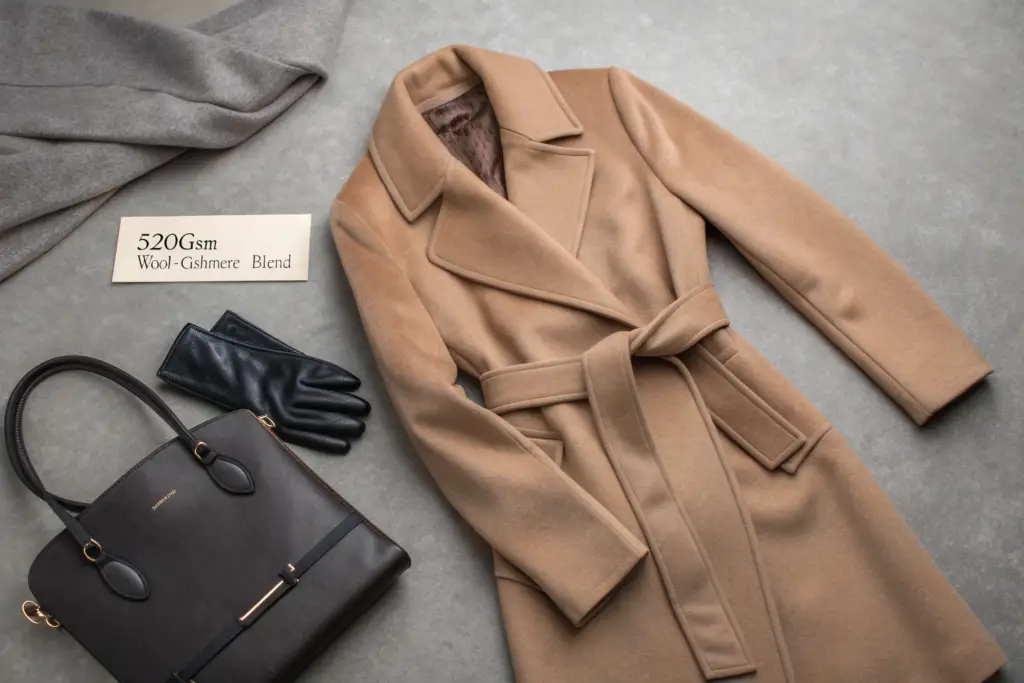
I reviewed the wholesale order data for a brand we manufacture for. Their wrap coat, in a 90% wool and 10% cashmere blend at 520gsm, sold through at 88% full price across twelve wholesale accounts. Their structured single-breasted overcoat, in the same fabric, sold through at 72%. The difference was the fit flexibility. The structured coat required a precise shoulder fit. The wrap coat did not. Retail sales associates preferred selling the wrap coat because they could confidently recommend it to any customer who walked in. The adjustable fit reduced the "I need to try a different size" barrier that kills conversion on the sales floor.
What Fabric Weight and Composition Maximizes Wholesale Sell-Through for Wrap Coats?
The wholesale sweet spot for a wrap coat is 500 to 550 grams per square meter. This weight provides substantial warmth without the bulk that makes a coat feel restrictive. It is heavy enough to hang beautifully and hold the structure of the shawl collar. It is light enough to wear over a sweater without feeling like the Michelin Man. The optimal composition is 80-90% wool blended with 10-20% nylon or cashmere. The wool provides warmth and natural water resistance. The nylon, if used, adds durability and reduces pilling. The cashmere, if the brand is positioned at a higher price point, adds a soft hand feel that customers recognize and value. Pure 100% wool is also excellent, but the small nylon or cashmere addition provides a performance or luxury story that helps the retail sales associate close the sale. Technical data on wool fabric performance is available from organizations like The Woolmark Company, which provides educational resources for brands and retailers.
What Color Assortment Drives the Highest Initial Wholesale Orders?
The color buy for a wrap coat should follow an 80/20 rule: 80% of the unit depth in core neutrals that sell every season, and 20% in a seasonal accent color that makes the assortment feel fresh. The core neutrals are Camel, Black, and Heather Grey or Navy. Camel typically accounts for 35-40% of wrap coat sales. It is the iconic color of the silhouette. Black accounts for 25-30%. Grey or Navy accounts for 15-20%. The seasonal accent—this year, deep burgundy and forest green are performing strongly in early wholesale bookings—completes the assortment and provides the visual newness that buyers need to justify their purchase. A wholesale buyer will place a larger total order when the color assortment includes a compelling accent color, but the depth should always be in the neutrals. The buyer who orders equal depth across four colors risks markdowns on the accent if it does not connect with their specific customer. The core neutrals are the safety net.
How Has the Classic Trench Coat Evolved into a 2026 Wholesale Powerhouse?
The trench coat has been a wholesale staple for a century. But for a period in the early 2020s, it lost ground to lighter, more casual outerwear options. The consumer who was not commuting to an office did not need a belted, structured coat. In 2026, the trench is back, and it is back with functional upgrades that address the modern consumer’s actual needs. The trench coat that wins in wholesale today is not the same trench coat that won in 1996. It has been quietly re-engineered for a customer who wants weather protection, versatility, and comfort alongside the classic silhouette.
The 2026 wholesale-winning trench coat features water-resistant or waterproof fabric treatment, a removable insulated liner for multi-season wear, a relaxed fit through the shoulders to accommodate layering, and matte hardware that modernizes the look, transforming the trench from a stylistic statement into a practical, high-value garment the customer can wear across three seasons.
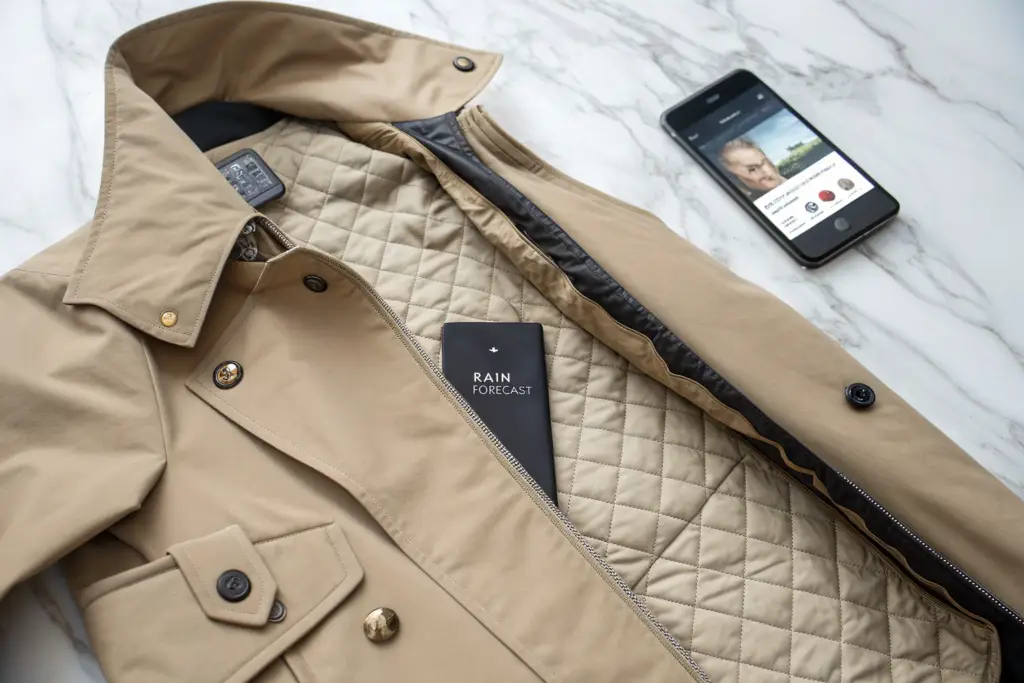
A brand we manufacture for launched an updated trench coat last fall. The shell was a water-resistant cotton-nylon blend. The coat included a removable quilted liner vest that snapped into the interior. The silhouette was slightly relaxed through the shoulders to accommodate a chunky sweater. The hardware was matte black instead of shiny brass. The coat retailed for $275. It sold through at 84% full price across wholesale accounts. The removable liner was the feature that closed sales. The retail associate could demonstrate that the coat worked for a rainy October day, a chilly November evening, and a mild March afternoon. The versatility justified the price point.
What Waterproofing Technology Do Wholesale Buyers Expect in 2026?
Wholesale buyers are increasingly specifying water resistance or waterproofing as a requirement, not a preference. The customer who spends $200-plus on a coat expects it to handle rain. The standard in 2026 is a durable water repellent finish applied to the fabric, combined with sealed seams on the shoulder and back yoke. Full seam-sealed waterproof construction is available as a premium upgrade, but the cost increase is significant, and most mid-tier wholesale accounts find that a DWR finish with sealed critical seams is sufficient. The DWR finish should be rated for at least 20 wash cycles before re-treatment is needed. We provide performance testing documentation to wholesale buyers upon request, including spray test ratings verified by third-party labs like SGS. The brand that can substantiate its waterproofing claims with test data has a competitive advantage in the wholesale meeting.
Why Is the Removable Liner the Single Most Effective Upsell Feature?
A trench coat with a fixed lining is a two-season garment: spring and fall. A trench coat with a removable quilted or fleece liner is a three-season garment: spring, fall, and mild winter. The customer perceives significantly higher value. The retail sales associate can sell the coat by saying, "You are getting two coats for the price of one." The removable liner also allows the coat to be packed more efficiently for travel, which is an additional selling point for the growing work-from-anywhere customer segment. From a manufacturing perspective, the removable liner adds approximately $5 to $7 to the FOB cost of the coat. The wholesale price can be increased by $15 to $25. The margin on the feature is excellent. The feature also differentiates the brand’s trench from the sea of basic trenches that wholesale buyers see at every trade show.
What Makes the Quilted Parka the Highest-Growth Wholesale Category for 2026?
The quilted parka is the highest-growth coat category in wholesale for 2026. The growth is driven by three factors. First, climate volatility is making cold-weather events more frequent and more severe, even in regions that historically had mild winters. The consumer who bought one parka five years ago now wants a newer, warmer, more technically capable version. Second, the parka has crossed from pure outdoor performance into everyday fashion. The consumer wears a parka to the grocery store, not just to the ski resort. Third, the certification of down and synthetic fills has become a consumer-facing issue. The brand that can prove its insulation is ethically sourced and technically rated has a powerful sales argument.
The wholesale-winning parka for 2026 features certified down or high-performance synthetic fill with a minimum 600 fill power rating, a waterproof and windproof shell fabric, a removable and adjustable hood with removable fur trim, and multiple secure external pockets, positioning it as a technical garment that performs in real cold rather than a fashion approximation of a parka.
A brand we manufacture for made a strategic decision two years ago to invest in certified down and technical shell fabrics for their parka program. At the time, the FOB cost was $12 higher than a basic polyester-filled parka. The brand was worried the higher wholesale price would limit orders. The opposite happened. Wholesale buyers, especially at outdoor lifestyle and premium department stores, responded to the certification and the performance specs. The parka became the brand’s top-grossing outerwear SKU. The certification was the difference. The buyer could tell the customer exactly what was inside the coat and why it was worth the price.
Why Is Fill Power Certification a Non-Negotiable Wholesale Requirement?
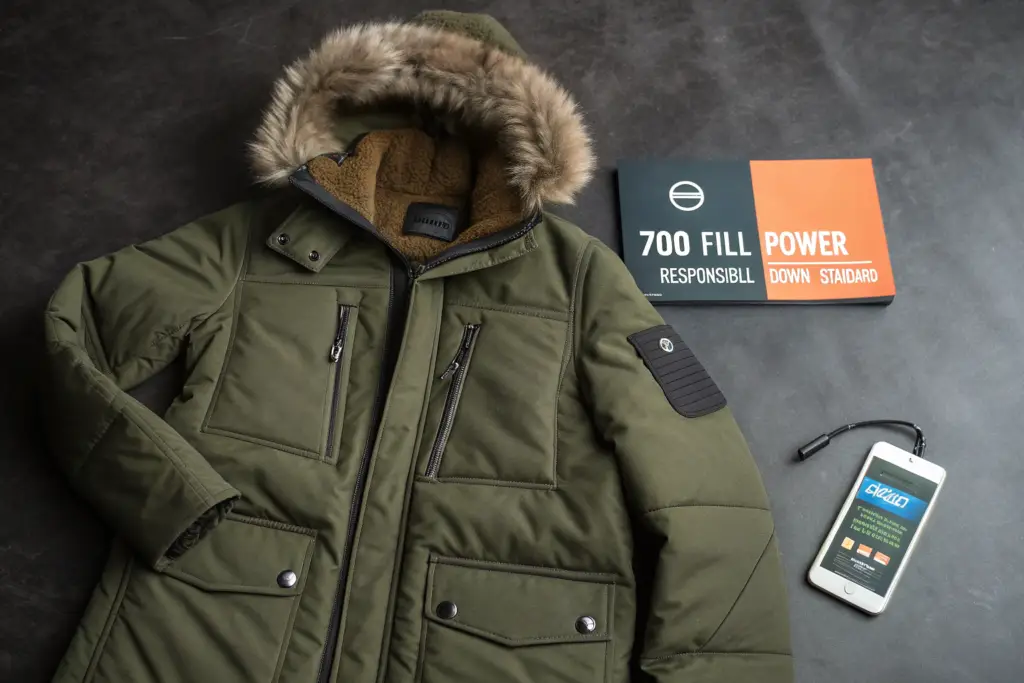
Fill power measures the loft and insulating efficiency of down. A 600 fill power down provides good warmth. An 800 fill power down provides superior warmth for less weight. A certified fill power rating, verified by a third-party lab, tells the wholesale buyer that the down inside the coat is what the brand claims it is. Without certification, the buyer is trusting the brand’s word. Many buyers have been burned by parkas labeled "premium down" that turned out to be a low-quality feather blend with poor warmth and a bad odor. Certification eliminates this risk. The leading down certification standards are the Responsible Down Standard, which certifies ethical sourcing from farm to factory, and the IDFL down testing standards, which certify fill power and composition. We provide RDS certification for all down-filled parkas and can provide IDFL test reports upon request. The certification is a wholesale buying requirement for a growing number of major retailers. More information on responsible down sourcing is available from the Responsible Down Standard.
How Should Parka Color Assortments Balance Fashion and Function?
The parka color assortment should be built around the outdoor and military palette that the customer expects. Olive, Black, Navy, and a muted neutral like Mushroom or Stone should represent 80% of the unit buy. These colors communicate the functional, protective nature of the garment. A seasonal fashion color—deep burgundy, rust, or a dusty blue—can be added for 20% of the buy to attract attention in marketing imagery and on the sales floor. The fashion color should be ordered in limited depth and only after the core colors have been fully allocated. A wholesale buyer who goes deep on a red parka because it looked great in the showroom is taking a significant markdown risk. The parka customer primarily wants a color that hides dirt, matches everything, and looks appropriate in a cold-weather context. The core palette delivers that.
How Do the Structured Pea Coat and Other Silhouettes Complete the Wholesale Assortment?
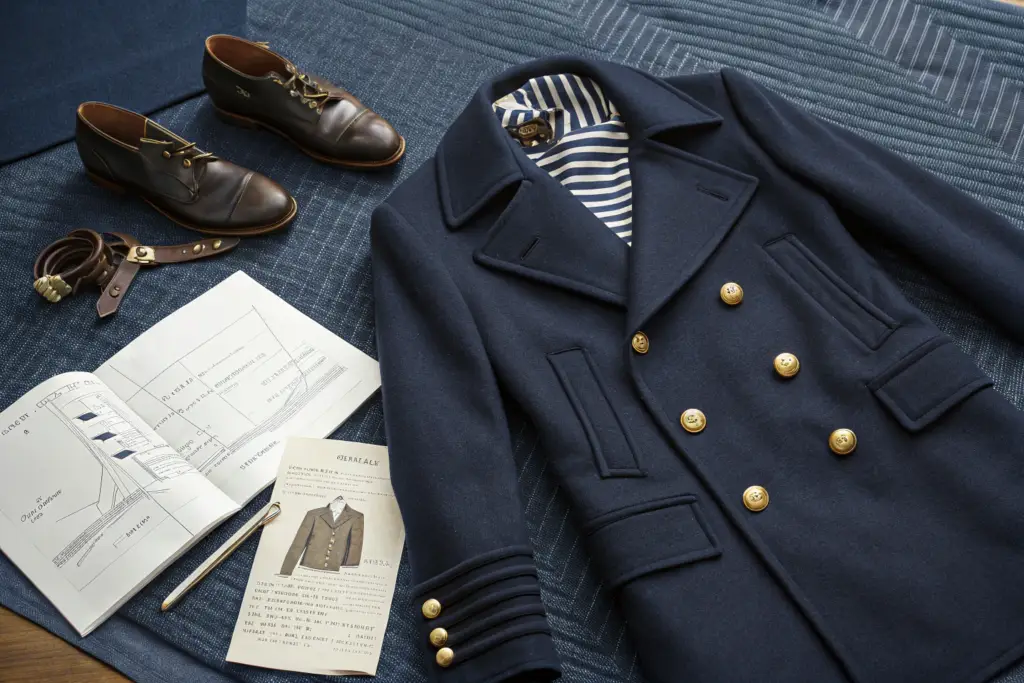
The wrap coat, trench, and parka cover the comfort, versatility, and performance segments of the coat market. The pea coat covers the tailored, structured segment. It is the coat for the customer who wants a sharp, military-inspired silhouette that reads as polished and put-together. The pea coat has historically been a double-breasted, hip-length coat in heavy melton wool. In 2026, the wholesale-winning pea coat has evolved. It is slightly cropped, hitting at the high hip rather than mid-thigh. It has a clean, minimal double-breasted front with matte or tonal buttons rather than shiny brass. It is cut with a slightly relaxed shoulder to accommodate a chunky sweater. The modern pea coat retains the tailored DNA but adapts to the customer’s actual life.
The structured pea coat, particularly in a modern cropped length with tonal hardware, serves the tailored customer segment that the wrap coat and parka do not reach, completing a wholesale outerwear assortment that covers the full spectrum from casual comfort to polished structure.
A brand we manufacture for launched a cropped pea coat in a 600gsm wool-nylon blend last fall. The coat was positioned as the "dress coat" in their outerwear assortment, styled with wide-leg trousers and boots. It sold to a narrower but highly loyal customer segment—professional women who wanted a coat that looked sharp for meetings and evening events. The sell-through was 74%, lower than the wrap coat but with a significantly higher average customer spend because the pea coat customer also bought the brand’s tailored trousers and knitwear. The pea coat served as a brand halo product. It attracted a high-value customer who then purchased across the collection.
What Silhouette Updates Are Making the Pea Coat Relevant for a Younger Demographic?
The traditional pea coat is boxy, heavy, and long. It reads as mature and conservative. The modernized pea coat for 2026 has three key updates. First, the length is cropped to high hip, which allows it to be worn over high-waisted trousers and creates a more fashion-forward proportion. Second, the double-breasted front is simplified to four buttons instead of six or eight, reducing visual bulk. Third, the hardware is tonal or matte rather than shiny gold, which removes the naval-uniform association and makes the coat feel more contemporary. These updates do not change the fundamental pea coat DNA. They simply adapt the silhouette to current styling preferences. The brand that offers a modern cropped pea coat alongside a traditional long pea coat will see the cropped version outsell the traditional version by a significant margin among customers under 45.
How Should the Pea Coat Be Priced Relative to the Wrap Coat in a Wholesale Line?
The pea coat and the wrap coat should sit at similar wholesale and retail price points. Both use similar wool fabric weights and similar construction complexity. If one is priced significantly below the other, the buyer will question the value of the higher-priced coat. The price parity also allows the brand to position the two coats as serving different style needs rather than different quality tiers. The wrap coat is for the customer who wants soft, adjustable comfort. The pea coat is for the customer who wants sharp, tailored structure. The customer selects based on style preference, not price. The brand captures both customers at the same margin.
Conclusion
The four women’s coat styles that will win wholesale in 2026—the Wrap Coat, the Trench Coat with removable liner, the Quilted Parka with certified fill, and the Cropped Pea Coat—are not random selections from a trend report. They are the silhouettes with proven sell-through data, structurally low return rates, and the functional features that retail sales associates can confidently sell. The wrap coat wins on fit flexibility. The trench wins on weather-ready versatility. The parka wins on certified performance. The pea coat wins on tailored polish for the professional customer segment.
A wholesale buyer who builds an outerwear assortment around these four styles covers the full spectrum of customer needs. The assortment has something for the customer who runs cold, the customer who values polish, the customer who needs rain protection, and the customer who simply wants to look elegant. The assortment is balanced, commercially safe, and capable of generating the full-price sell-through that makes a outerwear category profitable.
If your brand is planning its Fall/Winter 2026 outerwear line and wants to manufacture these wholesale-winning styles with a factory that understands the retail buyer’s requirements, we are ready to support you. At Shanghai Fumao, we produce all four silhouettes with the fabric certifications, performance testing, and quality consistency that wholesale accounts demand. Contact our Business Director, Elaine, at elaine@fumaoclothing.com to request our women’s outerwear wholesale line sheet and fabric swatch kit. Let’s build the coat assortment that sells through at full price.