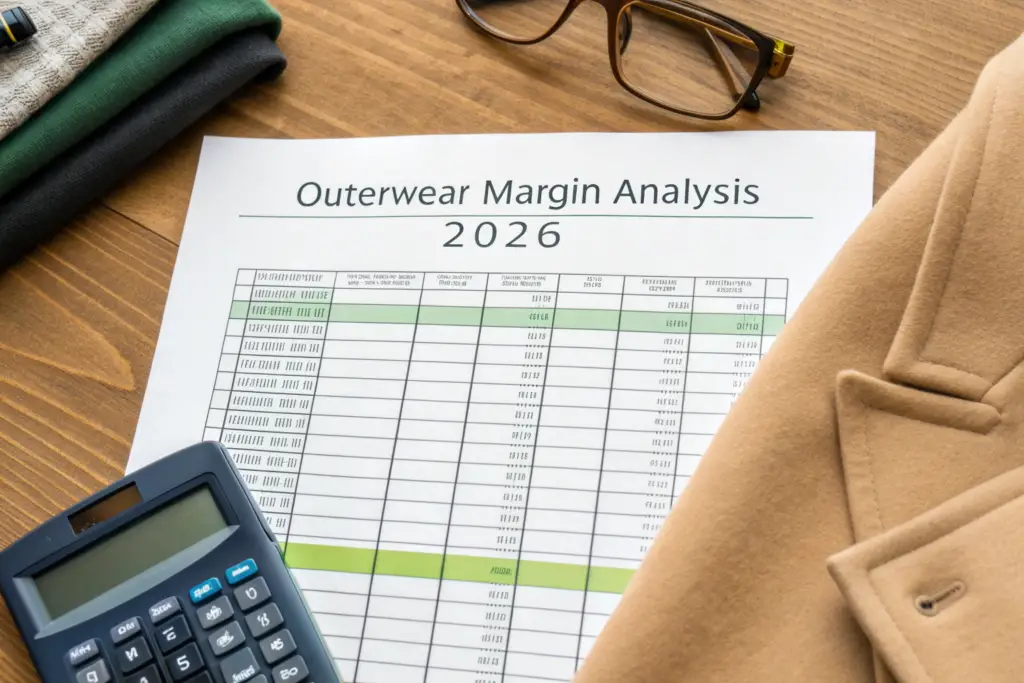
A brand owner I have worked with for four years called me last September with a spreadsheet open on her screen. She had been selling women’s coats for three seasons. Her revenue was growing. Her customer base was loyal. But her net profit was flat. She could not figure out why. We went through her SKU-level profitability together. Her best-selling coat by volume—a polyester-filled parka at $185 retail—had a 22% net margin after returns, markdowns, and logistics. Her third-best-selling coat by volume—a mid-weight wool wrap coat at $295 retail—had a 48% net margin. The parka was working three times as hard to generate roughly the same net profit per unit. She had been optimizing for volume. She should have been optimizing for margin.
The women’s winter coat types that offer the highest profit margins in 2026 are the mid-weight wool wrap coat, the double-faced wool coat, and the wool-cashmere blend tailored overcoat, all of which share three margin-driving characteristics: a perceived value that supports a retail price above $250, a relatively simple construction that keeps FOB costs manageable, and a low return rate driven by forgiving, adjustable fits.
Not all coats are created equal from a margin perspective. The coat that sells the most units is not necessarily the coat that makes the most money. The coat that makes the most money is the coat with the widest gap between the customer’s willingness to pay and the actual cost to produce, minus the costs of returns and markdowns that erode the gross margin. At Shanghai Fumao, we manufacture all the major women’s coat categories for US brands. I have seen the margin data across dozens of SKUs and multiple seasons. Let me share which coat types consistently deliver the highest profit and how to build your assortment around them.
Why Do Mid-Weight Wool Wrap Coats Generate the Highest Net Margins?
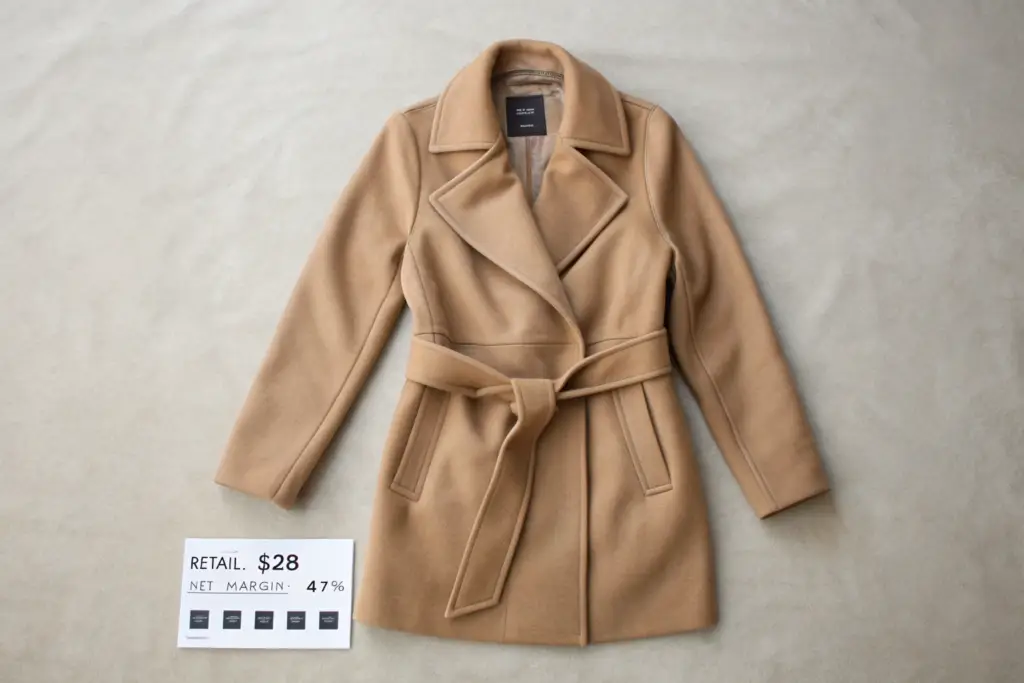
The wrap coat is a margin machine, and the reason is structural simplicity. A wrap coat has no buttons, no buttonholes, no zipper, no complex front closure construction. The closure is a self-fabric belt and an internal tie. The silhouette is relaxed and oversized, which means the precision tailoring required for a structured, fitted coat is not needed. The shoulder is dropped, eliminating the complex sleeve-head construction. The lining, if present, is simple. The coat is essentially a beautifully cut blanket with sleeves and a belt. The production labor hours are significantly lower than a structured button-front coat. Yet the customer perceives the wrap coat as a premium, luxurious garment because of the generous fabric volume and the soft drape.
The mid-weight wool wrap coat delivers margins of 45-55% net because its simple, buttonless construction keeps FOB costs in the $35-$50 range, while its oversized, fabric-forward aesthetic supports retail prices of $250-$350, and its adjustable self-belt fit reduces returns to under 6%, compared to 12-18% for structured coats.
I analyzed the profitability data for a brand we manufacture for. Their wrap coat had a $42 FOB, retailed at $298, and had a 4.8% return rate. Their structured single-breasted coat had a $48 FOB—more expensive to produce because of the buttonholes, the precise shoulder setting, and the structured interlining—retailed at $285, and had a 14.2% return rate. The wrap coat generated $87 more net profit per unit sold. The brand increased their wrap coat buy by 60% the following season and reduced the structured coat to a single SKU. The margin data made the decision obvious.
How Does the Adjustable Fit of a Wrap Coat Reduce Return-Related Margin Erosion?
Every returned coat costs the brand money. The original outbound shipping, the return shipping label, the warehouse labor to inspect and re-bag, and often a markdown because the coat is now out of season—these costs can total $15 to $25 per returned unit. A coat with a 14% return rate on 1,000 units sold generates 140 returns, costing the brand $2,100 to $3,500. A coat with a 5% return rate generates 50 returns, costing $750 to $1,250. The $1,350 to $2,250 difference goes straight to the bottom line. The wrap coat’s adjustable fit is the reason for the lower return rate. The customer does not need to be between sizes. She cinches the belt to her exact preference. The dropped shoulders mean there is no shoulder fit to get wrong. The relaxed body means there is no bust or hip strain. The coat fits almost every body type. Fewer returns mean more of the gross margin is retained as net profit.
Why Does the Simple Construction Keep FOB Costs Manageable?
A buttonhole on a wool coat requires a specialized machine and a skilled operator. The button must be precisely positioned. The buttonhole must be precisely cut. A mistake ruins the front panel. A wrap coat eliminates the entire button and buttonhole operation. A structured tailored coat requires a floating canvas interlining, a pad stitching operation on the lapel, a precise sleeve head attachment with ease distributed evenly—these are skilled, time-consuming operations. A wrap coat uses a simple fusible interlining or none at all. The lapel, if present, is a soft shawl collar that does not require pad stitching. The sleeve is a dropped shoulder with a simple attachment. The labor hours on a wrap coat are 25-35% lower than on a structured tailored coat of the same fabric weight. The lower labor cost widens the margin without the customer perceiving any reduction in quality. In fact, the customer perceives the wrap coat as more luxurious because of the fabric volume. The simple construction is a hidden margin driver.
Why Are Double-Faced Wool Coats a High-Margin Opportunity?
Double-faced wool is a fabric engineered with two layers of fabric woven together with connecting yarns. The fabric has no wrong side. Both faces are finished and presentable. A double-faced coat requires no lining. The seams are not hidden inside a lining; they are finished with a specialized hand-sewn or machine-sewn binding technique that creates a clean, self-finished edge. The coat is reversible or, more commonly, designed to show the contrast binding as a design detail. The construction is deceptively simple. There are fewer components than a fully lined coat. Yet the customer perceives double-faced wool as the height of luxury because of the fabric’s weight, drape, and the visible quality of the finishing.
Double-faced wool coats offer margins of 50-60% because the fabric’s premium hand feel and visual finish support retail prices of $350-$500, while the unlined, unconstructed production process partially offsets the higher fabric cost, resulting in a FOB of $55-$80 and a dollar margin per unit that significantly exceeds standard wool coats.
A premium brand we manufacture for launched a double-faced wool wrap coat last season. The fabric was a 90% wool, 10% cashmere double-faced coating at 580gsm. The FOB was $68. The coat retailed at $450. It sold out at full price in six weeks. The net margin per unit was approximately $185. The brand’s standard wool wrap coat, at a $42 FOB and $298 retail, generated approximately $110 net margin per unit. The double-faced coat generated 68% more profit per unit. The brand is doubling their double-faced order for next season. The customer response validated the price point, and the margin math validated the investment.
How Does the Unlined Construction Offset the Higher Fabric Cost?
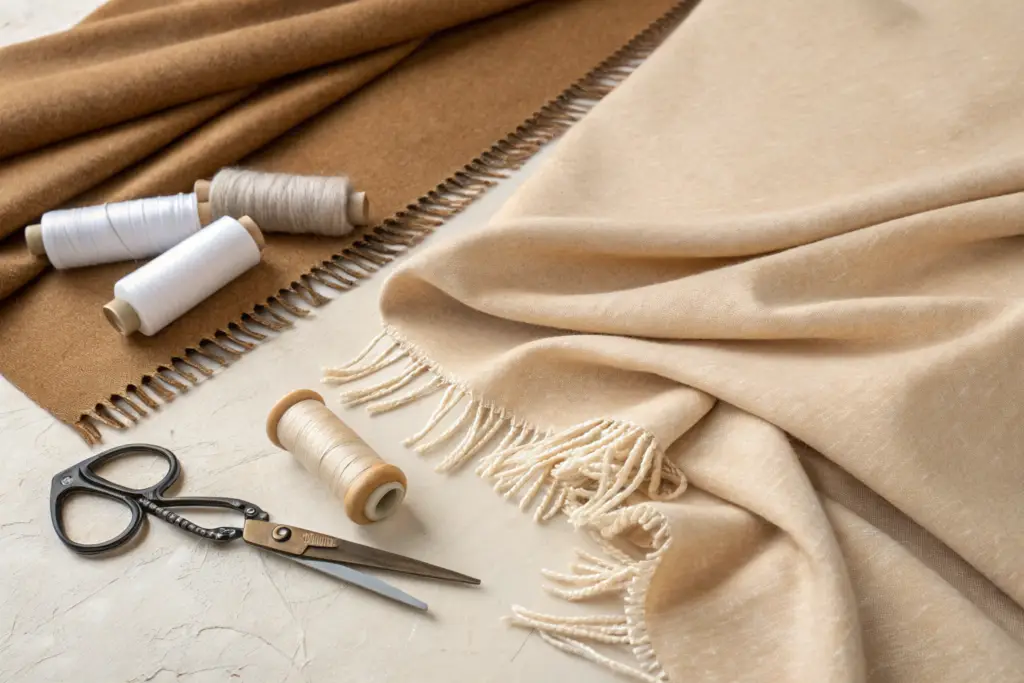
Double-faced fabric costs more per meter than standard wool coating—typically $18 to $28 per meter compared to $8 to $14. A coat consumes 2.5 to 3 meters, so the fabric cost is $45 to $84 higher per coat. But the unlined construction eliminates several costs. There is no lining fabric to purchase and cut. There is no interlining. There are no lining sewing operations—no lining attachment, no bagging out, no hand-stitching the lining hem. The seam finishing replaces these operations. The net labor reduction partially offsets the fabric cost increase. The FOB of a double-faced coat is typically 30-50% higher than a standard wool coat, but the retail price can be 50-80% higher. The margin gap widens at the higher price point. The customer pays for the fabric luxury, and the brand captures the margin on the premium positioning. Technical information on double-faced fabric construction and finishing is available from textile resources like The Woolmark Company.
Why Does the “Reversible” Feature Justify a Higher Price Point?
A coat that can be worn two ways—camel on the outside one day, cream on the outside the next—is perceived as two coats for the price of one. The customer’s value perception shifts. A $450 reversible coat feels like a better deal than a $350 single-face coat. The brand captures an extra $100 in retail price for a feature that costs approximately $15 in additional finishing labor. The reversible feature is a margin amplifier. The brand should clearly demonstrate the reversibility in product photography and in retail associate training. The customer who understands the dual-wear capability is more willing to pay the premium price. The feature also reduces the "I need another coat" impulse because the customer feels she already owns two options. This does not hurt the brand; it builds loyalty and positions the coat as a smart investment.
What Role Does the Wool-Cashmere Blend Overcoat Play in a High-Margin Assortment?
The tailored wool-cashmere overcoat is not the highest-volume coat in most brands’ assortments. The wrap coat and the parka will outsell it in units. But the overcoat serves a critical margin function: it captures the highest-spending customer and delivers a premium dollar margin per unit. The customer who buys a $400 wool-cashmere overcoat is often the brand’s most loyal, highest-lifetime-value customer. The overcoat is the centerpiece of her winter wardrobe. She will wear it for years. She will tell her friends about it. She will come back to the brand for her next investment piece.
The wool-cashmere blend overcoat generates a lower margin percentage than a wrap coat but a higher dollar margin per unit, with FOB costs of $55-$75 and retail prices of $350-$450, delivering $130-$175 net profit per coat sold, while attracting a high-lifetime-value customer who will purchase across the brand’s other categories.
A brand we manufacture for has a wool-cashmere overcoat that retails at $425. The FOB is $62. The net margin per unit is approximately $155. The overcoat represents only 15% of their outerwear unit volume, but it generates 28% of their outerwear profit dollars. The overcoat customer also buys the brand’s knitwear, trousers, and accessories at a higher average order value than the parka customer. The overcoat is a customer acquisition tool for the premium segment. The brand loses money or breaks even on some first-time customer acquisition through marketing, but the overcoat customer’s lifetime value recovers that investment within two purchases.
How Does the Cashmere Component Justify the Premium Price?
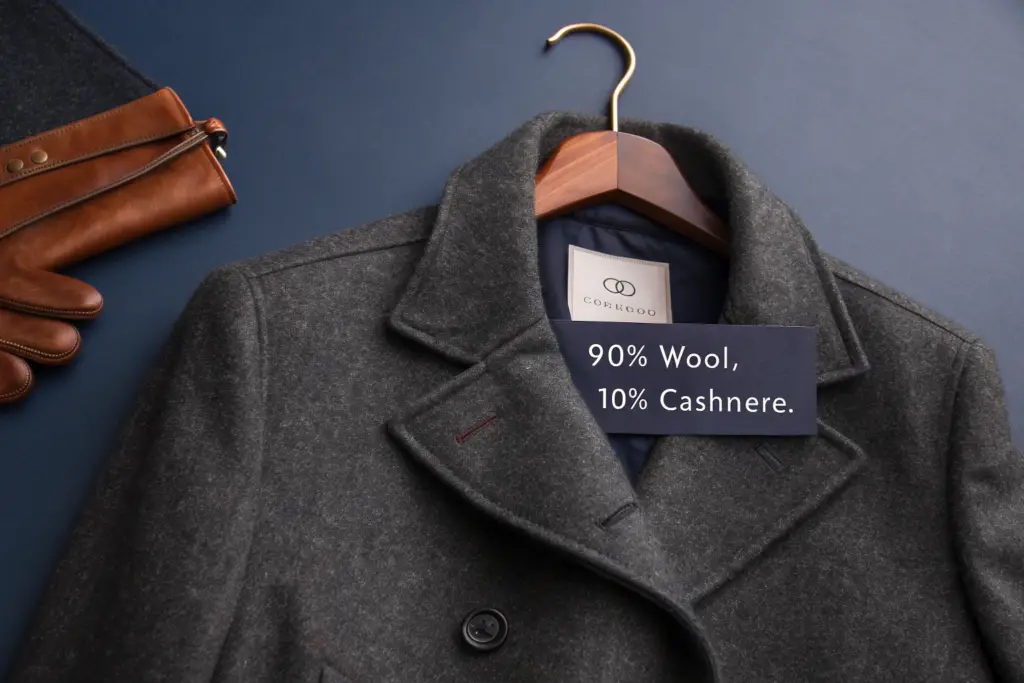
Cashmere is the shorthand for luxury in the consumer’s mind. A coat labeled "90% Wool, 10% Cashmere" commands a higher price than a coat labeled "100% Wool," even if the construction is identical. The cashmere adds approximately $6 to $12 to the fabric cost per coat. The retail price can be increased by $40 to $60. The customer feels the difference in hand feel—the cashmere adds a softness that is noticeable at the point of purchase. The brand can tell a material story. The margin on the cashmere addition is excellent. The brand should ensure the cashmere content is genuine and certified. A fiber content test report from a lab like SGS should back up the label claim. The brand that falsely labels a coat as cashmere-blend risks a customer complaint, a return, and potentially a legal issue. The margin advantage of the cashmere blend is real, but only if the fiber content is honest.
What Construction Details Signal Quality and Reduce Return Risk?
The customer spending $400 on an overcoat inspects the details. The buttons must be genuine horn or corozo, not cheap plastic. The buttonholes must be cleanly cut and densely stitched. The lining must be a quality viscose or cupro that glides over layers, not a cheap polyester that catches and causes static. The vent must lie flat when the coat is worn closed and fall open gracefully when walking. The interior pocket must be neatly finished. These details are not expensive to execute—the difference between a cheap plastic button and a genuine horn button is $0.50 per coat—but they signal quality to the customer who is looking for it. The customer who finds the quality details becomes a brand advocate. The customer who finds cheap details returns the coat and leaves a negative review. The attention to detail is a margin protection strategy.
How Should Brands Structure a High-Margin Coat Assortment?
A high-margin coat assortment is not a random collection of styles. It is a deliberate portfolio where each style plays a specific margin role. The wrap coat is the volume margin driver—high units, high margin percentage, moderate dollar margin per unit. The double-faced coat is the premium margin amplifier—moderate units, very high margin percentage, high dollar margin per unit. The wool-cashmere overcoat is the customer acquisition and lifetime value play—lower units, moderate margin percentage, very high dollar margin per unit. Together, the three styles create a margin portfolio that is diversified across price points and customer segments.
The optimal high-margin coat assortment follows a 50-30-20 unit allocation: 50% mid-weight wool wrap coats at $250-$325 retail, 30% double-faced wool coats at $350-$450 retail, and 20% wool-cashmere tailored overcoats at $350-$450 retail, with color depth concentrated in camel, navy, and black, and seasonal accents limited to 15% of the unit buy.
A brand we manufacture for restructured their coat assortment around this framework two seasons ago. Previously, they had five styles with equal depth: a parka, a puffer, a wrap coat, a structured coat, and a trench. The parka and puffer were low-margin. The trench was mid-margin. The wrap coat was high-margin but underbought. The structured coat was low-margin due to returns. They cut the parka and puffer from the line. They deepened the wrap coat. They added a double-faced coat. They kept the overcoat for the premium customer. The result: outerwear revenue increased 22%, and outerwear net profit increased 47%. The margin-focused assortment generated significantly more profit from fewer styles.
What Color Allocation Maximizes Margin Across These Coat Types?
The margin-maximizing color strategy is concentration, not expansion. Camel, Black, and Navy should represent 80-85% of the total unit buy across all three coat types. These three colors sell at full price season after season. They do not require markdowns. The customer who wants a camel wrap coat is not going to buy a burgundy one instead; she will wait or buy from a competitor. The core colors must be in stock. A seasonal accent color—deep burgundy, forest green, or a warm taupe—can represent 10-15% of the buy for merchandising freshness. But the accent color should be bought in limited depth and only in the wrap coat silhouette, where the lower FOB reduces the markdown risk. The premium double-faced coat and overcoat should be bought only in core colors. The customer spending $400-plus on a coat wants a color she will wear for five years. Camel, black, and navy are those colors.
How Should Brands Price These Coat Types Relative to Each Other?
The pricing ladder should create clear differentiation while maintaining the margin structure. The wrap coat anchors the entry premium price at $250-$325. The double-faced coat occupies the middle premium at $350-$425. The wool-cashmere overcoat sits at the top premium at $375-$450. The gaps are large enough to justify stepping up but not so large that the wrap coat customer feels the overcoat is unattainable. A brand that prices the wrap coat at $295 and the overcoat at $395 gives the customer a $100 reason to upgrade. The upgrade path captures the customer who enters through the wrap coat and moves up over time. The pricing ladder also protects the brand from competitive discounting. A competitor can undercut on a basic wrap coat, but they cannot easily replicate the double-faced fabric or the cashmere blend overcoat at the same price. The premium features create a pricing moat.
Conclusion
The women’s winter coats that offer the highest profit margins are not the ones that sell the most units. They are the ones that combine manageable production costs with high perceived value and low return rates. The mid-weight wool wrap coat wins on margin percentage because its simple construction keeps the FOB low while its adjustable fit minimizes returns. The double-faced wool coat wins on dollar margin because its premium fabric commands a high retail price with relatively simple unlined construction. The wool-cashmere overcoat wins on customer lifetime value because it attracts a high-spending, loyal customer who will purchase across categories.
The brand that structures its coat assortment around these three margin-driving silhouettes, concentrates color depth in the core neutrals, and builds a pricing ladder that encourages upgrading will generate significantly more profit from its outerwear category than a brand that spreads its buy across five or six styles of equal depth. Margin is not an accident. It is a design and assortment planning outcome.
If your brand is planning its winter coat assortment and wants to maximize margin, we can help you cost-engineer the silhouettes that deliver the best returns. At Shanghai Fumao, we produce wrap coats, double-faced coats, and wool-cashmere overcoats for US brands with transparent FOB costing and quality construction that supports premium retail pricing. Contact our Business Director, Elaine, at elaine@fumaoclothing.com to request a margin analysis for your target coat silhouettes and discuss your production timeline. Let’s build a coat assortment that makes money, not just sales.