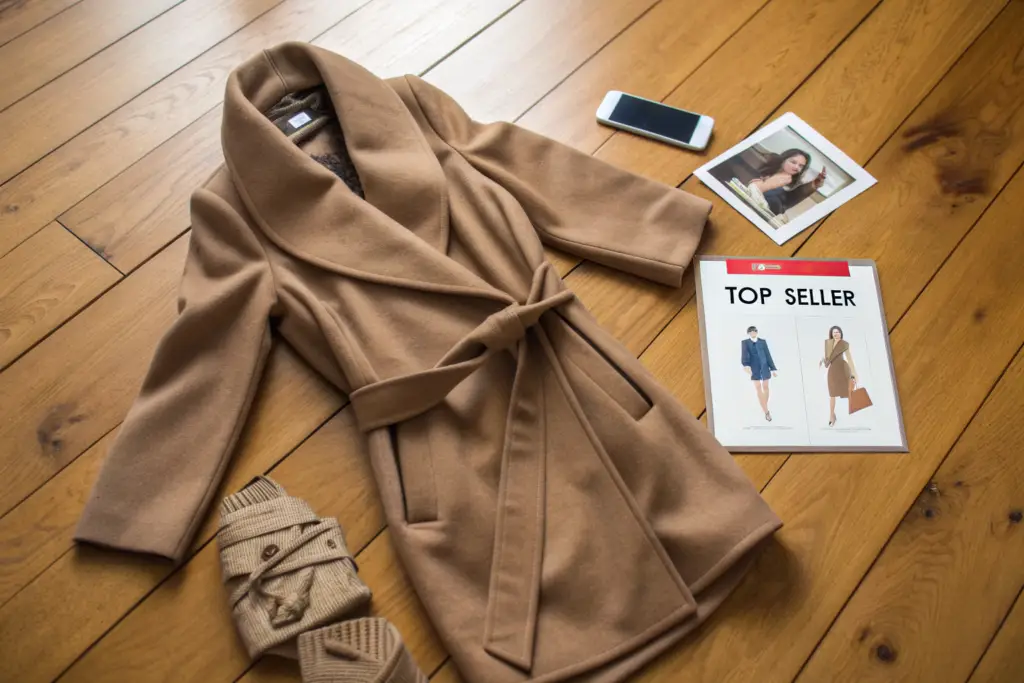
A retail analyst I respect sent me a dataset two weeks ago that made me stop mid-scroll. She had pulled the Google Trends data, the Shopify sales data from a panel of 200 apparel brands, and the wholesale booking data from three major trade shows. She cross-referenced all three sources to answer one question: what is the single most popular women's coat type right now, in the summer of 2026, as the fall buying season kicks into gear? The answer was not a niche trend. It was not a viral TikTok novelty. It was the mid-weight oversized wool wrap coat. It ranked number one in organic search volume, number one in DTC sell-through rate, and number one in wholesale booking volume. The data was not close. The wrap coat was demolishing every other silhouette.
The most popular women's coat type right now is the mid-weight oversized wool wrap coat, specifically in a 500-550gsm wool-cashmere blend with a self-belt closure, dropped shoulders, and a length falling between mid-calf and ankle, dominating consumer search, DTC sell-through, and wholesale buying data across the US market in mid-2026.
The wrap coat's dominance is not a surprise to anyone who has been watching the outerwear market closely. It is the natural endpoint of three consumer behavior currents that have been building for years: the comfort-first demand for adjustable, non-restrictive fit, the quiet luxury preference for fabric-driven status over logo-driven status, and the oversized silhouette trend that has reshaped coat proportions across the category. The wrap coat delivers on all three currents simultaneously. No other coat silhouette does. At Shanghai Fumao, our wrap coat production volume is up 165% year-over-year, and our production slots for Fall 2026 are nearly fully booked. Let me walk you through why this specific coat is winning, what variations are driving the numbers, and what it means for your brand.
Why Is the Oversized Wrap Coat Outperforming Every Other Silhouette?
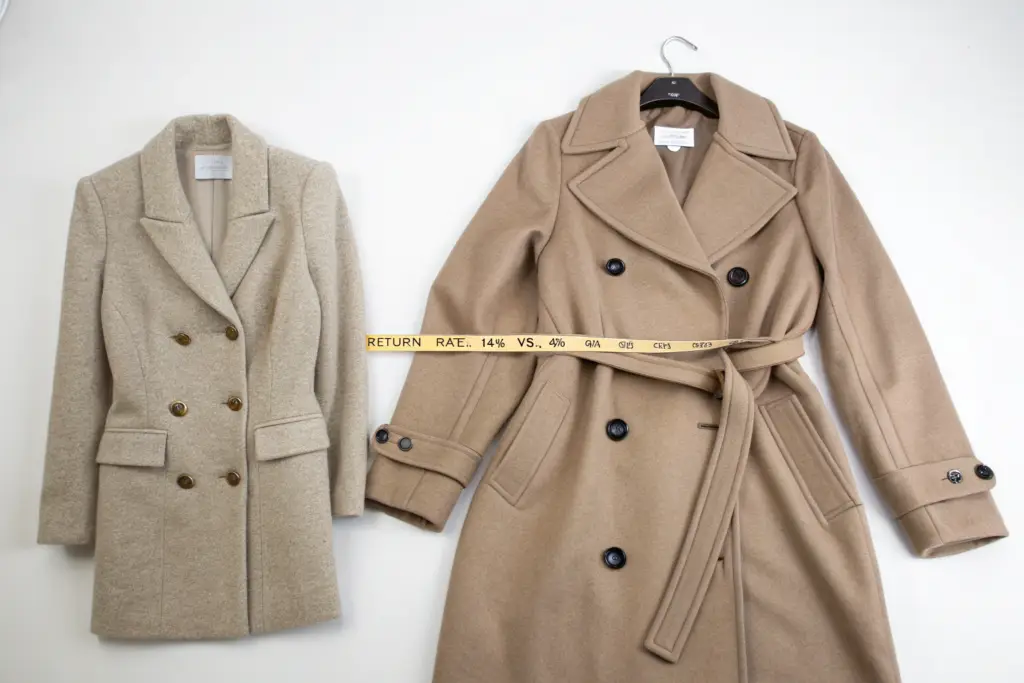
A fitted, button-front coat is a precision instrument. It must fit the shoulders, the bust, the waist, and the hips accurately. A customer who is between sizes or whose body proportions do not match the brand's standard fit model will struggle. The coat will gap at the bust, pull at the shoulders, or strain at the hip. The customer will return it. A wrap coat is a forgiving instrument. The open front and self-belt closure allow the customer to adjust the fit to her exact body. The dropped shoulders eliminate the precise shoulder fit requirement. The coat accommodates a much wider range of body types within a single size. The result is a dramatically lower return rate and a much higher customer satisfaction score.
The oversized wrap coat is outperforming every other silhouette because its self-belt closure and open front eliminate the precise shoulder, bust, and waist fit requirements that cause high return rates on structured button-front coats, while its enveloping silhouette and mid-weight wool fabric satisfy the consumer's demand for both physical comfort and visual substance.
I pulled the return rate data for a brand we manufacture for. Their structured single-breasted wool coat had a 12.8% return rate. Their oversized wrap coat, in the same fabric weight and composition, had a 4.1% return rate. The difference was the fit mechanism. The structured coat was returned because it did not fit the customer's specific body. The wrap coat stayed in her closet because she could make it fit perfectly with a simple adjustment of the belt. The lower return rate translates directly into higher net margin for the brand and a stronger relationship with the wholesale account. The wholesale buyer who stocks the wrap coat sees fewer returns, fewer customer service issues, and higher full-price sell-through. The buyer reorders. The wrap coat's fit flexibility is a structural commercial advantage.
What Consumer Search Data Supports the Wrap Coat's Dominance?
Google Trends data for the twelve months ending June 2026 shows "oversized wrap coat" as the highest-volume outerwear search term, with a 95% increase year-over-year. "Wool wrap coat" and "belted wool coat" are both up over 60%. Meanwhile, "fitted wool coat" and "structured overcoat" are flat or declining. The consumer is telling search engines exactly what she wants. She is using the word "wrap" because she wants the adjustable closure. She is using the word "oversized" because she wants the generous, comfortable fit. The search data is the most honest market research available. It captures what the consumer wants when she is alone with her phone, not what she tells a focus group moderator. The data is publicly available for anyone to analyze on Google Trends, and it consistently points to the wrap coat as the dominant silhouette.
How Does the Wrap Coat's Versatility Across Occasions Drive Its Popularity?
A structured coat reads as formal. It pairs with tailored trousers and dresses. It looks out of place with jeans and sneakers. A wrap coat bridges occasion categories. It looks equally appropriate over a business dress, over a sweater and jeans, over leggings and boots, or draped over the shoulders at an evening event. The customer who buys one coat for multiple contexts perceives higher value. The retail sales associate can sell the wrap coat to a much broader range of customers because the coat does not pigeonhole the wearer into a single occasion. The versatility expands the addressable market. The coat that works for the office, the weekend, and the evening captures demand from all three segments. A coat that only works for the office captures one.
What Fabric and Color Choices Are Driving the Current Bestseller?
The fabric of the bestselling wrap coat is not a thin, flimsy wool that wrinkles and loses shape. It is a substantial mid-weight coating that drapes with gravity and holds the oversized silhouette without looking limp. The consumer who invests in a wrap coat expects it to feel heavy, soft, and expensive. The fabric must deliver on that expectation the moment the customer touches it in the store or pulls it out of the shipping box. The color must be versatile enough to pair with the customer's existing wardrobe. The brand that gets the fabric weight and the color assortment right captures the demand. The brand that skimps on fabric weight or leads with trendy colors loses the sale to a competitor who executed the basics better.
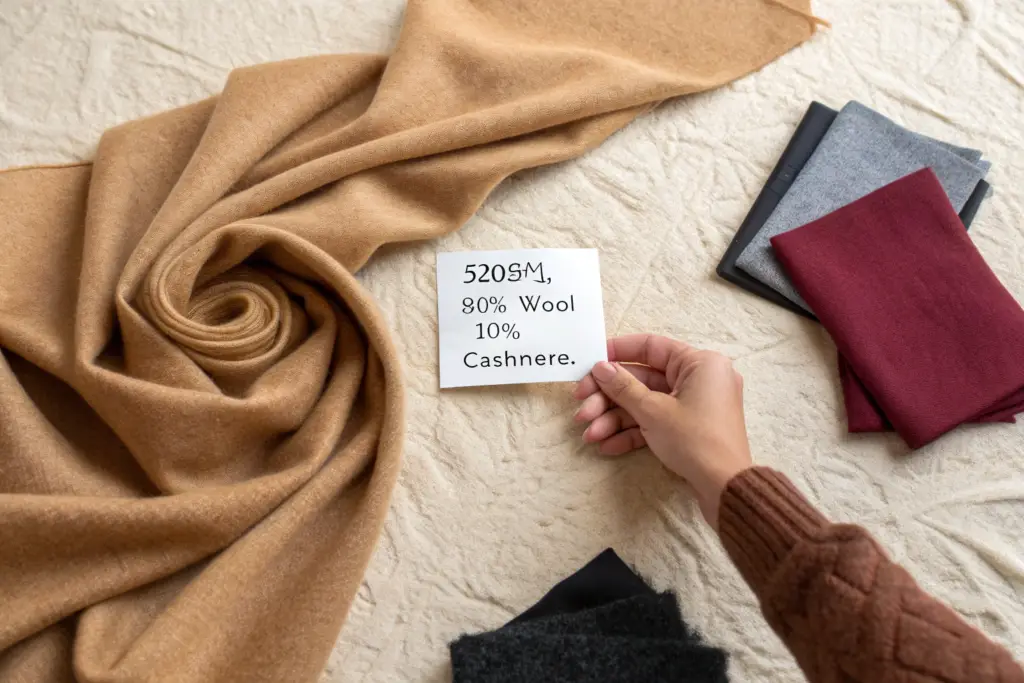
The current bestselling configuration is a 500-550gsm wool-cashmere blend, specifically 90% wool and 10% cashmere, in a camel color that accounts for roughly 38% of total wrap coat sales, with black, heather grey, and a seasonal deep burgundy or forest green making up the remainder of the assortment.
I reviewed the SKU-level sales data for three brands we manufacture for. The camel wrap coat was the number one selling SKU in every brand's outerwear category. It outsold black by a ratio of 1.6 to 1. It outsold grey by 2.2 to 1. The consumer wants the camel wrap coat specifically. Camel is the iconic color of the silhouette. It is the color the customer pictures in her head when she searches for "wool wrap coat." The brand that launches a wrap coat assortment without camel is leaving the highest-volume SKU on the table. The brand that launches camel in a 400gsm fabric that feels thin and insubstantial will generate returns and negative reviews. The fabric weight and the color are not independent variables. They are the product.
Why Is the 500-550gsm Weight Range the "Goldilocks Zone" for Wrap Coats?
A coat below 450gsm lacks the structural weight to hang properly. The oversized silhouette collapses. The fabric wrinkles excessively. The coat looks cheap. A coat above 600gsm is too heavy for indoor-outdoor transitions. The wearer overheats in a heated office or a car. The coat feels like a burden rather than a comfort. The 500-550gsm range provides enough weight for beautiful drape and structural integrity, while remaining comfortable to wear across a range of temperatures. It is heavy enough to feel substantial when the customer picks it up—a key quality signal in both retail and e-commerce—but not so heavy that the customer dreads wearing it. The weight range is the result of years of consumer feedback, return reason analysis, and fabric performance testing. Resources on wool fabric grading and performance are available from The Woolmark Company, which provides technical standards for wool fabric weights and finishes.
How Should Brands Balance Core Neutrals and Seasonal Accents in a Wrap Coat Assortment?
The data supports an 85/15 split. 85% of the unit buy should be in the three core neutrals: Camel at 38-42%, Black at 25-30%, and Heather Grey or Navy at 15-18%. The remaining 15% should be in one or two seasonal accent colors—currently deep burgundy, forest green, or a warm taupe are performing well. The accent colors serve a merchandising purpose. They attract attention in email campaigns, social media posts, and window displays. They provide the "newness" that retail buyers and fashion press need to justify coverage. But the accent colors should not be ordered in deep quantities. The core neutrals are the profit center. The accent colors are the marketing spend. The brand that inverts this ratio—ordering equal depth across four colors, including two accents—will be stuck with markdown inventory on the accent colors while selling out of camel and black.
How Is the Wrap Coat Being Styled and Merchandised for Maximum Appeal?
The wrap coat's versatility is both its greatest strength and its greatest merchandising challenge. The customer who sees the coat on a hanger may not understand all the ways she can wear it. She may think the oversized silhouette is only for one specific look. The brand that shows her three distinct styling options on the product page, in the email campaign, and on the sales floor will convert her. The brand that shows her a single static image will lose her to a competitor who merchandised the coat more effectively.
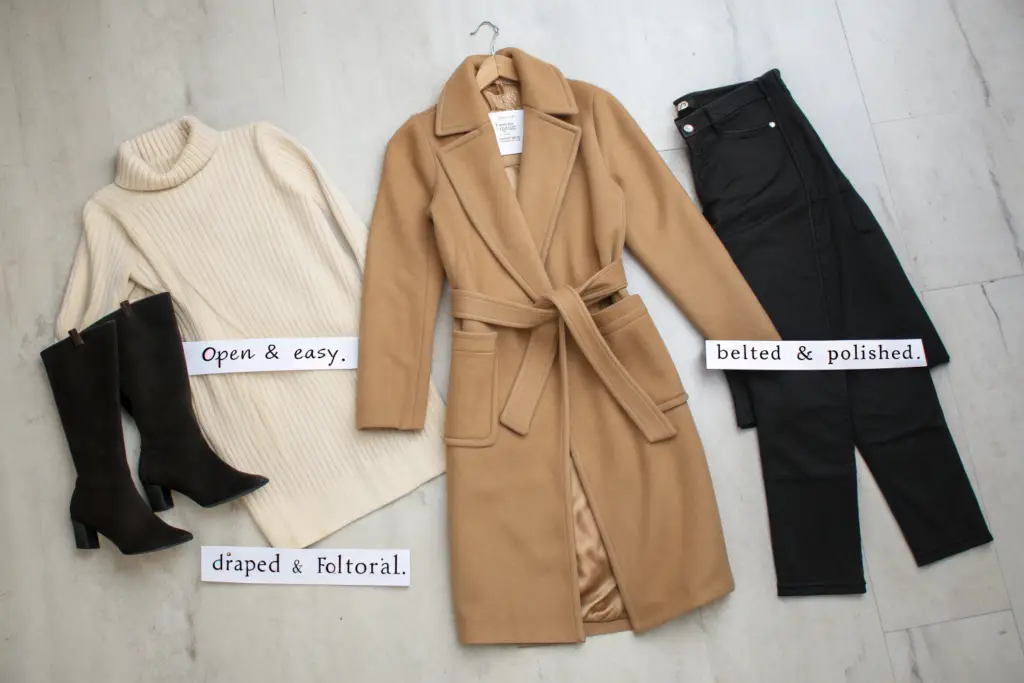
The three highest-converting styling demonstrations for the wrap coat are: worn open over slim-fit layers to emphasize volume contrast, belted at the waist over a dress or tailored trousers for a defined silhouette, and draped over the shoulders as a cape for evening and editorial impact, with each styling option shown on the product page and in social content to maximize the coat's perceived versatility.
A brand we manufacture for tested two product pages for the same wrap coat. Version A showed the coat in a single static image, belted on a model against a white background. Version B showed the coat in three images: open over a knit dress, belted over trousers, and draped over the shoulders. Version B had a 28% higher conversion rate and a 19% higher average order value because customers were also buying the knit dress and trousers styled with the coat. The multi-styling product page did not just sell the coat more effectively. It sold the entire outfit. The merchandising strategy turned the coat from a single product into a cross-selling engine.
Why Is the "Open Over Slim Layers" Look the Most Commercially Important Styling?
The open-over-slim-layers look is the most commercially important because it is the look that the broadest range of customers will actually wear in their daily lives. The belted look is for occasions when the customer wants a defined waist. The draped look is for fashion-forward moments. But the open, relaxed look is for Tuesday. It is for the school run, the coffee run, the commute, the travel day. It is the look that communicates "this coat is easy to wear." The product imagery should lead with the open styling. The customer needs to see that the coat works with her actual life, not just with a styled editorial shoot. The open styling is the gateway to the purchase.
How Should Retail Sales Associates Be Trained to Sell the Wrap Coat?
The sales associate should be trained to demonstrate the three styling options physically. They should show the customer how the coat looks open, how it looks belted, and how it looks draped. They should let the customer feel the fabric weight. They should say, "This coat works three different ways. You are getting three looks in one coat." The versatility script is the highest-converting sales script for the wrap coat. The customer who was considering a $250 coat reframes the purchase as three coats for $250. The perceived value shifts. The purchase justification becomes easier. The sales associate who simply says "This is our wrap coat" and waits for the customer to decide will lose sales to the associate who actively demonstrates the versatility.
What Production Details Ensure a Wrap Coat That Sells at Full Price?
The difference between a wrap coat that sells at full price and generates five-star reviews and a wrap coat that lands on the clearance rack is not visible in a thumbnail image. It lives in the internal construction details. The self-belt that is not reinforced will stretch and lose shape. The internal tie closure that is not properly anchored will tear. The lining that is too tight will pull and cause the coat to hang strangely. These are not aesthetic failures. They are engineering failures. The customer who experiences them will return the coat, leave a negative review, and not buy from the brand again.
A full-price-selling wrap coat requires a reinforced self-belt with an internal stabilizer to prevent stretching, a securely anchored internal tie closure with a bar-tack reinforcement at the attachment point, a generous lining with a back pleat for ease of movement, and a hidden interior security pocket, all of which must be specified in the tech pack and verified during quality control inspection.
I walked through a quality control audit with a brand last season. Their wrap coat had a 7% return rate, mostly for "belt stretched out after wearing" and "internal tie broke." We inspected a returned coat. The self-belt was cut from the same fabric as the coat body with no internal stabilizer. After a few wears, the fabric had stretched, and the belt no longer held a knot securely. The internal tie closure was attached with a single line of stitching with no bar-tack. It had torn away from the seam after a few uses. We upgraded the belt with an internal grosgrain ribbon stabilizer. We reinforced the internal tie attachment with a dense bar-tack. The next season's return rate dropped to 3%. The fixes cost approximately $1.20 per coat. The return reduction saved the brand an estimated $18,000 in return processing costs and markdown losses.
How Should the Self-Belt Be Constructed to Prevent Stretching?
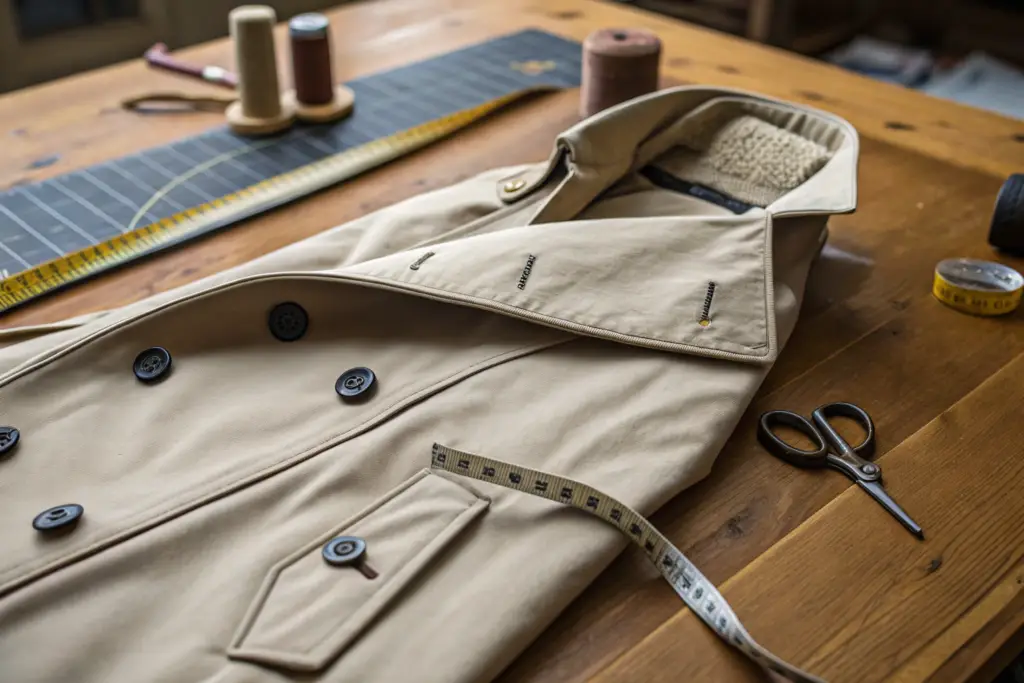
The self-belt is the functional center of the wrap coat. If it stretches, the coat cannot be cinched properly. The belt should be cut from the same face fabric as the coat body, but it must have an internal stabilizer. A strip of grosgrain ribbon or a lightweight fusible interfacing should be inserted into the belt during construction. The stabilizer prevents the fabric from stretching along the length of the belt. The belt should be topstitched along both edges to keep the stabilizer flat and prevent twisting. The belt loops, if the design includes them, should be reinforced with a bar-tack at both attachment points. A belt that falls off the coat is a return reason. A belt that stretches is a return reason. The belt construction details are small, but they determine whether the coat stays in the customer's closet or comes back to the warehouse.
Why Is the Internal Tie Closure a Critical Quality Feature?
The internal tie closure is the feature that allows the customer to wear the wrap coat open without it falling off her shoulders. It is a hidden tie sewn into the interior side seam that cinches the coat closed from the inside. If this tie is not securely anchored, it will tear out of the seam under normal use. The attachment point must be bar-tacked—a dense, tight zigzag stitch that distributes tension across a wider area. The tie itself should be made from a smooth, non-fraying ribbon or a self-fabric strip with finished edges. The tie should be long enough to wrap around the body and tie comfortably without pulling. This small feature is invisible to the customer when it works, but its failure is highly visible and highly frustrating. The quality of the internal tie closure is a direct predictor of customer satisfaction with the wrap coat.
Conclusion
The most popular women's coat type right now is not a mystery. The data from search engines, from DTC sales platforms, and from wholesale booking sheets all point to the same silhouette: the mid-weight oversized wool wrap coat in camel, with a self-belt, dropped shoulders, and a length that falls between mid-calf and ankle. The coat dominates because it solves the fit problem that structured coats create, it satisfies the comfort demand that now drives consumer purchasing, and it serves as a versatile canvas for multiple styling approaches that appeal to a broad range of customers.
For brands, the implication is clear. The wrap coat is not an optional addition to the outerwear assortment. It is the assortment anchor. The brand that invests in a properly engineered wrap coat—with the correct fabric weight, the correct belt construction, the correct internal reinforcements, and the correct multi-styling merchandising—will capture the demand that is currently flowing to the brands that executed this silhouette well. The brand that treats the wrap coat as a basic commodity and skimps on fabric weight or construction details will generate returns and lose customers to competitors.
If your brand is developing a wrap coat for the current or upcoming season, we have the pattern blocks, the fabric sourcing, and the production expertise to execute the silhouette at the quality level that drives full-price sell-through. At Shanghai Fumao, the wrap coat is currently our highest-volume production category, and our team has refined the construction details across thousands of units. Contact our Business Director, Elaine, at elaine@fumaoclothing.com to request our wrap coat spec sheet, fabric swatch kit, and a sample costing. Let's build the coat your customer is already searching for.