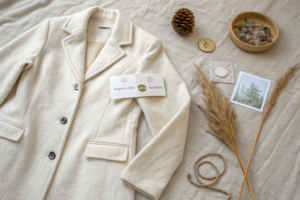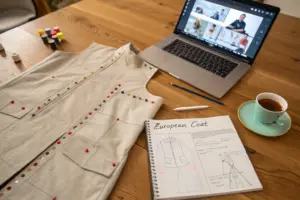
A brand owner from Seattle emailed me last month with a request that sounded simple but was actually quite complex. She wrote: "I want to order wool wrap coats with my brand logo. How do I do this?" I wrote her back a list of eleven questions she needed to answer before I could give her a quote. What fabric weight? What coat silhouette? Where do you want the logo placed—on the buttons, on the lining, on the exterior? Is the logo a woven label, an embroidered patch, a heat transfer, or a metal plate? What size is the logo? What colors? Do you have the logo in vector format? She replied, "I did not realize there were so many decisions. Can you just guide me through the process?" That is exactly what a good factory should do.
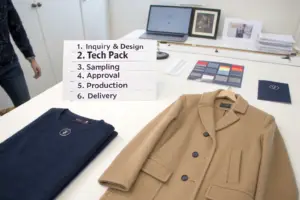
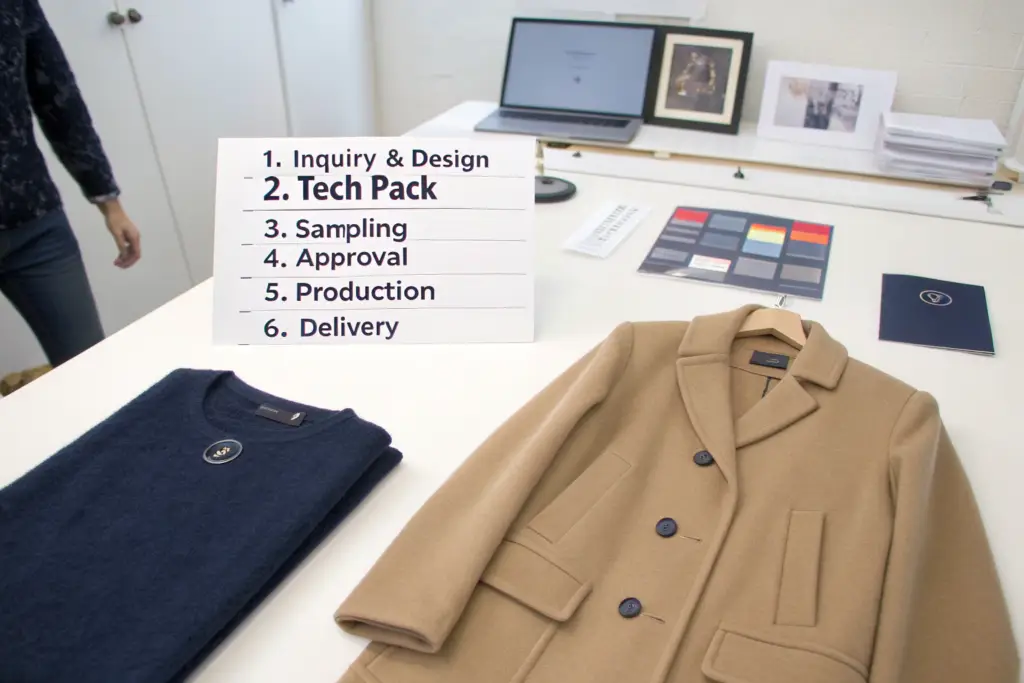
Ordering custom logo women's coats from Shanghai Fumao follows a structured six-stage process: submitting your design concept and logo artwork, developing a production-ready tech pack with logo placement specifications, approving a pre-production sample with the actual logo application, confirming the bulk production order with quality and delivery terms, and receiving your branded coats with your custom logo professionally applied at the factory.
Custom logo application is not a simple sticker-on-a-coat operation. The logo must be integrated into the garment's construction. A woven label must be sewn into the lining or the interior pocket. An embroidered logo must be digitized for the embroidery machine and tested on the actual coat fabric to ensure the stitches do not pucker or distort. A custom button with an engraved logo must go through mold development and sampling before it can be attached to the coat. Each logo application method has a different cost, lead time, and minimum order quantity. At Shanghai Fumao, we handle the full logo integration process, from artwork review to final quality inspection. Let me walk you through exactly how to place your order.
What Information Do You Need to Prepare Before Requesting a Quote?
The quality of the factory's quote depends entirely on the quality of the information you provide. A buyer who emails "I want to make coats with my logo, what is the price?" will receive either a generic range so wide it is useless or no reply at all. A buyer who emails a complete specification package will receive an accurate, itemized quote within 48 hours. The difference is preparation. The factory needs to know exactly what coat you want, exactly what logo you want on it, and exactly how many you want to order.
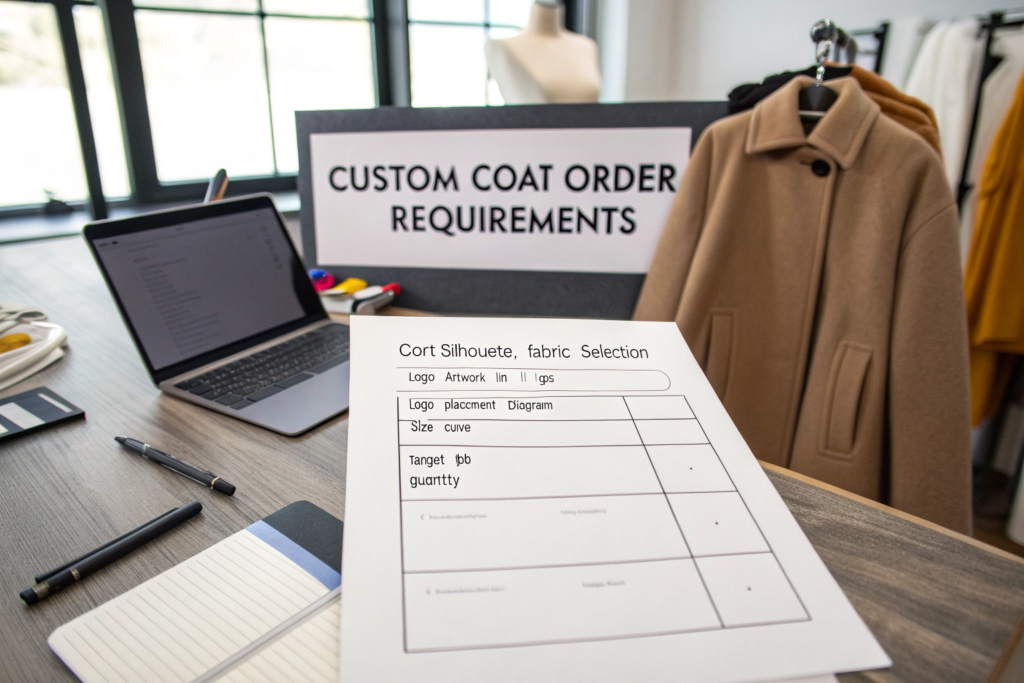
Before contacting us for a quote, prepare your coat silhouette selection from our catalog or your own design reference, your logo artwork in vector format (AI or EPS files), your preferred logo placement—exterior, interior lining, buttons, or a combination—your target fabric and color from our swatch library, your size curve and estimated first order quantity, and your target FOB price range if you have one.
I had a prospective client who arrived at our first video call with everything we needed. She had selected the wrap coat silhouette from our line sheet. She had her logo in three formats—vector, PNG, and a mockup showing it on a coat. She had a clear idea of placement: a small tonal embroidery on the exterior back neck, a woven label on the interior pocket, and her brand name engraved on the buttons. She had selected camel, black, and heather grey from our wool fabric swatch book. She knew her size curve and her target quantity of 300 pieces for the first order. We quoted her within 24 hours. The pre-production sample was in her hands within three weeks. The preparation she did before contacting us compressed the timeline by weeks.
What Coat Silhouette and Fabric Options Are Available for Custom Logo Orders?
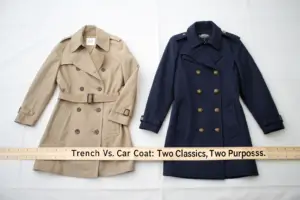
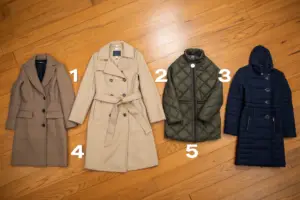
Our women's coat catalog includes six classic silhouettes: the Wool Wrap Coat, the Double-Breasted Trench Coat, the Tailored Wool Overcoat, the Quilted Parka, the Structured Pea Coat, and the Lightweight Duster. Any of these silhouettes can be customized with your brand logo. The fabric library includes wool and wool-blend coatings from 400gsm to 650gsm, cotton and cotton-blend gabardines for trenches, water-resistant technical shells for parkas, and lightweight wool and linen blends for dusters. Fabric swatch books are organized by weight and composition. We ship physical swatch books to prospective clients so you can feel the fabric hand before making a selection. The swatch book includes the available color palette for each fabric quality. If your brand requires a custom color not in our stock palette, custom dyeing is available at a minimum order quantity of 500 pieces per color.
What Logo Artwork and Placement Details Does the Factory Need?
Logo application requires the logo in a vector file format—Adobe Illustrator or EPS. A JPEG or PNG image pulled from a website is not sufficient for production. The vector file allows us to scale the logo to the correct size without losing resolution, and to convert it to the format needed for embroidery digitizing, engraving, or label weaving. You must also specify the exact placement of each logo element. A placement diagram is ideal: a simple sketch or annotated photo showing the coat and indicating where each logo goes, at what size, and in what color. Common placements include the exterior back neck, the interior lining, the interior pocket label, the buttons, the cuff strap, the belt buckle, and the packaging. Each placement has a different production process and cost implication. The more specific you are at the quote stage, the more accurate the quote will be.
What Are the Logo Application Methods and Their Quality Implications?
Not all logo applications are created equal. A logo that looks beautiful embroidered on a baseball cap may pucker and distort when embroidered on a soft wool coating. A heat transfer that works perfectly on a cotton t-shirt may peel off a nylon parka shell after three dry cleaning cycles. The logo application method must be compatible with the coat's fabric and the customer's expected care routine. The method also affects the perceived quality of the brand. A cheap, peeling logo makes the entire coat look cheap. A beautifully integrated logo elevates the perceived value of the garment.
We offer six logo application methods for women's coats, each with distinct aesthetic and durability characteristics: woven labels for interior branding, direct embroidery for tonal exterior logos on structured fabrics, engraved metal buttons for subtle luxury, metal logo plates for premium statement branding, heat transfers for performance outerwear shells, and debossed or foil-stamped leather patches for heritage-inspired branding.
A brand we manufacture for initially wanted a large, colorful embroidered logo on the exterior chest of their wool wrap coat. I advised against it. Wool coating is a soft, textured fabric. A dense embroidery design would pucker the fabric and create tension lines. The logo would not lay flat. I recommended a subtle tonal embroidery on the back neck instead—smaller, single-color, lower stitch density—and a more prominent branded button and interior woven label. The brand agreed. The result was elegant and understated. The customer perceived the coat as premium. The brand later told me a buyer at a trade show had specifically complimented the "restrained" branding.
| Logo Method | Best Application | Durability | Cost Impact Per Coat | MOQ Implication |
|---|---|---|---|---|
| Woven Label | Interior pocket, lining, hem | Lifetime of garment | $0.10 - $0.25 | 300 pcs minimum label order |
| Direct Embroidery | Exterior back neck, cuff | Lifetime of garment | $0.50 - $1.50 | No additional MOQ beyond coat order |
| Engraved Button | Front closure, cuff, belt | Lifetime of garment | $0.30 - $0.80 per button | 500 pcs minimum button mold |
| Metal Logo Plate | Exterior back neck, sleeve | Lifetime of garment | $1.00 - $2.50 | 500 pcs minimum plate order |
| Heat Transfer | Performance shell fabrics | 20-30 wash cycles | $0.20 - $0.50 | No additional MOQ beyond coat order |
| Leather Patch | Exterior back neck, hem | Lifetime of garment | $0.80 - $2.00 | 300 pcs minimum patch order |
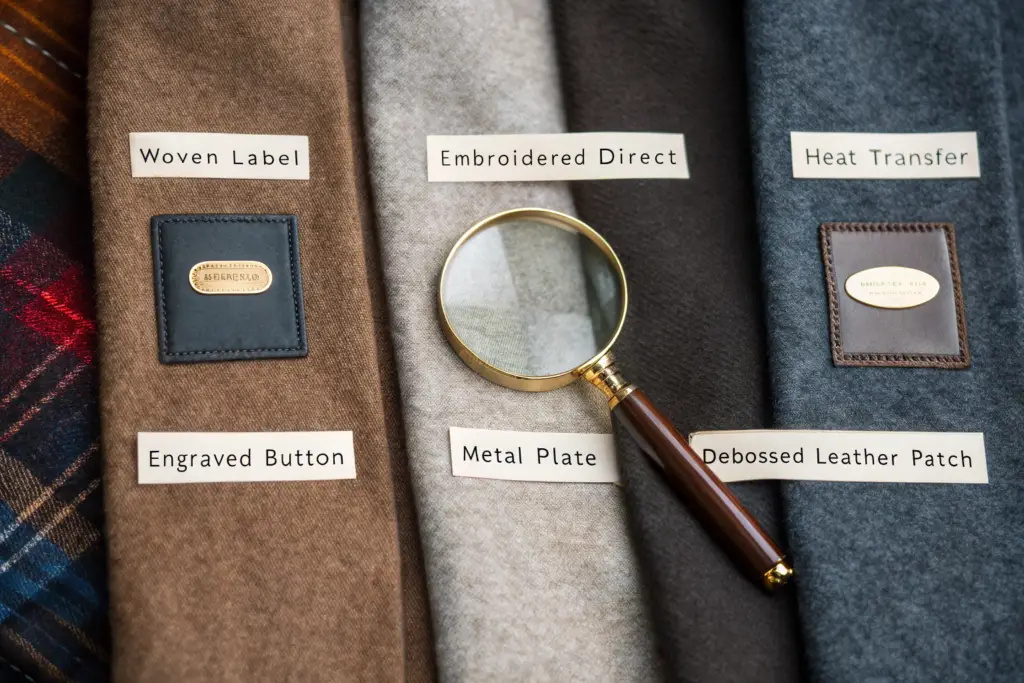
How Does Direct Embroidery on Coat Fabric Differ from Other Applications?
Direct embroidery stitches the logo directly into the coat fabric. It is permanent and cannot peel or detach. It looks premium because the thread has a texture and sheen that printing cannot replicate. But it requires a stabilizer backing to prevent the fabric from puckering during stitching. The stabilizer is applied to the back of the embroidery area before stitching and is either torn away or dissolved after. The stitch density must be adjusted for the fabric weight. A heavy wool coating can handle a dense fill stitch. A lightweight duster fabric requires a lighter stitch density to avoid distortion. The thread color should be tonal or subtly contrasting. A bright white logo on a camel coat can look cheap. A tone-on-tone embroidery—camel thread on camel fabric—looks expensive and sophisticated. For brands interested in the technical specifications of embroidery on outerwear, resources are available from organizations like The Association of Sewing and Design Professionals.
Why Are Custom Branded Buttons Worth the Investment?
A custom button with an engraved or embossed logo is the quietest, most effective branding signal on a coat. The customer does not see a logo. She sees a beautiful button. Only when she looks closely does she notice the brand name subtly engraved into the surface. This is the branding strategy of luxury houses. It communicates that the brand does not need to shout. The button mold development requires a one-time investment of $150 to $300 depending on the complexity of the logo and the button material. The per-button cost is $0.30 to $0.80 depending on the material—horn, corozo, or metal. The minimum order for custom buttons is typically 500 pieces, which covers approximately 80 to 100 coats depending on the button count per coat. The custom button is a long-term brand asset. Once the mold is made, reorders of the buttons are fast and inexpensive. The initial investment pays for itself over multiple production runs.
How Does the Sampling and Production Timeline Work for Custom Logo Orders?
Custom logo application adds steps to the standard production timeline. The logo artwork must be reviewed and converted into production-ready files. Custom trims—buttons, labels, plates—must be sampled and approved separately from the coat sample. The pre-production sample must include the actual logo application, not a placeholder, so the brand can evaluate how the logo looks and feels on the actual coat. These additional steps require additional time. The brand that builds them into the production calendar from the start will receive their coats on schedule. The brand that expects a standard timeline will be frustrated by delays.
The custom logo coat timeline adds two to four weeks to the standard production schedule: one week for logo artwork review and digitizing, two weeks for custom trim sampling and approval, and one week for the logo-inclusive pre-production sample, with the total timeline from order confirmation to shipment typically running eight to twelve weeks depending on the complexity of the logo applications.
A brand we worked with last year needed custom buttons and a woven label for their trench coat order. The timeline was tight—they needed the coats delivered by September 1st for a fall launch. We worked backward from the delivery date. The logo artwork was submitted in May. The button mold was ordered and the first button samples arrived in early June. The woven label strike-off arrived at the same time. The pre-production sample with the actual custom buttons and label was shipped in late June. The brand approved it in early July. Bulk production ran through July and August. The shipment left in mid-August and arrived at the brand's warehouse on August 28th. The timeline worked because every milestone was identified and scheduled at the start.
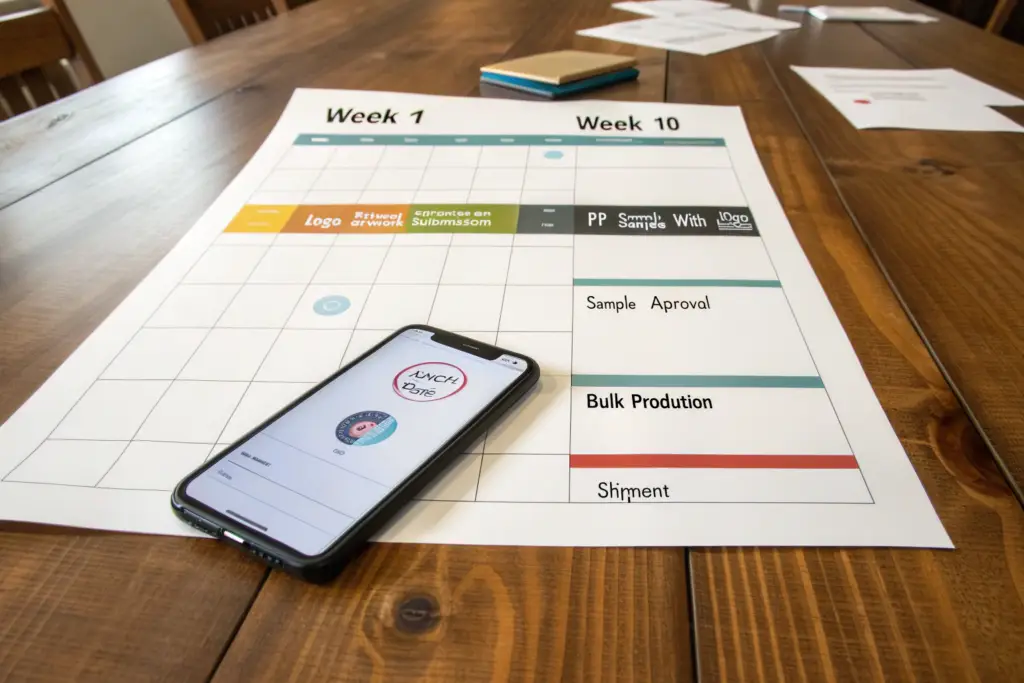
What Is the Logo Sampling and Approval Process?
The logo sampling process runs parallel to the coat sampling process. For custom buttons, the button factory produces a mold based on the vector logo file and sends physical button samples in the selected material and finish. The brand approves the button sample or requests adjustments. For woven labels, the label factory produces a strike-off—a physical sample of the label woven with the actual design and colors. The brand approves the strike-off. For embroidery, our digitizing team converts the vector logo into an embroidery file and produces a stitch-out on the actual coat fabric. The brand approves the stitch-out. All logo component samples are approved before the pre-production coat sample is made. The pre-production coat sample then incorporates the approved logo components. The brand approves the complete sample—coat, buttons, labels, embroidery—in a single review. This parallel sampling process prevents a scenario where the coat is approved but the buttons are delayed.
How Does the Quality Control Process Verify Logo Application?
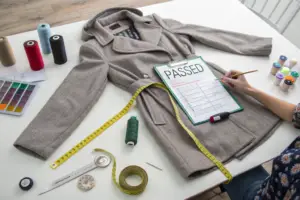
Logo application is a specific checkpoint in our quality control system. During the 100% end-of-line inspection, the inspector checks every logo element on every coat. For woven labels, the inspector verifies that the label is sewn flat, centered, and securely attached at all four corners. For embroidery, the inspector checks that the stitches are even, the thread has not broken, and the fabric is not puckered around the design. For buttons, the inspector verifies that all buttons are from the correct custom lot, the engraving is clear, and the buttons are securely attached with the correct thread shank. For heat transfers, the inspector performs a peel test on a random sample to verify adhesion. Any coat with a logo defect is placed on the rework rack. The logo is either corrected or the coat is replaced. The logo quality standard is the same as the garment quality standard: zero visible defects. The brand's logo is its most valuable asset. We treat it accordingly.
What Are the Pricing and MOQ Considerations for Custom Logo Coats?
A custom logo coat order has two types of costs: the one-time development costs and the recurring per-unit costs. The one-time costs include the button mold, the embroidery digitizing file setup, and the woven label setup. These costs are paid once and amortized across all future orders. The recurring per-unit costs include the cost of each custom button, the cost of each woven label, and the labor cost of applying the logo to each coat. The total cost impact of branding depends on which methods are selected and how many are combined.
Custom logo application typically adds $1.50 to $5.00 to the FOB cost per coat, depending on the combination of branding methods selected, plus one-time development costs of $300 to $800 for custom button molds, embroidery digitizing, and label setup that are amortized across the total order quantity and subsequent reorders.
A brand we quoted last season selected a comprehensive branding package: a custom engraved horn button on the front closure, a woven label on the interior pocket, and a tonal embroidered logo on the exterior back neck. The one-time development costs were $250 for the button mold, $100 for the embroidery digitizing, and $50 for the woven label setup—a total of $400. The per-unit branding cost was $3.20. On a 500-piece order, the amortized development cost was $0.80 per unit. The total branding cost per coat was $4.00. The brand's base coat FOB was $42. The branded coat FOB was $46. The brand retailed the coat at $310. The branding cost represented 1.3% of the retail price. The perceived value added by the custom branding was significantly higher than the cost.
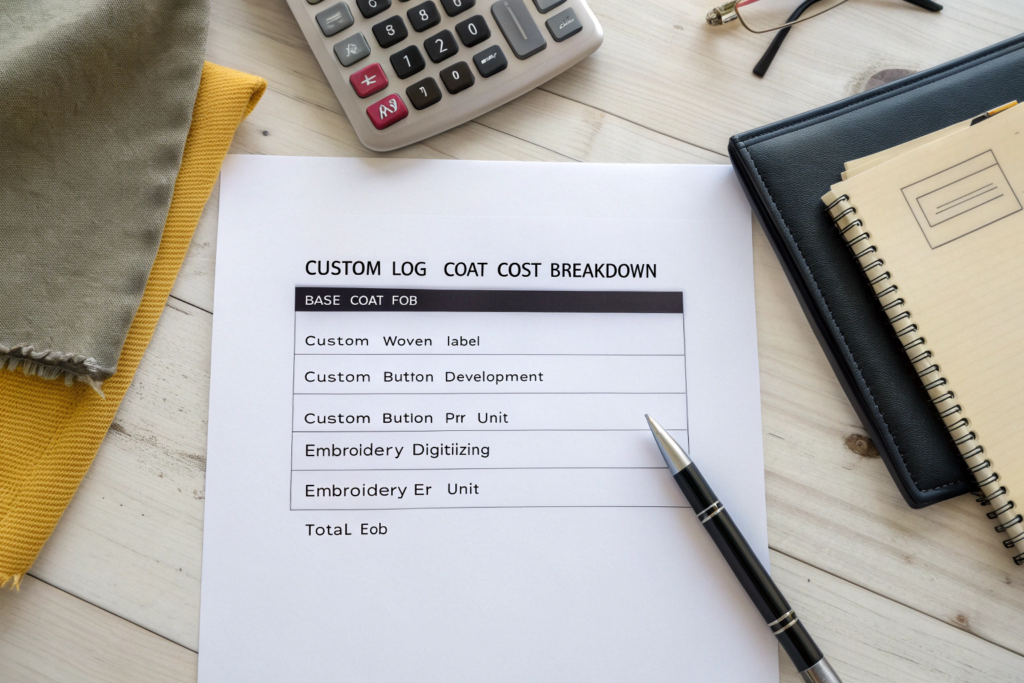
How Do MOQs for Custom Trims Affect the Order Viability?
Custom trims have their own minimum order quantities, independent of the coat MOQ. Custom buttons typically require a minimum of 500 pieces. For a double-breasted coat with eight buttons, 500 buttons is enough for 62 coats. If the brand's coat order is 300 pieces, the button MOQ is easily met and excess buttons are stored for future reorders. Custom woven labels typically require a minimum of 300 pieces. For a 300-coat order, the label MOQ is exactly met. Custom metal logo plates may require a minimum of 500 pieces. The brand should review the trim MOQs with us during the quoting process to ensure compatibility with their order quantity. If the brand's order is small—say, 100 pieces—some custom trim options may not be viable due to the supplier minimums. We advise on which branding methods are feasible at each order volume.
How Do Reorders Work Once Custom Tooling Is Complete?
Once the custom button mold is made, the embroidery file is digitized, and the label setup is complete, reorders are faster and less expensive. The one-time development costs are not charged again. The per-unit branding costs remain the same. The lead time for a reorder is typically two weeks shorter than the initial order because the logo sampling phase is eliminated—the logo components are already approved. The brand simply confirms the reorder quantity and the production slot. The reorder efficiency is one of the key benefits of investing in custom branding. The initial order absorbs the setup cost and establishes the quality standard. Reorders are streamlined.
Conclusion
Ordering custom logo women's coats from Shanghai Fumao is a structured, transparent process. It begins with your design concept and logo artwork. It moves through fabric and silhouette selection, logo method consultation, and parallel sampling of the coat and the branded components. It culminates in a pre-production sample that includes every logo element, a production run with 100% logo quality inspection, and a shipment of coats that carry your brand identity with the same quality and care as the garment construction.
The investment in custom branding—the button molds, the embroidery files, the label setups—is modest relative to the retail price of a quality coat. The payoff is a product that is unmistakably yours, that communicates your brand values through every detail, and that a competitor cannot easily replicate. The custom logo is not an add-on. It is the final expression of your brand's commitment to quality.
If you are ready to develop custom logo coats for your brand, we are ready to guide you through the process. At Shanghai Fumao, we handle the full integration of branding into outerwear manufacturing, from artwork review to final quality inspection. Contact our Business Director, Elaine, at elaine@fumaoclothing.com with your logo artwork and coat silhouette preferences. We will respond with a detailed quote, a timeline estimate, and a sample of our work. Let's build coats that carry your name with pride.