A founder of a new women's outerwear brand based in Austin emailed me in February. She had spent eight months designing her debut collection on paper. She had sketches, fabric references, and a clear vision of her customer. What she did not have was a factory. She had contacted twelve suppliers through Alibaba. Four replied. Two sent quotes that were clearly from template forms with no reference to her specific designs. One promised a $28 FOB on a wool-blend coat that she knew from her research should cost at least $45. The last one stopped responding after she asked for their social compliance audit report. She wrote to me exhausted and confused: "How do I find a factory that will actually make my coats the way I designed them, at a price that works, without getting scammed?"
Sourcing custom women's coats from China as a US buyer requires a systematic five-step process: preparing a production-ready tech pack before contacting any factory, vetting suppliers through third-party audit verification and reference checks, understanding the cost structure and realistic FOB pricing for your coat category, managing the sampling and approval process with clear communication protocols, and structuring the purchase order with quality and delivery terms that protect your investment.
Sourcing custom outerwear from China is not inherently risky. It is risky when the buyer skips steps. The buyer who sends a sketch and asks for a quote without a tech pack is gambling. The buyer who selects the cheapest quote without verifying the factory's certifications is gambling. The buyer who does not understand the cost structure of a wool coat is gambling. The process works when the buyer approaches it with the same rigor they would apply to any major business investment. At Shanghai Fumao, we have onboarded dozens of US brand partners through this exact process. Let me walk you through each step so you can source your coats with confidence.
What Do You Need to Prepare Before Contacting a Chinese Coat Factory?
The single biggest mistake US buyers make when sourcing coats from China is contacting factories too early. They send an email that says, "I want to make a wool coat, can you send me a quote?" The factory receives fifty emails like this every week. The factory does not know what kind of wool coat—tailored, oversized, wrap, double-faced? What fabric weight? What lining? What trim level? The factory can either ask twenty clarifying questions, which most buyers cannot answer quickly, or send a generic quote that is meaningless. Most factories choose the generic quote or do not reply. The buyer concludes that Chinese factories are unresponsive. The real problem is that the buyer did not arrive with a complete specification.
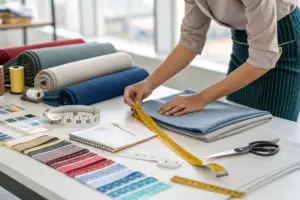
Before contacting any factory, a buyer must prepare a production-ready tech pack with detailed flat sketches, a full measurement specification sheet with tolerances, a bill of materials specifying exact fabric composition and weight, construction detail callouts, label and trim placement diagrams, and a clear target FOB price range based on realistic material and labor cost calculations.
A brand we onboarded last year arrived with a tech pack that was 24 pages long. It included everything: the exact wool blend composition (80% wool, 20% nylon, 520gsm), the exact lining specification (100% viscose, 120gsm), the exact button specification (30L horn button, matte finish, four-hole), the exact stitch type for every seam (301 lockstitch for topstitching, 516 safety stitch for internal seams). We quoted her within 48 hours. The pre-production sample was approved in one round. The bulk production shipped on time. The tech pack was the reason the process was smooth. The factory did not have to guess. The brand did not have to clarify. The specification was the communication.
What Specific Documents and Materials Should Your Tech Pack Include?
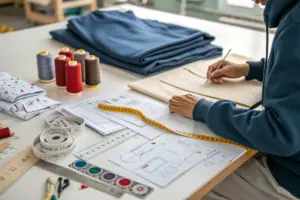
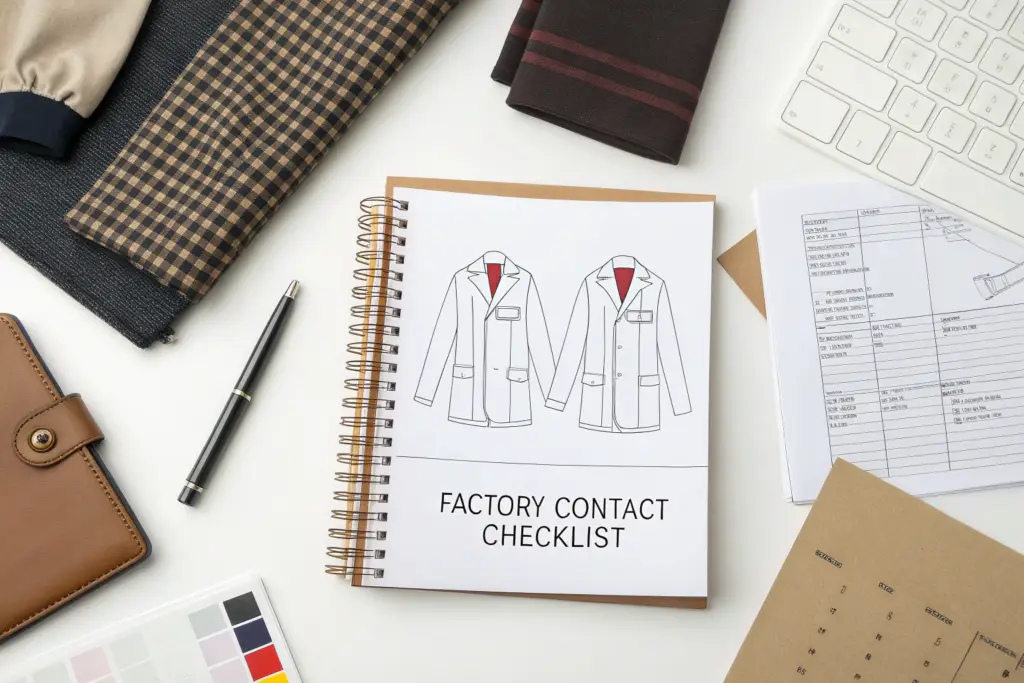
A coat tech pack must be more detailed than a t-shirt tech pack because a coat has exponentially more components. The tech pack must include front and back flat sketches with every design line, pocket, vent, and closure clearly illustrated. It must include a measurement specification sheet with at least twelve points of measure: center back length, shoulder width, chest circumference, sweep, sleeve length, bicep circumference, cuff opening, and more. It must include a bill of materials listing the shell fabric, lining fabric, interlining, fusible, buttons, zippers, labels, hangtags, and packaging. It must include construction callouts: seam types, stitch densities, hem finishes, pocket bag construction, and vent construction. It must include a label and trim placement diagram showing exactly where every brand label, care label, and size label is sewn. If the buyer has a reference sample—a coat whose fit and construction they want to replicate—that sample should be shipped to the factory along with the tech pack. For guidance on building a professional tech pack, platforms like Techpacker provide templates and tutorials specifically for apparel brands.
How Should You Determine a Realistic Target FOB Price Before Negotiating?
A realistic target FOB price is not what the buyer hopes to pay. It is what the coat actually costs to produce, plus a reasonable factory margin. The buyer who expects a fully lined, mid-weight wool-blend coat for $22 FOB will either be ignored by legitimate factories or will receive a coat made from cheap, short-staple wool that pills and loses shape. The buyer should research the cost of the raw materials. A meter of quality 500gsm wool-blend coating fabric costs approximately $8 to $12 from a Chinese mill. A coat consumes roughly 2.5 to 3.5 meters of fabric depending on the silhouette. The fabric cost alone is $20 to $42. Add lining, interlining, buttons, labels, labor, and factory overhead. A realistic FOB for a quality mid-weight wool-blend wrap coat is $38 to $55, depending on volume and complexity. The buyer who understands these numbers negotiates intelligently. The buyer who does not understand them negotiates blindly. Resources on textile pricing and global fabric markets are available from industry platforms like Fibre2Fashion.
How Do You Vet and Select a Reliable Coat Manufacturer?
A beautiful showroom and a responsive sales representative do not mean a factory is capable of producing your coats to specification. The showroom samples may have been made by a different factory. The sales representative may be a trading company agent who has never set foot on the production floor. The buyer who selects a supplier based on a good first impression and a competitive quote is taking a significant risk. The buyer who selects a supplier based on verified third-party audits, reference checks with current US clients, and a video tour of the actual production lines is making an informed decision.
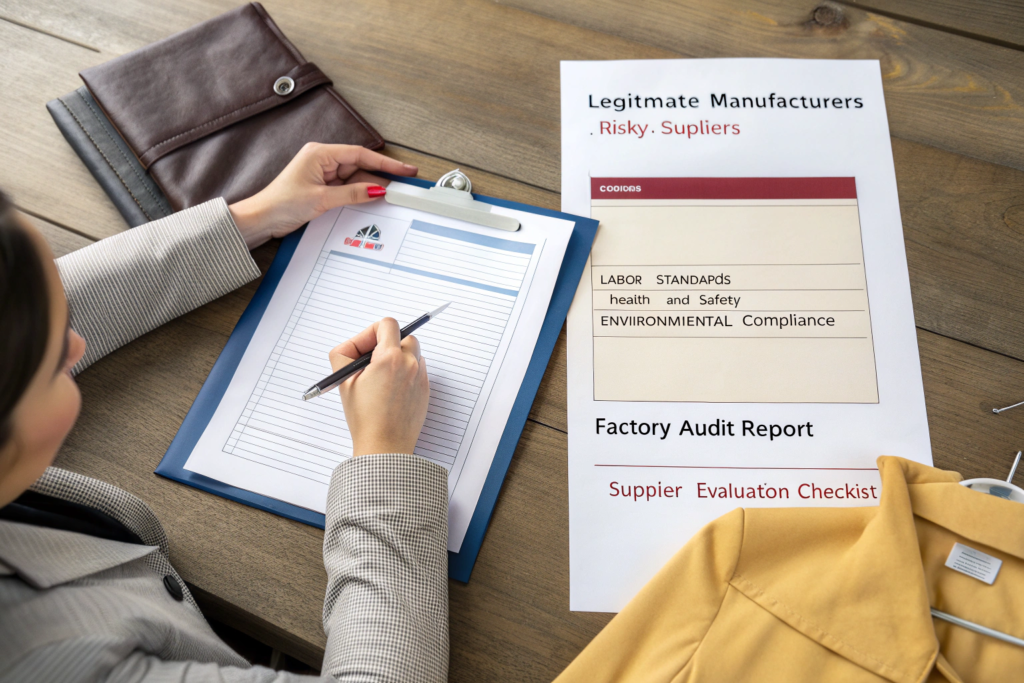
Vetting a coat manufacturer requires verifying their social compliance audit status through a recognized scheme like SMETA or BSCI, requesting and contacting at least two current US-based references, conducting a live video tour of the production floor focused on the cutting, sewing, and finishing areas specific to coat production, and confirming that the factory has experience producing coats of similar complexity and fabric weight to your designs.
I walked a prospective client through our vetting process last quarter. We provided our most recent SMETA audit report, conducted by a leading third-party firm, with zero critical findings. We provided contact information for three current US brand partners who had agreed to serve as references. We conducted a live video tour showing our cutting room, our tailoring line with the specialized pressing equipment for wool coats, and our quality control station with the coat-specific measurement jigs. The client called the references. All three confirmed on-time delivery and consistent quality. The client placed an opening order of $65,000. The vetting process took two weeks. It was time well spent for both parties.
What Certifications Should a Coat Factory Have?
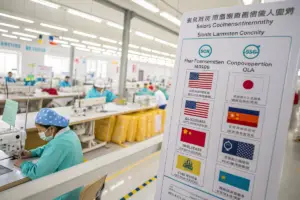
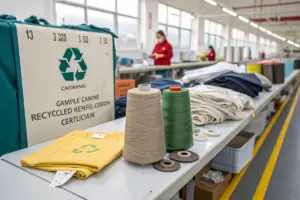
For US buyers, the most relevant factory certifications are social compliance certifications and quality management certifications. SMETA 4-Pillar is the most widely recognized social compliance audit, covering labor standards, health and safety, environmental performance, and business ethics. BSCI and WRAP are also commonly accepted. A factory that holds a current, unexpired certificate from one of these schemes has been independently verified as meeting baseline international labor and safety standards. For quality management, ISO 9001 certification indicates the factory has documented quality control processes. For buyers sourcing coats with down fill, the Responsible Down Standard certification verifies ethical sourcing of the down supply chain. The buyer should request copies of all relevant certificates and verify the certificate numbers on the issuing organization's database. Certificates can be faked. Verification is essential. The official certification databases are maintained by organizations like Sedex for SMETA and the respective websites for BSCI and WRAP.
What Should You Look for During a Live Video Tour of the Factory?
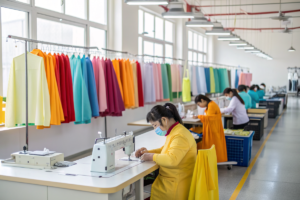
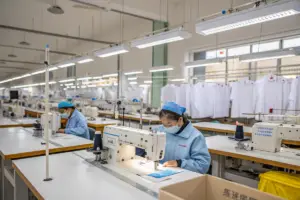
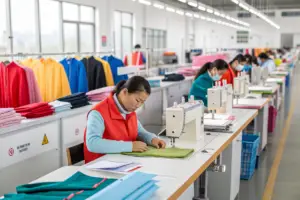
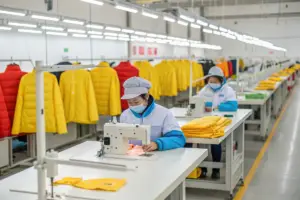
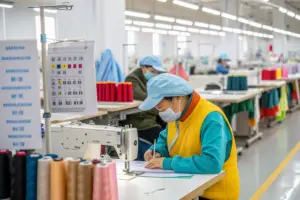
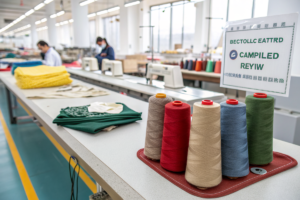
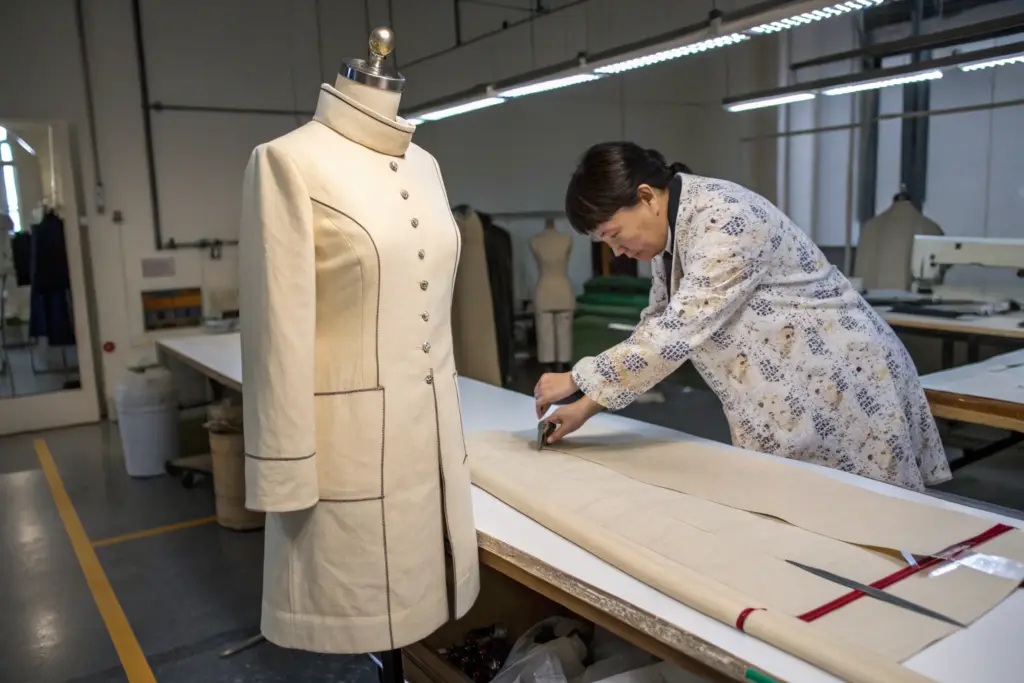
A live video tour is not a casual chat. It is a structured inspection. The buyer should request to see specific areas: the fabric warehouse to check how raw materials are stored and labeled, the cutting room to see if the factory has automatic cutting equipment or manual cutting, the sewing lines to see if there is a dedicated tailoring section for structured coats, the pressing and finishing area to see if the factory has specialized wool pressing equipment, and the quality control station to see the measurement and inspection process. The buyer should ask to see a production order on the line that is similar to their coat—a wool coat, not a lightweight jacket. The buyer should ask to see the QC rejection rack. A factory that is producing wool coats will have specialized equipment: industrial steam presses, needle detectors, armhole measuring jigs. A factory that does not have this equipment cannot produce structured wool coats properly. The video tour reveals the factory's actual capability in a way that a showroom visit cannot.
How Does the Sampling and Approval Process Work for Custom Coats?
The sampling process is where the buyer's vision either becomes a real product or breaks down in miscommunication. A coat is too complex to get right on the first attempt through email alone. The factory will produce a first sample based on the tech pack. That sample will almost always need adjustments—the shoulder pitch is slightly off, the sleeve length is a half-inch too long, the lapel roll is not quite right. The buyer who expects perfection from the first sample and reacts with frustration damages the relationship. The buyer who understands that sampling is an iterative process and provides clear, specific, measured feedback moves the process forward efficiently.
The custom coat sampling process typically involves two to three iterations: a first prototype sample for fit and construction review, a second pre-production sample incorporating the buyer's corrections, and in some cases a final top-of-production sample from the bulk production line, with the buyer responsible for providing clear, measured, and consolidated feedback after each round to avoid extended delays.
A brand we worked with on a tailored wool coat went through three sampling rounds. The first sample had the correct fabric and general construction but the shoulder was too wide by 1.5 centimeters. The brand provided a marked-up photo with the measurement clearly indicated. The second sample corrected the shoulder but the sleeve pitch was slightly off, causing diagonal wrinkles. The brand sent a video of the coat on a fit model, circling the problem area. The third sample was approved. The total sampling time was six weeks. The brand was frustrated by the timeline but understood that a tailored coat is a precision garment. The patience during sampling resulted in a bulk production with zero quality issues. The approval process for tailored outerwear is more demanding than for casual garments, and resources on fit evaluation techniques are available from organizations like The Association of Sewing and Design Professionals.
How Should You Provide Feedback That Gets Results?
Feedback must be specific, measurable, and consolidated. "The shoulder looks weird" is useless feedback. "The shoulder seam needs to be moved inward by 1.5 centimeters at the shoulder point, with the sleeve cap adjusted accordingly" is useful feedback. The buyer should mark up photos with arrows and measurements. They should take video of the sample on a fit model or dress form and narrate the issues. They should consolidate all feedback into a single document rather than sending six separate emails as they notice things. The factory's pattern maker is working from the feedback document. A single, clear, comprehensive feedback document gets faster results than scattered comments. The buyer should also be realistic about what can be changed. A shoulder width adjustment is straightforward. A complete silhouette change—deciding the coat should be oversized rather than fitted after seeing the first sample—requires a new pattern and restarts the sampling timeline.
What Are Lab Dips and Strike-Offs, and When Are They Required?
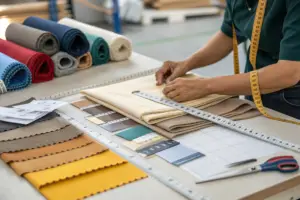
Lab dips are small fabric swatches dyed to match the buyer's target color. The dye house produces several variations—lighter, darker, slightly warmer, slightly cooler—and the buyer selects the one that matches their vision. Lab dips are required whenever a custom color is being developed. If the buyer is selecting a stock color from the factory's fabric library, lab dips are not needed. Strike-offs are sample prints or patterns on the actual fabric. They are required for printed linings, jacquard fabrics, or any textile with a pattern design. Lab dips and strike-offs should be approved before the pre-production sample is made so that the sample is produced in the correct color. Approvals are done under a lightbox that simulates natural daylight. The buyer should review lab dips in the same lighting conditions their customer will see the coat in. Color approval protocols are standardized in the industry, and technical guidance is available from organizations like AATCC.
What Contract Terms and Quality Standards Protect Your Coat Order?
A handshake and a friendly email thread are not a contract. When a $50,000 coat order is on the water, the buyer needs legal and procedural protections that are enforceable. The purchase agreement must specify the quality standard, the delivery date, the payment terms, and the consequences of non-compliance. Without these specifications, the buyer has no leverage if the coats arrive late, the fabric is lighter than approved, or the sizing is inconsistent. The contract is not a sign of distrust. It is a sign of professionalism. Legitimate factories expect and welcome clear contract terms.
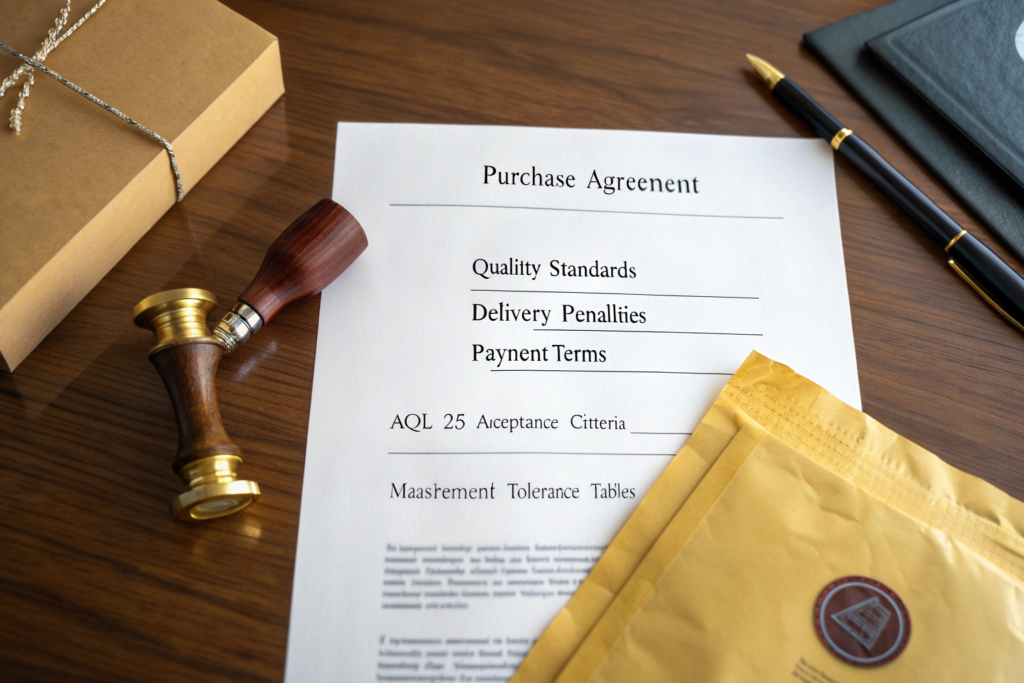
A protective purchase agreement for custom coats must specify the sealed golden sample as the legal quality reference standard, define measurement tolerances at plus or minus 0.5 centimeters for critical fit points, require an AQL 2.5 third-party inspection before shipment, tie the final payment to a passed inspection report, and include a delivery date with a defined penalty or discount for late shipment.
A brand we manufacture for had a quality dispute with a previous factory. The coats arrived with the wool fabric 40gsm lighter than the approved sample. The coats looked and felt thinner. The brand had no contractual specification for fabric weight. The factory argued the coats were "commercially acceptable." The brand had no recourse. They marked down the coats and lost margin. When they moved production to us, we specified the exact fabric weight—520gsm plus or minus 15gsm—in the purchase agreement. We attached a fabric weight test report to every shipment. The specification was contractual. The dispute scenario could never repeat.
What Is a Golden Sample and How Does It Protect Both Parties?
The golden sample is the physical reference standard. It is the exact coat that both the buyer and the factory have approved as representing the correct design, fit, fabric, and construction. The golden sample is sealed in a tamper-proof bag, signed by both parties, and dated. The bulk production must match the golden sample. If a dispute arises—the buyer claims the sleeve length is wrong, the factory claims it is correct—the golden sample is the referee. Both parties measure the bulk coat against the golden sample. The measurement decides the dispute. The golden sample must be created and sealed before bulk production begins. It must be stored securely by both parties. It is the single most important document in the production process because it is not a document at all. It is the physical truth.
How Do Third-Party Inspections and Payment Terms Work Together?
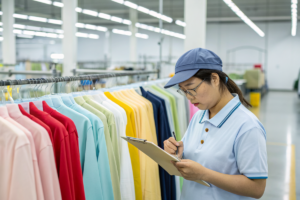
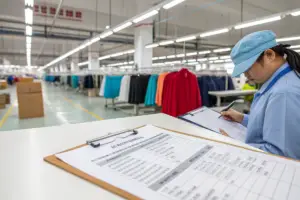
The buyer should not release the final payment until a third-party inspection company—like SGS, Bureau Veritas, or Intertek—has inspected the bulk shipment and issued a pass report. The inspection is conducted against the AQL 2.5 standard. The inspector pulls a random sample from the packed cartons, measures each coat against the specification sheet, checks for visual defects, and verifies the packaging and labeling. If the sample passes, the inspection report is issued and the buyer releases payment. If the sample fails, the factory must rework the defective coats and submit for re-inspection at their own cost. The payment structure should be 30% deposit to start production, 70% balance against a passed inspection report and a copy of the shipping documents. This structure gives the factory working capital to purchase fabric and trims, while protecting the buyer's balance until quality is verified. Never pay the full balance before the inspection report is in hand. The inspection is the buyer's last line of defense.
Conclusion
Sourcing custom women's coats from China is a process, not a transaction. The buyer who treats it as a transaction—send a sketch, get a quote, wire money, hope for the best—will eventually be burned. The buyer who treats it as a process—prepare a tech pack, vet suppliers, iterate through sampling, lock quality into a contract, verify with a third-party inspection—will build a reliable, profitable, long-term supply chain.
The process requires upfront investment of time and effort. The tech pack takes weeks to prepare. The supplier vetting takes days of research and calls. The sampling takes patience and clear communication. But the investment pays for itself the first time a container of beautiful, correctly-made coats arrives on time, sells through at full price, and generates reorders. The brands that succeed in sourcing from China are the brands that respect the process.
If you are a US buyer planning a custom women's coat program, we can help you navigate the process from tech pack to shipment. At Shanghai Fumao, we produce tailored wool coats, wrap coats, trench coats, parkas, and pea coats for US brands, with the certifications, references, and quality systems to support a professional sourcing partnership. Contact our Business Director, Elaine, at elaine@fumaoclothing.com to discuss your coat designs, request our factory capability deck, and receive a sample costing. Let's build your outerwear collection together.