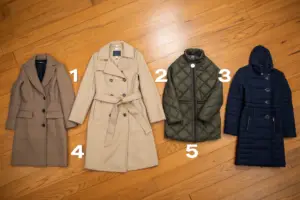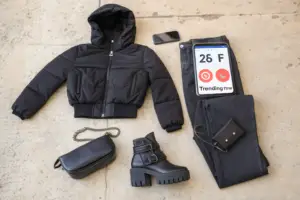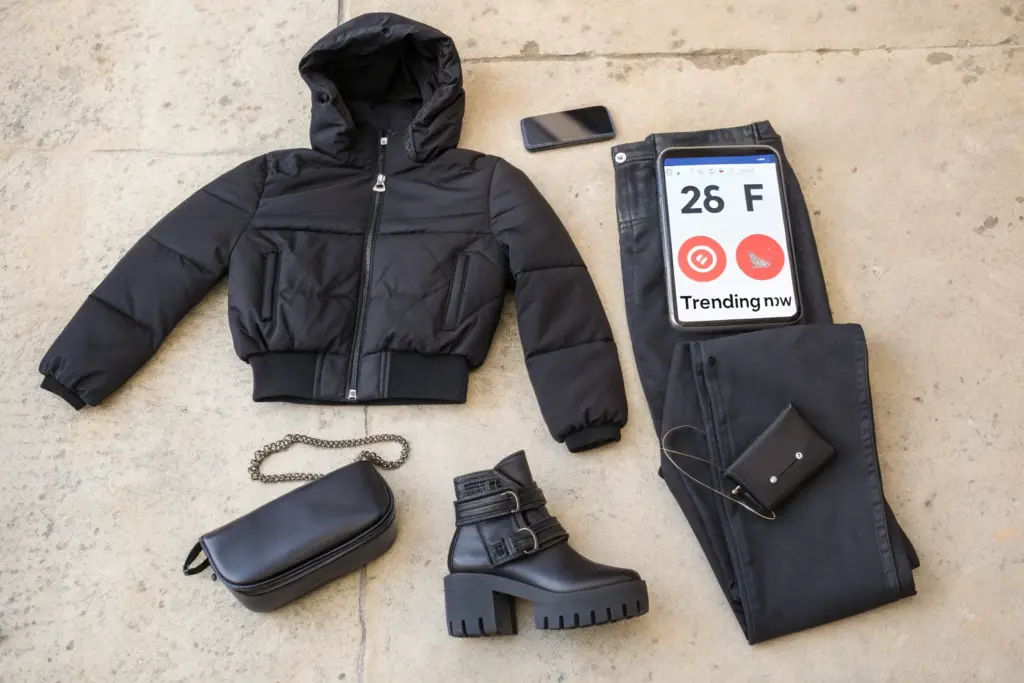
I was walking through a department store in New York last January, watching real customers shop the coat department during the first cold snap of the season. I positioned myself near the coat racks and watched for an hour. What I saw surprised me. The women were not flocking to the elegant wool wrap coats—the ones every fashion editor had declared the season's must-have. They were picking up puffers. They were trying on puffers. They were buying puffers. A woman in her late twenties grabbed a matte black cropped puffer, threw it over a hoodie, checked herself in the mirror, and walked straight to the register. She did not even look at the wool coats. I asked the department manager about it. She told me the puffer category was up 22% year-over-year, and the wool coat category was flat. The fashion press might be bored with puffers, but the customer was not.
Puffer jackets remain a must-have women's coat type in 2026, but the silhouette that wins has evolved from the long, bulky, purely functional styles of previous years into cropped, belted, and hybrid designs that use premium matte fabrics, responsible down or high-performance synthetic fills, and thoughtful tailoring to satisfy both the customer's demand for genuine cold-weather protection and her desire to look intentional rather than just warm.
The puffer jacket has been declared "over" by fashion trend forecasters at least three times in the last five years. Each time, the customer ignored them and kept buying. The puffer refuses to die because it does something no other coat does: it provides genuine, undeniable warmth in a lightweight package that can be stuffed into a bag. For the customer who lives in a cold climate, commutes on public transit, walks a dog in January, or simply refuses to shiver for fashion, the puffer is not a trend choice. It is a survival choice. At Shanghai Fumao, our puffer jacket production volume has increased for four consecutive seasons. The puffer is not going anywhere. But the puffer that sells in 2026 is not the same puffer that sold in 2019. Let me walk you through what has changed and why the updated puffer is still a essential part of any women's outerwear assortment.
How Has the Puffer Jacket Silhouette Evolved for 2026?
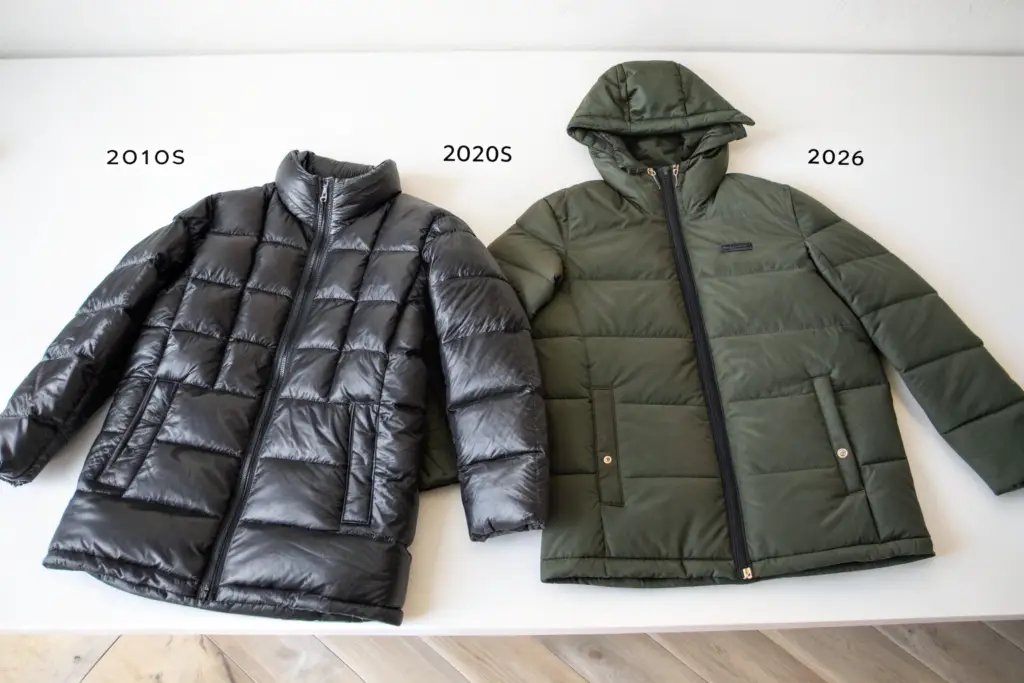
The puffer jacket of 2019 was a long, shiny, Michelin Man silhouette that prioritized warmth above all else. It worked. It was warm. But it was not flattering, it was not versatile, and it took up an entire coat closet by itself. The puffer jacket of 2026 has been through a design evolution. It is shorter through the body. It has a defined waist, either through a belt or through a tailored silhouette. The baffles are narrower and more engineered, creating a quilted pattern that adds visual interest rather than bulk. The fabric is matte, not shiny. The overall effect is a puffer that reads as a fashion choice, not just a weather contingency.
The 2026 puffer is defined by a cropped or waist-length silhouette, horizontal or chevron baffle quilting in narrow profiles, a matte or softly lustrous shell fabric, a defined waist achieved through internal drawcords or external belts, and a detachable hood and collar system that allows the jacket to transition from a practical cold-weather garment to a styled fashion piece.
A brand we manufacture for launched a cropped matte puffer last fall. The jacket hit at the high hip. It had narrow horizontal baffles in a chevron pattern across the torso. It had an internal drawcord at the waist that allowed the wearer to cinch the silhouette. It had a detachable hood with a removable faux fur trim. The jacket retailed at $245. It sold through at 91% full price. The brand's long, classic puffer from the same season, at the same price point, sold through at 64%. The customer was voting with her wallet for the updated silhouette. The cropped puffer was not warmer than the long puffer. It was more wearable, more flattering, and more versatile. Those attributes drove the sell-through.
Why Has the Cropped Silhouette Overtaken the Long Puffer in Consumer Preference?
The long puffer covers the body from shoulders to shins. It is warm. It is also overwhelming. It swallows the wearer's entire silhouette. It cannot be styled with the high-waisted trousers that have become the dominant bottom silhouette in women's fashion. The cropped puffer, ending at the high hip or waist, allows the trouser silhouette to be visible. It creates a proportion that reads as intentional and fashion-aware. It works with the high-waisted wide-leg trousers, the straight-leg jeans, and the midi skirts that make up the modern wardrobe. The cropped puffer also transitions more easily between outdoor and indoor environments. The wearer can leave it on in a casual setting without overheating or looking like she is dressed for an Arctic expedition. The functionality of warmth is preserved, but the aesthetic functionality is dramatically improved.
How Do Baffle Design and Quilting Patterns Affect the Puffer's Fashion Perception?
Baffles are the stitched channels that hold the insulation in place. The traditional puffer used wide horizontal baffles—four to six inches wide—that created a puffy, segmented look. The 2026 puffer uses narrow baffles—two to three inches wide—or engineered quilting patterns like chevrons, diamonds, or irregular wave patterns. The narrower baffles distribute the insulation more evenly, reducing the Michelin Man effect. The engineered patterns create visual texture that reads as a design feature rather than a structural necessity. The quilting pattern is one of the primary ways the puffer communicates its fashion credibility. A puffer with narrow chevron quilting in a matte fabric looks like a considered design object. A puffer with wide horizontal baffles in a shiny fabric looks like a sleeping bag with sleeves. The difference in consumer perception is significant, and it directly impacts the price the customer is willing to pay.
What Fill Technologies Are Addressing the Sustainability and Performance Demands?
The puffer jacket's biggest liability in recent years has been the ethical and environmental questions around its insulation. Down has been criticized for animal welfare concerns in the supply chain. Synthetic fills have been criticized for being petroleum-based and non-biodegradable. The customer who wants a warm puffer has been caught between two uncomfortable choices. The insulation technology landscape in 2026 has evolved significantly. The customer now has options that address both performance and ethics.
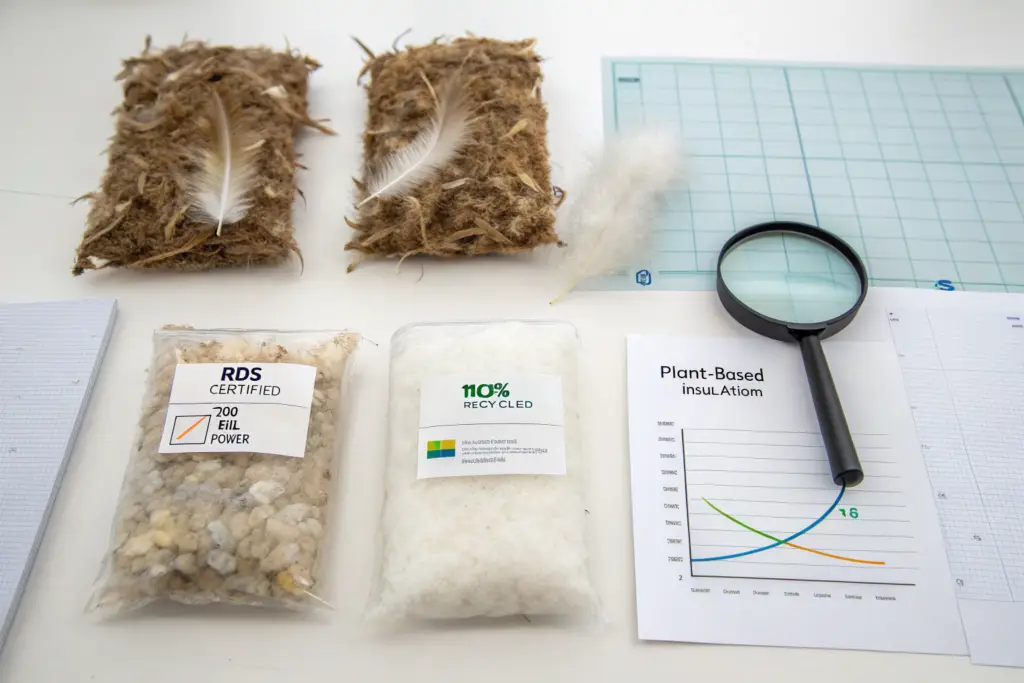
The 2026 puffer market is dominated by three insulation technologies: certified responsible down with minimum 600 fill power and full supply chain traceability, recycled polyester synthetic fill made from post-consumer plastic bottles with performance parity to traditional synthetics, and emerging bio-based fills derived from plant sources that offer a fully biodegradable alternative, each addressing a different segment of the sustainability-conscious consumer market.
A brand we manufacture for made a strategic decision to switch their entire puffer program to recycled synthetic fill in 2025. The decision was driven by a major wholesale account that required all down products to carry RDS certification, which the brand's previous down supplier did not have. The recycled synthetic fill cost was $3 per jacket higher than the non-certified down. The brand raised the retail price by $10 to cover the cost. The customer accepted the price increase. The sell-through was unchanged. The wholesale account placed a larger order the following season. The sustainability upgrade paid for itself and strengthened the wholesale relationship.
How Does Certified Down Differ from Conventional Down in the Supply Chain?
Conventional down is a byproduct of the meat industry. The ducks or geese are raised for food, and the down is collected after slaughter. The conventional supply chain does not track whether the birds were subjected to live-plucking or force-feeding. Certified down, under standards like the Responsible Down Standard, traces every batch of down back to the farm. Auditors verify that the birds were not live-plucked, not force-fed, and treated according to animal welfare standards. The certification adds approximately $2 to $5 per jacket to the insulation cost. For brands positioning in the premium and contemporary segments, RDS certification is increasingly a wholesale requirement. Major retailers have set deadlines for eliminating non-certified down from their supply chains. The RDS standard is administered by the Textile Exchange, which provides a public database of certified suppliers.
What Are the Performance Characteristics of Recycled Synthetic Fills?
Recycled synthetic fill is made from post-consumer PET plastic bottles that are melted, extruded into fine fibers, and processed into a down-like insulation. The performance characteristics have improved significantly. Early recycled fills were heavier and less compressible than virgin polyester. The current generation of recycled fills achieves a warmth-to-weight ratio that is competitive with mid-grade down, around 550 to 600 fill power equivalent. The advantage of synthetic fill is that it insulates when wet—down collapses and loses its insulating properties when soaked. For the customer in a wet, cold climate, synthetic fill is functionally superior. The disadvantage is that synthetic fill is still plastic. It sheds microfibers during washing. It does not biodegrade. The customer who prioritizes biodegradability will choose down. The customer who prioritizes animal welfare and wet-weather performance will choose synthetic. The brand that offers both options captures both customers. Performance data on insulation materials is available from testing standards published by ASTM International.
How Should Brands Style and Merchandise Puffers to Compete with Wool Coats?
The puffer's historical weakness has been its lack of versatility. A wool wrap coat can go from the office to dinner to a weekend walk. A traditional long puffer could only go to the grocery store or the ski lodge. The 2026 puffer, in its cropped, tailored, matte-finished form, has closed the versatility gap. It can be styled across multiple occasions in ways that previous generations of puffers could not. This versatility is what allows the puffer to compete with wool coats for the customer's outerwear budget.
The 2026 puffer competes with wool coats by being merchandised across three distinct occasion stories: the streetwear story pairing the puffer with hoodies, cargos, and sneakers; the elevated casual story pairing the puffer with dresses, boots, and structured bags; and the smart-casual story pairing the puffer with knitwear, tailored trousers, and refined footwear, demonstrating that the puffer is no longer a one-occasion garment.
A brand we manufacture for created a lookbook organized around these three styling stories. The campaign was shot in urban settings—a coffee shop, a gallery, a city park—not on a mountain or a ski slope. The puffer was positioned as a city coat, not an outdoor performance garment. The brand sold through 87% of their puffer inventory at full price. The puffer customer was not a separate customer from the wool coat customer. She was the same customer, buying both, wearing the wool coat for certain occasions and the puffer for others.
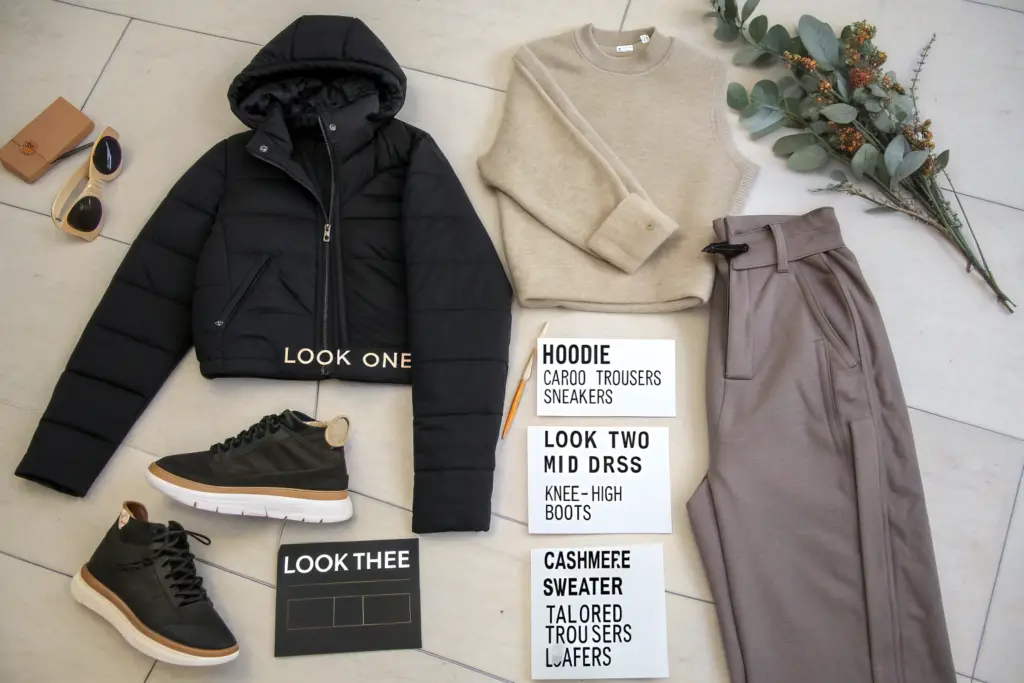
How Can the Puffer Be Styled for Settings Beyond Casual and Sport?
The key is the contrast of textures. A matte puffer in a neutral color—black, navy, cream, or sage—can be worn over a silk midi dress with heeled boots for a dinner look. The shiny puffer of the past could not pull this off. The matte finish reads as sophisticated rather than sporty. The cropped length allows the dress silhouette to be visible. A belted puffer can be cinched at the waist over tailored trousers and a fine-gauge knit, creating a defined silhouette that works for a casual office environment. The hood should be detachable so the collar can stand alone as a clean design line. The styling principle is: the puffer is the texture contrast piece. The rest of the outfit provides the formality. The puffer brings the warmth without dragging the look into purely functional territory.
What Product Page and Retail Merchandising Strategies Maximize Puffer Sell-Through?
The puffer should be merchandised adjacent to the wool coats, not in a separate "active" or "outdoor" section. The adjacency allows the customer to consider the puffer as a legitimate fashion choice, not a separate category. The product page should lead with the fashion styling images—the puffer over a dress, the puffer with tailored trousers—not with technical specifications. The technical specifications should be present on the page but positioned as supporting information, not the primary message. The customer needs to see the puffer as a fashion coat that happens to be exceptionally warm, not as a technical garment that happens to look acceptable. The merchandising message is: this is a coat, not a piece of equipment.
Conclusion
The puffer jacket is not only still a must-have women's coat type in 2026—it has expanded its territory. The silhouette has evolved from a purely functional garment into a legitimate fashion option that can hold its own alongside wool coats in a modern outerwear assortment. The cropped length, the narrow baffle quilting, the matte fabric finishes, and the defined waist have transformed the puffer's aesthetic. The certified down and recycled synthetic fills have addressed the ethical and environmental concerns that threatened the category. The multi-occasion styling has expanded the puffer's addressable market.
The brand that treats the puffer as a fashion coat—designing it with the same attention to silhouette, proportion, and material quality as a wool coat—will capture demand from a customer who wants to be warm without looking like she gave up on style. The brand that treats the puffer as an afterthought, a basic commodity to be ordered from a catalog, will lose that customer to the brands that evolved the category.
If your brand is planning its Fall/Winter 2026 outerwear assortment, the puffer deserves a place alongside the wool wrap coat and the tailored overcoat. At Shanghai Fumao, we produce cropped, belted, and tailored puffers in matte and soft-touch fabrics with RDS-certified down and recycled synthetic fill options. Contact our Business Director, Elaine, at elaine@fumaoclothing.com to request our puffer spec sheet, fabric and fill swatch kit, and a sample costing. Let's build a puffer that your customer reaches for even when it is not snowing.