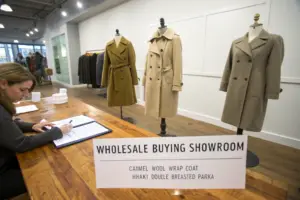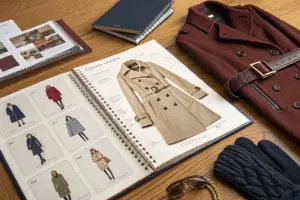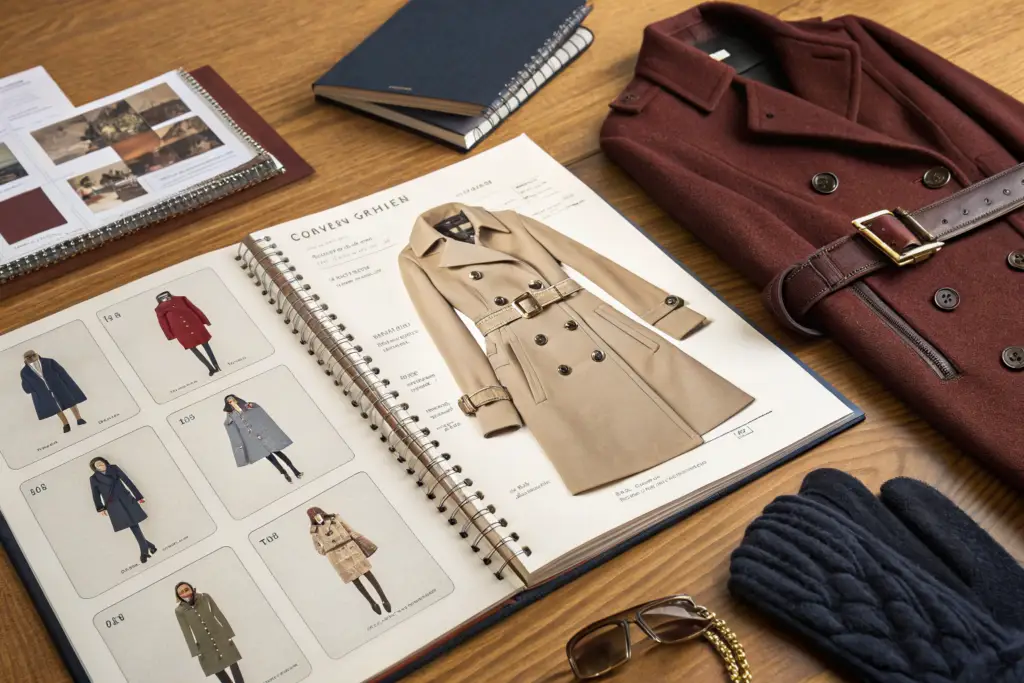
A buyer from a Canadian boutique chain visited our showroom last October. She walked in with a very specific problem. Her store had ordered outerwear from three different factories the previous season. One factory made beautiful wool coats but could not execute the technical seams on a parka. Another made decent parkas but their trench coat sizing was inconsistent. The third specialized in lightweight jackets and could not source the heavy melton wool she needed for her bestselling winter coat. She was exhausted from managing three supplier relationships, three quality standards, and three shipping schedules. She looked at our sample rack—which held a wool wrap coat, a quilted down parka, a classic trench, and a tailored overcoat—and asked, "Did you make all of these in this one factory?" When I said yes, she nearly wept with relief.
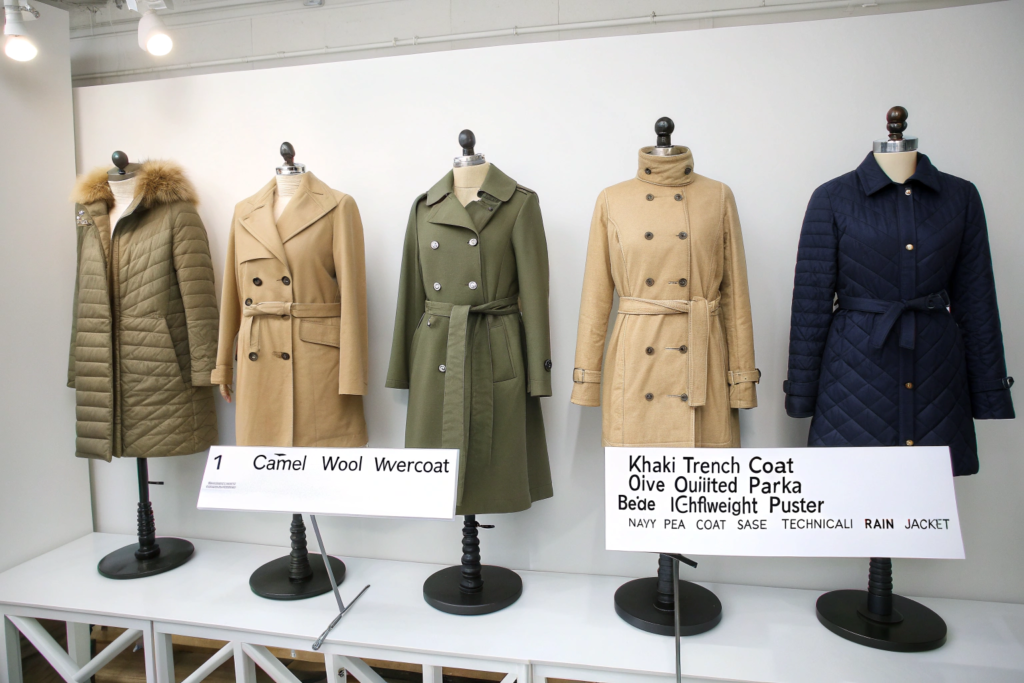
Shanghai Fumao manufactures six core categories of women's coats: tailored wool overcoats, double-breasted trench coats, quilted and down-filled parkas, lightweight transitional dusters and wraps, structured pea coats, and technical rainwear, with each category producible in multiple silhouette variations and fabrications across our five production lines.
Most apparel factories specialize. The factory that makes beautiful wool coats often cannot make a waterproof seam. The factory that makes performance outerwear often lacks the tailoring expertise for a structured lapel. This specialization forces brands to fragment their outerwear sourcing across multiple suppliers, which creates coordination complexity, inconsistent sizing, and logistical headaches. At Shanghai Fumao, we made a strategic decision years ago to invest in the cross-training and equipment necessary to manufacture the full spectrum of women's coat categories under one roof. Let me walk you through exactly what we make and why the breadth of our capability matters for your brand.
What Are the Six Core Women's Coat Categories We Manufacture?
When a brand partner asks us what coats we can make, I do not hand them a list of limitations. I hand them a line sheet with six categories, each containing multiple silhouette options, and tell them to choose what their customer needs. The breadth is not an accident. It is the result of deliberate investment in pattern-making expertise across tailored, casual, and technical outerwear construction. Each category requires different machinery, different fabric handling procedures, and different quality control checkpoints. We have built the capability for all six because we know brands want to consolidate their sourcing without compromising on product diversity.
Our six women's coat manufacturing categories cover the full outerwear spectrum: Wool Overcoats for formal and career wear, Trench Coats for classic transitional style, Quilted Parkas for cold-weather performance, Lightweight Wraps and Dusters for seasonal layering, Structured Pea Coats for military-inspired tailoring, and Technical Rainwear for functional weather protection.
Last year, a brand that had previously sourced wool coats from us approached us with a new challenge. They wanted to add a quilted parka to their fall collection but did not want to open a new supplier relationship. They asked if we could handle the transition from tailored wool to performance outerwear. I showed them the parka samples we had produced for another client. I walked them through the down-filling process, the baffle construction, and the waterproof zipper installation. They placed a combined order for wool coats and parkas in the same production run. The consolidated order reduced their per-unit freight cost by 18% because we could pack both styles into the same container. The supply chain consolidation was worth more to them than a slightly lower FOB from a specialized parka factory.
Why Does Cross-Category Capability Matter for a Brand's Sourcing Strategy?
Every additional factory a brand adds to its supplier matrix adds fixed costs. There is the cost of supplier vetting and audits. The cost of sampling and fit alignment across different factories with different pattern-making standards. The cost of managing multiple production timelines and shipping schedules. The cost of quality control across inconsistent standards. When a brand can source wool coats, trenches, and parkas from one factory, those fixed costs collapse. The brand's production manager manages one timeline, one quality standard, and one shipping consolidation. The time saved is redirected to product development and sales. The cross-category factory is not just a manufacturer. It is an operational efficiency partner. This sourcing consolidation strategy is increasingly recommended by supply chain analysts and is discussed in industry publications like Apparel Resources.
How Do Our Pattern-Making Teams Handle the Different Construction Requirements?
Each coat category has a different pattern-making discipline. A tailored wool overcoat requires precision in the lapel roll, the shoulder pitch, and the sleeve head ease. A quilted parka requires a different skill set: calculating down fill power, designing baffle geometry to prevent cold spots, and engineering hood attachments that do not leak heat. A trench coat requires expertise in the double-breasted closure, the storm flap construction, and the belt and buckle attachment points. We maintain separate pattern-making pods for tailored, casual, and technical outerwear. Each pod is led by a senior pattern maker with at least fifteen years of experience in that specific category. The pods share a centralized sample room and cutting facility, which allows cross-category collaboration when a design blends elements from multiple categories—for example, a wool coat with a technical waterproof membrane. The specialized expertise within a unified facility is the operational secret to our category breadth.
What Tailored Wool Coat Options Are Available for Women's Brands?
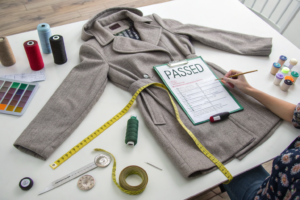
The wool overcoat is the crown jewel of a women's outerwear collection. It is the piece a customer invests in, wears for years, and judges with the most scrutiny. The lapel must roll perfectly. The shoulder must sit smoothly. The lining must glide over layers without pulling. The coat must feel substantial without feeling heavy. A poorly made wool coat is a return waiting to happen. A beautifully made wool coat is a customer loyalty engine. At Shanghai Fumao, we treat wool coat construction as the highest-skill category in our facility.
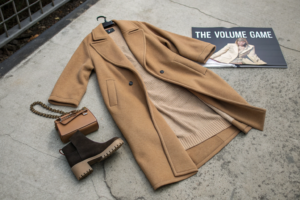
We manufacture four distinct wool coat silhouettes for women: the Classic Single-Breasted Overcoat with notched lapel, the Double-Breasted Wrap Coat with self-belt, the Structured Chesterfield with velvet collar option, and the Relaxed Drop-Shoulder Cocoon Coat, all available in wool, cashmere-wool blends, and alpaca-wool blends from 400gsm to 650gsm weight.
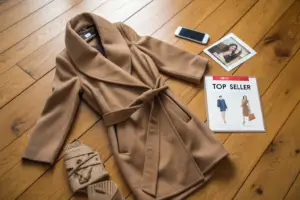
A brand we work with in the premium contemporary space launched a wool wrap coat with us two winters ago. The design required a self-belt, a shawl collar, and an interior tie closure to keep the wrap secure. The construction was complex—the belt had to be reinforced to prevent stretching, the shawl collar had to roll without gaping, and the interior tie had to be anchored to prevent tearing. We produced the coat at an $38 FOB. It retailed for $298. The brand sold through 85% at full price. The return rate was under 4%. The coat became their number one outerwear SKU. The construction quality was invisible to the customer, but it was the reason the coat stayed in her closet and not in the returns pile.
What Fabric Weights and Compositions Do We Offer for Wool Coats?
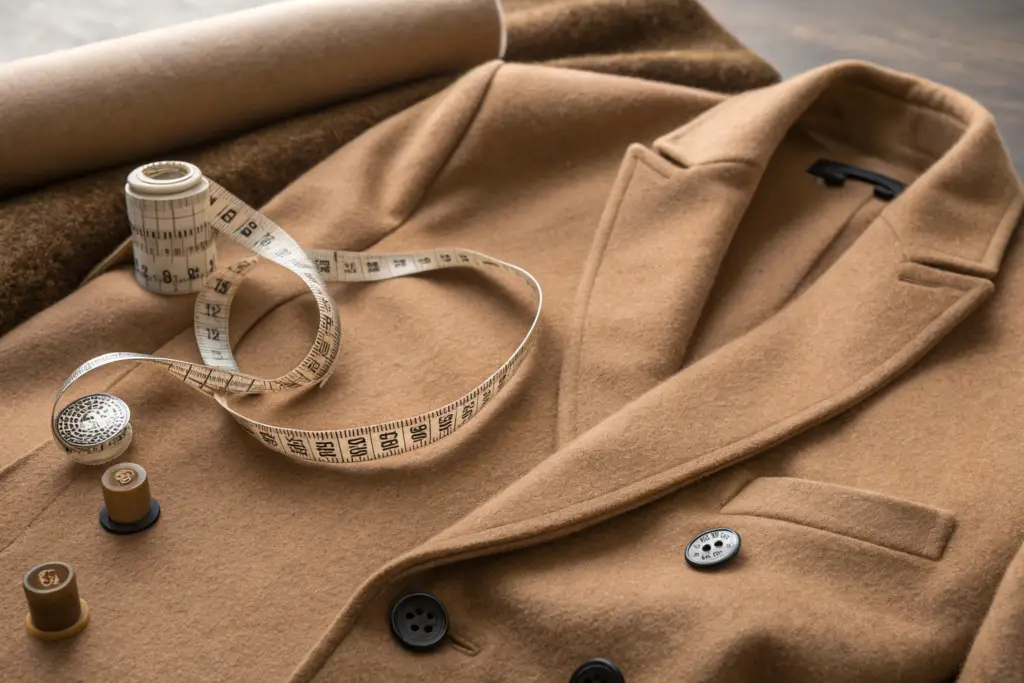
Wool coating fabric weight is measured in grams per square meter. A lightweight wool coat for autumn layering uses a 400-450gsm fabric. A mid-weight coat for standard winter wear uses a 500-550gsm fabric. A heavy, structured coat for cold climates uses a 600-650gsm fabric. We stock wool coating in all three weight categories, sourced from mills in China and, for premium requirements, from established mills in Italy. Composition options include 100% wool, 80% wool and 20% nylon for durability, 90% wool and 10% cashmere for softness, and alpaca-wool blends for a textured hand feel. The brand selects the weight and composition based on their target climate, price point, and brand positioning. We provide fabric swatch books organized by weight and composition to simplify the selection process. For more information on wool fabric properties and grading, the Woolmark Company provides educational resources on wool types and performance.
How Does the Interlining and Canvas Construction Affect the Coat's Structure?
A wool coat's shape comes not just from the outer fabric but from what is inside it. A fusible interlining—a heat-activated adhesive backing—is the standard in mass-market coats. It is fast to apply but can delaminate after dry cleaning and creates a stiff, flat appearance. A floating canvas interlining—a layer of stitched-in horsehair or synthetic canvas—is the traditional tailoring method. It allows the coat to mold to the wearer's body over time. It creates a lapel roll that is three-dimensional rather than pressed flat. We offer both construction methods. Fusible interlining is standard at our base price point. Full floating canvas construction is available as a premium upgrade for brands positioning in the luxury segment. The difference is visible in the lapel and in the way the coat moves. The brand that understands this difference can make an informed choice about their product positioning. Tailoring construction techniques are a specialized knowledge area, and resources are available from organizations like The Association of Sewing and Design Professionals.
What Casual and Performance Outerwear Categories Round Out the Collection?
Not every coat in a women's collection needs a tailored lapel. The modern outerwear assortment includes pieces designed for rain, for deep cold, for travel, and for the in-between weeks of spring and fall when a heavy wool coat is too much and a light jacket is too little. These categories require different construction techniques, different testing protocols, and different supply chain management than tailored wool. A factory that can handle both tailored and technical outerwear is rare. We built this capability deliberately.
Our casual and performance coat manufacturing includes quilted down parkas with certified fill power ratings, classic double-breasted trench coats with removable linings, lightweight unstructured dusters and kimonos for transitional seasons, and seam-sealed technical rain jackets with waterproof zippers and taped seams.
A brand that had previously sourced only wool coats from us decided to expand into rainwear. They wanted a classic trench silhouette in a waterproof cotton-blend with sealed seams and a detachable hood. We had the seam-sealing equipment and the waterproof zipper supply chain already in place from another client program. We produced a pre-production sample in ten days. The brand added the trench to their line, and it became their second-highest-grossing outerwear SKU. The ability to source the trench from the same factory that made their wool coats simplified their production calendar and gave them confidence in the quality consistency.
How Are Quilted Parkas Constructed for Cold-Weather Performance?
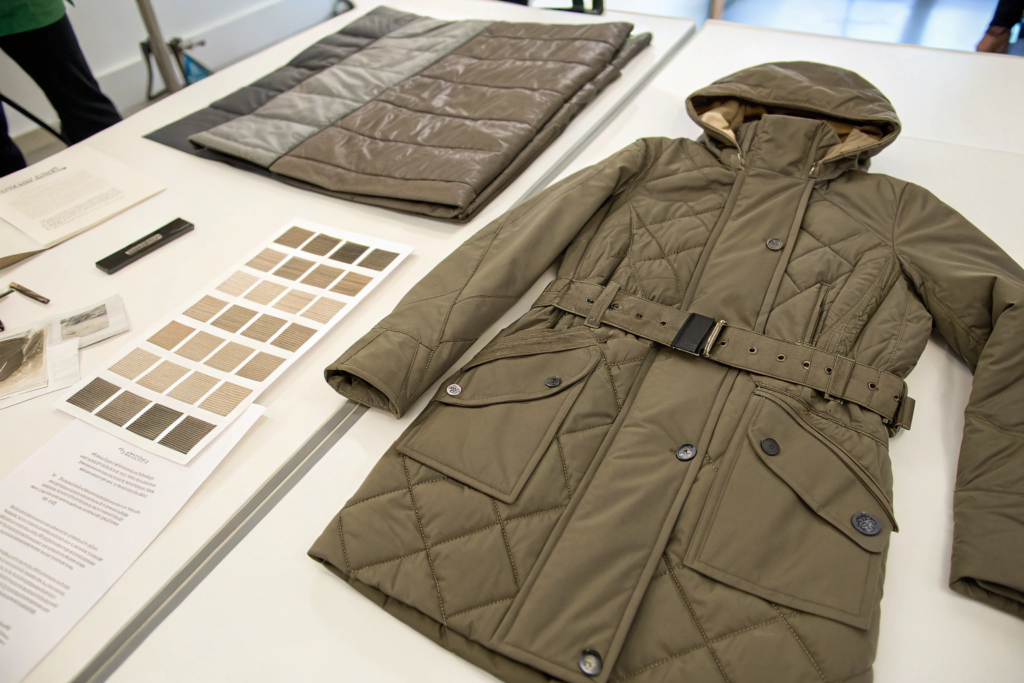
A parka is a system, not just a coat. The outer shell fabric must be wind-resistant and treated with a durable water repellent finish. The insulation layer—down, feather-down blend, or synthetic fill—must be evenly distributed through baffles that prevent the fill from shifting and creating cold spots. The baffle construction can be sewn-through for lighter weight or box-wall for maximum warmth. The hood must be adjustable and, ideally, detachable. The zipper must be a heavy-gauge, waterproof design with a storm flap covering it. The cuffs must have an inner rib-knit gaiter to seal out wind. Each of these components must be sourced, tested, and assembled correctly. We stock certified down fill from approved suppliers, with fill power ratings from 550 to 800 depending on the brand's warmth and price point targets. Down and feather fill certification standards are maintained by organizations like the Responsible Down Standard.
What Seam-Sealing Technology Do We Use for Waterproof Coats?
A waterproof coat is only as dry as its seams. A needle hole through waterproof fabric is a leak point. Every stitch hole must be sealed. We use hot-air seam sealing technology that applies a waterproof tape over every seam on the inside of the garment. The tape is bonded with heat and pressure, creating a permanent waterproof barrier. The process requires specialized machinery and trained operators. It is not a technique that a standard tailoring factory can execute. We invested in seam-sealing capability because we knew our brand partners would eventually need waterproof options in their outerwear collections. The sealed seams are tested using a hydrostatic head test, which measures the water pressure the seam can withstand before leaking. Our standard waterproof seams are rated to 10,000mm, which is sufficient for heavy rain conditions. Testing standards for waterproof garments are published by ASTM International.
How Can a Brand Build a Cohesive Outerwear Collection from Our Categories?
A cohesive outerwear collection is not a random assortment of coats. It is a strategically balanced offering that covers the customer's needs across occasions, weather conditions, and price points. The brand that offers one wool coat and five parkas has an imbalanced collection. The brand that offers a wool coat, a trench, a parka, and a lightweight wrap has a complete outerwear wardrobe. The customer can shop the brand for her work coat, her weekend coat, her travel coat, and her cold-weather coat. The brand captures more of her wallet and builds deeper loyalty.
A balanced women's outerwear collection built from our categories should include one tailored wool coat as the premium anchor, one trench coat for transitional versatility, one quilted parka for cold-weather function, and one lightweight duster or wrap for seasonal layering, with color coordination across categories to enable cross-selling.
A brand we manufacture for launched their outerwear collection last fall using exactly this framework. The wool wrap coat was the hero piece at $325 retail. The trench coat at $245 served the career customer. The quilted parka at $285 served the practical cold-weather customer. The lightweight duster at $165 served the early-fall and late-spring customer. The four coats shared a consistent color palette—camel, navy, and olive—which allowed the brand to market them together in lookbooks and social content. The collection generated $480,000 in outerwear revenue in its first season. The balanced assortment was the reason. No single coat category dominated. Each played a role.
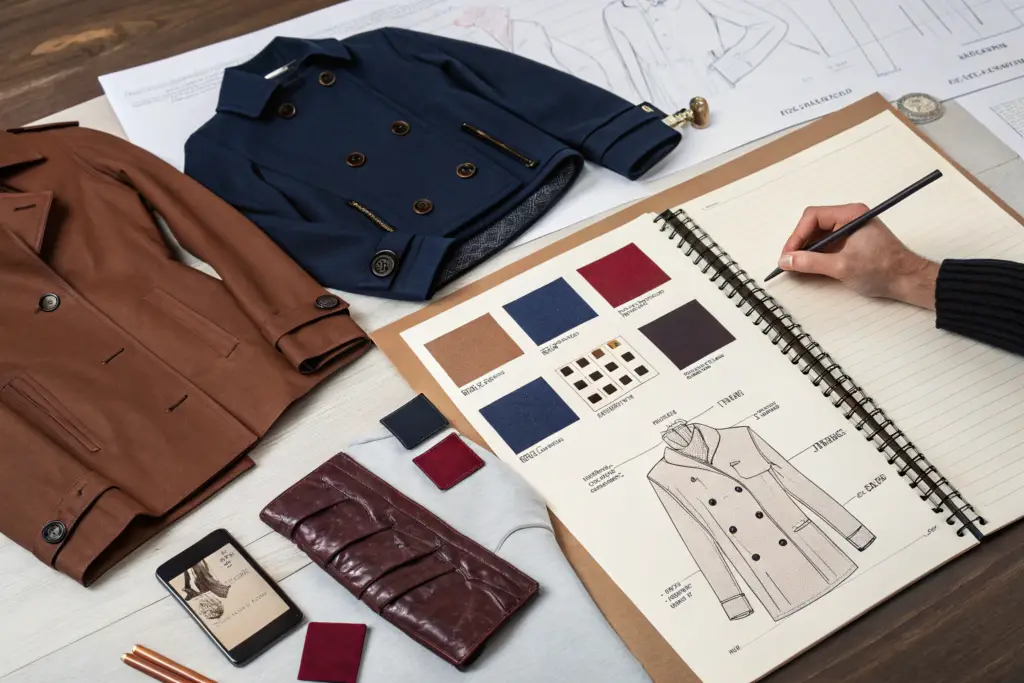
How Should Color and Fabric Stories Connect Across Coat Categories?
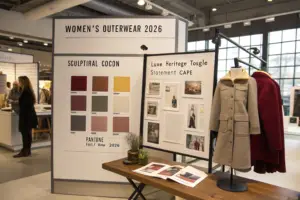
A customer who buys a camel wool coat should be able to buy a camel trench coat that complements it. The color story across categories creates a brand signature. We recommend brands develop a seasonal color palette of four to five colors that flow across all outerwear categories. Camel, navy, black, and a seasonal accent like deep forest green or burgundy. The same navy appears on the wool coat, the trench, and the parka. The customer who loves the brand's navy builds a collection. The fabric story should also connect. If the brand is positioned as natural-fiber-focused, the wool coat, the cotton trench, and the cotton-blend duster all share that material philosophy. The consistency of material and color across categories is what transforms a coat assortment into a recognizable outerwear brand.
What Is the Optimal Price Ladder for a Multi-Category Coat Collection?
The price ladder guides the customer from entry to investment. The lightweight duster or wrap is the entry price point, typically $150-$200 retail. It is the coat a new customer buys to try the brand. The trench coat and parka are the mid-tier, typically $200-$300 retail. They are the volume drivers. The wool overcoat is the premium tier, typically $280-$400 retail. It is the aspirational purchase that loyal customers save for. The price ladder serves a customer acquisition function. The entry coat brings the customer in. The mid-tier coats build the relationship. The premium coat rewards the loyalty. A brand that only sells $400 wool coats has a narrow customer base. A brand that only sells $150 dusters leaves premium margin on the table. The ladder captures the full market. Retail pricing strategy for apparel brands is a specialized discipline, and resources are available from organizations like The National Retail Federation.
Conclusion
The question of how many types of women's coats we manufacture has a simple answer—six core categories—and a deeper meaning. The six categories are Wool Overcoats, Trench Coats, Quilted Parkas, Lightweight Wraps and Dusters, Structured Pea Coats, and Technical Rainwear. But the number itself is not the point. The point is that a brand can source its entire women's outerwear collection from one factory, with one quality standard, one fit consistency, one production timeline, and one shipping consolidation. The operational simplicity of single-factory outerwear sourcing is the real product we offer.
The brand that previously managed three supplier relationships can manage one. The brand that previously dealt with inconsistent sizing across categories can have a unified fit standard. The brand that previously paid for three separate shipments can consolidate into one container. The time, money, and stress saved by consolidation are significant. The brand can redirect those resources into design, marketing, and customer experience—the activities that actually build the business.
If you are planning your women's outerwear collection and want to explore sourcing multiple categories from a single factory partner, I invite you to talk with us. At Shanghai Fumao, our five production lines are ready to handle your wool coats, your trenches, your parkas, and your lightweight layers. Contact our Business Director, Elaine, at elaine@fumaoclothing.com to request our women's outerwear lookbook and discuss your collection plan. Let's build a coat assortment that works as hard as you do.