Fifteen years ago, I made a mistake that cost me a major wholesale account. A distributor from Texas called me and asked, "What is the difference between a straight-fit chino and a relaxed-fit pleated short?" I gave him a rambling answer about fabric weight, waistband construction, and stitch density. He cut me off. "I do not need the engineering," he said. "I need to know which silhouette to show my retailers, and why." I had failed to answer the only question that mattered to him. He needed a clear, simple, and definitive guide to the silhouettes that drive the market. I did not give it to him. He sourced his shorts from a competitor that season.
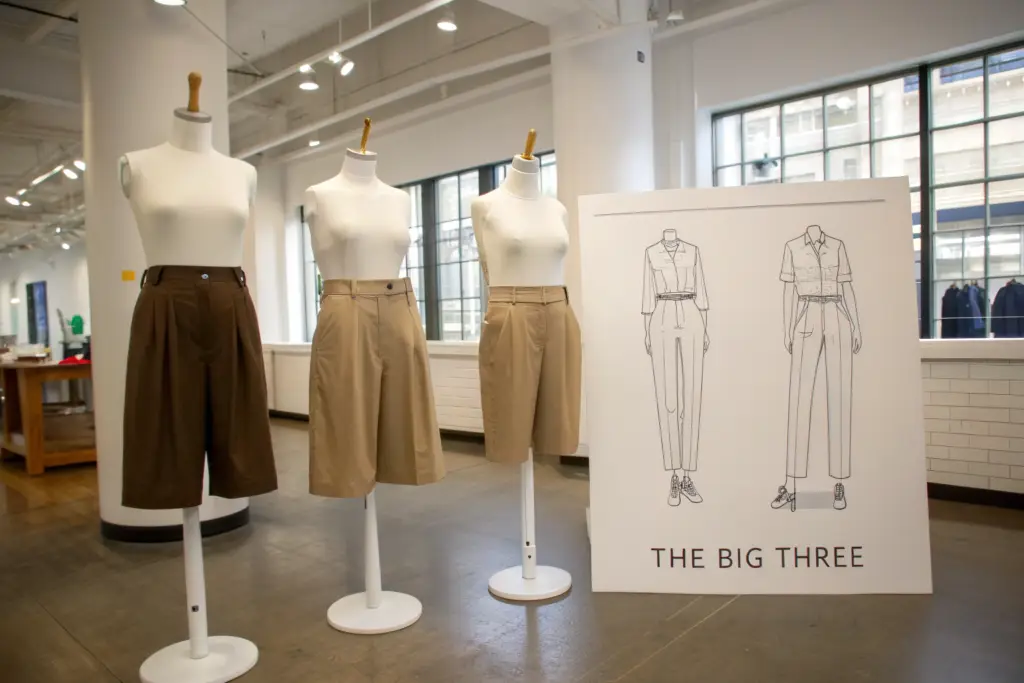
The top three classical shorts silhouettes every distributor must memorize are the Straight Flat-Front Chino, defined by a flat waistband with no pleats and a leg that falls cleanly from the hip to the hem with a consistent width, the Pleated Relaxed Fit, defined by one or two pleats at the front waistband and a leg that provides extra room through the thigh with a gentle taper to the hem, and the Tailored High-Rise Short, defined by a waistband that sits at or above the natural waist and a leg that is shaped to follow the body's curves without being tight, with each silhouette serving a distinct consumer segment with specific fit preferences and use occasions.
At Shanghai Fumao, I now train every new team member on these three silhouettes before they speak to a single buyer. A distributor does not need to know how to sew a waistband. They need to know, instantly and without hesitation, what each silhouette looks like, who buys it, and why they buy it. Let me walk you through the three silhouettes that form the foundation of the classic shorts market.
Why Is the Straight Flat-Front Chino the Undisputed Volume Leader?
The straight flat-front chino short is not the most exciting silhouette. It is not the most fashionable. It is not the most innovative. It is the most important. It is the short that the largest number of men buy, wear, and reorder season after season. A distributor who does not understand the chino short does not understand the classic shorts market. The chino is the baseline against which all other shorts are measured.
The Straight Flat-Front Chino is the volume leader in the classic shorts market because its defining characteristics, a flat waistband with no pleats, a medium rise that sits at the upper hip, and a straight leg that falls cleanly from the hip to the hem with a consistent width, make it the most universally acceptable and versatile silhouette, appropriate for a wide range of body types, age groups, and use occasions from business casual to weekend leisure, resulting in the broadest possible addressable market and the highest inventory turnover rate for distributors.
What Are the Defining Visual and Construction Characteristics?
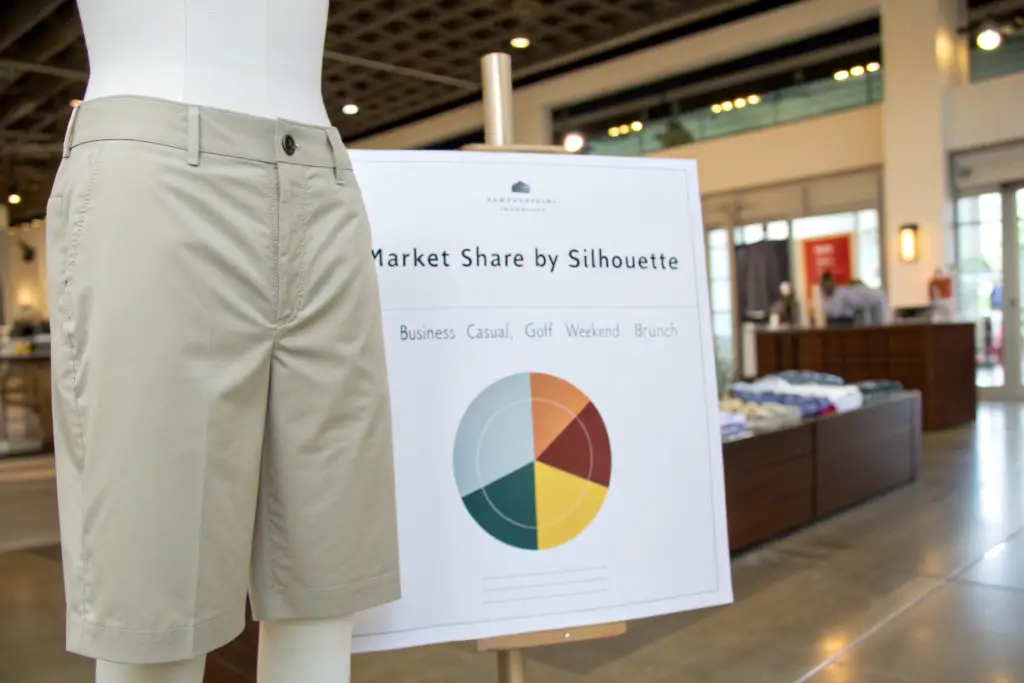
The straight flat-front chino has a specific, identifiable look that a distributor must be able to recognize immediately. The waistband is flat across the front. There are no pleats, no gathering, and no elastic. The closure is a standard zipper fly with a button at the top. The waistband sits at the upper hip, approximately one to two inches below the navel, a mid-rise that is comfortable for most men.
The leg is the defining characteristic. From the hip to the hem, the leg falls in a straight line. The width at the thigh is the same as the width at the hem. There is no taper. There is no flare. The leg opening for a size 32 waist is typically 22 to 24 inches in circumference. The inseam for the classic proportion is 7 to 9 inches. This chino short construction and fit guide provides the technical details. The fabric is traditionally a 100% cotton twill, though performance blends are now common. The color palette is anchored by khaki, navy, stone, and olive. The overall impression is clean, simple, and unpretentious.
Who Is the Target Consumer and What Are Their Purchase Motivations?
The straight flat-front chino short is bought by the largest segment of the menswear market. The target consumer is a man between 25 and 65 years old. He is not looking to make a fashion statement. He is looking for a reliable, comfortable, and appropriate pair of shorts that he can wear in a variety of settings without thinking about them too much.
His purchase motivations are practicality, comfort, and versatility. He wants a pair of shorts that he can wear to a casual Friday at the office, to a round of golf, to a barbecue with friends, and to a family dinner. He does not want to own multiple specialized shorts for different occasions. He wants one pair that works for all of them. The straight flat-front chino is that pair. He reorders the same style, often in the same colors, year after year. This consumer behavior in men's basics purchasing pattern is the foundation of the chino's volume dominance. For a distributor, this is the replenishment business, the reliable, high-volume, low-risk inventory that keeps the lights on.
Who Is the Pleated Relaxed Fit Short Actually For?
The pleated relaxed fit short is often dismissed by younger, fashion-forward brands as a relic. This is a mistake. It is a large, stable, and profitable segment of the market. The men who buy pleated shorts are loyal, they are not price-sensitive, and they are underserved by the many brands that have abandoned the silhouette in pursuit of younger consumers. A distributor who ignores the pleated short is leaving a significant revenue stream on the table.
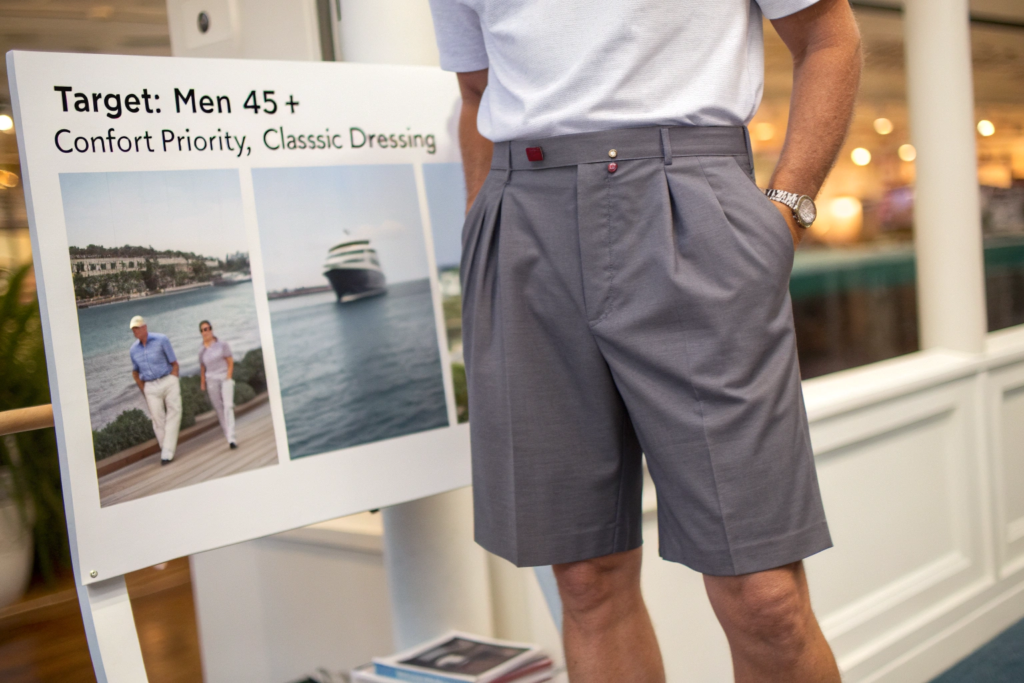
The Pleated Relaxed Fit Short serves a specific, loyal, and commercially valuable consumer segment of men typically over 45 who prioritize physical comfort and a classic, traditional aesthetic over contemporary fashion trends, with the single or double pleats at the front waistband providing extra room in the thigh and seat that accommodates a mature body shape more comfortably than a flat-front short, and the gentle taper through the leg providing a neat, tailored finish without the restrictive feel of a slim-fit silhouette.
How Do the Pleats Function to Provide Comfort and Fit?
A pleat is a fold of fabric at the waistband that provides extra volume in the thigh and seat area of the short. When the wearer stands, the pleat lies flat, and the short looks tailored. When the wearer sits or moves, the pleat opens, releasing additional fabric that prevents the short from pulling tight across the thigh and crotch.
This functional benefit is the primary reason the pleated short has a loyal customer base. The man who has worn pleated trousers and shorts for decades understands, consciously or unconsciously, that the pleats make the garment more comfortable to sit in. He is unwilling to switch to a flat-front short that feels restrictive, regardless of how fashionable the flat-front short is. The pleats can be single, one pleat on each side, or double, two pleats on each side. The pleats can face inward, toward the fly, which is the most traditional, or outward, toward the hip, which is less common. This pleated trouser and short construction provides the technical background.
What Are the Key Merchandising Points for This Consumer?
The consumer who buys pleated relaxed fit shorts is not shopping on Instagram. He is shopping in specialty menswear stores, department stores, and catalog retailers. He values quality, comfort, and service. He is often a cash customer, not a credit customer. His average transaction value is higher than the younger, trend-driven consumer.
The merchandising should emphasize the comfort, the quality of the fabric, and the classic, timeless aesthetic. The colors should be traditional, khaki, navy, stone, and grey. The fabric should be a soft, washed cotton twill or a lightweight performance blend. The short should be presented as a premium product, not a budget product. The price point can be higher than the flat-front chino because the consumer is less price-sensitive. This marketing to older male consumers in apparel is a specialized but profitable niche.
What Defines the Modern Tailored High-Rise Short?
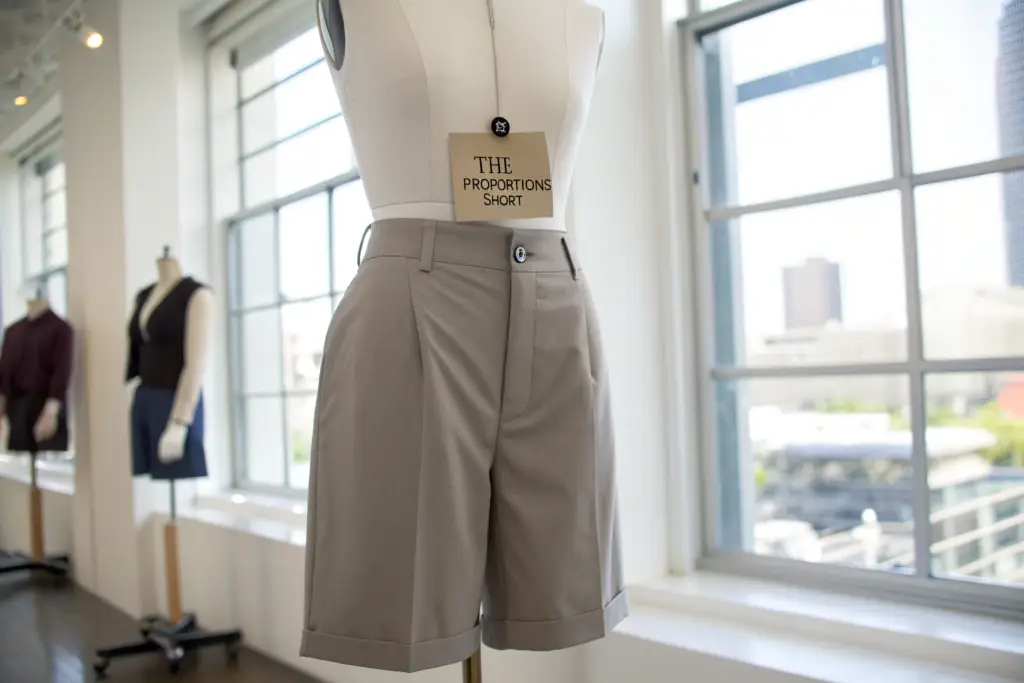
The tailored high-rise short is the newcomer to the classic shorts triumvirate. A decade ago, this silhouette was a niche product, found only in high-end designer collections and the most fashion-forward boutiques. Today, it is a mainstream offering, adopted by minimalist brands, contemporary labels, and even some mass-market retailers. It represents the modernization of the classic short, driven by the broader menswear shift toward proportion-conscious, tailored dressing.
The Tailored High-Rise Short is defined by a waistband that sits at or above the natural waist, a contoured shape that follows the curve of the body, and a leg that is shaped to be trim but not tight, creating a silhouette that elongates the leg and defines the waist, a proportion that appeals to the contemporary male consumer who is conscious of fit and silhouette and who views the short as an intentional style choice rather than merely a casual, functional garment.
How Does the High-Rise Waistband Change the Silhouette?
The high-rise waistband is the defining feature of this silhouette. On a standard mid-rise short, the waistband sits at the upper hip. The visual effect divides the body roughly in half, with the torso above the waistband and the legs below. On a high-rise short, the waistband sits at the natural waist, which is at or slightly above the navel.
This higher placement changes the visual mathematics of the outfit. The torso appears shorter. The legs appear longer. The overall proportion is closer to the classical ideal of the human figure. The waistband itself is typically contoured, meaning it is cut on a curve to follow the natural shape of the waist and hip, rather than being a straight strip of fabric. This contouring eliminates the back gap that is common on standard shorts and creates a clean, flat front. This high-rise trouser and short design is a tailoring technique that has migrated from trousers to shorts.
What Is the Consumer Profile and the Brand Positioning?
The consumer who buys the tailored high-rise short is typically younger, under 40, and fashion-conscious. He is interested in proportion, silhouette, and the overall effect of his outfit. He tucks in his shirt. He cares about the length of his inseam and the width of his leg opening. He is willing to pay a premium for a short that fits him exactly the way he wants.
The brand positioning for this silhouette emphasizes proportion, quality, and intentionality. The short is not presented as a casual afterthought. It is presented as a deliberate design object, equivalent in importance to a tailored trouser or a blazer. The fabrics are often premium, a heavy cotton twill, a linen blend, or a performance stretch cotton. The colors are typically muted and sophisticated, cream, black, navy, and olive. The price point is at the upper end of the market. This minimalist and contemporary menswear positioning is the fastest-growing segment of the classic shorts market.
Conclusion
The three classic shorts silhouettes, the Straight Flat-Front Chino, the Pleated Relaxed Fit, and the Tailored High-Rise, are not arbitrary variations on a theme. They are distinct products, each engineered to serve a specific consumer with specific needs. The chino is the universal volume driver, the safe, reliable, versatile short that the broadest market buys. The pleated relaxed fit is the specialist, the comfort-first short for the mature, traditional consumer who values ease and classic style. The high-rise is the modernizer, the proportion-conscious short for the contemporary, style-aware consumer who treats shorts as a deliberate wardrobe component.
A distributor who can identify each of these silhouettes instantly, who knows the target consumer for each, and who can speak to the specific benefits that each silhouette provides, is not just a supplier. They are a trusted advisor to their retail clients. They are the expert who helps the retailer build an assortment that covers the market, satisfies every customer who walks through the door, and maximizes sales per square foot.
At Shanghai Fumao, we manufacture all three silhouettes, and we help our distributor partners understand the nuances of each. If you are a distributor looking to build or strengthen your classic shorts program, contact our Business Director, Elaine, at elaine@fumaoclothing.com. Let's make sure you have the right silhouettes, for the right customers, at the right time.