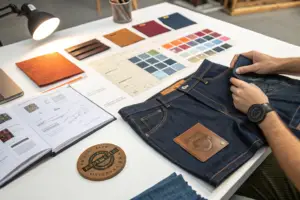
Selvedge denim is the holy grail for denim enthusiasts. The word itself carries weight. It conjures images of vintage shuttle looms, meticulous craftsmanship, and jeans that age like fine leather. Most denim factories will not touch selvedge. It is too slow. Too expensive. Too niche. The minimum order quantities from selvedge mills are high. The sewing process is different. The clientele is demanding. When a brand owner asks a standard denim factory about selvedge, the answer is usually a polite "we do not do that." I receive the selvedge question about once a month. The askers are always serious. They are boutique brand owners, premium menswear designers, or Japanese-inspired streetwear labels. They know what selvedge is. They know what it costs. They just want to know if we can make it.
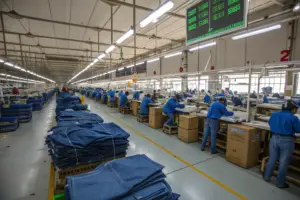
Yes, Shanghai Fumao can produce premium selvedge denim shorts. We source authentic shuttle-loomed selvedge denim from two partner mills, one in Japan's Okayama prefecture and one in China's Guangdong province. We construct the shorts with selvedge detailing on the outseam, the coin pocket, and the hem. We offer chainstitch hemming on our Union Special machine. The minimum order quantity is 500 pieces per style, and the ex-factory cost is approximately 2.5 to 3.5 times higher than our standard denim due to the fabric cost, the slower cutting process, and the specialized construction details.
Selvedge is not for every brand. It is a niche product for a niche customer who understands and values the craftsmanship. But if your brand operates in that niche, we have the capability to deliver. In this article, I will explain what selvedge denim actually is, where our fabric comes from, how the construction differs from standard denim shorts, what the costs and minimums look like, and how the ordering process works. This is not a marketing pitch. It is a technical explanation for buyers who need the real information.
What Exactly Is Selvedge Denim and Why Does It Matter?
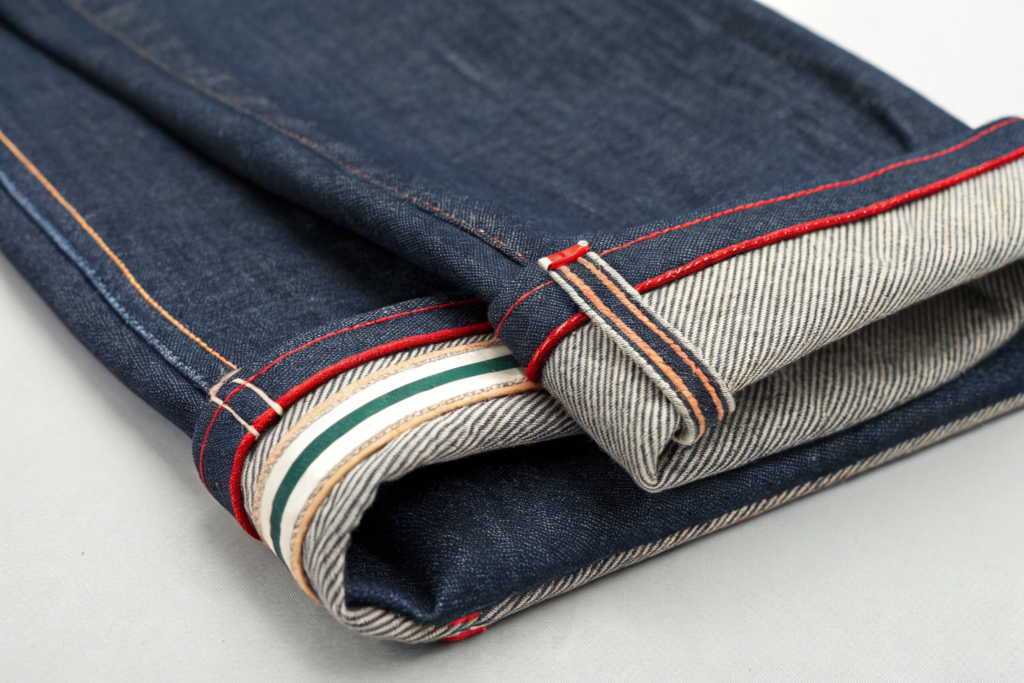
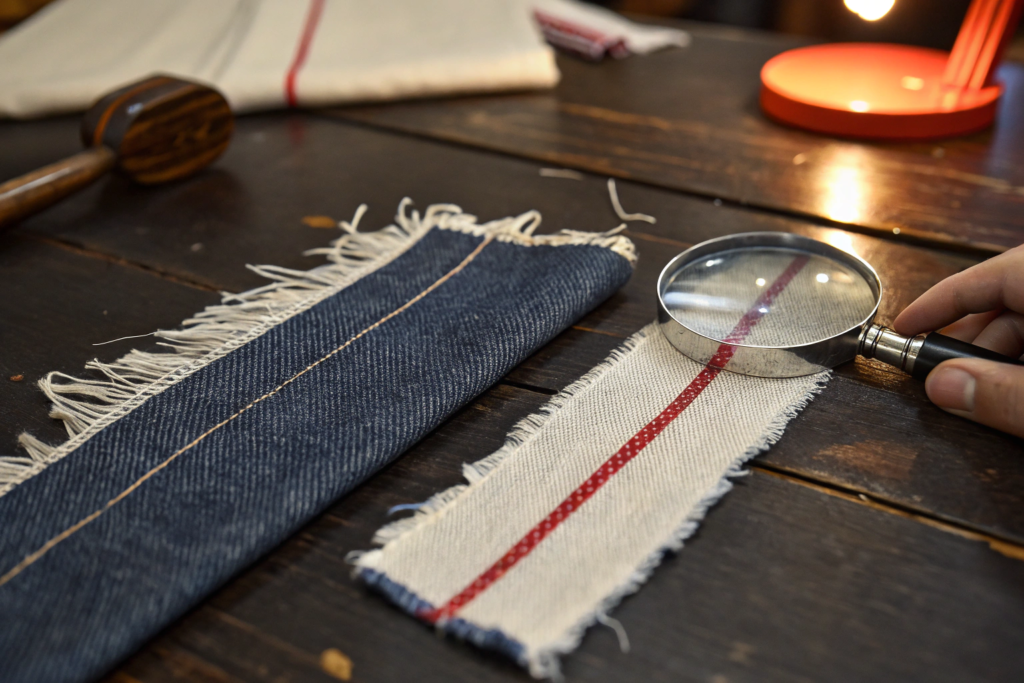
Selvedge is not just a buzzword. It is a specific manufacturing process with real performance and aesthetic differences from standard denim. The word comes from "self-edge." A selvedge fabric has a finished edge that does not fray because the weft yarn loops back on itself at the edge of the fabric. This finished edge is created by a shuttle loom, an old-style weaving machine that passes a single weft yarn back and forth across the warp. The resulting fabric is narrower, typically 28 to 32 inches wide, compared to the 60 to 72 inches of modern projectile-loomed denim. It is also slower to produce, more irregular in texture, and prized for its character.
The selvedge edge itself becomes a design feature. On a pair of jeans, the selvedge is visible when the cuff is rolled up. On a pair of shorts, it is visible on the outseam if the pattern is cut to preserve it. The ID stripe, a colored line woven into the selvedge edge, is a signature. Red line selvedge is the classic. Other colors indicate different mills or special editions. The selvedge detail signals to the wearer that this garment was made with a higher standard of fabric and construction. It is a quiet signal of quality in a world of mass-produced clothing.
Let me explain the technical differences between selvedge and non-selvedge denim and why those differences affect both the cost and the final product.
How Does Shuttle Loom Weaving Create the Selvedge Edge?
A shuttle loom operates differently from the modern projectile looms that produce the vast majority of denim today. A projectile loom shoots individual weft yarns across the warp at high speed. Each weft yarn is cut at the edge, leaving a raw, frayed selvedge that must be bound or finished later. The fabric is wide and the production speed is fast.
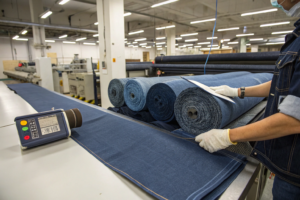
A shuttle loom carries a single weft yarn on a shuttle that travels back and forth across the entire width of the warp. The weft yarn never breaks. It loops back on itself at the edge, creating a clean, self-finished edge that will not fray. This continuous weft also creates a slightly different tension in the fabric. The weave is tighter at the edges and slightly looser in the center. This variation gives shuttle-loomed denim an irregular, organic character that denim enthusiasts value. The production speed is dramatically slower. A shuttle loom produces about 50 to 80 picks per minute. A projectile loom produces 500 to 1,000. The fabric width is half. The cost per yard is two to four times higher. The selvedge denim manufacturing process is well-documented by denim heritage sites. The key point for a brand buyer is that selvedge denim is fundamentally a different material from standard denim. It cannot be substituted or approximated. It is either shuttle-loomed or it is not.
Why Is Selvedge Denim Fabric More Expensive and Harder to Source?
The cost difference comes from three factors. First, the loom productivity is lower. A shuttle loom produces less fabric per hour than a projectile loom. The labor cost per yard is higher because the machines are slower and require more operator attention. Second, the fabric yield is lower. Because selvedge denim is narrower, cutting a pair of shorts from it consumes more fabric per unit. A standard short might use 1.2 yards of 60-inch denim. A selvedge short might use 1.8 yards of 30-inch denim. The wider fabric is also used less efficiently because pattern pieces must be aligned to preserve the selvedge edge on the outseam, which constrains the marker layout. Third, the supply is limited. There are only a handful of mills in the world that still operate shuttle looms. The most famous are in Okayama, Japan, where companies like Kuroki, Nihon Menpu, and Collect continue to produce selvedge denim on vintage Toyoda and Sakamoto looms. There are also a few mills in China, in Guangdong province, that have imported Japanese shuttle looms and produce high-quality selvedge at a slightly lower cost. The limited supply means the mills can command premium pricing. A yard of Japanese selvedge can cost $6 to $10. A yard of our standard 10.5 oz non-selvedge denim costs $1.80 to $2.20. The fabric cost alone makes selvedge shorts a premium product. The Japanese selvedge denim mills are the gold standard, and their fabric is sought after by premium brands worldwide.
Where Does Our Selvedge Denim Fabric Come From?
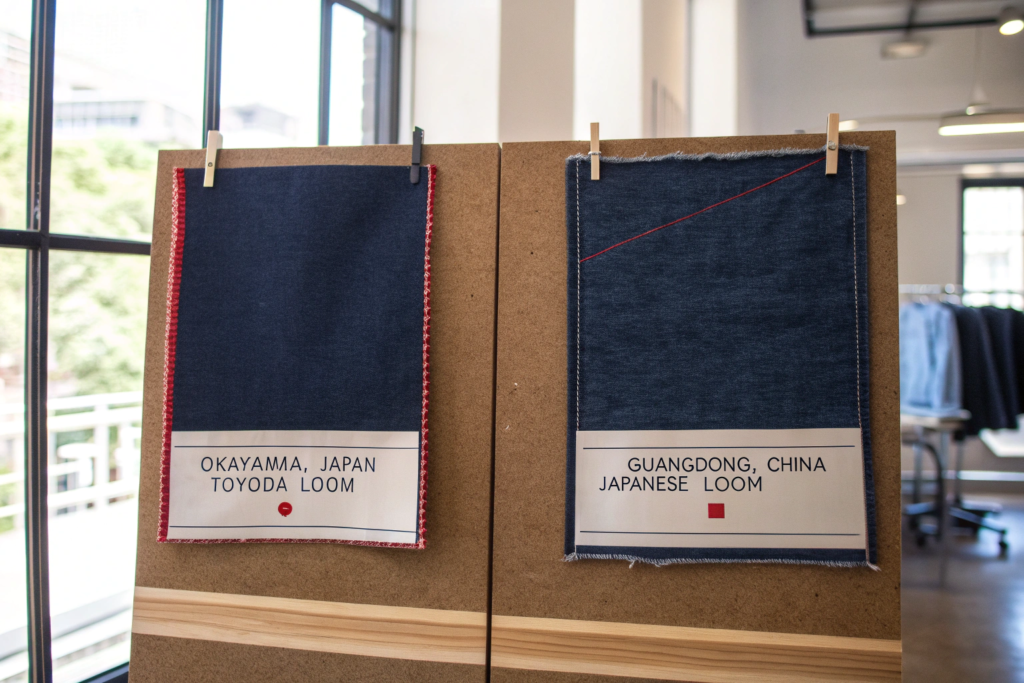
A selvedge short is only as good as the fabric it is cut from. The mill matters. The cotton origin matters. The dyeing method matters. The loom type matters. We do not buy selvedge denim from unknown brokers or surplus markets. We have direct relationships with two mills that produce authentic shuttle-loomed selvedge denim. Our buyers can choose between Japanese and Chinese selvedge depending on their brand positioning and budget.
The Japanese selvedge option comes from a mill in Okayama prefecture, the historic center of Japanese denim production. This mill operates vintage Toyoda shuttle looms from the 1960s. They use long-staple Zimbabwe cotton for their premium range and a Zimbabwe-Texas blend for their standard range. The indigo is rope-dyed in a sequence of eight dips, creating a deep, rich blue with a pronounced white core. The fabric weight options for shorts are 10 oz and 12 oz. The Chinese selvedge option comes from a mill in Guangdong that imported Japanese shuttle looms and employs technicians trained in Okayama. They use Xinjiang long-staple cotton. The indigo is also rope-dyed. The quality is high and the cost is about 30% to 40% lower than the Japanese option. We offer both and let the client decide based on their brand story and their retail price point.
Let me explain the differences between these two sourcing options and what each one means for your brand.
What Is the Difference Between Japanese and Chinese Selvedge Options?
The difference is partly objective, partly narrative. Objectively, Japanese selvedge has a slightly more irregular surface texture due to the age of the looms and the specific tension characteristics of the vintage Toyoda machines. The slub character, the small thick-and-thin variations in the yarn, is more pronounced. The indigo has a deeper, more complex tone because the Okayama water, which is soft and low in iron, affects the dye chemistry in a way that is difficult to replicate. The hand feel is slightly rougher in the raw state but breaks in to a softer finish over time.
Chinese selvedge is more consistent. The looms are newer, so the fabric has fewer irregularities. The indigo is clean and even. The hand feel is slightly softer from the start. For a brand that is marketing to hardcore denim enthusiasts who can identify Okayama denim by touch, the Japanese option is the authentic choice. For a brand that wants the selvedge aesthetic and the selvedge construction details at a more accessible price point, the Chinese option is excellent. Both are genuine shuttle-loomed selvedge. Both carry the ID stripe. Both will age and fade authentically. The choice is about your brand story and your target retail price. A pair of shorts in Japanese selvedge might retail for $180 to $250. A pair in Chinese selvedge might retail for $120 to $180. Both are premium products. The Okayama denim reputation is built on decades of craftsmanship. Japanese selvedge carries a narrative that adds perceived value for the end consumer.
How Do We Verify the Authenticity of the Selvedge Fabric?
Selvedge can be faked. A factory can print a fake selvedge edge onto standard denim. A mill can produce a narrow-width denim on a modern loom with a stitched edge that mimics a selvedge. The buyer must be able to verify authenticity.
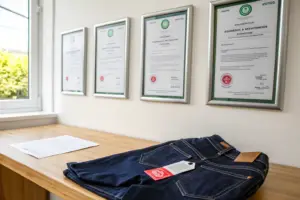
We verify through three methods. First, the mill provides a certificate of origin and a production specification sheet. The spec sheet states the loom type, the shuttle loom model and year, the cotton origin, the yarn count, the dyeing method, and the fabric width. A genuine selvedge mill provides this documentation transparently. Second, the selvedge edge can be tested. On a real selvedge, the edge is an integral part of the weave. It cannot be unravelled without destroying the fabric. A fake selvedge will have a separately stitched edge that can be picked out. Third, we burn-test the ID stripe. The colored yarns in a genuine selvedge ID stripe are dyed cotton, which burns to ash. A fake ID stripe may be printed with pigment, which melts or beads when burned. We perform these tests on every incoming selvedge lot and provide the documentation to the client. The authentic selvedge identification guide on Heddels provides detailed instructions for buyers who want to verify independently.
How Does Selvedge Construction Differ from Standard Denim Shorts?
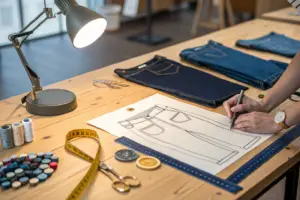
Selvedge denim is not just a fabric swap. The construction of the short must change to accommodate the fabric's characteristics and to showcase the selvedge detail. The pattern must be adjusted. The cutting process must be modified. The sewing techniques must be adapted. A factory that simply cuts standard patterns from selvedge fabric will produce a short that wastes the selvedge edge and looks like an expensive mistake.
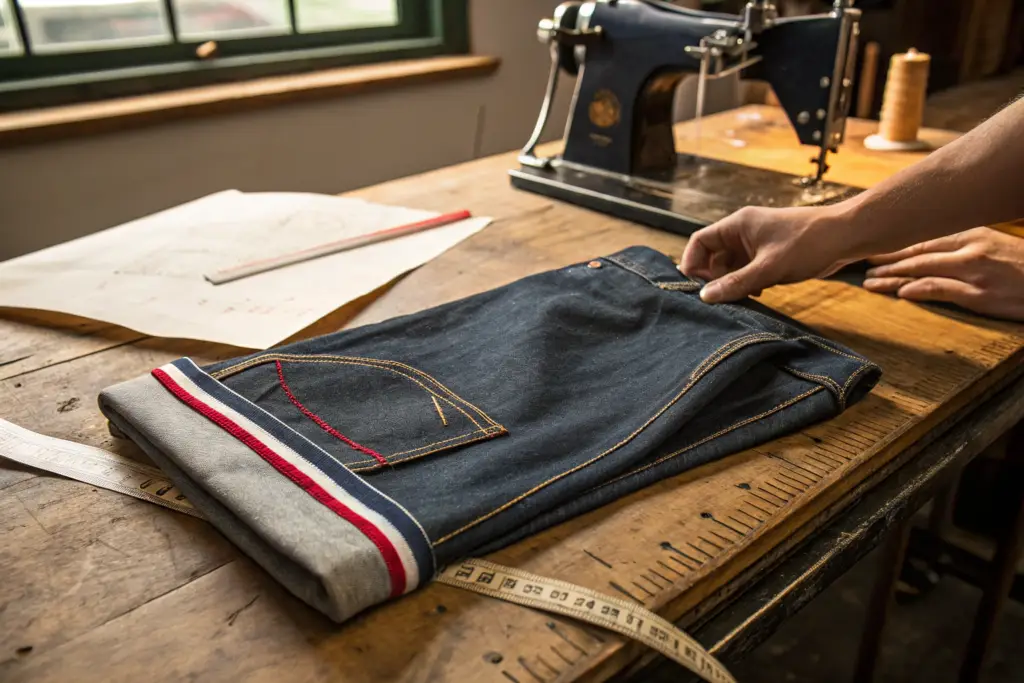
The defining feature of a selvedge short is that the selvedge edge is visible at the outseam. When the wearer is standing, the finished edge runs down the outside of the leg. This requires the outseam to be cut along the selvedge of the fabric. The front and back pattern pieces must be aligned so the selvedge falls precisely on the outseam line. This constrains the pattern layout on the fabric and increases fabric consumption. It also means the outseam is not sewn in the traditional way. The selvedge edge is the finished edge. It does not need an overlock or a fell seam. It is left raw but finished, showcasing the ID stripe.
Let me describe the specific construction techniques that distinguish a well-made selvedge short and the equipment we use to achieve them.
What Construction Details Define a Premium Selvedge Short?
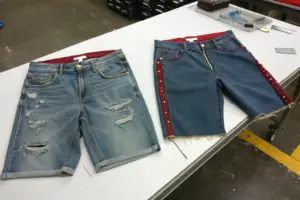
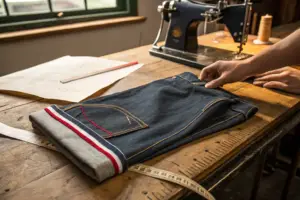
A properly constructed selvedge short has several signature details. The outseam is cut along the selvedge edge. The red or colored ID stripe is visible running down the outside of the leg. The outseam is either left as a clean, unfinished selvedge or finished with a single needle stitch to secure the seam allowance, depending on the design. The coin pocket, the small pocket inside the right front pocket, is cut on the bias or with a selvedge edge visible on the fold. On a true heritage selvedge short, the coin pocket selvedge is a subtle quality signal. The hem is chainstitched. A chainstitch hem is created by a Union Special 43200G machine, a vintage hemming machine that produces a distinctive roping effect after washing. The chainstitch pulls slightly, creating a puckered, wavy hem that denim enthusiasts recognize and value. The waistband and fly are constructed with tucked seam allowances and bar tacks at stress points.
The inside of the short should also reflect the premium nature of the fabric. The pocket bags are cut from a heavy cotton twill, not a lightweight poly-cotton. The waistband lining is a soft cotton herringbone or a printed stripe. The care label is tucked discreetly inside the waistband, not sewn onto the outside. These details collectively communicate that the short was made with intention. The selvedge denim construction guide from denim heritage sites documents these traditional techniques in detail.
Do We Have the Specialized Equipment for Chainstitch Hemming?
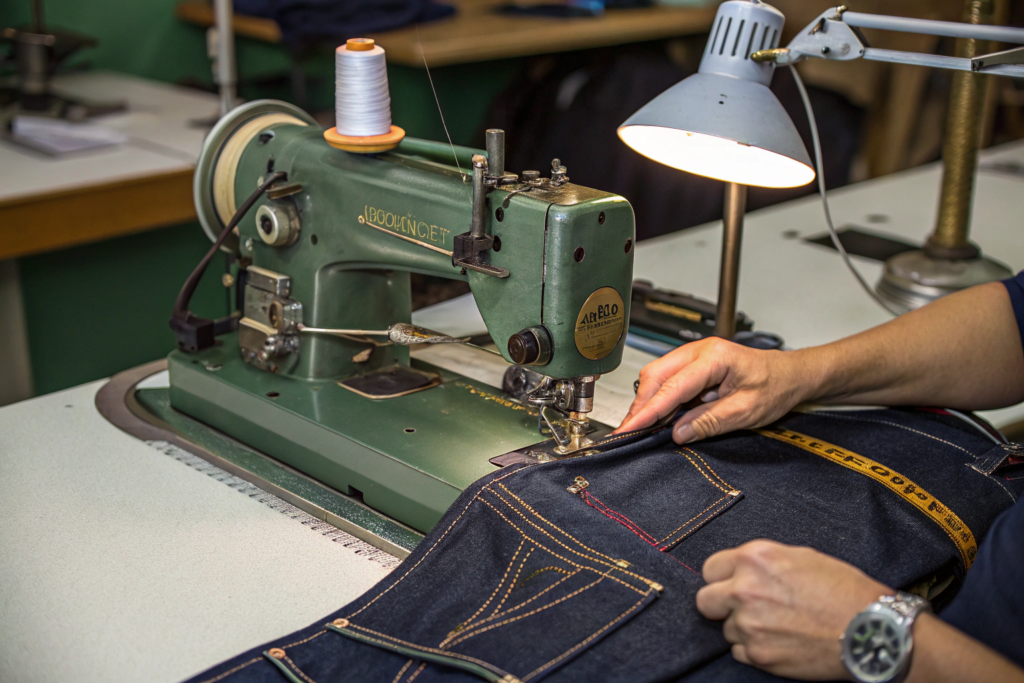
Yes. Chainstitch hemming is a specific process that requires a specific machine. A standard lockstitch hemming machine creates a straight, flat hem with no roping effect. A Union Special 43200G creates a chainstitch that pulls the fabric slightly as it hems, creating the characteristic roping, a wavy, puckered effect at the hem after washing.
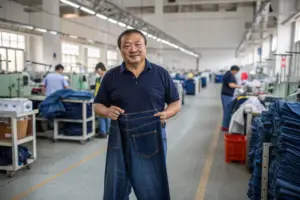
We own and operate a Union Special 43200G hemming machine, a vintage piece of equipment that was originally manufactured in the United States and is now maintained by specialized technicians. The machine is finicky. It requires regular adjustment and a skilled operator. We have one operator trained specifically on this machine. The chainstitch hem adds about $0.40 to the cost of each short compared to a standard lockstitch hem. It also adds about two minutes to the sewing time. For a selvedge short, the chainstitch hem is not optional. It is an expected detail. A selvedge short with a standard hem looks incomplete to the consumer who knows what they are looking at. The Union Special chainstitch hem machine is a legend in the denim world. Owning one and maintaining it is a commitment to the craft of denim.
What Are the Costs, Minimums, and Lead Times for Selvedge Shorts?
Selvedge is expensive. The fabric is expensive. The construction is more labor-intensive. The minimum order quantity is higher than for standard denim because the mills have minimums and the pattern layout is less efficient. A buyer considering selvedge needs to understand the numbers before committing to the development process.
I will be transparent about the costs, the minimums, and the timeline. These numbers are not negotiable in the same way standard denim pricing can be negotiated. The selvedge supply chain has fixed costs at every stage. We price selvedge shorts to cover those costs and deliver a product that meets the expectations of a premium consumer. A selvedge short that retails for $180 cannot have a crooked outseam or a skipped chainstitch. The quality standard is higher, and the production cost reflects that.
Let me break down the financial and operational requirements for a selvedge short order.
What Is the Price Breakdown for a Selvedge Denim Short?
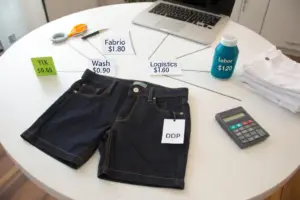
The ex-factory cost of a selvedge short is built differently than a standard short. Let me break down the cost components for a 12 oz Japanese selvedge short with chainstitch hem and standard hardware.
The fabric is the dominant cost. Japanese selvedge denim at 12 oz, 30-inch width, costs approximately $7.00 to $9.00 per yard. At a consumption of 1.8 yards per short due to the selvedge outseam layout, the fabric cost per short is $12.60 to $16.20. For comparison, our standard 10.5 oz non-selvedge fabric costs $1.80 to $2.20 per yard, with a consumption of 1.2 yards, for a fabric cost of $2.16 to $2.64. The fabric cost alone makes the selvedge short five to seven times more expensive at the material level. The hardware cost is similar to standard premium shorts. A YKK zipper, button, and rivets cost $0.55 to $0.85 per unit. The labor cost is higher for selvedge. The pattern layout, the cutting, the selvedge outseam alignment, and the chainstitch hemming require more time and more skill. Labor cost is approximately $2.00 to $2.80 per short, compared to $1.20 to $1.50 for a standard short. The wash cost depends on the finish. A raw, unwashed selvedge short has zero wash cost, though most clients order a rinse wash to remove shrinkage. A rinse wash costs $0.50 to $0.70. Total ex-factory cost for a Japanese selvedge short is approximately $15.50 to $20.00 per unit. For a Chinese selvedge short, the fabric cost is lower, approximately $4.50 to $6.00 per yard. The total ex-factory cost is approximately $11.00 to $14.00 per unit. These are FOB prices. DDP to the U.S. adds approximately $2.00 to $3.00 per unit depending on the destination. The selvedge denim cost factors are well-explained by denim industry analysts. The cost is driven by the slow, artisanal production methods at every stage.
What Are the Minimum Order Quantities and Production Timelines?
The minimum order quantity for a selvedge short is 500 pieces per style. This is higher than our standard minimum of 300 pieces. The reason is the fabric minimum at the mill. A shuttle loom produces fabric slowly. The mill will not set up a production run for a small quantity. We must order a minimum yardage to secure the fabric. For a custom selvedge development, where the mill dyes a specific shade or creates a custom ID stripe color, the MOQ can be 1,000 pieces or more.
The production timeline is longer than for standard shorts. The fabric lead time from a Japanese mill is 6 to 8 weeks. Chinese selvedge is 3 to 4 weeks. After the fabric arrives, the sampling process takes 3 to 4 weeks for the first sample and another 2 to 3 weeks for revisions. The bulk production, once the sample is approved, takes 5 to 6 weeks. Total timeline from order confirmation to shipment is 12 to 16 weeks for Japanese selvedge and 8 to 10 weeks for Chinese selvedge. This is significantly longer than our standard 5 to 7-week timeline for non-selvedge orders. The selvedge production lead times are constrained by the slow nature of shuttle loom weaving. Brands must plan their selvedge orders further in advance than their mainline orders.
Conclusion
Yes, it is possible to get premium selvedge denim shorts from Shanghai Fumao. We source authentic shuttle-loomed selvedge from mills in Okayama, Japan, and Guangdong, China. We construct the shorts with the selvedge outseam, the chainstitch hem, and the heritage details that the premium denim consumer expects. The minimum order is 500 pieces. The ex-factory cost is $11.00 to $20.00 depending on the fabric origin and the construction complexity. The lead time is 8 to 16 weeks depending on the fabric source.
Selvedge is not for every brand. The cost is high. The minimum is high. The customer base is niche. But for the brand that operates in the premium denim space, the brand whose customer knows the difference between a chainstitch and a lockstitch, the brand that wants to offer a product that cannot be found at a fast-fashion retailer, selvedge is a point of differentiation that justifies its premium. It is a product for the consumer who buys less but buys better. That consumer exists, and they are willing to pay for authenticity.
If your brand is ready to explore selvedge, the first step is a fabric swatch. Contact our Business Director, Elaine. Tell her you are interested in selvedge. She will send you swatches of our Japanese and Chinese selvedge options, along with the current fabric pricing and lead times. She can also provide a sample costing based on your design specifications. Her email is elaine@fumaoclothing.com. Selvedge is not fast fashion. It is slow craft. At Shanghai Fumao, we have the patience and the skill to make it right.