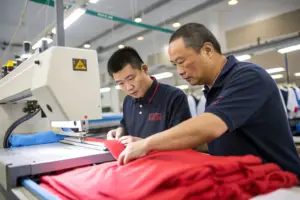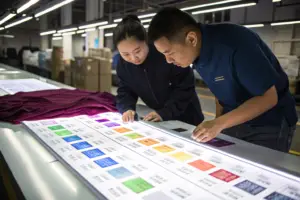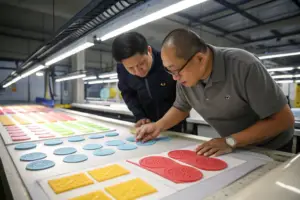
Six months ago, I noticed a shift in my inbox. The inquiries were still about denim shorts. The difference was where they came from. Berlin. Amsterdam. Copenhagen. Stockholm. Paris. European brand owners and buyers, who for years had sourced their denim from Turkey, Tunisia, or Bangladesh, were reaching out to a Chinese factory. At first, I thought it was a blip. Then the inquiries kept coming. Then the orders followed. Now, European clients represent our fastest-growing market segment.
European buyers are choosing Shanghai Fumao denim shorts for three structural reasons that changed in 2025 and 2026. First, the EU's tightening sustainability regulations, particularly the Digital Product Passport requirements, favor factories with transparent supply chains and certified chemical management, which we have. Second, Turkish denim prices rose by 20-25% due to currency volatility and energy costs, closing the price gap with Chinese premium manufacturing. Third, our DDP shipping model, which includes all duties and customs clearance, removes the administrative complexity that previously made importing from China unattractive for European SMEs.
I want to explain this trend from the factory floor. I will walk you through the regulatory changes that are reshaping European sourcing, the cost comparison that is driving buyers eastward, the specific product demands European buyers have that differ from the U.S. market, and how our factory adapted to meet them. If you are a European buyer currently sourcing from Turkey or North Africa, this article may change your calculations.
What Regulatory Changes Are Driving European Buyers to Chinese Suppliers?
Europe is not one market. It is 27 countries with a single regulatory framework that is becoming more demanding every year. The days when a brand could put a "sustainable" tag on a garment and move on are ending. The EU is building a regulatory architecture that requires brands to prove their supply chain claims with data. This regulatory shift is painful for brands. It is also an opportunity for factories that already have the data infrastructure in place.
The two regulations that matter most for denim shorts are the EU Strategy for Sustainable and Circular Textiles, which mandates the Digital Product Passport, and the ongoing tightening of REACH chemical restrictions. These regulations require brands to disclose where their garments were made, what materials they contain, what chemicals were used in processing, and whether the product can be recycled. A brand cannot answer these questions if its factory cannot provide the data. Many traditional suppliers in low-cost countries lack the testing labs, the chemical management systems, and the documentation infrastructure to support these disclosures.
Let me explain the two specific regulatory requirements that are redirecting European sourcing inquiries to our factory.
How Does the EU Digital Product Passport Favor Transparent Factories?
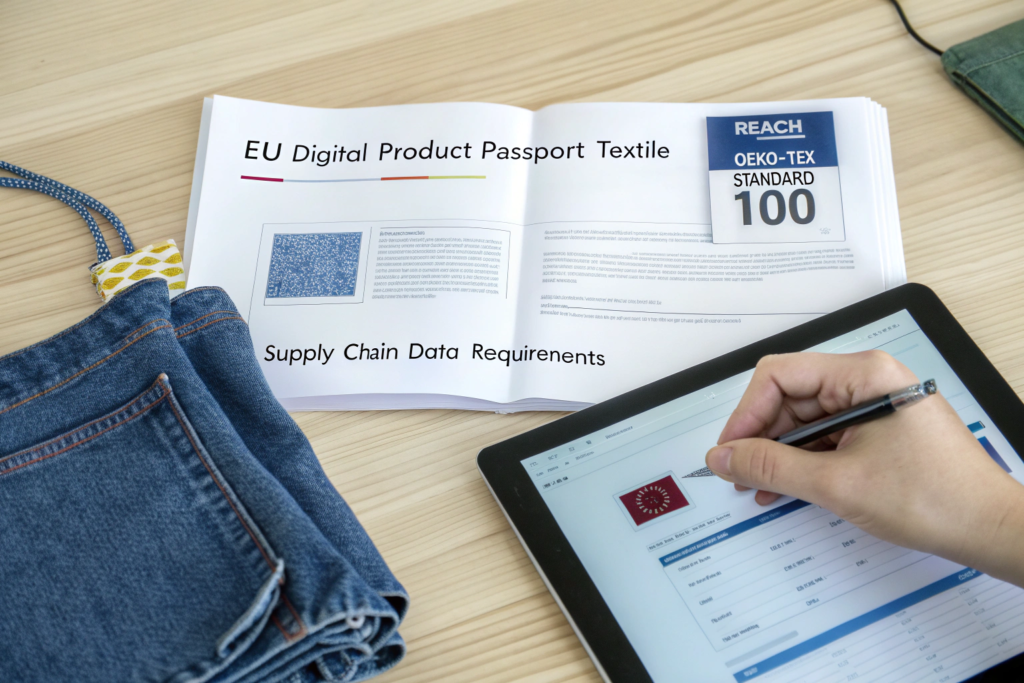
The Digital Product Passport is a digital record that accompanies a product through its lifecycle. By 2027, textiles sold in the EU will likely be required to have a DPP that includes information on material composition, manufacturing location, chemical substances used, and recyclability. The exact requirements are still being finalized, but the direction is clear. Brands will need data from every tier of their supply chain.
For a denim short, the data trail starts at the cotton gin and passes through the spinner, the weaver, the dye house, the garment factory, and the wash house. If any link in this chain cannot provide verified data, the brand cannot complete the passport. Many factories in traditional sourcing destinations do not have the digital record-keeping systems to support this. They operate on paper records. Our factory has been digitizing production records for three years. We track every fabric lot from mill certificate to finished garment. We record every chemical used in the wash process, with ZDHC Gateway compliance data. We maintain a digital chain of custody that a brand can access to populate their DPP. This data infrastructure is not something a brand can build quickly. It requires the factory to have invested in systems years before the regulation takes effect. European buyers who are planning for 2027 are looking for factories that already have this capability. The EU Digital Product Passport initiative is a fundamental shift in how textile products are documented and traded.
Why Does REACH Compliance Create a Barrier That We Already Clear?
REACH is the EU regulation on Registration, Evaluation, Authorisation, and Restriction of Chemicals. It restricts the use of hazardous substances in consumer products. The restricted substance list is longer and stricter than the equivalent U.S. regulations. For denim shorts, the relevant restrictions include limits on azo dyes that can release carcinogenic amines, limits on formaldehyde in fabric finishes, limits on heavy metals in hardware, and limits on phthalates in synthetic components.
A factory that does not have an internal chemical testing program will eventually ship a product that fails a REACH spot check. The brand that placed the order is legally responsible. They can be fined. Their product can be seized at the EU border. We test every fabric lot for the restricted azo amines. We test our hardware for nickel release, which is a common contact allergen restricted under REACH. We use formaldehyde-free fixing agents. Our OEKO-TEX Standard 100 Class I certification, which is stricter than REACH in many categories, provides an additional layer of assurance. European buyers who have experienced a REACH compliance failure with a previous supplier are particularly motivated to switch to a factory with a documented, verifiable chemical management system. The REACH regulation textiles guidance from the European Chemicals Agency explains the full scope of industry obligations.
How Has Turkish Denim Pricing Shifted the Competitive Landscape?
Turkey has been the dominant denim supplier for the European market for decades. The proximity is unbeatable. A truck from Istanbul can reach Berlin in three days. The quality of Turkish denim is high. The design sensibility aligns with European fashion trends. For a European brand, sourcing from Turkey has been the default, comfortable choice.
That comfort is being disrupted by economics. Turkey has experienced severe currency depreciation, with the lira losing over 70% of its value against the euro since 2020. This might sound like a benefit for foreign buyers. It is the opposite. Turkish manufacturers price their goods in euros or dollars to hedge against lira volatility. Their input costs, energy, labor, imported cotton, have risen sharply in lira terms. The result is that Turkish FOB prices have increased by 20% to 25% in euro terms over the past two years. At the same time, Chinese denim prices have remained relatively stable due to China's more controlled currency environment and integrated domestic cotton supply. The price gap has narrowed significantly.
Let me show you the numbers that European buyers are calculating and why the math is changing sourcing decisions.
What Is the Current Price Gap Between Turkish and Chinese Premium Denim?
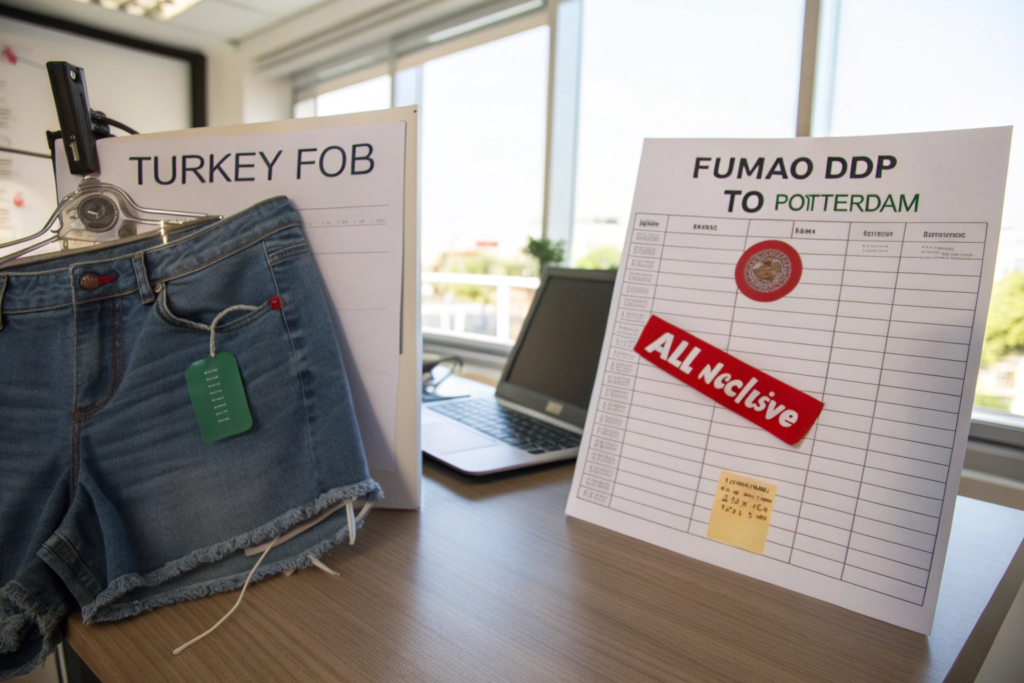
A premium denim short from a mid-tier Turkish manufacturer, with 10.5 oz rope-dyed denim, a YKK zipper, and a medium enzyme wash, currently costs approximately €5.50 to €6.80 FOB. The same specification short from our factory costs approximately €4.80 to €5.80 FOB. The FOB price difference is €0.70 to €1.00 per unit, or about 12% to 15%.
This difference existed five years ago too. What changed is the logistics cost and the administrative burden. Five years ago, importing from China meant a long sea freight journey, complex customs clearance, and a significant duty payment. For a European SME without a dedicated logistics team, the administrative cost of importing from China outweighed the unit price saving. Today, we offer DDP shipping to major European logistics hubs. The unit price you receive from us is the price delivered to your warehouse in Rotterdam, Hamburg, or Antwerp. The logistics complexity is our problem, not yours. The total landed cost comparison now favors Chinese production for many product categories. A €5.50 Turkish FOB short plus trucking might land at €5.80. A €5.30 Chinese DDP short lands at €5.30. The full cost is lower, and it arrives as a single, predictable invoice. The Turkey vs China denim sourcing analysis has been covered by industry publications tracking this shift.
Why Does Our DDP to Europe Model Remove the Traditional Pain of Chinese Imports?
Importing from China into the EU used to require a customs broker, an EORI number, a VAT registration, and a working knowledge of the Union Customs Code. For a small brand doing two containers a year, this was a significant barrier. The brand either hired an expensive consultant or risked making costly mistakes on customs declarations.
Our DDP model eliminates this barrier. We are the Importer of Record into the EU. We handle the customs clearance. We pay the duty. We arrange the trucking from the port to your warehouse. You receive a single commercial invoice with a single price per unit. You do not need an EORI number. You do not need a customs broker. You do not need to understand the Harmonized System classification for denim shorts. We handle it. This model has been standard for our U.S. clients for years. We extended it to Europe in 2025 after establishing partnerships with customs brokers in the Netherlands and Germany. The response from European buyers has been enthusiastic. Many told us they had previously dismissed Chinese sourcing because of the logistics headache. The DDP model removes the headache. The DDP Incoterms for European imports information explains the seller's obligations. We take those obligations on so the buyer can focus on design and sales, not customs paperwork.
What Specific Product Demands Do European Buyers Have for Denim Shorts?
European buyers are not just American buyers with a different accent. They have distinct product preferences, different fit expectations, and a different consumer culture around denim. A short that sells well in Texas will not necessarily sell well in Stockholm. The European consumer is generally more sustainability-conscious, more minimalist in styling, and more willing to pay a premium for verified ethical production.
When European buyers started reaching out to us, we had to adapt. The standard washes that worked for our U.S. clients were too heavy and too contrast-heavy for the European market. The fits were too relaxed. The labeling requirements were different. The sustainability expectations were more demanding and more specific. We invested in understanding these differences and adapting our product development accordingly.
Let me describe the specific product attributes that European buyers are requesting and how we adapted to meet them.
How Do European Fit and Wash Preferences Differ from the U.S. Market?
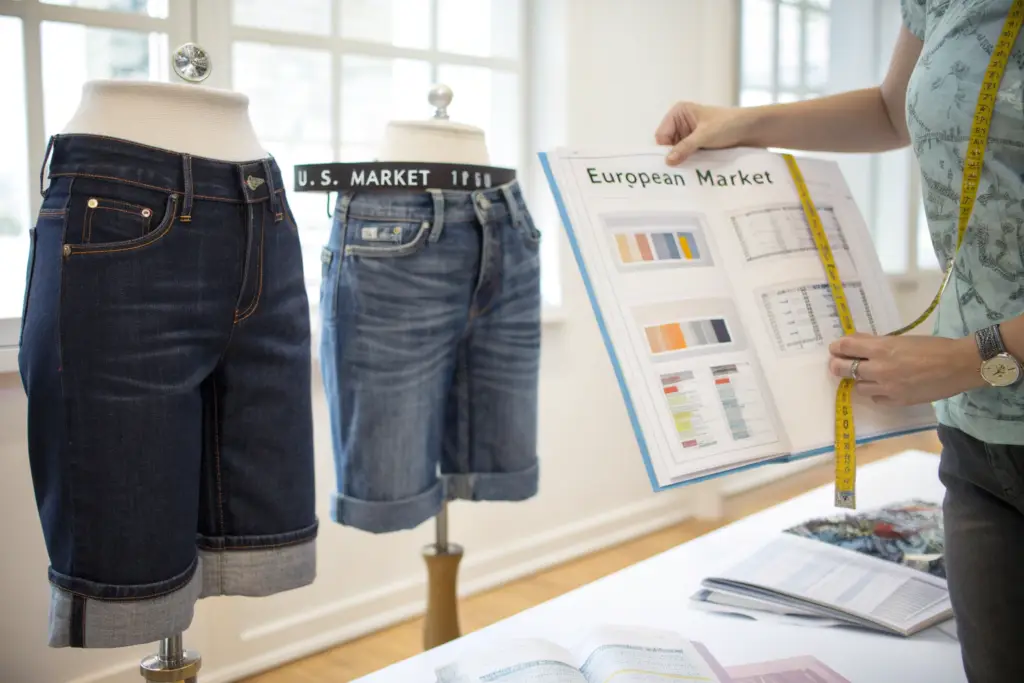
The European silhouette is generally slimmer and more tailored. The U.S. market favors a relaxed, straight-leg fit with a mid-rise. The European market, particularly in Northern Europe, favors a slim-fit, higher-rise short with a narrower leg opening. The difference is a few centimeters in the pattern, but those centimeters determine whether the short looks contemporary or dated to the target consumer.
The wash preferences also diverge. The U.S. market in 2025-2026 is leaning into heavy vintage fades with pronounced whiskering and contrast. The European market prefers cleaner, more uniform washes with subtle fading. A dark rinse with minimal distressing. A light ozone wash with an even, sky-like fade. The European aesthetic is understated. The wash should look natural, not processed. We developed a specific European wash palette in our lab. The palette uses lower-contrast enzyme treatments, gentler ozone cycles, and no heavy sandblasting or aggressive potassium permanganate spraying. The result is a short that looks like it faded naturally in the sun over several summers, not one that was aggressively distressed in a factory. The fit adjustments and wash development were informed by samples and feedback from our first European clients. The European vs American denim trends analysis from retail data platforms confirms these regional preference differences.
Why Are European Buyers More Demanding on Sustainability Certifications?
The European consumer cares about sustainability in a way that directly impacts purchasing behavior. Surveys consistently show that a higher percentage of European consumers, particularly in Germany, Scandinavia, and the Netherlands, are willing to pay a premium for sustainable clothing and will avoid brands with a poor environmental reputation. This consumer pressure flows upstream to the buyers.
U.S. buyers ask about OEKO-TEX. European buyers ask about OEKO-TEX, GOTS, ZDHC, BSCI, the EU Ecolabel, and the specific energy mix used in the factory. They want to know the water consumption per garment. They want to know the carbon footprint of the shipping method. They want third-party verified data, not marketing claims. Our existing certifications, OEKO-TEX Class I, BSCI, and ZDHC Gateway compliance, provided a foundation. We expanded our documentation to meet European expectations. We now provide a sustainability data sheet with every European order. It includes the fabric composition with mill traceability, the wash water consumption per unit, the ZDHC wastewater test results for the batch, the OEKO-TEX certificate number with a verification link, and the BSCI audit rating with the audit date. This level of documentation is what European consumers are beginning to expect, and what European regulations will soon require. The EU textile sustainability regulations page outlines the policy direction that is shaping these buyer requirements.
How Are European Buyers Finding and Vetting Our Factory?
The European buyers reaching out to us are not finding us on Alibaba. They are finding us through channels that prioritize substance over advertising spend. LinkedIn, where our technical content on denim manufacturing is shared in European sourcing groups. Industry trade shows, where they can touch our fabric and meet our team. Google searches for specific technical queries about OEKO-TEX certification or DDP shipping to the EU. And most importantly, referrals from their peers.
The European apparel industry is a network. Brand owners in Copenhagen know brand owners in Amsterdam. When one brand successfully sources from a new factory, word spreads. The vetting process is thorough. European buyers are trained in supplier due diligence. They ask for documentation. They commission third-party audits. They check references. They do not rush into a purchase order. I respect this thoroughness. It aligns with our transparency model.
Let me describe the vetting process that a typical European buyer conducts and how our factory responds to it.
What Does the European Buyer's Due Diligence Process Look Like?
A European buyer's due diligence typically involves six steps. First, a document request. The buyer asks for the business license, the BSCI audit report, the OEKO-TEX certificate, and the ZDHC wastewater test results. Second, a video tour of the facility, often with the buyer's quality manager or an independent consultant on the call. Third, a reference check with one or two of our existing European clients. Fourth, a paid sample order, which is tested by an independent lab in Europe for REACH compliance and physical quality. Fifth, a pre-production audit or an in-process inspection by a third-party firm like SGS or QIMA. Sixth, the bulk order, often starting with a smaller quantity than the buyer would order from an established Turkish supplier, to test the logistics and the full production quality.
This process can take three to six months from initial contact to bulk order. It requires patience from the factory. Many Chinese factories are not willing to invest this much time in a buyer who has not yet placed a large order. We are willing because we understand the European buyer's risk calculus. A buyer who switches from a known Turkish supplier to an unknown Chinese supplier is taking a career risk. If the order fails, they have to explain the failure to their management. The due diligence process is how they manage that risk. By cooperating fully and transparently at every step, we prove that we are a safe choice. The European supplier due diligence expectations are higher than in many other markets, driven by both regulatory requirements and a corporate culture that emphasizes supply chain risk management.
How Do European Trade Shows and LinkedIn Drive Our Visibility?
European trade shows are a critical trust-building channel. Unlike digital inquiries, a trade show allows the buyer to meet our team in person, to touch our fabric samples, to examine our wash quality under good lighting, and to have a detailed technical conversation. We have exhibited at Texworld Paris and plan to expand our European trade show presence.
LinkedIn has been surprisingly effective for reaching European buyers. Our technical posts, the ones that explain denim testing standards, wash processes, and sustainability data, are shared by European sourcing professionals. A post we wrote about ZDHC wastewater compliance was shared by a sustainable fashion consultant in Amsterdam to her network of 15,000 followers. That single share generated a dozen inquiries from small and medium European brands looking for a compliant denim supplier. The European LinkedIn community for apparel sourcing is active and engaged. They value technical content that helps them do their jobs better. Our content strategy of education over promotion aligns with what this community responds to. The B2B marketing Europe trade shows and LinkedIn combination has proven to be the most effective channel for reaching qualified European buyers.
Conclusion
The trend of European buyers choosing Shanghai Fumao for denim shorts is not a random fluctuation. It is the logical result of three converging forces. The EU regulatory framework is demanding the kind of supply chain transparency and chemical compliance that we invested in years ago. The economics of Turkish denim manufacturing have shifted in a way that makes Chinese premium production cost-competitive on a landed basis, especially with our DDP shipping model. And the European consumer's preference for cleaner, more sustainable denim aligns with our wash development direction and our certification portfolio.
We adapted to this market deliberately. We developed a European fit block. We created a European wash palette. We built a sustainability data sheet for every order. We established DDP logistics channels into Rotterdam and Hamburg. We learned the European buyer's due diligence process and organized our documentation to support it. We are not just exporting U.S.-spec shorts to a different continent. We are serving a distinct market with distinct requirements.
If you are a European brand or buyer currently sourcing denim shorts from Turkey, Tunisia, or Bangladesh, I invite you to compare. Request a sample. Review our sustainability data sheet. Talk to our existing European clients. Calculate the landed cost with DDP to your warehouse. The math may surprise you. Contact our Business Director, Elaine. She can provide our European specification sheet, our wash palette samples, and a detailed DDP quotation to your specific delivery address. Her email is elaine@fumaoclothing.com. The European denim market is changing. The factories that anticipated the change are ready. At Shanghai Fumao, we are ready.