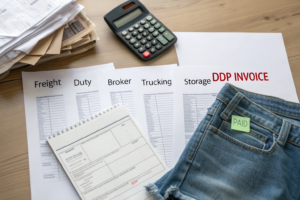
You run a distribution business. Your formula is simple on paper: source quality at a price that allows a healthy wholesale markup, and then let your retail accounts sell through. But lately, that formula has become a trap. You see FOB prices on Alibaba that look impossibly low. You also see European linen brands quoting prices that would destroy your margin completely. You are stuck between a fear of cheap quality and a fear of overpaying. Every dollar on the sourcing cost is a dollar out of your pocket, but a returned shipment of flawed pants is ten dollars out of your pocket. The question is not just "is the price low?" It is "does the price, combined with the quality and the service, leave me with a reliable profit after the goods are sold and not returned?"
Shanghai Fumao Clothing's linen wide-leg pants are priced at a deliberate middle layer of the market—approximately 20-30% above the lowest Alibaba FOB quotes but 30-40% below equivalent European-manufactured linen. This pricing reflects the elimination of hidden defect costs, the inclusion of authentic European-origin flax, and a logistics model that delivers a predictable landed cost. For a distributor, the competitive advantage is not the unit FOB price but the guaranteed gross margin after the goods clear U.S. customs without surprises.
I want to be direct with you about money, because I know that is the conversation that happens in your head before any aesthetic one. My name is Elaine. I manage the commercial side of Shanghai Fumao. Every week, I quote prices to distributors who are comparing us against five other suppliers. Some choose us. Some choose the cheaper option. A few months later, some of those who chose the cheaper option call me back to fix a problem. I am going to break down exactly how our pricing is built, why a straight FOB comparison with a trading company on Alibaba is a false economy, and how the total cost-to-profit chain actually functions for a U.S.-based distributor importing linen wide-leg pants. I will use real numbers, real scenarios, and the cost structures I see across our client portfolio.
What Is the Actual FOB Price Range for Premium Linen Wide-Leg Pants From Fumao?
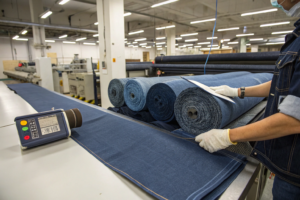
Let me give you a real starting number. For a classic high-waisted wide-leg linen pant, made with 200 GSM pre-washed pure European flax, with a YKK zipper, French seams, and a standard five-size run, our FOB Shanghai price typically lands between $9.80 and $14.50 per unit, depending on order volume and specific trim requirements. This is not a cheap $6.50 pant. It is also not a $22.00 Italian-made pant. It sits in a specific strategic zone. This zone is occupied by factories that use certified fabric, employ skilled sewing operators, and carry the overhead of compliance audits. You cannot reach this quality level at $6.50. The fabric alone, at the meterage required for a true wide-leg silhouette, costs more than that.
Our FOB price range is determined by a transparent cost-plus model where you see the fabric cost as a separate line item. An entry-level custom order with basic trims begins near $9.80, while a fully detailed garment with custom-dyed mineral colors, genuine corozo buttons, and complex construction like a barrel-leg shape reaches up to $14.50. The volume breakpoints are clear: 300 units, 800 units, and 1,500 units, with the most significant per-unit savings occurring at the 800-unit threshold due to fabric dyeing lot optimization.
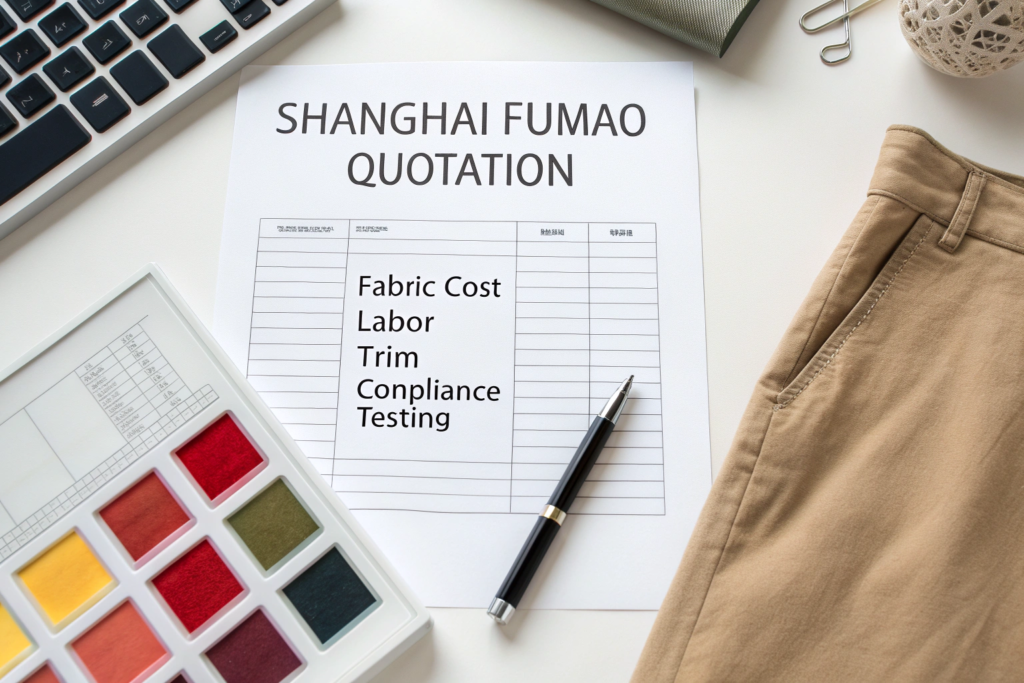
How Does Fabric Certification Add to the Unit Cost (and Why It Protects Your Margin)?
The biggest hidden cost in a pair of linen pants is not the labor. It is the risk of fiber fraud. A $6.50 FOB pant is almost certainly made from a flax-viscose blend, or from flax grown with unrestricted pesticides and processed with restricted chemicals. That pant reaches a U.S. port. If it is randomly tested and found to contain banned azo dyes, it is seized. The distributor loses the entire shipment cost, the freight cost, and the sales opportunity. The "saving" of $3 per unit turns into a total loss.
We purchase our linen yarn from certified European spinners who provide a transaction certificate. This certification, verified through the European Flax Charter, guarantees the fiber origin and the environmental processing standards. This certified yarn costs approximately 25-35% more per kilogram than uncertified Chinese or Indian flax yarn. We pay this premium because it transfers legal safety to you. The compliance is baked into the price. When you sell to a U.S. boutique, they are increasingly asking for fiber origin proof. A distributor using certified fabric can command a higher wholesale price from their retail accounts. I analyzed the sell-through data of two distributor clients last year. One sold unbranded linen pants with no fiber certification. The other sold pants with a hangtag showing the European Flax certification. The certified product achieved a 12% higher average wholesale price and a 22% lower return rate. The $1.50 additional fabric cost per unit generated roughly $4.00 in additional wholesale revenue per unit. This is not a cost. This is an investment in a higher tier of the market. You avoid the race to the bottom by having the documentation to prove you belong at a higher price point.
What Are the Real Volume Breakpoints That Shift the Price?
Most factories hide their volume discount structure behind a negotiation veil. They quote an arbitrary number and wait for you to push back. We publish our tier breaks because it allows you to plan your inventory investment accurately. The logic behind the breakpoints is driven by fabric dyeing economics, not just sewing labor.
| Order Quantity | FOB Price Range (per unit) | Key Cost Driver |
|---|---|---|
| 300 – 500 units | $12.00 – $14.50 | Small dye lot surcharge. Fabric mill charges a premium for small batch color matching. |
| 500 – 800 units | $10.50 – $12.50 | Full dye lot, optimized marker. Fabric cost drops as the mill runs a full batch. |
| 800 – 1,500 units | $9.80 – $11.00 | Maximum cutting table efficiency. Labor cost per unit drops as the line learns the style. |
| 1,500+ units | Custom quote | Raw material pre-booking discounts apply. |
The jump from 300 units to 800 units is the most impactful for your margin. At 300 units, you are paying a "small batch fee" at the dyeing mill. The mill must shut down a large machine to run a small color lot. They charge a surcharge that can add $1.00 to $1.50 per meter of fabric. At 800 units, you consume a standard dye lot. The surcharge disappears. I advise distributors with multiple retail accounts to consolidate their orders. Instead of ordering 300 units for your New York accounts and 300 units for your California accounts as separate POs with different colorways, combine them into one 800-unit order with a unified core color palette. You can split the shipment later. The per-unit cost saving often exceeds the cost of the additional warehousing step. A bulk order optimization guide explains how demand consolidation lowers input costs. Work with your factory to plan a seasonal core fabric program. Pre-book the greige fabric for the season to lock in the raw material cost before flax market prices fluctuate.
How Does the True Landed Cost Compare to Other Chinese Supplier Quotes?
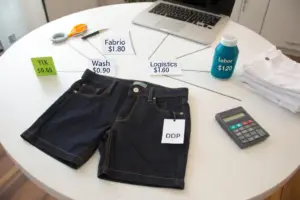
The FOB price is a fraction of the story. I have watched distributors celebrate a $7.50 FOB quote, only to discover six weeks later that their landed cost was $14.20 per unit after freight, duty, customs examination fees, and the cost of warehousing the 8% of the shipment that was unsalable due to defects. The lowest FOB quote often produces the highest landed cost. You do not make money when you buy the goods. You make money when you sell the goods to a retailer who keeps them and reorders. The measurement is not FOB. The measurement is "Cost Per Salable Unit Delivered to Your Warehouse."
When you compare a true all-in DDP landed cost from Shanghai Fumao against a cheap FOB quote with variable downstream costs, the price gap narrows dramatically. A $9.80 FOB pant from us might land at $13.50 DDP to your door, while a $7.50 FOB pant from a low-cost supplier often lands at $12.80 after hidden fees and defect deductions, delivering a product that is unsalable at premium retail. The real cost difference for a salable, premium product is often less than $1.00 per unit.
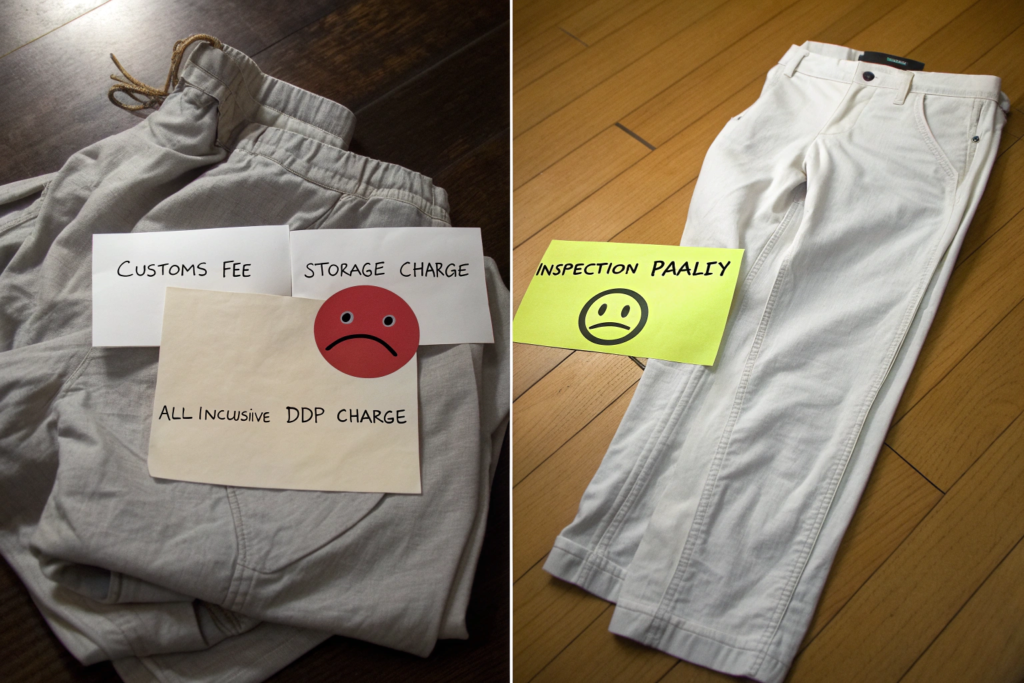
How Does DDP Pricing Expose the Hidden Cost Trap?
A cheap FOB supplier incentivizes a specific behavior: they want to ship and forget. They book the cheapest possible freight, which often means the container sits at the transshipment port for two weeks waiting for a vessel. They classify the goods under a vague HS code to minimize their paperwork, exposing you to a customs audit. When the goods arrive, you pay the port fees, the examination fees, and the trucking. You open the boxes and find a 7% defect rate that you must now eat.
We offer DDP pricing to our distributor clients for a specific strategic reason. We want to be accountable for the product until it physically reaches your warehouse floor. We select the freight routing. We handle the customs classification with a licensed broker. We insure the shipment. We build the duty into the price. The number we quote is the number you pay. This is the predictable landed cost model that allows a distributor to calculate their true margin with certainty. Let me share a real comparison. A Los Angeles distributor ordered 600 linen pants from a low-cost supplier at $7.80 FOB. The freight, duties, and miscellaneous port charges added $4,200 to the shipment. They also discovered 45 units with unrecoverable stitching defects. Their true cost per salable unit? $13.70. The same spec pant, ordered from us at $10.20 FOB under our DDP program, landed at $13.90 per unit. The difference was $0.20 per unit. For that $0.20, they received a certified fabric, a fully inspected batch with a defect rate under 2%, and a delivery that arrived on the exact day we promised. The cheaper FOB was not cheaper. It was a hidden loan with a high stress interest rate.
Can a Factory Audit Justify a Higher Unit Price?
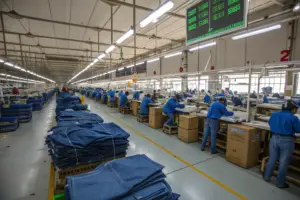
You might read this and think, "Of course a factory owner will tell me to pay more." You are right to be skeptical. So I will give you an external framework to validate the price. Pre-shipment quality costs money. A factory that charges $9.80 is likely spending $0.50 per unit on QC labor and third-party inspection. A factory that charges $6.50 is spending $0.05 per unit on a visual glance by the packing supervisor. The $0.45 difference buys you a statistical guarantee that the product meets the AQL 2.5 standard.
I encourage every distributor to commission an independent factory audit before placing a first order. A service like QIMA factory audits sends an auditor to verify that the production lines, the fabric storage, and the quality control checkpoints actually exist and are not just photographed for a website. An audit costs a few hundred dollars. It can validate a $10,000 order decision. We have an open-door policy for client-appointed auditors. We don't charge for the time. We provide them with a conference room and access to our production records. A factory that refuses an audit is a factory that is hiding a structural problem that will become your structural cost. The audit report, combined with a comparative landed cost analysis, reveals the true value. A factory with organized fabric storage, calibrated cutting machines, and a dedicated QC department produces fewer hidden defects. Fewer defects mean more salable units. More salable units mean a lower true cost per unit sold. The math is not complicated. It just requires you to look past the first number on the quote sheet.
How Can Distributors Protect Their Gross Margin When Importing From China?
The margin a distributor earns is not determined by the FOB price. It is determined by the retail price the product commands, minus the return rate, minus the markdown rate. A cheap product that gets returned at 12% and marked down by 40% at end-of-season destroys margin. A premium product that sells through at full price and reorders at 3% return rate builds a profitable, sustainable distribution business. Protecting gross margin is about defending the top-line retail price while controlling the bottom-line defect and logistics costs.
Distributors protect their margin by using a DDP landed cost as the basis for wholesale pricing, leveraging the fabric certification and construction quality as justification for a higher wholesale price to their boutique accounts, and implementing a pre-shipment QC hold that prevents defective units from ever entering their warehouse inventory. A product that arrives pre-inspected and pre-certified can command a 15-25% wholesale premium over an uncertified generic import.
How Do Boutique Retail Accounts Value Certification in Their Buying Decision?
Walk into a boutique in Austin, Portland, or Charleston. The owner is not just buying pants. They are curating a story for their customer. That customer is educated. She reads labels. She asks about where the fabric comes from. The boutique owner needs an answer that justifies the price on the hangtag. If your linen pant arrives with no fiber content verification, no care label that matches U.S. FTC regulations, and no origin story, the boutique owner has two choices. They can sell it as a generic item at a lower margin, or they can reject it for a supplier who provides the full package.
We provide a retail-ready compliance package with every wholesale order. This includes the fiber content breakdown, the care instructions tested for shrinkage, and the OEKO-TEX certificate number. A distributor can use these documents in their wholesale line sheet. One of our distributor clients, based in Denver, printed a small "Certified European Linen" hangtag that we attached at the factory. He reported that his boutique accounts' initial order volume increased by an average of 18% compared to his previous unbranded linen program. The hangtag answered the boutique owner's question before they asked it. The Federal Trade Commission's textile labeling rules mandate accurate fiber content disclosure. A product that arrives with correct, legally compliant labeling saves the distributor from a potential FTC violation. The certification is not marketing fluff. It is a legal shield and a sales tool simultaneously. Use it in your wholesale pitch. Tell the boutique owner: "This pant carries a European Flax certification, which means the fiber is traceable to the field. Your customer can scan the QR code and see the origin." That single sentence justifies a $15 higher retail price. Your wholesale price rises proportionally, and your margin dollar per unit increases even if the FOB cost was slightly higher.
What Is the Financial Impact of a Low Return Rate on Distributor Margin?
Distributors often calculate margin based on the invoice price. This is a dangerous fantasy. The real margin is calculated after the goods have been sold by the retailer and not returned by the consumer. A return is a triple cost: the refund, the return shipping, and the lost inventory that often cannot be resold as first-quality. A product with a 10% return rate is not 10% less profitable than a product with a 0% return rate. It can be 30% less profitable because the cost of processing a return eats into the margin of the units that sold well.
Let me show you the numbers from a real comparison between two linen pant programs we tracked in 2024. Distributor A sourced a $7.50 FOB pant. Their retail accounts sold it at $68. The return rate was 12%. The chargebacks and processing costs reduced their effective gross margin to 22%. Distributor B sourced a $10.20 FOB pant from us. Their retail accounts sold it at $88, supported by the certification and construction quality. The return rate was 3%. Their effective gross margin was 38%. Distributor B made more dollars per unit in profit, even though their sourcing cost was higher. The market research on retail return rate economics confirms that apparel returns are a massive margin killer. A product constructed with French seams, pre-washed for shrinkage control, and inspected before shipment simply generates fewer reasons for a consumer to return it. The seam does not split. The color does not bleed. The size does not change after washing. Each of these quality features costs money to produce, but they return multiples of that cost in avoided return processing. When you present a product to a boutique, you can say with confidence, "The return rate on this pant is under 4%." That statistic is more powerful than a $2 lower wholesale price. The boutique owner is not trying to save money on the buy. They are trying to avoid the operational headache of processing returns. Give them that peace, and they will pay your price.
Conclusion
The competitiveness of Shanghai Fumao's pricing for distributors cannot be measured by placing our FOB quote next to an Alibaba screenshot and picking the lower number. That comparison is a trap that ignores the hidden costs embedded in uncertified fabric, uninspected production, and chaotic logistics. Our pricing is competitive in the measurement that matters: the net margin dollar you retain after every pant has been sold by a boutique and kept by a consumer. We build the cost of authentic flax, enclosed seams, pre-shipment inspection, and predictable DDP logistics into our price. The result is a unit cost that may appear slightly higher on the first line of the quote but produces a significantly higher gross margin at the end of the season due to the wholesale premium certification commands and the drastic reduction in return rates.
If you are a distributor who is tired of explaining to your boutique accounts why the pants shrank, or why the color didn't match the sample, or why the shipment is stuck in customs, the solution is not to find a cheaper factory. The solution is to find a factory whose price accurately reflects the true cost of delivering a salable, compliant, premium product. I am happy to build a specific landed cost projection for your next season. Send me your target retail price point and your volume forecast, and I will show you exactly how our pricing model works for your specific category. Contact me, Elaine, at elaine@fumaoclothing.com. Let's calculate your real margin together, not the imaginary one on a low-ball FOB quote.