You are a high-volume buyer for a major retailer or a fast-growing brand. You are not browsing for inspiration. You are on a mission to find a reliable, long-term manufacturing partner. You land on a factory's website. Within the first 15 seconds, you make a judgment. Does this site feel like a professional, transparent, and capable organization? Or does it feel like a generic trading company with stock photos? A seasoned sourcing director told me, "I can rule out 90% of factory websites in under a minute. If they hide their factory floor, their certifications, or their real clients, they're hiding something. Trust is built through radical transparency."
A B2B clothing website earns the trust of a high-volume buyer by prioritizing transparent, verifiable proof over marketing claims. The key elements are: 1) Radical Transparency of Operations (real photos and live video tours of the actual production floor), 2) Verifiable Compliance and Quality Credentials (audit reports and certifications linked to official databases), and 3) Evidence of Specific, Relevant Expertise (detailed case studies and clear product specializations). It must speak the language of a professional, risk-averse buyer.
At Shanghai Fumao, our website is designed to be a window into our factory, not a curtain. We know that for our B2B partners, a website is a vetting tool. Let me explain the specific elements that transform a website from a digital brochure into a powerful engine of trust for serious, high-volume clothing buyers.
Why Is Radical Transparency of Operations the #1 Trust Signal?
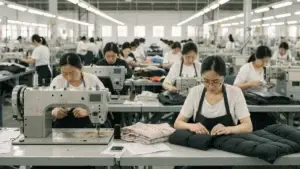
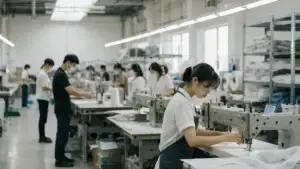
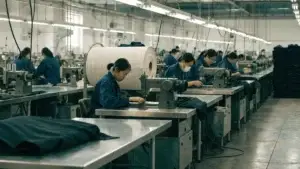
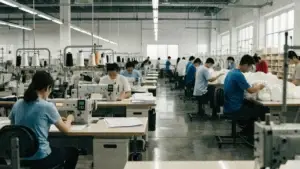
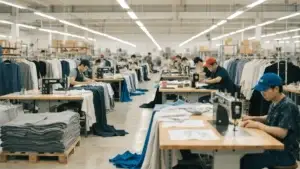
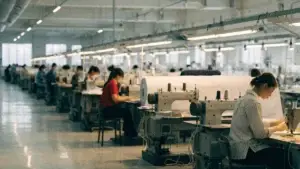
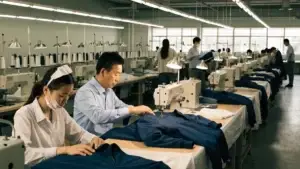
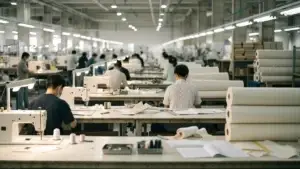
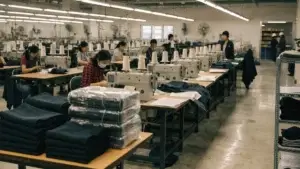
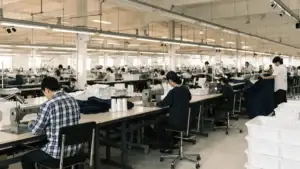
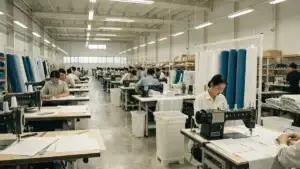
For a high-volume buyer, the greatest fear is misrepresentation. Is this a real factory, or a trading company with a nice website? The most powerful antidote to this fear is radical visual transparency. A website that confidently shows the buyer the actual factory floor, the real workers, and the daily operations signals that there is nothing to hide. This is the single most important differentiator between a trustworthy site and a generic one.
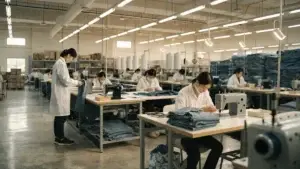
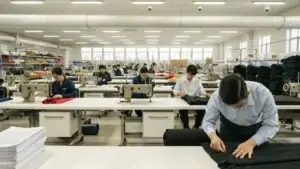
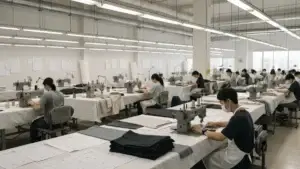
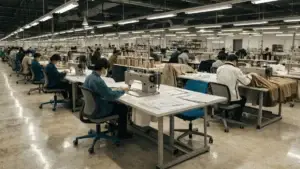
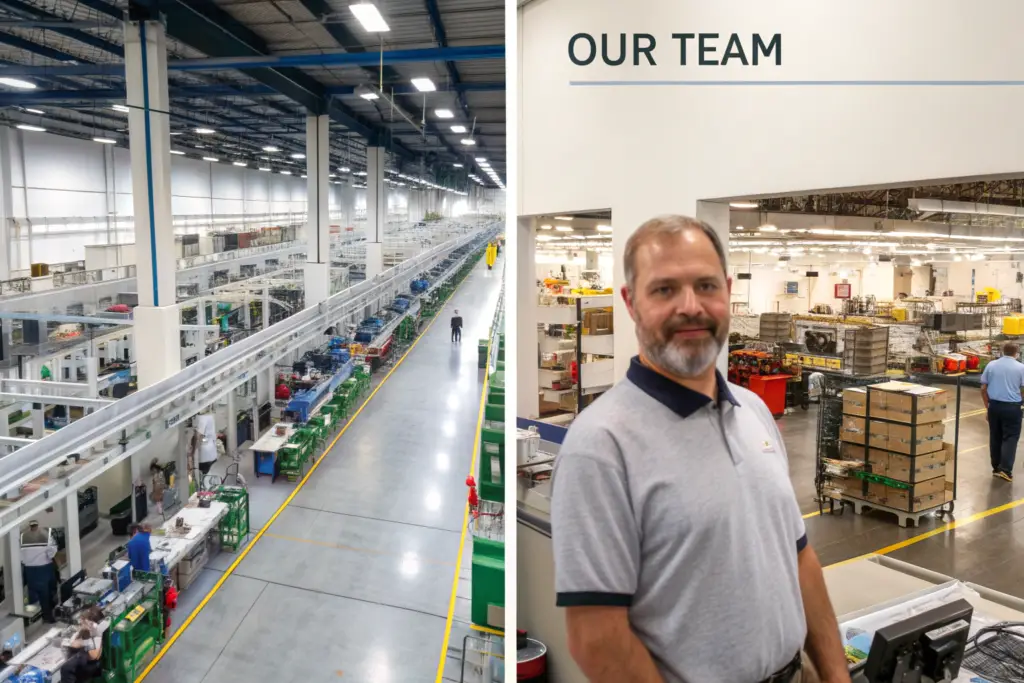
Radical operational transparency is the #1 trust signal. This means featuring real, high-quality photos and videos of your specific factory floor—not generic stock images. It means offering an embedded virtual tour or a prominent invitation to "Schedule a Live Video Tour." It means showcasing the "Faces Behind the Factory"—introducing key team members, from the QC manager to the line supervisor, with their real names. This level of openness directly addresses a buyer's deepest fear: misrepresentation.
I recall a sourcing manager for a major US brand telling me about his vetting process. He said, "If a factory's website only has generic photos of sewing machines that could be from anywhere, I click away immediately. But if I see a 360-degree tour of a floor that looks real, with people working, and they invite me to a live tour? That factory gets to the top of my list." He went on to explain how he once used a factory's live tour link directly from their site and was able to verify their operation within minutes. That transparency won the business. This is the standard we aim for with our invitation to tour Fumao , and we showcase the reality of our five production lines .
Why Are "Real Factory Photos" More Powerful Than Any Marketing Copy?
A single, slightly imperfect, high-resolution photo of your cutting room, with your workers, and your specific machinery is worth more than a thousand words of polished marketing text. It is verifiable. A buyer can look at the equipment, the lighting, the organization, and the worker's body language and make a judgment. Stock photos create doubt; real photos create trust. This is why our site is filled with authentic imagery of our facility and team. This is a core part of our transparent marketing .
How Does a Prominent Live Tour Invitation De-Risk the Buyer's Decision?
A factory that prominently invites you to a live, unscripted video tour is a factory that is confident in its operation. This invitation alone is a powerful trust signal. It tells the buyer, "We have nothing to hide. Come see for yourself." This dramatically lowers the perceived risk for a buyer considering a new partnership. This is one of the most effective tools for building trust remotely .
How to Showcase Verifiable Compliance and Quality, Not Just Claims?
Every factory website has a "Quality Control" page that talks about "commitment to quality." High-volume buyers are immune to this generic language. They need proof. They need to see the systems and the verifiable credentials that back up the claims. A trustworthy website translates its commitment to quality and ethics into visible, auditable evidence.
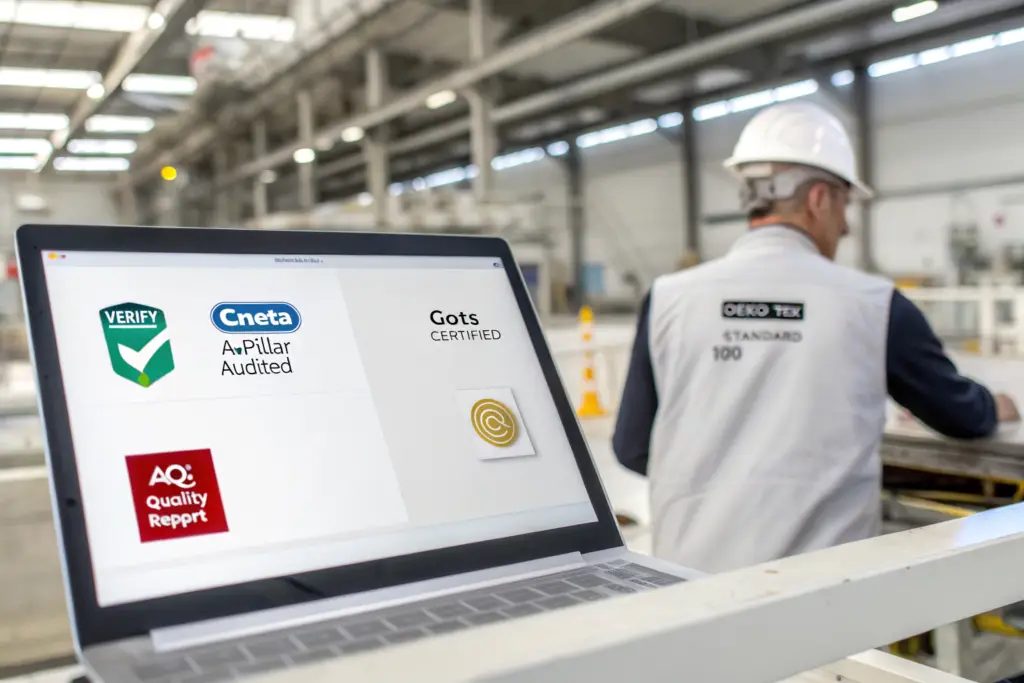
A trustworthy site showcases verifiable compliance and quality. It goes beyond displaying certification logos; it provides the license numbers and direct links to the official databases (like Sedex for SMETA, or the GOTS public database) where a buyer can instantly verify the credentials. It demystifies the QC process by providing a simple, visual walkthrough of the stages, and it even includes a redacted sample of a real AQL inspection report. This level of transparency speaks directly to the needs of a professional buyer.
A buyer once told us, "Your website is the first one I've seen that actually shows a sample AQL report. I didn't have to ask for it. You just put it out there. That told me you understand what I need to see and you're confident in your quality." He was right. We include a redacted, sample report directly on our site. This preemptively answers a key buyer question and demonstrates that our quality system is real and data-driven. This is the power of providing transparent quality documentation .
What Is More Powerful: A "Certifications" Page or a "Verify Our Certifications" Page?
The difference is immense. A page with logos is easily faked. A page that says, "Verify our SMETA audit live on the Sedex platform using Reference ZC:," and provides a direct link to the GOTS database is powerful. It transforms a passive display into an active, verifiable proof. This is the standard we set for verifiable compliance .
How Can You Visually Explain Your QC Process to Build Confidence?
Do not just say "we have a 3-step QC process." Show a simple, clean diagram of the three stages: Incoming Fabric Inspection, In-Line Audit, and Final AQL Inspection. Use icons and photos of each stage in action. This visual storytelling makes your quality system tangible and understandable to a buyer, building confidence in your operational rigor. This is a key part of our website's quality narrative .
How to Prove Specific Expertise Through Case Studies and Specialization?
A high-volume buyer is not just looking for any factory. They are looking for a factory with proven, specific expertise in their exact product category. A generic "we make all kinds of clothes" message is a trust-killer. A trustworthy website demonstrates its expertise through focused categories and detailed examples of past work. It shows, rather than tells, what it is uniquely good at.
To prove specific expertise, a trustworthy website uses detailed case studies and clear product specialization. It avoids generic claims and instead presents focused stories of past partnerships. A case study that briefly describes a client's challenge and the factory's specific solution demonstrates capability in a way a generic list of services cannot. It is also crucial to clearly state your core product categories, showing a buyer that you are a specialist, not a generalist.
A buyer for a premium outerwear brand once told us, "I chose Fumao because your website didn't just say you make jackets. You had a case study on exactly the kind of complex wool coating I use, and you talked about the specific machinery you have for it. You spoke my language. I knew you were the right partner." We feature case studies and clear category specializations on our site for this exact reason. This is how we demonstrate our specialized manufacturing expertise .
Why Are Specific Case Studies More Persuasive Than a Long Client List?
A list of logos (which buyers cannot always verify) is weak. A case study tells a story. It shows you solved a specific problem for a specific type of client. It demonstrates your problem-solving ability, your technical expertise, and your ability to form a partnership. It is far more credible and engaging. This is the approach we take in our portfolio of work .
How Does Clear Product Specialization Signal Reliability?
A factory that says "We specialize in premium wovens, tailored outerwear, and delicate silks" is far more trustworthy for a brand in those categories than a factory that says "We make t-shirts, denim, and wedding gowns." Specialization signals deep, relevant knowledge, dedicated equipment, and a proven track record. It shows you are a master of your craft, not a jack of all trades. This is the focus of our core expertise .
How Does Fumao's Website and Digital Presence Build Trust with Professional Buyers?
We have designed every element of our digital presence, from our website to our communication protocols, to answer the specific, unspoken questions of a professional, risk-averse buyer. We know they are looking for reasons to trust us, and we provide them proactively. Our goal is for a buyer to feel, after spending 10 minutes on our site and having one conversation, that we are a transparent, capable, and safe partner.
Fumao's digital presence builds trust by being a direct reflection of our operational transparency and expertise. Our website is not a marketing facade; it is a vetting tool. We invite buyers to tour our factory live, we provide verifiable compliance data, and we share detailed stories of our work. Our proactive, structured communication style, which begins with the first contact form, reinforces that we are a professional, organized, and reliable B2B partner.
A new brand partner recently told us, "Your website was the reason I reached out. It was the only one that didn't feel like a sales pitch. It felt like an open book. I felt like I already knew your factory before our first call." That is the exact experience we aim to create. We use our website not to make grand promises, but to provide verifiable proof. We let our transparency do the selling. This is the essence of our trust-building philosophy .

How Do We Use Our Website to Pre-Answer a Buyer's Top Vetting Questions?
We structure our content to address their fears directly. An "Our Factory" page with a live tour link answers "Are you a real factory?" A "Compliance" page with verifiable links answers "Are you ethical?" A "Quality" page with sample reports answers "How do you ensure consistency?" We remove the mystery and provide the answers upfront. This is a key part of our user-focused site design .
How Does Our Overall Digital Communication Style Reinforce Trust?
From the automated reply to a contact form submission to the structured weekly update from a Project Manager, our communication is prompt, professional, and transparent. This consistency in digital communication reinforces the message of our website: we are a well-managed, reliable, and professional organization. This is the foundation of a strong B2B digital relationship .
Conclusion
For a high-volume clothing buyer, a trustworthy B2B website is not one with the flashiest design or the boldest claims. It is one that provides radical operational transparency, verifiable proof of compliance and quality, and specific evidence of relevant expertise. It is a site that invites scrutiny and rewards it with evidence.
At Shanghai Fumao, our website is built on these principles. It is a digital handshake that says, "We have nothing to hide. Come and see for yourself." We provide the verifiable information that professional buyers need to make a confident, risk-reduced decision. We believe our transparency is our greatest sales tool.
If you are a serious buyer looking for a transparent and reliable manufacturing partner, we invite you to explore our website or contact our Business Director, Elaine, to schedule a live video tour. Experience the difference that radical transparency makes. Please email Elaine at: elaine@fumaoclothing.com.