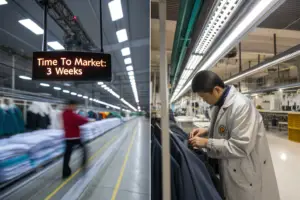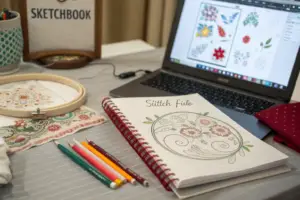
Every week I get on a call with an ambitious entrepreneur from the U.S. who just watched a few YouTube videos about private labeling and is ready to wire a deposit to start their clothing line. They have a mood board full of inspiration and a name they love. But they do not have a tech pack. They do not know what a GSM weight is. And they definitely do not understand how ocean freight consolidation works. Six months later many of those same people come back to me frustrated because their first shipment is stuck in customs or the fabric feels nothing like the sample they approved. I want to stop this cycle because it hurts the industry and it makes it harder for good brands to trust overseas manufacturing partners.
To avoid the biggest pitfalls when starting a private label clothing brand you must treat your first production run as a learning investment rather than a profit center and you must prioritize technical documentation over aesthetic design in the early stages. The most common failures stem from poor fit specification lack of clear fabric testing standards and a misunderstanding of international shipping Incoterms not from a lack of creativity or marketing skill.
I am writing this from the perspective of a factory owner here in China. I have seen the backend of this business for over a decade and a half. At Shanghai Fumao we run five production lines and we ship to North America every single day. I will walk you through the real-world obstacles that kill private label dreams and show you exactly how to sidestep them before they cost you thousands of dollars.
How Do I Create a Tech Pack That Prevents Costly Production Errors?
This is the single most important document in your entire business yet most first-time brand owners treat it like an afterthought. They think sending a photo of a Zara jacket with a note saying "make it like this but better" is enough. It is not. A bad tech pack or no tech pack at all is the number one reason you will open a shipping carton six months from now and want to cry. The garment will be wrong. The factory will point to the vague email you sent as their instruction. And you will be stuck with 2,000 units of unsellable inventory.
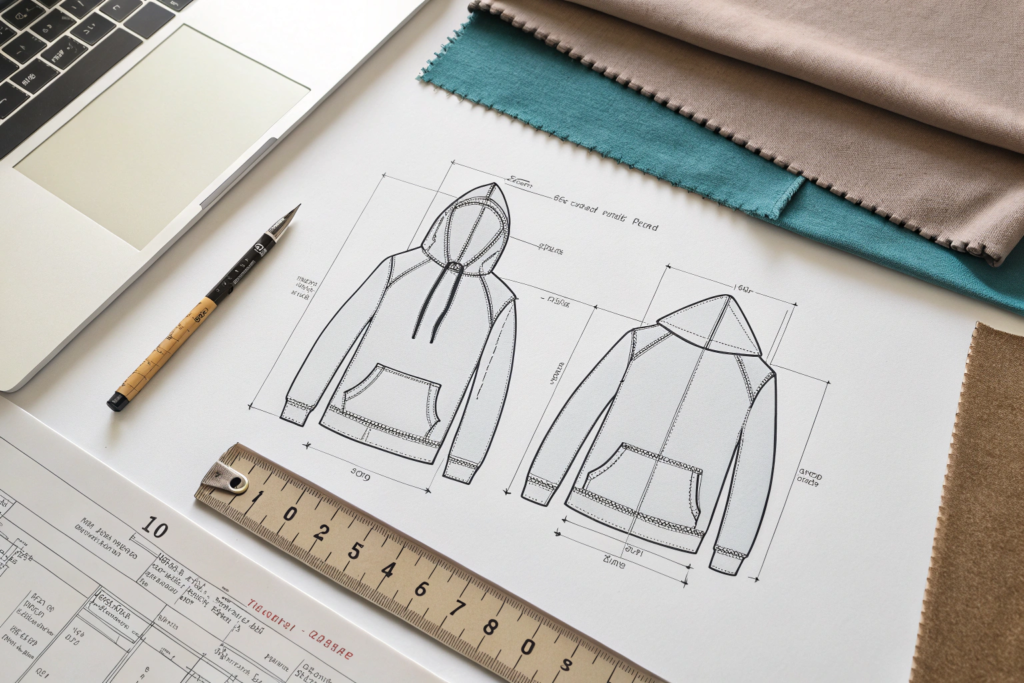
Creating a detailed tech pack prevents production errors by eliminating all subjective language and guesswork from the manufacturing process. A proper tech pack translates your creative vision into a precise engineering blueprint that includes graded measurements stitch types seam constructions and exact trim placements that a factory worker in any country can follow without needing to ask you a question.
What Specific Measurements Are Most Often Overlooked by New Designers?
I cannot tell you how many times I have received a spec sheet that has a chest width and a body length and absolutely nothing else. Then the brand owner gets angry because the sleeve is too tight or the armhole sits too low. You are not just selling a rectangle of fabric. You are selling a three-dimensional shape that must fit a human body in motion.
Here are the critical points of measure that separate a professional brand from an amateur one:
| Measurement Point | Why New Brands Miss It | The Resulting Fit Disaster |
|---|---|---|
| Bicep Circumference | They assume it scales with chest size. | The sleeve looks painted on a normal arm; returns for "runs small" spike. |
| Armhole Depth (Curve) | They copy a flat measurement from a different garment. | Restricted range of motion; fabric pulls across the front shoulder. |
| Front Neck Drop | They only measure total neck width. | The neckline chokes the wearer or gapes open when leaning forward. |
| Crotch Curve Length | They only specify inseam and outseam for pants. | Severe "camel toe" effect or sagging in the back rise; pants are unwearable. |
I worked with a brand owner from Denver last winter. She had a beautiful design for a women's woven blouse. She sent us a tech pack that lacked an armhole curve measurement. Our pattern maker used a standard ASTM body measurement grade for a size Medium. When the sample arrived the armhole was too high and it was cutting into her fit model's armpit. Because we had a proper relationship we caught it at the sample stage. We adjusted the curve depth by 1.25 cm and the production run was perfect. But if she had gone with a less communicative factory that just "follows the paper" she would have had 5,000 blouses with the same defect.
How Do Stitch and Seam Construction Details Affect Garment Longevity?
This goes beyond just saying "use a straight stitch." You need to specify the Stitches Per Inch. This is critical for knit fabrics. If you sew a cotton jersey t-shirt with a tight lockstitch that has no stretch the thread will pop the first time someone bends over. You must call out a stitch type 504 or 512 overlock with the correct differential feed.
At Shanghai Fumao we often guide new brands on this because they do not know the terminology. For a recent activewear startup we advised them to use a Flatlock Seam on the inside of the leggings. This adds about $0.45 to the cost per unit but it eliminates the raised bump of a traditional overlock seam. The customer feels no chafing during a workout. That detail is what builds a loyal following. You cannot communicate that detail in a WhatsApp message. It must be in the tech pack.
How Can I Ensure Consistent Fabric Quality Across Different Seasons?
This is where the private label dream often collides with reality. You find a great jersey knit for your spring collection. It is soft has good recovery and the color is perfect. You order a reorder for fall in the exact same color code and when the box arrives the hand feel is completely different. It is thinner. It pills faster. Your repeat customers notice and they leave bad reviews. This happens because fabric mills change their yarn sourcing based on commodity prices or they adjust finishing chemicals to speed up delivery.
Consistent fabric quality across seasons requires you to establish and enforce objective testing standards rather than relying solely on subjective hand feel. You must mandate specific lab tests for weight tolerance shrinkage and colorfastness for every single bulk fabric roll before it reaches the cutting table regardless of whether you have used that supplier before.
Why Is GSM Weight Tolerance More Important Than "Soft Hand Feel"?
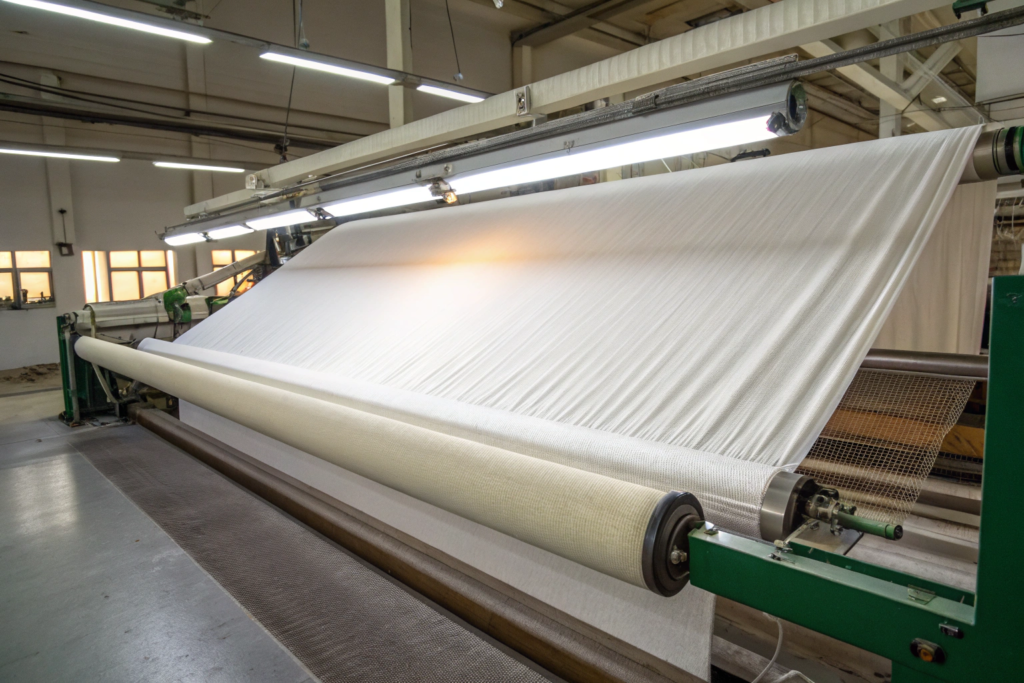
Soft hand feel is a temporary condition. A mill can make almost any fabric feel soft for about three washes by loading it up with silicone softeners and other finishing agents. But those chemicals wash out. When they do the true character of the fabric is revealed. If the base weight is too light the garment becomes flimsy and sheer.
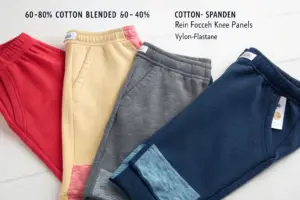
GSM stands for Grams per Square Meter. It is the objective weight of the fabric. If your tech pack specifies 180 GSM jersey you need to accept a tolerance of plus or minus 5%. If a roll comes in at 160 GSM that is an 11% reduction in material. That mill just saved 11% on yarn cost and you are getting an inferior product.
We had a situation in August 2025 with a men's streetwear brand. They complained the new shipment of hoodies felt "less beefy" than the sample run. We went back to the fabric inspection report. The sample run fabric tested at 435 GSM. The bulk fabric tested at 402 GSM. It was within the "standard" 8% tolerance most mills allow but the customer could feel the difference. We now work with that brand to include a clause in the purchase order that mandates a tighter 3% tolerance on bulk. It costs about 7% more on the fabric price but it protects the brand identity.
Here is a quick reference for common garment categories:
| Garment Type | Minimum Recommended GSM | What Happens if GSM is Too Low |
|---|---|---|
| Premium T-Shirt | 180-200 GSM | Fabric becomes see-through; collars curl after washing. |
| Heavyweight Hoodie | 400-440 GSM | Feels like a thin sweatshirt; lacks structure and warmth. |
| Summer Shorts (Twill) | 220-260 GSM | Fabric tears at the pocket stress points easily. |
What Lab Tests Should I Request for Colorfastness and Shrinkage Control?
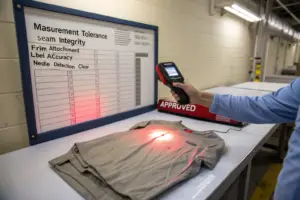
Do not trust the mill's word. Ask for the certified lab report from a third party like Intertek or SGS. Specifically request the AATCC 61 2A test for washing colorfastness. This simulates five home laundry cycles. If the color change grade is less than 4.0 or if there is heavy staining on the multifiber swatch you need to reject that dye lot. I had a client skip this step to save $200 on testing. They produced 8,000 red hoodies that bled pink dye onto the white drawstrings and kangaroo pocket linings during the first wash. The entire batch was a loss. The $200 test would have saved them roughly $65,000 in landed cost.
For shrinkage you need the AATCC 135 test. If you are using cotton or a cotton blend you must account for up to 5% length shrinkage in your pattern making. If you do not the medium size will fit like a small after the customer launders it. We always recommend a pre-shrinking process like compacting for knits or sanforizing for wovens. It adds a small cost but it eliminates the post-purchase disappointment that kills a private label's repeat business.
What Are the Hidden Logistics Fees That Destroy First-Year Profit Margins?
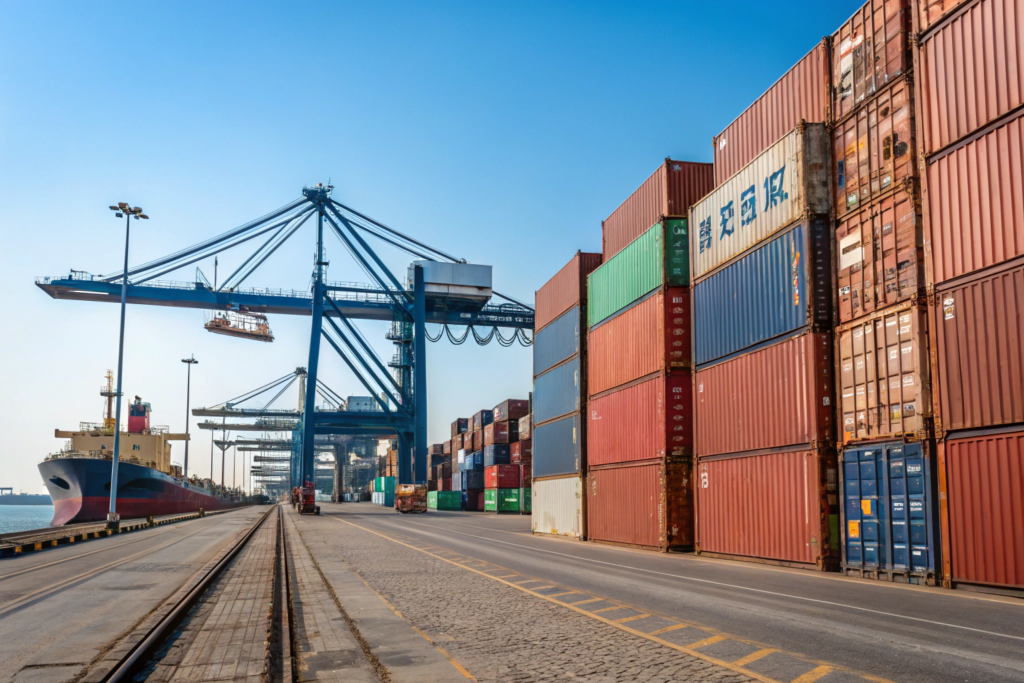
You have budgeted for the cost of the goods and the ocean freight quote of $3,500. You think you are done. Then the invoice from the freight forwarder arrives and it is $7,200. What happened? You got hit with destination fees you did not know existed. This is the most painful conversation I have with new brand owners because it feels like a hidden tax. It is not hidden if you know where to look but most people do not until it is too late.
The hidden logistics fees that destroy first-year profit margins are almost always found on the destination side of the shipment. These include Terminal Handling Charges Pier Pass fees for California ports Customs Examination Fees and most critically the warehousing and trucking charges that accrue if you do not have a customs broker and bonded warehouse pre-arranged.
Why Is DDP Shipping Preferable to FOB for First-Time Importers?
I strongly push all my new clients at Shanghai Fumao toward DDP shipping for at least their first two production runs. FOB means Free On Board. Under FOB terms our responsibility as the factory ends when the container is loaded onto the vessel in Shanghai. You as the buyer own all the risk of ocean loss and you are responsible for every single charge that happens when that ship hits the Port of Los Angeles or Long Beach.
This includes:
- ISF Filing: If you miss the 48-hour window the fine is $5,000.
- Customs Bond: You cannot clear goods without one.
- Exam Fees: If Customs and Border Protection flags your container for an X-ray or intensive exam you pay for the trucking to the exam site and the labor to unload and reload. This can cost $800 to $3,000 easily.
With DDP the factory or the forwarder we partner with manages all of that. We quote you a single landed price per unit. In late 2024 a brand owner I know tried to save $0.35 per unit by using a cheap FOB forwarder he found online. His container got selected for a CBP tailgate exam in Long Beach. He had no one on the ground to handle it. The container sat at the terminal for 14 days accruing demurrage fees. His total logistics bill ended up being 40% higher than the DDP quote we had provided him.
How Do Tariff Classifications Affect My Landed Cost Calculation?
You cannot just guess your HTS code. The Harmonized Tariff Schedule code determines how much duty you pay to bring the goods into the U.S. If you classify a men's cotton woven shirt as a "blouse" you might pay a different rate and you might get flagged for an audit.
Here is a practical example from our factory:
| Garment | Correct HTS Code (Example) | Approximate Duty Rate | Common Mistake |
|---|---|---|---|
| Men's Cotton T-Shirt | 6109.10.00 | 16.5% | Classifying as 6110 (Sweater) which has a lower or different rate depending on fiber. |
| Women's Polyester Dress | 6204.43.00 | 16% | Not breaking out the weight of the fabric vs. trim in the value declaration. |
| Kids' Woven Shorts | 6203.42.45 | 16.5% | Forgetting that kids' wear is often subject to stricter CPSC safety requirements for drawstrings and lead content. |
We had a client in Arizona who imported a shipment of men's flannel shirts. His previous broker had classified them under a tariff number that had a 0% duty rate due to a loophole. The loophole closed. CBP did a retroactive review and sent him a bill for three years of back duties plus interest. It nearly bankrupted his company. A good factory partner can provide you with the correct HTS code suggestion but you must verify this with a U.S.-based licensed customs broker.
How Do I Scale My Production Without Compromising on Quality Control?
You have made it through the first nightmare. The first shipment arrived and it was actually good. Sales are picking up. Now you need 5,000 units instead of 500. But you are terrified that the factory will cut corners on the larger order to save time. This fear is valid. When you scale volume the pressure on the sewing line increases. Operators are paid by the piece. They want to go faster. Faster often means sloppy.
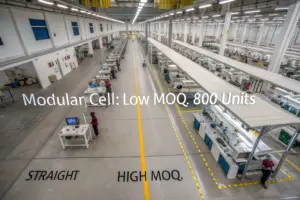
Scaling production without compromising quality control requires a shift from trusting the factory's internal checks to implementing a third-party or independent inspection protocol based on AQL sampling standards. You must also ensure that the factory has the physical capacity in terms of dedicated sewing lines to absorb your growth without outsourcing your product to a less experienced subcontractor.
What Is an AQL Inspection and How Do I Set the Right Tolerance?
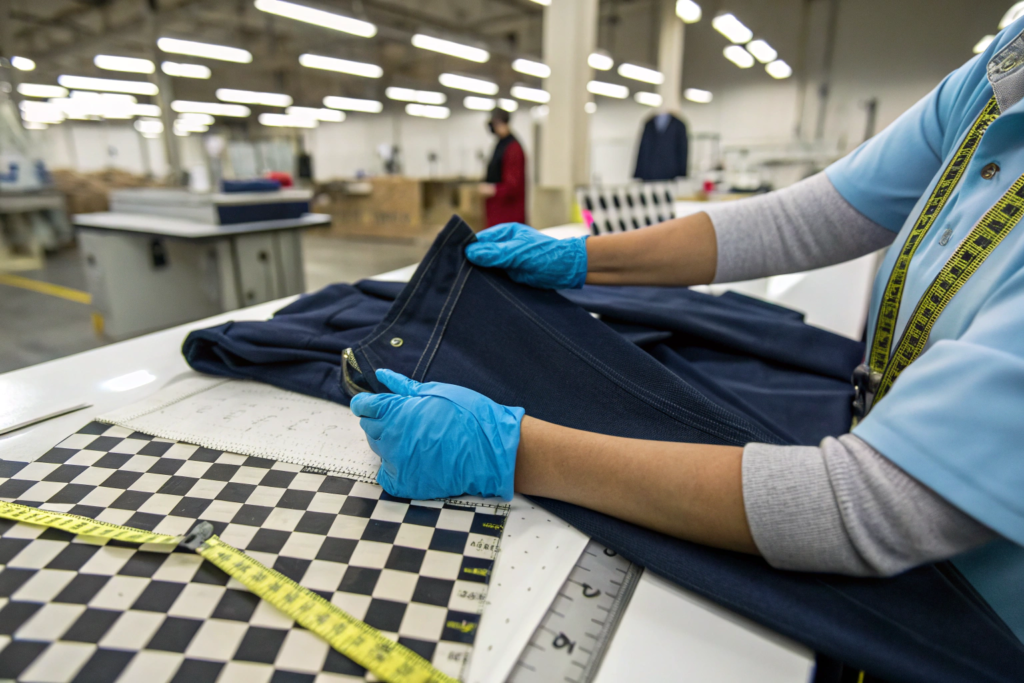
AQL stands for Acceptable Quality Limit. It is a statistical sampling method defined by ISO 2859-1. You do not check 100% of the goods because that is slow and expensive. You check a random sample. Based on the number of defects found in that sample you either accept the batch or reject it.
Here is the standard AQL table we use for U.S. apparel brands:
| Defect Type | Example | Typical AQL Tolerance (General Inspection Level II) |
|---|---|---|
| Critical Defect | Broken needle tip in garment; safety hazard. | 0.0% (Zero Tolerance. Any finding = Rejection) |
| Major Defect | Hole in fabric; seam open; stain on front; color shading. | 2.5% |
| Minor Defect | Loose thread ends; slight skew in label placement; minor crease. | 4.0% |
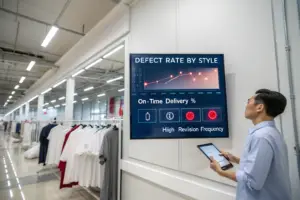
I tell all my clients at Shanghai Fumao that we prefer to do a DUPRO inspection. This is an inspection During Production. We do it when about 20% to 30% of the order is packed. This allows us to catch a systematic issue like the pocket being sewn 1cm too low before the factory finishes the entire 10,000 piece order. If we catch it early we fix it on the remaining 70% of the order. If you only inspect at the end when goods are 100% finished you either accept the defect or you miss your shipping window entirely.
How Can I Tell if a Factory Is Subcontracting My Order?
Subcontracting is the silent killer of quality. You think you are getting the premium line of Shanghai Fumao with our 15 years of experience. But if we are over capacity we might quietly send your cut fabric to a smaller workshop down the road where the lighting is bad and the sewing machine maintenance is worse.
To prevent this you need to ask for a Production Line Schedule photo. I require my project managers to send a weekly photo of the line to clients who ask. You should see your specific fabric and your specific trims on the floor of the factory you contracted with. Another trick is to request a Cutting Room Ticket. This is the paper document that stays with the bundle of fabric as it moves from cutting to sewing to finishing. If the ticket has a different factory name on it you have found the subcontractor. In 2023 we had a situation where a client wanted to add 10,000 units at the last minute. We were at capacity on our five lines. Instead of subcontracting secretly we were honest. We told the client we could push the delivery date by two weeks to run it on our own floor or they could approve a partner factory we had audited. Transparency keeps trust intact.
Conclusion
Starting a private label clothing brand is one of the most rewarding but technically challenging businesses you can enter. The pitfalls are not hidden secrets. They are well-documented traps that catch people who skip the due diligence step. You must create a detailed tech pack that serves as a legal manufacturing contract. You must enforce fabric testing standards that are objective and measurable not just based on how nice the swatch feels in your hand. You must understand the true cost of international logistics especially the fees that hit your wallet long after the boat leaves China.
The brands that survive and thrive are the ones that treat this as a manufacturing business first and a fashion business second. They understand that a beautiful design is worthless if the armhole is too tight or the color fades in the third wash. They also understand that a good relationship with a factory partner is not about getting the cheapest possible FOB price. It is about getting a reliable consistent product that allows you to build a reputation and command a higher retail price.
I have seen brands collapse under the weight of a single bad shipment and I have seen small labels grow into national names because they nailed the fit and the fabric on their first attempt. The difference always comes down to preparation and communication.
If you want to avoid these expensive mistakes and work with a factory that values transparency as much as you value your brand identity we are ready to help. Our team manages the process from fabric sourcing to DDP delivery so you can focus on selling. For specific questions about your upcoming production run or to discuss how we can help you navigate your first order please contact our Business Director Elaine. You can email her directly at elaine@fumaoclothing.com.