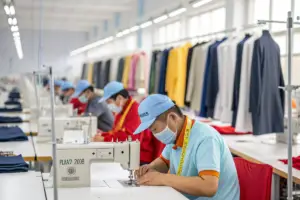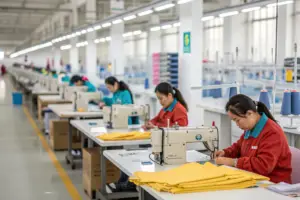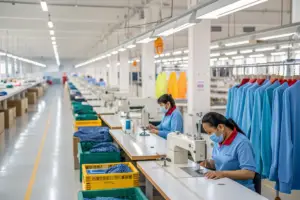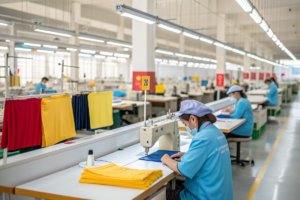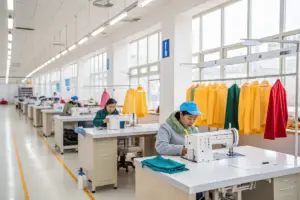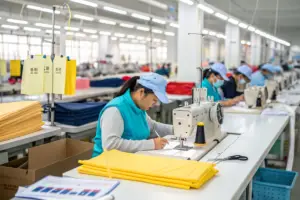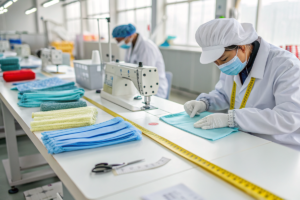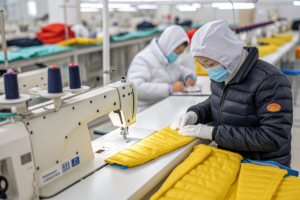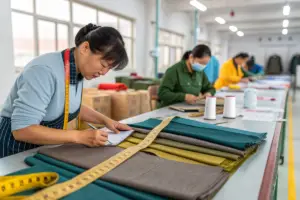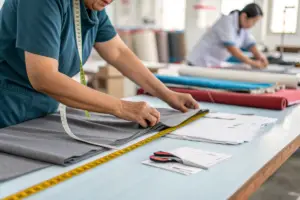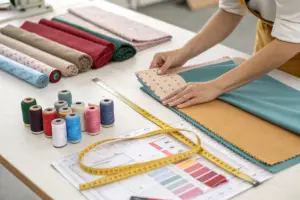
A brand owner from Stockholm sat in my showroom last month with a spreadsheet that told a painful story. For the past five years, he had managed his production the traditional way. He sourced fabric from a mill in Italy. He bought trims from a supplier in Portugal. He hired a pattern maker in Stockholm. He shipped everything to a cut-and-sew factory in China. He managed four separate vendor relationships, four separate quality control processes, four separate sets of shipping documents, and four separate payment schedules. The spreadsheet tracked the time he spent on coordination alone: fifteen hours per week. His collection was chronically late because one delay in the chain, a late fabric delivery from Italy, a missing trim shipment from Portugal, cascaded through the entire system. He looked at me and said, "I am a project manager for my own supply chain. I do not design clothes anymore. I manage vendors. I want one throat to choke."
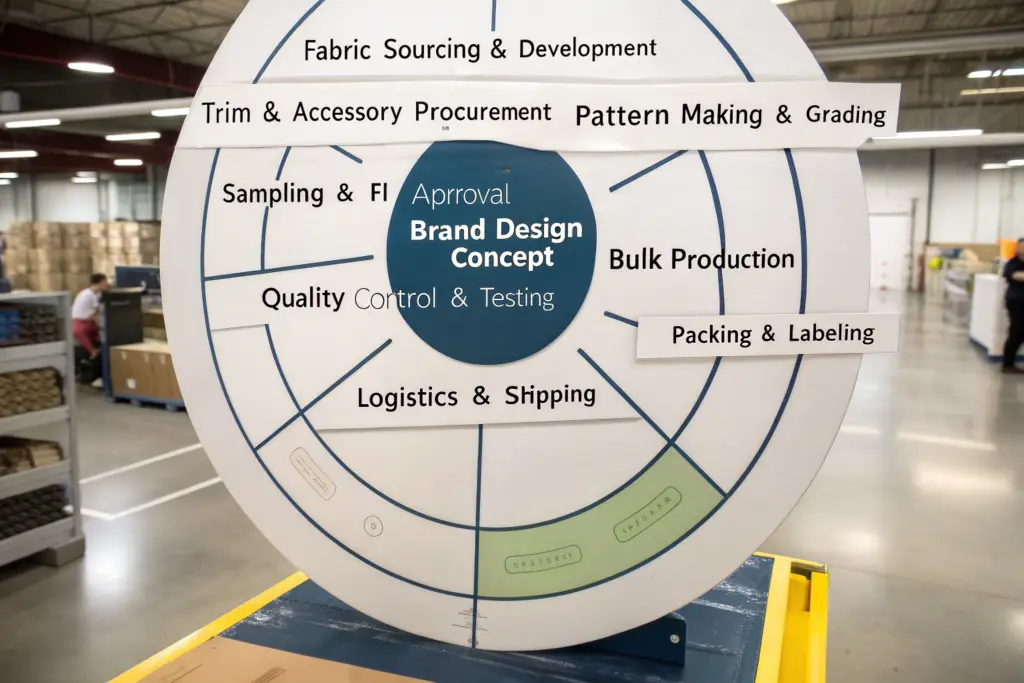
European buyers are shifting toward Chinese suppliers offering full-package services because the model collapses a fragmented, multi-vendor supply chain into a single point of accountability. A full-package supplier takes responsibility for fabric sourcing, trim procurement, pattern making, sampling, bulk production, quality control, and export logistics. The buyer provides the design concept and the purchase order. The supplier delivers finished, packaged goods ready for the retail floor. This model reduces the buyer's administrative burden, compresses the production timeline by eliminating handoffs between vendors, reduces the risk of delays caused by supplier interdependency, and allows the buyer to focus their time and talent on design and sales, not supply chain management.
The shift is not about cost savings. The full-package model is often not cheaper than the fragmented model, at least on the FOB price. The shift is about control, simplicity, and time-to-market. The European buyer who spends fifteen hours a week managing vendors is losing fifteen hours a week that could be spent on creative direction, customer relationships, and revenue-generating activities. The full-package model buys that time back. At Shanghai Fumao, we have offered full-package services for over a decade. The demand for this model from European buyers has accelerated sharply in the last three years. Let me explain why.
What Exactly Does a "Full-Package" Service Include at a Modern Chinese Factory?
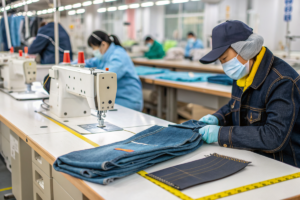
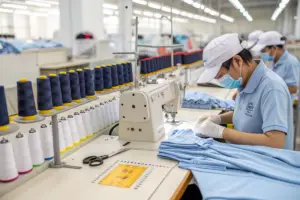
The term "full-package" is used loosely in the industry. Some factories claim to offer full-package services when all they really offer is cut-make-trim, sewing the garment from fabric and trims provided by the buyer. A genuine, modern full-package service is much broader. It begins at the design concept and ends when the finished, packaged goods are loaded onto the vessel. The buyer is involved in approvals at key stages, but the supplier manages the entire operational workflow.
A modern full-package service at a Chinese factory includes fabric research and sourcing, where the supplier presents suitable fabric options based on the buyer's design brief and target price. It includes trim and accessory procurement, buttons, zippers, labels, hang tags, packaging, all sourced by the supplier. It includes pattern making, grading, and sample development. It includes bulk production, inline and final quality control, and compliance testing at accredited laboratories. It includes packing to the buyer's retail specifications and managing the export logistics, either to the buyer's freight forwarder or as a delivered duty paid service. The buyer's role is to approve samples, confirm specifications, and receive finished goods. The supplier's role is everything else.
The scope of a full-package service varies by supplier capability. A factory with an in-house fabric mill can offer a deeper level of fabric customization. A factory without in-house textile capability must source from external mills, but still manages the sourcing process on behalf of the buyer. The key distinction is that the buyer has a single point of contact and a single point of accountability for the entire production process.
How Does Fabric Sourcing Responsibility Shift the Buyer's Role from Manager to Curator?
In a traditional cut-make-trim model, the buyer sources the fabric. This means the buyer must research mills, request swatches, negotiate prices, place purchase orders, arrange quality testing, manage the shipping of the fabric to the cutting factory, and resolve any issues with the fabric when it arrives. The buyer is the fabric sourcing manager.
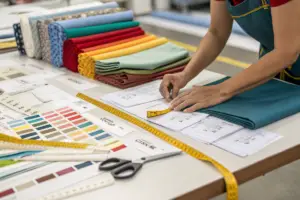
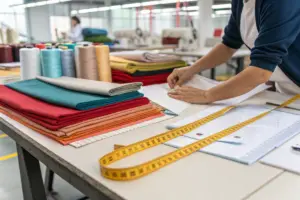
In a full-package model, the buyer becomes a fabric curator. The buyer provides the design brief and the target price. The supplier presents a curated selection of suitable fabrics, typically three to five options for each garment type. The buyer touches the swatches, feels the hand, reviews the test reports, and makes a selection. The buyer approves. The supplier executes.
The time saved is enormous. The fabric research, the mill communication, the negotiation, the logistics coordination, is handled by the supplier's fabric sourcing team, who have existing relationships with mills, understand the supplier's quality requirements, and can negotiate better prices through aggregated volume across multiple clients. The buyer's time on fabric is reduced from days of active management to hours of review and approval.
This shift also improves the fabric outcome. The supplier's sourcing team knows which mills consistently deliver quality on time. They know which mills are currently experiencing delays. They know the subtle differences between a mill's sample quality and their bulk quality. The buyer, sourcing fabric once or twice a season, cannot accumulate this depth of market knowledge. The supplier, sourcing fabric daily, has it.
A brand owner I work with transitioned from sourcing his own Italian wool to using our full-package fabric sourcing. He was nervous about losing control. We presented him with four Italian wool options from mills we had vetted over years, all within his target price. He selected one. The fabric arrived on time, on quality, and at a price 8% lower than he had been paying independently, because we aggregated his order with other clients using the same mill. His role had shifted from stressful manager to satisfied curator.
What Is the Difference Between "Full-Package" and "Cut-Make-Trim" in Terms of Accountability?
The difference in accountability between CMT and full-package is the fundamental reason European buyers are shifting. In a CMT arrangement, accountability is fragmented. The fabric mill is accountable for the fabric quality and delivery. The trim supplier is accountable for the trim quality and delivery. The cutting factory is accountable for the cutting, sewing, and finishing. If the finished garment has a defect, the buyer must determine which vendor caused it. The fabric mill blames the cutting factory for poor handling. The cutting factory blames the fabric mill for supplying defective material. The buyer is caught in the middle, acting as a detective and a judge, while the unsaleable garments sit in a warehouse.
In a full-package arrangement, accountability is unified. One supplier is accountable for the entire garment, from the raw material to the finished product. If the fabric pills, it is the supplier's responsibility, regardless of whether the pilling was caused by the mill's yarn or the factory's finishing process. If a trim fails, it is the supplier's responsibility, regardless of which trim subcontractor supplied it. The buyer has one point of contact for any quality issue. The supplier cannot deflect blame to a vendor the buyer chose, because the supplier chose all the vendors.
This unified accountability is what the phrase "one throat to choke" means, though I prefer a less violent metaphor. It is one partner to call. One partner who is responsible for making the problem right. The reduction in stress, in investigation time, and in dispute resolution cost is one of the most valuable benefits of the full-package model.
A buyer had a shipment of men's shirts where the collar interlining delaminated after washing. In a CMT model, the interlining supplier, the fabric mill, and the sewing factory would have blamed each other. The buyer would have spent weeks investigating. In our full-package model, the buyer called our merchandiser. We took responsibility. We traced the issue to a faulty batch of interlining from a supplier we had chosen. We replaced the entire shipment at our cost. The buyer's time on the problem was one phone call.
How Does a Full-Package Model Compress Lead Times for Seasonal European Collections?
The European fashion calendar is unforgiving. The fabric sourcing, sampling, production, and shipping windows are fixed by the retail delivery dates. A brand that can compress the production timeline gains a competitive advantage. They can start design later, react to trends closer to the season, or simply have more time to sell the collection before markdowns begin. The full-package model compresses the timeline by eliminating the gaps between the fragmented stages of a traditional supply chain.
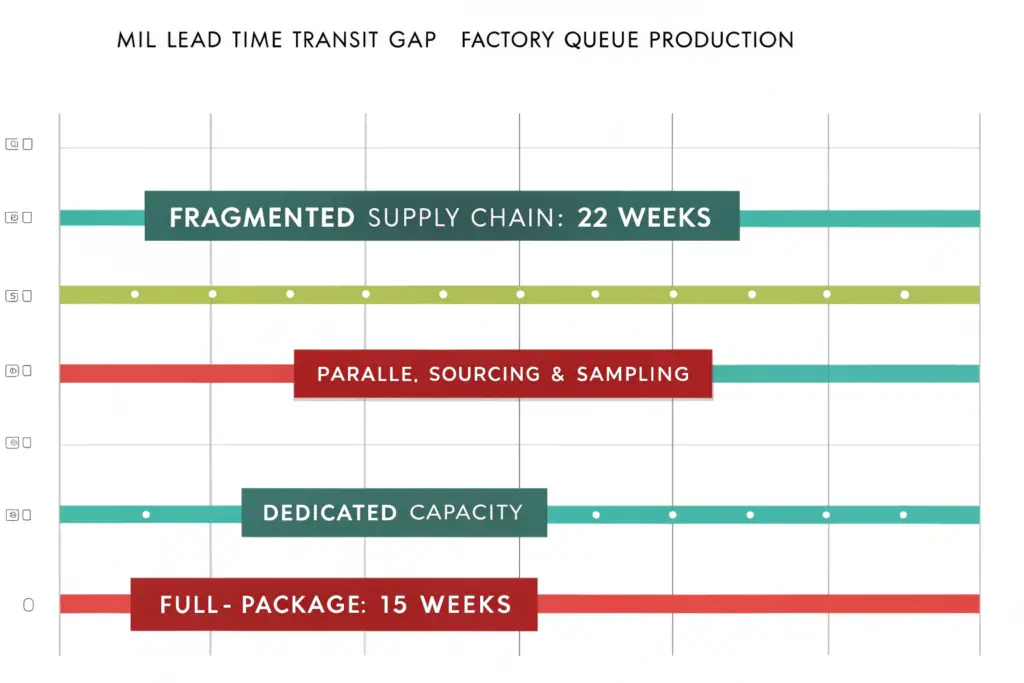
A full-package model compresses lead times by enabling parallel processing of tasks that are sequential in a fragmented model. When the fabric is sourced by an external party, the pattern making cannot begin until the fabric sample is received and tested. The production cannot begin until the fabric bulk is delivered. Each handoff between vendors creates a gap of days or weeks. In a full-package model, the fabric sourcing team, the pattern making team, and the production team work under the same roof. The pattern maker can begin work with a digital fabric specification while the physical fabric is being finished. The production line can be scheduled while the fabric is on the finishing machine. The gaps are collapsed.
The timeline compression is not just about internal coordination. The full-package supplier also has leverage with their fabric and trim suppliers that a single brand does not. A supplier placing orders for dozens of clients has more negotiating power with a mill than a single brand placing one order. The mill prioritizes the supplier's orders. The fabric lead time is shorter for the full-package supplier than for the individual brand.
Why Does Removing the "Transit Gap" Between Mill and Factory Save 2-3 Weeks?
In a fragmented supply chain, the fabric is produced at a mill in one location and then shipped to a cutting factory in another location, often in a different province or a different country. The transit time, the shipping, the customs clearance if international, the receiving and inspection at the cutting factory, typically adds two to three weeks to the timeline.
In a full-package model where the supplier has in-house fabric capability, or uses mills within close geographic proximity, the transit gap is eliminated or drastically reduced. The fabric is produced, finished, inspected, and delivered to the cutting room within the same industrial park or the same city. The delivery time is measured in hours or a day, not weeks.
Even when the full-package supplier uses external mills, the transit gap is reduced because the supplier's logistics team manages the shipping efficiently and has established, optimized routes. The fabric is not shipped to the brand for inspection and then forwarded to the factory. It goes directly from the mill to the supplier's receiving dock. The brand's approval is based on a lab dip and a handloom sent by courier, which takes days, not the shipment of bulk fabric, which takes weeks.
The two to three weeks saved by eliminating the transit gap is often the difference between making the retail delivery window and missing it. For a seasonal collection, that time is pure gold. It allows the brand to hold the design phase open longer, to place the production order closer to the selling season, or to ship by sea instead of air, saving significant freight costs.
How Can Parallel Sampling and Bulk Fabric Approval Shorten the Development Phase?
In a traditional sequential model, the brand develops the sample with a substitute fabric while the bulk fabric is being ordered and produced. Once the bulk fabric arrives, a pre-production sample is made in the actual fabric. If the bulk fabric behaves differently than the substitute, which it often does, the sample must be revised. The sequence is: sample in substitute, order bulk fabric, wait, sample in bulk fabric, revise.
In a full-package model with a greige bank, the supplier can parallel-process the sampling and the fabric approval. The pattern making and the first sample are done in a fabric from the greige bank that is very similar to the target bulk fabric. Simultaneously, the greige fabric is being dyed to the buyer's color. By the time the buyer has reviewed the first sample, the dyed fabric is ready. The pre-production sample is cut immediately in the actual bulk fabric. The two processes, sampling and fabric preparation, run in parallel, not in sequence.
The time saving from parallel processing is typically two to three weeks. The development phase is compressed without sacrificing the fit approval on the actual bulk fabric. The brand gets the speed of a shorter calendar and the security of a properly tested pre-production sample.
A European brand client launches four seasonal collections a year. The traditional development timeline was squeezing her design phase and forcing rushed decisions. By moving to our full-package model with parallel sampling, she gained three weeks in her development calendar. She uses those three weeks to refine her designs, make better color decisions, and spend more time with her customers. The time saving translated directly into better product and better sell-through.
What Quality Control Advantages Come with a Consolidated Supply Chain?
Quality control in a fragmented supply chain is reactive and fragmented. The brand inspects the fabric when it arrives at the cutting factory, which may be weeks after it left the mill. If the fabric is defective, the production is already delayed. The brand inspects the finished garments at the end of the line. Defects that originated in the fabric or in the early sewing stages are caught late, after labor has been invested. The brand's QC is a series of disconnected inspections at different points in a chain managed by different entities.
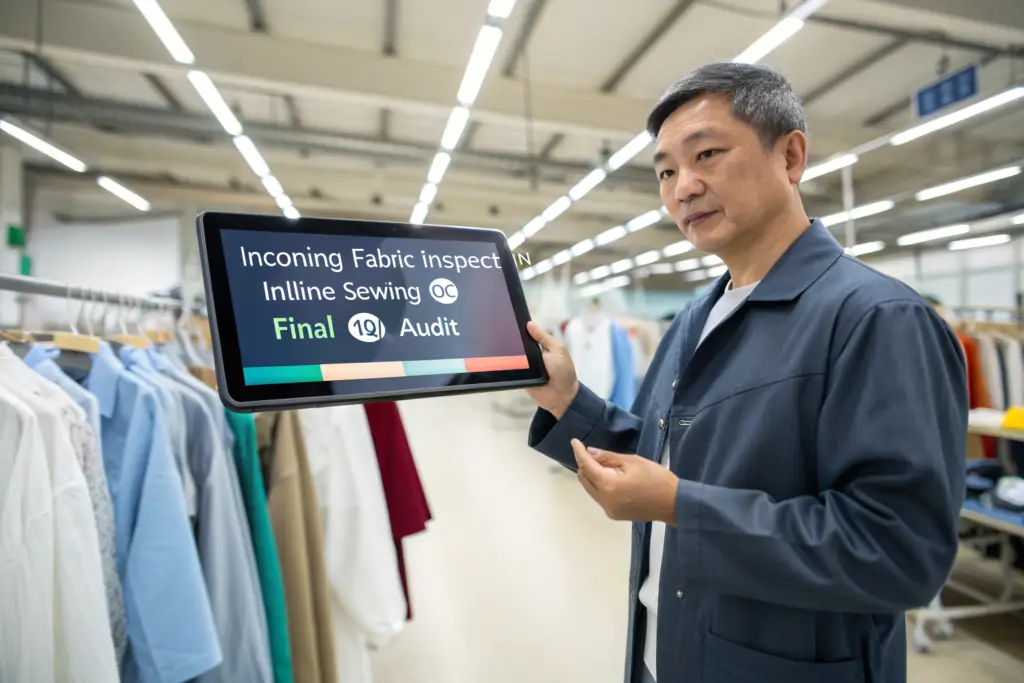
A consolidated, full-package supply chain enables a proactive, integrated quality control system. The supplier's QC team inspects the fabric at the mill before it is shipped. They inspect the incoming trims before they are released to the line. They perform inline inspections during sewing. They perform a final AQL inspection before packing. All of these inspections are managed by the same quality manager, using the same standards, and recorded in the same system. A defect trend identified at the inline inspection, a stitching issue, can be immediately traced back to the incoming fabric inspection or the machine maintenance records to identify the root cause. The integrated QC system catches defects earlier, corrects root causes faster, and delivers a more consistent final product.
The integrated QC system also eliminates the "blame game" between vendors. There are no separate vendors. There is one supplier responsible for the entire quality chain. The QC manager is not trying to prove another vendor's fault. They are trying to find and fix the problem. The accountability clarity drives a more honest, more effective quality culture.
How Does Inline Inspection Catch Defects That Originate in Fabric or Trims Earlier?
In a fragmented model, the fabric is inspected when it arrives at the cutting factory. If a defect is found, a color shading issue, a weave flaw, the fabric must either be returned to the mill for replacement or accepted with a discount. The return process takes time. The production schedule is already set. The factory is under pressure to cut. The defective fabric is often accepted and cut, with the hope that the defect will be sorted out during sewing. It rarely is. The defect becomes a garment defect.
In a full-package model, the supplier's QC team inspects the fabric at the mill before the fabric is shipped. The inspection is performed during or immediately after finishing, when the fabric is still at the mill and the mill's production team is available. If a defect is found, the mill can re-run the dye lot or re-finish the fabric immediately. The fabric does not leave the mill until it passes inspection. The defective fabric never reaches the cutting room. The production schedule is never threatened by a fabric quality issue discovered late.
The same principle applies to trims. In a fragmented model, the trims are shipped to the cutting factory, received, and may sit in the trim store for weeks before being used. If the zippers are defective, the problem is discovered when the sewing line is already running. Production stops. A new zipper order is rushed. The line waits.
In a full-package model, the trims are inspected upon arrival at the supplier's warehouse, before they are released to the line. A sample of zippers is tested. Buttons are pull-tested. The inspection is done when there is still time to reorder without disrupting the production schedule. The line never receives defective trims.
A European brand client had a recurring problem with button attachment strength on their shirts. In their previous CMT model, the buttons were supplied by a trim vendor and attached by the sewing factory. The trim vendor blamed the factory's sewing. The factory blamed the trim vendor's buttons. The problem persisted for three seasons. Under our full-package model, we tested the buttons upon arrival, found a batch with a manufacturing flaw, rejected it, and worked with the trim supplier to correct the tooling. The button attachment problem was solved permanently.
What Is a "Single QC Narrative" and How Does It Speed Up Root Cause Analysis?
A single QC narrative is the complete, end-to-end quality story of a production batch, documented in a single, integrated system. The fabric inspection report, the trim inspection report, the inline sewing inspection reports, the final AQL report, and the lab test reports are all stored in the same digital file, linked to the same batch number.
When a quality issue is identified, either by the final QC or, worse, by a customer return, the root cause analysis does not require gathering documents from multiple vendors and trying to piece together a timeline. The investigator opens the batch file. The fabric inspection report shows the fabric was accepted with no defects. The trim inspection report shows the zippers passed the function test. The inline inspection reports show a spike in stitching defects at Station 12 on Day 3 of production. The final AQL report shows the stitching defects were corrected after the inline flag. The root cause is traced in minutes, not days.
The single QC narrative also enables trend analysis across multiple batches. The supplier's quality manager can see that a particular fabric mill has a recurring shading issue, or that a particular sewing operation consistently generates defects on a specific fabric type. The trend analysis drives preventive action, not just corrective action.
We provide our full-package clients with a single batch quality report after every production run. The report is a digital file containing every QC record from incoming materials to final audit. The client has complete transparency into the quality of their order. The single narrative is a quality assurance document and a trust-building document.
Why Is the Shift Toward Full-Package Also a Shift Toward Strategic Partnership?
The shift from CMT to full-package is not just an operational shift. It is a relationship shift. A CMT relationship is transactional. The factory performs a defined service on materials provided by the buyer. The factory's incentive is to maximize the efficiency of the cutting and sewing, and to minimize their liability for defects. The factory is a vendor.
A full-package relationship is a strategic partnership. The supplier is deeply involved in the brand's product development, material choices, and quality standards. The supplier invests in understanding the brand's aesthetic and its target customer. The supplier's fabric sourcing team becomes an extension of the brand's design team. The supplier's success is directly linked to the brand's success. If the brand sells well, the supplier receives more orders. If the brand has quality issues, the supplier loses a valued long-term client. The incentives are aligned over the long term, not just per transaction. The shift to full-package is a shift from buying capacity to building a partnership.
This partnership model is particularly valued by European buyers, who often come from a business culture that values long-term, stable relationships over short-term, transactional efficiency. The full-package model allows the relationship to deepen because the scope of collaboration is broader. The brand owner and the supplier are working together on fabric innovation, on sustainability initiatives, on quality improvement, not just on price negotiation.

How Does a Long-Term Full-Package Deal Incentivize the Factory to Invest in Your Brand?
A CMT factory has a limited incentive to invest in a specific brand's success. The factory is paid for the labor and a margin on the cutting and sewing. If the brand's product improves, if the quality increases, if the sell-through is better, the factory does not directly benefit. The factory's revenue is the same whether the brand sells 50% or 90% of the production.
A full-package supplier has a broader, deeper incentive. The supplier's revenue is tied to the brand's total production volume. If the brand grows, the supplier grows. The supplier is therefore motivated to invest in the brand's success. The supplier might invest in developing a custom fabric exclusively for the brand. They might dedicate a production line to the brand during peak season. They might assign their most experienced merchandiser to the brand's account. They might absorb a small cost overrun to protect the brand's margin on a particular style.
These investments are not charity. They are rational business decisions based on the expectation of a long-term, growing revenue stream. The full-package model creates the conditions for this mutual investment. The CMT model does not.
A European brand client has been with us on a full-package basis for eight years. Her business has tripled in that time. We have invested in dedicated sample room capacity for her brand. We have developed three exclusive fabric blends for her, using our in-house knitting capability. We hold greige inventory specifically for her reorder program. These investments make our factory more valuable to her and her brand more valuable to us. The full-package partnership has created a virtuous cycle of mutual investment and mutual growth.
What Is the Difference Between a "Vendor" Mindset and a "Partner" Mindset in Problem-Solving?
The vendor mindset and the partner mindset produce fundamentally different responses to problems. A vendor, when a problem arises, seeks to minimize their liability. Their first instinct is to determine whether the problem is their fault. If it is not their fault, they are not responsible. The problem belongs to the buyer.
A partner, when a problem arises, seeks to solve the problem. Their first instinct is to understand the root cause and implement a fix, regardless of whose fault it is. The partner knows that an unsolved problem damages the brand, which damages the partnership, which damages the partner's own long-term revenue. The partner's self-interest is aligned with the brand's interest.
A shipment was delayed due to a documentation error at the freight forwarder. The forwarder was chosen by the brand, not by us. A vendor mindset would say, "This is your forwarder's fault. Not our problem." We said, "The shipment is delayed. Let's fix it." Our logistics team worked directly with the forwarder to correct the documentation. We absorbed the cost of the expedited courier for the corrected documents. The shipment was released. The delay was minimized. Our partner mindset cost us a few hundred dollars in courier fees. It preserved the brand's on-time delivery to their retail accounts and reinforced the trust in our partnership.
Conclusion
The shift of European buyers toward Chinese suppliers offering full-package services is a rational response to the complexity, fragmentation, and accountability gaps of the traditional multi-vendor supply chain. The full-package model is not a new idea, but its adoption is accelerating because the pressures on European brands, compressed seasonal calendars, rising consumer expectations for quality, the need for sustainability traceability, and the scarcity of internal team bandwidth to manage complex supply chains, have made the benefits of consolidation impossible to ignore.
We have defined what a genuine full-package service includes: fabric sourcing, trim procurement, pattern making, sampling, production, QC, and logistics, all managed under a single point of accountability. We have shown how this model compresses lead times by eliminating transit gaps and enabling parallel processing, how it improves quality through an integrated, proactive QC system, and how it transforms the buyer's role from supply chain manager to product curator.
And we have explored the most important shift of all: the shift from a transactional vendor relationship to a strategic partnership. The full-package model aligns the supplier's long-term interests with the brand's success. It creates the conditions for mutual investment, collaborative problem-solving, and shared growth. The European buyer who makes this shift is not just buying production capacity. They are building a competitive advantage.
At Shanghai Fumao, we have been a full-package supplier for over a decade. Our fabric sourcing team has deep relationships with mills across China and internationally. Our in-house pattern making, sampling, and production teams work seamlessly together. Our integrated QC system covers the entire production chain. Our logistics team manages export documentation and shipping. We are the single point of accountability for our brand partners.
If you are a European brand owner who is spending too many hours managing vendors and too few hours on design and sales, or if you are experiencing recurring quality issues that no vendor will take responsibility for, I invite you to contact our Business Director, Elaine. She can walk you through our full-package process, provide a sample timeline for your product type, and discuss how a consolidated supply chain could reduce your lead times and your administrative burden. Reach Elaine at elaine@fumaoclothing.com. Let's simplify your supply chain so you can focus on growing your brand.