A brand owner from London called me three years ago with a story that still makes my stomach tighten. His shipment of 2,500 women's coats had just landed in the UK. His warehouse team opened the first carton. The coats looked beautiful. Then they opened the second carton. The buttons were a different shade of horn than the approved sample. The third carton. The lining was sewn in twisted on several units, pulling the coat out of shape. The fourth carton. The care label was missing entirely. A total of 340 coats had defects that rendered them unsaleable at full price. His final inspection report from the supplier showed an AQL 2.5 pass with zero major defects recorded. The report was, bluntly, a work of fiction. He had trusted a piece of paper without verifying the inspection process behind it. The cost of the defective coats, the return shipping, the lost wholesale orders, and the damaged retail relationships exceeded £45,000.
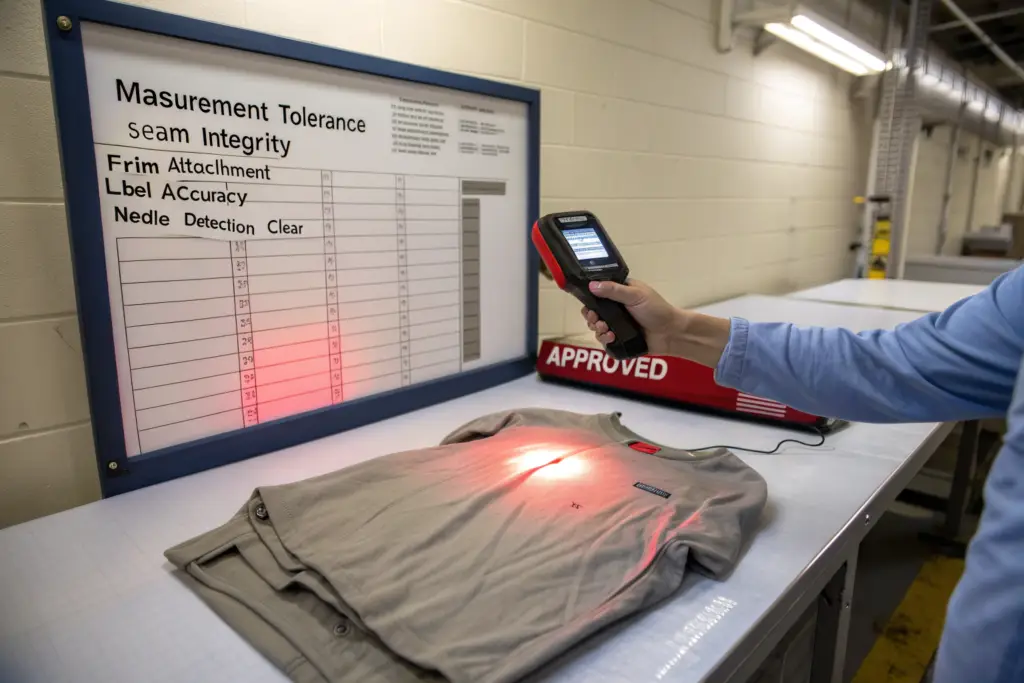
The most critical inspection criteria before releasing a bulk garment shipment fall into five mandatory categories: measurement and fit against the approved size specification, visual appearance and workmanship consistency against the sealed sample, trim and label accuracy including fiber content and care instructions, functional safety testing for children's wear including needle detection, and packaging and assortment accuracy against the purchase order. Each of these categories must be verified through an in-person, independent final inspection using AQL sampling methodology, with the results documented in a detailed report that includes photographs of defects. A paper certificate without a verifiable, photographed inspection is not quality assurance. It is a hope dressed as a document.
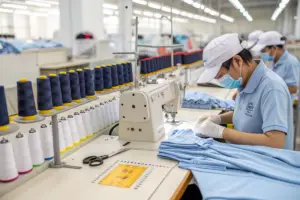
The final inspection before shipment is the last opportunity to catch a quality failure before it becomes a customer return, a negative review, or a wholesale rejection. After the container doors close, the brand owner's ability to control quality ends. The factory has been paid, or will be paid upon document presentation. The leverage is gone. The inspection is the point of maximum leverage and maximum protection. At Shanghai Fumao, our final inspection protocol is the culmination of the inline QC system we discussed in previous articles. It is the final gate, and it is never compromised. Let me walk you through the specific criteria that must be inspected before any shipment leaves our factory.
Why Is a Measurement Spot-Check Against the Approved Size Spec Non-Negotiable?
The size specification is the contract between the brand and the consumer. When a customer buys a size Medium, they have a reasonable expectation that the garment will fit their size Medium body. If the actual measurements deviate significantly from the labeled size, the customer will experience a fit problem. The garment will be too tight or too loose. The customer will return it, and they may leave a negative review warning other customers about the brand's inconsistent sizing.
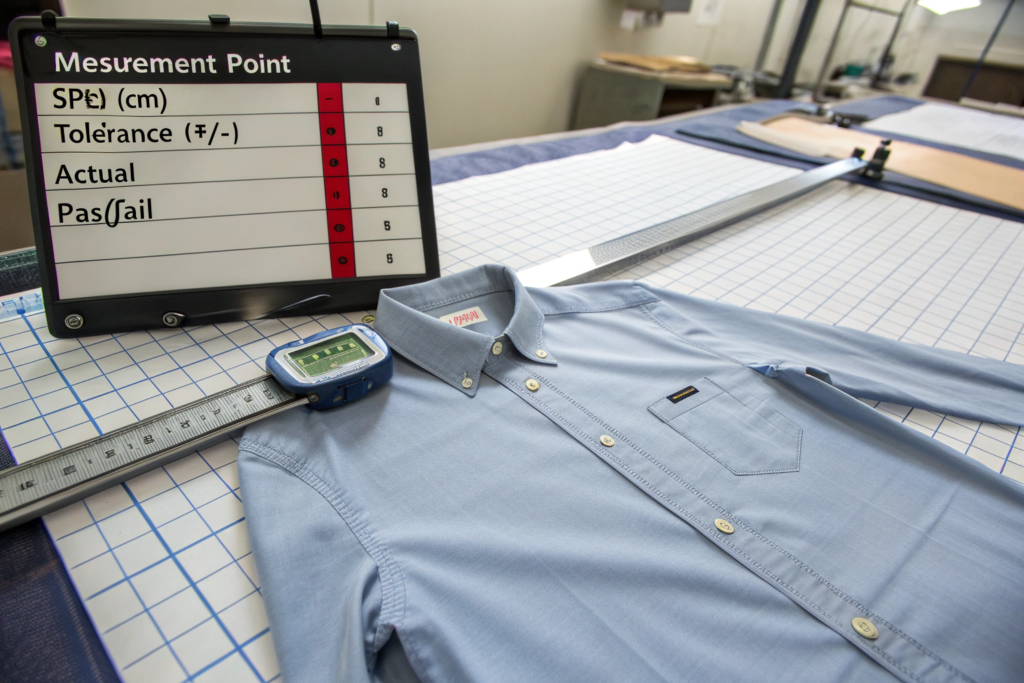
A measurement spot-check against the approved size spec is non-negotiable because sizing inconsistency is the single largest driver of customer returns in apparel e-commerce. The inspection must measure a statistically significant sample of garments from the bulk production against the graded measurement chart, including the key fit points: chest, waist, hip, shoulder width, sleeve length, and body length. Each measurement must fall within the agreed tolerance, typically +/- 1 cm for knit garments and +/- 0.75 cm for woven garments at key fit points. A garment outside tolerance on a key measurement point is a major defect. A pattern of measurements trending toward the limit of tolerance indicates a systemic grading issue that requires investigation, even if individual garments are technically within tolerance.
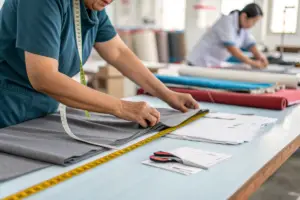
The measurement inspection is not a casual check with a loose tape measure. It is a precise, documented process using calibrated tools. The garment is laid flat on a smooth, hard surface. The measurement points are exactly as defined on the size spec diagram. The measuring tape or ruler is held without tension that would stretch the fabric. The measurements are recorded in the inspection report, item by item, size by size.
How Many Units Per Size Should Be Measured to Catch a Grading Error?
The AQL sampling plan determines the number of units to be inspected based on the total order quantity. For a typical apparel order of 1,200 to 3,200 units, the AQL Level II sample size is 80 to 125 units. Within that sample, the inspector must ensure that every size in the size range is represented. A grading error that affects only the Size Small or only the Size XXL will be missed if the inspection sample is concentrated in the middle sizes.
The inspector should proactively pull a minimum of three to five units from each size in the range, even if the random sample draw does not naturally produce that distribution. The sizes at the extremes, the smallest and the largest, are where grading errors most commonly occur, because the grade rule is applied to its maximum extent. A slight error in the grade rule for sleeve length will be barely noticeable on a Medium. It will be a significant deviation on an XXL.
If the inspection reveals a grading error, a specific size is consistently outside tolerance on one or more measurement points, the inspection scope must be expanded for that size. Additional units of the affected size are pulled and measured. The pattern maker must review the grade rule and correct the pattern before the next production run. For the current shipment, the affected size may need to be reworked or, in a severe case, removed from the shipment.
A brand owner's children's wear order had a grading error on the Size 6X sleeve length. The initial inspection sample included only one Size 6X, which happened to be within tolerance. The error was not caught. The entire production run of Size 6X had sleeves 2 cm too long. The brand received a flood of returns from parents of six-year-olds. The return rate on that size was 35%, while the other sizes were under 5%. A targeted measurement check of three to five units per size would have caught the error.
What Is the "Golden Sample" and Why Must It Be Present at the Final Inspection?
The golden sample, which we discussed in the context of inline QC, is the final approved pre-production sample. It was signed off by the brand owner as the exact representation of the quality, construction, and appearance that the bulk production must replicate. The golden sample is the physical standard.
The golden sample must be physically present at the final inspection station. The inspector does not rely on memory or on photographs. The inspector places the bulk production garment on the table next to the golden sample. The two garments are compared side-by-side, under the same lighting. The inspector checks the collar shape, the stitching details, the trim placement, the label position, the overall silhouette. Any visible deviation from the golden sample is noted.
A factory that has lost the golden sample, or that never received it from the brand, is conducting a blind inspection. The inspector is checking the garments against an internal standard that may not match the brand's approved standard. The golden sample is the only reliable reference.
We keep the golden sample for every active style in a sealed, labeled bag in our QC department. It is checked out for the final inspection and checked back in afterward. The golden sample is treated as a controlled document. If a style is reordered, the golden sample is retrieved and used as the standard for the new production run.
How Do You Systematically Inspect for Visual Defects Without Missing Subtle Issues?
Visual defects, uneven stitching, fabric flaws, color shading, pressing marks, are the most common category of quality issues. They are also the most subjective. One inspector might see a minor stitching irregularity as acceptable. Another might see it as a major defect. The subjectivity of visual inspection is a risk that must be controlled through a systematic, standardized process.
Systematic visual inspection follows a defined path across the garment, examining every component in a consistent sequence. The inspector begins at the top of the garment, the collar or neckline, and works downward. The front exterior is inspected first, then the back exterior, then the interior. The inspector checks each seam for stitch consistency, each hem for straightness, each pocket for alignment, each buttonhole for clean finishing. The garment is viewed from a standard distance, typically arm's length, under calibrated lighting of 1000 to 1200 lux. The inspection sequence is the same for every garment. The consistency of the process removes the variability of the inspector's attention and ensures that no area is skipped or given only a cursory glance.
The inspector must also handle the garment, not just look at it. The fabric is felt for hand feel consistency. The seams are gently pulled to check for slippage. The zipper is operated. The buttons are buttoned and unbuttoned. The visual inspection is a multi-sensory process.
What Is the "Arm's Length" Rule for Classifying a Defect as Major vs. Minor?
The arm's length rule is a simple, practical standard for determining the severity of a visual defect. The inspector holds the garment at arm's length, approximately 60 to 70 centimeters from their eyes. If the defect is clearly visible and noticeable at this distance, it is a major defect. If the defect is only visible upon closer inspection, within 30 centimeters, it is a minor defect.
The rationale is that the arm's length distance approximates the distance at which a consumer, a retail sales associate, or a wholesale buyer would view the garment. A defect that cannot be seen at arm's length is unlikely to cause a customer return. A defect that is immediately obvious at arm's length will be noticed by the customer and is likely to trigger dissatisfaction.
The arm's length rule must be applied under adequate lighting. A defect that is invisible in dim light but obvious under bright retail lighting is a defect that will be discovered by the customer. The inspection lighting must simulate retail or daylight conditions.
Examples of major defects at arm's length include a visible stain, a skipped stitch that creates a hole, a broken button, a noticeable color shade difference between the left and right sleeves, a twisted seam that distorts the garment's shape. Examples of minor defects include a slightly uneven stitch length that does not affect seam integrity, a tiny, isolated slub in the fabric, a barely visible pressing crease that will relax on the hanger.
Our inspectors are trained and tested on the arm's length rule. We use photographic reference cards showing examples of major and minor defects at the correct viewing distance. The cards are posted at every inspection station.
How Should You Inspect the Inside of a Garment for Hidden Construction Flaws?
The inside of a garment reveals the quality of the construction that the outside conceals. A beautifully finished exterior can hide a poorly finished interior, loose thread ends, raw seam allowances that are not properly overlocked, puckered lining, mismatched interlining. The interior construction affects the garment's durability, comfort, and behavior during washing.
The inspector turns the garment inside out and inspects the interior with the same systematic sequence used for the exterior. The seam allowances are checked for width consistency and for proper finishing. An overlocked seam should have no skipped stitches. A bound seam should have the binding attached evenly. The seam allowance should be pressed flat, not twisted.
The lining is checked for proper attachment. The lining should not pull or twist the shell fabric. The lining hem should be separate from the shell hem, allowing independent movement. The lining seams should be finished. The lining fabric should be free of flaws.
The interlining is checked through the shell fabric by feel and by visual inspection where accessible. The interlining should be smoothly fused, with no bubbling or delamination. The edges of the interlining should not be visible as a ridge on the exterior.
The interior labels are checked. The care label, the size label, the brand label, the country of origin label, must all be present, correctly positioned, and securely attached. The label text must be legible and accurate.
A brand owner's shipment of wool blazers had a hidden defect. The interior pocket bags were made from a polyester fabric that was not colorfast. When a customer put a white handkerchief in the pocket, the dye transferred. The exterior of the blazer was flawless. The interior pocket bag was the problem. The defect was only discoverable by turning the garment inside out and inspecting the interior components. Our current interior inspection protocol includes a colorfastness check of all interior pocketing materials.
What Trim and Label Accuracy Checks Prevent a Retailer Chargeback?
Inaccurate labels and trims are not quality defects in the traditional sense. The garment may be perfectly constructed. But if the care label specifies the wrong fiber composition, if the hang tag has the wrong price, if the country of origin label is missing, the garment is unsaleable. Major retailers impose chargebacks, financial penalties deducted from the supplier's invoice, for labeling non-compliance. A single missing or incorrect label on a single garment can result in a chargeback that wipes out the profit on the entire order.
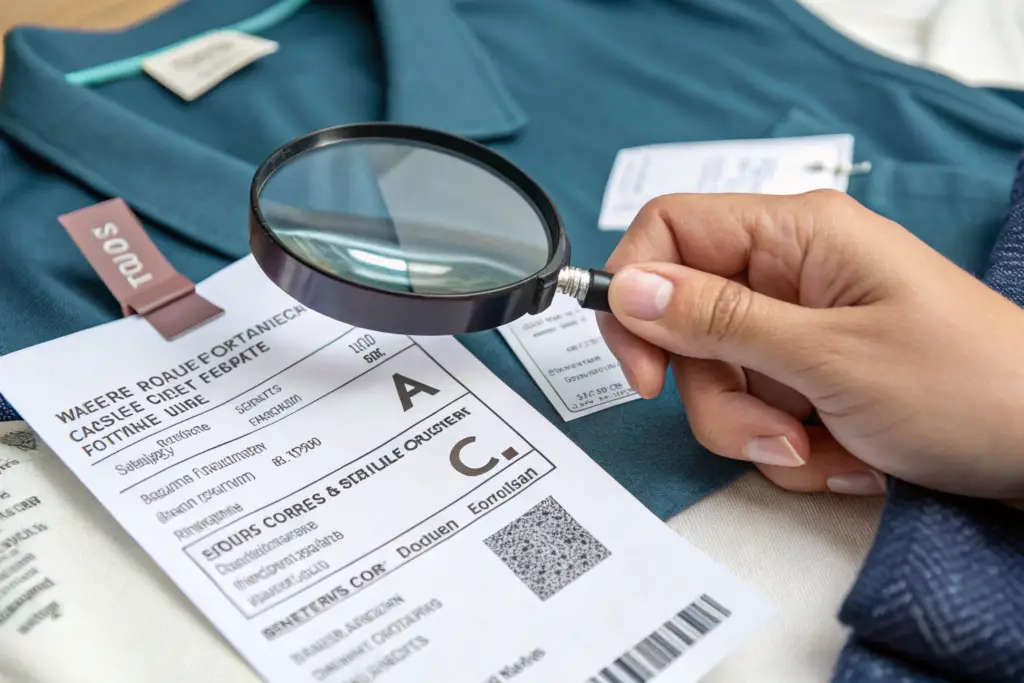
Trim and label accuracy checks before shipment must verify, for every label and trim type, that the information is present, correct, and matches the purchase order and the legal requirements of the destination market. The fiber composition on the care label must match the tested composition of the garment. The care symbols must be correct for the fabric type and must comply with the destination market's care labeling regulations. The country of origin label must be present and correct. The brand label must be correctly spelled and positioned. The hang tag must have the correct style number, color code, size, and barcode. The price, if printed, must be correct. An error on any of these elements can trigger a chargeback.
The inspection is a line-by-line verification. The inspector has a copy of the approved label artwork and the purchase order. They compare every piece of text, every symbol, every number. The check is tedious but absolutely necessary.
Why Must Fiber Content Be Verified by a Lab Test, Not Just the Mill's Word?
The fiber content on the care label is a legal declaration. In the US, the Textile Fiber Products Identification Act requires that the fiber content be stated accurately, with a tolerance of only 3% for fibers that are not intentionally added. In the EU, the Textile Labeling Regulation has similar requirements. A label that says "100% Cotton" on a garment that tests as 95% cotton and 5% polyester is a mislabeled product. The brand can be fined. The shipment can be seized.
A mill's internal quality report is not sufficient verification for the brand owner. The mill has a financial interest in the fabric passing the test. The only reliable verification is an independent lab test from an ISO 17025 accredited laboratory. The brand owner should require the supplier to provide a fiber composition test report for the bulk fabric lot, not just a historical report from a previous production run.
The lab test report number should be verifiable on the lab's website. A supplier who cannot provide a verifiable lab test report for the bulk fabric is not providing credible assurance of the fiber content. The brand owner is accepting a legal risk.
We provide an independent fiber composition test report for every bulk fabric lot used in our clients' orders. The report is part of the final inspection documentation package. The client can verify the report on the testing lab's website. The peace of mind is worth the cost of the test.
How Do You Check That Care Symbols Are Correct for the Specific Fabric Blend and Market?
Care symbols are a standardized, globally recognized system for communicating garment care instructions. The symbols are not arbitrary. They must accurately reflect the care requirements of the specific fabric blend and construction. A garment with a "Do Not Tumble Dry" symbol that actually shrinks in a cool tumble dry cycle is mislabeled. A garment with a "Wash at 60°C" symbol that fades at 40°C is mislabeled.
The correct care symbols for a given fabric are determined by testing, not by assumption. The fabric is subjected to the care procedures, washing, drying, ironing, dry cleaning, and the results are evaluated. The care label is then written based on the tested performance.
The care symbol system varies by market. The US uses the ASTM system of symbols. The EU uses the ISO system, which has been adopted by GINETEX. The systems are similar but not identical. The brand owner must specify which system is required for the destination market. The supplier must use the correct symbols for that market.
The inspection verifies that the care symbols on the label match the symbols on the brand's approved care label artwork, and that the symbols are printed legibly and in the correct order. A common error is a symbol that is rotated, distorted, or missing. The inspector checks each symbol individually against the standard.
A European brand client received a chargeback from a department store because the care label on a shipment of men's shirts used the US ironing symbol, dots inside the iron, instead of the EU system. The difference was subtle, a single dot versus a specific temperature marking, but it was a non-compliance. The chargeback was £1,200. The error was a simple label file mix-up at the label supplier. Our current trim inspection protocol includes a specific check of the care symbol system against the destination market requirement.
What Safety and Packaging Criteria Are Unique to Children's Wear Shipments?
Children's wear is not simply small adult clothing. It is subject to specific, stringent safety regulations that do not apply to adult apparel. These regulations are designed to protect children from specific hazards: choking on small detached parts, strangulation by drawstrings, laceration from sharp edges, and poisoning from restricted chemicals. The failure to inspect for these safety criteria is not a quality failure. It is a potential tragedy.
The safety criteria unique to children's wear include a needle detection pass for every single garment, not a sample, using a calibrated metal detector. All small components, buttons, snaps, rivets, must be tested for secure attachment using a pull test with a force specified for the child's age group. Drawstrings on hoodies and waistbands must comply with the length restrictions specified by ASTM F1816 in the US or EN 14682 in the EU. Flammability testing must be performed for sleepwear. Sharp edges and points must be absent. The packaging, particularly poly bags, must carry a suffocation warning and must be perforated or of a thickness that reduces the suffocation risk. A shipment that fails any of these safety criteria must not be shipped. The cost of the rework or the loss of the order is trivial compared to the cost of a child's injury.
The safety inspection for children's wear is not optional and cannot be reduced to a sampling plan. Needle detection is 100%. Component attachment testing is performed on a random sample with a very low acceptable defect rate, typically zero defects in the sample. The safety inspection is the most important inspection the factory will ever perform.
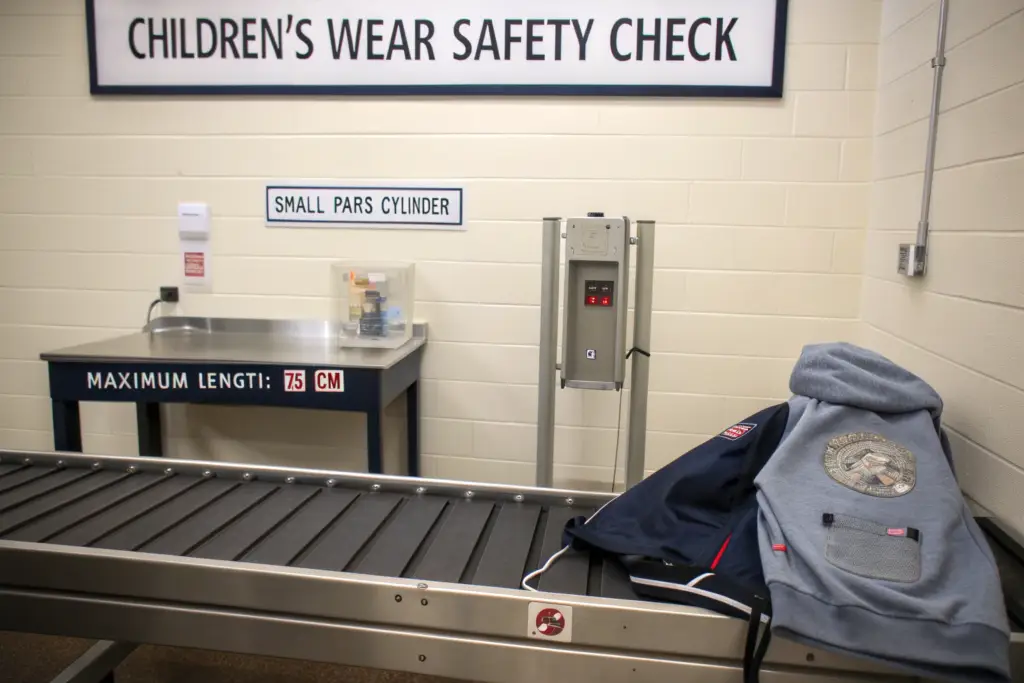
How Is a "Small Parts" Pull Test Performed and What Force Is Required?
The small parts pull test verifies that components that could detach and become a choking hazard for a young child are securely attached. The test applies a specific, calibrated force to the component for a specific duration. The component must not detach, break, or show signs of imminent detachment.
The test force and duration depend on the age group of the child and the relevant safety standard. For children under 3 years, the most vulnerable group, the US CPSC standard requires a pull force of 15 pounds, approximately 67 Newtons, applied steadily over 5 seconds. For children aged 3 and above, a lower force may be specified.
The test is performed using a force gauge, a calibrated instrument that measures the applied force. The component, a button, a snap, a decorative stud, is gripped with a clamp attached to the force gauge. The force is applied in the direction most likely to cause detachment, typically perpendicular to the fabric surface. The force is held for the specified duration. The component is then inspected for detachment, breakage, or loosening.
The inspection sample for the pull test should include garments from across the production run. A supplier who only tests the pre-production sample is not testing the bulk production, where attachment inconsistency is more likely. The final inspection should include pull tests on randomly selected bulk garments.
We use a calibrated force gauge in our children's wear final inspection. The test is performed by a trained QC technician. The results are recorded. A single component detachment failure triggers a 100% re-inspection of that component type on all garments.
What Packaging Details Are Most Often Missed That Cause a Shipment to Be Rejected?
Packaging errors are surprisingly common and surprisingly costly. A shipment of perfectly made garments can be rejected by a retailer's distribution center because the packaging does not meet the retailer's routing guide specifications.
The most frequently missed packaging details are the carton markings. The retailer's routing guide specifies exactly what information must be printed on the outside of each carton, the purchase order number, the department number, the style number, the color code, the size, the unit quantity, the carton weight, and the carton dimensions. The information must be in a specific format, in a specific location on the carton, and must be machine-readable, typically a barcode. A carton that is missing a required marking, or where the barcode does not scan correctly, will be rejected by the retailer's automated receiving system.
The carton size and weight limits are also a common source of rejection. Retailers specify maximum carton weights, often 20 kg or less, for manual handling safety. A carton that exceeds the weight limit will be rejected. Retailers specify standard carton sizes. A non-standard carton that does not fit the retailer's shelving or conveyor system will be rejected.
The poly bag specifications are often missed. The retailer may require a specific poly bag thickness, a specific suffocation warning printed in multiple languages, and a specific perforation pattern for easy opening. A poly bag that does not meet the specification is a rejection.
The final inspection must include a packaging check against the retailer's routing guide. The inspector opens several fully packed cartons, checks the carton markings, weighs the carton, measures the carton, inspects the poly bag, and verifies the packing list accuracy. The packaging check is as important as the garment quality check.
A brand owner's shipment to a major US department store was rejected at the distribution center because the carton barcodes were printed with an ink ribbon that was too faint for the automated scanners to read. The garments were perfect. The packaging was the failure. The entire shipment was returned to the brand at their expense. The rejection cost exceeded $8,000 in freight and rework. The issue would have been caught by a barcode scan test during the final packaging inspection.
Conclusion
The final inspection before shipment is the brand owner's last line of defense. It is the moment when all the effort of design, development, and production is validated or invalidated. A thorough, honest, well-documented final inspection protects the brand's quality reputation, prevents costly retailer chargebacks, and provides the confidence that the goods shipped are the goods the customer expects.
We have walked through the five critical inspection criteria that must be addressed before a container door is closed. The measurement spot-check, with a focused sample of three to five units per size, catches the sizing inconsistencies that are the leading cause of e-commerce returns. The systematic visual inspection, guided by the golden sample and the arm's length rule, ensures the garment's appearance matches the brand's approved standard. The trim and label accuracy check, including the verifiable fiber composition lab test and the correct care symbols, prevents the retailer chargebacks that can erase the order's profit. The children's wear safety inspection, with its 100% needle detection, small parts pull testing, and drawstring measurement, fulfills the legal and moral obligation to protect the most vulnerable consumers. And the packaging verification against the retailer's routing guide prevents the senseless rejection of perfect garments at the distribution center dock.
Each of these criteria is non-negotiable. A shipment that passes four out of five but fails the fifth is a failed shipment. The cost of a thorough final inspection is a fraction of the cost of the returns, chargebacks, lost customers, and brand damage that result from a failed shipment.
At Shanghai Fumao, our final inspection protocol is the capstone of our quality management system. It is performed by an independent QC team, not by the production line that made the garments. It is documented in a detailed, photographically-supported report that is shared with the client before the shipment is released. We invite our clients to attend the final inspection, in person or via live video, to witness the process and approve the shipment with their own eyes.
If you have experienced quality failures with previous suppliers despite receiving clean inspection reports, or if you want to establish a robust final inspection protocol for your production, I invite you to contact our Business Director, Elaine. She can share a sample of our final inspection report, explain our sampling and measurement procedures, and discuss how we can customize the inspection criteria to your specific brand and market requirements. Reach Elaine at elaine@fumaoclothing.com. Let's ensure your next shipment is inspected to the standard your brand deserves.