A brand owner from Vancouver sat in my office last March with a beautifully designed tech pack and a worried expression. He had a confirmed order from a major department store for 3,000 units of a women's linen blazer. The delivery window was locked for August 15th. He had calculated the bulk production time, the fabric lead time, and the shipping time. He had allocated twelve weeks for everything from order placement to delivery. He thought he was comfortably ahead of the deadline. What he had not accounted for was the sampling. The proto sample, the fit sample, the pre-production sample. The revisions between each stage. The shipping time for each sample from Shanghai to Vancouver and back. The internal review meetings. The sampling process, which he had assumed would take two weeks, took eight. His carefully planned twelve-week production window was crushed into four. The factory rushed. The quality suffered. The department store rejected 15% of the shipment for inconsistent fit. The sampling lead time, the invisible phase he had underestimated, was the root cause of the entire disaster.
Sampling lead time is the most underestimated factor in apparel sourcing because brand owners typically calculate their timeline from the bulk order date forward, forgetting that the bulk order cannot be placed until the samples are fully approved. The sampling process, from first proto to approved pre-production sample, often consumes eight to twelve weeks for a complex garment, not the two to three weeks that optimistic brand owners assume. This miscalculation compresses the bulk production window, forcing the factory to rush, which degrades quality, or causing the delivery to be late, which misses the selling season. The sampling phase is not a prelude to production. It is the most critical phase of production, and its time requirement must be respected.
The sampling phase is where the garment is truly designed. The tech pack is a theory. The sample is the reality. The gap between theory and reality is closed through iteration, which takes time. The brand owner who budgets time for three iterations, and who starts the sampling process early enough to absorb those iterations without compressing the bulk production window, ships a quality garment on time. The brand owner who budgets time for one iteration, or who starts sampling too late, ships a compromised garment or ships late. At Shanghai Fumao, we coach our brand clients to treat the sampling calendar with the same respect as the production calendar. Let me explain why this phase is so critical and how to plan it correctly.
Why Does a "Simple Change" on a Sample Often Require a Full Week to Execute?
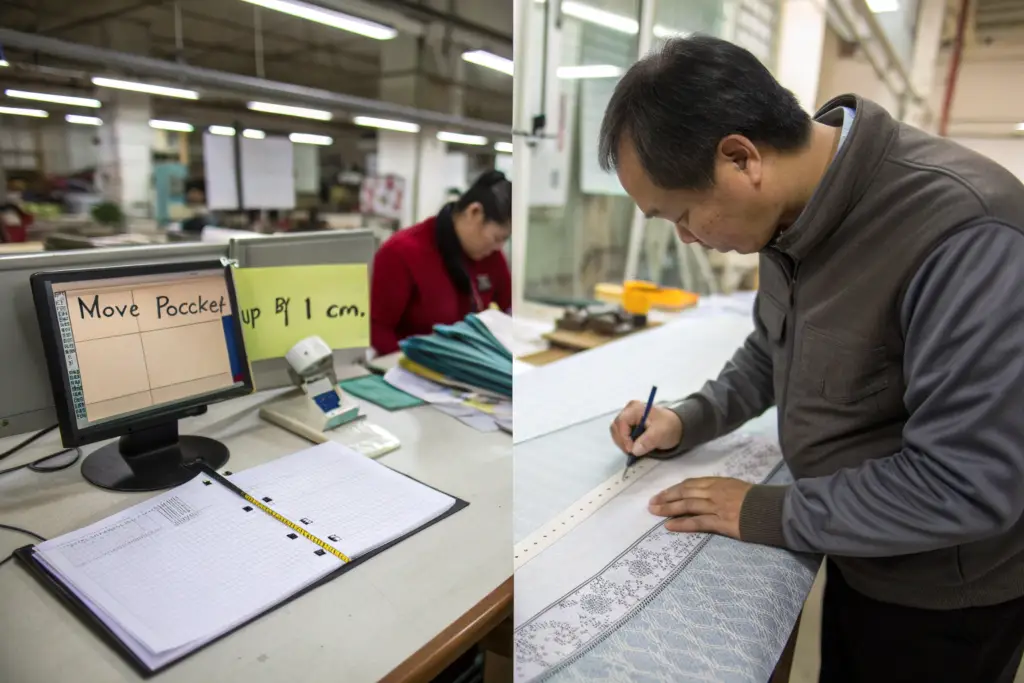
The brand owner sketches a design. In a meeting with their team, they decide to move the chest pocket up by one centimeter. They send an email to the factory. In their mind, this is a simple change. The factory receives the email. What the brand owner sees as a simple change is actually a cascade of actions that must be executed correctly to ensure the change does not introduce new problems.
A "simple change" on a sample requires a full week to execute because it triggers a chain of dependent tasks. The pattern maker must adjust the digital pattern, re-plot the affected pattern piece, and check that the adjustment does not affect the alignment of adjacent pieces. The cutting room must cut new fabric for the revised piece. The sewing line must unstitch the old pocket from the sample, re-position it, and re-stitch it. The QC inspector must re-measure the placement and check the surrounding seam integrity. The revised sample must be pressed, reviewed internally by the factory's production manager, and then shipped to the brand owner for approval. Each step takes time. The steps cannot all happen simultaneously. The cumulative time is typically three to five working days for a seemingly minor revision.
The brand owner who understands this hidden complexity does not fire off late-night revision emails expecting an updated sample the next morning. They understand that a revision requested on Friday will likely ship from the factory the following Thursday or Friday. They build this reality into their sampling calendar.
How Does Pattern Grading Delay Multiply When a Base Size Is Revised?
The base size is the anchor size, typically a Medium or a Size 10, on which the fit is developed and approved. The grade rules, the incremental adjustments for each other size, are applied to the approved base size pattern. If the base size is revised, the grading must be re-done for every size in the range.
A fit revision on the base size, moving a shoulder seam by 5 millimeters, changing a collar point shape, adjusting a hem curve, means that every single size must be re-graded. The pattern maker does not simply adjust the base size and hope the grade rules still produce a good fit on the other sizes. They must re-apply the grade rules to the revised base pattern, plot the full size range, and check the fit of the key sizes, typically the Small and the XL, on fit models or dress forms. A seemingly small change to the base size pattern can generate a week of grading work.
The time impact is most severe when a fit issue is discovered late in the sampling process, after the base size has been approved but the graded samples have not yet been checked. The brand owner sees the Size Small sample and realizes the sleeve length, which was perfect on the Medium, is now too long on the Small because the sleeve length grade rule was too aggressive. The base size sleeve must be adjusted, and the entire grade must be re-executed. The discovery saves the bulk production from a systemic sizing error, but it costs a week or more in the sampling calendar.
A brand owner developing a women's dress collection approved the base size Medium sample. The factory graded the pattern and produced the full size run samples. The brand owner reviewed the Size XL sample and found the bust dart was positioned incorrectly because the grade rule had shifted the dart point relative to the larger bust apex. The base size dart had to be re-engineered to account for the grade shift. The correction took ten days. The brand owner's sampling calendar had included a buffer for exactly this type of issue. The bulk order was placed on time. The buffer had done its job.
What Is the "Sample Room Queue" and How Does It Affect Your Place in Line?
The factory's sample room is a finite resource. It has a fixed number of pattern makers, sample cutters, and sample sewers. It serves all the factory's clients. When a revision request arrives, it does not go directly to the head of the queue. It enters the queue behind the other revision requests, new sample requests, and urgent projects that are already in progress.
During peak sampling season, typically two to three months before the main seasonal production windows, the sample room queue can be a week or more deep. A revision requested during peak season may sit in the queue for several days before a pattern maker even opens the file. The queue time must be added to the execution time to calculate the total revision turnaround.
The brand owner who has a strong relationship with the factory, who communicates respectfully, who pays sampling invoices promptly, and who has consistent order volume, will receive priority in the sample room queue. The factory values the relationship and wants to keep the brand satisfied. The transactional brand owner with sporadic orders and aggressive communication will find their revision at the back of the queue.
We manage our sample room capacity carefully. We allocate dedicated sample room hours to our core brand clients based on their seasonal sampling volume. A brand with a large, complex collection is allocated more hours. A brand with a small, simple collection is allocated fewer. The allocation is transparent and agreed upon at the start of the season. The brand owner knows their sample turnaround time and can plan their calendar accordingly.
How Should You Structure a "Sampling Timeline" to Protect the Bulk Production Window?
The sampling timeline and the bulk production timeline are not sequential phases that can overlap. The bulk production cannot begin until the final pre-production sample is approved. The fabric cannot be ordered in bulk. The cutting cannot start. The production line cannot be scheduled. The sampling phase is the gatekeeper of the bulk phase. If the sampling phase runs long, the bulk phase is compressed. The only way to protect the bulk production window is to finish the sampling phase on time.
A well-structured sampling timeline is built backwards from the bulk fabric order deadline. The brand owner identifies the date by which the bulk fabric must be ordered to meet the retail delivery date. From that date, they subtract the time required for the pre-production sample, the fit sample iterations, and the first proto sample. They add buffer time between each stage for shipping, review, and unexpected revisions. The resulting start date for sampling is often two to three months before the bulk order deadline. The sampling timeline is not a suggestion. It is a prerequisite for on-time delivery.
The discipline of backward planning forces the brand owner to confront the reality of the sampling lead time. If the bulk fabric order must be placed by May 15th, and the sampling process requires ten weeks, the first proto sample must be requested by March 1st. The brand owner who has not finalized their designs by March 1st is already behind schedule.
What Are the Non-Negotiable "Gates" Between Proto, Fit, and PP Sample Stages?
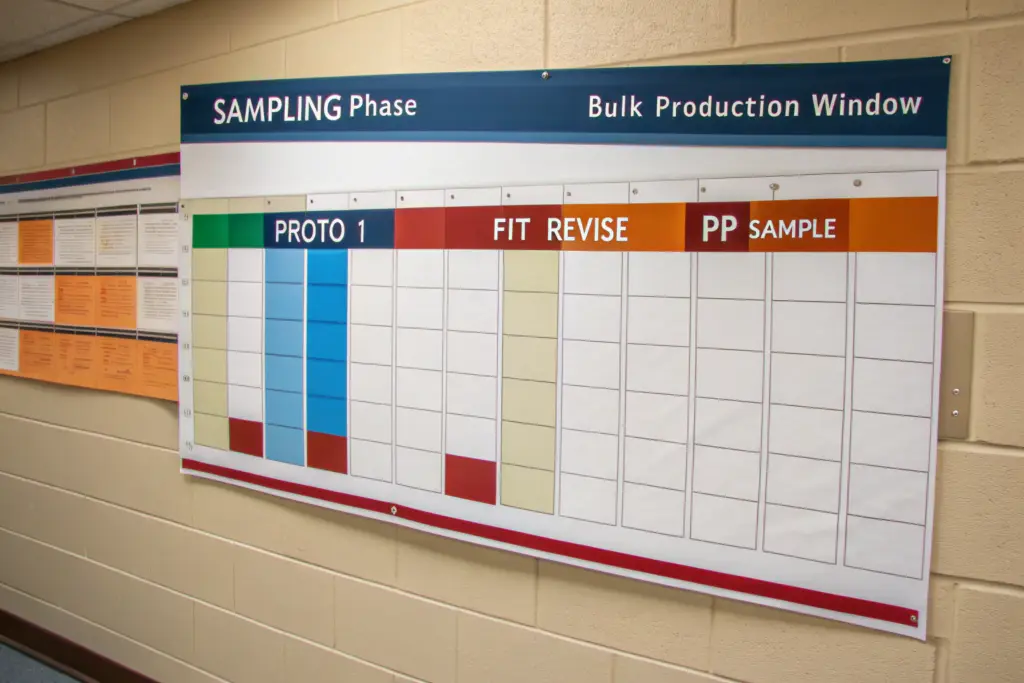
The sampling process has three distinct stages, each with a specific purpose and a specific approval gate. Skipping a stage or rushing through a gate creates risk that compounds into the bulk production.
The proto sample stage is about design interpretation. The factory receives the tech pack and creates a first sample to demonstrate their understanding of the design, fabric, and construction. The brand owner reviews the proto sample for overall aesthetic, silhouette, and design details. The gate question is: "Does this sample capture the design intent?" If the answer is no, the sample is revised until it does. The proto stage should not be concerned with perfect fit. That is the next stage.
The fit sample stage is about fit and sizing. The design is approved. The focus shifts to how the garment sits on the body. The brand owner reviews the fit sample on a fit model. Adjustments are made to the pattern. The gate question is: "Does this garment fit the target customer correctly?" If the answer is no, the fit sample is revised until it does.
The pre-production sample stage is about production readiness. The fit is approved. The PP sample is made in the actual bulk fabric with the actual trims. It is the exact garment that will be produced in bulk. The brand owner gives final approval. The gate question is: "Is this garment, exactly as constructed, approved for bulk production?" After this gate is passed, the design is frozen. Any changes after PP approval are costly and will delay the bulk order.
Each gate must be formally passed before the next stage begins. A brand owner who tries to combine the fit and PP stages, approving fit on a sample made in substitute fabric, is taking a risk that will be revealed when the PP sample in the actual fabric shows a different drape or a different shrinkage behavior.
How Many Iteration Loops Should a Brand Budget for a Complex Jacket?
A complex structured garment, a blazer, a coat, a tailored jacket, requires more sampling iterations than a simple unstructured garment. The number of iterations should be realistically budgeted in the sampling timeline.
For a complex jacket being developed with a new factory for the first time, the typical iteration count is three to four rounds. The first proto sample rarely nails the collar roll and the shoulder expression. The brand owner requests adjustments. The second sample is closer, but the sleeve pitch is off or the lapel width needs refinement. The third sample is the fit approval candidate. The fourth sample is the PP sample in the bulk fabric.
Each iteration, including the factory's remake time and the shipping time for the sample to travel from the factory to the brand owner, typically consumes two to three weeks. Four iterations consume eight to twelve weeks. This is the realistic lead time for a complex jacket sampling process with a new factory partner.
For a reorder of a previously produced style with minor fabric or trim changes, the iteration count drops to one or two rounds. The pattern is proven. The fit is established. The sampling is about verifying the new material, not developing the silhouette from scratch. The sampling timeline can be compressed accordingly.
A brand owner developing a men's tailored blazer with us for the first time budgeted four sampling iterations over twelve weeks. The first sample was reviewed, revised. The second sample was reviewed, revised. The third sample was approved for fit. The fourth sample, the PP sample in the actual wool flannel, was approved for production. The twelve-week timeline was fully consumed, but it was planned. The bulk production window was protected. The blazers shipped on time and fit perfectly.
What Are the Hidden Costs of Rushing the Sampling Process to Meet a Deadline?
When the sampling timeline has been underestimated, and the bulk order deadline is looming, the brand owner faces a terrible choice. Rush the sampling process, approve a sample that is not truly ready, and proceed to bulk production with unresolved fit or construction issues. Or delay the bulk order, miss the retail delivery window, and lose the season's sales. Many brand owners, under immense commercial pressure, choose to rush the sampling. They rationalize that the issues are minor and can be corrected in bulk. This rationalization is almost always wrong.
The hidden costs of rushing the sampling process include a higher defect rate in bulk production due to unresolved pattern issues, increased customer returns and negative reviews due to fit inconsistencies, the cost of post-delivery rework or refunds, and the long-term damage to the brand's reputation for quality. The cost of a delayed delivery is a one-time loss of a season's sales. The cost of a rushed sampling process is the erosion of the brand's quality equity, which compounds over multiple seasons. The brand owner who rushes sampling to save a season may lose the brand.
A fit issue that is not resolved in sampling will be replicated across every unit in the bulk order. A collar that does not roll correctly on the sample will not roll correctly on 2,000 jackets. The cost of fixing that issue on 2,000 finished jackets, or the cost of the returns from 2,000 dissatisfied customers, dwarfs the cost of an additional two-week sampling iteration.
How Does an Unresolved Fit Issue Compound Across a 5,000-Unit Bulk Order?
An unresolved fit issue on a single sample is a curiosity. The same issue on a 5,000-unit bulk order is a catastrophe. The economics are brutal.
The cost of an additional sampling iteration, the pattern maker's time, the sample fabric, the sample sewing, the courier shipping, is typically $300 to $800. This is the cost of getting the fit right before bulk production begins.
The cost of discovering the fit issue after bulk production is complete is exponentially higher. The brand owner has 5,000 units of a garment with a fit defect. The options are to ship the defective garments and accept the returns and brand damage, to attempt a rework which is often impossible for fit issues that are baked into the pattern, or to write off the entire order. The cost of any of these options is measured in tens or hundreds of thousands of dollars.
The math is clear. An $800 sampling iteration is an insurance policy against a $50,000 to $200,000 bulk failure. The brand owner who refuses to pay the $800 premium is gambling the entire order value on the hope that the issue is not as bad as it looks. Hope is not a quality control strategy.
A brand owner rushed the fit sample approval on a men's casual jacket because the fabric order deadline was three days away. The collar stood away from the neck slightly. He noticed but rationalized it as "acceptable." The 3,000-unit bulk order was produced. The jackets arrived. The collar gap was more pronounced on the larger sizes. Returns flooded in. The online reviews were savage. The brand owner had to recall the jacket from his retail partners. The total cost, refunds, return shipping, lost wholesale relationships, brand damage, was estimated at $140,000. The additional sampling iteration that would have fixed the collar would have cost $600 and taken ten days.
Why Is "Concept Approval" the Wrong Stage to Freeze a Design?
Concept approval is the stage where the brand owner reviews the first proto sample and confirms that the factory has correctly interpreted the design brief. The silhouette is generally correct. The fabric is as specified. The key design details are present. Concept approval is not fit approval. It is not production readiness.
A brand owner who freezes the design at concept approval, skipping the fit and PP sample stages, is essentially saying, "The proto sample is good enough. Make 5,000 of these." The factory, following the instruction, will make 5,000 garments based on a proto sample that has not been fit-tested on a body, that was likely made in a substitute fabric, and that has not been reviewed for production engineering.
The result is a bulk order that replicates every unresolved issue in the proto sample. The fit is approximate. The fabric behavior is unexpected. The construction details that worked on a one-off sample fail under bulk production conditions. The brand owner receives a container of garments that do not match their quality expectations, but they approved the proto sample. The factory met the approved standard. The brand owner has no recourse.
The correct stage to freeze the design is after the PP sample approval. The PP sample is the exact garment, in the exact materials, that will be produced. After PP approval, the brand owner knows exactly what 5,000 units will look like. The design freeze is an informed decision, not a hopeful guess.
How Can You Use Virtual Sampling to Compress the Timeline Without Sacrificing Fit?
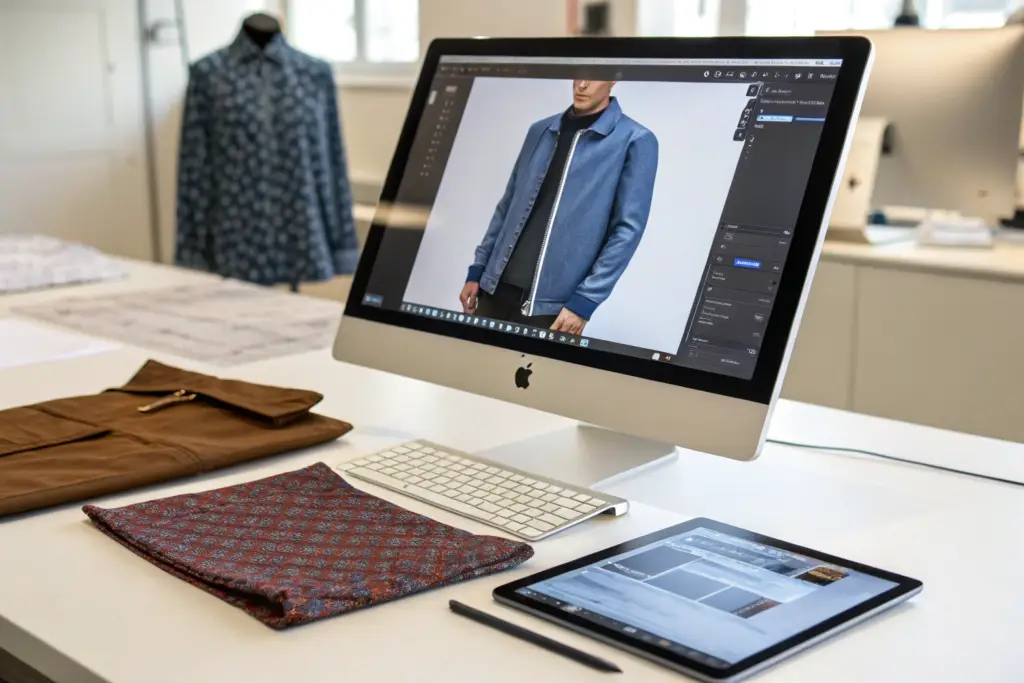
Virtual sampling, using 3D design software like CLO, Browzwear, or Optitex, is the most significant advancement in sampling efficiency in the last decade. A virtual sample is a digital simulation of the garment, draped on a digital avatar, with the fabric's physical properties, weight, stretch, drape, digitally encoded. The brand owner can review the virtual sample on a screen, rotate it, zoom in, and assess the design, the proportions, and the overall aesthetic. The time to create a virtual sample is hours or days, compared to weeks for a physical sample.
Virtual sampling can compress the early stages of the sampling timeline by replacing the first one or two physical proto iterations with digital iterations. The brand owner reviews the virtual sample, requests design and proportion adjustments, and the factory revises the digital file in hours. The back-and-forth that would take weeks with physical samples takes days with virtual samples. The first physical sample that is produced is at a more advanced stage of development, reducing the total number of physical iterations. Virtual sampling does not eliminate the need for physical fit and PP samples, but it shifts the physical sampling to later, more productive stages.
The limitation of virtual sampling is that it cannot fully replicate the physical hand feel of the fabric, the exact drape on a real human body with individual posture and movement, or the subtle details of stitch tension and pressing. The final fit and PP samples must still be physical. But the number of physical iterations can be significantly reduced.
What Are the Current Limits of 3D Sampling for Tailored Garments?
3D garment simulation software has advanced dramatically, but it still has limitations for complex tailored garments. The software can simulate the drape of a woven wool suiting fabric with reasonable accuracy. It can show how the fabric falls on a static avatar. What it cannot yet do perfectly is simulate the internal structure of a tailored jacket.
A tailored jacket has multiple layers, the shell fabric, the fusible interlining, the canvas chest piece, the shoulder pad, the lining. Each layer has its own mechanical properties. The interaction between the layers, how the canvas shapes the chest, how the shoulder pad lifts the sleeve head, how the fusible interlining stiffens the collar, is extremely complex to simulate digitally. The current generation of 3D software is improving rapidly in this area, but it is not yet a complete substitute for a physical sample of a structured jacket.
The 3D simulation also cannot simulate the pressing process. Pressing is a critical step in tailoring. The iron shapes the fabric, sets the seams, creates the collar roll. The pressing process is a combination of heat, pressure, steam, and skilled manual manipulation. It cannot be digitally replicated with current technology.
For these reasons, we recommend that brands with complex tailored garments use virtual sampling for the initial design and proportion review stages, but plan for the same number of physical fit and PP samples as they would without virtual sampling. The virtual sampling improves the quality of the first physical sample, but it does not eliminate the need for it.
How Can a "Hybrid" Sampling Model Balance Speed and Accuracy?
A hybrid sampling model uses virtual samples for the early aesthetic iterations and physical samples for the fit and production readiness stages. The model is designed to extract the speed benefit of digital tools while preserving the accuracy and reliability of physical sampling for the stages where it is essential.
The hybrid process works as follows. The brand owner sends the tech pack and fabric swatches to the factory. The factory creates a 3D virtual sample and sends it to the brand owner for review. The brand owner reviews the design, the proportions, the color, the trim placement, on the screen. They request adjustments. The factory revises the 3D file. This digital iteration cycle can happen two or three times in a single week.
When the virtual sample is approved for design, the factory produces the first physical sample. Because the design has been refined digitally, this first physical sample is often equivalent to a second or third iteration in a traditional process. The brand owner reviews the physical sample for fit on a fit model. Further physical iterations are only for fit refinement, not for design exploration.
The hybrid model can compress the total sampling timeline by two to four weeks for a typical garment, and more for garments with simple construction. The fit accuracy is not compromised because the critical fit stages are still performed on physical samples. The speed gain comes from the compression of the early design iteration phase.
We offer a hybrid sampling option to our brand clients. For a recent women's dress collection, the brand owner used virtual sampling for the initial design review. Three digital iterations were completed in five days. The first physical sample was produced. It required only one fit revision before PP approval. The total sampling timeline was five weeks, compared to a typical eight to nine weeks for a traditional all-physical process.
Conclusion
Sampling lead time is the invisible phase of garment production. It is the work that happens before the work that everyone plans for. The bulk production calendar, the fabric order deadlines, the shipping schedules, are visible and tangible. The sampling process that must be completed before any of those can begin is invisible and easily underestimated. The brand owner who fails to account for it is planning a failure.
We have seen why a seemingly simple change requires a week to execute, the hidden cascade of pattern adjustment, cutting, sewing, and QC. We have mapped the non-negotiable gates between proto, fit, and PP sample stages, each of which must be passed before the next can begin. We have calculated the devastating economics of rushing the sampling process, where an $800 iteration is an insurance policy against a $100,000 bulk failure. And we have explored how virtual and hybrid sampling models can compress the timeline without sacrificing fit integrity.
The lesson is clear and simple. The sampling calendar is as important as the production calendar. The brand owner who starts sampling early, budgets for three to four iterations for complex garments, and respects the time required for each stage, ships a quality garment on time. The brand owner who starts sampling late, budgets for one iteration, and pressures the factory to skip steps, ships a compromised garment or ships late.
At Shanghai Fumao, we work with our brand clients at the very beginning of their seasonal development cycle. We build the sampling calendar together, backwards from the bulk order deadline. We allocate sample room capacity in advance. We offer hybrid virtual sampling for early-stage efficiency. We do this because we know that a well-managed sampling phase is the foundation of a successful bulk production phase.
If you are planning a new collection and you want a factory partner who will help you build a realistic sampling timeline, or if you have been burned by sampling delays in the past and want to ensure it never happens again, I invite you to contact our Business Director, Elaine. She can walk you through our sampling process, provide a sample calendar template for your product type, and schedule a discussion with our sample room manager to plan your specific timeline. Reach Elaine at elaine@fumaoclothing.com. Let's build the time into the plan, so the plan delivers on time.