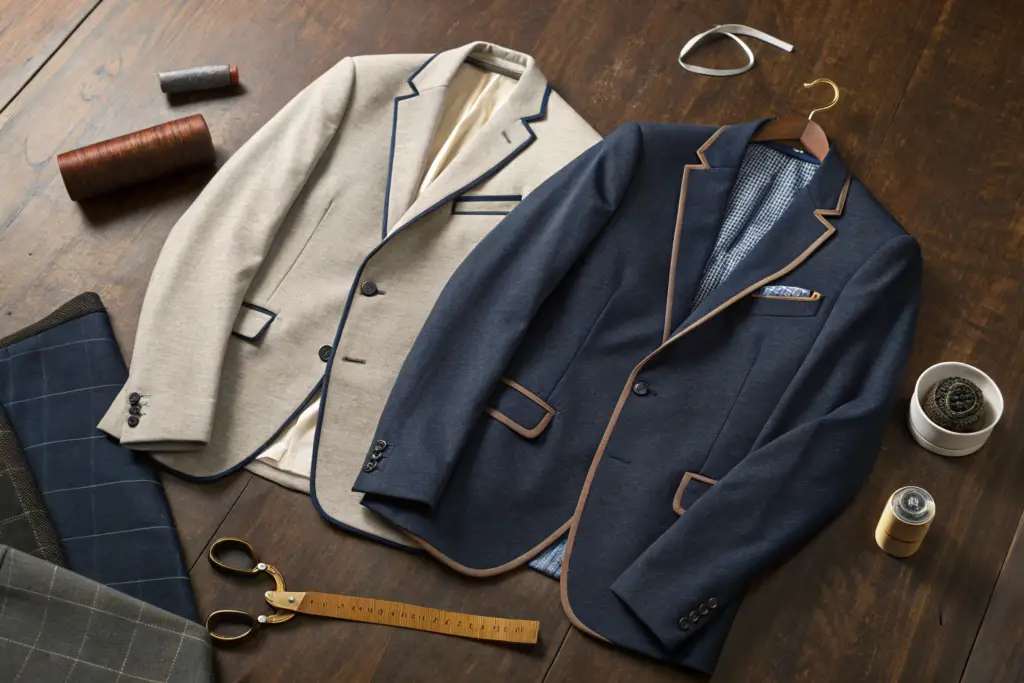
A wholesale director for a major Dutch menswear chain sat in my showroom two months ago with his tablet, swiping through sell-through data. He stopped on a graph for a blazer that had sold at 94% full-price within four weeks. I asked him what drove the numbers. Was it the new slim-fit block? No. Was it an aggressive price point? No. He zoomed in on a photo of the blazer's shoulder and lapel. "It's this," he said. "The soft shoulder. The wide lapel. The surgeon's cuff. My customer might not know the Italian words for these things, but he knows when they are missing. He wants a jacket that looks like a tailor made it, even if it costs €400, not €4,000. The details are the product."
The men's tailored blazer details currently overperforming in the EU wholesale market are the soft, unstructured spalla camicia shoulder, the wide notch lapel with a hand-sewn buttonhole, the half-lined or unlined interior with contrast detailing, and functional surgeon's cuffs with genuine horn or corozo buttons. These four details collectively signal a shift away from the stiff, structured, mass-produced blazer toward a softer, more artisanal garment that communicates authentic quality to the European consumer. Wholesale buyers are not just ordering blazers. They are ordering these specific, verifiable details, and they are rejecting blazers that lack them.
The European male consumer has become visually literate in tailored clothing details. He has been educated by online forums, YouTube style channels, and the general cultural shift toward authenticity and craft. He does not need a sales associate to explain what a surgeon's cuff is. He knows to look for it. He runs his hand over the shoulder to feel for padding. He checks the buttons. The blazer that fails these silent, self-administered quality tests is the blazer that stays on the rack. The blazer that passes is the blazer that sells at full price. At Shanghai Fumao, our tailoring line has been re-engineered around these details. Let me walk you through exactly what is selling and why.
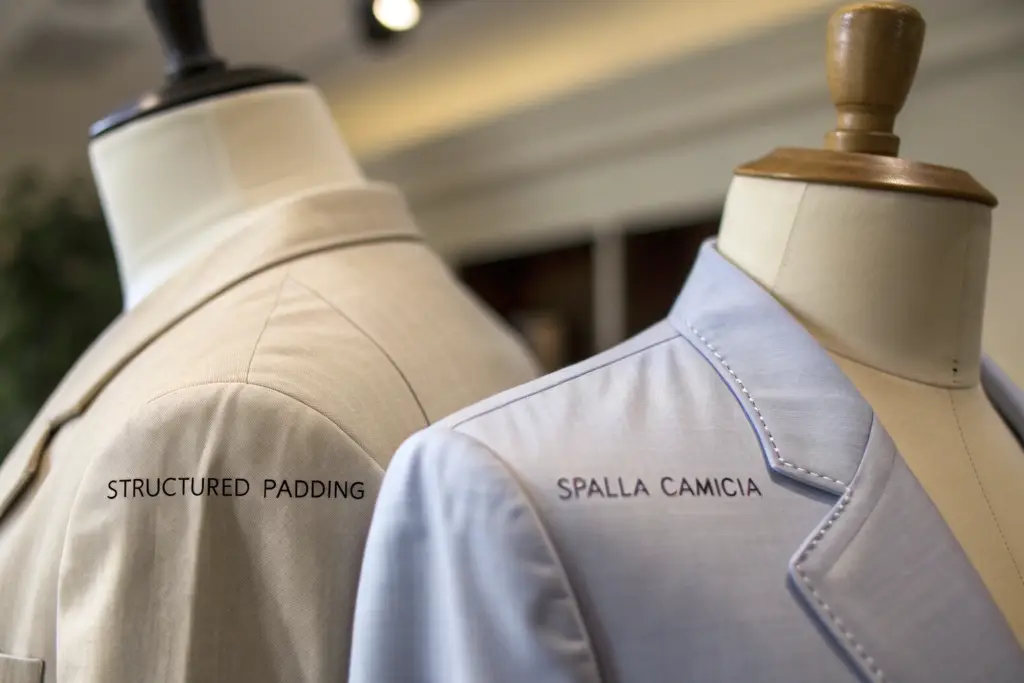
Why Is the "Spalla Camicia" Shoulder Outselling Structured Padding?
The shoulder is the soul of a tailored jacket. It defines the silhouette from which everything else hangs. For decades, the dominant shoulder in European tailoring, particularly in the British tradition, was the structured, padded shoulder. It created a strong, authoritative silhouette. The shoulder line was clean and sharp. The padding filled out the natural shoulder shape, creating an idealized, powerful form. That shoulder is now in steep decline in the wholesale market, replaced by the spalla camicia, the shirt shoulder.
The spalla camicia shoulder is outselling the structured padded shoulder because it aligns with the dominant cultural trend toward relaxed, authentic, unconstructed elegance. The spalla camicia, literally "shirt shoulder" in Italian, is a construction method where the sleeve is set into the armhole with a soft, natural fold, resembling the way a shirt sleeve is attached. It uses minimal or no padding. The shoulder line follows the wearer's natural anatomy. The effect is softer, more relaxed, and paradoxically more luxurious, because it demonstrates that the garment's quality comes from the fabric, the cut, and the handwork, not from hidden padding. The structured shoulder now reads as stiff, formal, and old-fashioned to the contemporary European buyer.
The shift from structured to soft is not a minor styling tweak. It is a fundamental change in what the blazer communicates. A structured shoulder communicates authority, formality, and adherence to a traditional dress code. A soft shoulder communicates confidence, ease, and a modern sensibility. The European man buying a blazer in 2026 wants to look capable, not corporate. The soft shoulder delivers that message.
How Does Reducing Shoulder Padding Change the Sleeve Head Construction?
Removing the shoulder pad is not a simple subtraction. The shoulder pad provides internal support for the sleeve head, the top of the sleeve where it meets the shoulder. Without a pad, the sleeve head must be engineered differently to maintain a clean, attractive shape.
In a structured shoulder, the sleeve head is typically cut with a significant amount of ease, extra fabric fullness that is gathered and steamed into shape over the pad. The pad supports this fullness, creating a rounded, domed sleeve cap.
In a spalla camicia shoulder, the sleeve head ease is reduced. The sleeve cap is cut lower and flatter. The sleeve is set into the armhole with a finer, more delicate hand-stitching that creates the characteristic slight puckering or "grin" along the seam. This puckering is not a defect. It is the visible signature of the handwork. It tells the consumer that a skilled human, not just a machine, attached that sleeve.
The sleeve head in a soft shoulder also requires a different internal structure. A small strip of bias-cut canvas or a very thin, soft wadding is often used inside the sleeve cap, not to pad it out, but to support the seam and prevent it from collapsing. The construction is lighter but more technically demanding than simply inserting a foam pad.
The factory that can produce a clean, attractive spalla camicia shoulder has skilled sleeve-setting operators and a presser who understands how to shape the sleeve head with steam and vacuum, not just crush it flat. This capability is a marker of a quality tailoring factory.
A wholesale buyer from a German menswear chain examined our spalla camicia shoulder sample at a trade show. He turned the jacket inside out, looked at the sleeve head construction, and nodded. "This is what my customer is asking for," he said. "He wants the shoulder to look like he has been wearing the jacket for ten years, from day one." The soft shoulder, with its relaxed, lived-in look, has become the signifier of instant, effortless quality.
What Is the Ideal Shoulder Slope for an Unconstructed Italian-Style Blazer?
The shoulder slope is the angle at which the shoulder seam runs from the neck point to the shoulder point. It is a critical fit and style variable. A steeper slope creates a more tailored, fitted look. A shallower slope creates a more relaxed, extended look.
The ideal shoulder slope for the unconstructed Italian-style blazers currently overperforming in the EU market is slightly shallower than a traditional British tailored shoulder. The shoulder point is often extended slightly beyond the natural shoulder, by 1 to 1.5 centimeters, and the slope is relaxed. This creates a gentle, rounded line that enhances the soft, effortless aesthetic.
The extended, shallow shoulder also improves comfort and range of motion. Without a restrictive pad, the arm can move freely. The jacket does not pull or bind across the upper back when the wearer reaches forward. The comfort advantage is a significant selling point for the consumer who wears the blazer in a modern, active context, commuting, traveling, working in an open-plan office.
The shoulder slope is determined by the pattern, specifically the angle of the shoulder seam on the front and back body pieces. It cannot be easily altered. The brand owner must specify the desired shoulder expression in the tech pack and work with a factory that has the pattern-making expertise to execute it.
We work with our tailoring clients to define the exact shoulder slope and expression using reference garments and photographs. The shoulder is the first thing we fit on a new blazer block because it sets the tone for the entire garment. Our standard unconstructed block uses a slightly extended, relaxed slope that has been refined over multiple seasons of wholesale feedback.
How Are Lapel Width and Buttonhole Details Influencing Wholesale Buying Decisions?
The lapel is the focal point of the blazer's front. It frames the face, the tie, and the shirt collar. The width, shape, and detailing of the lapel communicate the jacket's stylistic era and its quality level. The current wholesale market is decisively moving away from the narrow lapels of the 2010s, driven by the slim-fit, Mad Men era, and toward a wider, more generous lapel that recalls mid-century elegance and communicates modern confidence.
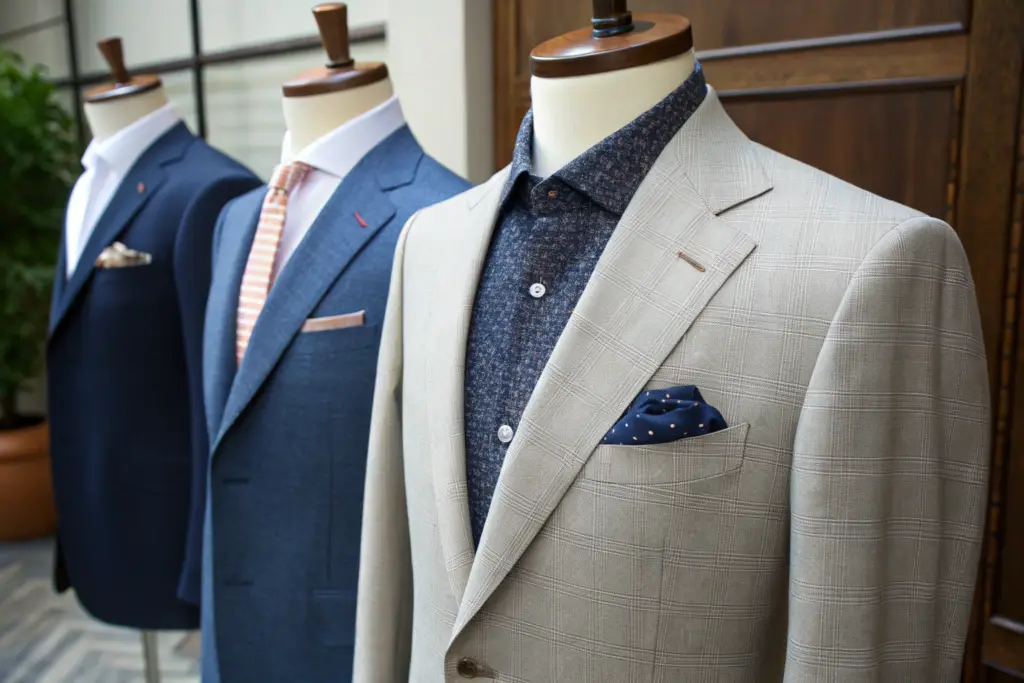
Wide notch lapels, measuring 9 to 11 centimeters at their widest point, are significantly overperforming narrower lapels in the EU wholesale market. The wider lapel creates a stronger V-shape on the torso, which is universally flattering. It provides a larger canvas for the critical quality signal: the hand-sewn buttonhole. A machine-made buttonhole on a lapel is functional. A hand-sewn buttonhole, with its slightly irregular, raised texture and contrasting silk thread, is a connoisseur detail. The wholesale buyer knows that the consumer who spots that hand-sewn buttonhole, either on the rack or on themselves in a mirror, is a consumer who is far more likely to purchase at full price. The lapel width and the buttonhole together are a powerful sales conversion tool.
The lapel width is not independent of the shoulder expression. A wide lapel pairs naturally with a soft, extended shoulder. A narrow lapel looks unbalanced with a wide shoulder. The proportions of the blazer must be designed as a coherent whole. The shoulder, the lapel, the button stance, and the jacket length all interact.
What Is the "Boutonnière" Loop and Why Is It a Top Request for Premium Blazers?
The boutonnière loop is a small loop of thread or fabric located behind the left lapel buttonhole. Its original purpose was to hold the stem of a flower, a boutonnière, in place. Today, its primary function is as a subtle but powerful signal of quality tailoring.
A blazer with a boutonnière loop behind the lapel buttonhole is a blazer that was made by a factory that cares about the details. It is a small, hidden feature that adds negligible cost but significant perceived value. The consumer who discovers it feels a sense of delight. The consumer has found evidence of care and craftsmanship.
The boutonnière loop is increasingly requested by European wholesale buyers as a required specification, not an optional extra. The cost to add it is minimal, a few centimeters of thread and a few seconds of sewing time. The return on that investment, in terms of the consumer's quality perception, is enormous.
The loop is typically made from the same thread as the buttonhole stitching, or from a fine silk thread. It is sewn to the back of the lapel, aligned with the buttonhole. It is a small, functional, and deeply traditional detail that has found new relevance in the modern market.
A Swedish menswear brand includes the boutonnière loop on all their tailored blazers. Their wholesale director told me, "It is the most Instagrammed detail on our jackets. Customers post photos of the loop with captions like 'attention to detail.' It is free marketing for the quality of our product." The loop is a social media asset as well as a quality signal.
How Does a Milanese Buttonhole Differ from a Standard Machine Buttonhole?
The Milanese buttonhole is the highest expression of the hand-sewn buttonhole. A standard machine buttonhole is created by a buttonhole machine that stitches a tight zigzag around the cut opening. It is functional and uniform, but it lacks dimensionality. The thread sits flat on the fabric surface.
A Milanese buttonhole is created by hand, using a labor-intensive process. The tailor first cuts the opening and reinforces the edge with a fine cord or gimp thread. Then a dense, raised satin stitch is worked over the cord by hand, creating a slightly elevated, rounded edge. The ends are finished with a small bar tack or a teardrop-shaped "foot." The stitching is subtly irregular, the hallmark of handwork. The buttonhole has a three-dimensional, sculptural quality.
The difference is immediately visible and tactile. The Milanese buttonhole communicates bespoke-level craftsmanship. It is a detail traditionally found on Neapolitan tailoring and the most expensive custom garments. Its presence on a wholesale blazer at a €300 to €500 retail price is a powerful statement of value.
The Milanese buttonhole is significantly more expensive than a machine buttonhole due to the skilled hand labor required. It is typically reserved for the lapel buttonhole, which is the most visible, with the other buttonholes on the front and sleeves being machine-made or of a simpler hand-finished style. The lapel buttonhole is the hero.
A Dutch wholesale buyer specified a Milanese lapel buttonhole on his premium blazer line. The cost added €2.50 per unit. The retail price was increased by €35. The blazer sold out. The buyer told me, "My customer does not know the word 'Milanese.' He knows the buttonhole on this jacket looks expensive. That is all he needs to know."
Why Are Half-Lined and Unlined Interiors Dominating the Lightweight Jacket Category?
The interior of a blazer was historically a hidden space. A full lining covered the internal construction, the seams, the interlining, and the canvas. The lining was functional, providing a smooth surface for easy donning and doffing, and a pocket for the tailor's label. The consumer rarely looked inside.
Half-lined and unlined interiors are dominating the lightweight jacket category because the modern consumer values lightness, breathability, and visible proof of construction quality. A half-lined blazer, where the lining is limited to the sleeves and the upper back, or an unlined blazer, with no lining at all, is significantly lighter and more breathable than a fully lined jacket. It is a three-season garment, wearable in spring, summer, and autumn. Furthermore, the absence of a full lining reveals the internal construction. The consumer can see the seam finishing, the quality of the canvas, and the handwork. The interior becomes a transparent showcase for the factory's quality, rather than a hidden void. The half-lined interior has moved from a cost-saving measure on cheap jackets to a premium feature on expensive ones.
The shift to half-lined construction is also a response to climate change. European summers are hotter. The demand for tailored clothing that can be worn comfortably in warm weather has increased. A half-lined wool-linen-silk blazer breathes. It can be worn over a t-shirt on a summer evening. A fully lined worsted wool blazer is unwearable in those conditions.
How Does Contrast Piping Inside a Blazer Signal Quality to the End Consumer?
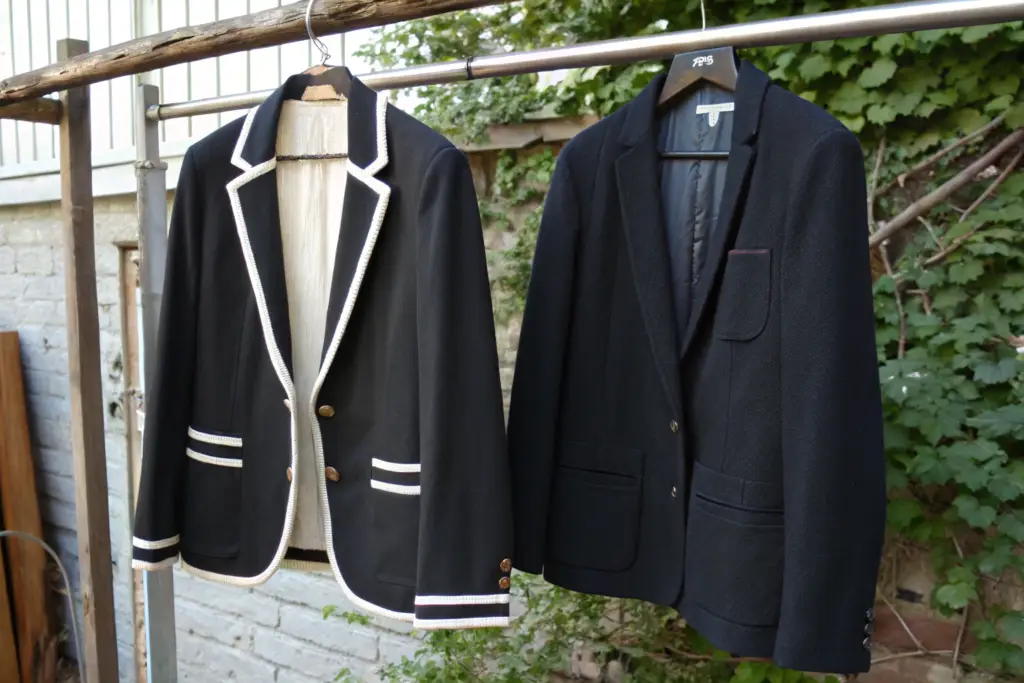
Contrast piping is a strip of fabric, often in a contrasting color or pattern, that is used to bind the internal seams of a half-lined or unlined blazer. The piping finishes the raw edges of the fabric and the lining, providing a clean, decorative detail.
The consumer who looks inside a blazer and sees neatly applied contrast piping is receiving a powerful quality signal. The piping says, "We finished this garment carefully, even in the places you are not supposed to look." It is the sartorial equivalent of a beautifully written note inside a book's cover.
The choice of piping fabric is itself a quality indicator. A cheap polyester satin ribbon suggests cost-cutting. A high-quality cotton or silk blend, in a color that complements or cleverly contrasts with the jacket's shell fabric, suggests design intentionality. Some brands use a signature piping color or pattern as a subtle brand identifier.
The cost of adding contrast piping is modest, primarily labor for the binding operation. The perceived value added is substantial. It is one of the most cost-effective quality upgrades available on a tailored jacket.
A French menswear brand uses a signature navy and white striped cotton piping on all their half-lined blazers. The piping has become a recognizable brand code. Customers photograph it for social media. The piping is as much a part of the brand's identity as their logo.
What Are the Best Breathable Lining Options for a Trans-Seasonal Travel Blazer?
For a blazer marketed as a travel garment, the lining is critical. A travel blazer must perform across different climates, from an air-conditioned plane cabin to a warm Mediterranean street. It must resist wrinkles from being folded in a suitcase. It must breathe. It must be comfortable against the skin.
The best lining options for a trans-seasonal travel blazer are cupro, also known as Bemberg, and a lightweight, breathable viscose twill. Cupro is a regenerated cellulose fiber made from cotton linter, a byproduct of cotton production. It is exceptionally breathable, soft, and anti-static. It feels like silk but is machine washable and more durable. Bemberg is the premium brand name for high-quality cupro.
A lightweight viscose twill is a more economical alternative to cupro. It offers good breathability and a smooth hand feel. The key is the weight. A lining weight of 70 to 90 GSM is ideal for a travel blazer. Heavier linings add unnecessary weight and reduce breathability.
The lining construction should also include ventilation features. Underarm grommets or mesh vents, small, discreet metal or fabric vents sewn into the underarm area of the lining, allow heat and moisture to escape from the body. These are a functional upgrade highly valued by the frequent traveler.
A wholesale buyer for a travel-focused menswear brand specified cupro half-lining with underarm mesh vents for his blazer program. The sell-through on the blazer was 20% higher than his previous fully-lined, non-vented travel blazer. Customer reviews specifically mentioned the breathability and the comfort on long flights.
How Are Genuine Horn Buttons and Surgeon's Cuffs Becoming Non-Negotiable?
The buttons and the cuffs are the parts of a blazer the consumer touches most often. The consumer buttons and unbuttons the front, fastens and unfastens the cuff, and runs their fingers over the buttons while wearing the jacket. The tactile experience of the buttons, the weight, the coolness, the subtle texture, is a constant, subconscious quality signal.
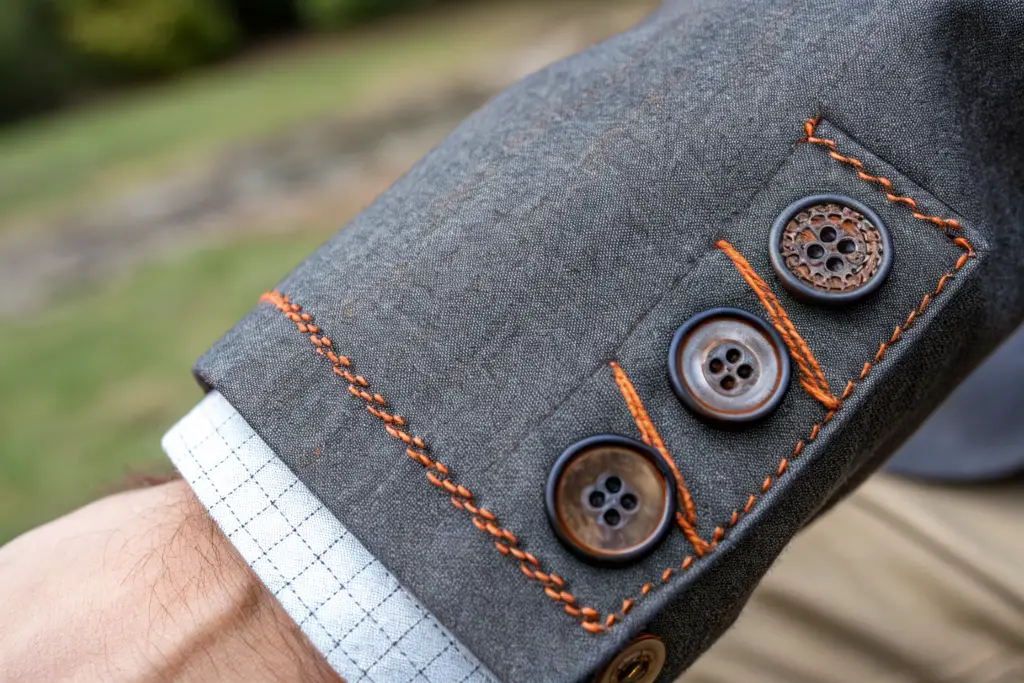
Genuine horn buttons and functional surgeon's cuffs are becoming non-negotiable in the EU wholesale blazer market because they are highly visible, tactile indicators of quality that the consumer has been educated to look for. A genuine horn button has a unique grain, a natural variation in color, and a cool, dense weight that plastic resin buttons cannot replicate. A surgeon's cuff, with functional, working buttonholes that actually unbutton, signals that the jacket was constructed with care and that the sleeve length can be altered by a tailor, a feature of high-quality ready-to-wear. A blazer with plastic buttons and sewn-shut cuff buttonholes is now perceived by the informed consumer as a lower-tier product, regardless of the quality of the fabric or construction.
The combination of genuine horn buttons and surgeon's cuffs has become a threshold requirement. The blazer that lacks these features is not even considered by a significant segment of the premium wholesale market. The features are not a luxury upgrade. They are a ticket to entry.
What Are the Most Desired Button Materials Beyond Standard Horn?
While genuine horn is the standard for premium blazers, the most desired button materials for the top tier of the market are sourced from specific, rare natural materials that offer a unique aesthetic and a compelling story.
Corozo buttons are made from the nut of the tagua palm tree, native to South America. The material is extremely dense, hard, and takes a beautiful polish. It can be dyed in rich, deep colors and has a subtle, natural grain. Corozo is a sustainable, plant-based alternative to horn that is highly regarded in the eco-conscious segment of the European market.
Mother-of-pearl buttons, made from the inner shell of certain mollusks, are prized for their iridescent, shimmering quality. They are primarily used on shirts but are also specified for the highest-end blazers, particularly in lighter summer weights where their luminous quality complements the fabric.
Hand-carved horn buttons, where each button is individually shaped and polished by a skilled artisan rather than mass-produced by machine, are the ultimate expression of the button-maker's craft. They have a subtle irregularity and a warmth that machine-made buttons lack. The cost is significantly higher, and they are reserved for limited-edition and bespoke-level garments.
The button material should be specified by name in the bill of materials, not just as "horn button." "Genuine Indian water buffalo horn button, 4-hole, 15mm, dark brown mottled" is a precise specification that leaves no room for substitution. We source buttons from specialist button manufacturers in Italy and China who provide certification of the material origin.
How Many Functional Buttons on a Surgeon's Cuff Is Considered Ideal?
The traditional surgeon's cuff features four functional buttons, stacked vertically, with the buttonholes cut through all layers of the fabric so the cuff can be unbuttoned and rolled back. This is the most common and most commercially accepted configuration.
A three-button cuff is also acceptable and is sometimes preferred on more casual, relaxed blazer styles. It is slightly less formal than a four-button cuff. A five-button cuff is rare and tends to look affected or trendy, rather than classic.
A one or two-button cuff, or a cuff with non-functional, decorative buttons, is now considered a marker of a lower-quality garment. The consumer has learned to check for working buttonholes. A blazer with decorative cuff buttons is a blazer that signals cost-cutting.
The spacing of the buttons is also a quality indicator. The buttons should be spaced closely together, with a gap of approximately 1.5 to 2 centimeters, and the bottom button should sit close to the cuff edge. Wider spacing suggests a less refined construction.
The buttonholes themselves should be neatly finished. A hand-sewn buttonhole on the cuff, echoing the lapel buttonhole, is a premium touch. A machine-made buttonhole is standard and acceptable. The key is that the buttonhole is cleanly cut and the stitching is dense and even.
A wholesale buyer for an Italian-inspired menswear brand specified a four-button surgeon's cuff with genuine mottled horn buttons and machine-made buttonholes. He told me, "Five years ago, this was a premium feature. Today, it is the minimum standard for a blazer over €300 retail. My customers expect it."
Conclusion
The men's tailored blazer market in Europe is being reshaped by a consumer who is more knowledgeable, more discerning, and more detail-oriented than ever before. This consumer does not buy a blazer because the brand tells him it is quality. He inspects the blazer. He checks the shoulder for padding. He measures the lapel width with his eye. He looks for the hand-sewn buttonhole. He unbuttons the surgeon's cuff. He reads the interior. His purchase decision is based on his own objective evaluation of the garment's details.
We have identified the four detail categories that are overperforming in the wholesale market. The soft, unconstructed spalla camicia shoulder, which replaces rigid padding with a natural, relaxed expression. The wide notch lapel with a hand-sewn, often Milanese, buttonhole and a boutonnière loop, which frames the face and signals artisanal quality. The half-lined or unlined interior with contrast piping and breathable cupro lining, which reduces weight and reveals the quality of the internal construction. And the genuine horn buttons with a functional surgeon's cuff, which provide a tactile, interactive quality signal every time the consumer touches the jacket.
These details are not secrets. They are the new baseline for the informed European consumer. A wholesale buyer who orders blazers without these details is ordering blazers for a consumer who no longer exists, or who is shopping at a price point far below the contemporary premium market. The wholesale buyer who specifies these details is ordering blazers that sell at full price.
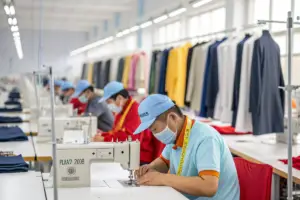
At Shanghai Fumao, our tailoring line has been developed specifically to deliver these details at a wholesale price point that allows our brand partners to achieve healthy margins. Our pattern makers understand the spalla camicia shoulder. Our sewing team includes specialists in hand-sewn buttonholes. Our finishing department can execute contrast piping and surgeon's cuffs to a standard that satisfies the discerning European consumer.
If you are a menswear wholesale brand or distributor looking to develop a tailored blazer program that meets the current market demand for these specific, overperforming details, I invite you to contact our Business Director, Elaine. She can provide our tailoring specification sheet, a sample pack of our button and lining options, and a virtual tour of our tailoring line so you can see the shoulder construction and finishing in detail. Reach Elaine at elaine@fumaoclothing.com. Let's build a blazer that your customers will inspect and buy.