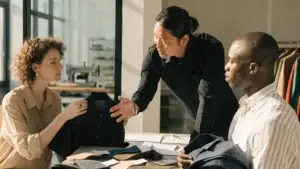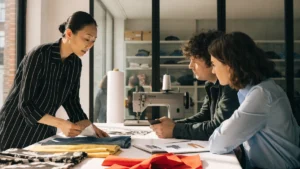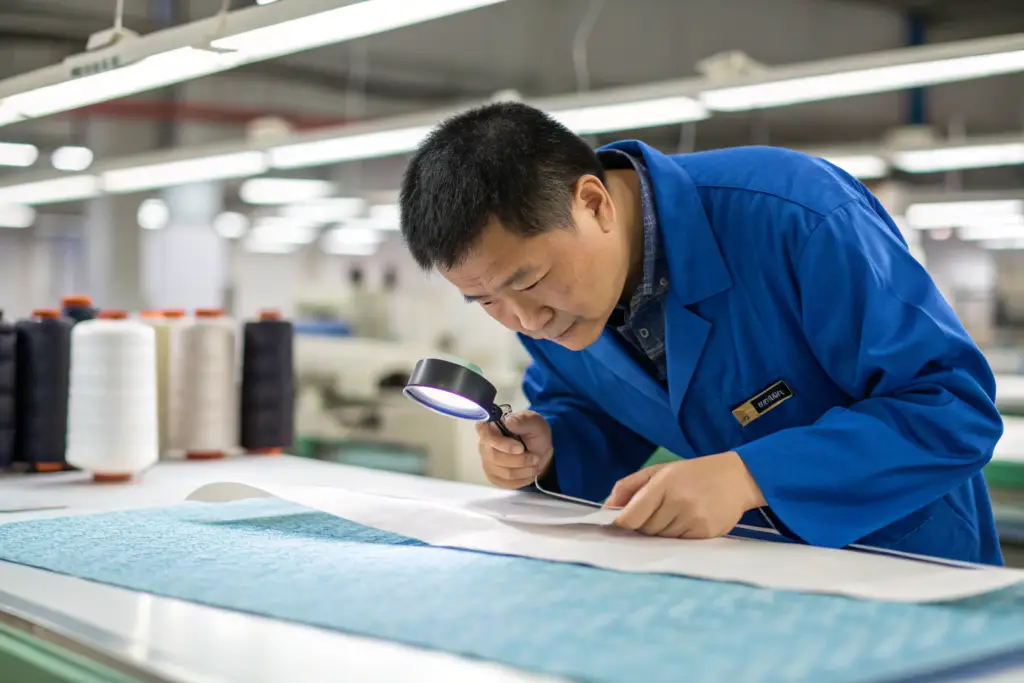
I remember standing in a sweltering factory floor in Ho Chi Minh City three years ago, looking at a pile of shirts with crooked seams. The owner looked me in the eye and swore the bulk would match the perfect samples. It didn't. That $45,000 mistake taught me a hard truth: a Zoom call and a smile are not a supply chain. You need a system. You need a way to cut through the polished sales deck and see the operation for what it really is.
You cannot rely on a PDF certificate to protect your brand. You need a repeatable, on-the-ground audit process that verifies the factory's physical output matches its promises. This means checking the stitching in the back room, not just the meeting room.
I write this not just as a factory owner in China, but as someone who has seen the underbelly of this industry. Over the last decade at Shanghai Fumao, I have fixed more messes created by other suppliers than I care to count. I have seen importers lose a full season because of a "minor" dye lot issue that turned into a public relations disaster on Instagram. If you are sourcing from China, Vietnam, or India, the distance creates risk. The only way to shrink that risk is to audit like a detective, not a tourist. Let me walk you through the exact steps I would take if I were in your shoes.
How to Prepare a Factory Audit Checklist Before Traveling?
I cannot tell you how many times I have seen buyers arrive in Shanghai with just a hotel reservation and a vague idea of "checking the place out." That is a waste of a 14-hour flight. The audit begins at your desk in America, not at the factory gate in Asia. If you don't have a structured checklist, the factory tour will be whatever the sales manager wants you to see—usually the air-conditioned meeting room with the new espresso machine.
An effective overseas factory audit checklist must go beyond basic cleanliness and include verification of raw material storage conditions, in-line production capacity versus your specific order size, and a detailed review of the Quality Control gate points on the sewing floor.
This preparation phase is where you separate the serious operators from the brokers pretending to be factories. You have to assume the first two days of communication will be "lost in translation" unless you force specificity. Let's break down the critical pre-flight work.

What Documents Should You Demand Before Booking The Flight?
Before you spend a dime on airfare, you need to put the supplier through a paper stress test. This is not about being annoying. This is about verifying if they are a true manufacturer or just a trading company with a nice showroom. I always tell my clients at Shanghai Fumao that transparency is the only currency that matters in this business. If a factory hesitates to share these documents, that hesitation tells you everything.
First, you must obtain a copy of their Business License. Check the registration date and, more importantly, the "Scope of Business." Does it actually say "Manufacturing"? Or does it say "Trading" or "Consulting"? You need to see the legal name matches the one on the invoice. Second, request a recent Factory Evaluation Report from a third-party auditor like SGS or Bureau Veritas. Even if it's a year old, it gives you a baseline for social compliance. If they don't have one, that's a red flag regarding working conditions. You can cross-reference this with the Worldwide Responsible Accredited Production (WRAP) standards to see if their claimed certifications align with industry norms.
Next, demand a Master Production Schedule for the current month. You want a screenshot, not a polished spreadsheet. Look for your potential order size compared to the volume already on the line. If you plan to order 5,000 pcs per month and their total capacity shown on the board is 3,000 pcs, you have just uncovered a major risk. They will subcontract you. And subcontracting is where quality dies. Finally, review their Fabric Mill Relationship List. A garment factory is only as good as its fabric sourcing network. Ask for the names of three specific mills they use for the type of fabric you need. If they can't name them instantly, they are likely buying from middlemen markets, which creates massive variance in color and hand feel.
How To Confirm Factory Specialization Matches Your Product Type?
This is the most common error I see from new brand owners. You find a factory making beautiful tailored wool coats and you assume they can make a simple cotton t-shirt well. That assumption will ruin your launch. Sewing a woven dress shirt requires entirely different machinery and operator muscle memory than sewing a knit hoodie. The needle type, the thread tension, and even the humidity required in the room change.
You must map the factory's equipment list to your Bill of Materials. When I audit a facility for a client, the first thing I look for is Needle Detectors and Automatic Thread Trimmers if we are doing knitwear. If those aren't standard on every line, you will get holes in the neckline. For woven garments, I look for specific Buttonhole Machines (Reece or Juki models) and Fusing Presses for the collars. A cheap fusing press leads to bubbling on the collar after the first wash—a guaranteed return for any US brand.
| Product Category | Critical Machinery Required | Common Failure Without This Machinery |
|---|---|---|
| Knit T-Shirts | Cylinder Bed Coverstitch Machine, Needle Detector | Skipped stitches at hem; Broken needles in garment |
| Woven Shirts | Straight Lockstitch with Auto-Trimmer, High-Temp Fusing Press | Bubbling collar interlining; Loose threads inside seams |
| Active Leggings | 4-Needle 6-Thread Flatlock Machine, Bar Tack Machine | Seam splitting during squat; Waistband drawcord failure |
| Outerwear Jackets | Walking Foot Industrial Machine, Snap Button Press | Uneven placket alignment; Rust on metal hardware |
You also need to verify the Needle Control Policy. In a good factory, broken needles are logged, the broken piece is taped to a logbook, and the garment is scanned. In a bad factory, they just grab a new needle and keep sewing. That's how your customer finds a sharp piece of metal in their kid's hoodie. Ask to see the logbook. If it's blank or "we never break needles," walk away. They are lying or not inspecting hard enough. Both are bad for business.
How to Spot Production Red Flags During The Factory Walkthrough?
The walkthrough is where the mask slips. The factory owner will guide you down a pre-cleaned path, usually from the cutting table to the finished goods warehouse. They will talk about efficiency. You need to ignore the words and watch the floor. My father taught me this forty years ago: look at the ceiling and look at the floor. The ceiling tells you about fire safety (sprinklers, not hanging cobwebs of flammable lint). The floor tells you about process control (are there oil stains near the fabric rolls?).
The most reliable indicators of a poorly managed garment factory are visible clutter under the cutting table, a lack of digital barcode scanning for work-in-progress bundles, and workers wearing personal headphones on the sewing line.
Those three things tell me more than a spreadsheet ever will. Clutter under the cutting table means the fabric is being damaged before it even hits production. No barcode scanning means they have no idea where your order actually is in the 10-day cycle. Headphones mean quality control is asleep; the operator can't hear the machine skipping a stitch. Let's dive deeper into two areas that often get overlooked.

How Do You Assess The True Condition of Machinery and Maintenance?
Don't just ask "Do you have a maintenance schedule?" That question gets a universal "Yes." Instead, ask to see the Machine Service Log for a specific line. Look at the last entry. Is it dated yesterday? Or six months ago? But the real secret weapon is to look at the Bobbin Cases. Walk up to a sewing machine operator and ask to see the bobbin case area. Is it filled with lint dust bunnies? Or is it clean? A mechanic once told me that 70% of tension problems come from dirty bobbin cases. A factory that doesn't clean the lint out daily is a factory that doesn't care about stitch consistency.
Also, check the Cutting Table Surface. Run your hand over it. It should be perfectly smooth. If you feel grooves or cuts, those same marks will snag your expensive rayon fabric. You should also check the Steam Irons at the finishing station. Look inside the water reservoir. Is it full of rust? That rust water gets sprayed onto a white blouse during pressing, and you don't find that stain until the customer opens the box in Seattle. This is the kind of detail you cannot catch in a video call. This is why physical auditing matters. At Shanghai Fumao, we know buyers rely on these details, so we maintain a transparent policy—our floor is open for clients to check the actual temperature logs on our fusing machines and the weekly needle replacement logs.
What Does A Well-Managed In-Line QC System Look Like?
Most factories have a table at the end of the line with a sign that says "QC." That is final inspection. That is too late. By the time a jacket reaches the end of the line, it's already finished. If the sleeve is set wrong, you have to rip it out and resew it. That damages the fabric and delays the order. A proper factory uses In-Line QC Gates.
Look for small tables set up between operations. Specifically, look for a checkpoint after the Collar Setting operation on woven shirts and after the Waistband Attachment on pants. You should see a worker with a measuring tape and a go/no-go gauge checking pieces at that station. Ask them what they are checking for. If they can't answer you clearly, it's a photo op, not a functional process.
| QC System Type | When It Happens | Risk Level For Your Brand |
|---|---|---|
| End-of-Line Only | After garment is 100% sewn and pressed | High Risk: Rework damages fabric; Shipments delayed for repairs |
| Critical Operation Check | After collar set, zipper fly, or pocket attachment | Medium Risk: Catches major structural issues before completion |
| Trimming Inspection | Before final pressing; checking loose threads and stains | Low Risk: Only aesthetic issues remain; easy to fix without damage |
| Full In-Line Gating | 5-6 checkpoints from cutting to packing | Very Low Risk: Issues isolated immediately; data logged for training |
You should also observe the Defect Tagging System. Do they use Red Tags to mark a defect? Where do those defective garments go? A good factory has a locked cage or a clearly marked "Mending Area" with skilled repair workers. A bad factory hides the defective garments under a pile of scraps or sneaks them back into the line hoping the light is dim enough for the final inspector to miss it. If you see a pile of garments under a table with no tags on them, assume those are your future chargebacks.
How to Verify Raw Material and Trim Quality in Person?
Fabric is the soul of the garment. You can have the best stitching in the world, but if the fabric pills after two wears or the color fades unevenly, the product is trash. I recall a specific case from last fall: a Miami-based activewear brand came to us after their previous Vietnamese supplier delivered 8,000 pairs of leggings that showed Shade Variation between the left and right leg. The supplier blamed the lighting. It was a cutting issue from different fabric rolls, but the real failure was that no one checked the Batch Dye Lots in the warehouse.
Verifying fabric quality requires you to request a 4-Point Inspection System report on incoming rolls, personally review the color continuity under a D65 light booth, and physically stress test the trims and zippers on site.
Do not trust the "Approved Swatch" hanging in the meeting room. That swatch is a lab sample. You need to see what is currently on the shelf, waiting to be cut for the next order. The gap between the lab dip and bulk production is where margins get eaten by air freight to fix mistakes.
How Can You Detect Hidden Defects in Fabric Rolls Before Cutting?
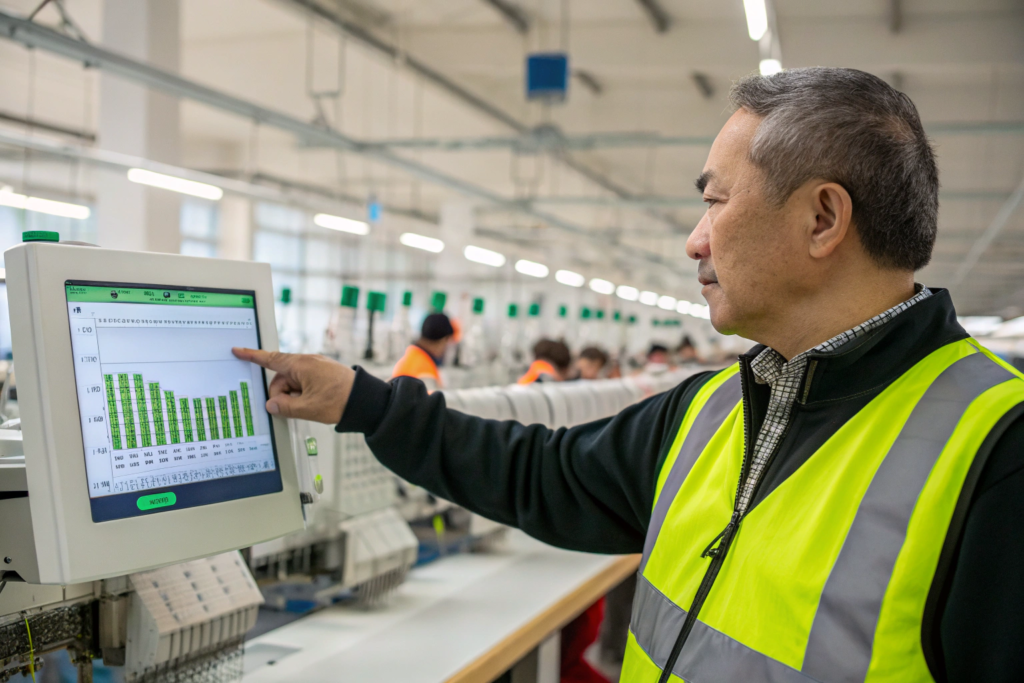
You cannot unroll every meter of fabric in the warehouse, but you can check the process. Ask the warehouse manager: "Where is your Fabric Inspection Machine?" It should be near the receiving dock, not buried in a corner covered in dust. Ask to see the Inspection Records for the last three rolls of the same fabric type you intend to use. A proper record uses the 4-Point System. You want to see points assigned per 100 yards. Anything over 40 points per 100 yards is considered a reject by US standards, though some cheap fast fashion will accept up to 45.
Grab a roll tag and check the Width marking. Then, ask the worker to pull out the first three yards and measure it yourself with a tape measure. I have seen rolls labeled 60" that measure 57" after shrinkage. That missing 3" means your marker efficiency drops, and you get 10% fewer units out of the same roll. That is pure profit evaporating because of a lazy supplier.
You also need to do a Snap Test on knits. Pull the fabric width-wise. Does it bounce back completely? If the fabric stays stretched out or the edge curls aggressively, that garment is going to bag out at the elbows and knees. Finally, do a Crocking Test on dark indigos or deep reds. Take a clean white handkerchief from your pocket and rub it firmly on the fabric 10 times. If you see significant color transfer, the American Association of Textile Chemists and Colorists (AATCC) standards would flag this for wet crocking failure. This is a $2 test that saves you from a $20,000 social media crisis when a customer posts a picture of their blue-stained white leather car seats.
What Are The Critical Checkpoints for Trims and Hardware Durability?
Never underestimate the power of a broken zipper to destroy a brand's reputation. Trims seem small, but they are the high-touch points for the customer. If the button falls off in the fitting room, the sale is lost. You must audit the Zipper Tape and Slider. Bring a sample of the zipper you intend to use and ask to see the bulk stock. Do they match exactly? I once caught a factory substituting a cheaper #3 coil zipper for a #5 molded tooth zipper. To the untrained eye, they both look silver. But the #3 will fail on a heavy jacket pocket after six months. You can verify the specifications against the YKK Zipper Standard Guidelines to ensure you aren't getting a counterfeit or inferior grade.
Look at the Snap Buttons. Take a sample from the bulk bin and a hammer or the back of a screwdriver. Hit the snap while it's attached to a piece of scrap fabric. Does the spring mechanism still work? Or did the post bend? A cheap snap works once; a good snap works for the life of the garment.
Another critical check is Rust Resistance. Ask to see the Salt Spray Test report for metal trims like D-rings on bags or rivets on jeans. If they look at you like you have two heads, that means they don't test for it. That means if your container gets a little humid crossing the Pacific, you will open the boxes to find rust spots bleeding onto the fabric. At Shanghai Fumao, we insist on a minimum 24-hour salt spray rating for any metal trim coming out of our coastal China location because we've learned the hard way that humidity is the enemy of cheap plating.
How to Secure Your Supply Chain with Payment and Logistics Terms?
You found a factory with clean floors, good machines, and great fabric. Congratulations. But if you get the payment terms wrong, you still lose. I have seen American companies wire 30% deposits only to have the factory hold the finished goods hostage for more money. This is called "ransom warehousing," and it is devastating when you have a launch date locked in with retailers. The contract is only as good as the leverage you hold at the end of the production run.
Securing your shipment means negotiating terms that protect the final payment until a third-party inspection is passed, and utilizing shipping terms like FOB or DDP that clearly define who owns the risk when the container is on the water.
This is the part of the audit that happens in the meeting room, not on the floor. You need to test how the factory reacts to specific financial and logistical scenarios. If they are rigid and unwilling to offer any protection for first-time buyers, you are dealing with a vendor, not a partner. A partner, like we strive to be at Shanghai Fumao, understands that sharing a little risk builds a lot of trust.
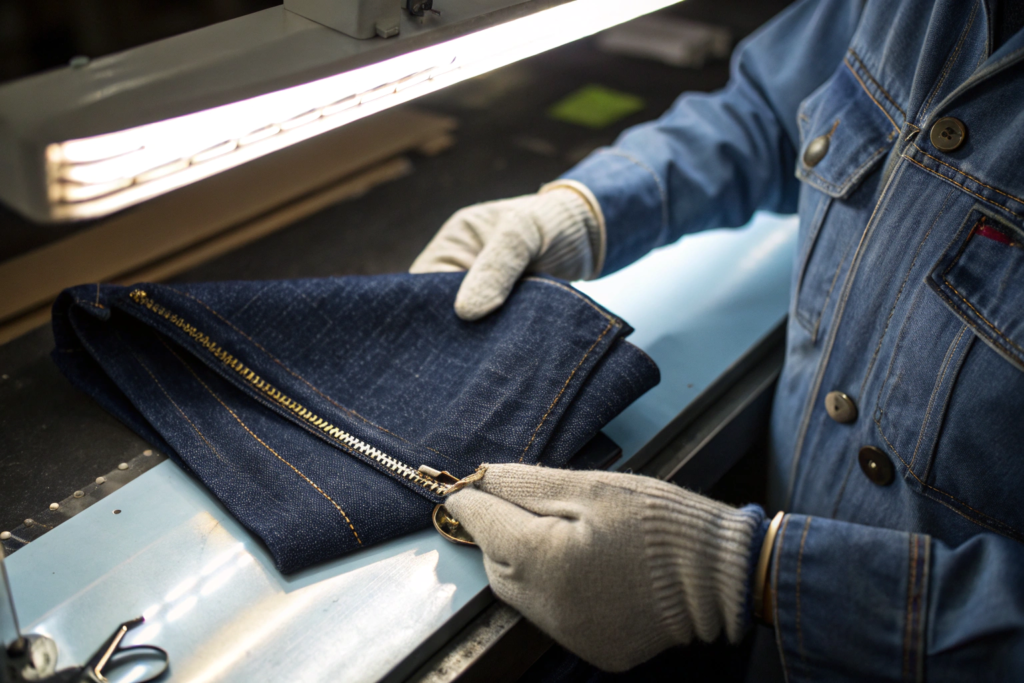
Why Is The Final Random Inspection The Gatekeeper of Payment?
Do not make the final balance payment based on an email that says "Goods Ready." Insist on a Final Random Inspection (FRI) . This should be conducted by you or a hired third party like QIMA or SGS. You are looking for AQL (Acceptable Quality Limit) compliance. For most US apparel brands, an AQL of 2.5 for Major defects and 4.0 for Minor defects is standard.
Here is the non-negotiable clause I advise all my consulting clients to put in their Purchase Order: "Balance payment due 7 days after passed FRI and receipt of scanned Bill of Lading." This does two things. First, it ties money to a verified quality metric. Second, it confirms the goods have actually been delivered to the port and are under the carrier's control. If the factory fails the FRI, you do not pay. You wait for them to rework the lot and re-inspect. This is the only language that guarantees they will fix the issue quickly. Without this clause, you are just hoping they are nice people. And hope is a terrible supply chain strategy.
FOB vs. DDP: Which Shipping Term Protects Your Margins?
Understanding the difference between FOB (Free on Board) and DDP (Delivered Duty Paid) is essential for cash flow. Many new buyers get lured in by a low DDP price because it sounds easy—"Just send one check, and it shows up at my warehouse." But DDP buries the logistics cost. You have no idea if you overpaid for freight or if the factory used a slow boat to save money. You also lose visibility.
| Term | Who Controls Freight? | Who Pays Duty & Tax? | Visibility For Buyer | Best Used When... |
|---|---|---|---|---|
| FOB | Buyer | Buyer (Upon Entry) | High: You track the vessel | You have a trusted freight forwarder and want to negotiate ocean rates directly |
| DDP | Supplier | Supplier | Low: Supplier handles all | You are a small brand without a customs bond or logistics team |
| Ex-Works | Buyer | Buyer | High (but Buyer picks up at factory) | You have a local office in the country of origin to manage trucking |
I strongly recommend FOB for any brand doing more than $200,000 in annual volume. Why? Because you can negotiate directly with C.H. Robinson or Flexport. More importantly, under FOB, the risk of loss transfers to you once the container crosses the ship's rail. That sounds scary, but it means you can buy Marine Cargo Insurance that you control. I've seen factories under DDP buy the cheapest insurance possible, and when a container of winter coats went overboard in a storm, the brand owner was left fighting a Chinese insurance company for six months. If you want peace of mind, control the freight and the insurance.
If you are new and overwhelmed, we offer flexible terms at Shanghai Fumao. We can handle DDP for your first two orders while you set up your own customs bond. Then we transition you to FOB so you can see the actual cost breakdown. That's how a real manufacturing partner behaves. We also ensure you are working with a facility that understands U.S. Customs and Border Protection (CBP) requirements for labeling and fiber content, which prevents your goods from being held at the port of Los Angeles.
Conclusion
Auditing a garment factory from 7,000 miles away is not easy, but it is the single most important thing you can do for your business. You cannot skip the step of putting boots on the ground. You have to look at the bobbin cases, you have to pull on the fabric, and you have to verify the zippers yourself. The brands that survive in this competitive market are the ones who treat their supply chain like an asset, not an afterthought. A good factory solves problems you didn't even know you had. A bad factory creates problems you can't afford to fix.
Every detail we discussed—from the rust in the iron to the slack in the cutting table—is a leak in your profit bucket. By using a strict audit checklist, verifying the true production capacity, and locking down your payment terms to an independent inspection, you protect the brand you've worked so hard to build. The goal is to find a facility that sees your quality standards as the minimum requirement, not a suggestion.
If you are tired of chasing late shipments and fighting with sales reps who disappear after the deposit clears, let's talk. My team at Shanghai Fumao builds apparel for American brands that can't afford to guess. We've spent years perfecting the production lines and the communication systems so you can focus on selling, not firefighting. If you have a project you need to get right the first time, reach out to our Business Director, Elaine. She can walk you through our facility, our process, and our past performance.
Contact Elaine directly at: elaine@fumaoclothing.com