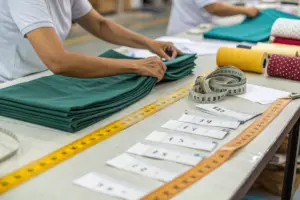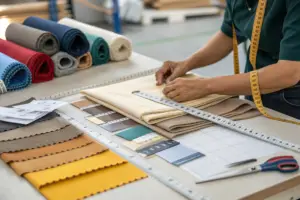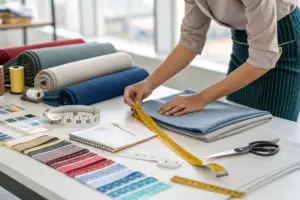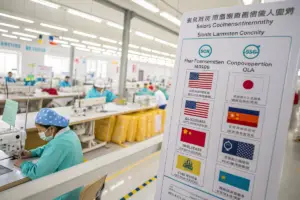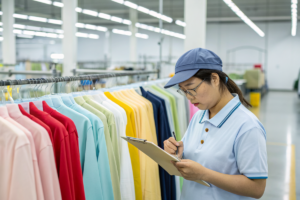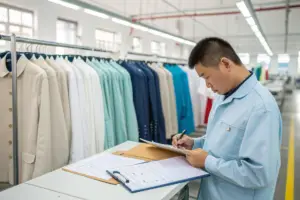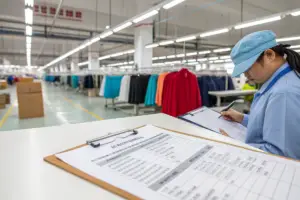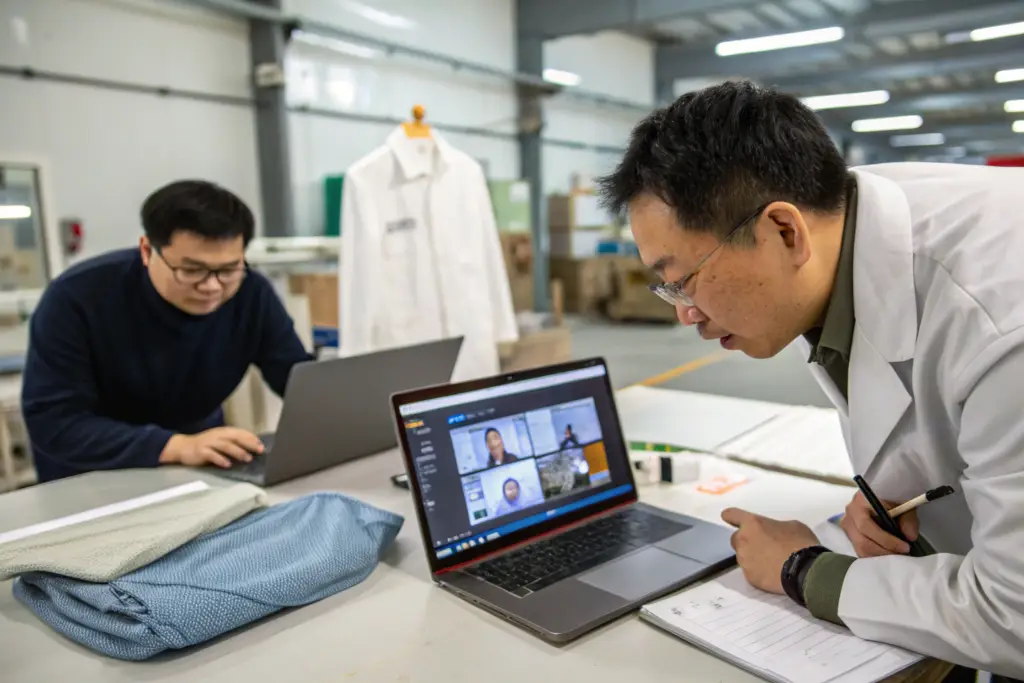
Last summer, a startup brand owner in Austin sent me a frustrated email. She had just received her first bulk shipment of 500 women's blouses, and the buttons were falling off. Not after washing—just sitting in the polybag. She had approved a pre-production sample that was hand-sewn with meticulous care by a sample room specialist. The bulk production, however, was sewn by a line operator on a quota, using a slightly different thread tension. The sample was perfect. The bulk was a disaster. The $18,000 shipment was unsellable. She had never spoken to the actual quality team who inspected her product. She didn't know their names. She didn't know their testing protocols. She had bought a sample, not a production system.
You schedule a live, 60-minute video inspection meeting with Shanghai Fumao's QA team by contacting our Business Director Elaine, who will lock in a time on our production calendar during your pilot run, ensuring you can witness your actual bulk garments being measured, tested, and inspected in real-time by the exact technicians responsible for your order. This is not a sales call. It is a live, transparent, interactive audit of your product's quality before it leaves our factory floor. I want to give you the exact, step-by-step protocol for booking this meeting, the technical setup we will use, and the four specific, actionable inspections you must demand during that live video session. This meeting is your single most powerful tool for preventing the sample-to-bulk quality gap that kills brands.
Why Should You Meet Our QA Team Before Cutting Starts?
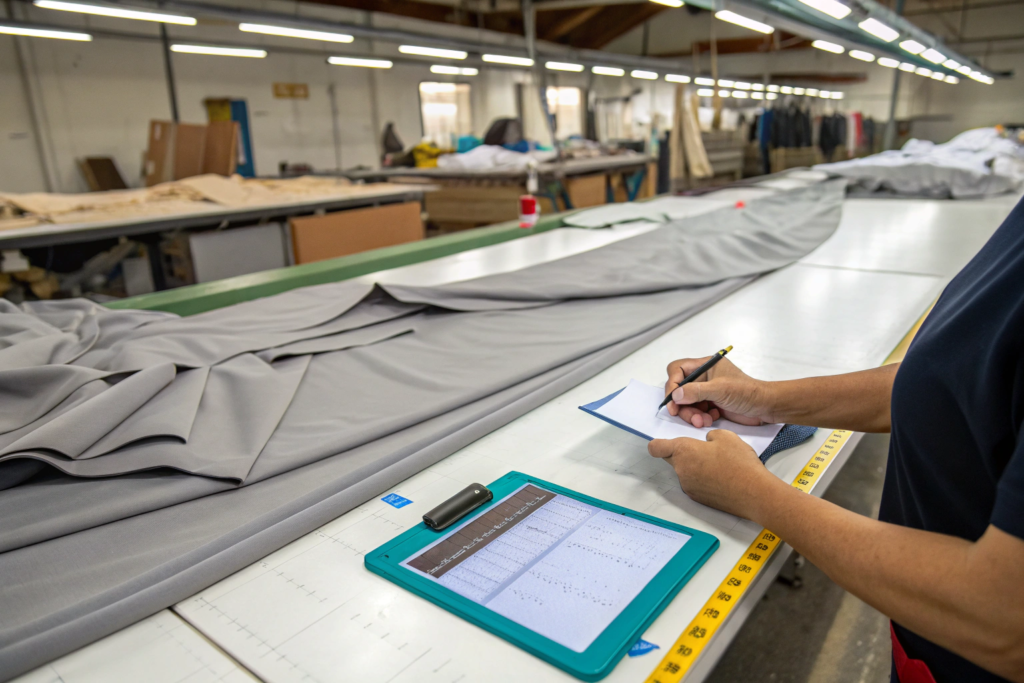
The moment before cutting is the most critical and most overlooked leverage point in the entire garment manufacturing process. After the fabric is cut, your capital is committed. The fabric is no longer a roll that can be returned to inventory. It is a pile of garment panels. Any defect that is in the fabric, or any misunderstanding of your specification that is baked into the pattern, is now an irreversible cost. The pre-production meeting is your last chance to inspect the raw material and verify the production setup before your money is cut into pieces.
Most brands skip this step entirely. They approve a sample and then simply wait for the shipping notification. This is the behavior of a hopeful buyer, not a professional sourcing manager. A professional understands that the sample is a promise, but the QA team's pre-production setup is the physical fulfillment of that promise. Meeting the team, seeing the actual fabric rolls, and witnessing the first production patterns being aligned is the act of verifying that the promise will be kept.
How Does a Live Inspection Prevent the "Sample vs. Bulk" Gap?
The sample vs. bulk gap is the single largest source of financial loss in the apparel supply chain. It occurs because a sample is made in a slow, artisanal process by a single, highly skilled technician. Bulk production is made by a team of operators on a moving line, under time pressure, using bulk fabric rolls that may differ subtly from the sample fabric. The sample proves the design is beautiful. The bulk proves the factory's production system is controlled. These are two entirely different things.
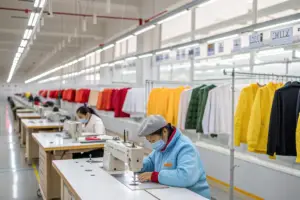
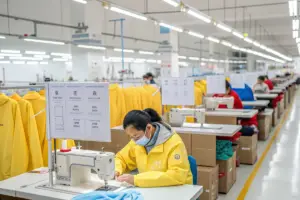
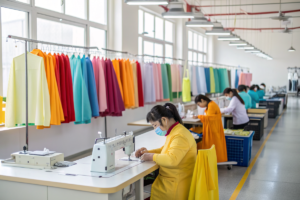
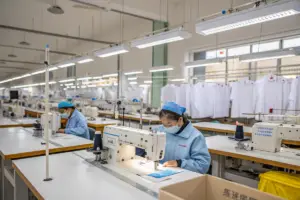
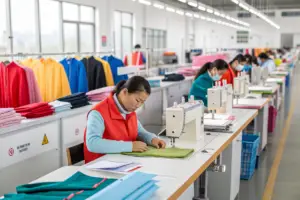
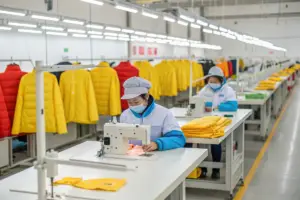
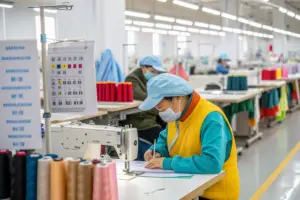
A live inspection during the pilot run, which is the first small batch of your actual bulk order, directly connects you to the production system. You are not looking at a golden sample. You are looking at the 50th unit off the line. You see the actual stitch tension, the actual pocket alignment, the actual thread color against the bulk fabric in the factory's own lighting. Our QA team leader, Mr. Li, holds the approved sample in one hand and the pilot run garment in the other, and walks you through the comparison, live, on camera. You see any deviations with your own eyes. You approve the bulk standard, or you reject it and demand an adjustment, before the line runs the remaining 5,000 units. This single hour of live inspection can save you from a $50,000 shipment of garments that match the approved sample in spirit but not in precise, measurable, production-line reality. This is the difference between buying a sample and buying a certified production system, a distinction that is fundamental to professional supply chain management.
What Four Critical Checks Can You Only Do on a Video Call?
A physical sample sent by courier only allows you to inspect the product. A live video call allows you to inspect the process. It gives you access to the factory floor, the testing equipment, and the people who are responsible for your order. This process transparency is what reveals a factory's true operational DNA, and it provides four specific types of evidence that a shipped sample can never provide.
First, you can verify the raw material identity. You can ask Mr. Li to walk the camera to the fabric rack, show you the actual roll labels with the lot numbers, and cross-reference them against the mill certificates you approved. Second, you can witness a live destructive test. You can watch a button from your actual bulk garment being pulled to 15 pounds of force on a digital gauge, and see the reading with your own eyes. Third, you can audit the in-line measurement process. You can ask a QC inspector to measure the chest, length, and sleeve of a random garment pulled from the line, and compare those numbers to your spec sheet in real-time. Fourth, you can assess the team's competence and culture. You can see how the QA team communicates with each other, how clean and organized the inspection station is, and whether the team leader can answer your technical questions without hesitation. This human audit is the most revealing of all. A factory with a chaotic, disorganized inspection table and a QA leader who cannot explain his own defect classification system is a factory that will ship you chaos. A calm, organized, technically fluent QA team is a factory that will ship you consistent quality. These four checks are the core of a true virtual audit, and they are impossible to perform on a shipped sample. This methodology is aligned with the principles of a formal quality audit conducted in person.
What Is the Step-by-Step Protocol to Book This Meeting?
The booking process is intentionally simple and human. We have not built an automated online portal because a pre-production meeting is not a standard, one-size-fits-all event. Your meeting is specific to your product, your production schedule, and your quality concerns. It requires a human conversation with our Business Director to set the correct agenda and ensure the right people and materials are in the room.
The protocol is a four-step sequence. First, you email Elaine with your production order number and your preferred meeting week. Second, Elaine confirms the exact date and time when your specific pilot run will be on the sewing line and ready for inspection. Third, you receive a pre-meeting checklist and a secure Zoom link. Fourth, you join the meeting, and we guide you through your personalized inspection agenda. This process takes less than 48 hours from your initial email to a confirmed meeting slot. It is designed to integrate seamlessly into your existing product development calendar, not add weeks of delay.
Why Must You Email Elaine to Schedule Around the Pilot Run?
Because the meeting must happen at the exact moment your fabric is being cut and your first units are being sewn. This is a moving target on a dynamic production floor. A generic meeting request for "next Tuesday at 10 AM" is almost certainly the wrong time. Your pilot run might be scheduled for Wednesday morning, or it might be delayed by 24 hours due to a previous order running slightly over. Scheduling the meeting around the physical reality of the production floor is the only way to guarantee you will see your actual product being made and inspected, not a staged demonstration.
Elaine's job is to act as the bridge between your calendar and our production schedule. She physically walks to the cutting room floor and the sewing line supervisor's office to pin down the exact, real-time window when your pilot run will be live. She then locks that window into our QA team's schedule, ensuring Mr. Li and his inspection equipment are ready and waiting for your video call. She also confirms that your specific, approved golden sample, your signed tech pack, and your certified fabric mill certificates are physically on the inspection table, ready to be shown on camera. This human, manual scheduling process is deliberately low-tech. It is not scalable, but it is precise. It ensures the meeting you join is not a generic factory tour, but a focused, live audit of your specific product at its critical moment of production truth. To begin this process, simply send your request to elaine@fumaoclothing.com.
What Information Do You Need to Prepare for a Productive Zoom?
A productive Zoom inspection is a directed audit, not a passive viewing. You, as the buyer, must come with a specific, written checklist of the quality points you want to verify. A vague request to "check the quality" results in a vague, unproductive meeting where the QA team shows you what they want you to see. A precise checklist forces them to demonstrate exactly what you need to see, and it prevents the meeting from being derailed by irrelevant detail.
Your preparation should consist of three documents. First, your own copy of the approved tech pack and the golden sample approval notes. Second, a specific, written defect checklist: "I want to see the armhole seam measured on 5 random units. I want to see the button pull test on 3 random units. I want to see the color of the bulk fabric compared to the approved lab dip under the factory's light booth." Third, a simple pass/fail criteria sheet for each check. For example, "Armhole seam tolerance: +/- 0.5cm from spec. Button pull test: must hold 15 lbs for 10 seconds." If you email this checklist to Elaine 48 hours before the meeting, our QA team will have the measurement tools, the testing jigs, and the batch samples pre-staged and ready. Your meeting will start not with setup and searching, but with immediate, efficient, directed inspection. This preparation transforms you from a hopeful observer into a professional, directive auditor, and it commands the full respect and focus of our team.
How Does the Live Test Work During the Zoom Call?
The live test is the core of the meeting. This is where the abstract specifications on your tech pack become a physical, witnessed, and recorded event. You are no longer trusting a PDF report that was emailed to you. You are watching the exact test being performed on your exact product, and you are seeing the raw, unedited result with your own eyes. This is the highest standard of evidence in remote quality assurance.
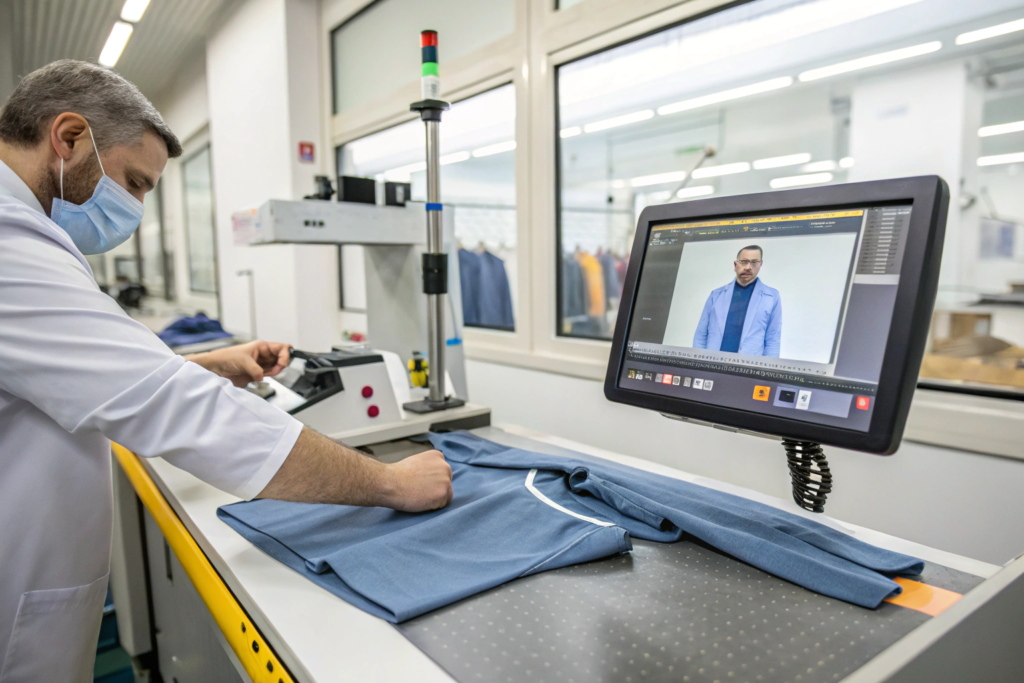
Our QA lab is equipped with a dedicated, high-resolution PTZ camera mounted directly above the main testing bench. This camera provides a clear, top-down view of the force gauge, the measurement tools, and the garment. Mr. Li will narrate the test as he performs it: "I am now taking a random sample from carton number three. I am attaching the force gauge to the top button. I am applying a steady tensile load. Please read the display." You watch the digital numbers climb on your screen. You see the button hold at 15 pounds, 18 pounds, 22 pounds. The test is not a video recording; it is a live, physical experiment conducted at your request, and you are the primary witness.
Can You Witness a Button Pull Test on Your Actual Bulk Garment?
Yes, and this is the single most requested and most impactful test in our virtual QA meetings. A button that detaches from a garment is a choking hazard for children's wear and a quality failure for any product. A paper test report is a claim. A video of a test is evidence. But a live, witnessed test is a legally and commercially unassailable fact.
The procedure is simple and visually dramatic. Mr. Li will walk to the sealed carton of your pilot run garments. He will break the seal on camera. He will pull a random garment from the middle of the stack—not a pre-selected sample from the top. He will place the garment on the test bench and attach the clamp of a calibrated, digital force gauge to the button. You will see the gauge's serial number and its most recent calibration sticker. He will then pull the gauge at a steady rate, perpendicular to the fabric. You will watch the live digital readout on the screen. Your spec sheet says 15 pounds minimum. The needle climbs past 15, past 18, and the button holds. The fabric around the button distorts, but the thread and the button itself do not fail. You have just witnessed, in real-time, that the attachment method, thread type, and operator technique on your bulk production line produce a secure, compliant, and durable button. This test takes two minutes and provides more real quality assurance than a hundred pages of a generic AQL report. It is the truth, and you have seen it with your own eyes.
How Does Mr. Li Measure Critical Points on Camera?
Measurement is not a subjective judgment. It is a comparison of a physical garment against a numerical standard. The key is to ensure the measuring tool is calibrated, the measurement point is exactly as defined on your tech pack, and the measurement is taken on a random, relaxed garment, not stretched or manipulated to hit a number.
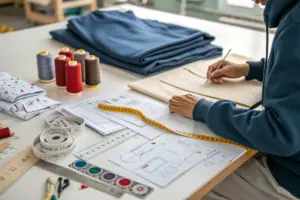
Mr. Li uses a rigid, calibrated steel ruler and a soft, non-stretch fiberglass tape measure. He will first show the calibration certificate of the ruler on camera, proving it has been checked against a certified standard. He then lays the garment flat on the inspection table, smoothing it gently without stretching the fabric. He points to the specific measurement point: "This is the chest measurement, taken 2 centimeters below the armhole seam, as specified on your tech pack." He then places the ruler on the garment and directs the overhead camera to zoom in. You see the ruler's markings clearly aligned with the garment's edges. You read the measurement on your screen: 52.3 centimeters. Your spec sheet says 52.0 centimeters with a tolerance of +/- 0.5 centimeters. The garment is within tolerance. You have just independently verified a critical measurement on a random bulk unit, live, with your own eyes. This process is repeated for sleeve length, body length, shoulder width, and any other critical points you specified in your pre-meeting checklist. The evidence is visual, immediate, and independently verifiable. There is no report to falsify. There is only the physical garment and the ruler, and you are the judge.
Conclusion
A Zoom call with our QA team before production is the single most effective, zero-cost insurance policy you can take out on your next purchase order. It is the act of verifying that the production system, not just the sample, is calibrated to deliver your specification. You will witness your actual fabric rolls being cross-checked, your actual bulk garment components being destructively tested, and your actual critical measurements being verified against your tech pack by the exact technician who is responsible for your order's quality. The process is simple: email Elaine at elaine@fumaoclothing.com with your order number and your preferred week. She will lock in the exact time your pilot run will be live, send you a preparation checklist, and ensure Mr. Li and his lab are ready to perform the specific, directed inspections you demand. Come with a written checklist, watch the tests live, and make your approval or rejection decision based on unedited, witnessed physical evidence, not a PDF report.
This meeting is your right as a professional buyer. It is our standard operating procedure, not a special favor. A factory that resists a live, on-camera inspection of its production system is a factory that is hiding something. We invite it because we are proud of our QA team and our production discipline, and we want you to see it with your own eyes.
Stop buying samples and hoping the bulk matches. Start auditing the production system that builds your product. The camera is on, and the lab is ready. Contact Elaine at elaine@fumaoclothing.com and tell her you want to book your pre-production QA Zoom. Let's put your spec sheet on the inspection table, pull a random garment from your pilot run, and prove to you, live, that your product is built to the standard you specified and the standard your customer deserves.