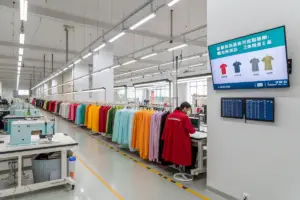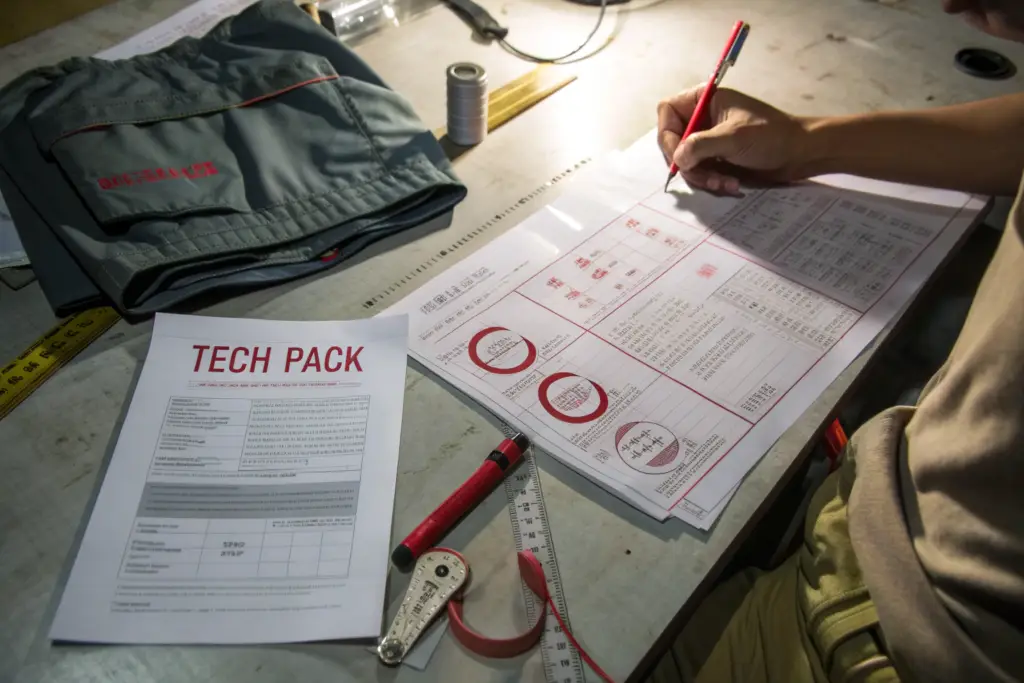
I stood in our finishing room three years ago staring at 850 men’s shirts that were supposed to have a spread collar. They had a point collar. Not a subtle point collar that a forgiving customer might not notice. A classic, unmistakable point collar with sharply angled points and no spread whatsoever. The tech pack had specified "collar: spread type." Below that line, in the same document, a hand-drawn sketch showed a point collar. The pattern maker had followed the sketch. The brand owner had written the words. Neither had noticed the contradiction. The 850 shirts were wrong. The fabric was cut. The sewing was done. The pressing was complete. The shipment was due in five days. We re-cut and re-sewed 850 collars in four days at a cost of $6,200. The brand owner paid half. We paid half. The tech pack ambiguity cost both of us.
Poorly translated and vague tech packs completely ruin bulk garment production runs because the tech pack is the only binding communication between the brand’s design intention and the factory’s production execution. When the document contains ambiguous language, contradictory instructions, or measurements that do not reconcile, the factory is forced to interpret rather than execute. Different interpreters on the factory floor make different choices. The pattern maker interprets one way. The cutting room supervisor interprets another way. The sewing line supervisor interprets a third way. The result is a production run where the same garment varies from piece to piece, the measurements do not match the specification, and the finished product does not match the approved sample. The 850-shirt collar disaster was caused by exactly this dynamic. The words said one thing. The sketch said another. The factory chose the sketch. The brand assumed the words would prevail. Neither communicated clearly, and 850 units of rework was the price of that failure.
A tech pack is not a formality. It is not a document to rush through so the factory can start cutting fabric. It is the legal and technical contract between the brand and the manufacturer. Every ambiguity in that contract is a future production error waiting to happen. Every missing measurement is a future argument about who is responsible for the mistake. Every untranslated term is a future moment where a factory worker guesses, and guesses wrong. I want to share exactly how these failures happen, what they cost, and how to build a tech pack that prevents them entirely.
What Are the Most Common Tech Pack Translation Errors That Trigger Production Line Confusion?
A brand owner once sent us a tech pack that specified "fabric: soft cotton." That was the entire fabric specification. Three words. Soft. Cotton. No fiber composition percentage. No yarn count. No knit or weave structure. No weight in GSM. No finish. Our fabric sourcing team had to guess. They sourced a 160 GSM cotton jersey with a enzyme wash finish because that matched their understanding of "soft cotton." The brand owner had envisioned a 220 GSM interlock cotton with a brushed finish, a completely different fabric that was twice as heavy and structurally different. The samples arrived. The brand owner was confused. "This is not what I specified." But she had specified nothing specific. The vague language had outsourced critical decisions to the factory, and the factory had made different decisions than she would have made.
The most common tech pack translation errors that trigger production line confusion include vague fabric descriptions that omit quantifiable specifications, inconsistent measurement units that mix inches and centimeters within the same document, construction terminology that has different meanings in different languages, and trim descriptions that use brand-specific names instead of industry-standard terms. A fabric described as "medium weight" means nothing without a GSM number. A measurement listed in inches on one page and centimeters on another creates ambiguity about which unit applies. A construction callout for "clean finish" may mean bound seam to an English-speaking pattern maker and turned-and-stitched seam to a Chinese-speaking sewing operator. Every one of these ambiguities forces a factory worker to make a decision that should have been made by the brand. The factory worker will make the decision based on their experience, their assumptions, and their interpretation of what is easiest to produce. Their decision may not match the brand’s intention.
Translation errors are not limited to language translation between English and Chinese. They also occur within the same language when the brand uses imprecise terminology. A designer who writes "nice drape" on a tech pack has communicated nothing actionable. The factory cannot sew "nice drape." The factory can sew a specific fabric with a specific weight, specific fiber content, and specific construction. The tech pack must speak the language of production, not the language of design critique.
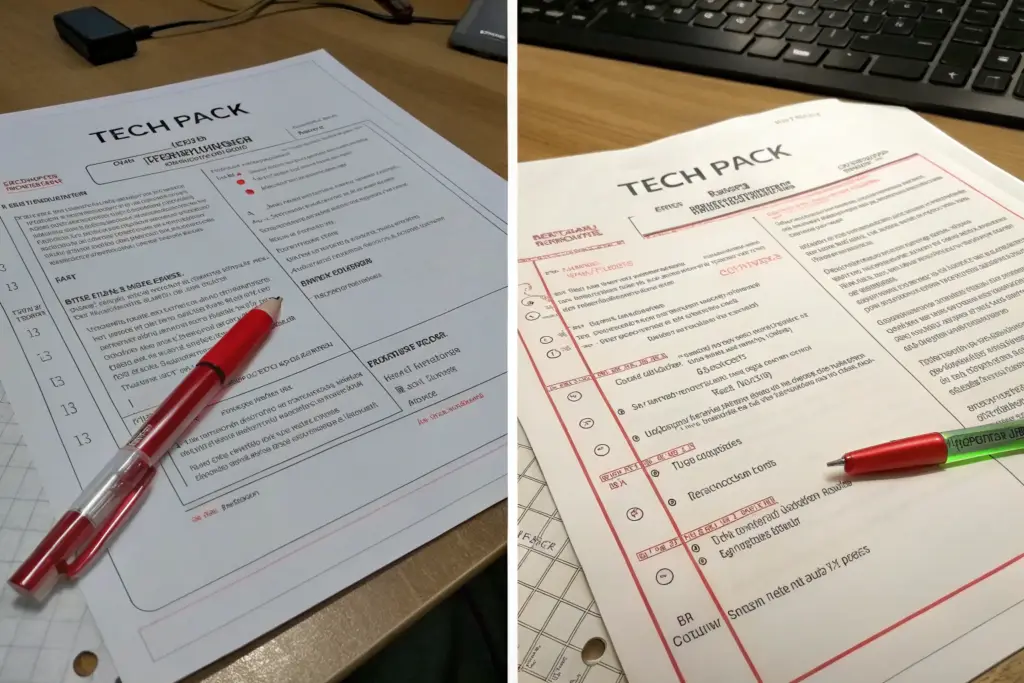
Why Do Mixed Measurement Units Within a Single Tech Pack Cause Cutting Room Disasters?
A tech pack that lists body length in inches and sleeve length in centimeters on the same page is a cutting room disaster waiting to happen. The pattern maker opens the file and sees two numbers: body length 28 and sleeve length 65. If the pattern maker assumes both numbers are in centimeters, the body becomes 28 centimeters long, a crop top instead of a standard shirt. If the pattern maker assumes both numbers are in inches, the sleeve becomes 65 inches long, a sleeve for a giant. The error is not caught until the first sample is sewn and the garment looks absurd. The time and material wasted on the incorrect sample is lost. The corrected sample must be re-cut and re-sewn. The production timeline slips by one to two weeks. The mixed measurement unit error is one of the easiest to prevent. The tech pack must specify a single unit system for all measurements, and every measurement must include the unit label. "Body length: 71 cm" not "Body length: 71." The unit label is not redundant. It is the only thing preventing a unit assumption error. At Shanghai Fumao, our tech pack template enforces metric units for all measurements and includes a validation check that flags any number entered without a unit designation.
How Do Ambiguous Trim and Notion Terms Lead to Substituted Materials That Ruin the Design?
A tech pack that specifies "zipper: black, metal" is specifying approximately 5% of what the factory needs to know about the zipper. The remaining 95% is unspecified and will be substituted at the factory’s discretion. The factory needs to know the zipper type: coil, vislon, or metal tooth. The zipper size: #3, #5, or #8. The zipper finish: shiny nickel, antique brass, or matte black. The zipper tape color: black, but is it jet black or charcoal black? The zipper puller style: standard, custom logo, or no puller. The zipper length: specified in centimeters for every size. A tech pack that says "zipper: black, metal" will receive a standard #5 metal tooth zipper with a shiny nickel finish and a standard puller. If the brand intended an antique brass #8 metal zipper with a custom logo puller, the substitution has ruined the design’s most visible hardware element. The garment looks different from the approved sample. The brand is disappointed. The factory followed the specification that was provided. The trim specification detail is not the factory’s responsibility to guess. It is the brand’s responsibility to specify. A complete trim specification includes the supplier name, the product code, the material, the finish, the color, the size, and the attachment method. Any one of these elements left unspecified will be substituted.
How Do Missing or Contradictory Measurement Points Create Irreversible Cutting Errors?
A brand sent us a tech pack for a women’s woven dress with a tiered skirt. The tech pack specified the waist circumference, the hip circumference, the total body length, and the sleeve length. It did not specify the length of each skirt tier. There were three tiers. The pattern maker needed to know the finished length of each tier to draft the pattern pieces correctly. She called the sales representative. The sales representative emailed the brand owner. The brand owner was traveling and did not respond for four days. The pattern maker made a decision. She divided the total skirt length by three and drafted three equal tiers. The sample was sewn. The brand owner returned from travel and reviewed the sample photos. The tiers were wrong. Her design had a short top tier, a medium middle tier, and a long bottom tier. The equal tiers changed the entire visual proportion of the dress. The sample was scrapped. A new sample was cut and sewn. The development timeline lost ten days.
Missing measurement points create irreversible cutting errors because the pattern maker cannot draft a pattern from incomplete information. When a critical measurement is absent from the tech pack, the pattern maker must either stop work and wait for clarification, which delays the entire production schedule, or make an assumption and proceed, which risks producing incorrect pattern pieces that must be scrapped and re-cut. Contradictory measurement points, where two specified measurements mathematically cannot both be true, create the same dilemma with the added problem that the pattern maker does not know which measurement is correct and which is the error. The factory is forced to guess, and a wrong guess results in cut fabric that cannot be un-cut. The cutting room is the point of no return in garment production. A mistake caught in the sewing line can be re-sewn. A mistake caught in the cutting room has already consumed fabric that must be re-ordered, re-dyed, and re-cut, adding weeks and thousands of dollars to the production cost.
The measurement specification is the skeleton of the tech pack. Every other specification, fabric, trims, construction, is attached to the measurement framework. If the framework is incomplete or contradictory, the entire garment is built on an unstable foundation. The errors compound as production progresses.
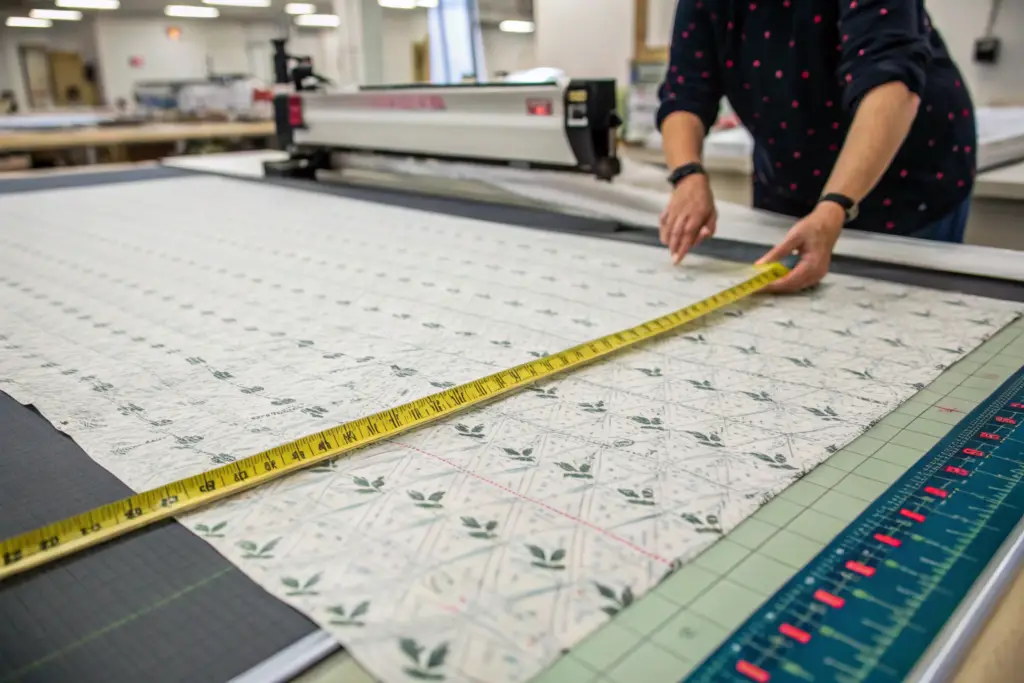
What Is a Measurement Reconciliation Checklist and How Does It Catch Conflicts Before Cutting?
A measurement reconciliation checklist is a systematic review of every measurement point in the tech pack to verify that the specified measurements are mathematically consistent with each other. The checklist verifies that the sum of component measurements equals the total measurement. For a dress with a bodice and a skirt, the bodice length plus the skirt length must equal the total body length. If the tech pack specifies a bodice length of 38 centimeters, a skirt length of 52 centimeters, and a total body length of 92 centimeters, the measurements do not reconcile. The sum is 90, not 92. Two centimeters are unaccounted for. The checklist identifies the discrepancy before the pattern maker begins drafting. The checklist also verifies that circumference measurements are consistent with width measurements. A chest circumference of 96 centimeters on a woven shirt with front and back pattern pieces implies a half-chest width of approximately 48 centimeters plus ease. If the tech pack specifies a half-chest width of 44 centimeters, the circumference and width measurements are contradictory. One of them is wrong. The measurement reconciliation process catches these conflicts at the document stage, before a single pattern piece is drafted. At Shanghai Fumao, our pattern makers perform a reconciliation check on every incoming tech pack before beginning work. The check takes 15 to 30 minutes. The rework it prevents saves days.
Which Five Critical Measurement Points Are Most Frequently Omitted from Tech Packs?
The five critical measurement points most frequently omitted from tech packs are the armhole circumference, the bicep circumference, the neck opening circumference, the pocket placement position, and the hem finish depth. The armhole circumference is omitted because designers focus on the sleeve length and forget that the armhole size determines how the sleeve attaches and how the garment feels when the wearer moves their arms. The bicep circumference is omitted because designers assume the sleeve width will scale with the chest width, but the relationship between chest width and bicep width varies significantly across body types and fit preferences. The neck opening circumference is omitted because designers specify the collar style but not the neckline measurement that the collar attaches to. The pocket placement position is omitted because designers mark the pocket on a sketch but do not provide the X and Y coordinates from a reference point, leaving the placement to the pattern maker’s visual judgment. The hem finish depth is omitted because designers consider it a minor detail, but a hem depth that is too narrow curls during washing and a hem depth that is too wide adds unwanted weight to the garment bottom. Each of these omitted measurements has caused a production error in our factory at some point. Each error was preventable with a single additional measurement callout on the tech pack. The critical measurement points list should be a standard part of every brand’s tech pack template.
What Construction and Stitch Detailing Omissions Cause Quality Failures That Brands Never Anticipate?
A brand owner once sent us a tech pack for a men’s chino pant. The tech pack specified the fabric, the measurements, the pocket bag fabric, and the button style. It did not specify the stitch type for the side seam, the stitch density, the seam allowance width, or the bar-tack placement at stress points. The factory produced the pants using a standard single-needle lockstitch with a 1-centimeter seam allowance, which is the default construction for casual trousers. The brand had intended a double-needle topstitch with a 1.5-centimeter seam allowance and bar-tacks at the pocket corners, which is the standard construction for workwear-grade chinos. The pants looked correct in the product photos. After three washes, the side seams began to pucker. After ten washes, the pocket corners began to tear. The pants were failing in the customer’s hands because the construction was not durable enough for the intended use. The brand had not communicated the construction standard. The factory had built to its default standard. The gap between the two standards was a quality failure that emerged slowly over time.
Construction and stitch detailing omissions cause quality failures because the stitch type, stitch density, seam allowance, and reinforcement placement collectively determine how a garment performs over its lifetime. A garment can look perfect on day one and fail on day 30 if the construction was not specified for the durability the end use requires. The brand that omits construction specifications is delegating critical durability decisions to the factory’s default standards. The factory’s default standards are designed for average-use garments at average price points. A brand positioned as premium or performance must specify construction standards that exceed the defaults. Without those specifications in the tech pack, the factory will produce to the default, and the brand’s quality positioning will be undermined by construction failures that emerge after the customer has worn and washed the garment.
Construction specifications are the most technical part of the tech pack and the part most frequently omitted by brands without formal technical design training. The omissions are not laziness. They are a knowledge gap. The brand owner knows what they want the garment to look like but does not know the specific construction callouts required to achieve that look and durability.
What Stitch Type and SPI Specifications Prevent Seam Failure on High-Stress Garment Areas?
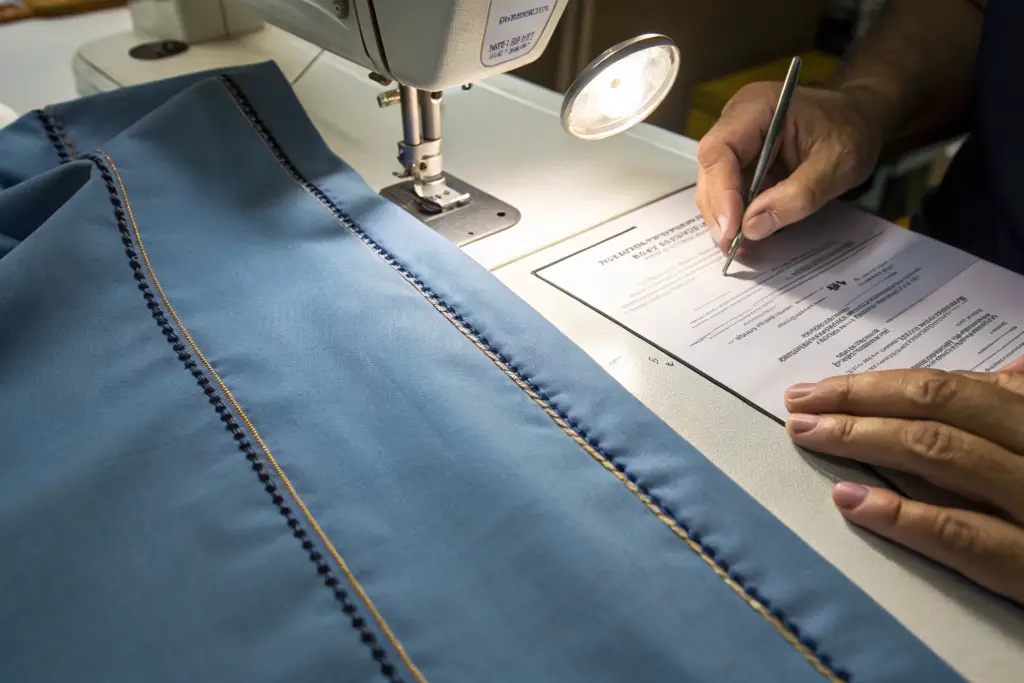
Stitch type and stitches per inch directly determine seam strength and stretch resistance. A single-needle lockstitch, ISO 301, is the standard for woven garments. It produces a straight seam with moderate strength and no stretch. A double-needle topstitch adds a second row of stitching and significantly increases seam durability. For high-stress areas like the crotch seam of trousers, the armhole seam of jackets, and the shoulder seam of backpacks, a safety stitch, ISO 516, which combines a lockstitch and an overedge stitch in a single operation, is the standard. A safety stitch seam will withstand approximately 40% more force before failure than a single-needle lockstitch. The stitch density, measured in stitches per inch (SPI), also affects seam strength. A woven garment seam with 8 SPI has approximately 20% less strength than the same seam with 12 SPI. The trade-off is that higher SPI takes longer to sew and costs more in thread. The stitch specification standards exist in published industry references. A tech pack that specifies "side seam: ISO 516 safety stitch, 12 SPI, 1.5cm allowance" has communicated everything the sewing operator needs. A tech pack that says "side seam" has communicated nothing actionable.
How Do Missing Pressing and Finishing Instructions Create an Unprofessional Final Appearance?
Pressing and finishing instructions are the most commonly omitted section of a tech pack and the most visibly impactful on the final garment appearance. A blouse that is not pressed at the collar points will have curled, rounded collar points instead of crisp, sharp ones. A trouser that is not creased along the front leg will look casual when the design intended formal. A knit top that is not steamed after packing will have crease lines from folding that the customer must iron out before wearing. These are not construction defects. They are presentation defects. The garment is correctly sewn but incorrectly finished. The pressing and finishing specifications should specify the pressing temperature for the fabric type, the areas that require creasing, the areas that must not be creased, the steaming or ironing method, and the folding and packing presentation. A garment that is pressed to specification looks professional on the retail hanger. A garment that is not pressed looks unfinished, regardless of the sewing quality underneath.
How Can a Brand Systematically Audit and Correct Its Tech Packs Before They Reach the Factory Floor?
A brand owner I work with implemented a tech pack audit protocol after losing $4,800 on a production run of 400 dresses with incorrect hem finishes. The dresses were supposed to have a rolled hem with a 5-millimeter depth. The tech pack specified "narrow hem." The pattern maker interpreted "narrow hem" as a turned-and-stitched hem with a 1.5-centimeter depth, which is narrow relative to a standard 2.5-centimeter hem. The brand owner now audits every tech pack against a 40-point checklist before it leaves her office. The checklist takes 45 minutes per style. She has had zero production errors attributable to tech pack ambiguity in the two years since she started the practice. The $4,800 loss bought a permanent process improvement.
A brand systematically audits its tech packs by running a standardized pre-production checklist that verifies the completeness, consistency, and clarity of every specification category before the document is released to the factory. The checklist covers measurement completeness, fabric specification detail, trim and notion specification detail, construction and stitch callouts, labeling and packing instructions, and visual reference quality. The audit is performed by a person who understands production, not by the designer who created the document. The designer is too close to the design to see the ambiguities. A fresh set of eyes, either an internal technical designer or the factory’s sales representative acting as a pre-production reviewer, catches the omissions and contradictions that the designer’s brain automatically fills in from visual memory. The 40-point checklist is the mechanism that transforms a good-faith design document into a factory-ready production contract.
The tech pack audit is the highest-leverage quality activity a brand can perform. One hour of audit time before the tech pack reaches the factory prevents dozens of hours of rework, weeks of schedule delay, and thousands of dollars in material waste. The return on time invested is astronomical. The brands that skip the audit pay for the skipped time many times over.

What Are the Essential Elements of a 40-Point Pre-Production Tech Pack Validation Checklist?
The 40-point checklist is organized into eight categories of five checkpoints each. Category one is measurement completeness. It checks that every key measurement point has a specification, every specification includes a unit label, tolerance ranges are defined, grade rules between sizes are specified, and the measurements reconcile mathematically. Category two is fabric specification. It checks fiber composition percentages, yarn count or denier, knit or weave structure, weight in GSM or ounces per square yard, and finish or treatment. Category three is trim specification. It checks zipper type, size, finish, and puller style; button material, size, and attachment method; thread color and weight; interlining type and weight; and label specifications with placement positions. Category four is construction specification. It checks stitch types with ISO numbers for every seam, stitch density in SPI for every seam, seam allowance width for every seam, reinforcement stitching at stress points, and pressing instructions with temperature and method. Category five is visual reference. It checks that the tech pack includes front and back flat sketches, detailed sketches of critical construction areas, a photo of the approved reference sample, color references with Pantone codes, and placement markers for all design elements. Category six is size and fit. It checks that the size range is defined, the fit model measurements are documented, the fit intent is described with ease allowances, the grading rules are specified, and the size curve quantities are allocated. Category seven is labeling and packing. It checks care label content and language requirements, brand label placement and attachment method, hang tag content and attachment position, folding and packing method, and carton markings and packing list format. Category eight is approvals and revisions. It checks that all previous revision comments have been addressed, the version number is updated, the approval signature blocks are complete, the distribution list is current, and the document is saved in a non-editable format for release. The tech pack audit checklist is a living document. It is updated after every production run with new checkpoints that address errors discovered during that run.
How Should a Brand Collaborate with the Factory’s Pre-Production Team to Catch Ambiguities Before Sampling?
The factory’s pre-production team, the sales representative, the pattern maker, and the production manager, are the brand’s best allies in catching tech pack ambiguities. They see hundreds of tech packs per year from dozens of brands. They know the common failure points. They know which specifications are frequently missing. They know which terms cause confusion across languages. The brand should request a pre-production review call with the factory’s team before the tech pack is locked for sampling. The call is a structured walk-through of the tech pack where the factory team asks clarifying questions about every specification they find ambiguous. The brand answers the questions in real time and updates the tech pack with the clarifications. The call takes 30 to 60 minutes. The clarifications generated during the call prevent the back-and-forth emails, the delayed responses, and the incorrect assumptions that would otherwise occur during the sampling process. The pre-production collaboration protocol should be a standard step in every development cycle. At Shanghai Fumao, we offer a tech pack review service to every brand partner. Our team reviews the tech pack before it enters the sampling queue, flags every ambiguity, and schedules a call to resolve them. The service adds one to two days to the pre-production timeline and saves one to three weeks of rework during sampling and production.
Conclusion
A poorly translated and vague tech pack is not just an inconvenience. It is a direct cause of financial loss, schedule delay, and brand quality damage. Every ambiguous specification in the document is a decision the factory must make without the brand’s input. Every decision the factory makes without the brand’s input is a risk that the production outcome will not match the brand’s intention. The 850 shirts with the wrong collar, the 400 dresses with the wrong hem, the pants that failed after ten washes, these are not random events. They are the predictable consequences of tech packs that did not communicate clearly.
The solution is not to hire a different factory. The factory can only produce what the tech pack specifies. The solution is to build a better tech pack. Use a single measurement unit system throughout. Specify every fabric property with quantifiable metrics. Specify every trim component with supplier codes, material, finish, and size. Specify every construction detail with stitch types, stitch density, and seam allowances. Audit the completed tech pack against a standardized checklist before it leaves the brand’s office. Review the tech pack with the factory’s pre-production team before sampling begins. These are not expensive activities. They are time investments with returns measured in prevented rework costs, prevented schedule delays, and prevented customer quality complaints.
At Shanghai Fumao, we have seen the cost of bad tech packs and the value of good ones. We provide a tech pack template to every new brand partner that includes all the specification categories required for error-free production. We offer a pre-production tech pack review service that identifies ambiguities before the document reaches the pattern maker. We schedule a clarification call for every new style to resolve open questions before sampling begins. These services are not premium add-ons. They are our standard operating procedure because we have learned that a factory’s quality output cannot exceed the quality of the input document. The tech pack is the input. The finished garment is the output.
If your brand has experienced production errors caused by tech pack miscommunication, or if you want to prevent those errors on your next production run, we can help. At Shanghai Fumao, we will review a sample of your current tech pack and provide a gap analysis identifying the specification categories that need improvement. We will share our standardized tech pack template and our 40-point audit checklist. Contact our Business Director, Elaine, at elaine@fumaoclothing.com. She can schedule a tech pack review session with our pre-production team and demonstrate how we catch ambiguities before they become production errors. The cost of a clear tech pack is an hour of focused attention. The cost of a vague tech pack is a production run that does not match your vision. Choose the cost you would rather pay.