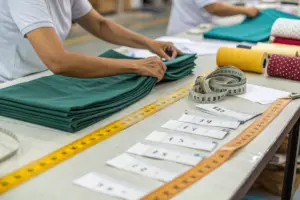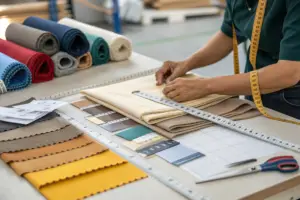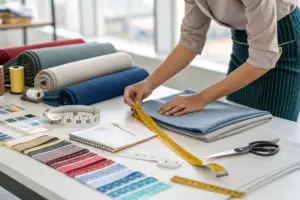
I once watched a brand owner lose a $15,000 retail order because of a bad sales representative. Not a bad factory. A bad representative. The factory itself was competent. The sewing lines were clean. The quality was decent. But the sales rep assigned to the brand never responded to emails in less than 48 hours. She never had answers to technical questions. She forwarded every inquiry to someone else and never followed up. The brand owner spent more time chasing the representative than making decisions about his own business. One day, a department store buyer asked him for a revised sample with a different fabric within ten days. He emailed the sales rep. Three days of silence. He sent a follow-up. Two more days. The rep finally replied and said the factory could not meet the deadline. It was too late anyway. The department store buyer had moved on. The brand owner moved his production to our factory the following season. He told me the factory was fine. The representative was the reason he left.
A highly dedicated factory sales representative is absolutely crucial for brand success because this single person is the human interface between the brand's creative vision and the factory's production reality. A great sales rep translates the brand's design intentions into technical specifications the factory can execute. They absorb the brand's urgency and convert it into prioritized action on the factory floor. They catch errors in tech packs before they become expensive production mistakes. They communicate delays honestly and early enough for the brand to adjust their plans. And they build a relationship of trust that survives the inevitable problems that arise in any manufacturing partnership. A factory with excellent production capabilities and a mediocre sales rep will lose brands. A factory with solid production capabilities and an exceptional sales rep will keep brands for decades.
The sales representative is the most underrated factor in sourcing decisions. Brands spend weeks evaluating fabric quality, production capacity, and pricing. They spend almost no time evaluating the person who will be their daily point of contact for the next three years. That is a mistake. The representative is the person who answers your 9 PM panic call when a shipment is stuck in customs. The representative is the person who catches the button color mismatch before 500 units are sewn. The representative is the person who fights for your order to be prioritized when the factory is oversold. Choose the factory with the better representative, and you will have fewer problems to solve in the first place. I want to share what a dedicated sales rep actually does that makes them so valuable, based on what I have seen from our team at Shanghai Fumao and from the brands who came to us after being failed by someone else.
What Specific Daily Actions Does a Dedicated Factory Sales Rep Take That a Generalist Cannot Match?
A brand owner once forwarded me an email chain with his previous factory's sales rep. It was 17 emails long. It covered a span of nine days. The subject was a simple question: "Can you confirm the zipper color for style 1042?" The rep's first response was "I will check with production." Then silence. The brand followed up. The rep replied, "Production says it is navy." The brand replied, "The spec says black. Can you double check?" Silence again. The rep came back three days later, "Sorry, it is black." Nine days to answer a zipper color question that should have taken nine minutes. A dedicated rep does not forward a question and wait. A dedicated rep walks to the production floor, looks at the zipper with their own eyes, and replies within the hour.
A dedicated factory sales rep performs specific daily actions that a generalist cannot match because the dedicated rep has deep product knowledge of the brand's specific styles, a direct relationship with the factory's production team, and the authority to make decisions without escalating every question. Each morning, a dedicated rep reviews the production status of every active order for their assigned brands, identifies any issues before the brand notices them, and proactively communicates updates. They attend the factory's daily production meeting and advocate for their brands' priorities. They physically inspect at least one in-process order per day, touching the fabric, checking the stitching, and verifying that the production matches the approved sample. They respond to all brand communications within the same business day, even if the response is "I need to check this and will update you by tomorrow." The generalist rep, who handles 30 brands and has no specific product knowledge about any of them, cannot perform any of these actions with the same speed or accuracy.
The difference between a dedicated rep and a generalist rep is the difference between a personal assistant who knows your schedule, preferences, and priorities and a call center operator who reads from a script. The call center operator can handle simple transactions. They cannot handle the complex, judgment-intensive communication that apparel manufacturing requires. A brand that accepts a generalist rep is accepting that every communication will be a transaction instead of a collaboration.
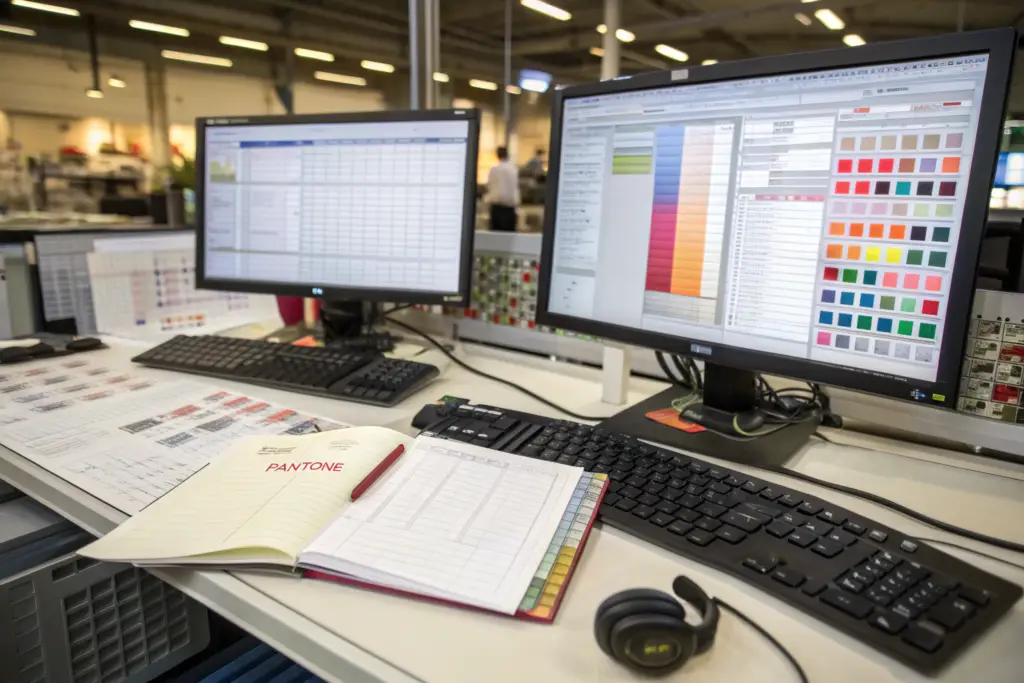
How Does a Dedicated Rep's Physical Presence on the Factory Floor Prevent Production Errors?
A production error that is caught in the sewing line costs a few minutes to fix. The same error caught in final inspection costs a few hours. The same error caught by the customer costs a return, a refund, and a damaged reputation. The cost of an error increases exponentially with the distance between where the error occurs and where it is discovered. A dedicated rep who spends time on the factory floor every day collapses that distance. Last spring, a brand we work with had an order for 400 linen shirts. The approved sample had a specific collar stitch at 3 millimeters from the edge. Our rep, Elaine, walked the sewing line at 10 AM on the second day of production. She noticed the collar stitch on the in-process shirts was at 5 millimeters. The sewing operator had set the guide incorrectly. Elaine stopped the line. She showed the operator the approved sample. She watched the operator reset the guide and sew two correct pieces. The entire intervention took 12 minutes. The 400 shirts were produced correctly. If Elaine had not been on the floor, the 5-millimeter stitch would have been caught at final inspection, three days later, after 300 shirts were already sewn. The rework would have taken two operators a full day. The shipment would have been delayed. The in-line production monitoring that a dedicated rep performs is not in any job description. It is a behavior that comes from caring about the outcome.
What Proactive Problem-Solving Does a Dedicated Rep Deliver Without Being Asked?
A reactive rep answers questions. A proactive rep prevents the questions from needing to be asked. A reactive rep waits for the brand to notice a problem. A proactive rep notices the problem first and presents a solution along with the notification. A brand we manufacture for received an email from their dedicated rep last November that read: "The fabric for your coat order arrived this morning. The lab dip was approved at 320 GSM, but the actual roll weight is 305 GSM. The difference is within tolerance, but I want you to know. The fabric feels slightly lighter. I have asked our pattern maker to check if the interlining needs to be adjusted to maintain the coat's structure. I will have her recommendation by tomorrow. You do not need to do anything yet. I just wanted you to know." The brand owner told me later that this email was the moment he decided he would never leave our factory. The rep had identified a problem the brand did not know existed, had already initiated the technical response, and had communicated clearly without causing panic. The rep could have ignored the 15 GSM difference. It was technically within tolerance. The brand might never have noticed. But the coat would have draped slightly differently. A few customers might have returned it. The brand would have wondered why the quality felt off. The proactive quality communication transformed a potential silent failure into a managed adjustment.
How Does a Long-Tenured Factory Representative Save a Brand from Costly Development Mistakes?
A first-time brand owner sent us a tech pack for a women's jumpsuit. The design was beautiful on paper. The fabric specified was a 100% linen with no stretch. The tech pack included a fitted waist with a 2-centimeter ease allowance. A fitted waist in non-stretch linen with only 2 centimeters of ease is a garment that the wearer cannot sit down in. The brand owner did not know this. She was a designer, not a pattern engineer. Our sales rep reviewed the tech pack before it reached the pattern maker. She immediately flagged the ease issue. She emailed the brand owner: "This design is gorgeous. I want to flag one thing before we cut the sample. The linen you have chosen has no mechanical stretch. A fitted waist with 2 centimeters of ease will be very tight when sitting. I recommend increasing the waist ease to 5 centimeters or switching to a linen blend with 2% spandex. Which direction would you prefer?" The brand owner chose the spandex blend. The sample was perfect. The rep's intervention saved the brand from spending $800 on a sample that would have been unwearable, and from losing weeks of development time.
A long-tenured factory representative saves a brand from costly development mistakes because they have seen thousands of tech packs and know the failure patterns that inexperienced designers repeat. They know that a non-stretch woven fabric cannot achieve a bodycon fit. They know that a lightweight chiffon will not hold a structured collar. They know that a specific dye process works on cotton but will bleed on a poly blend. This knowledge is not written in any textbook. It is accumulated through years of watching samples fail and productions rework. When a dedicated rep reviews a tech pack, they are not just checking for completeness. They are mentally simulating the garment in three dimensions, predicting where the fabric will fight the design, and flagging the conflict before the first pattern is drafted. The savings from a single caught mistake can exceed the rep's monthly salary.
The development stage is where mistakes are cheapest to fix and most valuable to catch. A design change made on paper costs nothing. A design change made after the first sample costs the price of a new sample. A design change made after bulk production has started costs the margin on an entire order. The dedicated rep shifts mistake detection to the left, catching problems at the paper stage or the sample stage rather than the production stage. This left-shift is the single highest-return investment a factory can make in quality, and the sales rep is the mechanism that delivers it.
What Technical Knowledge Does an Experienced Rep Apply During Tech Pack Review?
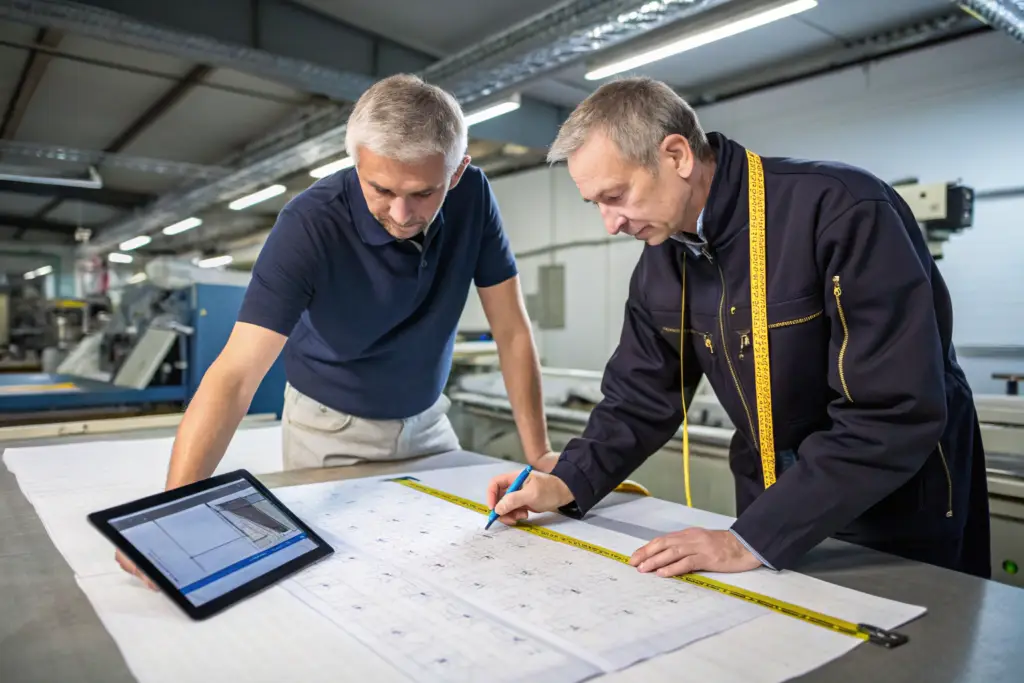
An experienced rep reviews a tech pack through three lenses simultaneously: fit feasibility, material compatibility, and production efficiency. Fit feasibility asks whether the specified measurements and ease allowances will work with the specified fabric. A woven fabric with zero stretch needs more ease than a knit fabric with mechanical stretch. A bias-cut garment will stretch in length over time and needs to be cut shorter than the final desired length. Material compatibility asks whether the specified fabric, trims, and construction methods work together. A heavy zipper will pull a lightweight fabric out of shape. A rough-textured fabric will cause pilling on a smooth lining. A metal trim will rust if the garment is specified for enzyme wash. Production efficiency asks whether the design can be manufactured consistently at scale. A design with 12 small, un-joined pattern pieces will take three times longer to sew than a design with 6 larger pieces. The tech pack review process that an experienced rep performs is a condensed version of what a full technical design team does at a large brand. For a small brand that cannot afford a technical designer, the rep is the only technical review the design receives before it becomes a physical sample.
How Does a Rep's Relationship with the Production Team Accelerate Sample Turnaround?
A sample request from a generalist rep enters a queue. It is assigned to a pattern maker based on availability. The pattern maker works through their queue in order. The sample is completed when it reaches the front of the queue. This process is fair but slow. A sample request from a dedicated rep bypasses the queue. The rep walks to the pattern making department and speaks to a specific pattern maker they have worked with for years. They explain the design, the brand's priorities, and the deadline. They negotiate a delivery date directly. If the deadline is tight, they ask the pattern maker to work overtime or to reprioritize a less urgent project. They follow up in person every day until the sample is complete. The sample turnaround time drops from three weeks to ten days. The difference is not the factory's capacity. It is the rep's ability to navigate the informal organization of the factory floor. The sample development acceleration happens because the rep has social capital with the production team. They have helped the pattern maker meet a deadline in the past. The pattern maker wants to help them in return. This reciprocity is built over years of working together. A generalist rep has no such capital.
Why Is Consistent Communication from a Single Point of Contact More Valuable Than Lower Unit Prices?
A brand owner once showed me a cost comparison spreadsheet. He had received quotes from three factories for the same style. Factory A quoted $12.50 per unit. Factory B quoted $11.80. Factory C, our factory, quoted $13.20. He chose us. I asked him why, since we were the most expensive option by a meaningful margin. He said, "Factory A's sales rep took four days to send the quote. Factory B's rep sent the quote quickly but could not answer any of my follow-up questions. Your rep responded to my initial inquiry in three hours, answered every question in detail, and included notes about potential issues with my fabric choice that I had not even considered. I am not paying the extra $1.40 per unit for the sewing. I am paying it for the communication. I know that when I have a problem at 10 PM my time, your rep will answer because it is 10 AM her time and she is already at her desk."
Consistent communication from a single point of contact is more valuable than lower unit prices because communication failures cost far more than the price difference between factories. A missed email delays a decision by two days, which delays a sample by a week, which delays production by two weeks, which misses a delivery window, which loses a retail order, which costs $20,000 in revenue. The $1.40 per unit price difference on a 2,000-unit order is $2,800. The communication failure costs $20,000. The math is brutal and consistent. Brands that optimize for unit price over communication quality are making a calculation error. They see the visible cost on the invoice. They do not see the invisible cost of the delays, errors, and missed opportunities that accumulate around a non-communicative representative. The dedicated rep's communication consistency is not a soft benefit. It is a hard financial asset that protects revenue.
The single point of contact model is specifically valuable for overseas manufacturing because of time zone differences. When a brand owner in New York finishes their day and sends an email at 6 PM, it is 6 AM in Shanghai the next morning. A dedicated rep who starts their day at 7 AM reads that email first thing and responds by 8 AM Shanghai time, which is 8 PM New York time. The brand owner has an answer before they go to bed. The 24-hour problem-solution cycle becomes a same-day cycle. The time zone gap, which could be a source of delay, becomes a source of speed.

How Does a Single Point of Contact Eliminate the "Who Do I Ask" Delay During Production Crises?
A production crisis is a problem that must be solved within hours, not days. A shipment is stuck in customs and needs a revised commercial invoice immediately. A fabric flaw has been discovered and the brand must decide whether to accept or reject the lot. A retail buyer has changed the delivery address and the cartons are already on the truck to the port. In each of these scenarios, the brand owner needs one person who can make decisions and execute actions. They do not have time to email a general inbox and wait for someone, anyone, to respond. They do not have time to be transferred between three departments. The single point of contact eliminates the "who do I ask" delay because the brand owner knows exactly who to contact. The dedicated rep may not personally solve every problem. A customs issue requires the logistics department. A fabric flaw requires the quality manager. But the rep is the quarterback. They receive the brand's urgent message, they route it to the correct person internally, they follow up to ensure the person is acting on it, and they report back to the brand. The brand owner never has to manage the factory's internal coordination. The single point of contact model in supply chain management is a force multiplier. It allows the brand owner to focus on their own business while the rep manages the manufacturing relationship.
What Is the Measurable Financial Impact of Communication Speed on Seasonal Sales Outcomes?
The financial impact of communication speed can be measured by comparing the outcomes of fast and slow decision cycles during critical selling periods. A brand that launches a winter coat collection needs wholesale reorders fulfilled within the season's selling window. The typical wholesale reorder window for winter coats is October through December. A communication delay of five days in processing a reorder inquiry means the reorder ships five days later, arrives at the retail store five days later, and loses five days of selling time during the peak holiday shopping period. If a retail store sells an average of three coats per day, five lost selling days equals 15 lost unit sales. At a wholesale price of $60 per coat, that is $900 in lost wholesale revenue from one store. If the brand has 20 wholesale accounts, the five-day communication delay costs $18,000 in lost revenue. This calculation does not include the secondary effects: the retail buyer who is frustrated by the delay and reduces their order for the next season, the brand owner who spends their time chasing the factory instead of opening new accounts. The cost of communication delay is a real line item on the brand's income statement. It is simply not labeled as such. The dedicated rep eliminates this cost.
How Does a Dedicated Rep Build the Trust That Survives Inevitable Production Problems?
Every manufacturing relationship will experience problems. A shipment will be delayed. A quality issue will be discovered. A cost will increase unexpectedly. The question is not whether problems will occur. The question is whether the relationship has enough trust reserves to survive the problem. A relationship with a transactional, unresponsive rep has zero trust reserves. When a problem occurs, the brand assumes malice or incompetence. The relationship fractures. The brand leaves. A relationship with a dedicated, responsive, transparent rep builds trust reserves during normal operations. When a problem occurs, the brand assumes good faith and works with the rep to solve it. The relationship strengthens. The brand stays.
A dedicated rep builds the trust that survives inevitable production problems through consistent transparency, proactive ownership of errors, and demonstrated competence over time. When a problem occurs, the dedicated rep informs the brand immediately, explains the cause without defensiveness, presents a solution and a timeline, and takes personal responsibility for seeing the solution through. They do not hide the problem hoping it will resolve itself. They do not blame the production team or the fabric supplier. They say, "Here is what happened. Here is what we are doing to fix it. Here is when you will have your goods. I am personally tracking this and will update you daily until it is resolved." The brand owner who receives this communication may be frustrated by the problem, but they are not frightened. They know someone competent is handling it. The trust built through hundreds of small, positive interactions over months and years provides the buffer that absorbs the impact of the occasional problem.
The trust asset is the most valuable thing a factory representative builds, and it cannot be built quickly. It accumulates through consistent performance: the email answered in under four hours, the production issue caught before the brand noticed, the sample delivered a day early, the honest warning about a potential delay. Each interaction deposits a small amount of trust. Enough deposits create a balance that can survive a withdrawal. The generalist rep who is slow to respond, who never proactively communicates, who the brand owner does not trust to handle a crisis, has a zero trust balance. The first problem that arises empties the account and ends the relationship.
How Does a Rep's Honesty About Factory Limitations Strengthen Rather Than Weaken the Relationship?
A dishonest rep says yes to every request and then fails to deliver. An honest rep says, "We cannot do that by Friday. We can do it by Tuesday. Does Tuesday work, or should we explore an alternative approach?" The honest rep sounds less accommodating in the moment. They are actually more valuable because their yes means something. A brand owner who works with an honest rep learns that when the rep says a deadline is achievable, it really is achievable. They learn that when the rep says a certain fabric will not work for a certain design, the rep is right. They learn to trust the rep's judgment. This trust means the brand owner can make decisions faster. They do not need to second-guess the rep's recommendations. They do not need to build buffer time into the schedule because they do not trust the promised dates. The trust-based supplier relationship accelerates every subsequent interaction. The honest rep who occasionally says no is more valuable than the people-pleaser who always says yes and delivers maybe.
What Are the Signs That a Factory Representative Truly Advocates for Your Brand Internally?
An advocate is someone who fights for your interests when you are not in the room. A dedicated rep advocates for their brand in the factory's daily production meeting. When the production planner proposes moving the brand's order back by three days to accommodate a larger order from a different brand, the advocate pushes back. They argue that the brand has a confirmed delivery window, that the retail accounts are depending on the shipment, and that the three-day delay will cascade into a two-week delay due to the upcoming holiday. They win the argument or negotiate a compromise that minimizes the impact. The brand never knows this argument happened. They only experience the result: their order shipped on time despite competing priorities. The signs that a rep is an internal advocate include the brand's orders consistently shipping on time even during peak season, the rep providing early warnings about potential conflicts before they affect the schedule, and the rep occasionally mentioning that they "had to fight for your slot this week." This last sign, the casual mention of advocacy, is the most telling. The rep who never mentions fighting for anything is probably not fighting. The rep who occasionally mentions a specific battle they won on the brand's behalf is demonstrating their value as an advocate. The internal brand advocacy is invisible to the brand but visible in the reliability of their production outcomes.
Conclusion
The factory sales representative is not a customer service agent. They are not an order taker. They are not an email forwarder. They are the human operating system through which the brand accesses the factory's entire capability. A great rep connects the brand's creative vision to the factory's technical execution. They catch mistakes before they become expensive. They communicate with speed and clarity that protects the brand's revenue. They build trust that survives the problems that every manufacturing relationship encounters. They advocate for the brand internally when the brand is not in the room. A brand with a great rep and a good factory will outperform a brand with a great factory and a mediocre rep every single time.
At Shanghai Fumao, we have invested in building a team of dedicated sales representatives because we have seen the data. Our brand retention rate for brands assigned to a dedicated rep is 94% over three years. Our brand retention rate for brands served by a generalist model in our early years was 61%. The difference is not the factory. The factory has the same machines, the same operators, the same quality systems. The difference is the human being who connects the brand to the factory. We assign every brand partner a single dedicated representative who stays with the brand for the entire relationship. That representative learns the brand's products, preferences, and priorities. They become the brand's internal advocate. They are measured on the brand's satisfaction and retention, not on the number of emails they process.
If you are sourcing a new factory partner, or if you are frustrated with your current factory's communication, evaluate the representative as carefully as you evaluate the production quality. Ask who your daily contact will be. Ask how long they have been with the factory. Ask to speak with them before you sign anything. Their responsiveness during the sales process is a preview of their responsiveness during production. If they are slow to answer your inquiry when they are trying to win your business, they will be slower once they have it.
At Shanghai Fumao, we are happy to introduce you to the representative who would be assigned to your account. You can speak with them directly, ask them about their experience, and judge for yourself whether they are the kind of partner you want in your corner. Contact our Business Director, Elaine, at elaine@fumaoclothing.com. She can connect you with one of our senior representatives for a conversation about your brand's needs. She can also share examples of how our dedicated rep model has helped other brands navigate production challenges and capture seasonal opportunities. The factory makes the clothes. The representative makes the relationship. Choose both carefully.