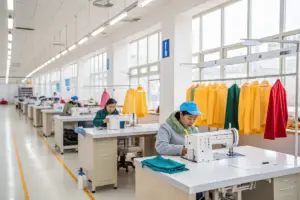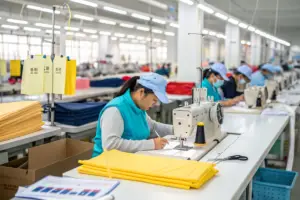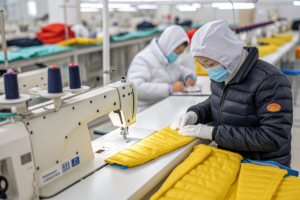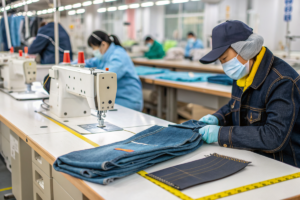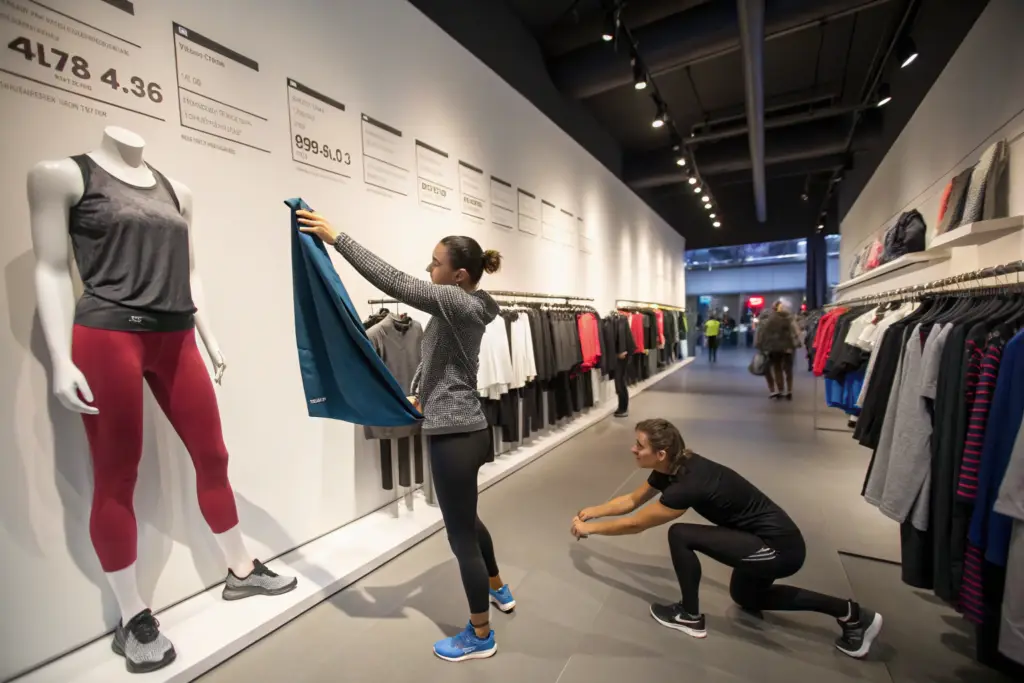
I sat in a coffee shop in Portland last year with a buyer for a national sporting goods chain. He had been sourcing apparel for 18 years. He told me something that reframed how I think about the entire clothing industry. He said, "Ten years ago, my open-to-buy was 70% lifestyle apparel and 30% performance. Today, it is 55% performance and 45% lifestyle. And honestly, the lifestyle category only holds because of the athleisure crossover. If I stripped out the leggings and the performance knits from the lifestyle numbers, performance would be 70%." He was not describing a trend. He was describing a structural shift in what consumers put on their bodies every morning. And wholesale buyers like him are placing their orders accordingly.
High performance athletic wear is the fastest growing segment in B2B clothing wholesale because it sits at the intersection of three powerful demand drivers that no other apparel category combines. First, consumer behavior has permanently shifted toward health, wellness, and active lifestyles, creating daily demand for performance garments that replace traditional casual wear. Second, technical textile innovation has accelerated to the point where performance fabrics deliver measurable functional benefits, moisture wicking, temperature regulation, compression support, odor control, that consumers can feel and will pay a premium for. Third, the blurring line between athletic wear and everyday wear has expanded the addressable market from gym-goers to virtually every clothing consumer. A wholesale buyer who stocks performance athletic wear is not just selling to athletes. They are selling to commuters, remote workers, travelers, and anyone who values comfort and function in their daily clothing.
The B2B wholesale market follows consumer demand with a slight lag. The consumer started wearing leggings to brunch five years ago. The wholesale buyer started increasing their performance wear open-to-buy three years ago. Today, the pipeline is fully shifted. Performance athletic wear is no longer a niche category within a sporting goods store. It is the main floor. I want to share what we have observed at Shanghai Fumao as our performance wear production volume has grown year after year, and what this means for wholesale buyers who want to capture the growth in this category.
What Technical Fabric Innovations Are Driving Wholesale Buyer Demand for Performance Apparel?
A wholesale buyer for a chain of yoga studios visited our factory in Shanghai two years ago. She had been buying basic cotton-spandex leggings from a domestic supplier. Her customers were complaining about pilling, fading, and fabric that lost its shape after three months of regular wear. She was losing clients to a competitor who sold a higher-priced legging with a mysterious "performance fabric" that her customers described as "buttery soft but somehow supportive." She asked me what fabric that was. I showed her a nylon-elastane interlock with a brushed face finish, a fabric we had developed for a premium activewear brand. She touched it. She stretched it. She held it against her cheek. She placed an order for 1,200 units on the spot. Six months later, she told me her reorder rate had tripled because customers who bought one pair of leggings came back and bought three more.
Technical fabric innovations drive wholesale buyer demand for performance apparel because they create a tangible product difference that the end consumer can feel and will pay more for. The key innovations include moisture-wicking synthetic yarns with modified cross-sections that pull sweat away from the skin, four-way stretch constructions that provide compression without restricting movement, anti-odor treatments that reduce bacterial growth, and thermoregulation technologies that adapt to the wearer's body temperature. These are not marketing claims. They are measurable physical properties verified by standardized textile testing. A wholesale buyer who stocks garments made with these fabrics can sell performance benefits that are real, demonstrable, and worth the premium price point. The fabric is the product.
The performance fabric market has evolved dramatically in the past five years. The first generation of performance fabrics felt synthetic and looked technical. They were clearly gym clothes. The current generation of performance fabrics feels like cotton, drapes like modal, and looks appropriate in a coffee shop or an airport lounge. The hand feel has caught up with the function. This convergence is what enables the athleisure crossover. Consumers do not have to choose between comfort and performance. They get both in the same garment.
What Are the Measurable Performance Properties That Wholesale Buyers Should Require from Fabric Mills?
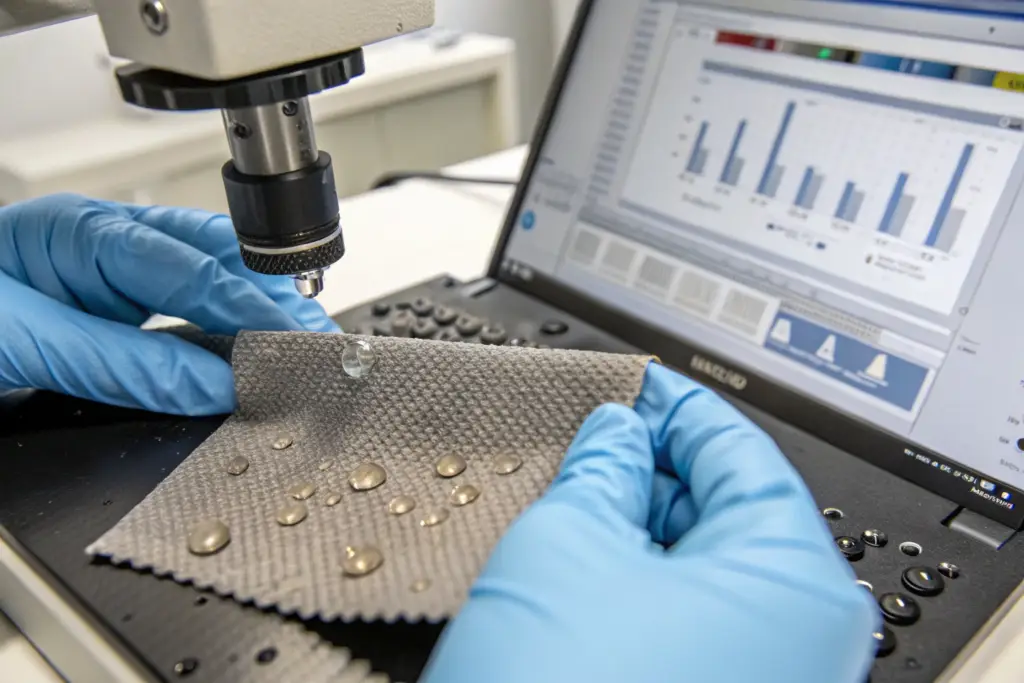
A wholesale buyer evaluating a performance fabric should not rely on the supplier's verbal claims. They should require standardized test reports for the specific performance properties relevant to the garment's intended use. Moisture wicking is measured by the AATCC Test Method 195, which quantifies the fabric's ability to transport liquid moisture away from the skin. A result of grade 3 or higher on a 5-grade scale indicates good wicking performance. Drying time is measured by AATCC Test Method 201, which records how quickly a saturated fabric returns to its dry weight. A drying time under 30 minutes is considered fast. Four-way stretch is measured by ASTM D2594, which records the fabric's elongation under a specified load and its recovery when the load is removed. A fabric with 75% stretch in both directions and 95% recovery will provide compression without bagging out. Anti-odor performance is measured by AATCC Test Method 100, which quantifies the reduction of bacterial colonies on the fabric surface. A reduction of 90% or higher indicates effective odor control. UV protection is measured by AATCC Test Method 183, which assigns a UPF rating. A UPF of 30 or higher provides very good protection. The performance fabric testing standards are established and accessible. A wholesale buyer who requests these reports before placing an order is performing due diligence. A fabric mill that cannot provide them is not a performance fabric mill.
How Are Sustainable Performance Fabrics Changing the Wholesale Value Proposition?
The wholesale buyer of 2025 faces a new requirement. The end consumer wants performance benefits and sustainability credentials in the same garment. The old model offered a trade-off: you could have recycled polyester that felt rough, or virgin polyester that performed well but carried an environmental cost. The new model eliminates the trade-off. Recycled polyester made from post-consumer plastic bottles is now available with the same yarn cross-sections and finishing treatments as virgin polyester. The performance is identical. The sustainability story is additional. Bio-based synthetic fibers made from castor beans, corn starch, and other renewable feedstocks offer performance properties comparable to petroleum-based synthetics with a significantly lower carbon footprint. Recycled nylon made from discarded fishing nets offers the compression and recovery of virgin nylon with a compelling ocean-cleanup narrative. The sustainable performance fabric movement has reached technical maturity. A wholesale buyer can now specify a performance fabric that meets all functional requirements and carries a certified sustainability credential. The garment can be marketed on both performance and environmental responsibility. This dual value proposition commands a higher wholesale price and a higher retail margin. The end consumer who is choosing between two pairs of leggings, one with performance claims and one with performance claims plus a recycled content certification, chooses the latter at a rate that wholesale buyers are tracking and responding to with their purchasing decisions.
Why Are B2B Buyers Shifting Open-to-Buy Dollars from Lifestyle Apparel to Activewear Categories?
A multi-brand retail buyer I know managed the women's apparel budget for a chain of 40 stores across the Midwest. In 2019, she allocated 25% of her fall season open-to-buy to activewear and performance categories. In 2024, that number was 48%. I asked her what drove the shift. She said, "The sell-through data. It is not even close. My lifestyle dresses and blouses turn 2.5 times per season. My performance leggings, joggers, and training tops turn 4.8 times. The inventory productivity difference is so large that my allocation committee would fire me if I did not shift dollars into activewear. The math is the math." Her experience is not unique. It is the new normal in wholesale apparel buying.
B2B buyers are shifting open-to-buy dollars from lifestyle apparel to activewear categories because the sell-through velocity and gross margin return on inventory investment are demonstrably superior. Performance activewear turns faster, sells at a higher full-price percentage, and generates more revenue per square foot of retail space than traditional lifestyle categories. The consumer has voted with their wallet. They are buying fewer woven blouses and more performance tops. They are buying fewer tailored trousers and more performance joggers. The wholesale buyer who follows the consumer's spending behavior captures the growth. The wholesale buyer who maintains legacy category allocations misses it.
The shift is not temporary. It is not a pandemic-era comfort trend that will revert when offices fully reopen. The data shows the shift accelerating even as return-to-office rates have stabilized. Consumers have experienced the comfort and functionality of performance fabrics in their daily lives. They are not willing to return to restrictive, non-stretch, non-wicking clothing. The performance category has permanently expanded the definition of acceptable daily attire.
What Sell-Through Data and Margin Analytics Are Driving Category Reallocation Decisions?
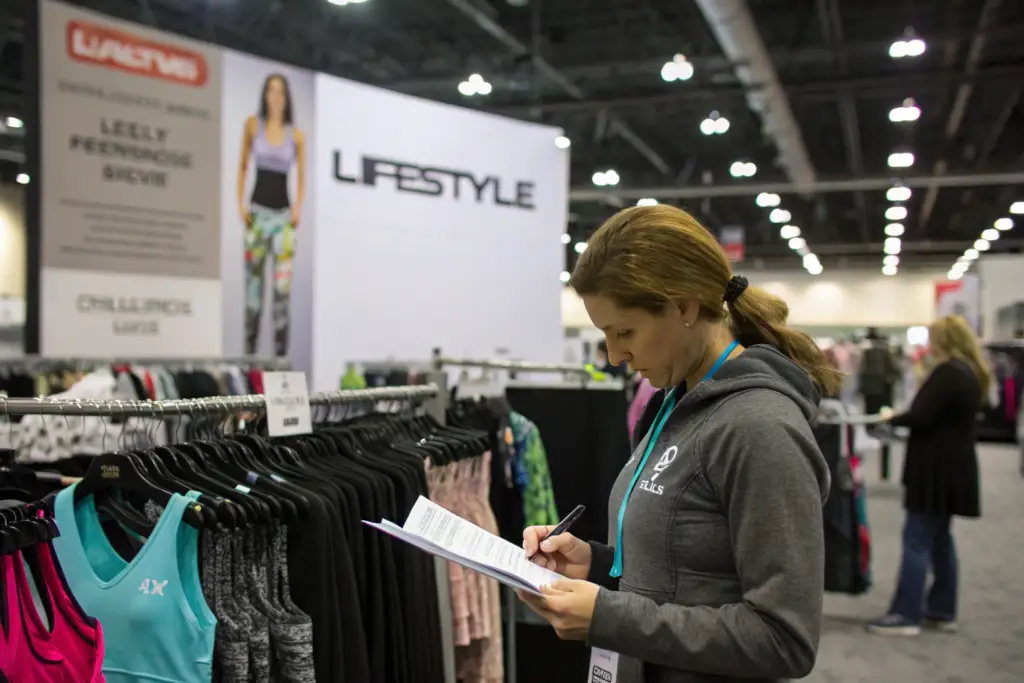
The retail math favors performance activewear across three key metrics. Sell-through rate measures the percentage of inventory that sells at full price during the planned selling window. Performance activewear consistently achieves sell-through rates of 75% to 85% at full price, compared to 55% to 65% for lifestyle apparel categories. The 20-percentage-point difference means the buyer needs to stock fewer units to achieve the same sales volume, reducing inventory carrying costs and markdown exposure. Gross margin return on inventory investment, GMROI, measures the gross profit earned for every dollar invested in inventory. Performance activewear typically delivers a GMROI of $3.50 to $5.00, meaning every dollar spent on inventory generates $3.50 to $5.00 in gross profit. Lifestyle categories typically deliver $2.00 to $3.00. The retail inventory productivity metrics gap is persistent and significant. A buyer managing a $500,000 open-to-buy can generate $1.75 million to $2.5 million in gross profit from performance activewear or $1.0 million to $1.5 million from lifestyle apparel. The allocation decision, viewed through this lens, is not a matter of taste. It is a fiduciary responsibility to the business.
How Is the "Athleisure Blur" Expanding the Addressable Market Beyond Traditional Athletic Channels?
The athleisure blur is the phenomenon where garments designed for athletic performance are purchased and worn for non-athletic activities. A performance legging is worn to the office under a long blazer. A moisture-wicking polo is worn to a casual Friday meeting. A training jogger is worn on a transatlantic flight. The garment's functional properties, stretch, moisture management, temperature regulation, are valued by the consumer even when the consumer is not exercising. This blur expands the addressable market dramatically. The traditional athletic wear market was limited to people who exercised regularly, roughly 20% to 25% of the adult population. The athleisure market includes virtually everyone who values physical comfort in their daily clothing, which is close to 100% of the adult population. A wholesale buyer who stocks a performance jogger is not just selling to runners. They are selling to travelers, remote workers, students, and anyone who wants to be comfortable while looking presentable. The athleisure market expansion has fundamentally changed the sizing of the performance apparel opportunity. The category is no longer limited by gym membership penetration. It is limited only by the number of people who wear clothes.
What Minimum Order Quantity and Pricing Structures Make Performance Wear Accessible to Emerging Brands?
A startup brand founder came to us in 2023 with a brilliant concept for a performance travel dress. It had hidden zip pockets, a built-in bra support, moisture-wicking fabric, and UPF 50 sun protection. Her design was strong. Her market research was solid. Her funding was $15,000. She asked me what the minimum order quantity would be for her fabric. I told her that the performance nylon-spandex she wanted typically required a 1,000-meter minimum from the mill. At her garment consumption of 1.2 meters per dress, that meant ordering 833 units just to meet the fabric minimum. Her $15,000 would be consumed by fabric and production costs before she sold a single dress. We found a solution. We had a similar performance fabric in our greige inventory that another brand had ordered and over-forecasted. We sold her 300 meters at cost. She produced 250 dresses. She sold out in four weeks. She placed a reorder for 500 units with her own fabric now that she had proven demand and cash flow.
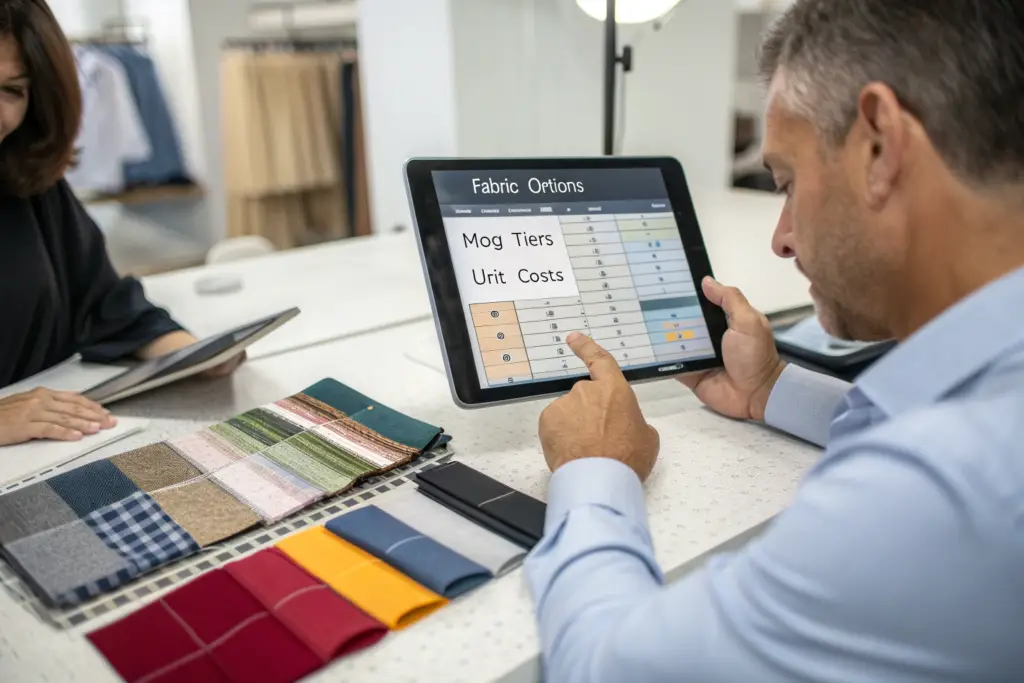
Emerging brands can access performance wear manufacturing through flexible MOQ structures that lower the barrier to entry. The key mechanisms include utilizing factory-stocked greige performance fabrics instead of requiring custom mill runs, participating in piggyback production where the brand's small order is combined with a larger order using the same fabric, and accepting a slightly higher unit cost in exchange for lower minimums. The pricing structure for emerging brands typically starts at a 15% to 25% premium over high-volume pricing, and the premium decreases as the brand's volume grows and their forecasting accuracy improves. The accessible MOQ for performance wear through these mechanisms is typically 100 to 300 units per style, down from the 1,000 to 3,000 units that a custom mill run would require.
The performance wear manufacturing ecosystem has matured to accommodate emerging brands. Five years ago, a brand needed $50,000 minimum to launch a performance wear line. Today, a brand with $15,000 and a clear concept can enter the market, test their designs with real customers, and scale based on validated demand. The factory's role has shifted from order-taker to launch partner.
How Can a Brand Use Factory-Stocked Greige Performance Fabrics to Launch with Lower Risk?
Factory-stocked greige fabric is un-dyed fabric that the factory purchases in volume and holds in inventory. The factory buys 5,000 meters of a popular performance nylon-spandex quality because they know multiple brands will use it over the course of a year. An emerging brand can order 200 meters from this inventory instead of ordering 1,000 meters directly from the mill. The per-meter cost is slightly higher because the factory adds a handling and carrying cost markup, typically 10% to 15%. The brand's total fabric cost is lower because they are not purchasing 800 meters of excess fabric they have no orders for. The greige fabric program also enables faster turnaround. The fabric is already in the factory. The brand does not wait four to six weeks for mill production. They select the fabric from the factory's stock, approve the color lab dip, and move to production within two weeks. For an emerging brand launching with a test collection, the factory-stocked fabric program is the lowest-risk path to market.
What Piggyback Production Strategies Allow Small Brands to Access Premium Performance Fabric Mills?
Premium performance fabric mills have high minimums. A mill that produces a specialized compression fabric for a major athletic brand will not accept a 200-meter order from a startup. The mill's business model is built on 5,000-meter runs. A piggyback production strategy solves this by combining multiple small orders from different brands into a single mill run that meets the minimum. The factory acts as the aggregator. The factory forecasts the combined demand for a specific performance fabric across all their brand partners. They place a single 5,000-meter order with the mill. The mill produces the fabric. The factory allocates the fabric to each brand based on their individual orders. The brand pays for the fabric they use at a rate that reflects the mill's volume pricing plus a small aggregation fee. The piggyback production model gives emerging brands access to fabrics that would otherwise be unavailable to them. The trade-off is that the brand must use the fabric the factory has selected, rather than developing a fully custom fabric. For a brand's first collection, this trade-off is almost always worth making. Custom fabric development is a second-collection activity, not a first-collection necessity.
How Are Wholesale Performance Wear Brands Building Reorder Engines Through Channel Strategy?
A performance wear brand we manufacture for has built a reorder engine that generates 40% of their annual revenue from replenishment orders placed by existing wholesale accounts. The engine works because performance wear is fundamentally a replenishment category. A boutique that sells a customer a pair of leggings in January will sell that same customer another pair in April and another in August. The customer does not buy one pair of performance leggings in their lifetime. They buy multiple pairs, in multiple colors, for multiple activities. The wholesale brand that makes reordering easy captures this repeat demand. The wholesale brand that treats every order as a one-time transaction leaves the repeat demand for a competitor to capture.
Wholesale performance wear brands build reorder engines by structuring their product lines around carryover core styles that remain available for multiple seasons, by providing retail buyers with real-time inventory visibility through a B2B portal, and by offering rapid replenishment shipping that gets restocked product onto retail floors within seven to ten business days. The carryover core style strategy is the foundation. A performance legging that is available for 18 months generates reorders. A performance legging that is discontinued after 12 weeks generates markdowns. The wholesale brand that commits to keeping best-selling performance styles in continuous production builds a reorder revenue stream that compounds season after season.
The reorder engine concept applies uniquely well to performance wear because the category has lower fashion risk than lifestyle apparel. A black compression legging does not go out of style. A moisture-wicking training top in navy does not become unfashionable. The performance wear consumer buys based on function and fit, not on seasonal trend. The core styles have multi-year lifecycles. The wholesale brand that recognizes this structural advantage and builds their production planning around it captures revenue that fashion-dependent brands cannot access.
What B2B Digital Portal Features Do Retail Buyers Expect for Efficient Athletic Wear Replenishment?
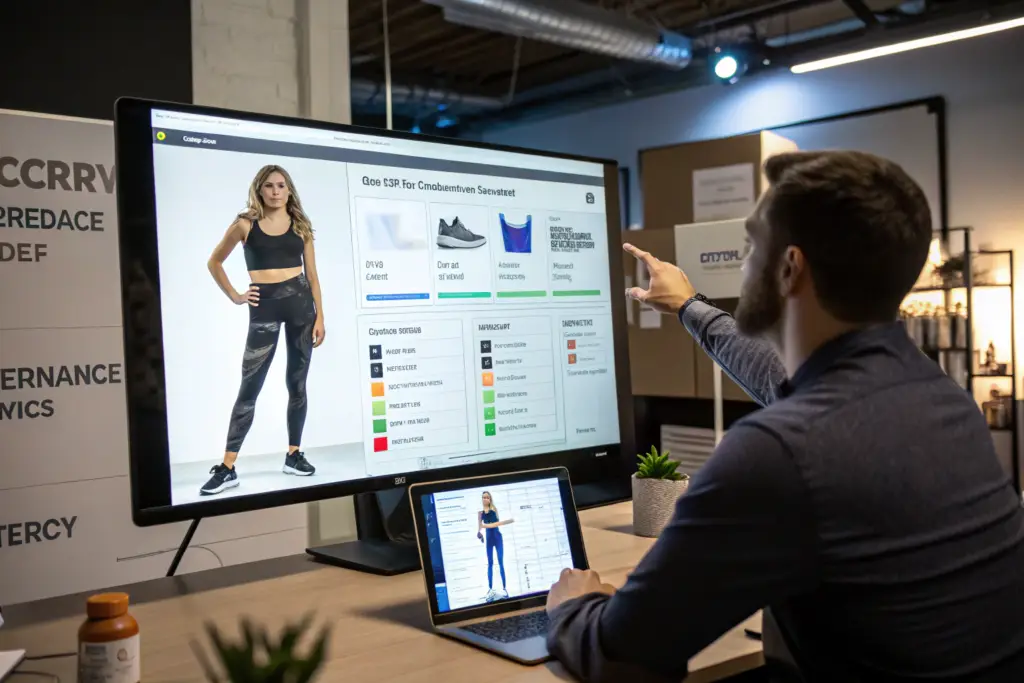
The retail buyer who needs to restock a best-selling performance top does not want to email a sales rep, wait two days for a response, and then fill out a paper order form. They want to log into a B2B portal, see real-time inventory availability by size and color, place an order in three clicks, and receive an automated confirmation with a ship date. The portal features that retail buyers expect include real-time inventory visibility showing in-stock quantities for every SKU, a saved order template that pre-populates their typical size curve and color mix, a reorder suggestion engine that analyzes their sell-through history and recommends quantities, an order tracking dashboard that shows the status of every order from submission to delivery, and an integrated payment system that supports net-30 terms for approved accounts. The B2B wholesale portal transforms the replenishment process from a human-dependent, email-driven workflow into a self-service, always-available platform. The retail buyer places replenishment orders on Sunday evening from their phone. The factory processes the order on Monday morning. The goods ship on Tuesday. The retail store is restocked by Friday.
How Do Carryover Core Programs Create Multi-Season Revenue Visibility for Wholesale Brands?
A carryover core program is a set of styles that the brand commits to keeping in continuous production for 12 to 24 months. These styles are the proven best-sellers: the legging that fits perfectly, the training top that customers buy in three colors, the jogger that sells steadily month after month. The brand treats these styles differently from seasonal fashion styles. They maintain greige fabric inventory for the core styles so production can be triggered by reorder demand rather than by seasonal launch calendars. They keep the design, fit, and specifications frozen so no sampling or development time is required for reorders. They provide retail buyers with a guarantee that the style will be available for reorder through a specified date, typically the end of the calendar year. This guarantee enables the retail buyer to plan their inventory with confidence. They know they can reorder the best-selling legging in October if their September sales deplete their stock. They do not need to overbuy in August to protect against stockouts. The carryover core program creates revenue visibility for the wholesale brand because the reorder patterns of core styles become predictable over time. A brand with 12 months of reorder history on a core legging can forecast within 10% accuracy how many units their wholesale accounts will reorder each month. This predictability enables better production planning, better cash flow management, and better fabric purchasing decisions.
Conclusion
High performance athletic wear is the fastest growing segment in B2B clothing wholesale because it is the only category where consumer demand, fabric technology, and retail economics are all moving in the same direction simultaneously. Consumers want performance garments for daily life. Fabric mills are producing technical textiles that deliver functional benefits with lifestyle-appropriate aesthetics. Retail buyers are allocating open-to-buy dollars to the category that turns inventory fastest and generates the highest margin return on investment. Emerging brands can enter the market with accessible MOQs and factory-stocked fabric programs. Established brands can build reorder engines around carryover core styles that generate predictable, compounding revenue.
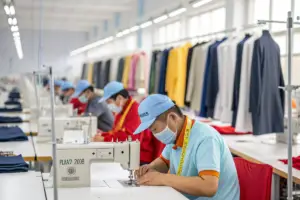
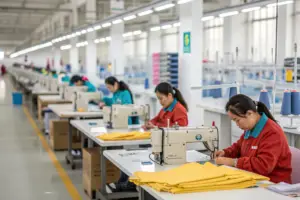
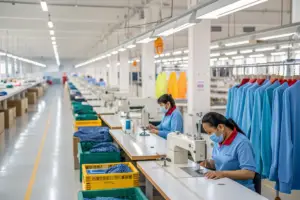
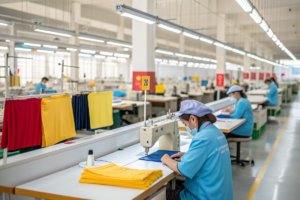
At Shanghai Fumao, we have invested in performance wear manufacturing capabilities because we see the same data that wholesale buyers see. Our performance fabric library includes moisture-wicking nylon-spandex blends, four-way stretch polyester-elastane interlock, anti-odor treated cotton-modal-performance knits, and recycled polyester with mechanical stretch. Our greige fabric inventory program allows emerging brands to launch performance collections with 200-unit minimums instead of 2,000-unit minimums. Our carryover core production model supports the multi-season replenishment programs that build wholesale reorder revenue.
If your brand is exploring the performance athletic wear category, or if you are a wholesale buyer looking for a manufacturing partner who understands the technical requirements of performance fabrics and the commercial requirements of wholesale replenishment, reach out to us. At Shanghai Fumao, we can send you our performance fabric swatch book with technical specifications and testing data for each fabric. We can discuss greige inventory availability for your target launch quantities. We can share case studies of how other performance wear brands have structured their core carryover programs. Contact our Business Director, Elaine, at elaine@fumaoclothing.com. She will respond within one business day with the information you need to evaluate a performance wear manufacturing partnership. The performance category is growing. The brands that move now will capture the shelf space and the customer loyalty that will define the category for the next decade.