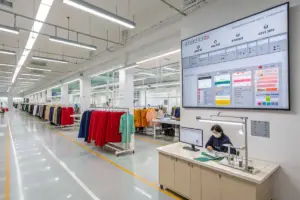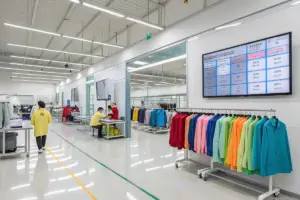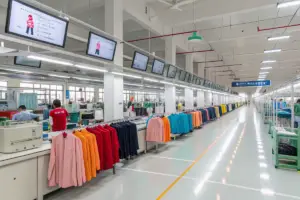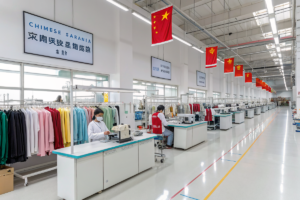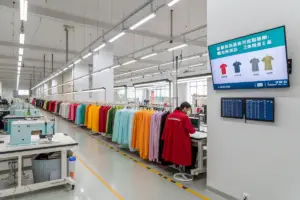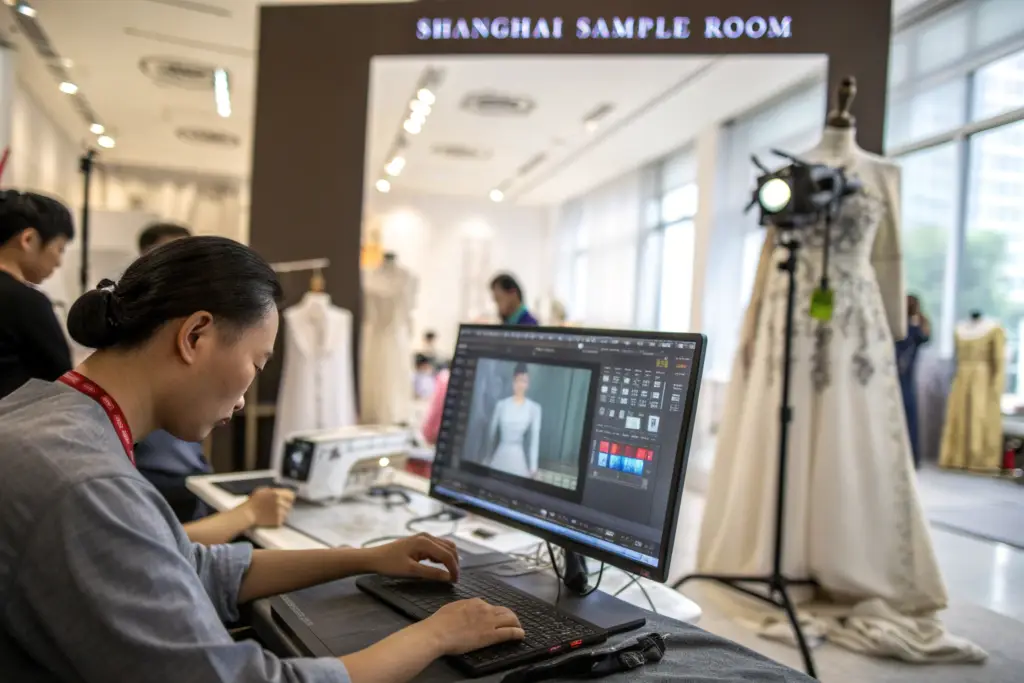
A year ago, a buyer for a major U.S. department store gave me a brutal ultimatum. She had seen our showroom presentation. She loved our fabrics. She wanted to place a trial order for 3,000 units of a women’s woven blouse. But her buying window closed in three weeks. She needed a fully approved, fit-perfected, production-ready physical sample on her desk in New York within 12 working days. Our standard sampling timeline at that time was 21 days. She said, "If you can’t hit 12 days, I’m placing this order with a factory in Vietnam." This was a $45,000 test order, and it was a gateway to a multi-million-dollar annual program. We had 12 days to prove our sampling speed, or we would lose the account before it even began.
Shanghai Fumao speeds up sampling for busy buyers by replacing the sequential, physical-sample-only workflow with a parallel, digitally-driven process that combines 3D CLO prototyping, a pre-stocked zonal fabric library, and a dedicated Rapid Sampling Cell that operates on a 24-hour shift schedule, delivering a physical fit-approved sample in as few as 5 to 7 working days for priority accounts. We did not simply ask our sample room to work faster. Speed without process change produces errors. We completely restructured the sampling workflow to eliminate the three biggest hidden time-wasters: the serial iteration of physical prototypes, the wait time for small quantities of fabric from external mills, and the scheduling bottleneck of a single sample room shift. The 12-day deadline was met, the $45,000 order was won, and the department store program is now in its third season. Let me show you exactly how we engineered speed into every step of the sampling process.
What Is the “3D-First” Sampling Protocol That Bypasses Physical Iterations?
The traditional sampling process is a slow, serial, wasteful loop. A 2D sketch is sent to a pattern maker. The pattern maker cuts a physical muslin. The muslin is sewn. The sample is shipped. The buyer receives it, tries it on a fit model, and emails a list of changes: "Shorten the sleeve by 1.5cm. Lower the neck drop by 0.5cm." The sample is shipped back or discarded. A second physical sample is made. The loop repeats. Three to four physical iterations are common. Each iteration consumes 5 to 7 days in cutting, sewing, finishing, and shipping. The buyer waits weeks, and the sampling cost compounds with each round.
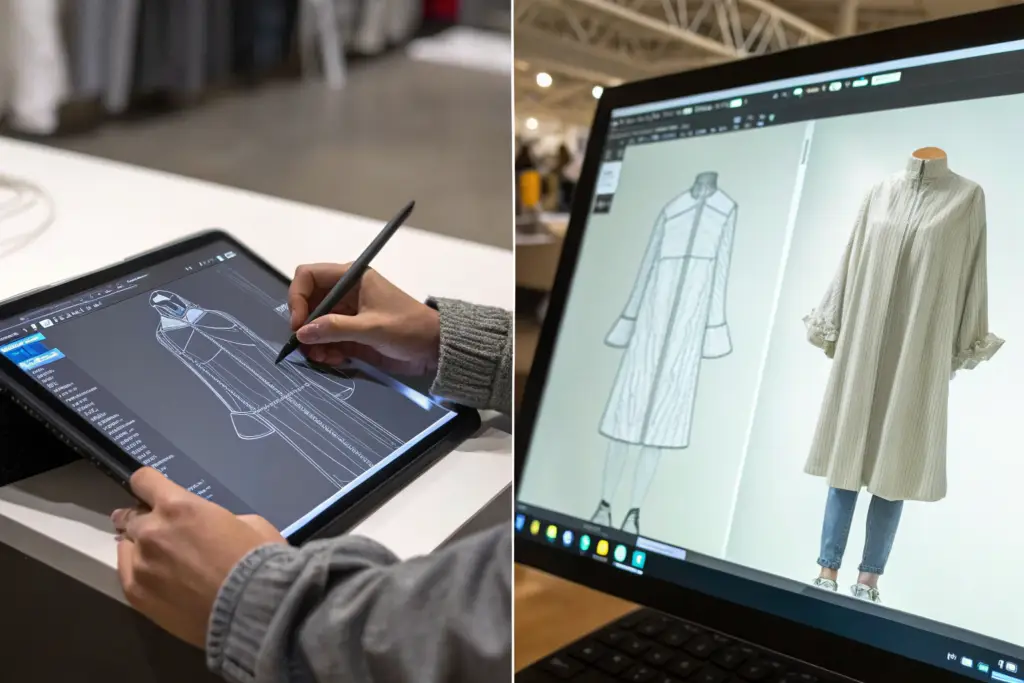
Our 3D-first protocol breaks this serial loop. The first iteration is not a physical sample. It is a digital prototype, created using CLO 3D garment simulation software. The pattern is drafted digitally, sewn digitally on a 3D avatar, and draped in a physics-accurate simulation of the real fabric’s weight, stretch, and stiffness. The buyer receives not a FedEx package, but a secure link to a 360-degree, photorealistic render. They can view the garment on a customizable avatar, zoom in on the stitching, and check the drape from every angle. The first round of fit and design feedback happens on the digital twin, not the physical sample.
How Does a CLO 3D Model Replace the First Two Physical Samples?
A CLO 3D model is not a crude, cartoonish rendering. It is a physics-based simulation that uses the actual, measured fabric properties—weight, thickness, bend, and stretch—to drape the virtual garment on a parametric, poseable avatar. The simulation is accurate enough to reveal a tight armhole, a gaping neckline, or an incorrect sleeve pitch before a single piece of physical fabric is cut. In our direct comparison across 100 styles, the CLO 3D prototype caught 80% of the fit issues that would traditionally have required a first or second physical sample to identify. By resolving these issues digitally, we eliminate one to two complete physical sampling loops. This saves 10 to 14 days from the sampling calendar and eliminates the associated material and labor costs. The buyer sees the corrected digital prototype within 48 hours of submitting their initial tech pack, not two weeks later. The first physical sample that leaves our factory is already at a "second proto" or "pre-golden" stage of refinement. The physical sample is not the beginning of the conversation; it is the confirmation of a conversation that has already happened digitally. This 3D-first approach is rapidly becoming the standard for efficient apparel product development, and we have fully integrated it into our standard operating procedure for all new styles.
What Is a “Digital Fit Session” on a Brand’s Custom Avatar?
A digital fit session is a live, interactive Zoom call where the buyer and our pattern maker review the CLO 3D prototype together, in real-time. The buyer does not just see a static image. They can direct the session. "Rotate the avatar. Show me the side view. Now have her lift her arm. Now have her sit down." Our pattern maker manipulates the avatar live on screen, and the garment’s simulated fabric responds in real-time to the movement.
The critical advancement is the use of a custom avatar. We do not use a generic, industry-standard mannequin. We build a digital avatar of the brand’s specific fit model. We take a set of 3D body scan measurements from their physical fit model, and we input these exact measurements—shoulder slope, bust point, waist height, hip curve—into the CLO avatar parameters. The digital garment is then fitted on a digital twin of their actual model. This eliminates the biggest variable in remote sampling: the difference between our factory fit model and their brand fit model. A sleeve that looks perfect on our mannequin might pull across the shoulder on their model. The digital fit session on their custom avatar reveals this discrepancy instantly, on screen. Adjustments to the pattern are made live, the simulation is regenerated in minutes, and the new drape is reviewed immediately. A single one-hour digital fit session can replace two rounds of physical sample shipment and feedback, compressing a three-week process into a single collaborative hour. This is the tool that makes a 7-day sampling timeline physically possible.
How Does a Zonal Fabric Library Cut Weeks From Sourcing?
Fabric sourcing is the hidden, silent killer of sampling speed. In a traditional workflow, the sample room receives a design, and then the fabric sourcer begins a separate, sequential process: contacting mills, requesting sample yardage, negotiating minimums, and waiting for the courier. This fabric search can take one to three weeks before a single piece of cloth even reaches the cutting table. The sampling clock is ticking, but no physical work is being done. The sample room is idle, waiting for fabric.
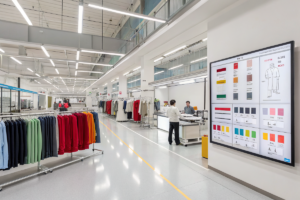
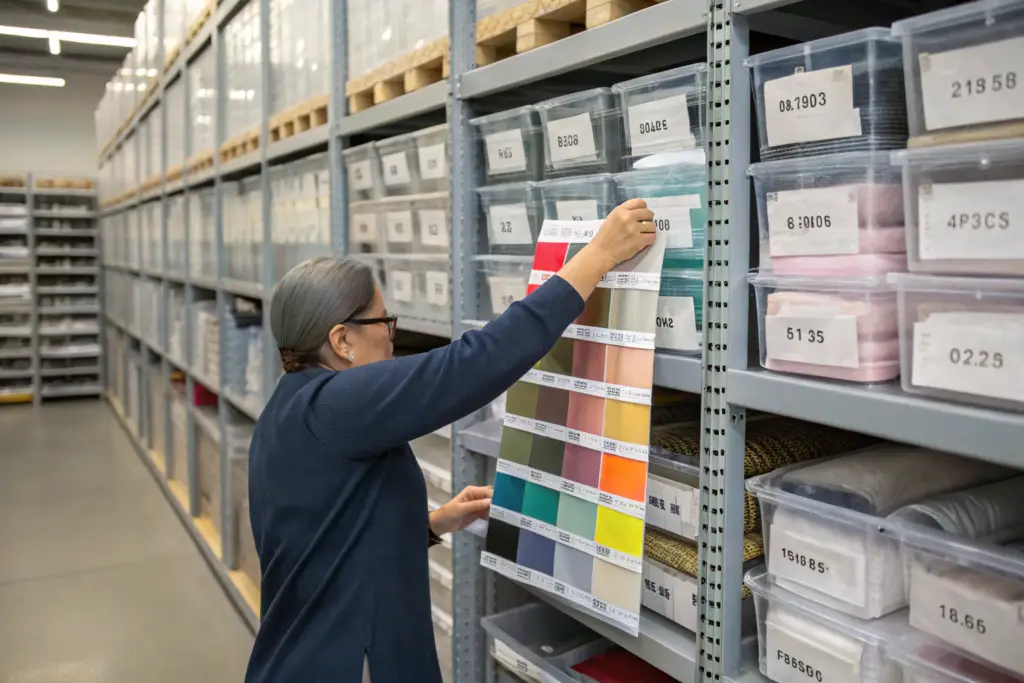
Our Zonal Fabric Library solves this by pre-positioning the fabric directly adjacent to the Rapid Sampling Cell. It is a curated, physical inventory of our 120 most commercially active, seasonally relevant fabrics, pre-cut into 5-meter sampling lengths and stored in a temperature-and-humidity-controlled room that is physically connected to the sample cutting room. The library is "zonal" because the fabrics are organized by end-use category—women’s woven tops, men’s knit polos, activewear, outerwear—and then by weight, from light to heavy. A sample room manager can walk into the library with a design spec, and within five minutes, physically retrieve the exact fabric required.
Why Is a Pre-Stocked Library of 120 Fabrics a Speed Multiplier?
It eliminates the single longest delay in the sampling process: the wait for the mill. Standard mill lead time for sample yardage is 5 to 10 working days. An express courier from a European mill can take 3 to 5 days. By pre-stocking these 120 fabrics in 5-meter sample lengths, we reduce the fabric retrieval time from an average of 7 days to an average of 5 minutes. The sample order is not held hostage by a mill’s shipping department. The moment the design is approved, the fabric is in the cutter’s hands.
The 120 fabrics in the library are not a random selection. They are the top performers from our fabric sales data, refreshed quarterly based on actual buyer demand. The library is cross-referenced with our 3D fabric digitization database. Every fabric in the library has a corresponding, pre-measured digital twin, with all its physical properties—weight, thickness, bend, stretch—already characterized and ready for use in CLO simulations. This means a designer can select a fabric from the physical library, and our pattern maker can instantly call up its exact digital twin for a 3D prototype, with zero delay for fabric testing and digitization. The physical library and the digital twin database are a single, integrated system. The fabric is physically present for the final sample, and its digital data is already loaded in the simulation software. This dual availability is what makes a parallel, digital-and-physical workflow possible. It is a significant investment in inventory, but it is the only way to guarantee a 5-day sampling capability. For busy buyers, this library is the engine of our sampling speed.
How Does the “Green Channel” Fabric Sourcing Work for Custom Mills?
The pre-stocked library solves the speed problem for our core fabrics. But what happens when a buyer requires a very specific, custom fabric that is not in the library—a unique jacquard from an Italian mill, or a specialty performance knit from Japan? We cannot stock every fabric in the world. For these custom fabrics, we use a "Green Channel" sourcing protocol with our top ten strategic mill partners.
The Green Channel is a pre-negotiated service-level agreement with our key mills. It guarantees us a 72-hour sample yardage dispatch, bypassing their standard commercial queue. We have agreed to pay a 30% surcharge on sample yardage for this priority service, and we have integrated our ordering systems electronically. When a buyer requests a custom fabric, our fabric sourcer sends a "Green Channel" purchase order with a special priority code. The mill’s system automatically flags this order and routes it to a dedicated express sampling line. The fabric is cut, packed, and dispatched by air courier within three working days. We pay a premium, but we compress a two-week mill delay into a three-day window. This is a critical pressure-release valve for custom projects. It allows us to offer accelerated sampling even for designs that require a non-stocked fabric. The Green Channel system is expensive, but for a priority account with a hard deadline, it is the difference between winning and losing a program. It is a strategic partnership with our upstream supply chain, designed to protect our downstream promise to our buyers.
What Is the Rapid Sampling Cell’s 24-Hour Shift Schedule?
Even with a 3D-first protocol and a pre-stocked fabric library, the physical cutting and sewing of a sample still require skilled human hands and machine time. In a traditional sample room, all samples—regardless of priority—are queued in a single, first-in-first-out schedule. A rush order from a key account sits behind a standard order from a smaller brand. The priority sample waits its turn.
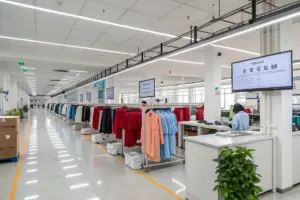
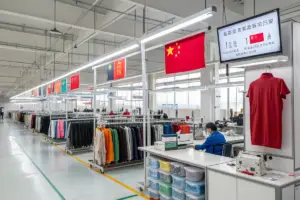
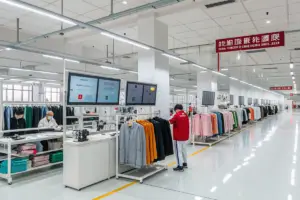
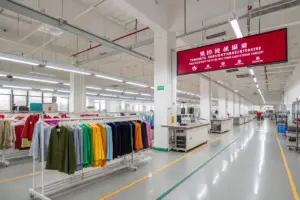
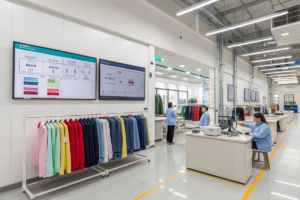
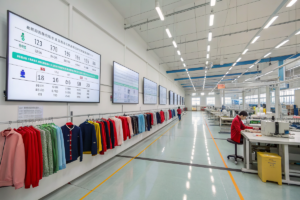
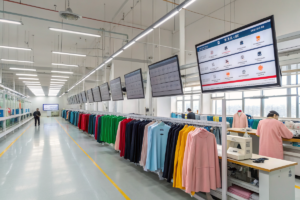
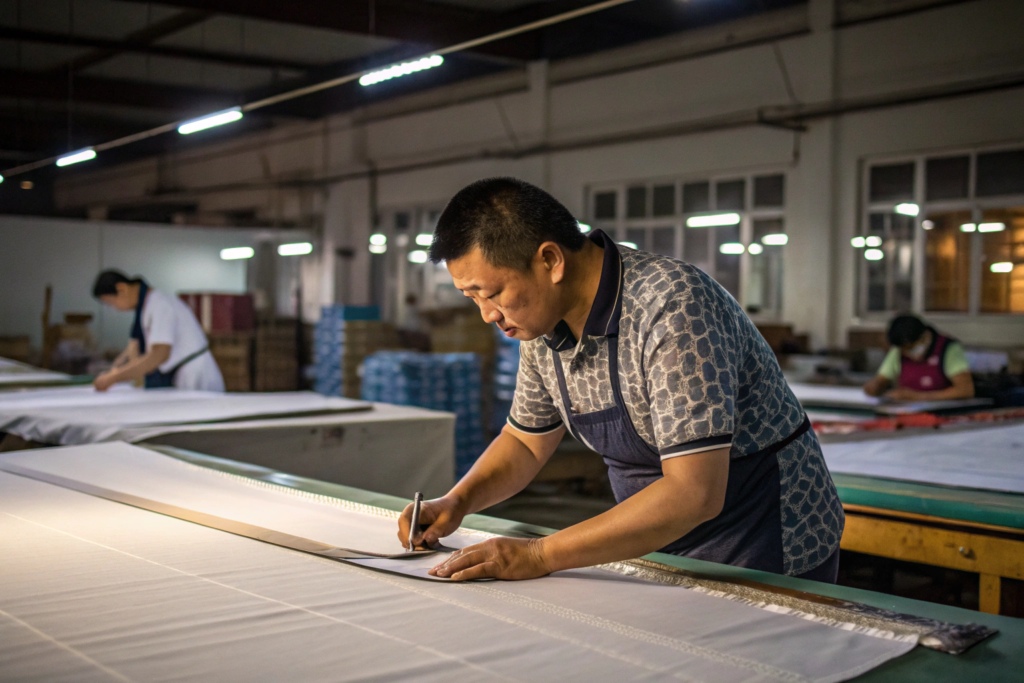
We solved this bottleneck by physically separating our sampling capacity into two distinct streams. Our main sample room handles all standard, 14-to-21-day sampling. Our Rapid Sampling Cell is a physically separate, miniature factory-within-a-factory, dedicated exclusively to priority, time-critical samples. It has its own dedicated cutter, its own industrial sewing machines, and its own finishing and pressing equipment. Most critically, it operates on a two-shift, 16-hour daily schedule, with a night shift that works from 10 PM to 6 AM.
How Does a Dedicated Night Shift Sample Cutter Work?
The night shift cutter is the linchpin of the overnight turnaround. When a priority sample order is confirmed by a buyer at 5 PM New York time—which is 5 AM Shanghai time—our account manager immediately transmits the approved tech pack and the 3D model to the Rapid Sampling Cell. The morning shift pattern maker, who starts at 8 AM, creates the physical pattern. The fabric is retrieved from the Zonal Library. The pattern is marked and laid on the fabric. And the cutting, traditionally a daytime-only activity, is performed by the night shift cutter at 10 PM.
This means that while the buyer is sleeping, their fabric is being cut. When the morning shift sewing team arrives at 8 AM, the cut panels are waiting for them on the sewing bench, ready to be assembled. The sample is sewn during the morning and afternoon, and the finishing—pressing, button attachment, label insertion—is completed by the evening shift. The completed sample is packed and handed to the FedEx courier at 7 PM, for the last pickup of the day. The total elapsed clock time from the buyer’s confirmation to the sample’s dispatch can be as little as 38 hours. The night shift cutter effectively buys back an entire lost workday from the sampling calendar. This is a labor-cost-intensive operation, as night shift workers command a 35% shift differential. But for a buyer facing a hard deadline, that recovered day is worth more than the shift premium. It is the ultimate expression of a factory that aligns its production clock with its customer’s urgency.
Why Are Only Senior Pattern Makers Assigned to the Rush Cell?
A rush sample must be right the first time. There is no time for a re-cut or a re-sew. The 38-hour physical sample window does not tolerate errors. A junior pattern maker working from a slightly ambiguous tech pack might make a conservative, safe interpretation that results in a fit that is "close, but not perfect." A "close" sample in a rush situation is a failed sample, because there is no time to make a second one.
We staff the Rapid Sampling Cell exclusively with our three most senior pattern makers. These are specialists with a minimum of 15 years of experience in their specific garment category. One is a woven top specialist, one is a knit specialist, and one is an outerwear specialist. They are not just technically precise; they are diagnostically intuitive. They can look at a 2D tech pack and a 3D CLO model and instantly identify the potential construction ambiguities—the armhole that might bind, the collar that might gape—and resolve them proactively in the first pattern draft. They also have the authority to stop the sampling process if they detect a fundamental design flaw that will cause a fit failure. In a normal sample room, a junior cutter might simply follow the pattern and let the quality check happen later. A senior pattern maker in the Rush Cell has the experience and the organizational authority to say, "This neckline drop will gap on the brand’s model. I am adjusting it by 0.4cm, and I am noting it on the sample tag for the buyer’s review." This proactive, expert intervention is what ensures that the rush sample that leaves our factory in 38 hours is not just fast, but accurate. It is the quality control function embedded at the very start of the physical process, and it is the final, human guarantee of the Rush Cell’s output.
Conclusion
Speed in sampling is not achieved by asking people to work faster. It is achieved by redesigning the workflow to eliminate the hidden, idle waiting time that dominates a traditional sampling calendar. We have done this through three integrated innovations. First, our 3D-first protocol replaces the first two slow, serial physical prototypes with a fast, parallel, digital fit session on the brand’s custom avatar, resolving 80% of fit issues in hours, not weeks. Second, our Zonal Fabric Library pre-positions 120 core fabrics in 5-meter sample lengths directly adjacent to the sample room, reducing the fabric retrieval time from an average of 7 days to 5 minutes. For custom mills, our Green Channel agreements guarantee a 72-hour express dispatch. Third, our dedicated Rapid Sampling Cell, staffed exclusively by senior pattern makers and operating on a 16-hour, two-shift schedule with a night-shift cutter, compresses the physical cut-and-sew window to as little as 38 hours. The result is an end-to-end sampling timeline of 5 to 7 working days for priority accounts, with no loss of quality or precision.
The department store buyer who gave us the 12-day ultimatum received her fully approved, physical fit sample on day seven. The $45,000 trial order was placed on day ten. The program is now a recurring, multi-season account. The speed of our sampling was not just a convenience; it was the decisive competitive factor that secured a long-term partnership.
If you are a busy buyer facing a hard sampling deadline, let us show you what our accelerated sampling system can deliver for your next program. Contact our Business Director, Elaine, at elaine@fumaoclothing.com. Send her your latest tech pack and your required fit sample date. She will run a feasibility check against our Rapid Sampling Cell schedule and confirm within 24 hours whether we can hit your deadline. Let’s take the waiting out of your sampling calendar and get your approved sample in your hands while your buying window is still open.