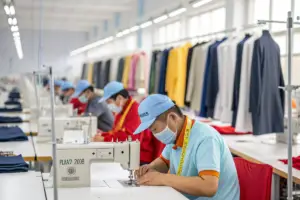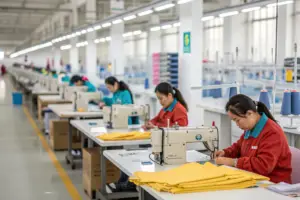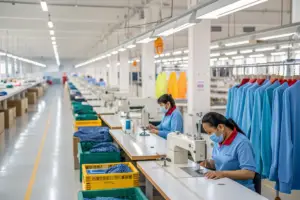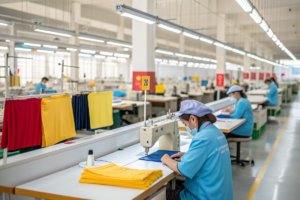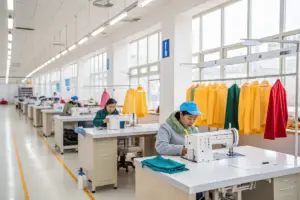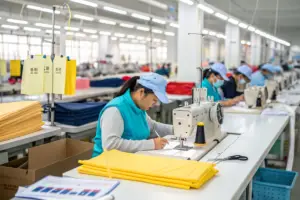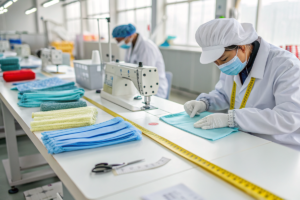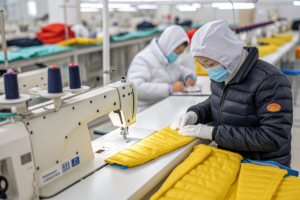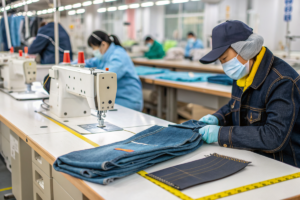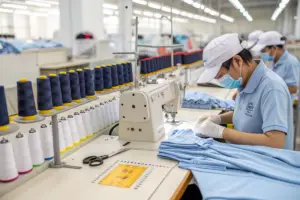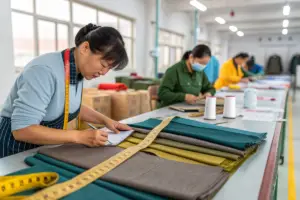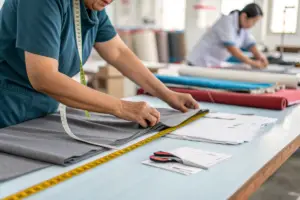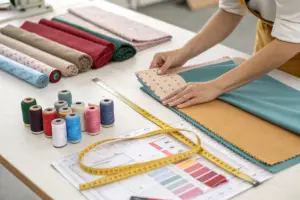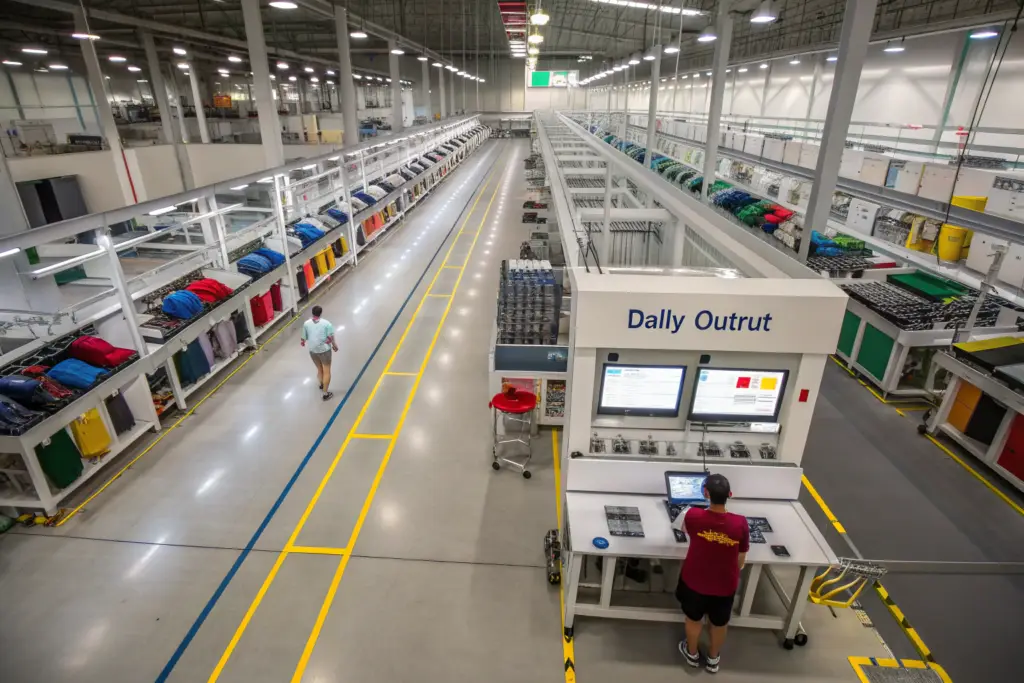
A few years ago, a brand owner I had worked with for three seasons called me in early March. His classic chino short had been picked up by a major department store. His order volume was tripling overnight from 5,000 units to 15,000 units, and he needed delivery by May 1st. I had to tell him something he did not want to hear. "I cannot accept this order." He was stunned. "You have been making these shorts for me for three years. Why can't you just make more of them?" I explained that our factory, at that time, had three production lines. We were running at 85% capacity with our existing clients. His spike order required a dedicated line for eight weeks. We did not have a spare line. Accepting his order would have meant delaying every other client's order, or rushing his production and compromising quality. Neither was acceptable. He found another factory, a larger one, and they delivered his shorts on time. I lost the account. That was the day I committed to expanding to five production lines.
A factory needs a minimum of five production lines to handle a classic shorts volume spike because a surge in demand from a single client cannot be absorbed by an already-booked production schedule without dedicated, flexible capacity, and having multiple independent lines allows the factory to isolate the spike to a specific line without disrupting the existing production of core clients, to maintain specialized setups for different short constructions, and to build inherent redundancy that protects delivery timelines from the inevitable machine breakdowns, labor fluctuations, and material delays that occur in any manufacturing environment.
At Shanghai Fumao, I have now built the five-line factory that I needed back then. The decision was expensive and difficult. The result is a factory that can say yes to a loyal client's spike order without sacrificing the quality or the delivery timeline of any other order. Let me explain the specific, practical reasons why five lines is the threshold for reliability.
How Does Dedicated Line Capacity Prevent Order Cannibalization?
When a factory with insufficient capacity receives a spike order, the production planner faces an impossible choice. The existing orders for all current clients are already scheduled. The machines are allocated. The operators are assigned. There is no empty space on the calendar. The spike order can only be accommodated by displacing an existing order. The displaced order is delayed. The client whose order was displaced is angry. The factory's reputation for reliability is damaged. The spike order may be delivered on time, but it is delivered at the cost of broken promises to other clients.
Dedicated line capacity allows a factory to absorb a volume spike by isolating the spike order onto a specific, available production line without displacing or delaying the orders of existing clients, preserving the delivery commitments that are the foundation of long-term manufacturing partnerships, and enabling the factory to accept spike orders from loyal clients with confidence, turning a potential crisis into an opportunity to deepen the relationship rather than a choice between refusing the order or breaking commitments to other clients.
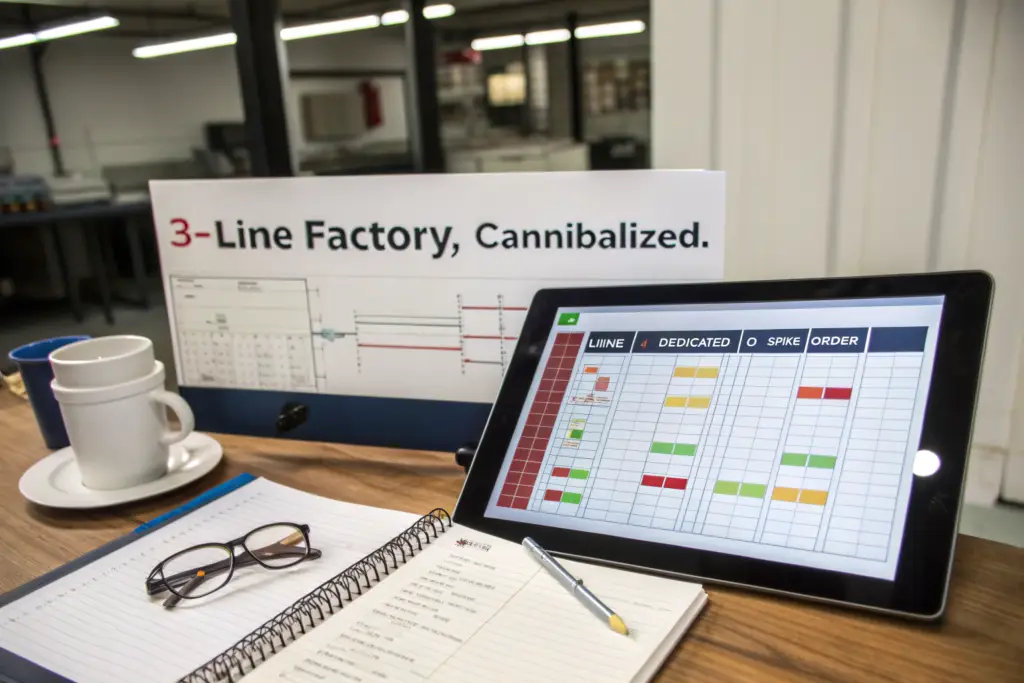
What Happens to Existing Orders When a Spike Order Is Forced onto a Full Schedule?
The production planner is given a mandate. "Find space for this 10,000-unit spike order. Delivery is in eight weeks." The schedule is full. The planner has no good options. They choose the least bad option. They delay one or more existing orders by a week or two. They compress the production timeline for another order, reducing the time available for quality control. They authorize overtime, pushing operators to work longer hours, which increases fatigue and the risk of sewing errors.
The client whose order was delayed calls, angry. The factory provides an excuse, a material delay, a machine breakdown. The client knows the excuse may not be true. Trust is eroded. The client whose order was compressed receives shorts with a slightly higher defect rate because the QC inspectors were rushed. The client notices the quality slip. Trust is eroded further. The spike order is delivered on time, but the factory has damaged its relationships with two or three other clients. The short-term revenue from the spike order is offset by the long-term loss of trust and future orders from the displaced clients. This production planning and capacity management in garment manufacturing is the daily reality of a capacity-constrained factory.
How Does a Five-Line Factory Absorb a Spike Without Disruption?
In a factory with five production lines, the production planner has options. The spike order does not need to displace an existing order. It can be assigned to a line that is currently operating below capacity, or it can be assigned to a new line that is brought into operation specifically for the spike.
At Shanghai Fumao, we typically run our five lines at 75% to 85% utilization for scheduled, recurring client orders. This leaves 15% to 25% of our total capacity available for spike orders, rush orders, and production contingencies. When a loyal client's volume triples, we can allocate the spike to the spare capacity across one or two lines. The existing orders on those lines continue on schedule. The other three lines are entirely unaffected. The spike order is absorbed seamlessly. No client is delayed. No quality is compromised. The factory says yes to the spike order, and every other client's delivery date remains intact. This capacity management for volume flexibility in manufacturing is the primary operational benefit of a five-line structure.
Why Is Quality Consistency a Function of Production Line Specialization?
A production line is not just a row of sewing machines. It is a system. The machines are configured for specific operations. The operators are trained on specific construction sequences. The quality control checkpoints are positioned for specific defect types. A line that sews flat-front chino shorts every day develops a rhythm, a muscle memory, and a quality consistency that is impossible to achieve on a line that switches between chinos, cargo shorts, and pleated shorts depending on the day's schedule.
Quality consistency in classic shorts manufacturing is a direct function of production line specialization, where a dedicated line that produces the same short construction continuously allows operators to develop deep, specific skill in that garment type, allows machines to be permanently configured with the correct attachments, guides, and tension settings for that specific fabric and construction, and allows quality control checkpoints to be optimized for the specific defects associated with that style, resulting in a lower defect rate, higher efficiency, and more consistent output than a generalist line that switches between different products.
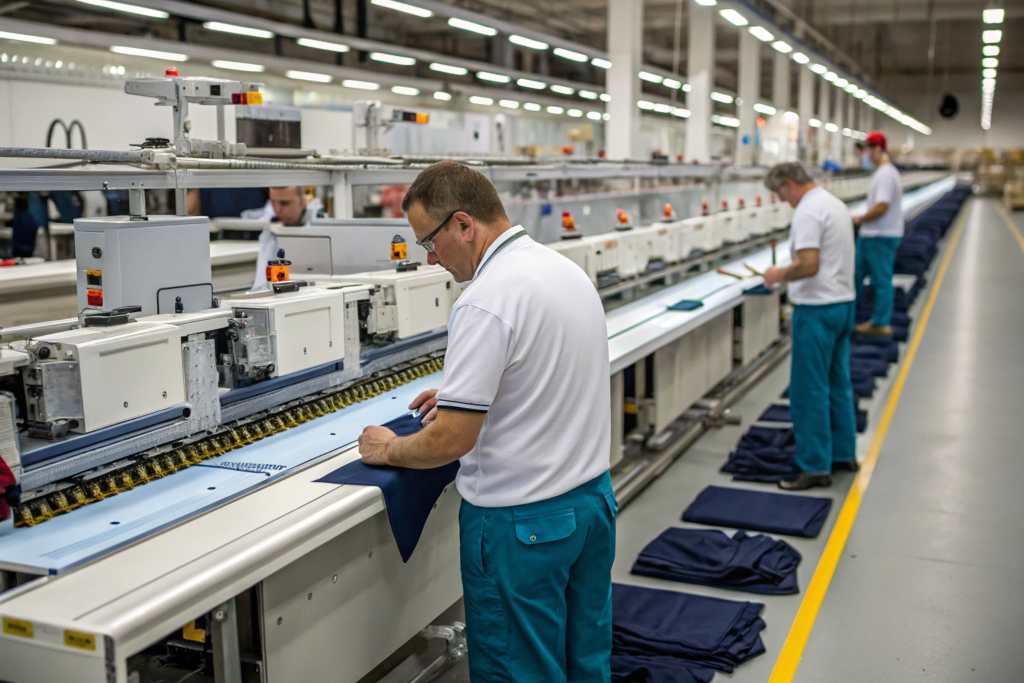
How Does Operator Specialization Reduce the Defect Rate?
An operator who sews the same waistband on the same style of short for weeks develops a deep, specific skill. Her hands know the exact feel of the correct seam allowance. She knows the precise speed at which the fabric should be fed through the machine. She recognizes the subtle signs of incorrect thread tension before it produces a visible defect. She is not just following instructions. She has internalized the operation.
An operator who switches between a chino waistband on Monday, a cargo short pocket on Tuesday, and a pleated short pleat on Wednesday never reaches this level of specialization. Each switch requires a mental reset. The first few units after each switch have a higher probability of error. Over thousands of units, this difference in specialization produces a measurable difference in defect rates. The specialized operator on the dedicated line consistently produces higher quality output than the generalist operator on the mixed line. This operator specialization and quality in garment manufacturing is a well-documented principle of production management.
What Machine Configurations Are Unique to Specific Short Styles?
Different short constructions require different machine setups. A flat-front chino short requires a specific folder attachment on the waistband machine that folds the waistband fabric precisely for topstitching. A cargo short requires a specialized pocket setter that positions and attaches the cargo pocket in one operation. A pleated short requires a pleating machine or a specialized press that forms the pleats before they are sewn into the waistband.
On a generalist line, these machine configurations must be changed every time the product changes. The changeover takes time. The machine must be recalibrated. The first few units after the changeover must be inspected carefully to ensure the settings are correct. On a dedicated line, the machines are permanently configured for the specific construction that the line produces. There is no changeover time. There is no recalibration risk. The machines are always ready, always correctly set, and always producing at the target quality level. This machine setup and line balancing in garment production is a key factor in the quality and efficiency advantage of dedicated lines.
How Does Multi-Line Redundancy Protect Against Production Risks?
Every production line has a finite capacity and a finite reliability. Machines break down. Key operators call in sick. A fabric delivery is delayed. In a factory with only two or three lines, a single line failure can be catastrophic. A third of the factory's capacity is offline. The orders scheduled on that line will be delayed. There is no spare capacity on the other lines to absorb the work. The factory is in crisis mode. In a factory with five lines, a single line failure is a manageable problem. Twenty percent of capacity is offline. The work can be redistributed. The delivery dates can be preserved.
A five-line factory provides inherent redundancy that protects client delivery timelines from the inevitable operational disruptions of manufacturing, allowing the factory to redistribute production from a disabled line to the remaining operational lines without exceeding their capacity, to cross-train operators across multiple lines so that skilled labor is not siloed on a single line, and to schedule preventative maintenance on a rotating basis without interrupting overall production output, a level of operational resilience that a smaller factory simply cannot provide.
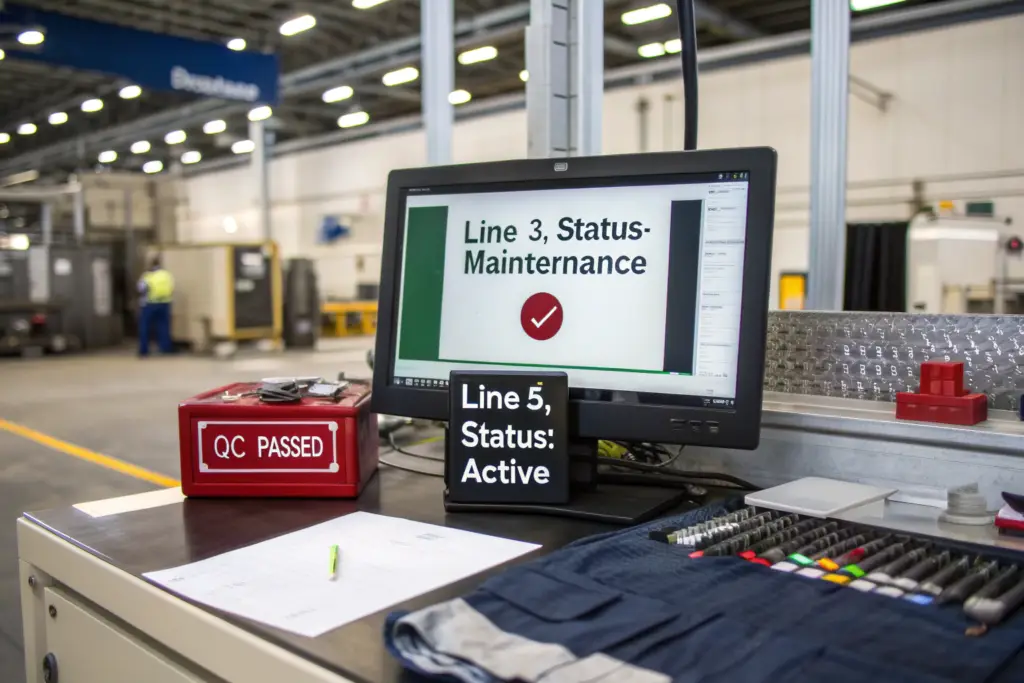
What Happens When a Key Machine or Operator Is Lost on a Smaller Line?
A critical machine breaks down. The waistband attaching machine on Line 2 suffers a major mechanical failure. The part must be ordered from the equipment manufacturer. The repair will take three days. On a three-line factory, one-third of the total capacity is now offline. The orders on Line 2 are stopped. The other two lines are already running at full capacity. The orders on Line 2 will be delayed by at least three days.
A key operator, the most skilled sewer on the line, calls in sick for a week. Her operation is the bottleneck. Without her, the entire line slows down. In a smaller factory, the operator's skill is often unique to her line. There is no trained replacement. The line output drops by 30% until she returns. The orders are delayed. These disruptions are not hypothetical. They are weekly occurrences in any manufacturing environment. This production risk management and contingency planning in manufacturing is essential for reliable delivery.
How Does a Five-Line Setup Allow for Preventative Maintenance?
Every machine requires regular maintenance. The oil must be changed. The belts must be inspected. The moving parts must be cleaned and calibrated. If maintenance is deferred, the machine will eventually fail, usually at the worst possible moment. But taking a machine offline for scheduled maintenance means stopping the line, which means stopping production, which means delaying orders.
In a factory with limited capacity, maintenance is often deferred because there is no slack in the system to accommodate the downtime. The deferred maintenance increases the probability of an unplanned, catastrophic failure. In a five-line factory, maintenance can be scheduled on a rotating basis. One line at a time is taken offline for a half-day of preventative maintenance. The work from that line is temporarily redistributed across the other four lines. No order is delayed. The maintenance is completed. The machines run reliably. This preventative maintenance scheduling in garment factories is a key operational advantage of a five-line structure.
What Does a Five-Line Factory Mean for a Brand's Long-Term Growth?
A brand's relationship with its factory is not a series of individual transactions. It is a partnership that either enables or constrains the brand's growth. A brand that partners with a small factory may find that the factory served them well when they were ordering 3,000 units per season, but cannot handle the 10,000-unit order that comes with the department store placement. The brand is forced to choose between leaving their trusted factory partner and capping their own growth, or staying with the factory and turning down the big order. Neither is a good choice. The factory's capacity ceiling becomes the brand's growth ceiling.
A factory with five production lines provides a brand with a scalable manufacturing platform that can grow with the brand from its initial market entry volumes to its major retail expansion volumes, eliminating the disruptive and risky process of switching factories as order volumes increase, and allowing the brand to build a deep, integrated partnership with a single manufacturing partner who understands the brand's quality standards, fit blocks, and design language over years of continuous collaboration.
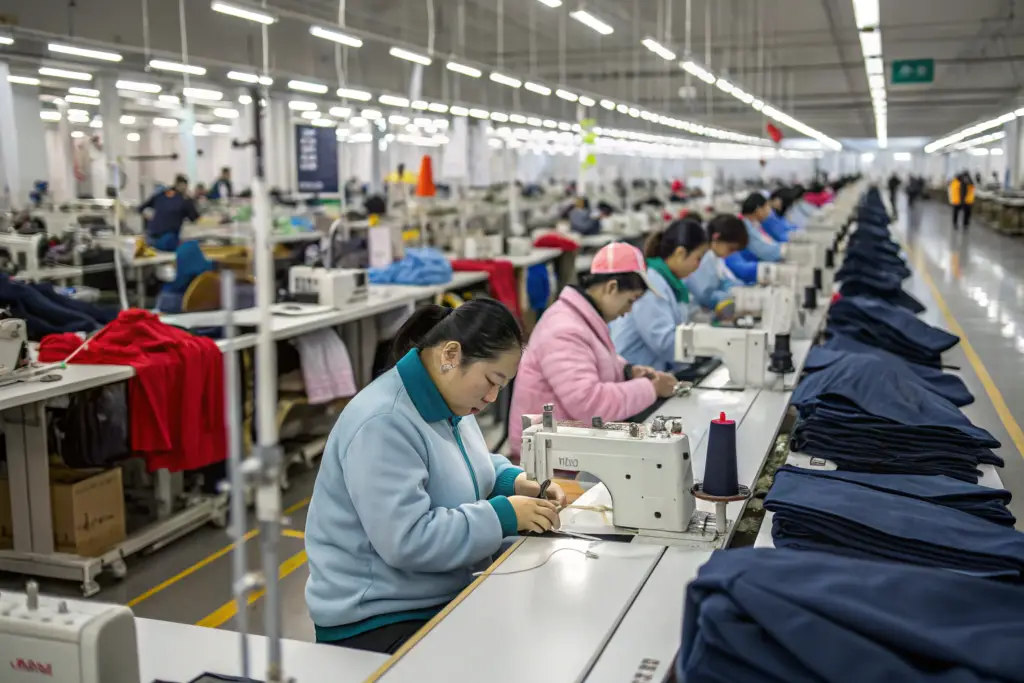
How Does Scalable Capacity Eliminate the Need for Factory Switching?
A brand that starts with a small factory and experiences rapid growth eventually hits the factory's capacity ceiling. The brand must find a new, larger factory. The new factory must learn the brand's fit, the brand's construction standards, and the brand's quality expectations. The learning curve involves mistakes. Samples are produced incorrectly. First production runs have higher defect rates. The brand and the factory go through a painful, expensive adjustment period.
A brand that partners with a five-line factory from the beginning can grow within the same manufacturing relationship. The brand starts with a portion of one line. As volume grows, the brand expands to a full line, then to two lines, then to three. The factory already knows the brand's specifications. The operators already know the brand's construction standards. The QC team already knows the brand's quality expectations. The growth is seamless. The brand never has to endure the disruption of switching factories. This scalable manufacturing partnerships for growing brands is one of the most valuable but least appreciated benefits of choosing the right factory partner.
What Does Dedicated Account Management Look Like at Scale?
In a small factory, the brand owner talks directly to the factory owner. This works when the brand is ordering 3,000 units. When the brand is ordering 30,000 units, the factory owner cannot personally manage every client. The brand needs a dedicated account manager, a specific person who is responsible for their orders, who knows their specifications, and who can answer their questions immediately.
A five-line factory has the scale to support dedicated account management. Each major client is assigned an account manager who oversees their production across all lines. The account manager communicates with the client weekly, provides production updates, manages the sampling process, and resolves issues. The brand owner has a single point of contact who knows their business intimately. This account management in garment manufacturing is a critical component of a scalable manufacturing partnership.
Conclusion
A factory with five production lines is not a luxury. It is a structural requirement for reliably manufacturing classic shorts at volume. The five-line structure provides the dedicated, flexible capacity to absorb a loyal client's volume spike without displacing existing orders or compromising delivery commitments. It enables production line specialization, with each line dedicated to a specific short construction, which drives the operator skill and the machine optimization that produce consistent quality at scale. It provides inherent redundancy, the ability to absorb a machine breakdown or a labor shortage without missing a delivery date, because work can be redistributed across the remaining operational lines. And it provides a scalable manufacturing platform that allows a brand to grow from 5,000 units to 50,000 units within the same trusted partnership, without the disruption and risk of switching factories.
At Shanghai Fumao, I have invested in the five-line structure because I learned, through the painful experience of losing a valuable client, that a factory's capacity is not just a matter of square footage. It is a matter of reliability, quality, and partnership. If you are a brand that is experiencing a volume spike, or a brand that is planning for growth and wants a manufacturing partner who can grow with you, contact our Business Director, Elaine, at elaine@fumaoclothing.com. Let's make sure your next spike order is a celebration, not a crisis.