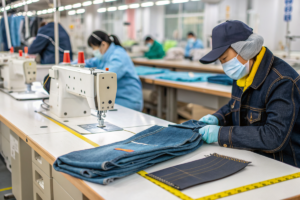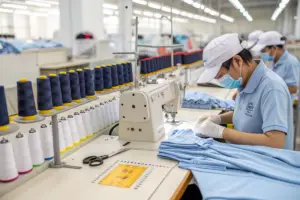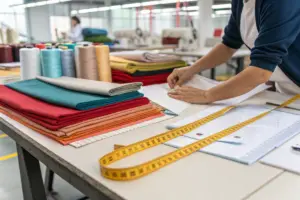
A distributor from Miami called me last month with a problem that almost killed his business. He had ordered 5,000 units of a men's performance polo shirt from a factory that bought fabric from a third-party mill. The sample was perfect. The bulk shipment was a disaster. The fabric weight was 15 grams lighter than the spec. The color was half a shade off from the approved swatch. The pilling resistance failed after five washes. His retail buyer rejected the entire shipment. The factory blamed the mill. The mill blamed the factory. My distributor friend was left with a container of unsellable inventory and no one willing to take responsibility. He told me, "I will never again buy from a factory that does not make its own fabric."
US distributors should seriously consider Chinese factories with in-house fabric weaving mills because vertical integration eliminates the blame game between supplier and mill. A factory that controls its own yarn procurement, knitting, and dyeing can guarantee fabric consistency, enforce quality standards at the fiber level, and dramatically shorten lead times. This single-source accountability reduces the distributor's risk and creates a faster, more transparent supply chain from raw material to finished garment.
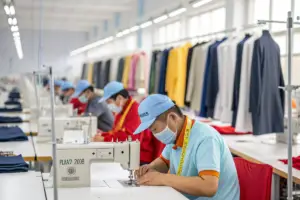
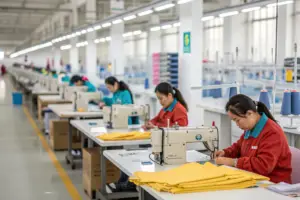
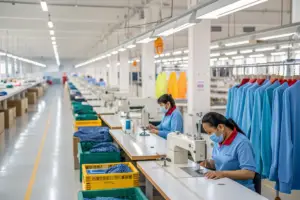
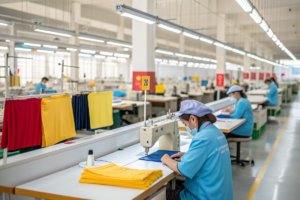
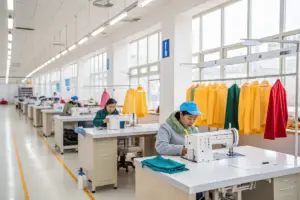
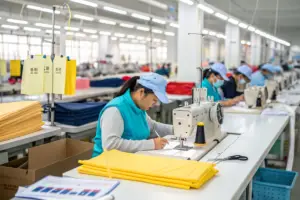
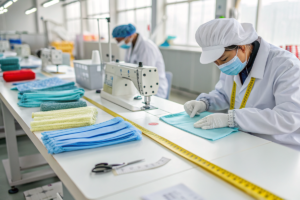
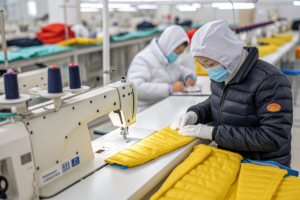
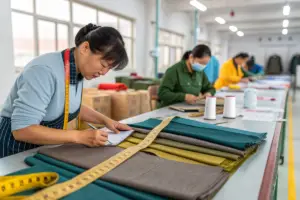
When the same company weaves the fabric and sews the shirt, there is no gap for problems to hide in. The left hand knows what the right hand is doing. The dye house cannot blame the knitter. The cutting room cannot blame the weaver. Everyone works under the same roof, for the same boss, toward the same delivery date. At Shanghai Fumao, this vertical integration is not just a feature. It is the foundation of our quality promise.
How Does In-House Weaving Eliminate the "Blame Game" in Quality Disputes?
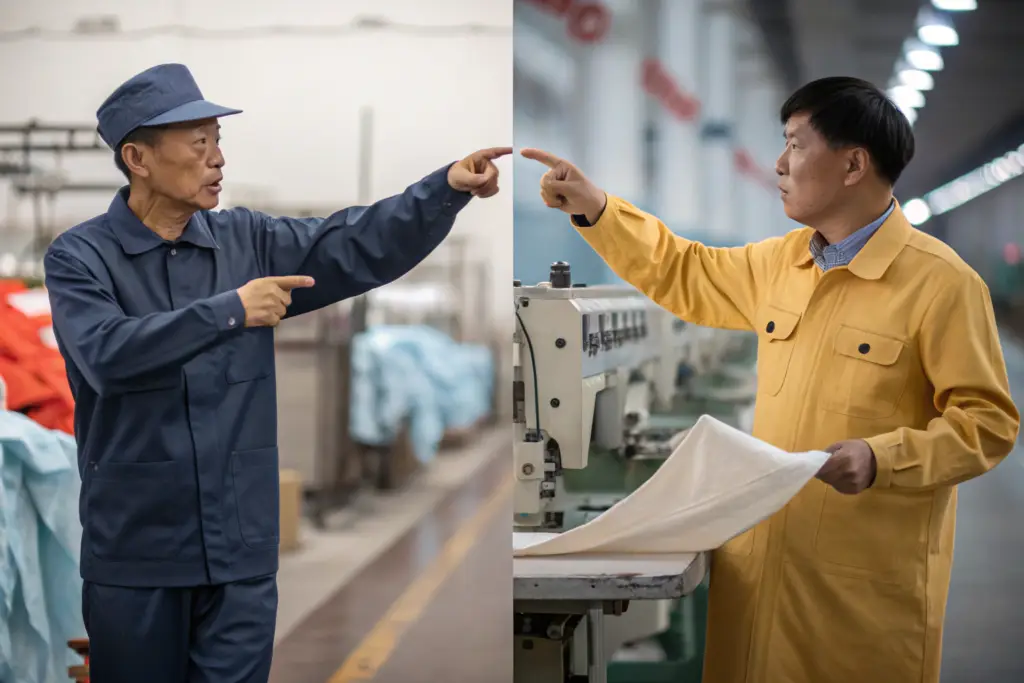
The garment industry has a dirty little secret. When a quality problem arises, the first instinct of many suppliers is to deflect. The sewing factory blames the fabric mill for supplying bad material. The fabric mill blames the yarn supplier for providing weak fiber. The yarn supplier blames the cotton trader. By the time the blame circle is complete, you, the distributor, have a rejected shipment and no one willing to compensate you. You are left holding the financial bag.
In-house weaving eliminates the blame game because there is no external mill to point fingers at. The factory owns the entire quality chain. If the fabric pills, it is our fault. If the color bleeds, it is our fault. If the weight is off, it is our fault. This single-point accountability forces a culture of proactive quality control rather than reactive excuse-making. For the US distributor, this means disputes are resolved with solutions, not with a chain of shifting responsibility.
When a quality issue emerges in a vertically integrated factory, the investigation is internal and rapid. The production manager walks over to the weaving floor. She checks the machine settings. She reviews the yarn batch records. She identifies the root cause within hours, not weeks. There is no email chain stretching across two different companies. There is no waiting for the mill to "look into it." The problem gets fixed immediately because the person fixing it reports to the same management team as the person who created it.
What Happens When Fabric Weight Is Off-Spec in a Traditional Supply Chain?
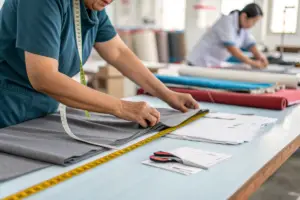
Fabric weight is a critical specification. A lightweight summer blazer that is supposed to be 180 grams per square meter (GSM) but arrives at 160 GSM will look flimsy and cheap. The drape will be wrong. The garment will feel insubstantial to the customer. In a traditional supply chain, the factory orders fabric from an external mill based on a spec sheet. The mill ships the fabric. The factory checks it, but often only after cutting has begun or, worse, after the garments are sewn.
When the weight discrepancy is discovered, the factory is in a bind. The fabric is already cut. The labor is already spent. They have two choices: ship the substandard garments and hope the distributor does not notice, or stop production, inform the distributor, and take a huge financial loss. Many factories choose the first option. The distributor receives the shipment, notices the quality is off, and files a complaint. The factory then says, "We made the garment correctly. The mill sent us the wrong weight. You should claim against the mill." But the distributor has no contract with the mill. The distributor's contract is with the factory. The factory has the responsibility, but they are trying to escape it.
I have seen this exact scenario destroy a brand's summer season. The distributor spent months developing the product, marketing it to retailers, and securing purchase orders. The defective fabric weight made the final product look like a knock-off of its own sample. The retailers canceled their orders. The distributor lost the season and the client relationships. All because two separate companies, a mill and a factory, could not align their quality standards. Resources like ASTM International provide standardized test methods for fabric weight that can be used in contracts, but the enforcement is only as strong as the supply chain's integrity.
How Does On-Site Yarn Procurement Improve Final Garment Consistency?
The quality of a garment begins with the quality of the yarn. A sweater that pills excessively is usually made from short-staple fibers. A t-shirt that twists in the wash is often made from yarn with uneven twist. When a factory buys fabric from an external mill, the yarn quality is a black box. The factory does not know what cotton bale the yarn came from or how it was spun. They accept the mill's word.
A factory with in-house weaving controls the yarn procurement directly. We buy yarn from specific spinners we have audited and qualified. We test incoming yarn batches for strength, evenness, and twist level before a single meter of fabric is knitted. If a yarn lot fails our incoming inspection, we reject it before it enters our production system. This prevents the problem from ever reaching the fabric stage, let alone the cutting table.
This upstream control has a direct, visible impact on the final garment. A men's dress shirt made from yarn we selected and knitted in-house will have a consistent surface, a uniform color absorption in dyeing, and a predictable shrinkage rate. These are the invisible qualities that a customer feels when they put the shirt on. They do not know about yarn testing. They just know the shirt looks and feels premium. And they know it still fits after five laundry cycles. This consistency is what turns a first-time buyer into a repeat customer.
Can Vertical Integration Really Cut 15 Days from Bulk Production Lead Times?
Time is the hidden currency of the fashion industry. A 15-day reduction in lead time is not a minor operational improvement. It is a strategic weapon. It means your summer collection hits the retail floor two weeks before your competitor's. It means you can reorder a hot-selling style mid-season and restock before the trend fades. It means you can hold your cash longer, placing the deposit closer to the selling season. In an industry built on deadlines, speed is money.
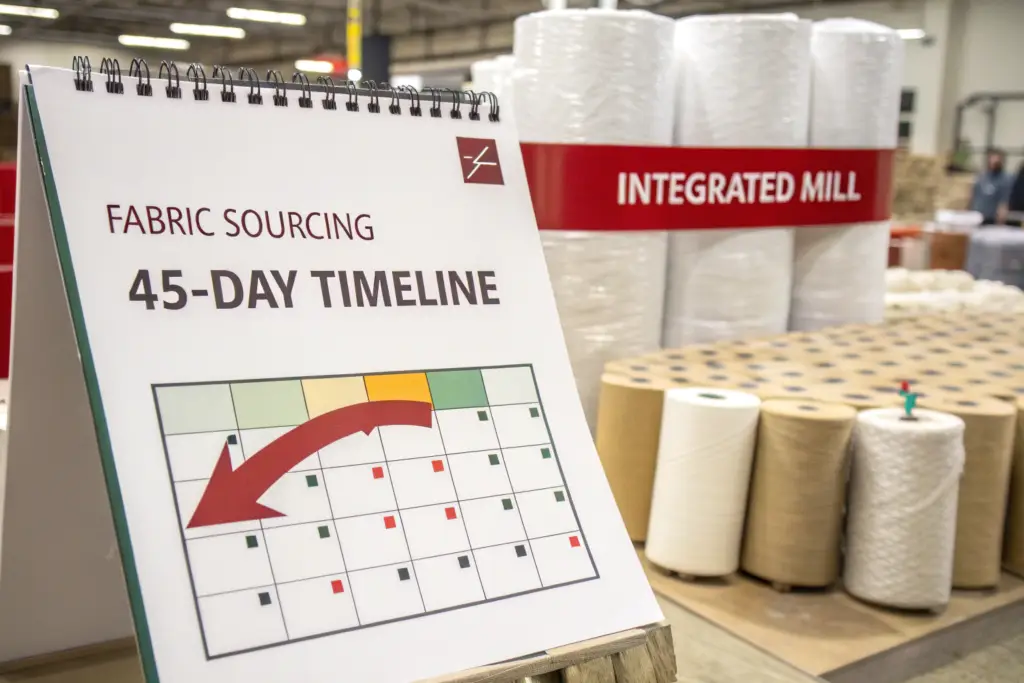
Vertical integration can realistically cut 10 to 15 days from bulk production lead times by eliminating the external fabric ordering, production scheduling, and shipping gaps. When the weaving mill is in the same facility, fabric does not need to be ordered, queued, produced, inspected, packed, and transported from a separate supplier. It moves directly from the knitting floor to the cutting room, often within hours of being finished.
In a traditional model, ordering fabric is a discrete project with its own timeline. The factory sends a purchase order to the mill. The mill puts it in their production queue. The fabric is woven, finished, inspected, rolled, packed, and loaded onto a truck. The truck drives to the factory. The factory receives it, logs it into inventory, and then issues it to the cutting room. Each of these steps adds days. The transport alone can take three to five days if the mill is in a different province. We have eliminated this entire sequence. Our fabric does not travel. It goes down the hallway.
How Does Eliminating Fabric Transport Reduce Risk and Time?
Transport is a risk multiplier. A truck carrying 5,000 meters of expensive wool suiting can break down. It can be delayed by weather. The fabric can get wet. The rolls can get crushed. Every day the fabric is on a truck is a day outside of anyone's quality control. It is a day when the production schedule is vulnerable to a logistics failure that no one can control.
When the weaving mill is in-house, the transport step disappears entirely. The fabric comes off the finishing machine, passes a final quality check, and is moved on a rolling cart to the cutting room. The journey is measured in meters, not kilometers. It takes minutes, not days.
This elimination of transport risk is particularly valuable for complex fabrics. A delicate silk charmeuse or a textured jacquard is easily damaged by rough handling during loading and unloading. Every transfer point is an opportunity for snags, stains, and tears. By keeping the fabric inside our facility, we reduce handling damage to near zero. The fabric arrives at the cutting table in the exact condition it left the finishing machine. This not only saves time but also reduces the hidden cost of material wastage due to transit damage. The logistical efficiency of this model echoes principles seen in advanced manufacturing hubs globally, where industrial symbiosis reduces both cost and environmental impact, a topic often covered by McKinsey & Company in their operations practice studies.
What Role Does "Just-in-Time" Dyeing Play in Responsive Manufacturing?
Color is a last-minute decision for many brands. They want to see the selling data from the first week of the season before committing to a second batch of a specific shade. Maybe the navy sold better than the charcoal. Maybe the emerald green was a surprise hit. Traditional supply chains cannot react to this data because the fabric was dyed and cut weeks ago.
A factory with in-house dyeing capabilities can operate a "greige goods" strategy. Greige fabric is raw, undyed material. We knit a large quantity of greige fabric in standard constructions and hold it in inventory. When the brand sees the sales data and decides they need 500 more units in navy, we do not need to knit new fabric. We take the greige fabric from our shelf and dye it to the exact navy specification. The dyeing and finishing process takes 5 to 7 days instead of the 25 to 30 days required to start from yarn. We cut the lead time by nearly four weeks.
This is the power of vertical integration combined with smart inventory strategy. It turns the factory from a slow, rigid operation into a responsive, demand-driven partner. The brand reduces its risk of over-ordering the wrong color and under-ordering the right one. It captures more full-price sales because it can chase the winners mid-season. The factory benefits from a more stable order flow and a deeper partnership with the brand. Everyone wins. This is the kind of responsive manufacturing that the global textile industry is moving towards, a shift well-documented by the International Textile Manufacturers Federation.
What Are the True Cost Savings of Skipping the Middleman Mill Markup?
Let me show you the real math behind the factory gate price. When a garment factory buys fabric from an external mill, the mill is not a charity. It is a business. It buys yarn, adds value through knitting, and sells the fabric at a profit. That profit is a markup. The markup can range from 8% to 20%, depending on the fabric complexity and the market dynamics. Then the mill sells to a fabric agent or trader, who adds another 3% to 5% commission. By the time the fabric reaches the factory, the cost has been padded by two layers of margin.
The true cost savings of skipping the middleman mill markup are typically between 10% and 18% on the fabric component of the garment. Since fabric often represents 50% to 60% of the total garment cost, this translates to a 5% to 10% reduction in the overall FOB price. These savings can be shared between the factory and the distributor, making the distributor more competitive in their home market without sacrificing a single quality standard.
This is not a theoretical saving. It is a structural cost advantage that a vertically integrated factory enjoys every single day. We do not pay a third-party mill's profit margin because we are the mill. We do not pay an agent's commission because we source our own yarn directly from the spinner. The cost we capture from these eliminated layers is reinvested in better yarn, more rigorous QC, and competitive pricing for our distributors.
How Does Direct Yarn Procurement Affect Your Bottom Line?
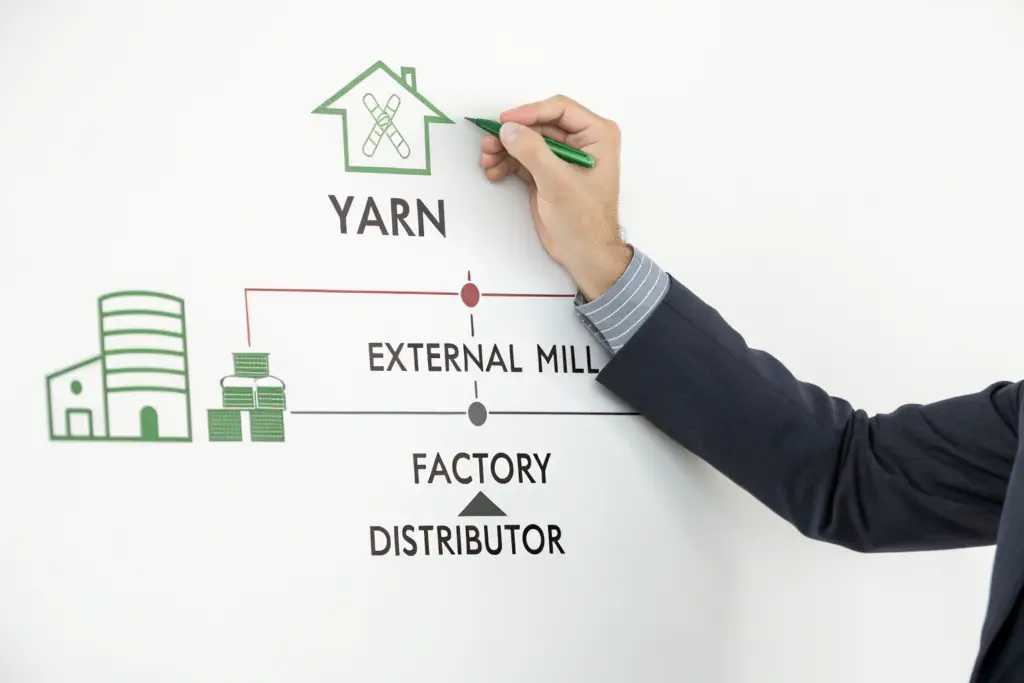
Yarn is the fundamental raw material of fabric. A factory without an in-house mill buys fabric from a mill that bought yarn from a spinner that bought fiber from a trader. There are four transactions, each with a profit margin, before the yarn even becomes fabric. A vertically integrated factory buys yarn directly from the spinner. There is only one transaction.
This direct relationship with spinners gives us pricing leverage. We commit to large volumes of specific yarn counts and compositions across multiple client orders. This volume commitment secures a preferential price that a small fabric mill ordering for a single production run cannot match. The savings compound through the chain. Cheaper yarn makes cheaper fabric, which makes a more competitively priced garment.
But the savings are not just in the price per kilogram. There is also a quality cost saving. When we control the yarn specification, we avoid the hidden cost of poor yarn. Poor yarn causes knitting machine stoppages. It creates fabric defects that must be cut around. It results in garments that fail quality inspection and must be remade. These non-conformance costs are invisible on a supplier's invoice but are very real on the factory's bottom line. By using superior, consistent yarn, we reduce our internal failure rate. This efficiency gain is reflected in a stable, reliable price for our distributors.
Can You Offer More Competitive FOB Prices Without Compromising Quality?
This is the core question every distributor asks. Is the lower price a trick? Are you cutting corners to hit that number? The answer is no. The lower price from vertical integration is not a trick. It is the result of removing intermediary costs. You are paying for the value-added steps of knitting, dyeing, cutting, and sewing, not for the margin of a separate fabric company.
Let me give you a real example. A US distributor was sourcing a basic men's chino pant. The fabric was a 98% cotton, 2% elastane stretch twill. His previous factory was buying the fabric from a specialized twill mill. The fabric cost was $3.80 per meter. We produced the exact same fabric, to the exact same specification, in our in-house weaving unit. Our internal cost, including a fair allocation of overhead, was $3.15 per meter. That is a $0.65 saving per meter. A pair of chinos uses about 1.2 meters. The fabric cost saving was $0.78 per pair. On an order of 10,000 pants, that is a $7,800 saving. We passed a portion of that saving to the distributor in a more competitive FOB quote. The pant quality was identical. We sent the fabric to an independent lab. The tensile strength, the tear strength, the colorfastness. All the same. The only difference was the price.
This is the conversation I have with new distributors who are skeptical of our pricing. I do not tell them to trust me. I tell them to test the fabric. I send them a lab report alongside our quote. The numbers do not lie. The eliminated middleman margin is a genuine competitive advantage.
What Unique Fabric Customization Options Do Self-Owned Mills Enable?
Off-the-shelf fabric is a commodity. Anyone can buy it. If your competitor can go to the same fabric market in Guangzhou and buy the same polyester-cotton blend, your product has no material differentiation. You are forced to compete on price alone. That is a race to the bottom. The real value of a vertically integrated factory is not just the cost savings on standard fabrics. It is the ability to create fabrics that your competitors cannot access.
Self-owned mills enable unique fabric customization options that are impossible for factories relying on the open market. This includes exclusive jacquard weaves with a brand's signature pattern, custom-developed fiber blends like hemp-silk for a specific hand feel, and proprietary dye recipes matched to a brand's exact Pantone identity. These exclusives act as a competitive moat, protecting the distributor's designs from immediate knock-offs.
When a distributor partners with us, they are not just buying production capacity. They are buying access to a fabric development lab. They can sit with our textile engineers and say, "I want a fabric that feels like this, drapes like this, but is made from this sustainable fiber, and has this specific surface texture." We can make that happen. This turns the garment from a generic product into a proprietary asset.
How Can You Develop a Signature Jacquard or Dobby Weave Exclusively?
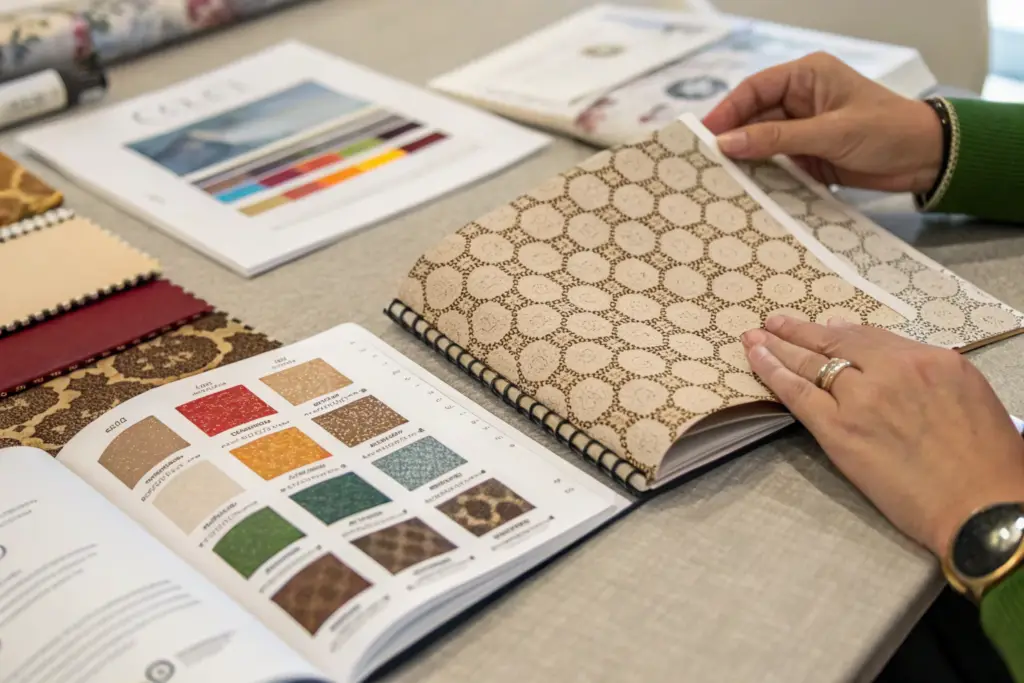
Jacquard and dobby weaves are the pinnacle of fabric artistry. They are patterns woven directly into the fabric structure, not printed on the surface. Think of a men's formal dress shirt with a subtle geometric texture woven into the body. Or a blazer with a brand's initials discretely woven into the lining. These are powerful brand signifiers. They scream quality and intentionality.
Developing these fabrics typically requires an external mill to create a custom pattern disk or digital file, set up a dedicated machine, and run a minimum order of several thousand meters. The cost is prohibitive for a small or medium brand. The mill's lead time for development is long.
With an in-house weaving mill, these barriers collapse. We have our own jacquard looms. Our textile designers work in the same building as our garment pattern makers. A distributor can request a custom weave for a specific jacket. Our team creates the digital file, loads it onto the loom, and weaves a few meters for approval. The development time is days, not weeks. The minimum order quantity is manageable because we are not trying to sell the fabric to anyone else. It is for your order only. The fabric becomes your exclusive. We archive the weave file under your brand name, and we will never produce it for another client. This exclusivity is a powerful selling point for boutiques and premium retailers. The technology behind this, including digital weaving and 3D fabric simulation, is rapidly advancing, as covered by organizations like Techtextil.
What Is the Value of a Proprietary Color Library for Your Brand?
Color is identity. Tiffany has its blue. Hermès has its orange. For a US distributor building a brand, color consistency across seasons is a silent signal of quality. A customer sees a shirt in a store window and recognizes the brand's specific shade of navy before they even read the label. This color equity is built over years and can be destroyed by a single season of off-shade production.
External mills struggle with color consistency across long periods. They dye your fabric, ship it, and then move on to the next client's order. When you come back next season with the same Pantone reference, they have to recreate the dye recipe from scratch. The lab dip process starts over. There is a risk of a slight shift.
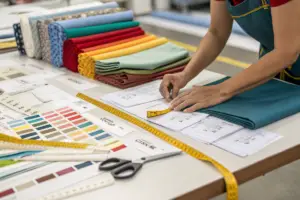
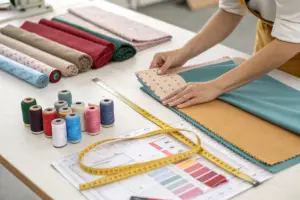
An in-house dyeing operation maintains a proprietary color library. We keep a physical archive of every approved lab dip, along with its precise digital recipe stored on a spectrophotometer. When a brand reorders the same color six months later, we do not guess. We call up the stored recipe. We make a test batch and compare it to the archived standard. The match is exact. The shirt the customer buys this year is the identical shade to the one they bought last year. This consistency builds trust. It tells the end consumer that the brand is meticulous. It also reduces the back-and-forth of lab dip approvals, which itself saves time and accelerates the order. This is another form of cost saving that is invisible on the invoice but very real in the operational efficiency.
Conclusion
The relationship between a US distributor and their Chinese manufacturing partner is built on a fragile thing: trust. Every order is an act of faith. You send a wire transfer halfway around the world and wait for a container to arrive. The factory's job is to make that wait feel safe. The most effective way to build that safety is to eliminate the fault lines where trust breaks down. The biggest fault line in garment manufacturing has always been the gap between the fabric mill and the sewing factory. It is the crack where quality falls, where delays begin, and where responsibility dissolves.
By choosing a partner with an in-house weaving mill, you seal that crack. You get single-source accountability for the entire product. The fabric weight is right because the same company that wove it also cut it. The lead time is shorter because the fabric traveled down a hallway, not down a highway. The price is sharper because there is no third-party mill adding a margin to your material cost. And the product itself is uniquely yours because you can collaborate on custom weaves and proprietary colors that your competitors cannot replicate.
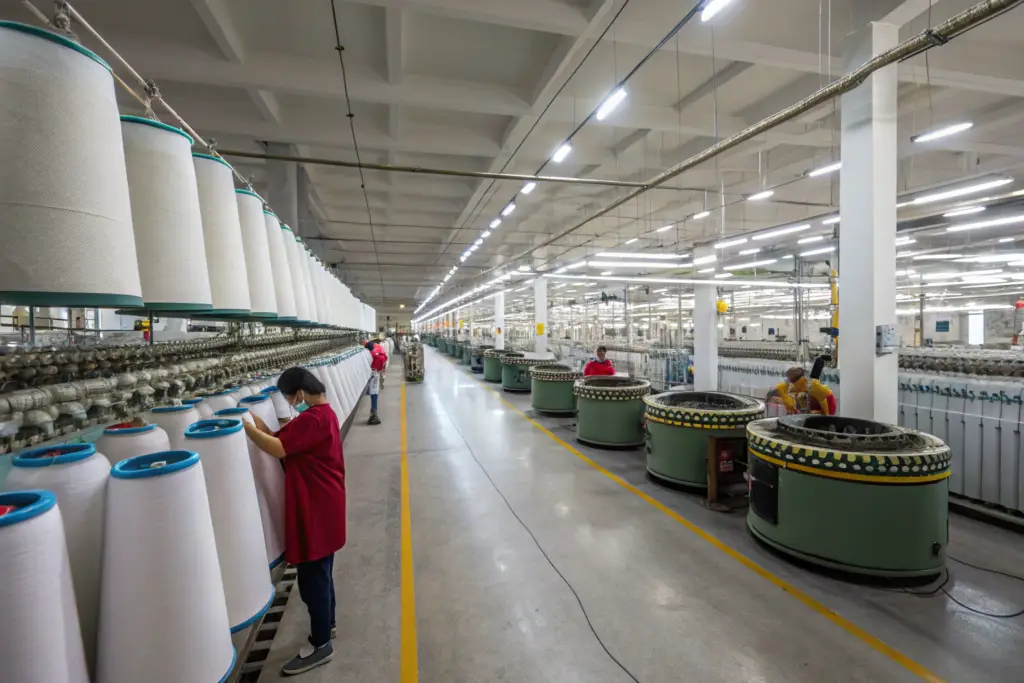
At Shanghai Fumao, our integrated operation is not a marketing slogan. It is the physical reality of our factory. Our knitting and weaving floors hum 24 hours a day, feeding our cutting tables directly. We control the yarn, the dye, the weave, the cut, the sew, and the finish. This control is what allows us to make promises and keep them.
If you are a US distributor who has been burned by the fabric blame game, or if you are simply looking for a competitive edge through faster lead times, sharper pricing, or exclusive materials, I invite you to start a conversation with us. Contact our Business Director, Elaine, at elaine@fumaoclothing.com. She can arrange a virtual tour of our weaving floor, share our library of custom-developed fabrics, and provide a comparative costing exercise showing the vertical integration advantage on your specific product. Let's build a supply chain where the buck stops at one door, and that door is ours.