I watched a brand owner cry in our Shanghai showroom two years ago. Not tears of frustration. Tears of exhaustion and confusion. She had spent 18 months developing her collection with us. The fabrics were beautiful. The construction was flawless. The fit was perfect. She had 1,200 units sitting in her garage in Austin, Texas. And she had sold exactly 37 of them. Her marketing strategy had been a single Instagram post and a hope that her friends would tell their friends. She had invested every dollar in product development and nothing in product distribution. The clothes were exceptional. The marketing was invisible. I sat down with her that afternoon and we rebuilt her launch plan from scratch. Six months later, she sold through her inventory and placed a reorder for 2,000 units. The product did not change. The marketing did.
The absolute most effective ways to aggressively market custom imported clothing combine high-impact organic content that demonstrates the product's unique value, paid social media advertising laser-targeted to the exact demographic that buys premium imported apparel, strategic retail partnerships that put the product in front of qualified buyers, and a direct-to-consumer sales funnel that captures the customer at the moment of peak interest. The aggressive marketer does not spread a thin budget across ten channels. They concentrate resources on the two or three channels where their specific customer actually discovers and buys clothing, and they execute on those channels with a frequency and intensity that competitors are unwilling to match. Consistency of presence beats cleverness of message.
Aggressive marketing is not about shouting louder. It is about showing up more often in more places where the customer is already looking. The customer does not care about your factory relationship or your import logistics. They care about how the garment makes them feel and how it looks in their life. The marketing that wins is the marketing that puts the product into the customer's imagined version of themselves. I want to share the specific strategies we have seen work for our most successful brand partners, strategies that are practical, repeatable, and scalable for brands that import custom clothing from manufacturers like Shanghai Fumao.
How Can You Use Behind-the-Scenes Content to Build a Loyal Audience Before Your Clothing Launch?
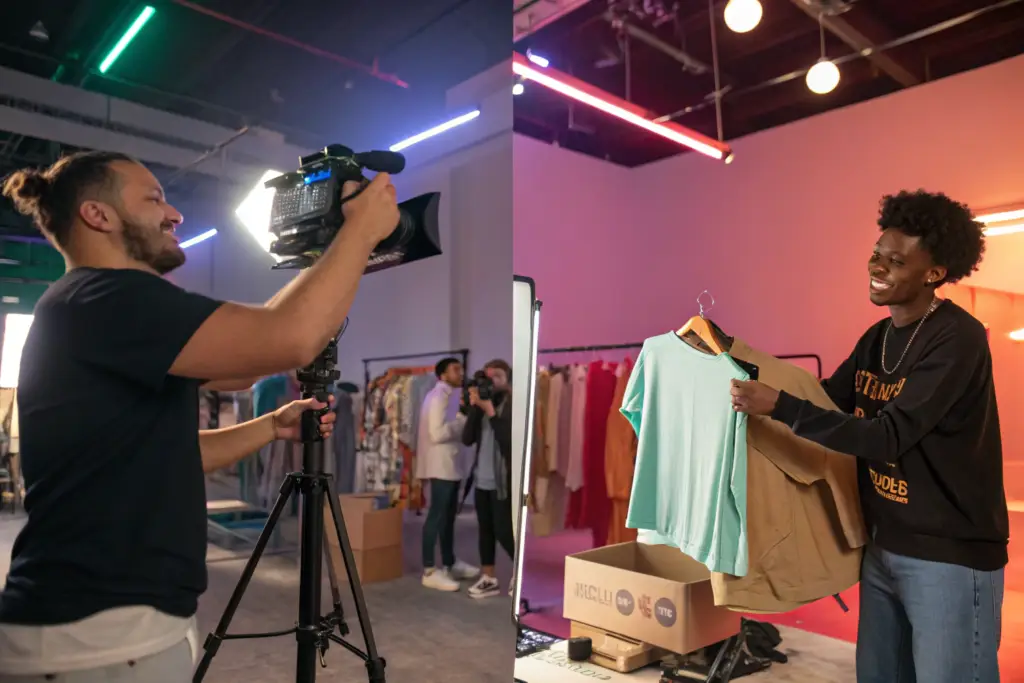
A streetwear brand founder I work with posted a 90-second video from our factory floor every single day for the 30 days leading up to his launch. The videos were not polished. Shot on an iPhone. No script. No editing beyond trimming the start and end. He showed the fabric being cut. The screen printing setup. The sewing line operators at work. The quality inspection. The packing. His audience watched a collection being born in real time. By the time he opened pre-orders, 400 people had already decided to buy. They had watched the garments being made. They felt like co-creators. They trusted the quality because they had seen the manufacturing process with their own eyes. The launch sold out in 72 hours.
Behind-the-scenes content builds a loyal audience before a clothing launch by turning the manufacturing process into a narrative that the audience can follow and invest in emotionally. The content strategy should document every stage of production: fabric sourcing, sampling, fitting sessions, production line work, quality control, and packing. Each piece of content should educate the audience about one specific aspect of apparel manufacturing while building anticipation for the finished product. The audience learns that custom imported clothing is not a commodity ordered from a catalog. It is a crafted product that involves skilled labor, technical decisions, and a human supply chain. This education creates perceived value that no amount of finished-product photography can match.
The psychology behind this strategy is simple. People value what they understand. A customer looking at a finished hoodie on a website sees a commodity. A customer who has watched a 10-part video series about how that hoodie was designed, sampled, pattern-tested, fabric-sourced, cut, sewn, printed, inspected, and packed sees a story. They are willing to pay more for the story. They are also far more likely to tell other people about the product because they have content to share, not just a product link.
What Specific Manufacturing Moments Generate the Highest Engagement on Social Media?
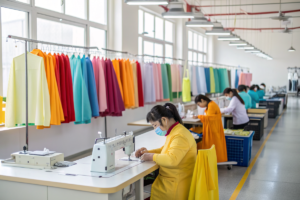
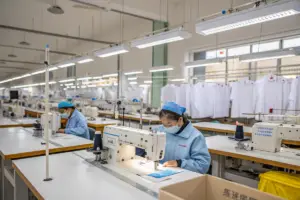
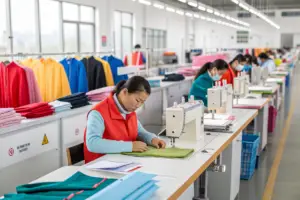
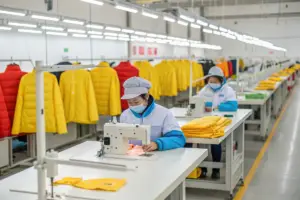
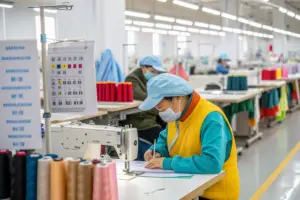
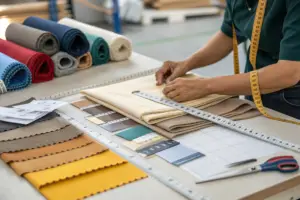
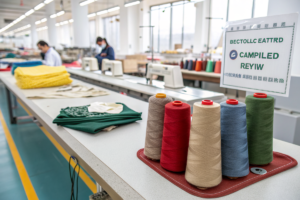
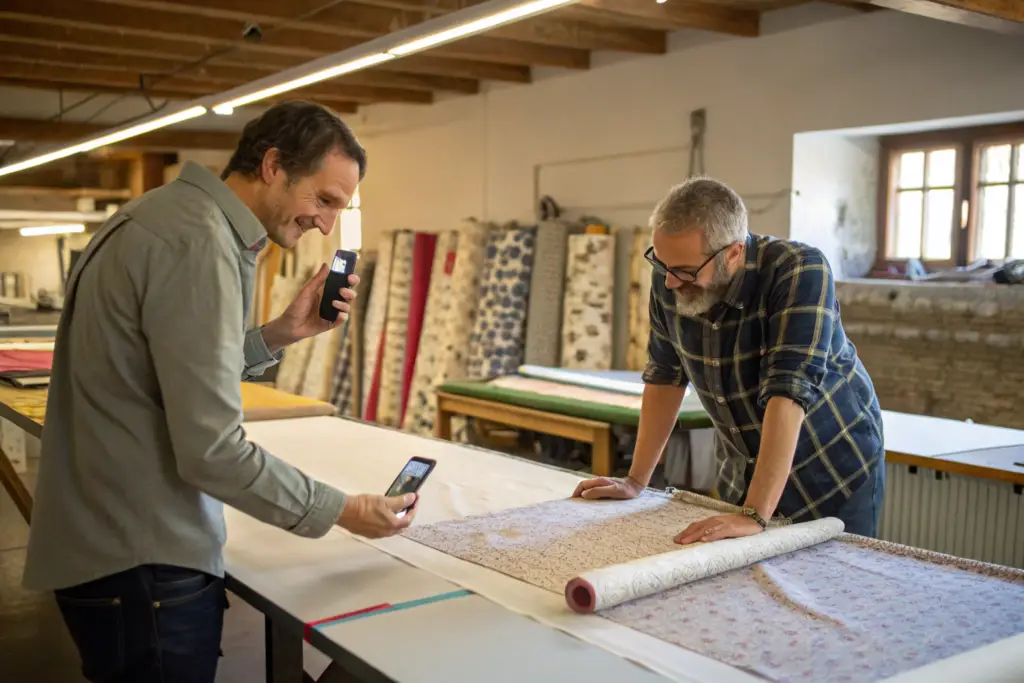
Not all behind-the-scenes content performs equally. Our brand partners track engagement metrics on every post and have identified the manufacturing moments that consistently generate the highest saves, shares, and comments. The number one performing content type is the fabric reveal. A close-up video of a custom fabric, a textured jacquard, a brushed fleece, a garment-dyed French terry, generates more engagement than almost any other content. The audience loves to see and almost feel the material. The second highest performer is the before-and-after comparison. A split-screen showing the initial sketch next to the finished sample. The flat pattern pieces next to the constructed garment. The greige fabric next to the dyed finished product. These comparisons satisfy the audience's curiosity about how things are made. The third highest performer is the factory floor tour, specifically showing the sewing line in operation. The rhythm of multiple machines running simultaneously is visually mesmerizing. It also communicates production capacity and professionalism. The audience infers that a brand using a factory this organized must be serious. The content that performs poorly is the brand owner talking to the camera without any visual action. The audience wants to see the process, not hear about it. Every piece of behind-the-scenes content should show hands doing something: cutting, sewing, measuring, inspecting, packing.
How Can a Brand Owner Film Professional-Looking Factory Content Without a Production Crew?
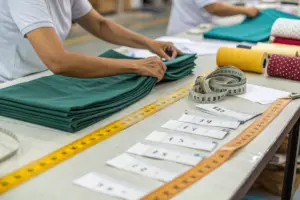
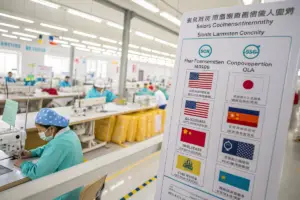
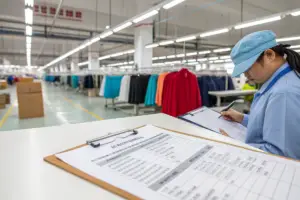
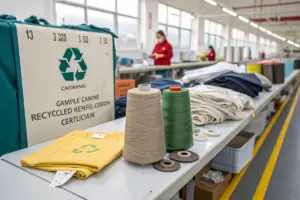
A brand owner visiting a factory does not need a film crew. They need a smartphone with a stabilizer, a small clip-on microphone, and a shot list prepared in advance. The stabilizer eliminates the shaky handheld look that makes content feel amateur. The microphone captures clear audio even with factory machinery noise in the background. The shot list ensures the brand owner captures every critical moment during a limited factory visit window. We recommend a shot list of 15 specific shots: fabric rolls on shelves, fabric being spread on the cutting table, the cutting machine in operation, cut parts being bundled, a sewing operator at work from a front angle, a sewing operator at work from an over-the-shoulder angle, the quality inspector checking a garment with a measuring tape, the needle detector machine in operation, finished garments on a rack, the packing station, cartons being sealed, the factory exterior, the factory floor wide shot, the brand owner with the factory manager, and a close-up of the brand owner touching a finished garment. This shot list produces enough footage for 30 days of daily content. The editing required is minimal. Trim the clips to 60 to 90 seconds. Add a text overlay explaining what the viewer is seeing. Post one clip per day. The consistency of daily posting matters more than the production quality of any individual clip. The smartphone content creation approach is accessible to any brand owner regardless of budget.
What Paid Advertising Platforms Deliver the Highest Return for Custom Imported Apparel Brands?
A brand owner I advise was spending $2,000 per month on Instagram ads with no clear strategy. She was boosting posts that were already performing well organically, which is the advertising equivalent of watering a plant that is already getting rain. Her cost per acquisition was $48. Her average order value was $85. After cost of goods, shipping, and ad spend, she was losing money on every customer acquired through ads. We rebuilt her ad strategy from the ground up. We stopped all boosted posts. We built a cold-traffic prospecting campaign targeting lookalike audiences of her existing customers. We built a retargeting campaign that showed different ads to people who had visited her website, added to cart, and abandoned checkout. We built a creative testing framework that tested new ad images and copy every week and killed underperformers after five days. Her cost per acquisition dropped from $48 to $19. Her return on ad spend went from 1.8x to 4.2x. The ad budget did not change. The strategy did.
The paid advertising platforms that deliver the highest return for custom imported apparel brands are Meta Ads Manager for visual, lifestyle-driven customer acquisition, Google Shopping Ads for capturing high-intent search traffic, and TikTok Ads for reaching younger demographics with authentic, unpolished creative. The key to profitability on any platform is not the platform itself but the audience targeting and the creative strategy. Aggressive marketers build detailed customer avatars, create separate ad campaigns for cold prospects, warm prospects, and existing customers, and test new creative variations constantly. The ad creative that wins is almost always user-generated style content that looks like a real person wearing the product, not a studio shot that looks like an advertisement.
Paid advertising is a multiplier. It multiplies the effectiveness of a good product and a good organic presence. It also multiplies the ineffectiveness of a bad product and a confusing brand message. Before spending a single dollar on ads, a brand needs a converting website, a clear value proposition, and proof that real customers like the product. Paid ads accelerate demand. They do not create demand from nothing.

How Should a Brand Structure Its Meta Ads Funnel for Cold Traffic Prospecting?
The Meta ads funnel has three stages for cold traffic. The first stage is the awareness campaign. The objective is to get the product in front of people who match the brand's customer avatar but have never heard of the brand. The targeting uses lookalike audiences built from the brand's existing customer email list, interest-based targeting on relevant fashion and lifestyle categories, and broad targeting with no interest restrictions for a percentage of the budget. The creative is lifestyle-focused, showing the product being worn in aspirational settings. The call to action is soft: "Shop the Collection" or "Learn More." The second stage is the consideration campaign. The objective is to get people who engaged with the awareness ads to visit the brand's website and view specific product pages. The targeting is a custom audience of people who watched 50% or more of the awareness video ads or clicked on the awareness ads. The creative is product-focused, showing detail shots of the fabric, fit, and unique design elements. The call to action is specific: "Shop the Hoodie" or "View the Lookbook." The third stage is the conversion campaign. The objective is to get website visitors to complete a purchase. The targeting is a custom audience of people who viewed product pages, added to cart, or initiated checkout in the last 14 days but did not purchase. The creative includes social proof, customer reviews, and urgency elements like limited stock notifications. The call to action is direct: "Buy Now." This Meta Ads funnel structure separates prospects by their readiness to buy and delivers the right message at the right time.
What Role Do Google Shopping Ads Play in Capturing High-Intent Purchasers?
Google Shopping Ads capture demand that already exists. A customer searches for "heavyweight organic cotton hoodie" because they already want to buy a heavyweight organic cotton hoodie. They are not browsing Instagram for inspiration. They are searching Google with a purchase intent. Google Shopping Ads put the brand's product image, price, and store name directly in the search results. The customer sees the product before they see any text links. The visual format matches the shopping behavior. The customer who clicks on a Shopping ad has a significantly higher conversion rate than the customer who clicks on a text ad because the Shopping ad customer has already seen the product and the price. They are clicking to buy, not clicking to browse. The key to Google Shopping success is product feed optimization. The product title must include the high-intent search terms the customer is typing. A title like "Men's Heavyweight Organic Cotton Hoodie | 400 GSM | Garment Dyed | Custom Streetwear" will appear in more relevant searches than a title like "The Classic Hoodie." The product description must include material specifications, fit details, and care instructions. The product image must be high-resolution, well-lit, and show the product on a clean background. Google's algorithm ranks Shopping listings partly on the completeness and accuracy of the product feed data.
What Retail Partnership Strategies Can Multiply Your Wholesale Distribution Overnight?
A women's wear brand we manufacture for had been selling exclusively direct-to-consumer for two years. Their revenue was steady but had plateaued at around $15,000 per month. They could not seem to break through that ceiling. I introduced them to a boutique chain buyer I had met at a trade show. The buyer placed a test order for five stores. The order was only 200 units, but it changed everything. The brand's product was now in physical retail stores where new customers could touch the fabric, try on the fit, and discover the brand organically. Three of those five stores reordered within three weeks. The brand's direct-to-consumer sales also increased because the retail presence provided legitimacy. Customers who discovered the brand in a boutique looked it up online and purchased directly for future orders. Within six months, the brand had 22 wholesale accounts and their monthly revenue had tripled. The product was the same. The distribution was different.
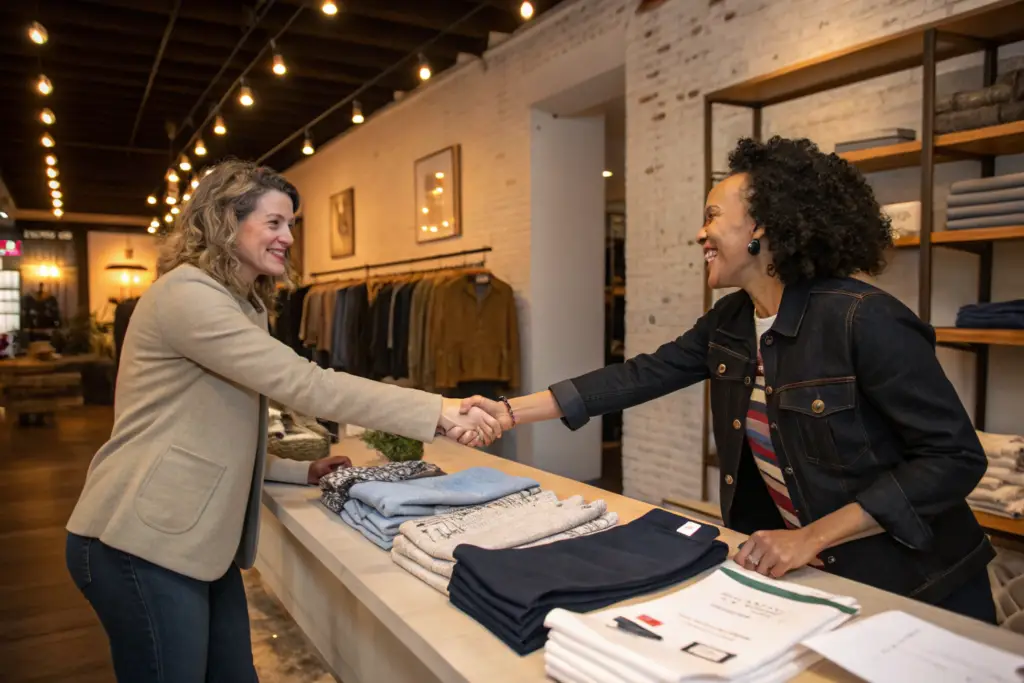
Retail partnership strategies multiply wholesale distribution by placing the product in physical locations where qualified customers already shop for premium apparel. The most effective strategies include targeted outreach to independent boutiques that align with the brand's aesthetic and price point, participation in wholesale marketplaces and trade shows where retail buyers actively source new brands, and consignment partnerships that lower the barrier to entry for retailers who are hesitant to take inventory risk on an unproven brand. The key to retail partnership success is a professional wholesale package that includes a line sheet with wholesale and retail pricing, high-quality lookbook imagery, a clear brand story, and order minimums that are achievable for a small boutique. A retailer who can place a $500 opening order is far more likely to say yes than a retailer who must commit to a $5,000 minimum.
Wholesale distribution is a force multiplier. Each retail account is a mini-marketing department that displays the product, talks to customers about it, and sells it on the brand's behalf. The brand does not pay for the retail staff, the store rent, or the foot traffic. The retail markup covers those costs. The brand's wholesale margin is lower per unit than direct-to-consumer, but the volume and the marketing exposure can more than compensate. A brand selling 200 units direct-to-consumer at full margin might make the same total profit as a brand selling 500 units wholesale at a lower margin. The wholesale brand also acquires 500 new customers who may become direct-to-consumer buyers for the next season.
How Can a Brand Secure Its First 10 Wholesale Accounts Without a Sales Team?
A founder with no sales team can secure wholesale accounts through a systematic direct outreach process. The process starts with building a target list of 50 to 100 independent boutiques that carry brands at a similar price point and aesthetic. The list is built by searching Instagram for boutiques that follow competitor brands, browsing wholesale marketplace directories, and visiting local boutiques in person. The brand owner emails each boutique with a personalized message that references a specific product in the boutique's current assortment and explains why the brand's product would complement it. The email includes a link to a digital line sheet, not an attachment. Attachments get caught in spam filters. The follow-up is relentless but professional. One email is not enough. Three emails over three weeks, each with new information: a new press mention, a new style added to the collection, a customer review. The goal of the first email is a reply. The goal of the second email is a phone call. The goal of the third email is a sample request. The boutique that requests a sample converts to a wholesale account at a much higher rate than the boutique that places an order from a line sheet alone. The wholesale buyer outreach process is a numbers game. A 10% conversion rate from initial contact to wholesale account is considered strong. To get 10 accounts, the brand needs to contact 100 boutiques. The math is simple. The execution is tedious but effective.
What Trade Show and Wholesale Marketplace Strategies Generate the Most Qualified Buyer Leads?
Trade shows and wholesale marketplaces are the highest-density environments for meeting qualified retail buyers. A brand that does a three-day trade show might meet more buyers than they would contact in three months of email outreach. The cost is significant, $3,000 to $10,000 for booth space, travel, and sample production, but the return can be equally significant. The key to trade show success is pre-show buyer outreach. The brand should not wait for buyers to wander into the booth. They should email every registered buyer attending the show two weeks before the event, introduce the brand, and invite them to visit the booth. The email includes the booth number, a preview of the collection, and a specific incentive for visiting: a free sample, an exclusive show discount, or entry into a prize drawing. During the show, the brand collects buyer contact information, not just business cards that get lost in a bag. A tablet with a simple form captures the buyer's name, store name, email, and product interests. The follow-up after the show happens within 48 hours while the buyer's memory of the product is still fresh. The trade show preparation strategy transforms a passive booth presence into an active lead generation machine.
How Can You Leverage User-Generated Content to Create a Self-Sustaining Marketing Engine?
A brand I work with has a marketing budget of zero dollars. Not a small budget. Zero. They have not spent a single dollar on paid advertising in three years. Their secret is a user-generated content engine that produces a steady stream of authentic marketing material without the brand creating anything themselves. Every customer who buys a garment receives a post-purchase email that invites them to share a photo of themselves wearing the product with a specific hashtag. Every month, the brand selects three customer photos and features them on the brand's social media accounts. The featured customers receive a $50 store credit. The brand gets three pieces of authentic, high-converting content that costs them $150 in store credit, which costs them roughly $45 in actual product cost. Their entire monthly content budget is $45. Their Instagram following is 85,000. Their customers do the marketing for them.
User-generated content creates a self-sustaining marketing engine by converting customers into brand ambassadors who produce authentic, persuasive content at a fraction of the cost of professional production. The content is more effective than brand-created content because consumers trust other consumers more than they trust brands. A photo of a real person wearing a garment in their actual life converts better than a studio-shot model photo because the customer can imagine themselves in the real person's place. The brand's role shifts from content creator to content curator. The marketing budget shifts from production costs to incentive costs, which are dramatically lower. The content volume scales with the customer base. More customers mean more content. More content means more customers.
The user-generated content engine requires careful design to produce content that actually converts. A random customer photo taken in a dark bathroom mirror does not sell product. The brand must guide the customer toward creating content that showcases the product effectively without losing the authentic feel that makes user-generated content powerful in the first place.

What Incentive Structures Generate the Highest Volume of Quality Customer Photos?
Cash works. Store credit works almost as well and costs the brand significantly less. The most effective incentive structure we have seen is a tiered reward system. A customer who posts an in-feed Instagram photo with the brand's hashtag receives a 10% discount code for their next purchase. A customer whose photo is selected by the brand for a monthly feature receives a $50 store credit. A customer whose photo is used in a paid advertisement receives a $100 store credit and a free product from the next collection. The tiered system motivates both volume and quality. The 10% discount code generates a high volume of submissions because the barrier is low. The $50 feature prize motivates customers to put effort into their photos because they want to be selected. The $100 advertisement prize motivates the most dedicated customers to produce professional-quality content that the brand can use in high-visibility placements. The user-generated content strategy also includes clear usage rights language in the terms and conditions. The customer grants the brand a perpetual, royalty-free license to use their photo in any marketing channel. The brand never has to worry about a customer demanding payment or removal two years after the photo was posted.
How Can a Brand Build a Community That Markets Itself Through Word-of-Mouth Referrals?
A community is not a social media following. A following is an audience that consumes content. A community is a group of people who talk to each other, not just to the brand. When a community member recommends a product to another community member, the recommendation carries more weight than any advertisement. Building a community requires giving people a reason to talk to each other. The most effective community-building tool we have seen is a private, brand-owned communication channel. A Slack group, a Discord server, or a Facebook group, not a public social media comment section. The private channel attracts the most dedicated customers. The brand seeds conversation with design polls, asking the community to vote on color options for the next collection. The brand shares early access to product drops, giving community members the ability to purchase before the general public. The brand hosts live Q&A sessions where the founder answers questions about manufacturing, design, and the business. The community becomes a hub of shared interest. Members form relationships with each other. They post photos of their purchases in the group, generating user-generated content without being prompted. They defend the brand against criticism from outsiders. They recruit new members from their personal networks. The brand community building investment is time, not money. The founder must show up consistently, participate genuinely, and treat the community as a valuable asset rather than a sales channel. The sales follow the relationships.
Conclusion
Aggressive marketing is not about spending more money than competitors. It is about spending whatever money you have more intelligently. The brand that posts a single product photo and hopes for the best is not competing. The brand that documents its manufacturing process daily, structures its paid ads like a precision instrument, systematically builds wholesale accounts one boutique at a time, and converts its customers into a volunteer marketing army is competing to win. Each of these strategies works independently. Combined, they create a marketing system that is difficult for competitors to replicate because the system is built on the brand's unique product, unique story, and unique customer relationships.
At Shanghai Fumao, we support our brand partners' marketing efforts in ways that go beyond manufacturing. We allow brand owners to film in our factory during production visits. We provide high-resolution photos of the manufacturing process that brands can use in their behind-the-scenes content. We produce physical samples specifically for wholesale buyer outreach and trade show display. We maintain production timelines that enable the rapid restocking that makes aggressive marketing possible. A brand cannot market aggressively if their factory delivers four weeks late and they have nothing to sell when the marketing campaigns drive demand. The manufacturing and the marketing are two parts of the same engine.
If you are ready to work with a factory that understands that production is the foundation of marketing, reach out to us. At Shanghai Fumao, we will not just manufacture your custom imported clothing. We will help you document the manufacturing process for your content strategy, deliver on the timelines that your marketing calendar requires, and produce the consistent quality that makes your customer photos look incredible. Contact our Business Director, Elaine, at elaine@fumaoclothing.com. She can share examples of how other brands we manufacture for have built their marketing engines, and she can discuss how our production capabilities can support your specific marketing plan. Your marketing brings the customers. Our manufacturing keeps them coming back.