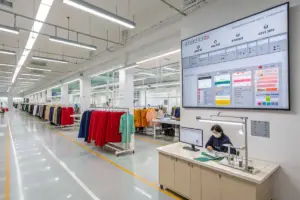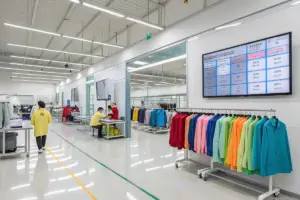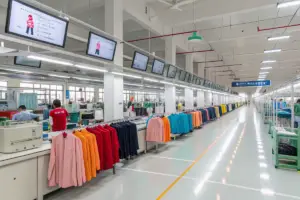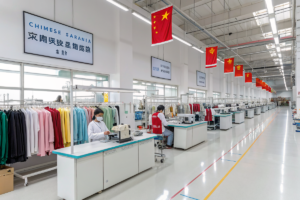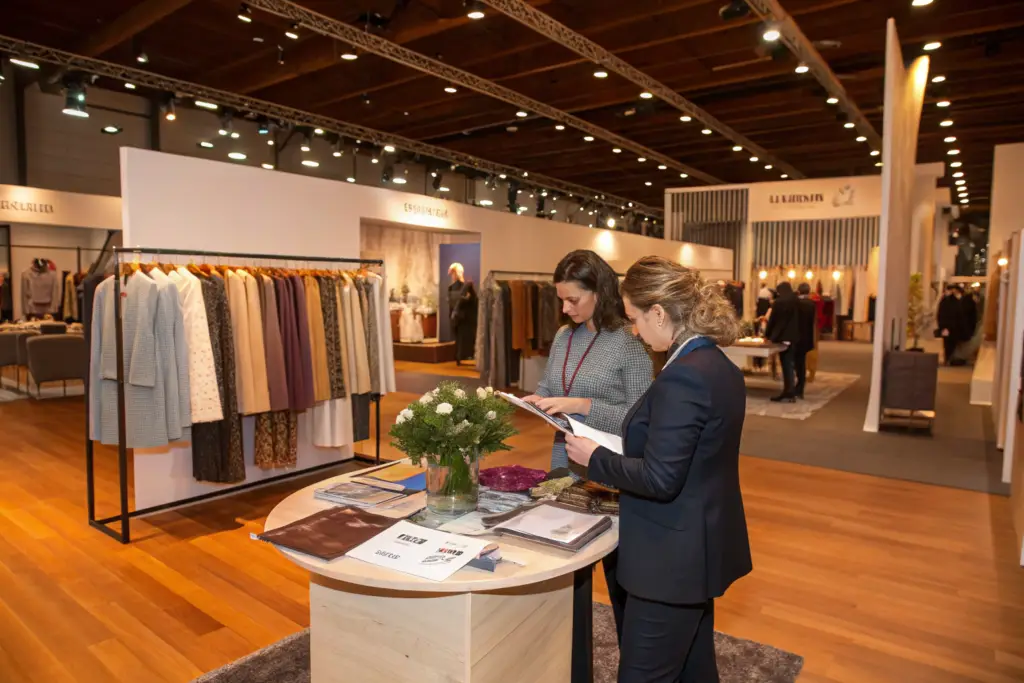
I watched a brand owner stand in a trade show booth in Las Vegas two years ago. She had spent $12,000 on the booth space, travel, and sample production. She had beautiful garments. Her fabrics were sourced from our factory. Her stitching was flawless. Her pricing was competitive. Over three days, she collected exactly four business cards and wrote zero orders. The booth next to hers was packed. Buyers were waiting in line to speak with the brand owner. The difference was not the product. It was the preparation. The successful brand had shipped their booth materials to the show venue three weeks in advance. They had pre-booked 20 buyer appointments before they got on the plane. They had trained two staff members on exactly how to qualify a lead in under 90 seconds. The unsuccessful brand had set up their booth the night before and waited for buyers to wander in. Trade shows do not reward hope. They reward preparation.
Successfully exhibiting premium manufactured clothing at major international trade shows requires a three-phase military-grade preparation strategy that begins 90 days before the show floor opens. You must pre-book qualified buyer appointments using the show’s official matchmaking platform and your existing email list to fill a calendar of 15-minute meetings across every hour of the event. You must design your booth as a physical sales letter, with clear sightlines from the aisle, a single hero product that stops foot traffic, and a private area for order writing. You must ship your samples, booth fixtures, and printed materials to the advance warehouse at least three weeks before the show to avoid the crushing cost and risk of last-minute freight. And you must train every staff member on a structured qualification script that separates $50,000 accounts from $500 accounts within the first three questions. The brands that treat a trade show as a strategic military operation win multi-season contracts. The brands that treat it as a display opportunity collect business cards they never convert.
I have seen the difference between a prepared brand and an unprepared brand up close. Our factory produces for both types. The prepared ones send us reorders within six weeks of the show. The unprepared ones email us six months later asking if we can hold their fabric because they still have inventory. I want to share the exact preparation system that our most successful brand partners use, so you can apply it to your next trade show and come home with a stack of signed purchase orders.
How Do You Pre-Book Qualified Buyer Appointments 90 Days Before a Trade Show Floor Opens?
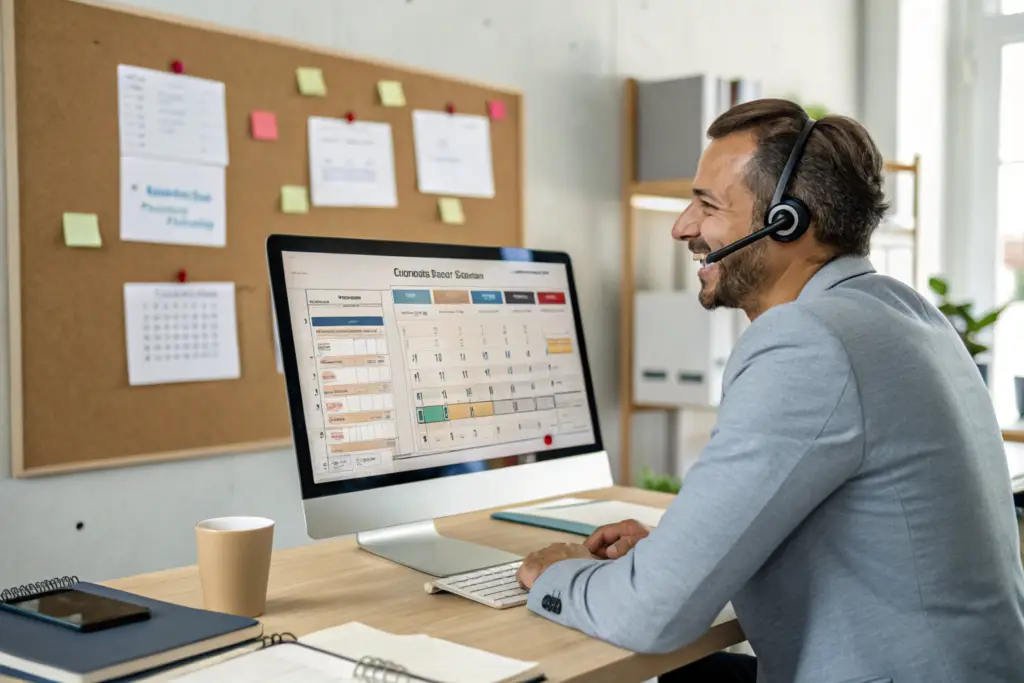
A brand owner I work with booked 28 buyer appointments before she stepped onto the plane for Magic Las Vegas last February. She started her outreach in November. She pulled the previous year’s attendee list from the show organizer’s website. She filtered it by buyer title, store type, and geographic region. She identified 60 target accounts that matched her brand’s price point and aesthetic. She sent a personalized email to each buyer. The email was four sentences long. It referenced a specific product in the buyer’s current assortment. It attached a single high-resolution image of her best-selling garment. It offered a 15-minute meeting during the show with a specific time slot. And it included a Calendly link. Twenty-eight buyers clicked the link and booked. When she arrived at the show, her calendar was full. She did not spend a single hour of the three days waiting for foot traffic. She spent every hour in pre-scheduled meetings with qualified decision-makers. Her order book was 70% full by the end of day one.
You pre-book qualified buyer appointments by starting outreach 90 days before the show. You acquire the official attendee list from the show organizer, which is often available to exhibitors as part of the booth package. You segment the list into three tiers: high-priority accounts that match your exact target profile, medium-priority accounts that are adjacent to your niche, and general attendees. You send personalized email outreach to the high-priority tier first, followed by a second wave to the medium tier 60 days out. Your email must be short, specific, and easy to act on. It must reference the buyer by name, show you have researched their store, state the value you will deliver in a 15-minute meeting, and provide a one-click scheduling link. You must also use the show’s official matchmaking platform if one exists, as many retail buyers use these tools to find new brands. The goal is to have at least 80% of your available appointment slots filled before your plane takes off.
The math is simple. A trade show has approximately 20 hours of open floor time. If you spend those hours waiting for buyers to walk past your booth, you might interact with 100 people, of whom 10 are actual decision-makers. If you spend those hours in pre-scheduled meetings, you will interact with 30 people, of whom 25 are actual decision-makers. The second approach generates more qualified conversations in the same time window. The difference is the preparation.
What Specific Email Outreach Sequence Converts Cold Buyer Leads into Confirmed Show Appointments?
A meticulously crafted email outreach sequence, pulsing with strategic warmth and tailored value, stands as the bridge between a cold buyer lead and a confirmed show appointment. Imagine this: the first email, a gentle opener, arrives in their inbox like a soft knock at the door of their decision-making process. It introduces your expertise not as a hard sell, but as a solution to a subtle pain point they might be feeling—a whisper of how your product or service could ease their daily challenges, perhaps with a vivid example of a similar client who transformed their workflow.
How Do You Use the Show’s Official Matchmaking Platform to Secure Meetings You Could Never Get Cold?
Major trade shows like Magic, Première Vision, and Texworld offer official matchmaking platforms that connect exhibitors with registered buyers. The buyer fills out a profile indicating their product interests, price point range, and sourcing needs. The platform’s algorithm suggests exhibitors that match the buyer’s criteria. A brand owner who optimizes their exhibitor profile with detailed product keywords, specific price ranges, and high-quality images will appear in more buyer search results. The platform also allows exhibitors to send direct meeting requests to buyers. These requests are more effective than cold emails because they come through the official show channel. The buyer is already using the platform to plan their show agenda. A meeting request that arrives in their platform inbox is more likely to be accepted than an email that lands in a cluttered general inbox. We advise our brand partners to spend two hours optimizing their matchmaking platform profile with complete product descriptions, minimum order quantity information, and professional booth photography. The brands that invest this time receive two to three times more inbound meeting requests than brands with incomplete profiles. The platform is a lead generation tool. Use it deliberately.
What Booth Design and Visual Merchandising Strategies Stop Foot Traffic at a Major International Show?
I walked the aisles of a textile trade show in Paris last year with one of our brand partners. Every few booths, I would stop him and ask, "What is that brand selling?" He could answer instantly for some booths. For others, he squinted at the signage, tried to identify the products on the racks, and eventually shrugged. The difference was the hero product. The booths that stopped him had one unmistakable piece displayed at the front corner, visible from 20 meters away. A jacket with a dramatic silhouette. A dress in a vibrant color. A garment that acted as a visual magnet. The booths that confused him had racks of 30 garments packed tightly together. From the aisle, they looked like a clothing rack at a discount store. No single piece stood out. No visual story was told. The buyer’s eye had no place to land, so the buyer walked past.
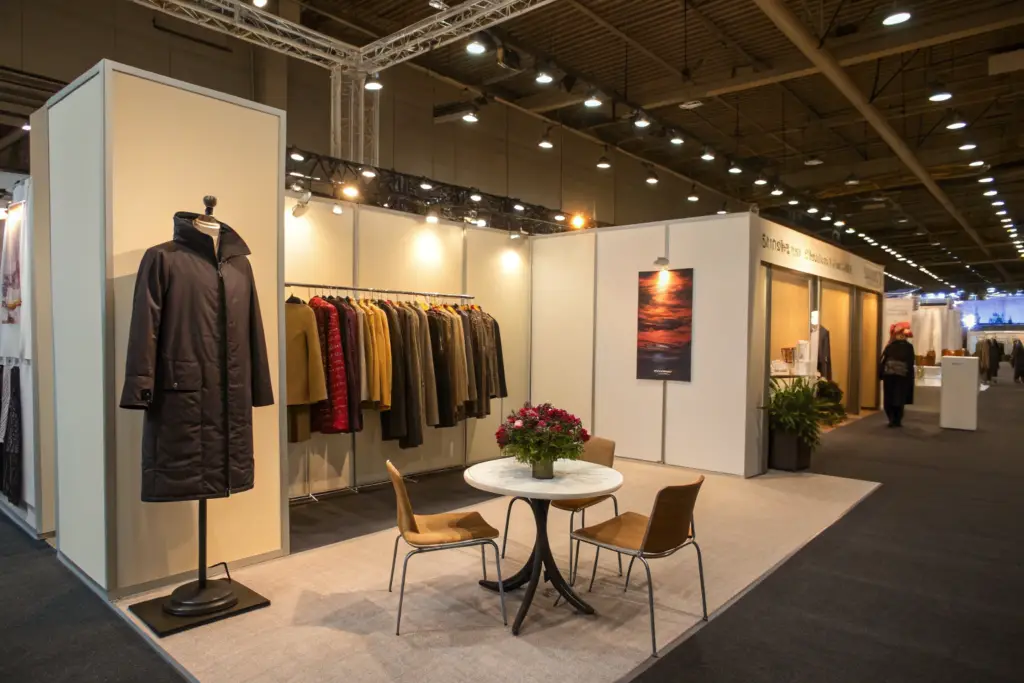
You stop foot traffic at a major international show by designing your booth around a single hero product placed at the forward corner closest to the main aisle. This product must be your most visually striking piece, not necessarily your best-selling piece. Its job is to make a buyer stop walking and step into your booth. Once the buyer is inside, you guide their eye through a color story that moves from light to dark or from neutral to statement across the wall racks. You keep the booth open and uncluttered, with no tall walls or pop-up banners that block the sightline from the aisle. You create a designated order-writing zone at the back of the booth with a table, chairs, and a locked cabinet for your line sheets and order forms. The booth is a sales funnel. The hero product grabs attention. The color story builds interest. The order-writing zone closes the sale.
Booth design is not decoration. It is sales psychology applied to physical space. A buyer walking a trade show floor is overwhelmed with visual stimuli. They have approximately three seconds of attention to give to any single booth as they walk past. Your booth must communicate what you sell and why it is premium within those three seconds. The hero product does the job. Everything else in the booth supports the hero product’s message.
What Is the Optimal Booth Layout to Filter Serious Buyers from Casual Browsers in Seconds?
The optimal layout divides the booth into three zones: the attraction zone, the engagement zone, and the conversion zone. The attraction zone is the front two meters of the booth. It contains the hero product on a mannequin, a small pedestal with your brand name and tagline, and nothing else. This zone is visible from the aisle. A buyer who stops and looks at the hero product has self-identified as interested. The engagement zone is the middle of the booth. It contains your color-coordinated garment racks, your fabric swatch display, and your lookbook on a stand. A buyer who steps into this zone is actively evaluating your collection. A trained staff member approaches the buyer here with a qualification question: "What stores are you buying for this season?" The buyer’s answer tells you whether they are a serious prospect or a curious passerby. The conversion zone is the back of the booth. It is a private, quiet area with a table, chairs, water bottles, and your order forms. A buyer invited to sit in the conversion zone has passed the qualification filter. They are ready to discuss quantities, pricing, and delivery timelines. The trade show booth layout strategy separates buyers by intent level and allocates staff time accordingly.
How Do Lighting and Color Psychology Influence a Buyer’s Perception of Quality Before They Touch the Fabric?
Lighting is the most under-invested element of trade show booths. Most exhibitors rely on the venue’s overhead fluorescent lights. These lights cast a flat, cold, unflattering illumination that makes premium fabrics look cheap. Color looks washed out. Texture disappears. A buyer standing under fluorescent light cannot distinguish a $40 fabric from a $10 fabric. We advise our brand partners to invest in warm LED track lighting with a color temperature of 3000 Kelvin. This lighting mimics natural daylight and reveals the true color and texture of premium fabrics. The lights are positioned to spotlight the hero product and the wall racks. The booth feels like a boutique, not a warehouse. Color psychology also matters. The booth’s backdrop and flooring should be neutral, white, light gray, or natural wood tones, so the garments are the only source of color in the space. A bright red backdrop competes with the garments for attention. A neutral backdrop makes the garments pop. The buyer’s eye is drawn to the product, not to the booth decoration. The lighting design for trade shows is a small investment, typically $500 to $1,500, that delivers a disproportionate return in perceived quality.
What Pre-Show Logistics Prevent the Soul-Crushing Disaster of Missing Samples and Materials?
A brand owner I know arrived at her booth at a major London trade show to find that her shipment of samples had not arrived. She had shipped them to the venue’s general receiving dock instead of the show’s official advance warehouse. The venue had no record of her shipment. She spent the first four hours of the show on the phone with the shipping company, the venue, and the show organizer. Her booth was empty. Buyers walked past and saw nothing. She lost an entire day of potential orders. She eventually found her samples at a different loading dock on the other side of the exhibition center. They arrived at her booth at 4 PM on day one. The emotional stress and financial loss of that morning were entirely preventable.
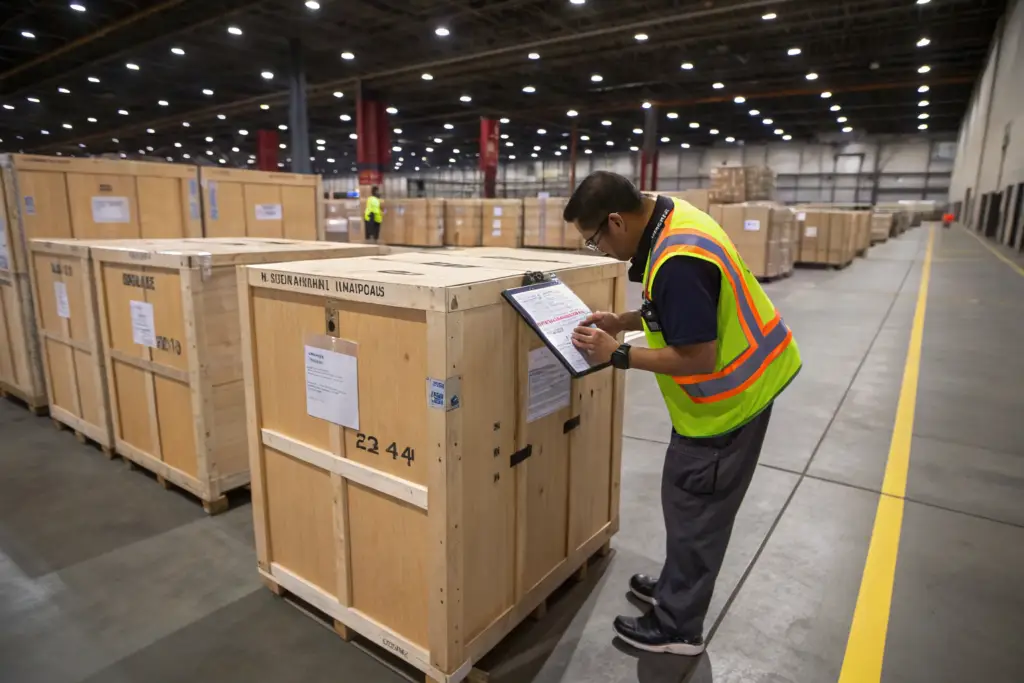
You prevent the disaster of missing samples by shipping everything to the show’s official advance warehouse at least three weeks before the opening day. The advance warehouse is a service offered by nearly every major trade show organizer. You ship your booth materials, samples, signage, and printed materials to this warehouse by the published deadline. The warehouse staff delivers your materials to your booth before you arrive at the venue. When you walk onto the show floor for setup, your crates are already there, sitting in your booth space, waiting to be unpacked. You bypass the venue’s general receiving dock entirely. You also pack a carry-on bag with your absolute essential items: one of each sample, your order forms, your phone charger, and a backup USB drive with your digital lookbook. If the airline loses your luggage, you can still sell. If the advance shipment is delayed, you have a backup. Redundancy is the difference between a stressful show and a smooth show.
I have watched brands try to save $300 by shipping directly to the venue or, worse, carrying everything in checked luggage. The savings are a false economy. The cost of a missed day of buyer meetings is thousands of dollars in lost orders. The advance warehouse fee is a tiny insurance premium that guarantees your materials are in your booth when you need them.
What Is the “Advance Warehouse” Strategy and Why Does It Save You from $1,000 Last-Minute Freight Fees?
The advance warehouse is a consolidation point operated by the show’s general contractor. You ship your materials to this warehouse by the advance deadline, typically three to four weeks before the show. The warehouse staff receive your shipment, log it into their system, store it securely, and transport it to your booth location before the setup day. The cost is a flat fee based on weight and crate size, typically $200 to $500 for a standard booth shipment. Shipping directly to the venue incurs a different cost structure. The venue may charge a receiving fee, a storage fee, and a material handling fee. If your shipment arrives outside the designated receiving window, you pay overtime rates. The total can easily exceed $1,000. Beyond the cost, the advance warehouse eliminates the risk of your shipment getting lost in the venue’s general receiving system, which processes thousands of deliveries for multiple concurrent events. The advance shipping warehouse guide is a service every exhibitor should use. The cost is predictable. The peace of mind is priceless.
How Do You Create a “Booth Survival Kit” That Keeps You Selling Even If Your Main Shipment Is Lost?
The booth survival kit is a carry-on bag or small suitcase that stays with you at all times during travel. It contains one sample of each of your top five styles. These are not your full sample set. They are the pieces you can use to show a buyer the quality of your fabric, the precision of your stitching, and the design of your silhouettes. The kit also contains a printed copy of your line sheet, a printed copy of your order form template, a backup USB drive with your digital lookbook and tech pack examples, a phone charger, a portable battery, breath mints, a small sewing kit for emergency repairs, and a permanent marker for labeling. If your main shipment is lost, delayed, or damaged, you open the survival kit and set up your booth with the backup samples. It will not look as impressive as the full display, but you can still conduct buyer meetings, show fabric quality, and write orders. A brand that has a survival kit is still in business. A brand that does not is an empty booth. The trade show emergency preparedness kit costs $50 to assemble and can save $50,000 in lost orders.
How Do You Train Your Booth Staff to Qualify, Pitch, and Close a Wholesale Buyer in Under 90 Seconds?
A brand owner brought two friends to work her booth at a trade show in New York. They were lovely people. They were enthusiastic about her brand. They had zero training. When a buyer entered the booth, they would say, "Hi! Let me know if you have any questions!" and then step back. The buyer would browse for 30 seconds and leave. No questions were asked. No information was gathered. No relationship was started. The brand owner collected 12 business cards in three days and converted none of them into orders. The following year, she brought one trained staff member who used a structured qualification script. That single trained staff member generated more qualified leads in one day than the two untrained friends generated in three days. The difference was not personality. It was process.
You train your booth staff to qualify, pitch, and close a wholesale buyer by giving them a three-question qualification script that takes under 90 seconds to deliver. The first question is always open-ended and friendly, never "Can I help you?" The goal of the qualification phase is to determine whether the person standing in your booth is a decision-maker with budget authority, or a student, a competitor, or a service provider. If they fail the qualification, you politely disengage and redirect your attention to the next person. If they pass, you move to the pitch phase, where you hand them a specific garment, tell them a specific fact about its construction or sell-through performance, and ask them a specific question about their store’s customer. The close phase is a natural transition to the order-writing table, not a high-pressure sales tactic. The entire interaction feels like a helpful conversation. It is actually a structured sales process.
Most brand owners staff their booth with friends or family members who have no sales training. The result is a booth full of nice people who do not know how to separate a $50,000 account from a fashion student doing research for a class project. A trained staff member can make this distinction in 30 seconds and allocate their time accordingly.
What Is the Exact Three-Question Script That Instantly Identifies a Qualified Wholesale Decision-Maker?
The script is simple and natural. Question one: "What type of store are you buying for this season?" This question identifies the person’s role and the store category. A decision-maker answers immediately with their store name, location, and category. A non-buyer hesitates or gives a vague answer. Question two: "What price point do your customers typically respond to for your product category?" This question qualifies the budget match. If the buyer answers with a price point that aligns with your wholesale pricing, the match is good. If they answer with a price point 50% below your pricing, the match is not there. You politely thank them and offer your lookbook for reference, but you do not spend more time. Question three: "Are you placing orders at this show, or are you in the research phase?" This question identifies the buyer’s timeline. A buyer placing orders at the show is a hot lead. A buyer in the research phase is a warm lead for follow-up. You treat them accordingly. The qualification script for trade shows takes practice to deliver naturally. The staff member should rehearse it 20 times before the show opens. The delivery should feel like a friendly conversation, not a scripted interrogation.
How Do You Conduct a Live “Fabric Story” Demonstration That Justifies Your Premium Wholesale Price?
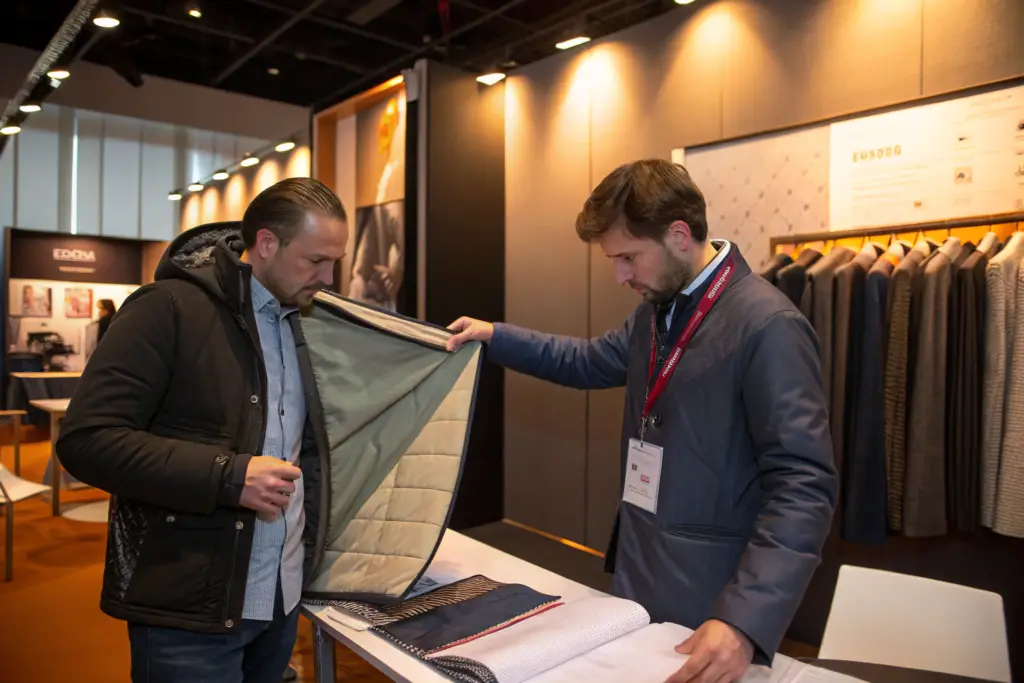
The fabric story is the moment you justify your higher price point without ever saying the words "we are premium." You do it by putting the garment in the buyer’s hands and directing their attention to a specific, demonstrable quality feature. You say, "Feel the weight of this French terry. It is 400 GSM, which is twice the industry standard. It will not lose its shape after washing." You turn the garment inside out. "Look at the seam finishing here. That is a French seam, which encloses the raw edge completely. It takes twice as long to sew, but it will never fray." You show them a hidden detail. "We added a reinforced button shank here because we know this is a high-stress point." The buyer touches the fabric, sees the construction, and understands the value without you making a single comparison to a competitor. The fabric story is rehearsed for each of your top five styles. It is delivered the same way every time, with the same gestures, the same sequence of touches, and the same closing question: "Is this level of construction detail something your customers would appreciate?" The sensory selling technique converts an abstract price objection into a concrete quality experience. The buyer who has touched the fabric and seen the seams is far less likely to negotiate on price than the buyer who has only looked at a line sheet.
Conclusion
A major international trade show is the highest-density sales environment available to a wholesale clothing brand. Nowhere else will you find hundreds of qualified retail buyers walking past your products over three days, actively looking for new brands to stock. The brands that treat the show as a strategic military operation, with pre-booked appointments, a hero-product booth design, advance shipping logistics, and a trained staff running a qualification script, leave with order books that fund their next production run. The brands that treat the show as a display opportunity leave with a collection of business cards they never call.
The preparation system I have described is not expensive. It is labor-intensive. It requires 90 days of focused effort before the show. The cost of that effort is your time. The return on that effort is the difference between a $50,000 order book and a $5,000 order book. The brands that make the investment win. The brands that do not make excuses.
At Shanghai Fumao, we support our brand partners’ trade show preparation in specific, tangible ways. We produce show-quality samples with reinforced construction details specifically designed to be handled by hundreds of buyers without showing wear. We provide fabric swatch cards and construction detail photography that brands can use in their booth displays. We ship samples and booth materials directly to advance warehouses according to show deadlines, so our brand partners never have to manage international sample logistics themselves. And we maintain production capacity that can handle the post-show order surge, because a successful trade show generates orders that must be fulfilled.
If you are planning to exhibit at a major trade show and you need a manufacturing partner who understands the preparation required, reach out to us. At Shanghai Fumao, we will review your show plan and provide a sample production timeline that aligns with your show date and your post-show delivery commitments. Contact our Business Director, Elaine, at elaine@fumaoclothing.com. She can share a trade show preparation checklist and a sample production calendar for brands exhibiting at the next major show season. Prepare like a professional. Sell like a champion. Leave the show with a stack of orders your factory is ready to produce.