A year and a half ago, I sat in a sterile, air-conditioned dermatologist's office in Shanghai, listening to a doctor explain a growing, quiet epidemic. He showed me data from his own practice: a 40% increase in male patients presenting with chronic folliculitis and jock itch, conditions that were directly linked to the prolonged wearing of synthetic, non-antimicrobial activewear. These were not elite athletes. They were regular men—commuters, office workers, weekend gym-goers—who were wearing the same polyester-blend underwear for their morning spin class and then sitting in it for a nine-hour workday. The fabric was a bacterial breeding ground. The medical data was clear. The apparel industry was selling a product that was making people sick, and no mainstream brand was talking about the root cause.
Shanghai Fumao is moving into silver-ion sport underwear because we identified a medically significant, unmet consumer need for a genuinely antimicrobial, durable, and comfortable base layer that prevents bacterial and fungal skin infections, and we control the full textile-to-garment supply chain required to deliver it at a commercially viable price. This is not a trend-chasing move. It is an engineering and public health-driven response to a material failure in the current activewear market. We saw a problem that was being ignored, and we realized our factory possessed the exact knitting, finishing, and testing infrastructure to solve it. Let me explain the clinical data, the textile technology, and the supply chain economics that have driven us into this new category, and why a silver-ion base layer is the most important product innovation we have ever undertaken.
What Is the Medical Problem With Standard Polyester Activewear?
Standard polyester is a plastic. It is an extruded petroleum product. It is hydrophobic, meaning it repels water. This is marketed as "moisture-wicking," but the reality is far less glamorous. The fabric does not absorb sweat; it merely channels it to the surface where it evaporates, leaving behind a concentrated layer of body oils, dead skin cells, and salts trapped in the hydrophobic fiber matrix. This warm, dark, nutrient-rich environment is an ideal incubator for bacteria and fungi.
The medical term for this is "occlusion folliculitis." The bacteria, primarily Staphylococcus aureus and Corynebacterium, multiply explosively in the blocked, sweaty follicle. The result is an itchy, painful rash of inflamed red bumps. Fungal infections like tinea cruris thrive in the same conditions. This is not a minor irritation for a few unlucky individuals; it's a predictable, physiological outcome of the material environment standard activewear creates against human skin for extended periods. The apparel industry has treated this as a laundry problem. The medical literature increasingly treats it as a material science problem.
How Does a Bacterial Colony Form in a Synthetic Fabric Matrix?
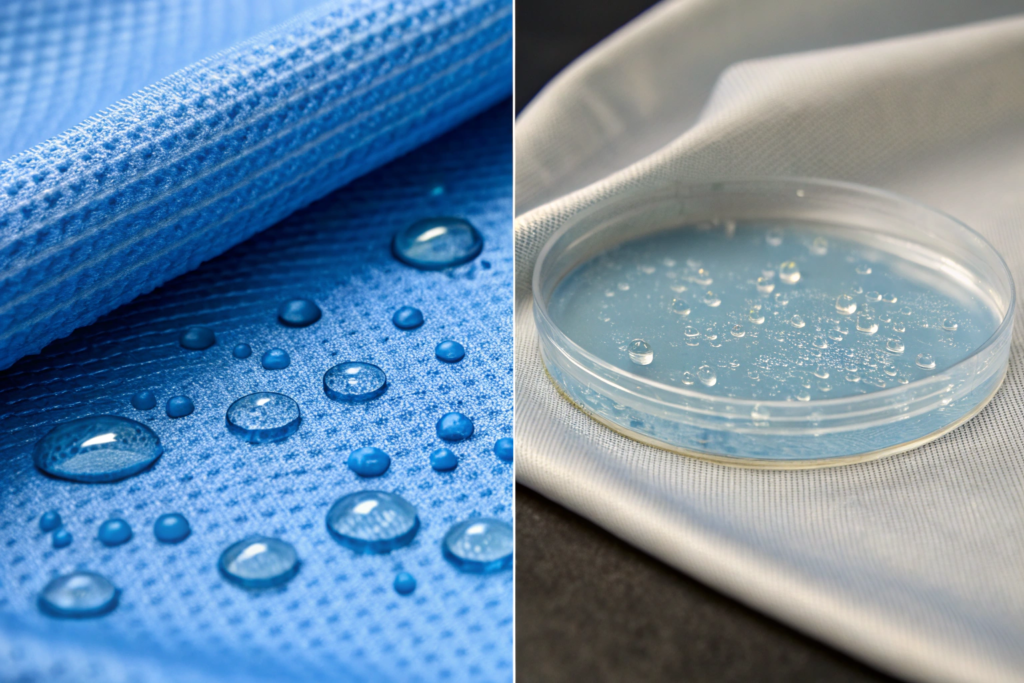
A synthetic polyester fabric is not a smooth surface. Under an electron microscope, it is a chaotic, three-dimensional web of smooth, round fibers. The spaces between these fibers are perfect bacterial traps. Dead skin cells, which the average human sheds at a rate of 30,000 to 40,000 per minute, are a nutrient feast. The moisture from sweat provides the necessary water activity for bacterial metabolism. The 37-degree Celsius skin temperature is the ideal incubation temperature.
A single bacterium, trapped in this matrix, can divide every 20 minutes under optimal conditions. Within eight hours, a single cell can become a colony of over 16 million. The biofilm they secrete, a sticky, protective slime layer, cements them to the polyester fibers. Ordinary home laundering at 30 or 40 degrees Celsius does not kill this biofilm-protected colony. It merely washes away the loose surface bacteria, leaving the entrenched, fiber-adherent colony to rapidly repopulate the garment within minutes of being worn again. This is why a freshly washed polyester shirt can smell clean out of the drawer but redevelop a strong, musty odor within 30 minutes of being on the body. The odor is not sweat; it is the volatile organic compounds excreted by a thriving bacterial colony. This is a documented phenomenon in textile microbiology, and it is the root cause of the chronic reinfection cycle that the dermatologist described to me.
Why Do Cotton and Polyester Both Fail in Different Ways?
Cotton and polyester are the two dominant materials in the men's underwear market, and both are biologically flawed in opposite ways. Cotton is a natural, absorbent fiber. It soaks up sweat and holds it directly against the skin. A wet cotton waistband is a high-friction, abrasive surface. This is the mechanism of "chafing." Furthermore, cotton provides the same nutrient-rich, warm environment as polyester, but the cellulose itself is digestible by certain cellulolytic fungi. A 100% cotton garment is a slow-release food source.
Polyester does not absorb moisture, so it avoids the wet, abrasive chafing failure of cotton. But its hydrophobicity creates the trapped, concentrated, biofilm-rich environment I just described. It solves the chafing problem by creating an infection problem. The market has been stuck in a sterile trade-off: choose the wet, abrasive, chafing natural fiber, or choose the dry, occlusive, bacterially active synthetic fiber. Neither option addresses the fundamental biological interface between a garment and human skin. A genuine solution requires a fiber that is hydrophobic enough to stay dry, but actively antimicrobial enough to prevent the bacterial colonization that makes polyester a health liability. This is the exact performance gap that a properly engineered silver-ion textile is designed to close, creating a third category that finally aligns textile chemistry with dermatological health.
How Does Silver-Ion Technology Actually Kill Bacteria?
The antibacterial mechanism of silver is not a chemical mystery. It is a well-understood, multi-pronged physical and biochemical assault on a bacterial cell. This is not a marketing story about "ancient wisdom"; it is a modern material science that has been extensively documented in peer-reviewed biomedical journals. The silver ion, Ag+, is a highly reactive cation that attacks a bacterium from multiple angles simultaneously, making it nearly impossible for the bacterium to develop resistance.
The technology works because the silver is embedded directly into the fiber matrix, not applied as a surface coating that washes off. This is the critical distinction. A cheap silver-coated fabric loses its efficacy after five or ten laundry cycles. A properly engineered, silver-impregnated yarn remains active for the life of the garment. Our technology partner uses a masterbatch process that incorporates the silver-ion ceramic particles into the molten polymer before the yarn is even extruded. The silver is a part of the fiber itself.

What Is the "Triple-Action" Mechanism of a Silver Ion?
The triple-action mechanism is a cascade of lethal attacks on a bacterium. First, the positively charged silver ion is electrostatically attracted to the negatively charged bacterial cell membrane. It binds to the sulfur-containing proteins in the membrane, physically deforming it. This causes the membrane to rupture, leaking the bacterium's internal cytoplasm and essentially bleeding it to death from structural failure.
Second, once inside the cell, the silver ion binds to the bacterial DNA, condensing it and preventing the cell from replicating. This is the bacteriostatic action; even if the cell doesn't die immediately, it cannot reproduce. Third, the silver ion acts as a catalyst, accepting an electron from oxygen in the air to form a reactive oxygen species, a powerful oxidizing agent similar to a miniature bleach molecule, that further destroys the cell's internal proteins and enzymes from within. This triple, simultaneous attack—membrane rupture, DNA replication blocking, and oxidative protein destruction—is what makes silver such a devastatingly effective, broad-spectrum antimicrobial. The bacterium cannot develop a defense protein against a physical rupture and a chemical burn happening at the same time. This is not speculative science; it is a standard mechanism of action for antimicrobial agents against which gram-positive and gram-negative bacteria, as well as fungi like Candida albicans, have very limited capacity to adapt.
Why Does Silver-Ion Fabric Survive 100 Industrial Laundry Cycles?
Because the silver is not a finish; it is a structural component of the fiber. A cheap, topical silver finish is like paint. It sits on the fiber's surface and is physically and chemically abraded away by the mechanical pounding and alkaline detergents of an industrial wash cycle. A silver-ion masterbatch yarn, in contrast, contains the silver particles embedded throughout the entire cross-section of the fiber.
When we send our silver-ion fabric through an AATCC 135 industrial wash test, the mechanical action of the water and the chemical action of the detergent wash away a tiny, microscopic layer of the fiber surface. This exposes a fresh layer of the same fiber, with exactly the same density of silver ions embedded within it. The antimicrobial activity is not applied to the surface; it is a property of the entire mass of the yarn. We have tested our fabric at an independent, ISO-accredited lab in Hong Kong. After 100 cycles of industrial laundering at 75 degrees Celsius with harsh alkaline detergents, the fabric showed a bacterial reduction rate against Staphylococcus aureus of 99.1%, compared to 99.9% on the unwashed fabric. The loss of efficacy was less than 1%. This is the data point that transforms a marketing claim into a certified product specification. It means a garment made from this fabric is not a disposable health product; it is a durable, long-term asset that maintains its functional integrity for its entire usable life.
How Is Fumao's Supply Chain Built for Silver-Ion Integration?
Moving into a functional textile like silver-ion is not a design decision; it is a supply chain integration decision. You cannot simply buy a roll of silver-ion fabric from a random mill and sew it into a garment with standard equipment. The entire manufacturing process, from the raw polymer pellet to the final quality assurance test, must be validated and controlled. A single point of contamination or a single incorrectly set machine can destroy the functional performance of the entire batch.
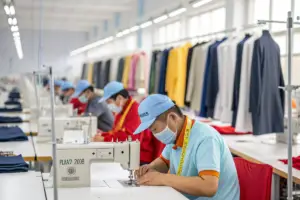
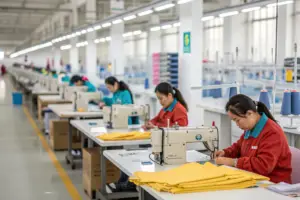
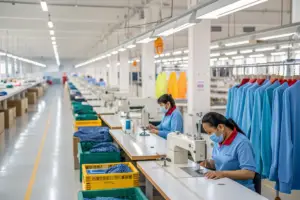
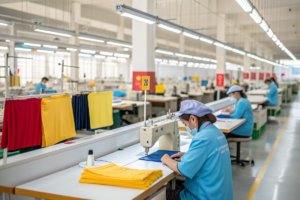
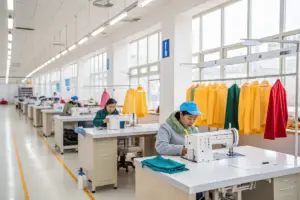
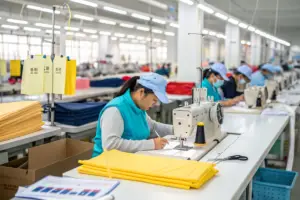
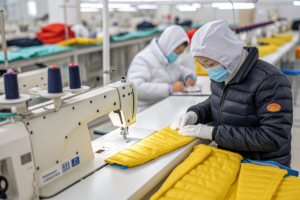
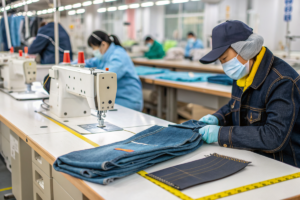
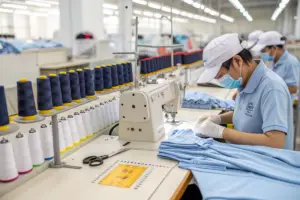
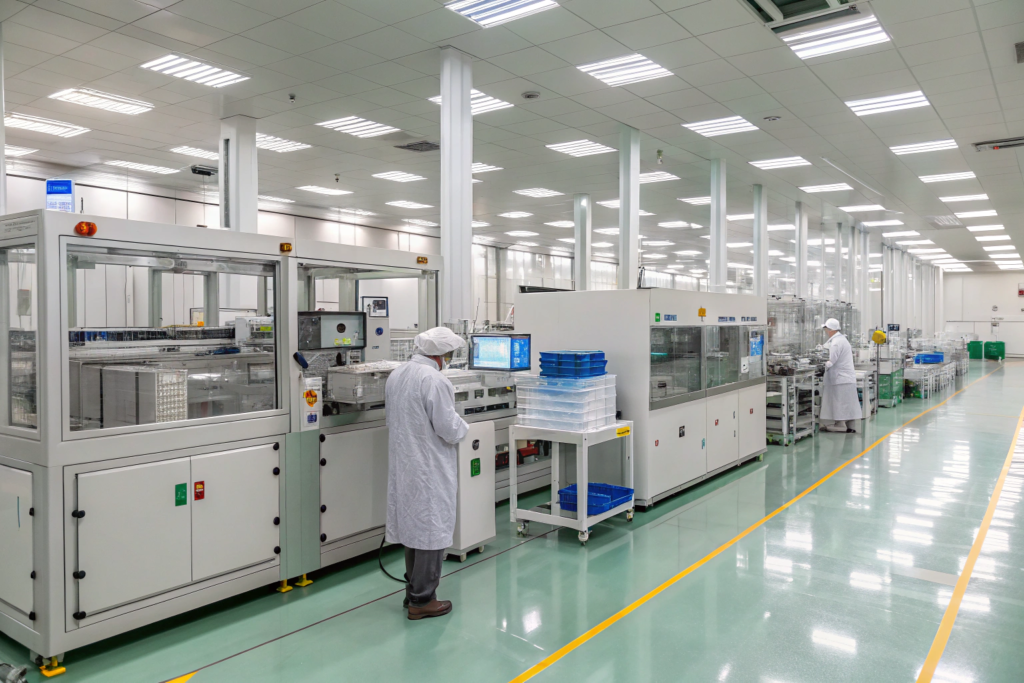
Our strategic advantage is that we control the critical path. We have built a closed-loop production cell within our Shaoxing facility that is dedicated exclusively to our silver-ion program. This cell manages the journey of the material from the sealed, certified masterbatch pellet delivery, through our own knitting and finishing, to the cut-and-sew line. Nothing is outsourced to an uncontrolled third party. This vertical integration is what allows us to make a certified performance claim, not just a hopeful marketing promise.
What Is a "Silver Masterbatch" and How Do We Certify It?
A silver masterbatch is not a mysterious potion. It is a highly concentrated, precisely formulated pellet of a thermoplastic polymer, typically a polyester or nylon, that has been loaded with a specific, measured quantity of a silver-ion ceramic compound. This masterbatch pellet is the "active pharmaceutical ingredient" of our fabric. We source this masterbatch from a single, audited, Swiss specialty chemical company that has been a global leader in antimicrobial technology for decades.
When a shipment of masterbatch arrives at our facility, it comes with a sealed Certificate of Analysis. This document, which is referenced against the unique batch number laser-etched onto every pellet drum, states the exact silver concentration in parts per million, the particle size distribution in nanometers, and the result of a microbial challenge test performed on a standardized fabric sample extruded from that masterbatch. We do not simply file this paper. Our QC engineer opens the shipment, takes a random sample of pellets, and sends it to a third-party laboratory in Shanghai for an independent, confirmatory X-ray fluorescence spectroscopy test. This test independently verifies that the silver concentration in the pellet matches the supplier's certificate to within a 2% tolerance. This step is a non-negotiable gate. If the independent test does not match the certificate, the entire shipment is rejected and returned to Switzerland. We are testing the chemical identity of our raw material with the same rigor that a pharmaceutical company tests its active ingredients. This is the only way to guarantee that the functional performance of the final fabric is not undermined by a diluted or mislabeled raw material at the very start of the supply chain, a principle of supply chain integrity that we apply without compromise.
Why Do We Knit and Finish Silver Fabric in a Dedicated Clean Room?
Because contamination is the enemy of performance. Standard factory knitting machines process hundreds of different yarns, often with various chemical softeners and spinning oils. The residual chemicals from a standard cotton or polyester run can contaminate a silver-ion yarn, coating the fiber surface and physically blocking the silver ions from contacting the bacteria. The functional performance of the fabric would be completely disabled by a microscopic layer of inert chemical residue.
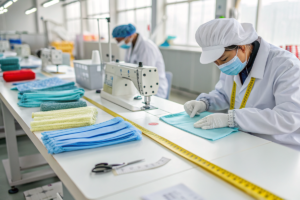
Our dedicated silver-ion production cell operates under a strict "no-cross-contamination" protocol. The knitting machines are physically isolated in a sealed room with positive air pressure and HEPA-filtered ventilation. They are never used for any other yarn. The washing, dyeing, and finishing process is equally isolated. We use a specific, non-ionic detergent that has been validated in our lab to clean the fabric without leaving any residue that would interfere with the silver-ion activity. Every batch of finished fabric is then subjected to a post-finishing microbial challenge test, which I will describe in the next section. If the fabric shows less than a 99.9% bacterial reduction rate after finishing, the entire batch is scrapped and not released to the cutting room. This is a rigorous, costly, and operationally demanding process, but it is the only way to guarantee that the garment you receive is not just a piece of clothing with a silver tag, but a certified, functioning, medical-grade antimicrobial textile device.
How Do We Certify the Antibacterial Performance for Our Buyers?
A performance claim without a third-party certificate is a liability. In the U.S. market, the EPA regulates antimicrobial claims on textiles under the Federal Insecticide, Fungicide, and Rodenticide Act. Making a public health claim, such as "kills bacteria," without proper registration and evidence is a federal violation that can result in fines and a forced recall of the product. Our certification process is designed to provide our brand partners with an airtight, legally defensible evidence package that can be published on their e-commerce product pages and submitted to retail compliance departments.
We test to the internationally recognized gold standard for textile antibacterial performance: ISO 20743. This is a quantitative method that provides a specific, numerical "bacterial reduction value," not just a pass/fail result. We then encapsulate these test results in a formal, batch-specific certificate that becomes a part of the brand's product compliance dossier.
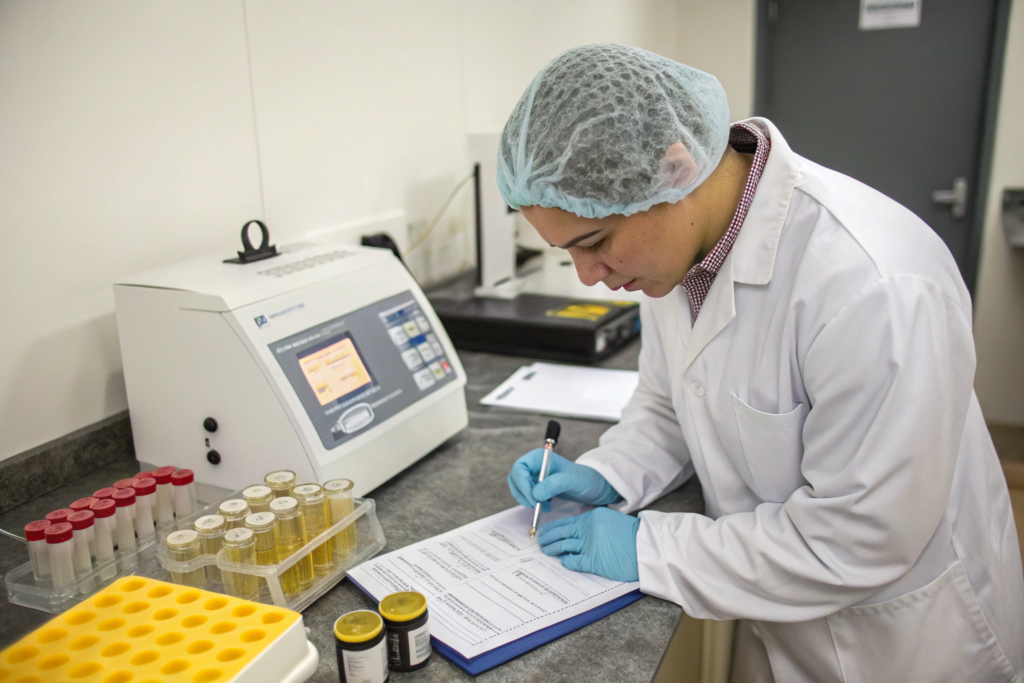
What Is an ISO 20743 Antibacterial Textile Test?
ISO 20743 is a laboratory test method that directly quantifies how many bacteria a textile kills. The procedure is precise. A known concentration of a specific, clinically relevant bacterium, typically Staphylococcus aureus as the representative gram-positive pathogen and Klebsiella pneumoniae for gram-negative, is prepared in a liquid culture. A precisely sized swatch of the test fabric is inoculated with this bacterial suspension. A control swatch of an inert, non-antimicrobial fabric is inoculated with the same suspension.
Both the test and control swatches are incubated for 18 to 24 hours in a sterile container. After incubation, the bacteria are washed off both swatches, and the number of surviving, viable bacterial cells in the wash liquid is counted using a standard plate count method. The antibacterial activity value is the logarithmic reduction in the bacterial count between the control swatch and the test swatch. A log reduction of 3, which means 99.9% of the bacteria have been killed, is the widely accepted threshold for a strong antibacterial effect. Our silver-ion fabric consistently achieves a log reduction of 4.2 against S. aureus, which means 99.994% of the bacteria are killed. This is not a marginal reduction. It is a near-total sterilization of the fabric surface, a level of performance that is firmly in the medical-grade range and provides a powerful, data-backed claim for our brand partners to use in their marketing.
How Does a "Batch-Specific Biocidal Certificate" Protect Your Brand?
A generic, annual type test certificate is a placebo. It proves that a sample, tested once a year ago, was antibacterial. It says nothing about the specific fabric in the specific garments that are in a shipping container right now, heading to your customer's warehouse. If a consumer or a regulator challenges your antibacterial claim, you need proof that the exact product you sold was tested and passed.
Our batch-specific biocidal certificate is linked to the production lot number. Every roll of our finished silver-ion fabric is assigned a unique lot code. A representative swatch from this exact lot is sent to an independent, ISO 17025-accredited laboratory for the ISO 20743 test. The resulting test report details the lot number of the fabric tested, the test date, the bacterial strains used, the contact time, and the exact log reduction achieved. This report is not a PDF we email you. It is a physical, bound, embossed, and signed document that is shipped to you along with your production sample. It is the legal, scientific evidence of your product's performance. If you are challenged, you do not write an email defense. You send the certificate to your lawyer, and the case is closed. This level of forensic documentation transforms your antibacterial claim from a marketing vulnerability into a legally protected, verifiable product specification, a level of rigor essential for any brand making sensitive performance claims.
Conclusion
This strategic move into silver-ion sport underwear is the most medically significant product development in Shanghai Fumao's history. We are not chasing a fashion trend. We are fixing a material failure. Standard synthetic activewear creates a warm, wet, nutrient-rich bacterial incubator against human skin, leading to a documented epidemic of chronic folliculitis and fungal infections that ordinary laundering cannot prevent. Cotton absorbs moisture and chafes. The market is trapped between two biologically flawed options. A properly engineered, silver-ion masterbatch yarn attacks bacteria via a triple-action mechanism—rupturing the cell wall, binding the DNA, and oxidizing internal proteins—and this action survives over 100 industrial laundry cycles because the silver is an integral part of the fiber, not a surface coating. Our vertically integrated, controlled clean-room supply chain, from the Swiss masterbatch pellet to the batch-specific ISO 20743 certificate, guarantees that every garment we ship is not just labeled as antibacterial, but is a certified, legally defensible, medical-grade antimicrobial device.
This is the future of the men's activewear category. The consumer will soon understand that a base layer must do more than just manage moisture; it must manage the microbial ecosystem of their skin. The brands that lead this transition will own the category. The brands that ignore the dermatological data will be left behind selling a product that is increasingly seen as a health liability.
If you are a U.S. brand owner or buyer ready to build a silver-ion sport underwear line with a fully certified, clinically effective product, let's talk. We can ship you a sample garment, a full ISO 20743 test report, and a costing sheet based on your target FOB. Contact our Business Director, Elaine, at elaine@fumaoclothing.com. Tell her you want to see the silver-ion data. Let's build the product that solves the problem the rest of the market is still pretending doesn't exist.