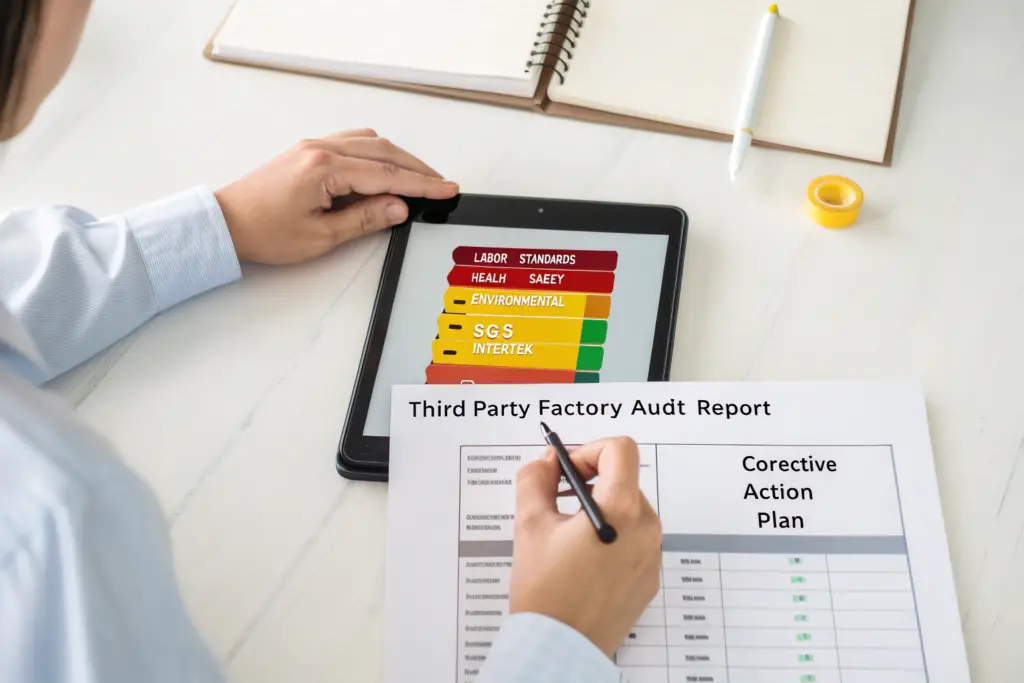
You have a promising factory. You have had good video calls, and the samples look promising. But before you place a significant order, you need to be absolutely certain that the reality of their operation matches their polished presentation. You know that a single, undiscovered ethical or quality failure could blow up your brand. You decide to hire a professional, third-party inspection service, but you are not sure how to properly set up and conduct an audit. A veteran global compliance director once told me, "A third-party audit is a powerful tool, but it's not a magic wand. You don't just hire a company and blindly trust their report. You must be the architect of the audit. You must define the scope, select the right standard, and ensure the findings are actionable. The report is only as good as the instructions you give the auditor."
Properly auditing an overseas factory using a third-party service is a proactive, three-step process of structured investigation. The key steps are: 1) Selecting the Correct Audit Framework for your specific needs (a SMETA 4-Pillar audit is the gold standard for social and ethical compliance, while a technical audit focuses on their production capability), 2) Commissioning the Audit with Surgical Precision (specifying a "semi-announced" window, defining the scope to include your specific product category, and demanding direct access to the unredacted report), and 3) Managing the Post-Audit "Corrective Action Plan" (CAP) as a critical partnership tool, not just a pass/fail grade. The audit is not the end of the process; it is the beginning of a managed, transparent relationship.
At Shanghai Fumao, we do not fear the rigorous third-party audit; we welcome it. Our entire B2B model is built on the foundation of transparency and verified compliance. Let me explain how to use these powerful services effectively, ensuring your audit is not a wasted expense but a definitive, actionable, and brand-protecting investigation.
How to Select the Correct Audit Standard and a Reliable Partner for Your Brand's Needs?
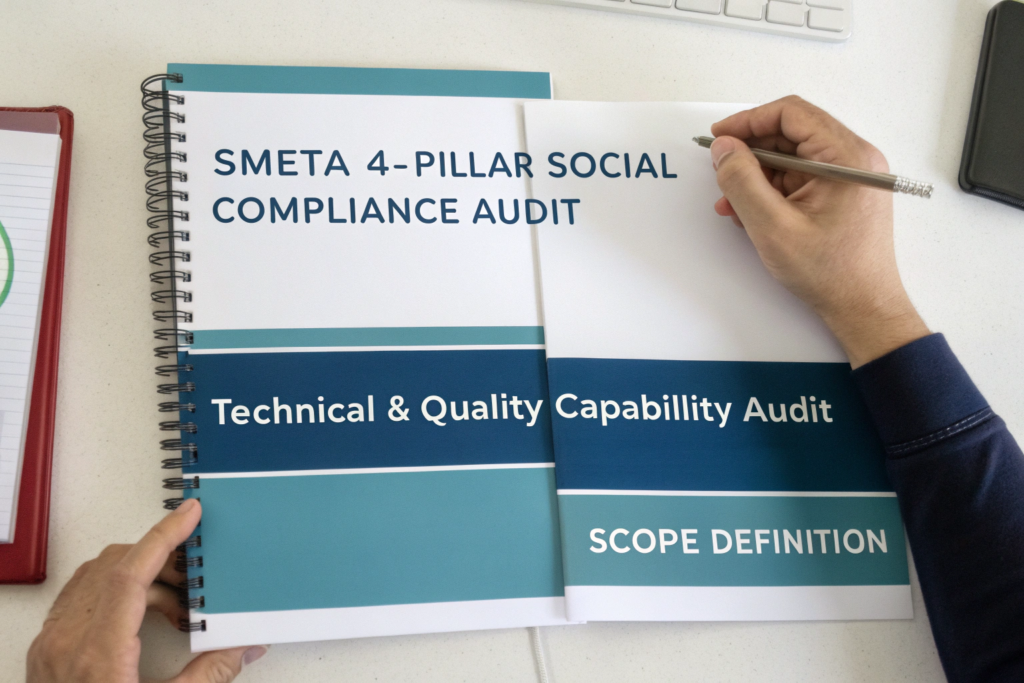
Not all audits are the same. A generic "factory visit" is worthless. A professional audit uses a specific, internationally recognized standard that provides a structured framework for the investigation. The most critical decision is which type of audit to commission, based on what you need to verify. For most brands, a social compliance audit is the non-negotiable first step to ensure ethical production. For a brand with complex technical requirements, a separate technical audit may also be necessary.
To select the correct audit, you must first define your primary goal. If your priority is to verify ethical labor practices, safe working conditions, and environmental responsibility, a SMETA 4-Pillar audit is the global gold standard. For a broad check on quality systems, a ISO 9001-based technical audit may be appropriate. The audit firm itself must be credible. Look for globally recognized firms like SGS, Intertek, or Bureau Veritas, or firms that are APSCA-audited. An audit is only as credible as the firm and the standard behind it.
A brand selling to major European retailers was asked for a "social compliance audit." A generic "factory inspection" would have been rejected. We advised them to commission a SMETA 4-Pillar audit from SGS. The resulting, detailed report was immediately accepted by their retailer's compliance portal because the standard and the firm were recognized and credible. This is the power of using the right, industry-recognized tool for the job. This is the standard of credible compliance verification .
What Is the Critical Difference Between a 2-Pillar and a 4-Pillar SMETA Audit?
A 2-Pillar SMETA only assesses Labor Standards and Health & Safety. It is the minimum standard. A 4-Pillar SMETA adds a rigorous assessment of Environmental Performance (waste, energy, water) and Business Ethics (anti-bribery, fair competition). The 4-Pillar audit provides a far more comprehensive picture of a factory's overall responsibility and is the standard expected by most global retailers. We only undertake the more comprehensive 4-Pillar audit.
Why Should You Only Use an APSCA-Audited or Globally Recognized Inspection Firm?
The audit firm itself must be credible. The APSCA (Association of Professional Social Compliance Auditors) is the industry body that sets standards for auditor competence and firm integrity. Using an APSCA member firm ensures the individual auditor is trained, certified, and operating under a framework of professional ethics. Globally recognized names like SGS, Intertek, and Bureau Veritas have deep expertise and robust internal quality control processes that a small, unknown local firm may lack.
How to Commission the Audit with Surgical Precision to Get Actionable Results?
A huge mistake is to simply order a "SMETA audit" from a firm without providing any further instructions. This can result in a generic, surface-level report that misses critical, brand-specific risks. To get truly actionable results, you must treat the audit like a targeted investigation and give the auditor specific, intelligence-driven instructions on where to look and what to verify.
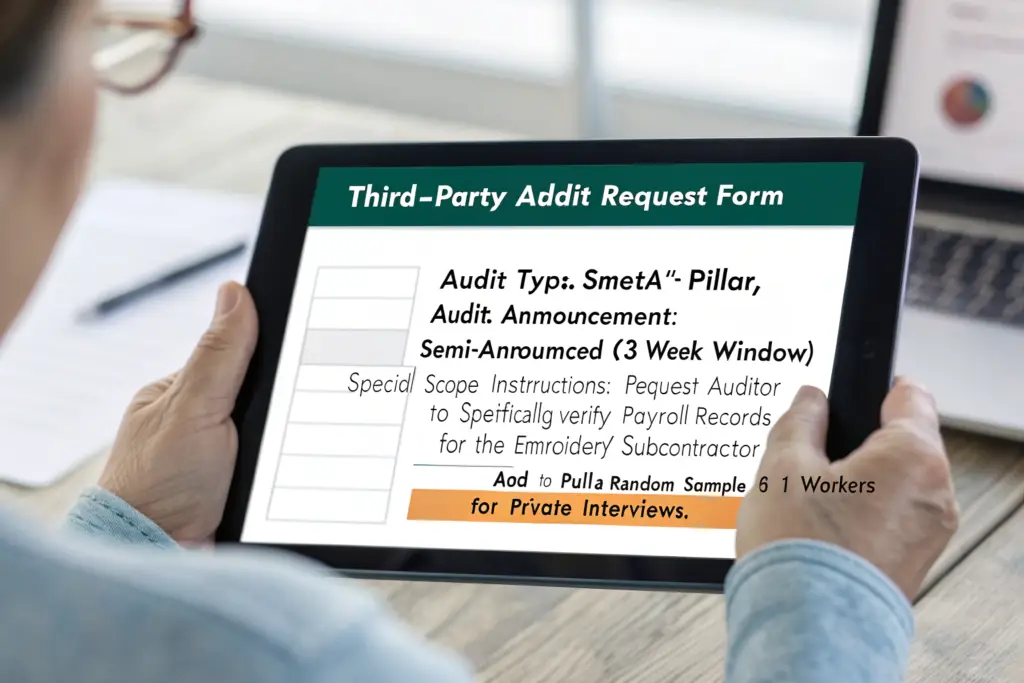
To commission an audit with precision, you must demand a "semi-announced" format. This gives the factory a 2-4 week window in which the audit will occur, preventing a fully staged "announced" audit, but is more practical than a fully unannounced raid. You must also define a brand-specific "Special Scope." If you suspect a supply chain risk (e.g., subcontracting), instruct the auditor to investigate that specific area. For example: "Please verify the working hours and payroll for the embroidery subcontractor on the 3rd floor, and conduct a private worker interview with at least 5 employees under the age of 25."
A brand owner I know was concerned that a factory was outsourcing a portion of their production to an un-audited subcontractor. In their audit request to SGS, they specifically instructed: "Please trace the production flow of the client's order. Physically verify that all stages, including the special wash, are performed on-site. If a subcontractor is used, request to audit that facility as well." This specific, targeted instruction uncovered the hidden subcontractor and saved the brand from a major ethical risk. This is the power of surgically precise audit instructions .
What Is the Difference Between an "Announced," "Semi-Announced," and "Unannounced" Audit?
- Announced: The factory knows the exact date. They can stage a perfect, but potentially false, picture. This is the weakest form.
- Semi-Announced: The factory is given a 2-4 week window in which the audit will occur. This is the industry best practice, balancing practicality with the element of surprise.
- Unannounced: The auditor shows up with zero warning. This provides the most realistic snapshot but can be logistically difficult.
For most brands, a semi-announced audit with a short window is the optimal choice for a credible, real-world assessment.
How Do You Demand Direct Access to the Full, Unredacted Audit Report?
The factory may try to only share a summary or a "cleaned-up" version. Your contract with the audit firm must specify that the full, unredacted report is sent directly to you. The raw data, including the number of non-compliances, the specific worker interview notes, and the photographic evidence, is where the true value of the audit lies. You must own the full report.
How to Turn a Post-Audit "Corrective Action Plan" into a Powerful Partnership Tool?
A factory that gets a "perfect" score on a social compliance audit is a statistical near-impossibility and a potential red flag. Any real, operational factory will have minor, manageable findings. The true test of a trustworthy partner is not a flawless report, but their attitude and response to the findings. A great partner will have a proactive, transparent, and accountable "Corrective Action Plan" (CAP) already in place. The post-audit phase is where a vendor becomes a partner.
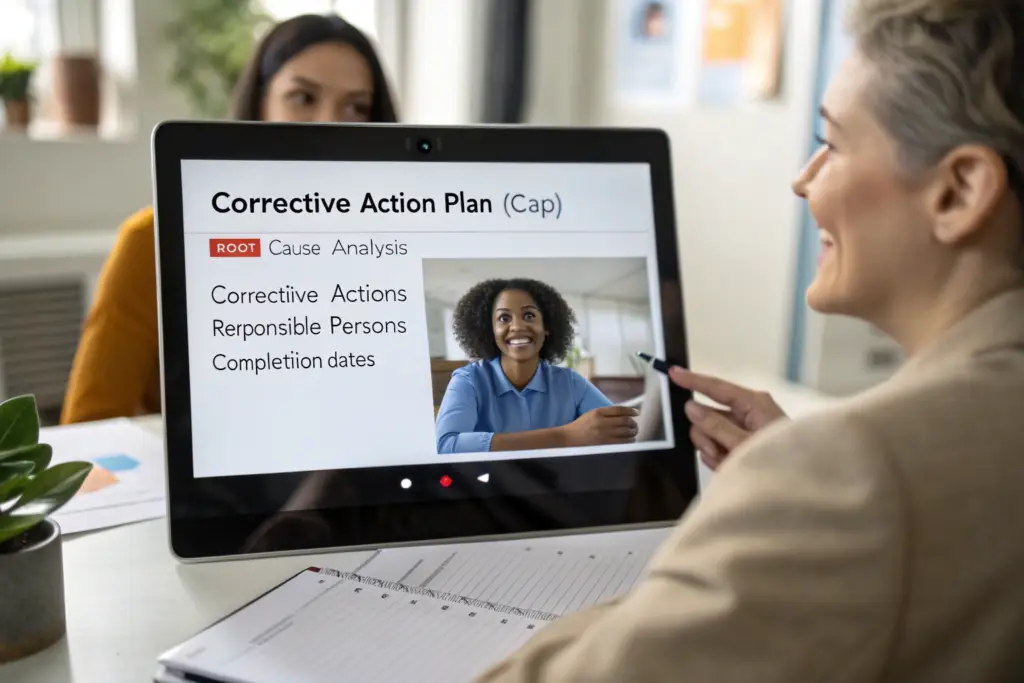
A "Corrective Action Plan" (CAP) is the true test of a factory's character. It should be a document that details each audit finding, identifies the root cause, defines a specific, measurable corrective action, assigns a responsible person, and sets a hard deadline for completion. A trustworthy factory will not hide their CAP; they will present it to you proactively, demonstrating a culture of continuous improvement. You should review the CAP with them, ask for photographic evidence of completed actions on a follow-up call, and use this process to build a deeper, more transparent relationship.
After our last SMETA audit, which had a few minor, expected findings about improving the clarity of our safety signage, we did not just file the report. We proactively shared the full audit report and our detailed CAP with every existing partner and used it as a demonstration of our commitment to transparency and getting better. A client told us, "Your willingness to share your CAP and walk us through it convinced me that you are a true partner, not just a vendor." This is the trust-building power of post-audit accountability .
What Is the Difference Between a "Critical," "Major," and "Minor" Non-Compliance Finding?
This is the language of a SMETA report.
- Critical: An immediate, life-threatening danger (e.g., a locked fire exit) or evidence of forced/child labor. This is an immediate and total disqualifier.
- Major: A significant, systemic failure (e.g., inconsistent overtime records, inadequate PPE).
- Minor: An isolated, less severe lapse (e.g., a missing inspection tag on a single fire extinguisher).
A factory with no critical findings and a clear, rapid plan to fix a few minor issues is a strong, healthy partner. This is the standard we hold for our ethical operations .
How Can You Verify, on a Video Call, That a CAP Item Has Been Genuinely Closed?
Do not accept a simple "done" email. Schedule a brief video call and ask them to take the camera to the exact location of the finding. For example, "You said the broken emergency light was fixed. Can you walk me to station B-12 right now and show me the new, working light?" This unscripted, visual verification is the only way to be certain the fix is real, not just a paper exercise. This is the level of transparency we provide to our partner communications .
How Does Fumao's Proactive, Audited Model Make This Process Seamless for You?
We do not wait for you to commission an audit on us. We have already invested in the most rigorous, independent verification of our own operations and have made that data available to you as a core part of our B2B service. Our platform-based transparency removes the administrative burden and the guesswork from your compliance process, providing you with an instant, credible, and current view of our ethical and operational health.
Fumao's proactive, audited model makes your supplier verification seamless and instantaneous. We provide all of our B2B partners with direct access to our current, unredacted SMETA 4-Pillar audit report on the Sedex platform. You do not need to commission, pay for, or wait for a new audit; the data is live and immediately available. We also provide our GOTS and OEKO-TEX certifications for independent database verification. Our compliance is a transparent, on-demand service.
A new brand partner told us, "You saved me $3,000 and three weeks of waiting. I didn't have to commission an audit on you; you just gave me a live link to your platform, and I could see your full SMETA report instantly. That level of proactive transparency is unheard of, and it immediately made me trust you." That is our goal. To provide a level of pre-verified, transparent compliance that makes the audit process not a hurdle, but a simple, confidence-building click. This is the power of a truly transparent partnership .

How Does Your Direct Access to Our Live Sedex Profile Eliminate the Need for a Costly, Independent Audit?
We provide you with our Sedex Reference Number (ZC:...) . You log into your own Sedex account, link to our profile, and you can view our current, live, and unredacted SMETA 4-Pillar audit report instantly. The data you are seeing is the same data a major retailer would see. This saves you the significant time and cost of contracting your own audit. This is the ultimate in pre-verified, transparent compliance .
How Do We Use Our Own Audit Data to Drive Continuous, Transparent Improvement?
We do not treat an audit as a final exam to be passed and forgotten. We use the findings as a management tool. Our CAP is a living, active document that we review with our team. We share our progress with our partners. We believe that a culture of continuous improvement, demonstrably proven through independent audit data, is the foundation of a lasting, trusted partnership. This is our commitment to operational excellence .
Conclusion
Properly auditing an overseas garment factory is a powerful, multi-step process of commissioning a targeted, professional investigation and then using the findings to build a transparent and accountable partnership. The key is to select the right audit standard, structure the investigation with surgical precision, and engage with the resulting Corrective Action Plan as a tool for continuous improvement, not just a final grade.
At Shanghai Fumao, our entire business model is built to make this process seamless, transparent, and immediate. Our proactive investment in the most rigorous third-party audits, and our commitment to sharing that live data directly with our B2B partners, transforms supplier verification from a costly, time-consuming project into a simple, instant, and confidence-building step.
If you are ready to experience the peace of mind of a pre-verified, transparent, and ethically audited manufacturing partnership, let's talk. Our Business Director, Elaine, can provide you with access to our live Sedex profile. Please email Elaine at: elaine@fumaoclothing.com.