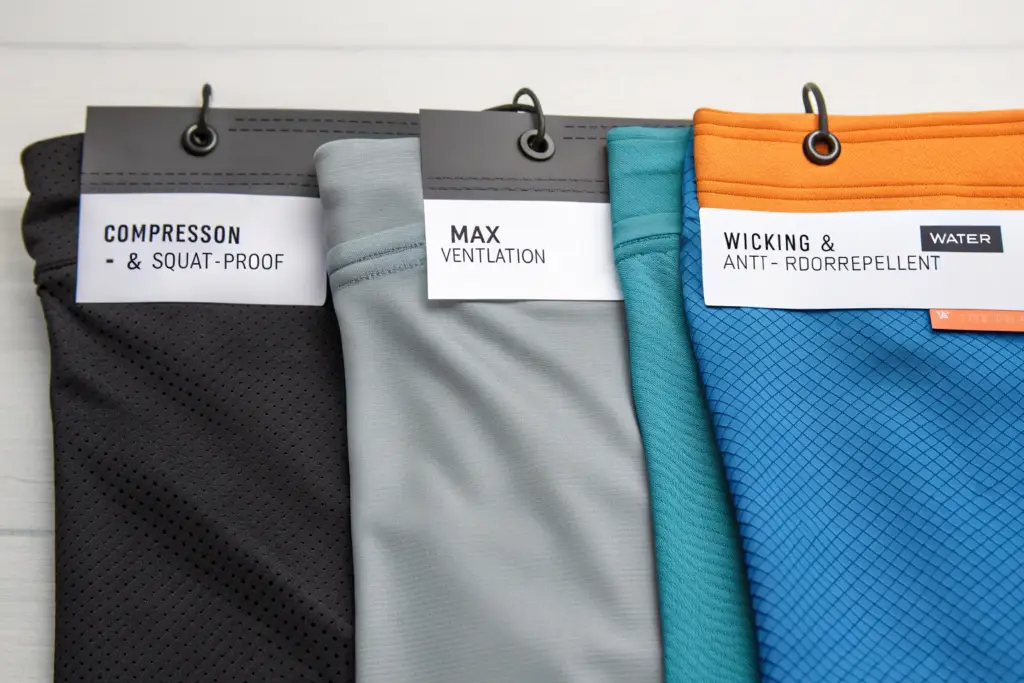
You are designing your next activewear line. You know that your customer is not just looking for style; she is demanding performance. She wants leggings that are "squat-proof," a sports bra that wicks sweat instantly, and a top that won't smell after a single workout. But walking into a fabric library is overwhelming. You are faced with a sea of technical terms, confusing blends, and bold performance claims. A designer for a leading athletic brand once told me, "In activewear, the fabric isn't just the product; it is the entire customer experience. A beautiful design in the wrong fabric is a beautiful failure. You have to start with the science of the material."
The best performance fabrics for activewear are engineered to solve a specific athletic problem. There is no single "best" fabric. The optimal choice depends on the end-use. For high-compression, squat-proof leggings, a high-gauge nylon/spandex blend is the gold standard. For maximum ventilation in high-heat training, an ultralight polyester mesh is superior. For all-day comfort and next-to-skin softness, a brushed, wicking recycled polyester is ideal. And for outdoor or transitional pieces, a tightly woven nylon with water repellency is essential. The key is matching the fabric's specific functional properties to the intended activity.
At Shanghai Fumao, we are experts in the science of performance textiles. We guide our B2B partners through this complex landscape, sourcing the perfect fabrics for their specific activewear applications. Let me break down the core performance categories and the specific material technologies that deliver on their promises.
What Are the Best Fabrics for High-Compression, Squat-Proof Leggings?
The legging is the hero product of any activewear line, and it has two non-negotiable performance requirements. It must be completely opaque when stretched to its physical limit, and it must provide a powerful, compressive "held-in" feel that snaps back instantly, never bagging out. Achieving both of these simultaneously requires a very specific and highly engineered material.
The gold standard for high-performance leggings is a high-gauge knit with a specific Nylon/Spandex blend. A composition of 75-80% Nylon (Polyamide) and 20-25% Spandex (Elastane) delivers the perfect balance of powerful compression, "squat-proof" opacity, and shape retention. Nylon provides an inherently softer handfeel, superior strength, and better colorfastness than polyester. The high spandex content provides the "snap-back" memory that prevents the fabric from bagging at the knees or stretching out over time. The knit must be high-gauge (dense) enough to be completely non-see-through, even under maximum stretch.
A brand we work with built their entire reputation on their signature legging. They spent months with us testing different knit structures and blend ratios. They landed on a specific, high-gauge 78/22 Nylon/Spandex blend with a brushed, matte finish. The opacity was absolute. The compression was powerful but comfortable. They marketed this fabric by its technical specs, and their customers became evangelical about the "second-skin" feel and the confidence of the squat-proof guarantee. This is the power of starting with a technically superior legging fabric .
Why Is Nylon (Polyamide) Superior to Polyester for a Premium Legging Handfeel?
While both are synthetics, nylon has a distinct advantage in next-to-skin comfort. It has a naturally softer, more "cotton-like" handfeel than polyester. It is also more abrasion-resistant and takes dye more richly, leading to deeper, more vibrant blacks that do not fade to grey. For a premium, everyday legging, nylon is the superior choice.
How Is "Squat-Proof" Opacity Tested and Guaranteed During Production?
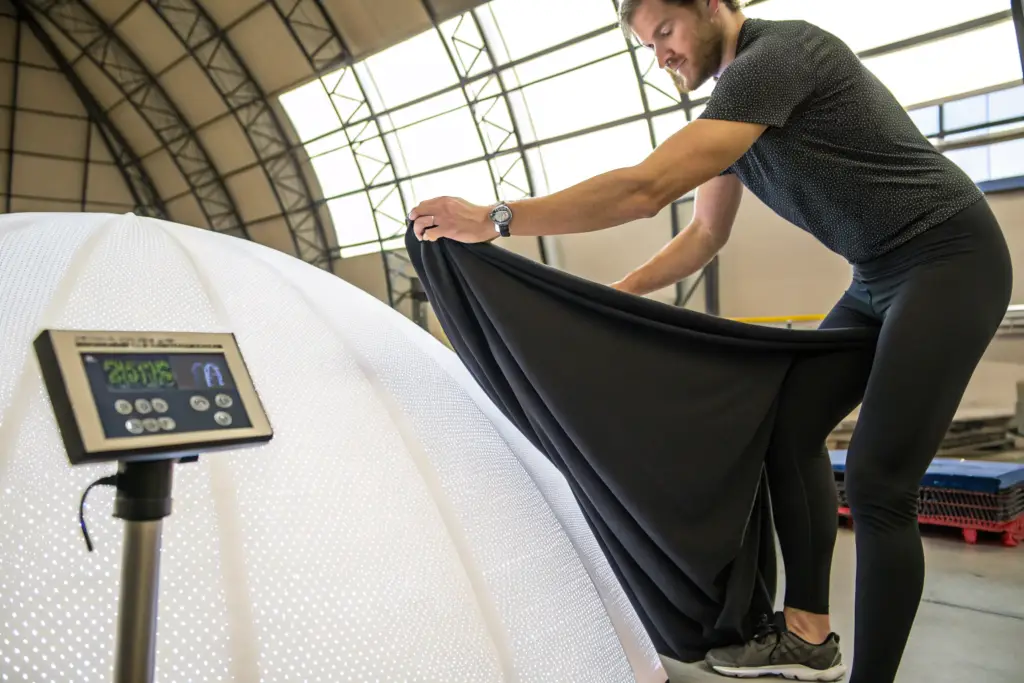
We do not rely on a visual check. We use a standardized, calibrated stretch test over a dome that simulates the maximum stretch over the glutes and knees. We inspect the fabric under intense, directional light. If any light, skin tone, or underlying pattern is visible, the fabric is rejected. This test is performed on every batch, ensuring absolute consistency. This is a non-negotiable part of our activewear quality control .
What Are the Best Materials for Maximum Moisture Wicking and Anti-Odor Performance?
For high-intensity training, the ability of a fabric to manage sweat and control odor is paramount. This is not achieved with a simple topical finish; it requires engineering at the fiber level. The best performance fabrics are those that actively pull moisture away from the skin and spread it across a large surface area for rapid evaporation, while simultaneously inhibiting the bacterial growth that causes odor.
The best materials for moisture management and anti-odor are engineered polyester knits with permanent, built-in technologies. For wicking, look for polyester yarns with a modified, multi-channel cross-section, which creates a powerful capillary action. For odor control, the most effective and durable technology is a silver-ion treatment embedded directly into the polyester fiber during extrusion. Silver ions are naturally antimicrobial and permanently inhibit the growth of odor-causing bacteria. These are engineered into the fiber and will not wash out, unlike topical "anti-odor" finishes.
A brand we work with that focuses on high-intensity interval training (HIIT) uses a specific 100% polyester pique knit with a permanent silver-ion treatment. The open pique structure promotes airflow, the multi-channel fibers wick sweat rapidly, and the embedded silver prevents the "post-workout stink" that plagues cheaper synthetics. Their customers rave about being able to wear the top for a full workout, rinse it out, and wear it again the next day. The performance is embedded in the fabric. This is the power of an engineered performance textile .
What Is the Difference Between a Topical "Anti-Odor" Finish and an Embedded Technology?
A topical finish is a chemical coating applied to the surface of the fabric. It is cheaper, but it degrades and washes out over time, losing its effectiveness. An embedded technology, like a silver-ion treatment, is built into the fiber itself during manufacturing. It is permanent and will last for the life of the garment. For a premium activewear brand, embedded technology is the only acceptable choice.
What Is "Capillary Action" and How Does It WICK Moisture?
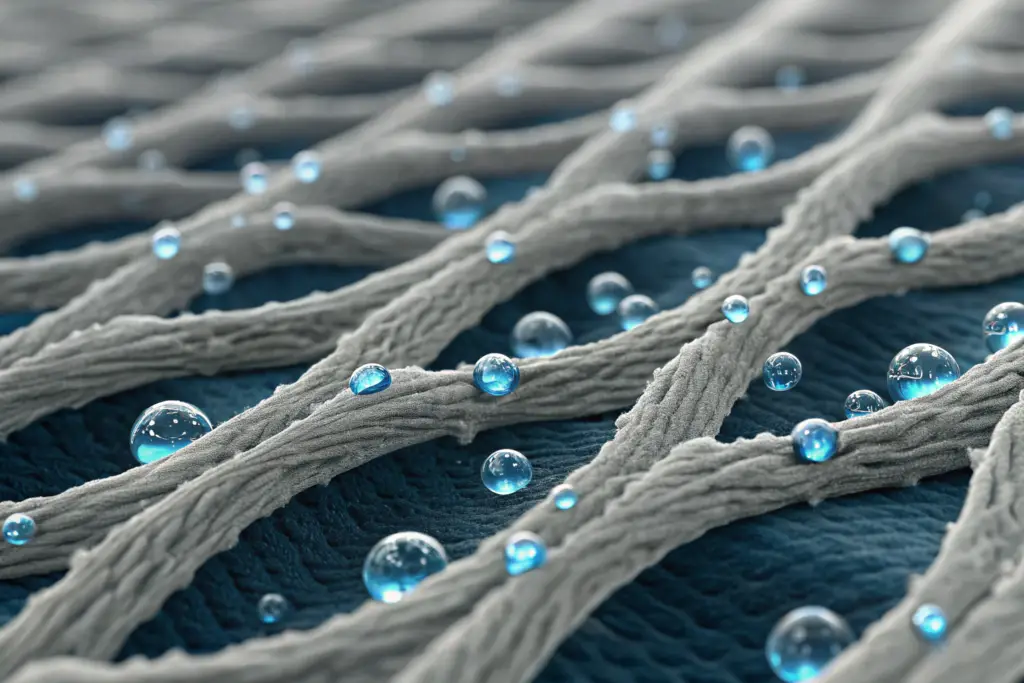
This is a physical process, not a chemical one. The multi-channeled surface of the polyester fiber creates tiny "pipes" that use surface tension to pull moisture away from the skin, against gravity. The moisture is then spread across a much larger surface area on the outside of the fabric, where it can evaporate quickly. The fiber itself is hydrophobic (does not absorb water), so it stays dry. This is the physics of modern moisture management.
What Are the Best Fabrics for Maximum Ventilation and Cooling?
For running, high-intensity training, or any activity in warm conditions, the priority shifts to maximizing airflow and convective cooling. The goal is to minimize the physical barrier between the skin and the outside air. This is achieved with specialized, open-structure knit fabrics that prioritize air permeability above all else. These are designed to be placed strategically on the body's "hot spots."
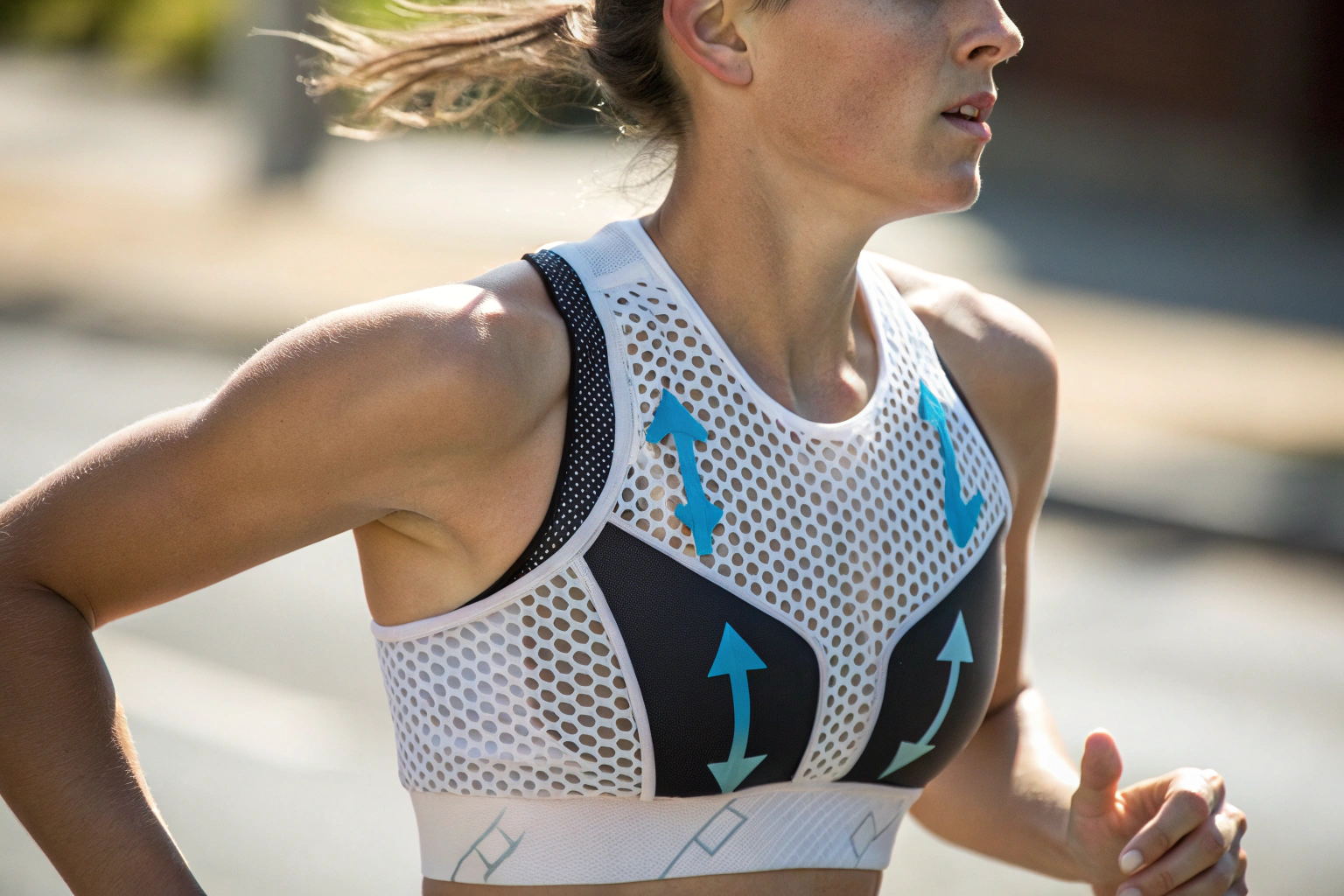
The best fabrics for maximum ventilation are highly specialized mesh knits. The most effective is a wide-open, honeycomb-structured 100% polyester mesh. Because it is 100% polyester, it is inherently hydrophobic and will not absorb sweat, staying lightweight and fast-drying even when soaked. The open structure creates a direct pathway for hot, humid air to escape and for cooler ambient air to enter, facilitating powerful convective cooling. This material is ideal for strategic panels on the back, underarms, and side panels.
A running brand we work with uses our ultralight, large-hole hex mesh on the full back panel of their summer running tops. The test results are remarkable: the surface temperature of the skin under the mesh panel is measurably several degrees cooler than under a standard solid knit. Their customers describe the feeling as "running with air conditioning on your back." This is not a gimmick; it is a measurable, physiological performance advantage created by an intelligently chosen ventilation fabric .
What Is the Trade-Off Between Ventilation and Durability in Mesh Fabrics?
A very open, ultralight mesh provides maximum ventilation but is inherently less durable and more prone to snagging than a solid knit. It is a performance fiberglass, not a rugged workhorse. The art of design is to use it strategically—on the back panel, for example—and not in high-abrasion areas. This is the kind of guidance we provide in our product development .
How Do You Use a Combination of Fabrics in a Single Garment for "Body-Mapped" Performance?
This is the most advanced design strategy. You create a hybrid "body-mapped" garment that uses different fabrics to solve different physiological needs. A high-compression, wicking nylon/spandex for the main body, a large-hole hex mesh panel on the back for heat dumping, and a smooth, soft polyester jersey under the arms for chafe-free comfort. The garment becomes a system of engineered zones. This is the future of performance activewear design .
How Does Fumao Source and Test These High-Performance Fabrics to Guarantee Results?
The world of performance fabrics is full of bold marketing claims. We separate the hype from the reality through rigorous, independent testing. Our role is to provide our B2B partners with the objective, verifiable performance data they need to make confident material choices. We have built a vetted network of advanced mills and an internal testing protocol that ensures every fabric we recommend delivers on its promise.
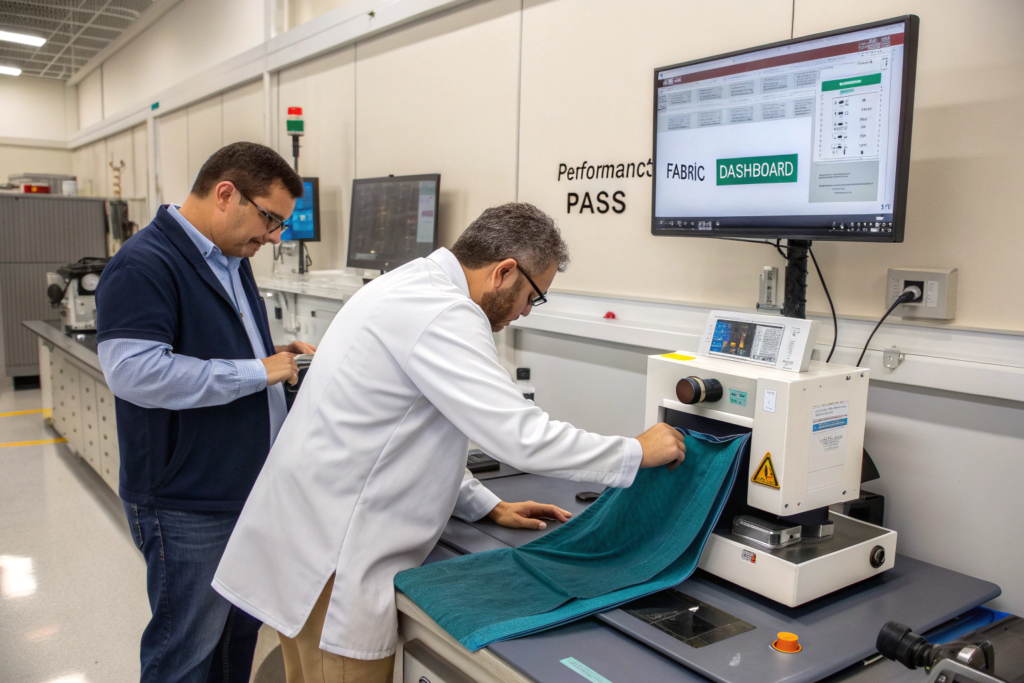
Fumao guarantees performance by combining a vetted network of advanced technical mills with rigorous in-house testing. We do not just trust a mill's marketing sheet. We perform our own wash testing, stretch and recovery testing, opacity checks, and pilling resistance tests on every new performance fabric. We provide our partners with the technical data sheets, including weight (GSM), composition, wicking rates, and anti-odor efficacy. We ensure the fabric performs as promised before it is ever cut into a garment.
A brand founder was considering two different "high-compression" leggings fabrics with similar specs. Our lab tested both and provided a comparative report. One fabric had a significantly superior stretch recovery after our 5-cycle wash test. The other lost 15% of its compressive power after just a few simulated washes. She chose the superior material, and her brand's reputation for long-lasting performance was built on that single, data-driven decision. This is the value of a performance-driven manufacturing partner .
What Specific Tests Do You Perform on a New Performance Fabric?
Our standard performance fabric qualification includes:
- Stretch & Recovery Test (ASTM D2594): To ensure the fabric maintains its shape.
- AATCC Wash Fastness & Appearance Test: To simulate real-world consumer laundering.
- Martindale Pilling Test: To ensure the fabric surface remains smooth.
- Moisture Vapor Transmission Rate (MVTR) Test: To quantify wicking performance.
- In-House "Squat-Proof" Opacity Test: A physical stretch test under calibrated lighting.
This data is the foundation of a credible performance claim. This is our commitment to verifiable performance quality .
How Can Your Sourcing Network Help Us Find a Truly Unique, Exclusive Performance Fabric?
We work with mills that are at the cutting edge of technical textile innovation. If you need a novel texture, a specific level of compression, or a unique sustainable performance blend, we can partner with these mills to develop a custom, exclusive fabric for your brand. This is the ultimate level of our strategic sourcing partnership .
Conclusion
The best fabrics for activewear are not about a single perfect material, but about engineering the right material for the right job. A squat-proof legging demands a high-gauge nylon/spandex blend; a high-vent top demands an ultralight polyester mesh; an all-day performance piece demands an embedded anti-odor and wicking technology. Performance is a science of material specificity.
At Shanghai Fumao, we are experts in this science. We guide our B2B partners through the complex landscape of technical textiles, and we back our recommendations with rigorous, objective testing. We help you build activewear that performs as good as it looks, creating a brand that athletes and enthusiasts trust.
If you are ready to develop an activewear line built on a foundation of engineered performance fabrics, let's talk. Our Business Director, Elaine, can share our library of tested, high-performance materials. Please email Elaine at: elaine@fumaoclothing.com.