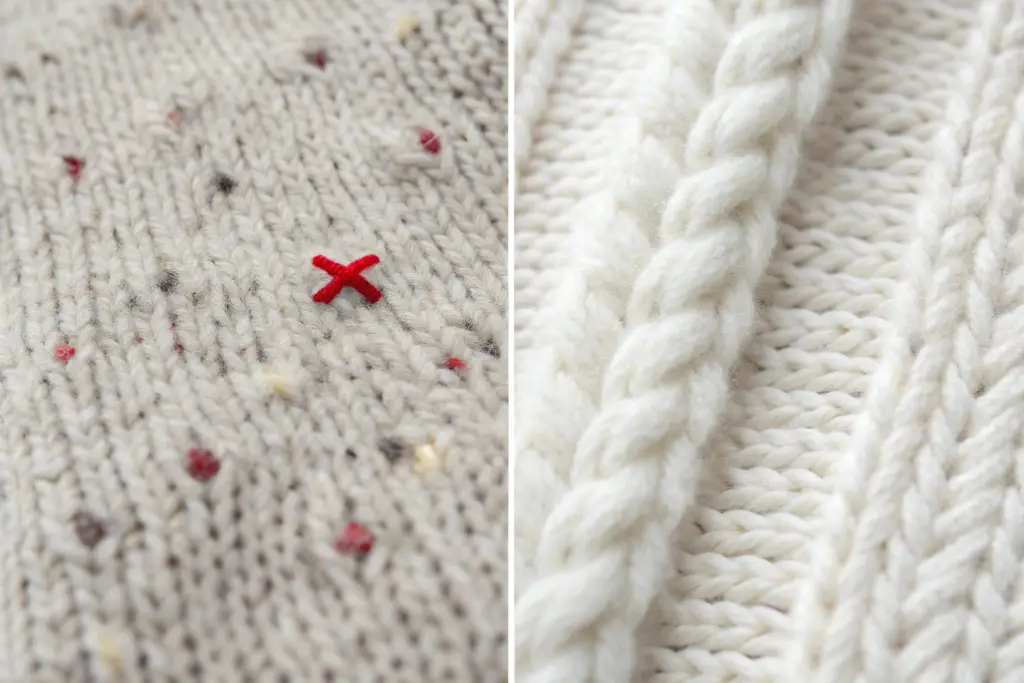
You have designed a beautiful men's knitted sweater. The color is rich, the fit is perfect. You ship it to your customers, and the initial reviews are glowing. Then, a few weeks later, the emails start coming in. Photos of the sweater show a rough, fuzzy surface under the arms and on the sides, covered in tiny, unsightly balls of fiber. Your premium product now looks cheap and worn out. A frustrated brand owner told me, "I thought pilling was just something that happened to cheap sweaters. I learned the hard way that it's a direct result of the yarn and the knit structure. It's an engineering problem, and it can be designed out of a product before you ever make a sample."
Avoiding pilling in men's knitted sweaters is a science of fiber selection and yarn engineering. It starts at the source of the raw material and the way the yarn is constructed. The three most powerful strategies are: 1) Using Long-Staple, Combed Fibers that are inherently stronger, smoother, and have fewer loose ends to work their way to the surface, 2) Specifying High-Twist Yarns that lock the short fibers tightly into the core of the yarn, preventing them from escaping, and 3) Choosing a Tight, Dense Gauge Knit Structure that minimizes surface friction and the natural "migration" of fibers. Pilling is not inevitable; it is a design choice.
At Shanghai Fumao, we help our B2B partners engineer sweaters that stay looking new. Our deep knowledge of fabric construction and our rigorous testing protocols protect your brand from the #1 quality complaint in knitwear. Let me explain the exact science of a pill-resistant sweater and how to specify it.
How Does Using Long-Staple, Combed Fiber Stop Pilling at Its Source?
Pilling is the direct result of short, weak fibers working their way loose from the yarn, rising to the surface of the fabric, and then tangling together due to friction. The most fundamental way to prevent this is to start with a raw fiber that has very few short fibers to begin with. This is a battle won at the very beginning of the supply chain, with the selection of the raw material.
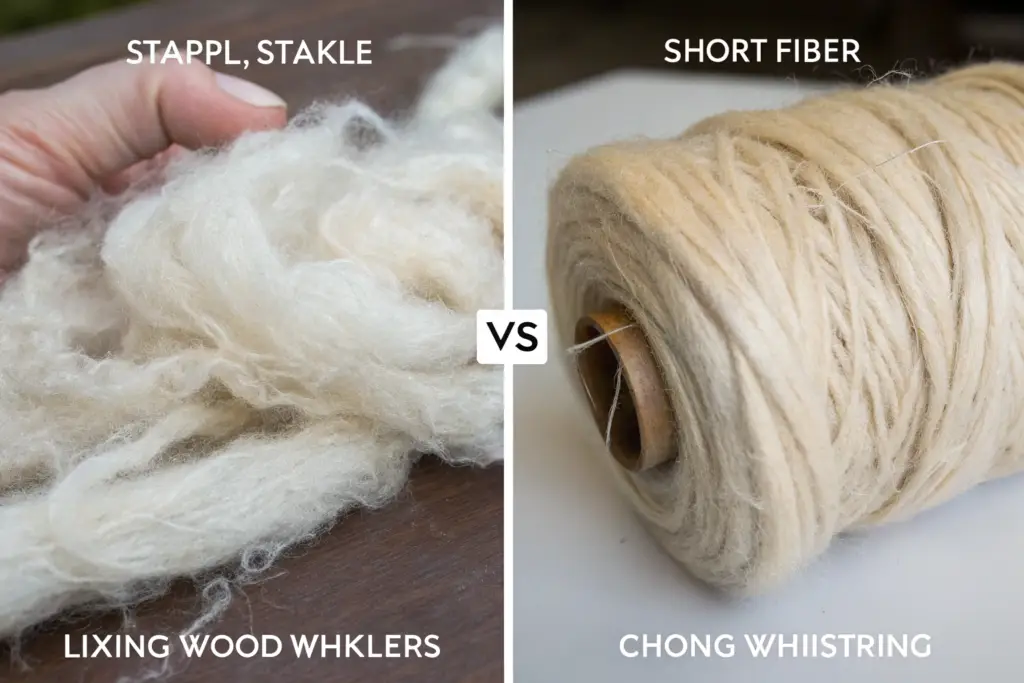
Using long-staple, combed fibers is the first and most powerful defense against pilling. A "staple" is the length of the individual fiber. Long-staple cotton (like Pima or Supima) and long-staple wool (like Merino) have inherently longer fibers. During the spinning process, the yarn is then "combed" to mechanically remove the short fibers and impurities, leaving behind only the longest, strongest, and most uniform strands. A yarn made from these purified, long fibers has very few loose ends to work loose and form pills.
A men's wear brand we work with had a major pilling problem with their cashmere-blend sweaters. We traced the issue to the source: the mill was using a cheaper, short-staple cashmere blend. We helped them source a long-staple, combed Merino wool from a premium supplier. The new yarn was visibly smoother and more uniform. They produced a test batch of sweaters, and after a standardized 5,000-cycle abrasion test, the new sweaters showed virtually zero pilling, while the old ones were covered in fuzz. The upgrade in raw fiber quality was a total solution. This is the power of premium fiber sourcing .
What Is the Difference Between "Staple Length" in Cotton and Wool?
The concept is the same for both natural fibers. The "staple" is the length of the individual fiber. Longer fibers (like a long-staple Egyptian cotton or a fine Merino wool) can be spun into a finer, stronger, and smoother yarn. Shorter fibers have more ends per inch of yarn, which means more potential for those ends to work loose and form a pill. The length of the raw fiber is the single most important quality metric. This is a key part of our raw material education .
How Does the "Combing" Process Actually Remove the Fibers That Cause Pills?
Combing is a mechanical refining process. The raw, carded fibers are passed through a series of fine, needle-like combs. These combs act like a sieve, catching the short, broken fibers and any remaining plant impurities and removing them from the sliver. The remaining, "combed" fibers are all long, parallel, and clean. This is the physical process that creates a superior, pill-resistant yarn. This is the standard of quality we demand from our yarn suppliers .
How Do High-Twist Yarns Lock Fibers in Place and Resist Pilling?
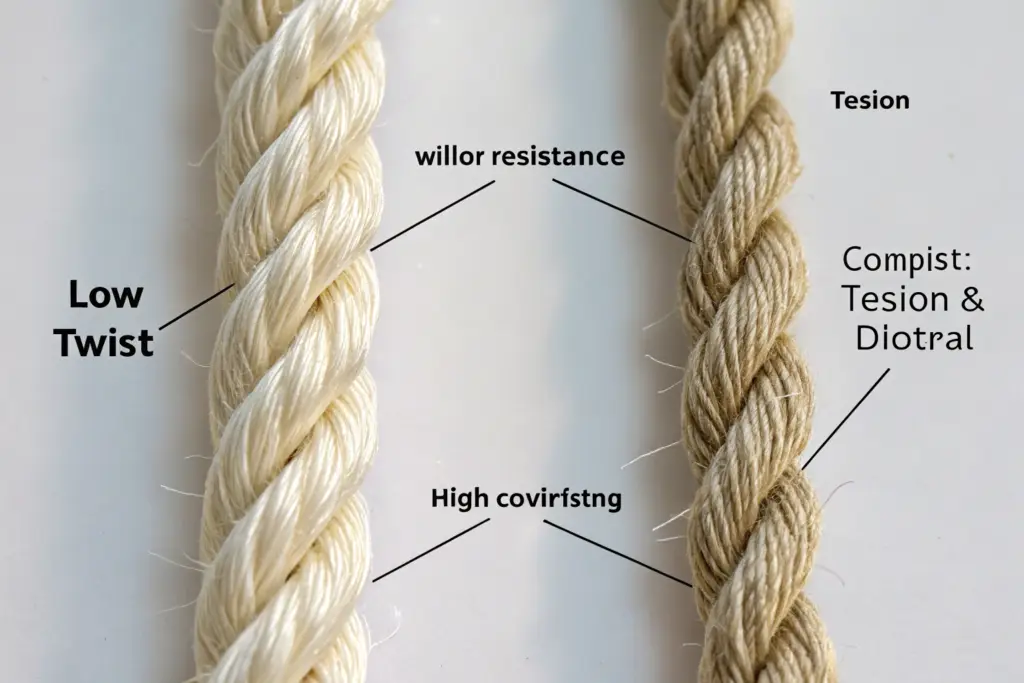
Even with a long-staple, combed fiber, a loosely spun yarn can still pill. The tension with which the fibers are twisted together—the "twist"—is the mechanical lock that holds everything in place. A high-twist yarn is like a tightly wound rope, physically imprisoning the short fibers and preventing them from migrating to the surface. A low-twist yarn is a loose, airy structure that allows fibers to easily escape.
High-twist yarns are a powerful weapon against pilling. By increasing the tension and number of twists per inch, the short fibers are physically bound and locked into the core of the yarn structure. They cannot easily work their way loose to the surface. A tightly twisted yarn is smoother, stronger, and significantly more pill-resistant. This is a specification that can be communicated to a spinner: you are asking for a yarn with a higher "Twist Per Inch" (TPI) value.
A brand we work with switched their core sweater program from a standard, low-twist cashmere yarn to a high-twist, "worsted-spun" Merino wool. The handfeel changed from a soft, fuzzy, and delicate fluff to a clean, smooth, and slightly crisp feel. The pilling complaints, which had been their #1 quality issue, virtually disappeared overnight. Their customers embraced the new, cleaner, and more modern aesthetic. The higher twist not only solved the functional problem, but also became a signature of the brand's sophisticated, urban look. This is the dual power of a strategic yarn construction choice .
What Is "Worsted Spun" and Why Is It More Pill-Resistant Than "Woollen Spun"?
This is a key distinction in wool processing. Woollen spun yarn is softer, fuzzier, and airier, with more fiber ends on the surface (think of a classic, hairy Shetland sweater). Worsted spun yarn is a more refined process where the fibers are combed to be parallel and then twisted tightly. This creates a much smoother, denser, and stronger yarn that is far more resistant to pilling. For a modern, pill-resistant sweater, worsted-spun is the superior engineering choice.
Can a Yarn Be Too Tightly Twisted? What Is the Trade-Off?
Yes. An excessively high twist can make the fabric feel stiff, wiry, and less soft against the skin. It is a balance between pilling resistance and the desired handfeel and drape of the finished garment. The art of a great sweater design is finding the optimal twist level that provides excellent durability without sacrificing the comfort and softness that the customer expects. This is the expertise we bring to fabric and yarn development .
Why Is a Tight, Dense Knit Construction Your Final Physical Barrier Against Pills?
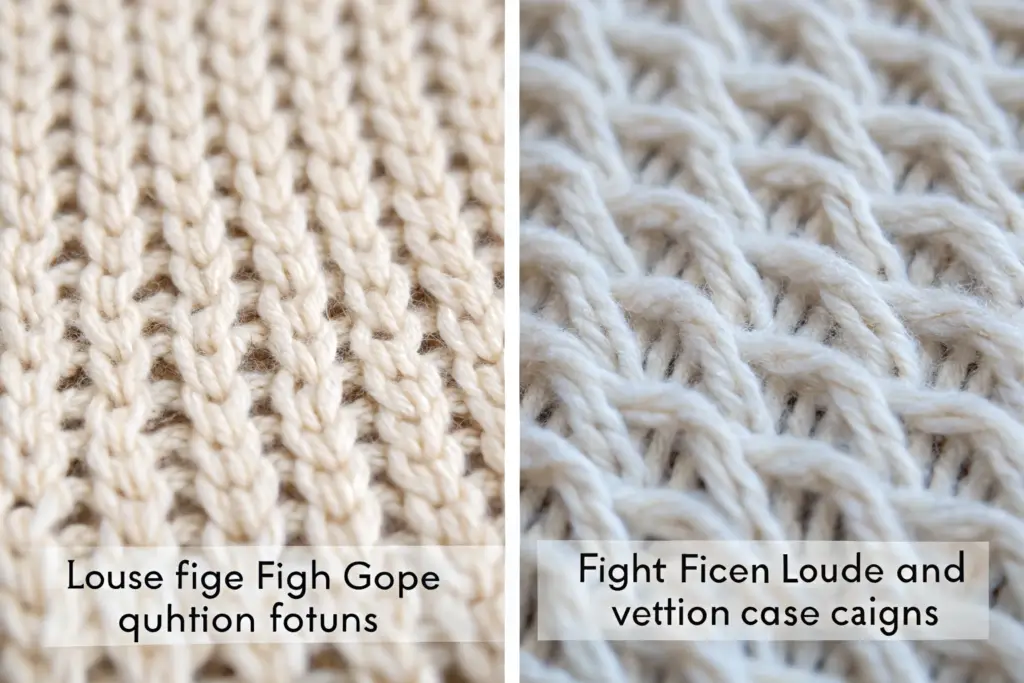
Even a perfect yarn can pill if it is knitted into a loose, open structure. A loose knit exposes more individual fibers to surface friction, which is the mechanical trigger that starts the pilling process. A tight, dense knit presents a compact, smooth surface to the world, dramatically reducing the opportunity for friction to catch and pull any loose fiber ends. The physical gauge of the knit is the final, external defense layer.
A tight, dense knit gauge is the final physical barrier against pilling. A higher gauge knit means there are more yarns per inch, creating a more compact and smooth surface. This dense structure inherently resists abrasion, as there is less "fuzz" to be rubbed up. Crucially, areas of high friction, like the underarms and side seams, should be reinforced with an even tighter stitch or a different, more durable construction to withstand the constant rubbing that triggers pilling in those specific zones.
A brand we work with had a recurring issue with pilling under the arms of their otherwise beautiful cashmere sweaters. The body of the sweater was fine, but the friction zone was a problem. We worked with them to specify a "tighter gauge jersey" in the underarm gusset area. This simple, localized change to the knit density solved the pilling problem in the highest-wear zone, dramatically improving the overall customer experience without changing the luxurious handfeel of the rest of the garment. This is the surgical precision of a well-engineered knitwear construction .
How Do You Test for Pilling Resistance to Guarantee Your Design?
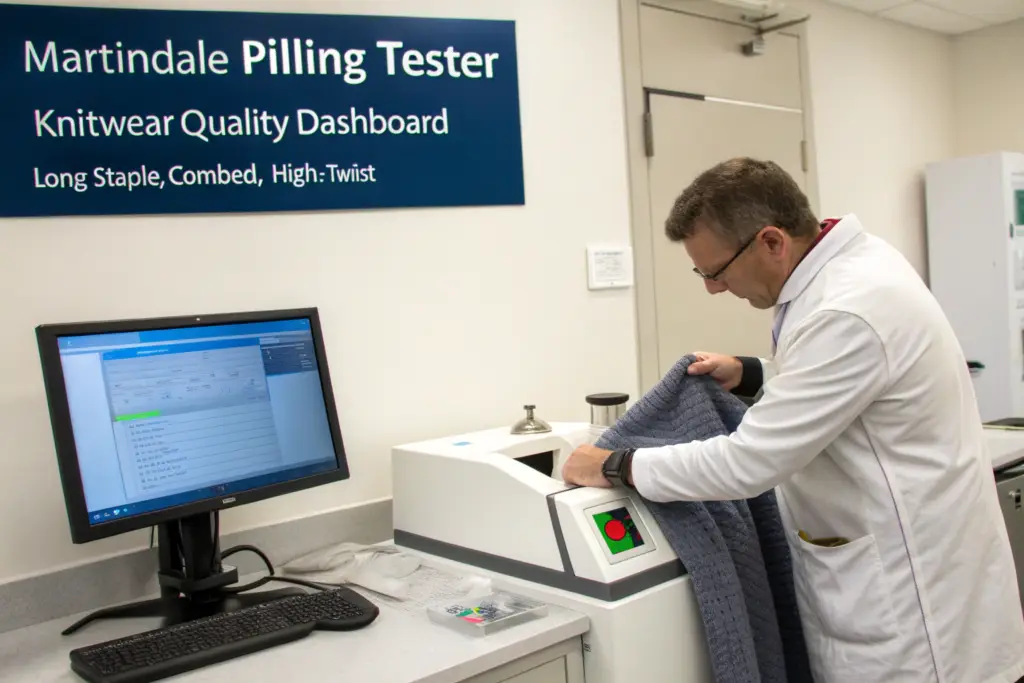
We do not guess. We use the Martindale Abrasion and Pilling Tester (ISO 12945-2) . A sample of the sweater fabric is rubbed against a standard abrasive for a specific number of cycles (often 2,000 or 5,000). The tested sample is then compared against a visual set of graded standards and given a score of 1 (very severe pilling) to 5 (no pilling). A premium sweater must achieve a grade of at least 4. This is a core part of our quality assurance for knitwear .
What Are the Specific "Friction Zones" on a Sweater That Need Reinforced Design?
The areas that experience the most abrasion during wear are the underarms, the sides of the body where the arms rub, and the cuffs. A smart designer will reinforce these areas with a tighter knit, a different, more durable stitch, or a small, integrated gusset. This targeted engineering solves the problem at its source without compromising the overall design. This is the kind of intelligent design-for-durability we encourage.
How Does Fumao's Sourcing and Quality Control Engineer Out the Risk of Pilling?
A pill-resistant sweater is not an accident; it is the predictable outcome of a disciplined, multi-stage engineering process. From the selection of the raw fiber to the specification of the yarn twist and the final verification of the knit structure, every step is a deliberate choice to prioritize durability and quality. Our role is to manage this complex process for our B2B partners, ensuring your designs are built on a foundation of material science.
Fumao's sourcing and QC process engineers out the risk of pilling by managing the entire supply chain. We source from mills that specialize in premium, long-staple, combed fibers. We work with spinners to specify the optimal high-twist yarn construction for your design. We ensure the final knit gauge is appropriately dense for the intended use of the garment. And, most importantly, we verify the end result by performing rigorous Martindale pilling tests on every new development, ensuring your sweater meets our non-negotiable performance standards before it ever goes into bulk production.
A new brand partner, who had been plagued by pilling returns on a previous collection, was amazed by our systematic approach. "You didn't just ask me what color I wanted," he said. "You walked me through the yarn specs, the gauge options, and then you showed me the pilling test data. I felt like I was finally in control of my product's quality." That is our goal. To provide the technical expertise and the rigorous verification that transforms quality from a hope into a predictable, engineered outcome. This is the value of a true manufacturing partnership .
How Do You Vet a New Yarn Supplier for Pilling Resistance?
We do not take their word for it. We request a sample cone of the yarn, knit it into a standard test swatch in our sample room, and run it through our full battery of tests, including the Martindale pilling test. We only add a supplier to our approved network after their materials have proven their performance in our own lab. This is our commitment to verified quality .
What Is the Best Way to Communicate Pilling Resistance Requirements in a Tech Pack?
Be specific and use measurable standards. Do not write "anti-pill fabric." Write: "Yarn must be long-staple, combed, with a minimum twist of TPI. The finished fabric must achieve a minimum Grade 4 on the ISO 12945-2 Martindale Pilling Test after 2,000 cycles." This precise, technical language is what a professional factory and mill understand. We guide our partners in creating these performance-based specifications .
Conclusion
Pilling in men's knitted sweaters is not an inevitable sign of wear; it is a preventable engineering failure. By starting with superior, long-staple fibers, locking them in place with a high-twist yarn construction, and protecting them with a dense, tight-gauge knit, you can design a sweater that maintains its clean, premium appearance for years. Your customer's trust depends on these invisible, technical choices.
At Shanghai Fumao, we are masters of this material science. Our expertise in yarn sourcing, knit construction, and rigorous performance testing provides our B2B partners with the confidence that their sweaters will not just look beautiful on day one, but will stay that way. We help you build a brand known for quality that endures.
If you are ready to develop a knitwear line that is engineered against pilling, let's talk. Our Business Director, Elaine, can walk you through our yarn and quality assurance process. Please email Elaine at: elaine@fumaoclothing.com.