You have a retail price target. Your customer will pay $68 for a pair of classic shorts. She will not pay $98. You know your margin. You need a landed cost of $14 per unit to make the numbers work. You send the tech pack to five factories. The quotes come back. $9.50. $12.00. $14.50. $18.00. $22.00. The range is staggering. The $9.50 quote is tempting. It would give you a fantastic margin. But you remember the last time you chose the cheapest quote. The fabric was thin. The seams were crooked. The returns ate your margin and your reputation. The $22.00 quote is beautiful. The sample is perfect. But at that price, you have no margin at all. You are stuck between the cheap short that will fail and the expensive short that will not sell. You need to find the middle ground. The price that buys enough quality to satisfy your customer and enough margin to sustain your business. This is the central challenge of apparel sourcing.
Balancing quality and price when sourcing classic women's shorts is a process of identifying the non-negotiable quality elements that drive customer satisfaction and low return rates, and then optimizing the negotiable elements that drive cost. The non-negotiables are fabric weight and shrinkage control, stitch density at stress points, zipper and button quality, and fit consistency. These elements directly impact the customer's experience and the return rate. The negotiables are fabric blend ratios, pocket lining material, label and hang tag complexity, and packaging frills. A smart sourcing strategy locks in the non-negotiables to a minimum acceptable standard and then negotiates aggressively on the negotiables to hit the target price. The goal is not the cheapest short. The goal is the short that delivers the required quality at the lowest possible cost that protects the brand.
At Shanghai Fumao, I help brand owners navigate this balance every day. I have seen the cost breakdown of thousands of shorts. I know where the real value is, and where factories hide cost. I know which corners you can cut without the customer noticing, and which corners will destroy your return rate. This article is a practical guide to making these trade-offs intelligently. It gives you the cost structure of a classic women's short, the quality elements ranked by importance, and a negotiation framework that gets you the best value for your target price.
What Are the True Cost Drivers in a Classic Women's Short?
You cannot balance quality and price if you do not know where the money goes. A classic women's short is not a mysterious object. It is a sum of material costs, labor costs, overhead, and profit. Understanding the cost structure empowers you to have an intelligent conversation with the factory. Instead of saying "your price is too high," you can say "the fabric cost seems high for a 55% linen blend. Can we use a 55% cotton, 45% linen blend to reduce the material cost by 15%?" This is a collaborative problem-solving conversation. The factory respects it. The outcome is a better price without a sacrifice in perceived quality.
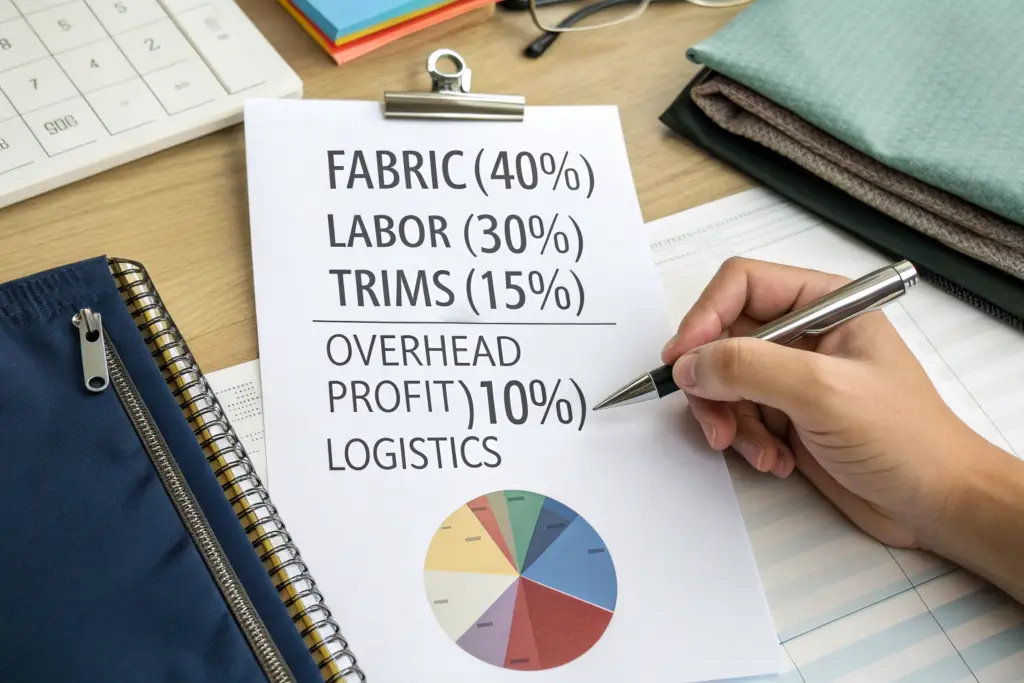
I review cost breakdowns with clients regularly. The biggest surprise for most new brand owners is that fabric is the largest single cost, typically 35% to 45% of the FOB price for a classic short. Labor is next at 25% to 35%. Trims, including zippers, buttons, labels, and hang tags, are 10% to 15%. Factory overhead and profit are 10% to 15%. Logistics, if quoted FOB, is separate. The garment cost breakdown guide provides a detailed template. A buyer who understands these proportions knows where to focus their cost-reduction efforts.
The cost structure varies by fabric, construction complexity, and order volume. A linen short has a higher fabric cost than a cotton twill short. A short with multiple pockets and pleats has a higher labor cost than a simple pull-on short. A 500-piece order has a higher per-unit cost than a 5,000-piece order. Let's examine the controllable and uncontrollable cost factors.
How Do Fabric, Labor, Trims, and Logistics Break Down by Percentage?
For a classic women's chino short in a 280 GSM cotton twill, with a YKK zipper, a basic woven label, and a simple hang tag, the FOB cost at a 1,000-piece order quantity typically breaks down as follows. Fabric is 38% of the cost. This includes the shell fabric, the pocket lining, and the interfacing. Labor is 30%. This includes cutting, sewing, finishing, and pressing. Trims are 12%. This includes the zipper, button, thread, labels, and hang tag. Factory overhead and profit margin is 15%. Logistics to the port of export is 5%.
If the order quantity drops to 300 pieces, the labor percentage increases because the factory cannot achieve the same efficiency on a small run. The fixed setup costs are amortized over fewer units. The per-unit cost increases. If the fabric is upgraded to a linen-cotton blend, the fabric percentage increases to 45% or more. The garment cost breakdown by component provides a calculator. A buyer should understand the cost structure of their specific product. It is the foundation of an intelligent negotiation.
Where Can a Factory Legitimately Reduce Costs Without Sacrificing Quality?
A factory reduces costs through efficiency, not through material substitution. Efficient marker making that minimizes fabric waste. Specialized sewing lines where operators are trained on a specific operation and produce at high speed. Bulk purchasing of greige fabric that lowers the per-meter cost. In-house trim inventory that eliminates supplier markups. A well-run factory has a lower cost structure than a poorly run factory, and can offer a better price without sacrificing quality.
A factory should not reduce costs by substituting a cheaper, inferior fabric without telling you. Or by reducing stitch density from 12 SPI to 8 SPI. Or by using a generic zipper instead of a YKK. These are not cost reductions. They are quality reductions. They should never happen without the buyer's explicit approval. The ethical cost reduction in garment manufacturing guide explains the difference between efficiency-driven savings and quality-cutting shortcuts. A professional factory is transparent about its cost structure and its efficiency. A buyer should be suspicious of a price that seems too good to be true. It probably is.
Which Quality Elements Are Absolutely Non-Negotiable for Customer Satisfaction?
Some quality elements are visible to the customer. Some are invisible. The visible elements, fabric hand feel, color, drape, zipper smoothness, affect the purchase decision. The invisible elements, seam strength, shrinkage control, color fastness, affect the return decision. Both matter. But when budget is tight, the invisible elements that prevent returns must be protected at all costs. A short that feels great in the store but shrinks two inches after the first wash will be returned. The return destroys the margin that the cheap fabric secured.
I have identified five non-negotiable quality elements based on years of analyzing return data with our brand partners. Fabric weight and shrinkage control. Stitch density at the back rise and pocket corners. Zipper brand and function. Button attachment strength. Fit consistency across sizes. These five elements directly correlate with return rates. A short that fails any one of them will generate customer complaints and returns. A short that satisfies all five will generate satisfaction and repeat purchases. The garment quality elements that reduce returns guide details these critical factors.
The non-negotiables are not expensive to get right. They require specification, not a higher fabric price. A 280 GSM twill specified in the purchase order costs the same whether the buyer specifies it or not. The factory just needs to know it is required. Let's define each non-negotiable.
Why Are Fabric Weight and Shrinkage Control the Foundation of Perceived Quality?
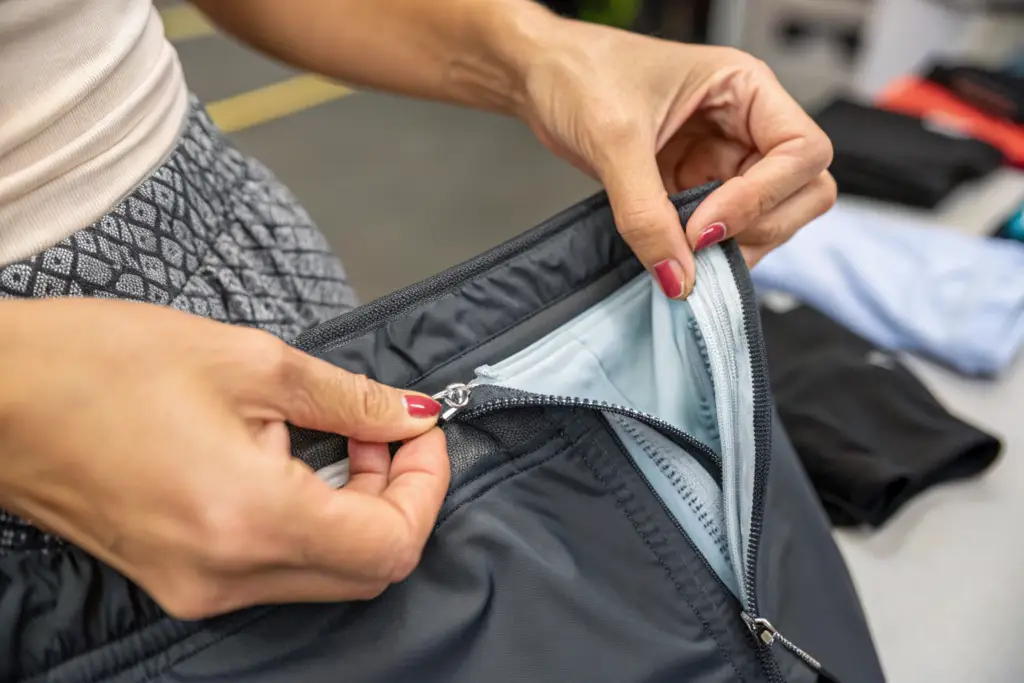
Fabric weight determines how the short drapes, how it feels, and how it wears over time. A classic women's short should have a minimum fabric weight of 240 GSM for a twill and 180 GSM for a linen blend. Below these weights, the fabric feels flimsy. The pockets show through. The short wrinkles excessively. The customer perceives low quality. Fabric shrinkage must be controlled to under 2% residual shrinkage. This requires pre-washing or sanforizing the fabric before cutting. A short that shrinks after the first wash is unwearable. The customer returns it. The return costs the brand far more than the pre-shrinking process cost.
Fabric weight and shrinkage control are specified in the tech pack. They are verified with a GSM cutter and a wash test. The fabric weight and shrinkage testing standards provide the methods. A buyer should never compromise on minimum fabric weight. The difference between a 200 GSM fabric and a 240 GSM fabric is perhaps $0.40 per unit. The cost of a return is $8 to $15 in processing and lost margin. Protecting the fabric weight is a profitable decision.
How Do Stitch Density, Zipper Quality, and Fit Consistency Impact Returns?
Stitch density at stress points, the back rise seam and the pocket corners, must be a minimum of 10 to 12 stitches per inch. Below this density, seams gape and rip. The zipper must be a YKK or equivalent brand-name zipper. A generic zipper fails. The slider jams. The teeth separate. A failed zipper renders the short unwearable. Fit consistency means a size medium measures the same in this order as it did in the last order. Inconsistent sizing is the number one cause of online returns. The customer orders her usual size. It does not fit. She returns it. She loses trust in the brand.
These elements are controlled by clear specifications and QC inspections. The stitch density and zipper quality standards are industry norms. A buyer should specify them in the tech pack and verify them on the pre-production sample and the bulk inspection. A factory that pushes back on these specifications is not a factory that values quality. A buyer should walk away.
What Fabric and Trim Choices Offer the Best Value Compromise?
Between the non-negotiables and the purely cosmetic, there is a zone of smart compromise. These are choices that reduce cost without significantly impacting the customer's quality perception. A fabric blend that substitutes a portion of an expensive fiber with a less expensive one while maintaining the hand feel. A pocket lining that is a cotton-polyester blend instead of 100% cotton voile. A button that is a high-quality resin instead of a natural Corozo nut. A hang tag that is a simple card instead of a multi-page booklet. These compromises are invisible or barely visible to the customer. They save meaningful money.
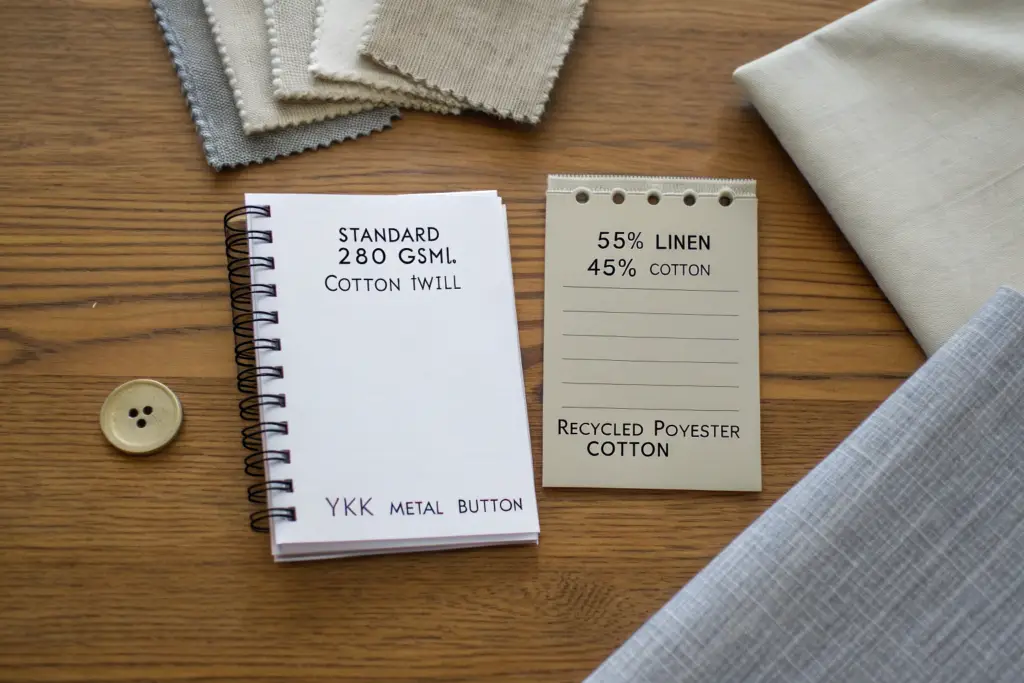
I guide my clients through these compromise decisions. A brand that wants a linen look but has a $12 target FOB cannot use 100% linen. A 55% linen, 45% cotton blend provides the linen texture and breathability at a lower cost. The customer sees the slub. She feels the cool hand. She does not know the exact blend ratio. The value is delivered. The cost is controlled. The fabric blend options for cost optimization guide explains these trade-offs. Smart value engineering is not about cheapening the product. It is about achieving the required performance and aesthetic at the lowest possible cost.
The value compromise zone exists in the fabric blend, the pocket lining, the button material, and the packaging. These are areas where the customer's ability to perceive a difference is low, but the cost difference is meaningful. Let's explore the best value choices.
When Should You Choose a Poly-Cotton Pocketing Over 100% Cotton Voile?
The pocket lining is inside the short. The customer sees it only when she turns the pocket inside out. She feels it when she puts her hands in the pockets. A 100% cotton voile is the premium choice. It is soft, breathable, and luxurious. It costs more. A poly-cotton blend pocketing, 65% polyester and 35% cotton, is the value choice. It is strong, resists shrinking, and costs about 30% less than cotton voile. The hand feel is slightly less soft, but the difference is subtle inside a pocket.
For a brand with a retail price above $80, use 100% cotton voile. For a brand with a retail price of $50 to $80, a poly-cotton pocketing is a reasonable value compromise. The pocket lining material options guide explains the cost-quality trade-off. A buyer should specify the pocketing material in the BOM. Do not leave it to the factory's default. The default is often the cheapest possible polyester, which feels scratchy and cheap.
How Do Custom Labels and Hang Tags Impact Cost Without Impacting Sales?
A custom woven label and a custom hang tag are important branding tools. They communicate the brand identity. They also add cost. A simple woven label costs $0.05 to $0.10 per unit. An elaborate woven label with multiple colors and a complex design costs $0.15 to $0.25 per unit. A simple hang tag on basic cardstock costs $0.05 per unit. A premium hang tag with letterpress printing, foil stamping, and a multi-page booklet costs $0.30 to $0.50 per unit.
A new brand should start with simple, clean branding. A single-color woven label. A simple, well-designed hang tag on good-quality paper. The branding should look professional, not expensive. As the brand grows and the customer base values the branding, the packaging can be upgraded. The clothing label and hang tag cost guide provides detailed pricing. Branding is important. Elaborate branding is a choice that should be justified by the retail price and the brand positioning. For a value-focused brand, simple branding protects the margin without hurting sales.
How Does Order Quantity Unlock Better Pricing Without Quality Cuts?
Order quantity is the most powerful price lever that does not sacrifice quality. The factory's fixed costs, pattern making, marker making, machine setup, are the same whether the order is 300 pieces or 3,000 pieces. The larger the order, the more pieces these fixed costs are spread over. The per-unit cost drops. The fabric cost also drops with larger meterage. Mills offer better prices for larger orders. The factory can buy fabric more efficiently. The sewing line efficiency improves with longer runs. Operators get into a rhythm. Output per hour increases. The labor cost per unit drops.
I show my clients the tiered pricing openly. An order of 300 pieces might cost $13.50 per unit. An order of 600 pieces might cost $11.80. An order of 1,200 pieces might cost $10.50. The quality is identical. The fabric is the same. The stitching is the same. The only difference is the efficiency of scale. The order quantity and cost per unit relationship is a fundamental economic principle. A buyer who consolidates styles onto the same base fabric, or who orders deeper on core colors, can hit a higher quantity tier and unlock a lower price without touching quality.
The quantity lever is powerful, but it must be used wisely. Ordering more than you can sell to get a lower unit price is a false economy. The markdown on excess inventory will wipe out the unit cost savings. The goal is to find the optimal quantity that balances the cost benefit with inventory risk.
What Is the Minimum Order Quantity That Unlocks Factory Efficiency?
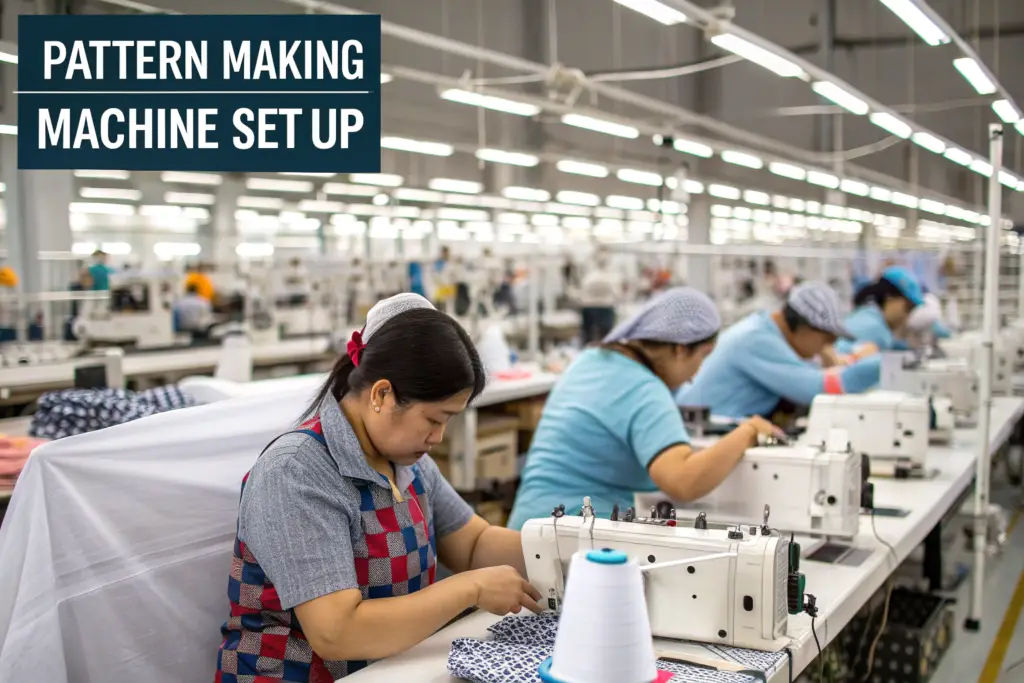
The minimum order quantity that unlocks factory efficiency is typically around 300 to 500 pieces per style for a classic short. Below this quantity, the factory cannot set up a proper sewing line. The operators must switch between operations, losing efficiency. The fabric cutting is less optimized. The per-unit cost is high. Above 500 pieces, the line can be set up efficiently. The operators specialize. The cutting is optimized. The per-unit cost drops.
The MOQ for fabric dyeing is a separate constraint. Custom-dyed fabric often has a minimum of 500 meters, which is enough for about 600 pairs of shorts. For orders below this, stock fabric colors must be used. The minimum order quantities in garment manufacturing guide explains the constraints. A buyer should ask the factory about their efficiency threshold. Ordering at or above that threshold unlocks better pricing without any change to the product.
How Can You Consolidate Styles to Hit Higher Quantity Tiers?
If you are ordering three styles, each 200 pieces, you have three orders at 200 pieces each. The per-unit cost is high on all three. If you can design the three styles to share the same base fabric, you can consolidate the fabric order. You order 600 meters of the same twill. The fabric cost drops. The cutting can be optimized across the three styles. You approach the factory with a 600-piece total order, not three 200-piece orders. The per-unit cost drops for all three styles.
This is smart line planning. Use the same twill for the chino short, the trouser short, and the paperbag-waist short. Change the color, the trim, or the detail. The fabric is shared. The quantity leverage is achieved. The line planning for cost optimization guide explains this strategy. Consolidation is the buyer's most powerful negotiation tool.
Conclusion
Balancing quality and price is not about choosing one over the other. It is about understanding the cost structure, protecting the non-negotiables, making smart compromises on the negotiables, and leveraging order quantity to drive efficiency. The non-negotiable elements, fabric weight and shrinkage control, stitch density, zipper quality, and fit consistency, are the foundation. They prevent returns and build customer trust. They are not expensive. They are specific. The negotiable elements, fabric blend ratios, pocket lining material, button material, and packaging complexity, are the value engineering zone. Smart choices here reduce cost without the customer noticing or caring. Order quantity is the multiplier. Higher quantities unlock efficiency savings that improve the price without any compromise on quality.
The goal is the best value short for the target retail price. A short that the customer loves, that wears well, that washes well, that she tells her friends about. A short that the brand sells at full price with a healthy margin. This is not a fantasy. It is the result of intelligent sourcing decisions.
At Shanghai Fumao, we help our clients make these decisions. We provide transparent cost breakdowns. We explain the quality impact of every specification choice. We offer tiered pricing based on quantity. We suggest value engineering options that protect the customer experience while reducing cost. If you are sourcing classic women's shorts and struggling with the quality-price balance, contact our Business Director, Elaine, at elaine@fumaoclothing.com. Send her your tech pack and your target FOB price. She will prepare a cost breakdown and suggest options to hit your target without compromising the quality your customer expects. Let us help you find the smart middle ground.